
Victorian Age Wedding Dresses: Surprising Secrets Behind Their Timeless Allure
Velvet trains sweeping across marble aisles, orange blossoms tucked into carefully arranged curls, and silk satin shimmering by candlelight—Victorian wedding dresses were far more than pretty gowns. They were statements of morality, technology, class, and empire. Between Queen Victoria’s marriage to Prince Albert in 1840 and the end of her reign in 1901, bridal fashion transformed dramatically, reflecting shifting social values, industrial progress, and the expanding global reach of Britain. Understanding Victorian wedding dresses means understanding how an age defined femininity, respectability, and romance in fabric and thread.
The Historical Context: Marriage, Morality, and the Victorian Ideal
The Victorian era—spanning from 1837 to 1901 under Queen Victoria—coincided with enormous social change: industrialization, urbanization, the growth of the middle class, and the codification of strict moral norms. Marriage was central to Victorian life, legally, socially, and economically. A wedding was less a purely romantic event than a public negotiation of status, property, and respectability. The wedding dress functioned as a kind of visual contract: it signaled the bride’s virtue, her family’s respectability, and, increasingly, their social standing.
Can You Name the Masterpiece?
Ten masterpieces. Ten questions. How well do you know the history of art?
According to the Victoria and Albert Museum (V&A) in London, which holds one of the world’s most important dress collections, the wedding became “one of the principal social rituals of the nineteenth century middle class,” and the dress its most visible symbol. As middle-class families rose in numbers and influence, they imitated aristocratic customs, including increasingly elaborate wedding attire and ceremonies held in churches rather than at home. The dress, once a relatively practical garment, became an object of aspiration and display.
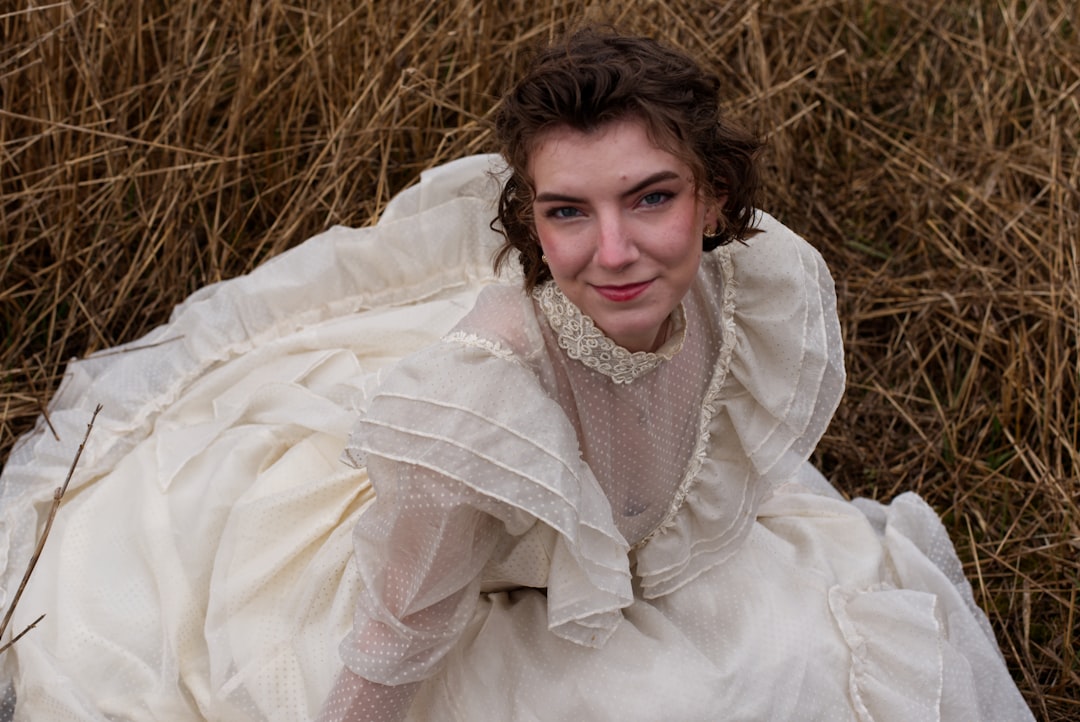
At the same time, the Victorian cult of domesticity—often summarized as the ideal of the “angel in the house”—cast women as moral guardians of the home. Bridal fashion helped stage the transition from maiden to wife: modest yet luxurious, heavily constrained yet visually delicate. The Metropolitan Museum of Art (The Met) notes that nineteenth-century bridal gowns often balanced modest necklines and long sleeves with expensive fabrics and intricate decoration, reinforcing the idea that virtue and refinement could—and should—coexist in a single, carefully controlled figure.
Queen Victoria’s White Dress: Myth, Reality, and Influence
The most enduring story about Victorian wedding dresses is that Queen Victoria “invented” the white wedding gown in 1840. While this is an oversimplification—elite brides had worn white or pale dresses before—her choice and the way it was publicized did fix white as the dominant bridal color in the Western imagination. Victoria’s silk satin dress, trimmed with Honiton lace and worn with a simple orange-blossom wreath instead of a jeweled tiara, was widely reported in newspapers and fashion plates, turning one royal decision into a cultural template.
Can You Guess the Artist?
Three clues. One artist. How quickly can you identify the painter?
The dress itself, preserved in part at institutions such as the Royal Collection Trust and often discussed in essays by the V&A, was notable less for its color than for its symbolic restraint. By avoiding lavish jewels and excessive ornament, Victoria signaled modesty and domestic virtue, aligning with the young queen’s careful cultivation of a moral image. As fashion historian Edwina Ehrman of the V&A has observed, Victoria’s gown “was a calculated political and personal statement,” expressing both royal status and middle-class values.

What truly cemented the white wedding gown was not just Victoria’s example, but the combination of print media and industrial production. Illustrated newspapers, such as The Illustrated London News, reproduced images and descriptions of royal and aristocratic weddings. Dressmakers and department stores—from London’s Liberty & Co. to Parisian couture houses—capitalized on the trend, offering white and ivory wedding costumes to aspirational middle-class customers. By the late nineteenth century, as The Met notes in its Costume Institute resources, white had become so dominant that colored wedding dresses were increasingly framed as unusual or regionally specific.
Fabric and Construction: From Industrial Looms to Hand Stitching
Victorian wedding dresses were the product of a world in which textile manufacturing was increasingly mechanized, but garment construction remained largely artisanal. The Industrial Revolution made fine fabrics more accessible: power looms in places like Manchester and Lyon produced silk, satin, and figured brocades at lower costs, while chemical dyes expanded color options (even though white remained the bridal ideal). Yet most wedding gowns, even for middle-class brides, were still cut and sewn by hand, either by dressmakers, seamstresses, or skilled family members.
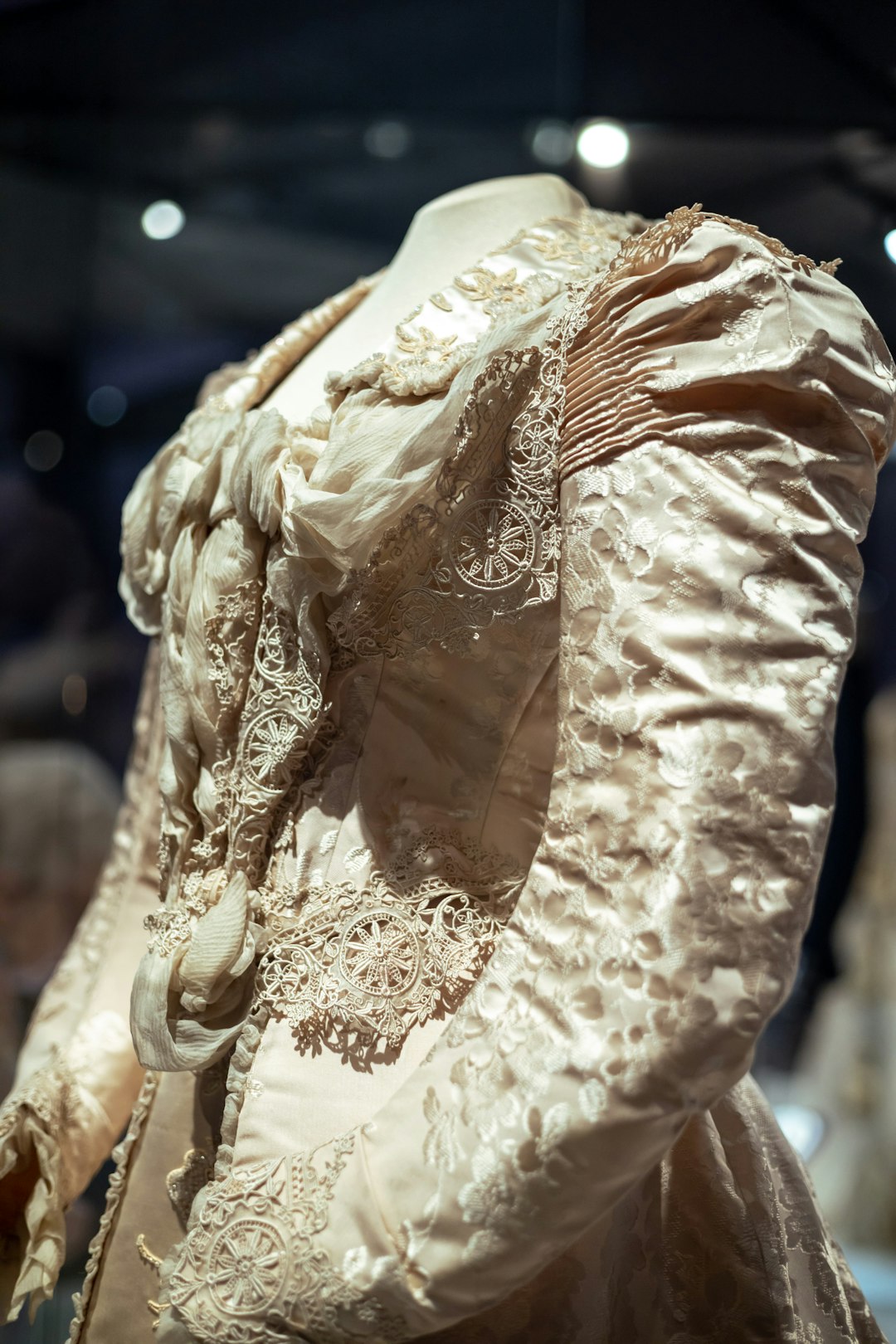
The Smithsonian Institution, in its collections of nineteenth-century women’s dress, highlights how advances in textile technology made certain luxury materials more attainable. Machine-made lace, for example, allowed brides to echo the elaborate lacework seen in aristocratic and royal weddings without the prohibitive cost of handmade bobbin lace. At the same time, high-quality silk satin and taffeta remained marks of status, with wealthier families commissioning custom-woven fabrics and extensive trains.
Construction techniques reflected the period’s emphasis on structure and silhouette. Wedding dresses were typically worn over corsets, petticoats, and, at various points in the century, crinolines or bustles. Seams were often boned for extra rigidity; bodices might be flat-lined with sturdy cotton or linen. Even delicate gowns were engineering feats. As the V&A has observed in multiple costume studies, Victorian dressmaking prioritized “control over the body’s appearance,” with wedding gowns among the most carefully constructed garments a woman would ever wear.
Silhouettes Through the Decades: 1840s to 1900
The phrase “Victorian wedding dress” can be misleading, as the fashion of 1840 looked very different from that of 1890. Across the six decades of Victoria’s reign, bridal silhouettes shifted dramatically. In the early 1840s, inspired by Queen Victoria’s own gown, wedding dresses typically featured fitted bodices, tight sleeves, and bell-shaped skirts supported by layers of starched petticoats. The waistline was slightly dropped, and bodices often had pointed fronts and modest boat or V-necklines.
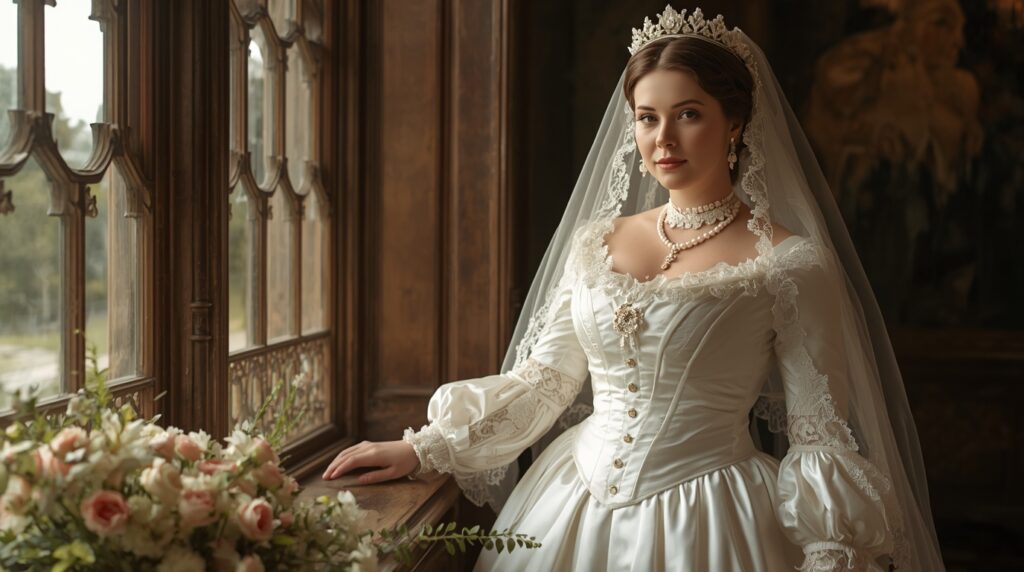
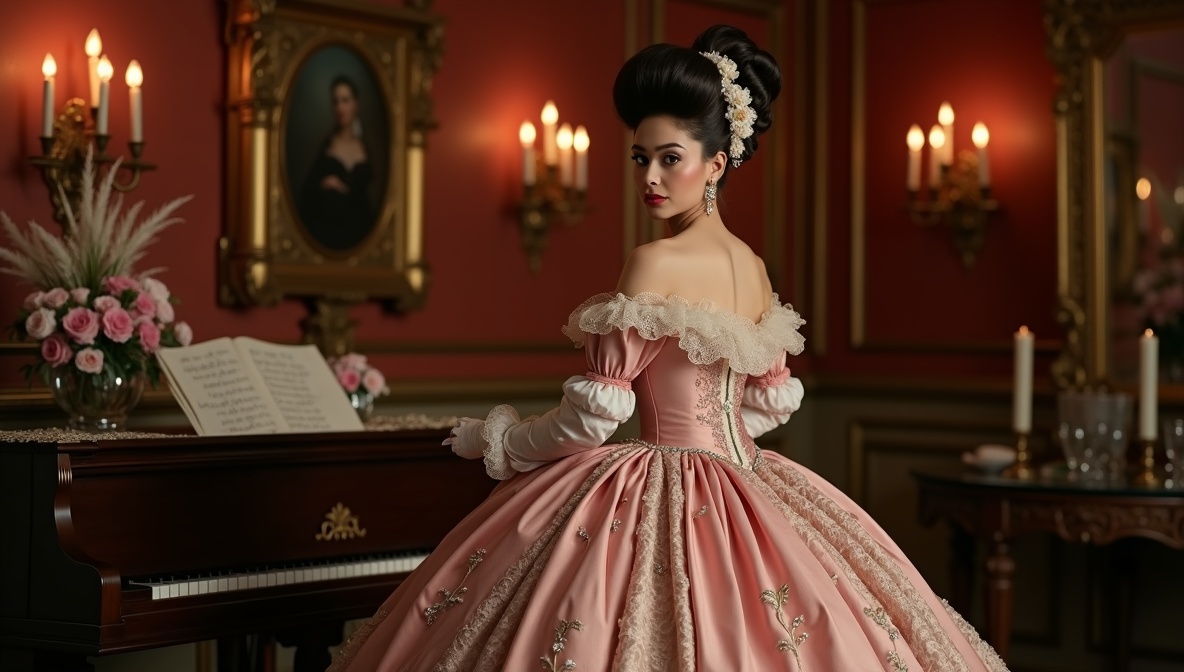
By the 1850s and early 1860s, the invention and spread of the steel cage crinoline transformed bridal silhouettes. Skirts grew dramatically wider, sometimes reaching extraordinary circumferences. The Metropolitan Museum’s Costume Institute showcases several mid-century wedding dresses with immense bell-shaped skirts, often trimmed with horizontal bands of lace or flounces. These gowns demanded space and spectacle, turning the bride into a moving architectural form. Bodices remained fitted, with narrow sleeves and often high, modest necklines for church ceremonies.
From the late 1860s onward, the skirt’s fullness migrated to the back with the bustle, then flattened again in the natural-form 1870s, only to return in pronounced bustle form in the mid-1880s. Each of these shifts affected wedding fashion. Brides of the 1870s might choose sleek, long-lined dresses with trains sweeping behind; those of the 1880s often wore sharply tailored bodices and prominent bustles, sometimes ornamented with bows and drapery. By the 1890s, sleeves ballooned into the famous “leg-of-mutton” shape, creating dramatic upper silhouettes even in relatively simple wedding gowns. The Louvre Museum’s fashion-related holdings, though more focused on French couture, demonstrate these broader European trends, which strongly influenced British and American bridal dress.
Color, Symbolism, and Reuse
Although white came to dominate, Victorian brides did not universally marry in pure white gowns. Shades of ivory, cream, and pale gold were common, and many brides—particularly outside the upper and middle classes—wore colored dresses they could reuse as best gowns afterward. Darker hues such as brown, plum, or navy were practical choices, better suited to repeated wear and less likely to show dirt. As The Met notes in its online essays on wedding costume, it was not unusual for a bride’s “wedding dress” to be the dress she wore for visiting or special occasions for years afterward.
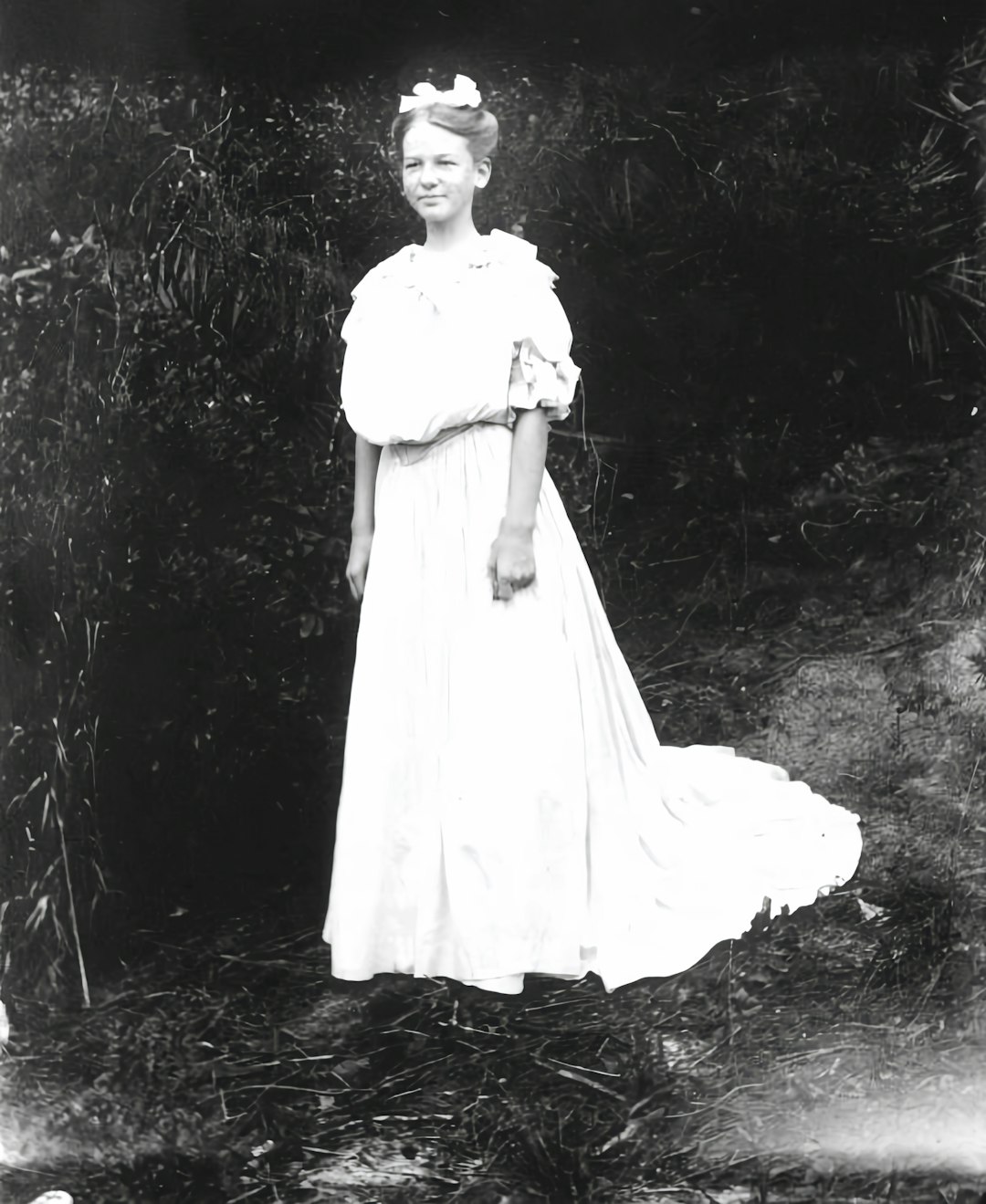
Symbolism, however, increasingly favored white and pale tones. Writers of the period linked white with purity, innocence, and virginity—values heavily emphasized in Victorian discourse on femininity. Manuals on etiquette and domestic management, as well as women’s magazines, advised white or very light-colored dresses for “respectable” church weddings. Orange blossoms, popularized by Queen Victoria, became the quintessential bridal flower, symbolizing fertility and eternal love; myrtle and rosemary also carried traditional meanings.
Even for wealthier brides who could afford a one-use gown, Victorian practicality occasionally prevailed. Some dresses were designed with removable trains or overskirts, allowing the main dress to be altered for later wear. Museums such as the V&A and the Smithsonian hold examples of wedding ensembles that were deliberately constructed for adaptation, illustrating the tension between a growing ideal of the “unique, once-in-a-lifetime” wedding dress and older habits of clothing economy.
Accessories, Veils, and the Bridal Ensemble
The Victorian wedding “look” extended far beyond the dress itself. Veils, wreaths, gloves, shoes, and jewelry all contributed to the bridal image. The veil in particular gained symbolic weight in this period, growing longer and more elaborate as the century progressed. Early Victorian veils were often made from fine lace or tulle and worn over a wreath of orange blossoms. By the second half of the century, floor-length or even cathedral-length veils were common in upper- and middle-class weddings.
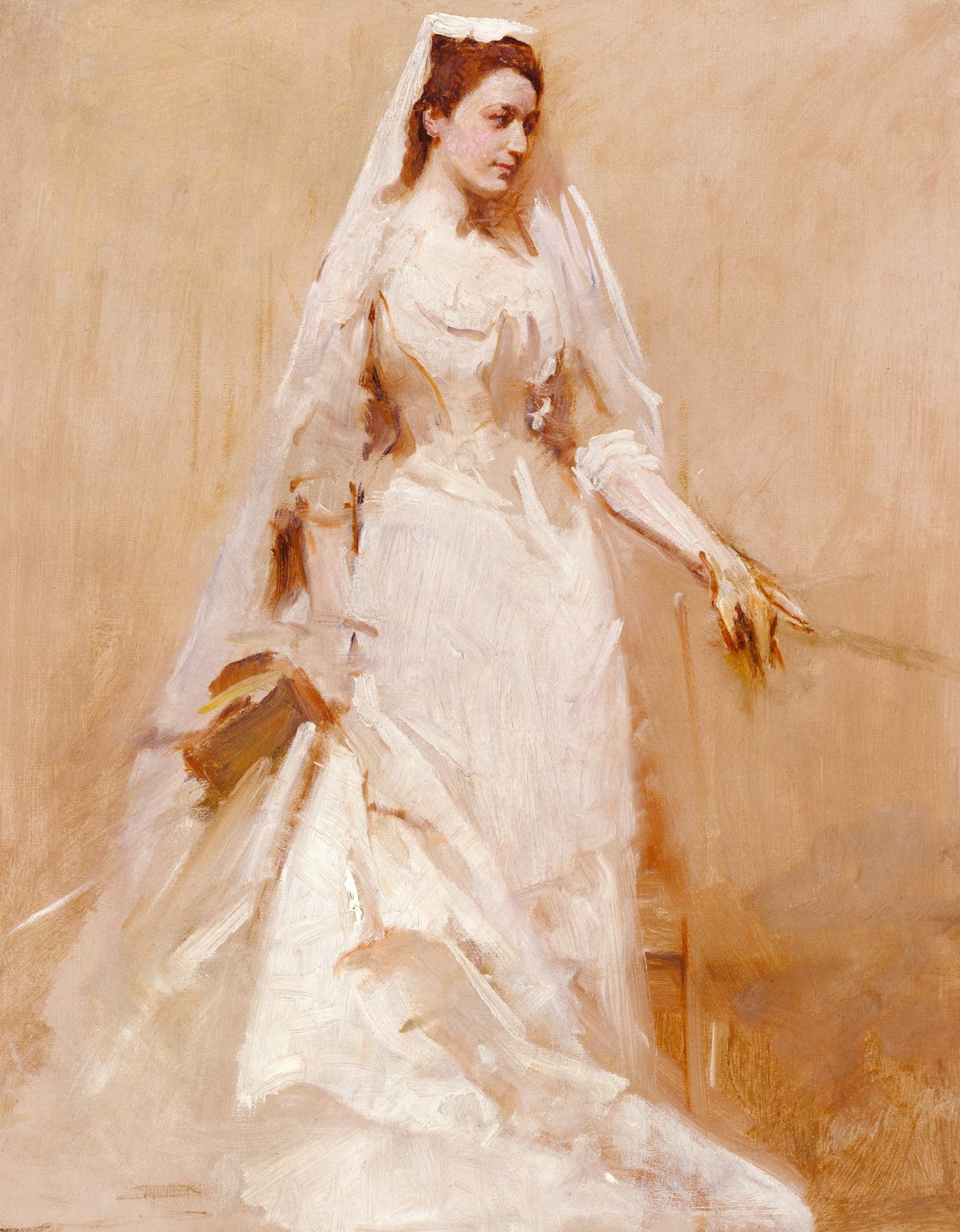
The Victoria and Albert Museum notes that “the veil, once a practical or regional custom, became a romantic emblem of modesty and mystery” in Victorian wedding iconography. In portraits and photographs, the veil could be arranged to conceal or reveal, framing the bride’s face or cascading dramatically from the head to the train. Gloves—usually white kid or cotton—were essential for respectability, and shoes were typically satin or leather, sometimes dyed to match the dress.
Jewelry was carefully controlled. Pearls, long associated with purity and tears, were popular bridal choices, as were modest brooches or lockets bearing family or sentimental significance. Lavish diamonds and colored gemstones were more likely in aristocratic circles or as wedding gifts. The Smithsonian’s jewelry collections include nineteenth-century bridal pieces that were designed specifically to complement white or ivory gowns, demonstrating how the entire ensemble was conceived as a coordinated aesthetic and symbolic whole.
Social Class, Geography, and Everyday Reality
Not every Victorian bride stepped into yards of silk and lace. Social class and geography profoundly shaped what “Victorian wedding dress” meant in practice. Urban middle-class brides in London, Paris, or New York might visit fashionable dressmakers, follow illustrated fashion magazines, and emulate royal and aristocratic models. Provincial or rural brides, and those from working-class backgrounds, often adapted current styles in simpler fabrics, or wore their best Sunday dresses, sometimes with a special bonnet or shawl to mark the occasion.

The Met and the Smithsonian both emphasize, in their digital exhibitions, the danger of generalizing from surviving garments, which tend to be the high-quality dresses that were preserved, photographed, and later donated. Everyday wedding wear—cotton or wool dresses, modest trimmings, and local styles—rarely survived in the same numbers. Yet parish records, diaries, and regional photographs from places like Yorkshire, Brittany, or New England confirm a wide variety of practices, from black or dark-colored wedding dresses in some Catholic regions to locally distinctive lace or headwear.
Institutional records from churches and town halls also reveal pragmatic choices. Many couples married in ordinary clothing, sometimes changing only a shawl, bonnet, or sash. For them, the symbolic weight of the wedding dress lay in its role as “best” clothing rather than in adherence to a specific color. Nonetheless, as the century progressed, the white dress ideal exerted growing cultural pressure, especially as global trade and print media spread British norms throughout the empire and beyond.
Key Characteristics of Victorian Wedding Dresses
| Feature | Typical Characteristics (c. 1840–1900) | Notes / Sources |
|---|---|---|
| Dominant Colors | White, ivory, cream; also pale pastels and practical dark tones | Popularized after Queen Victoria’s 1840 gown (V&A, The Met) |
| Fabrics | Silk satin, taffeta, brocade, lace, fine muslin, tulle | Industrial looms made fine fabrics more accessible (Smithsonian) |
| Silhouette (Early) | Bell-shaped skirts, fitted bodices, modest necklines, long sleeves | Supported by petticoats; 1840s–1850s (The Met) |
| Silhouette (Mid-Century) | Very wide skirts with cage crinolines | 1850s–early 1860s (V&A collections) |
| Silhouette (Late) | Bustled backs, then narrower skirts, leg-of-mutton sleeves | 1870s–1890s (Louvre and V&A fashion holdings) |
| Accessories | Veils, orange-blossom wreaths, gloves, modest jewelry | Veil becomes symbolic of modesty (V&A) |
| Construction | Hand-sewn; boned bodices; worn over corsets and structured undergarments | High degree of tailoring skill (Smithsonian, V&A) |
| Social Variation | Elite: custom couture; middle: dressmakers; working class: best dress | Not all brides wore white or one-use gowns (The Met, Smithsonian) |
Authoritative Perspectives and Sources
Curators and historians at major museums have emphasized the cultural weight of the Victorian wedding dress. As The Metropolitan Museum of Art notes in its Heilbrunn Timeline of Art History, “The white wedding dress became a powerful symbol of bourgeois morality and romantic idealism” by the late nineteenth century, an image reinforced through photography and print culture.
The Victoria and Albert Museum goes further, connecting the bridal gown to broader gender norms: “Nineteenth-century wedding dresses were not simply garments for a single day, but visual arguments for a particular model of womanhood—virtuous, domestic, and visibly dependent on male provision,” writes one of its costume curators in an essay on wedding fashion. This interpretive framework helps explain why the dress matters historically: it materializes values that might otherwise remain abstract.
The Smithsonian Institution and comparable collections underline the importance of looking beyond royal and aristocratic garments. Their documentation of everyday dresses—plain silks, wools, and cottons—reminds us that most Victorian brides negotiated between ideal and reality, mixing aspiration with pragmatism. Together, these institutions—along with European collections such as those in the Louvre and the Musée des Arts Décoratifs in Paris—provide the evidentiary backbone for our understanding of Victorian bridal fashion.
Frequently Asked Questions about Victorian Wedding Dresses
Did all Victorian brides wear white?
No. White and ivory became increasingly prestigious and common, especially after Queen Victoria’s 1840 wedding, but many brides wore colored dresses, often in practical browns, blues, or grays. These could be reused as “best” dresses after the wedding. Museums like The Met and the V&A hold numerous non-white bridal gowns from the era.
Were Victorian wedding dresses only worn once?
Only among the wealthiest families. Many middle- and working-class brides chose dresses that could be re-worn, sometimes with removable trains or trimmings. Some surviving gowns in the Smithsonian and V&A collections show evidence of later alterations, confirming their extended use beyond the wedding day.
How uncomfortable were Victorian wedding dresses?
Comfort was secondary to fashion and respectability. Corsets, heavy skirts, and multiple layers could be restrictive and hot, especially in crowded churches or summer weddings. However, women were accustomed to wearing structured clothing daily. Wedding gowns amplified existing norms rather than introducing entirely unfamiliar discomfort.
Did Victorian brides design their own dresses?
Some did, especially those with sewing skills, but many relied on dressmakers. Fashion plates and magazines served as guides, and dressmakers adapted popular designs to individual clients and budgets. Wealthy brides might commission gowns from leading London or Paris houses, some of whose work is now preserved in institutions like the V&A and the Louvre-related fashion collections.
Were veils always part of Victorian weddings?
Veils became increasingly standard for church weddings, but they were not universal. Some brides wore bonnets, floral wreaths, or simple head coverings instead. The white lace or tulle veil, as a romantic and symbolic accessory, was popularized through royal and aristocratic examples and spread via illustrated media.
Conclusion
Victorian wedding dresses were more than romantic costumes; they were crafted performances of identity in an era obsessed with morality, class, and progress. From Queen Victoria’s influential 1840 gown to the practical yet aspirational dresses of shopkeepers’ daughters and factory workers’ brides, these garments stitched together technology, symbolism, and social ambition. The collections of institutions like The Metropolitan Museum of Art, the Victoria and Albert Museum, the Louvre, and the Smithsonian allow us to read these dresses not just as fashion, but as evidence—tangible records of how an entire age imagined love, duty, and the ideal woman.
AI Notice: Some visual content in this article may have been created or enhanced using artificial intelligence (AI) for artistic, editorial or illustrative purposes. Learn more about our approach in our AI & Editorial Principles.