Victorian Working Class Clothing: Surprising Truths You’ve Never Seen
Grimy cobbled streets, the hiss of factory steam, and the press of bodies in a rapidly expanding city: in nineteenth‑century Britain, the Industrial Revolution did not merely transform work—it reshaped what people wore to survive it. Far from the silk gowns and tailored frock coats that fill period dramas, most Victorians were working class, and their clothing was defined by hard labour, tight budgets, and strict social expectations. To understand Victorian working‑class clothing is to see how industry, gender, poverty and respectability were woven—quite literally—into everyday life from Manchester mills to London docks and Glasgow shipyards.
Historical Context: Industrial Britain and the Cost of Clothing
Victorian working‑class dress cannot be understood outside the massive social upheavals of the nineteenth century. The early Victorian period (c. 1837–1860) saw explosive growth in industrial centres such as Manchester, Leeds and Birmingham, as well as in docklands like London’s East End and Liverpool. The later decades (1860–1901) brought cheaper mass‑produced textiles, new synthetic dyes and a growing second‑hand clothing trade, all of which filtered down into working‑class wardrobes. As the Victoria and Albert Museum notes of nineteenth‑century fashion, “industrialisation revolutionised not only how textiles were made, but who could afford them.” For the working poor, this meant a bit more access, but not escape from hardship.
Can You Name the Masterpiece?
Ten masterpieces. Ten questions. How well do you know the history of art?
Clothing for the masses of labourers, factory hands and domestic help was heavily influenced by the ruthless economics of poverty and exploitation. Even an average week’s wages for a labourer could be just enough to cover the cost of food and shelter, and not leave much for garments that had to be sturdy and resilient. As the Metropolitan Museum of Art writes, clothing was ‘a major household expense” in the nineteenth century, and garments were bought infrequently, worn until they could be patched and sewn and handed on until they became rags. A new coat or a pair of boots represented a hefty investment, and pawnshops in London, Leeds and Glasgow regularly held the country’s Sunday best as the penultimate form of security.
Meanwhile, there was enormous symbolic significance to how people dressed. Respectability, one of the defining Victorian virtues, was often seen of in one swift glance. For the working classes, this was an especially sharp dilemma: as the working poor could not afford standards of dress deemed fashionable, they had to try to look clean and broadly “respectable” in order to hold down jobs and be seen as “good” people and do so despite their clothes inevitably being ancient, worn, and patched. This contradiction was commented upon by social reformers writing for the Charity Organisation Society in London; and it has been described by the Smithsonian Institution, in its document on labour in the nineteenth-century
Fabrics, Colours and Construction: Built for Wear, Not for Show
Working‑class garments were primarily made from sturdy, affordable textiles. Wool, coarse linen and later cotton were the staples. In early Victorian decades, homespun and hand‑woven fabrics still appeared in rural communities, but urban workers increasingly wore machine‑woven cloth produced in the very mills that employed them. Heavy wool serge, fustian (a cotton‑and‑linen or cotton‑and‑wool blend) and stout calico provided durability. As the V&A’s textile collections illustrate, such fabrics were often rough to the touch and loosely dyed, making them prone to fading but relatively cheap to produce and buy.
Can You Guess the Artist?
Three clues. One artist. How quickly can you identify the painter?
It was directly linked to pragmatism and price. Dark colours (particularly browns, navy and black) were popular for everyday, as they masked dirt, could be worn through a greater range of laundry loads and recommended a modest respectability. Durable cheap dyes were not available until the midnineteenth century, when synthetic dyes entered mass production, so in the early part of the century brighter colours were only available in small accessories and perhaps Sunday bests invariably chemically dyed and prone to wash out or run, leaving a comparatively washed out range of tints in practice. As the Metropolitan Museum of Art noted in studies of ninetieth century dress, the drabness of surviving clothes “reflects both wear and the necessity of concealment of soil, rather than a lack of interest in colour”.

Fashions produced were sustainable because they were designed for longevity and ease of repair. Flatter seams, simple cuts, garments made for let out/take in or reheming. Working class women were experts when it came to repairs; needlework was a household skill for survival. It was not common for clothes to be abandoned. Men‘s trousers were patched at the knee or seat, women‘s dresses turned (reversed to hide signs of wear), and children‘s garments pieced together from worn fabric. Case studies and archival material from industrial towns in the British Library demonstrate that garments were being “re- fashioned” in the home long before sustainable fashion is suggested as a modern idea by today‘s fashion industry.
Men’s Working‑Class Clothing: From Factory Floor to Dockside
Men’s daily wear served different labour demands in mines, docks, factories and construction sites, but shared core features of durability and simplicity. In early Victorian decades, a labourer might wear coarse linen or cotton shirts, loose fustian or corduroy trousers, a wool waistcoat for warmth, and a short, boxy jacket or “slop” coat. Footwear often consisted of stout leather boots, if they could be afforded, or clogs in industrial districts of Lancashire and Yorkshire, where the wooden soles provided insulation and durability on wet, dirty streets. A flat cap, cloth hat or sometimes an old felt top hat cut down for work completed the ensemble.
By the mid to late Victorian era, factory produced, readymade clothing was becoming more accessible to those arriving at port towns and large industrial centers; sailors, dockers and labourers can buy offthepeg trousers, shirts and jackets from forinstance, tailors and ‘slop shops’ near the West India Docks area in London, or the Liverpool waterfront, up the river. As the contents and shop lists of the Victoria and Albert Museum show, these cheap, mass produced, ready to wear clothes were ‘reduced versions… Sack coats and waistcoats (without) the superfine wool or studies craft of…tailorings’; Dockers might wear the same worn frock coat on their day off and keep a ‘dungaree coat’ in their lockers for the factory floor.’ Grafting middleclass fashion even onto cheap, rough fabric, allows us to see just how much clothing was an overt signifier of social standing; even the option of shopping for it.
Occupations also dictated what men wore. Miners in South Wales or northern England generally wore shirts and baggy trousers in the tunnels where the conditions were hot and dirty; dock-workers in London and Glasgow favoured guernseys or knitted jerseys (much more flexible and fitted than the sock-like woollen jumper) for warmth and freedom of movement. Railway navvies and builders of the new architecture wore multiple layers of coarse woollen cloth to protect them from weather and terrain. Photographs and engravings from the period (some of which are now preserved and analysed by the Smithsonian Institution in their study of Victorian industrial work) capture the dirt and frayed edges and the lasting creases of the clothes they were wearing artifacts of the physicality of Victorian working life in every crease, fold and stain.
Women’s Working‑Class Clothing: Labour, Respectability and Constraint
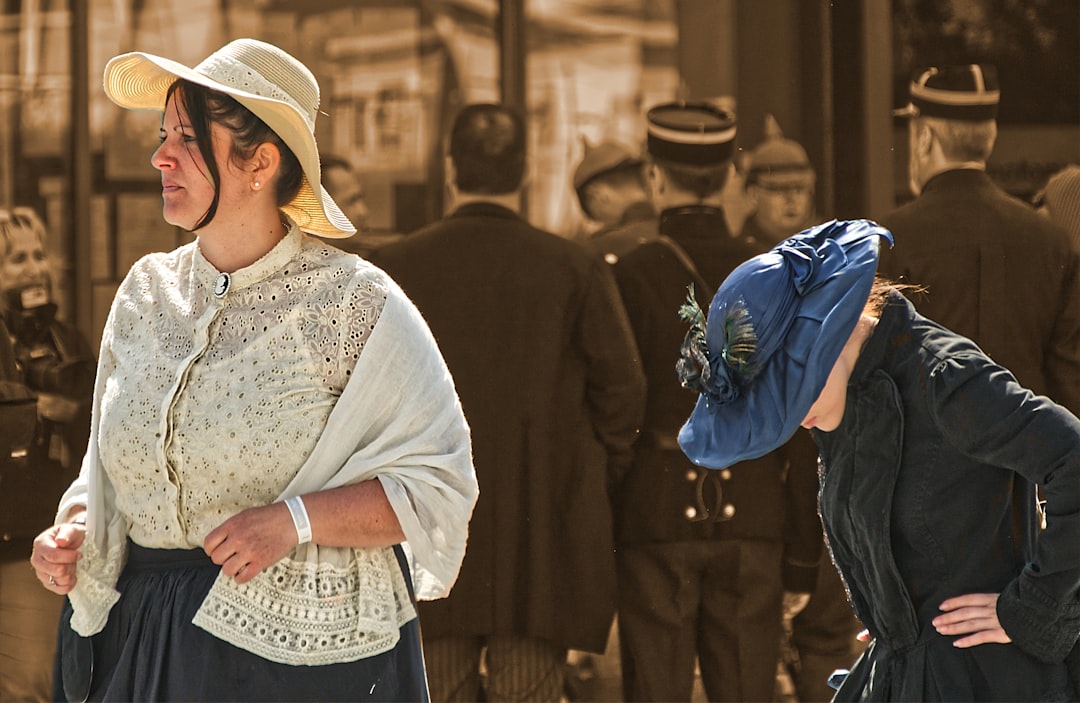
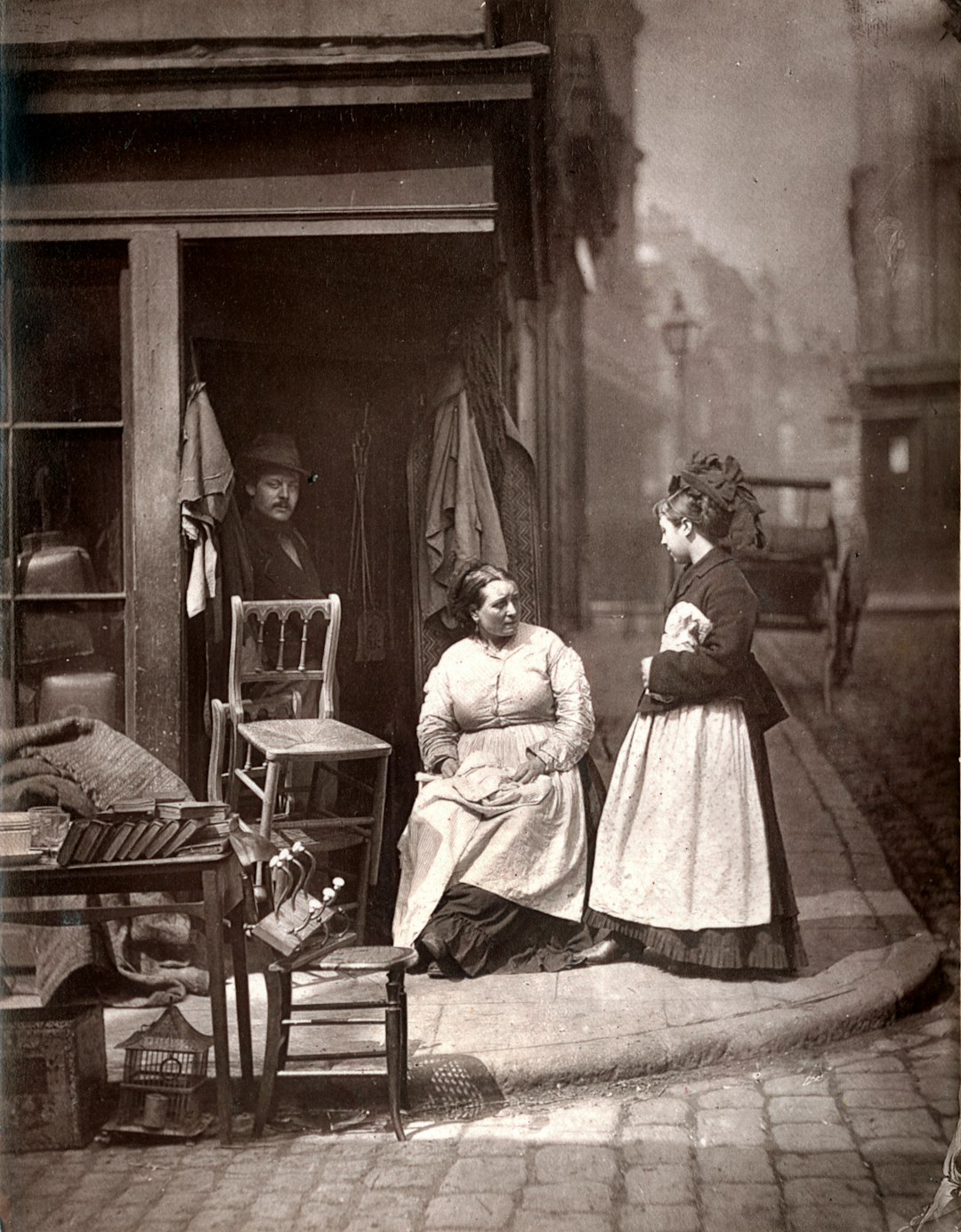
Working‑class women’s clothing had to accommodate a burdensome triple workload: paid employment, unpaid domestic labour, and childrearing. A typical outfit in an urban setting—say, a female factory worker in Manchester or a laundress in London’s East End—consisted of a simple bodice, a full skirt, petticoats for warmth and modesty, and an apron. The apron was crucial: it protected the dress beneath, could be changed more frequently than the main garment, and served as a multipurpose tool for carrying small items or even children. In cheaper materials and often pale colours, aprons visibly recorded the day’s labour in stains and patches.
However, despite modern images of corsets being predominantly a middle or upperclass thing many workingclass women would have certainly worn some kind of stays or boned bodice, particularly in early and midVictorian times. The stays these women wore could be less stiff and elaborate than those of upperclass women, being homemade or second hand, and the Metropolitan Museum of Art has suggested that working women could have uses for stays as a basic ‘support garment…giving back support in heavy work, not just in dogmatic displays.’ To be ‘decent’ though a woman, under any circumstances, had to be stiff and layerd and the idea of this becoming uncomfortable while working so hard may not have been taken into account.
Outerwear and shoes were both a material and symbolic problem. A shawl, woollen during winter and thinner for summer use, was more usual than a formal coat, as it was flexible, worn indoors as well as out, and easily passed along. The ‘Paisley shawl’ (after the pattern was designed in Kashimmir) was reproduced widely and reverse-imitated by working-class women who might purchase very cheap versions to simulate the highest fashion. Shoe wear spread from the boot to clogs to- in the depth of poverty- bare feet or application of the most makeshift boot. Writers and researchers such as Henry Mayhew, frequently employed as an authority in museum research, recorded London flower girls and hawkers in the 1850s wearing ‘shreds of boots’ or no shoes at all to reveal the discrepancy between the aspiration of proper clothing and the reality.
Children’s Clothing: Miniature Adults in a Harsh World
Victorian working‑class children were not simply “children” in the modern sense; they were often wage earners or unpaid helpers from a very young age, and their clothes reflected that. Both boys and girls wore garments repurposed from adult clothing: cut‑down trousers, shortened dresses, pieced‑together jackets. In early childhood, boys and girls were frequently dressed similarly in simple frocks or smocks, a practical choice for rapid growth and hand‑me‑down use. Only when boys reached school or work age (if they attended institutions like the emerging Board Schools after the 1870 Education Act) were they more clearly differentiated by trousers and shirts.
Factories, mines and street trades also knew the importance of having durable clothes that provided good even minimal protection. Child textile workers in Lancashire and Yorkshire commonly wore simple cottons which could be washed, often insensibly barefoot in the factory to avoid damage to machinery as the factory reports used by the Smithsonian to tell their story show. Chimney sweeps’ apprentices and street children in London as painted as characters by reformers and artists were also seen in illustrations in their patchy jackets miles too big for their tiny frames evidence of the second or thirdhand economy of clothes. In mining districts of Northumberland and South Wales children working underground quickly depleated what they already had and often had to make do with more.
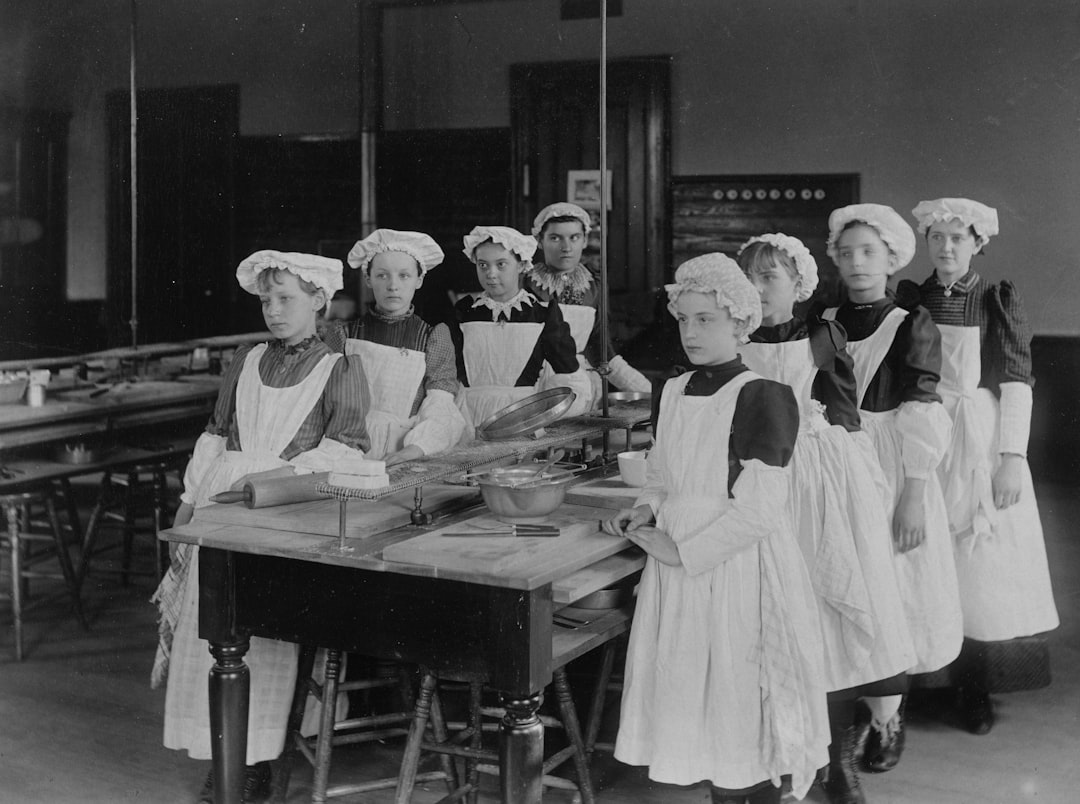
However, even among the poor, there were occasions where clothing denoted especially significant stages in life. Slightly smarter clothing be it a new one, or one bought from a second hand stall or pawnbroker was saved for wearing at church or confirmation; or for getting a good photograph taken. By the late Victorian period, when charitable organizations and Sunday schools were coming more into view, children had to look at the very least, neat and covered, at least some of the time. As evidenced by the Victoria and Albert Museum‘s collection of children‘s clothing, working families often only owned, or at least only used as Sunday best, a single item which could be patched and mended into use for several years.
Sources of Clothing: Second‑Hand, Charity and Self‑Provision
New, custom‑made garments were a rarity for most working‑class Victorians. Instead, clothing reached them through a complex web of second‑hand markets, pawnshops, charity, and home production. The second‑hand clothing trade was especially concentrated in large cities: London’s Rag Fair in Houndsditch, markets in Birmingham and Manchester, and similar districts in Glasgow and Liverpool. As the V&A notes, these markets distributed “cast‑off garments from the middle and upper classes” down the social ladder. Workers could buy a former gentleman’s frock coat or lady’s bodice cheaply, then adapt it to their needs, blurring visible class distinctions at a distance, but never erasing them in close inspection.
Pawnshops proved crucial for workingclass maintenance of clothing. A good pair of boots, coat and Sunday clothes might be pawned early in the week and redeemed on Saturday along with the wages, a pattern made vivid by social commentators and substantiated by police and parish records. Clothing was sometimes obtained through charitable sources: parish relief, workhouses (instituted under the 1834 Poor Law Amendment Act) and other nineteenthcentury foundations. Workhouse uniforms, of which many survive in museum collections, were deliberately dull and institutional: they de-individualised themarkwearer. These same sources (such as the Smithsonian Institution) have concluded that uniforms given out by poor relief often signified subservience and dependency.
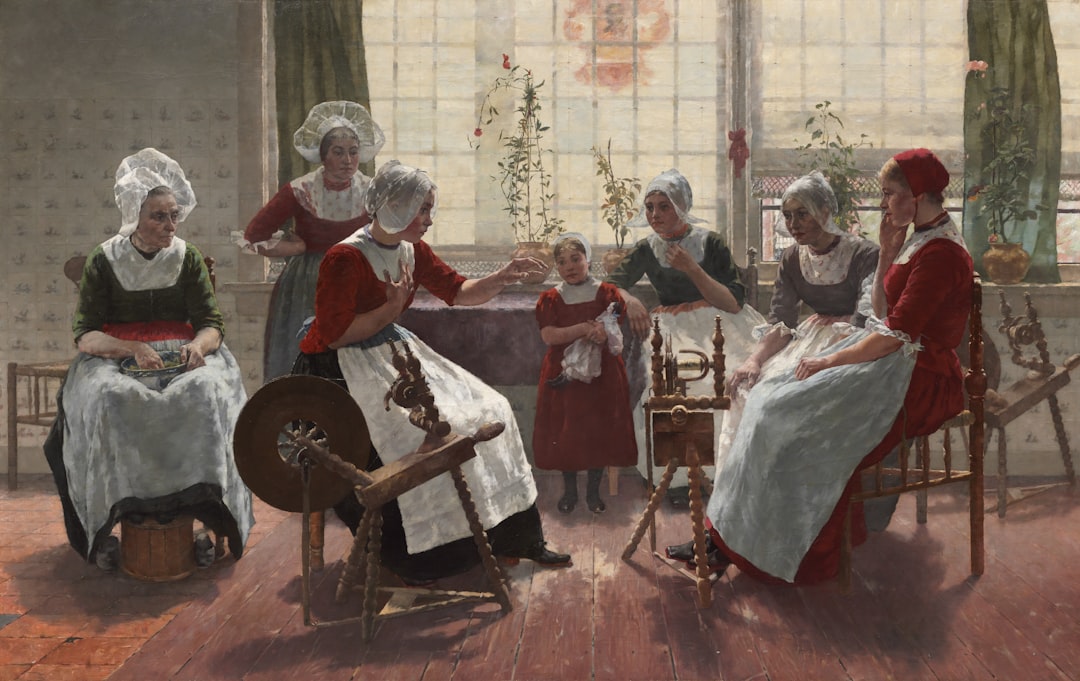
Self-provision was valued where possible. Many workingclass women in rural districts and small towns still spun, knitted and sewed for themselves or their families, using wool and cotton spun at home to fill out their store-bought shirts, socks, caps or pantalets. In the Welsh and Scottish highlands and much of Ireland, too, the practice of home weaving and knitting persisted into the last quarter of the nineteenth century. Although the Metropolitan Museum of Art pointed out that “domestic production coexisted with factory output” in their recent survey of European textiles from the sixteenth to early twentieth centuries, this intertwined economy meant that one purchase could reflect an array of historic traces, such as a handmade calico dress, a cozy shawl knitted at home and even, in the end, a secondhand man‘s waistcoat.
Summary Table: Key Features of Victorian Working‑Class Clothing
| Aspect | Men | Women | Children |
|---|---|---|---|
| Main fabrics | Wool, fustian, cotton, corduroy | Wool, cotton, calico, linsey‑woolsey | Adult cast‑offs in cotton, wool mixes |
| Typical work garments | Shirt, trousers, waistcoat, short coat, cap/hat | Bodice, skirt, petticoats, apron, shawl | Cut‑down dresses, trousers, smocks |
| Footwear | Leather boots, clogs, sometimes barefoot | Boots, clogs, sometimes barefoot | Often barefoot or in inherited shoes |
| Colour palette | Dark browns, navy, black, muted checks | Dark solids and small prints, stained aprons | Faded, mismatched, patched hues |
| Source of clothing | Second‑hand, slop shops, pawnshops | Second‑hand, home‑made, charity | Hand‑me‑downs, charity, cast‑offs |
| Sunday/“best” wear | Slightly better coat, cleaner shirt | Better dress, cleaner apron, shawl | Single neat outfit, often shared/saved |
| Maintenance | Patched and darned extensively | Constant mending, remaking, turning | Rapid alterations as children grew |
Authoritative Perspectives and Sources
Museums and historians have pieced together the reality of working‑class dress from surviving garments, paintings, photographs and written accounts. The Victoria and Albert Museum emphasises that “the vast majority of nineteenth‑century people did not wear the fashions depicted in fashion plates,” reminding us that elite images misrepresent everyday dress. The Metropolitan Museum of Art, through exhibitions like “Fashion in European Art, 1840–1914,” explores how artists captured labourers in simple, worn clothing that contrasts sharply with their more glamorous sitters.
Institutions outside Britain also provide valuable context. The Louvre Museum, in its collections of nineteenth‑century French painting, preserves scenes of workers and peasants whose clothing closely parallels that of British labourers: coarse fabrics, earth‑toned colours, and garments visibly marked by use. These visual records, though not British, help scholars understand the broader European working‑class aesthetic of the time. The Smithsonian Institution, meanwhile, has published numerous essays and digital resources on industrialisation, child labour and material culture, framing clothing as part of a broader story of technological change and social inequality.
Historians and curators consistently stress that surviving garments under‑represent the poorest. As one curator at the V&A has observed in commentary on their nineteenth‑century collections, “the clothes of the poor were worn until they fell to pieces,” meaning very little working‑class clothing was preserved. What we know, then, is reconstructed from fragments—literal and metaphorical. Yet those fragments tell a coherent story: Victorian working‑class clothing was tenacious, ingeniously adapted and profoundly shaped by economic constraint and social expectation.
Frequently Asked Questions
Did Victorian working‑class people follow fashion trends?
To a limited degree. They could not afford rapid changes, but they did adopt simplified versions of fashionable silhouettes as they filtered down through second‑hand markets and cheap ready‑mades. A woman’s skirt shape or a man’s jacket cut might echo middle‑class styles, but in coarser fabric and worn for many more years.
How often did working‑class people change or wash their clothes?
Far less frequently than middle‑ and upper‑class Victorians, largely due to the cost of soap, water access, and the labour involved. Underclothes and shirts might be changed weekly if possible; outer garments far less often. Laundresses, often working‑class women themselves, played a crucial role in urban laundry services.
Did all working‑class women wear corsets?
Not all, but many wore some supportive garment—stays, a boned bodice or a lightly boned corset—especially in the earlier Victorian decades and for public or Sunday wear. These were generally less restrictive than high‑fashion corsets and were sometimes valued for back support during manual labour.
Were children really sent to work in adult clothing?
Yes. Children commonly wore cut‑down or heavily altered adult garments. Trousers were shortened, dresses were taken in, and jackets were reshaped to fit smaller bodies. This practice maximised the use of every piece of cloth in a household.
Where can I see examples of Victorian working‑class clothing today?
Major collections include the Victoria and Albert Museum (London), the Metropolitan Museum of Art (New York), and the collections and digital archives of the Smithsonian Institution. Paintings and photographs in museums like the Louvre and the V&A also provide visual evidence of how such clothing was worn.
What Working-Class Men Actually Wore
Clothing for working-class men had to endure the rigours of physical labour but be presentable enough for the street, factory, public house, church or market. Hence the working-class wardrobe was fairly limited in number but versatile for different uses. Shirt, waistcoat, trouser, jacket, cap, boot and heavy outer coat could be interchanged according to the season and the nature of the job.
The lighter wool, cotton, and linen, and increasingly cheap, factory-made, blends were also popular among many industrial workers. A waistcoat could be a practical garment, as it kept the wearer warm without constraining their arms like a coat. Caps were common among town workers, although brimmed hats were more often an indicator of a person‘s occupation and social standing.
The line between work clothes and fine clothing could be sharp. A labourer might wear stained “dirties” and a grease or “tan dust” smirched shirt all week, save a blacker pair of trousers, a clean shirt and a polished pair of shoes for Sunday. This “Sunday best” was not merely to indulge vanity. Society such as this in which appearance affected employment, credit, social ties and standing to the extent it did could make fine clothing a tangible commodity.
Women’s Clothing: Practicality Beneath Layers
Working-class women also faced a much more complex challenge, as they were expected to undertake physically arduous work but still present a modern feminine image. Factory workers, laundresses, domestic servants, market sellers, seamstresses and working mothers had to have clothing that was both comfortable to move in, resilient to multiple washes and fairly concealing.
Normal working clothing probably consisted of a plain cotton or wool dress, blouses or bodices, an apron, shawl, some leg coverings, and practical shoes. Aprons were essential because they would catch off dirt that would otherwise dirty the main dress, and could be readily taken off when necessary.
In practice, then, the multiple components of Victorian women‘s dress might be more trouble than they were worth. A skirt could always be worn over a petticoat, and shawls and – if close to the fire – outer garments offered warmth to coldly-heated homes and workspaces. Nonetheless, the combination of layers necessitated large quantities of cloth, washing, and sheer effort. Especially for the poorer family, clothing particularly if constantly washed could take up a great deal of time as well as money.
AI Notice: Some visual content in this article may have been created or enhanced using artificial intelligence (AI) for artistic, editorial or illustrative purposes. Learn more about our approach in our AI & Editorial Principles.