
Victorian Corsets Are Back: The Dark History Behind the Trend
Few garments have stirred as much fascination, myth, and moral panic as the Victorian corset. To some, it symbolizes ruthless beauty standards and female oppression; to others, it represents skilled craftsmanship, bodily discipline, and even empowerment. Victorian women laced themselves into these structured garments every day, yet most of what we “know” about them comes from cartoons, scandalized doctors, and later feminist critiques—rather than from the garments themselves and the women who wore them. To understand the Victorian corset is to enter a world where fashion, medicine, industry, and gender politics were tightly interlaced.
The Victorian Corset in Historical Context
The corset predates Queen Victoria, but it was in the long 19th century (roughly 1837–1901) that it became a central symbol of womanhood in Western Europe and North America. Earlier “stays” of the 18th century focused on lifting and shaping the torso into a conical form; by the mid‑Victorian period, corsets had shifted toward emphasizing a narrow waist and rounded bust and hips. This change reflected broader Victorian ideals: a controlled, modest exterior covering powerful undercurrents of industrial and social change.
Can You Name the Masterpiece?
Ten masterpieces. Ten questions. How well do you know the history of art?
This was an era of unprecedented urban growth, and of a burgeoning global textile trade, with the centers of manufacture clustered in Manchester and other British cities, Part-Dieu and Lyon in France, and the mill towns of New England, like Lowell, Massachusetts. As a result, cotton textiles and metal eyelets, having made their way into production, had become cheaper and more accessible, and corsetry followed suit; as the Victoria and Albert Museum reminds us, 19th century corsets 19th century corsets “evolved with advances in textile technology and changing attitudes to health and the body.”
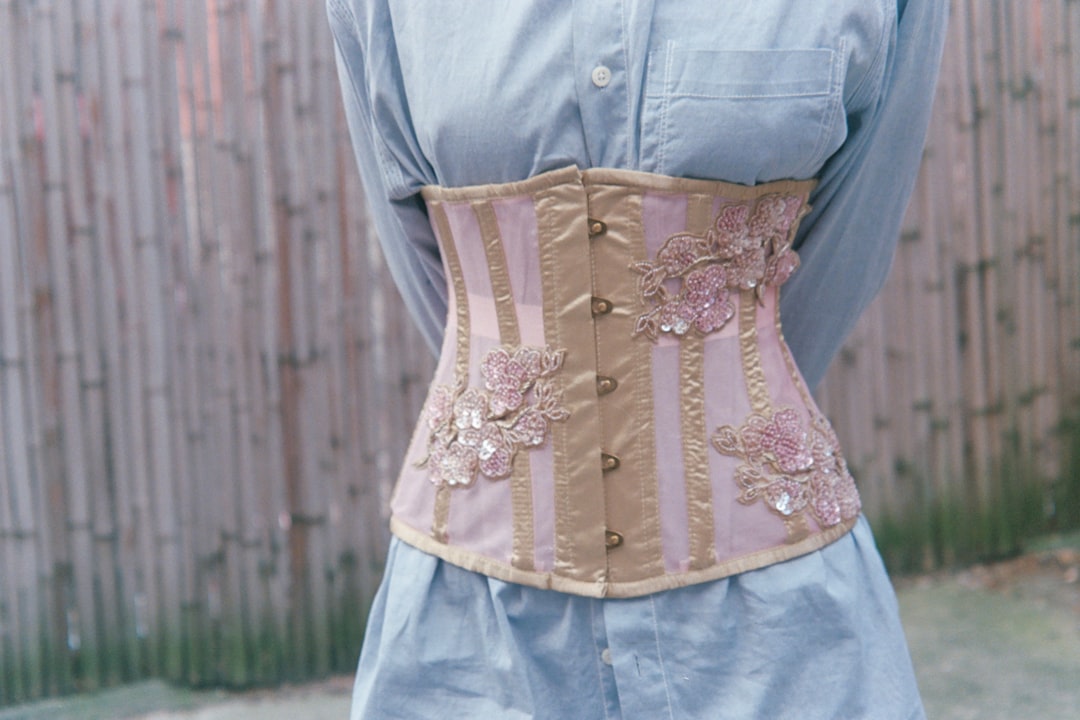
The Victorian corsets of each decade or period gave rise to different shapes of the body. During the 1840s and 1850s, the early Victorian corsets emulated an elongated, smooth line leaning toward a flat or lowered waistline and gained greater cinch as the century continued, with the late Victorian corset encouraging a broad, shapely Sbend shape until the shape moved toward the S-bend by the Edwardian era. It was the response to changing conception of modernity, morals, and posture in Britain, France, and the U. S.
Construction, Materials, and Craftsmanship
Technically, a Victorian corset is an engineering feat. Its structure relies on three key elements: the pattern, which shapes the body through curved seaming; the materials, which must be strong yet flexible; and the hardware, which allows the garment to be laced and fastened securely. A typical mid‑19th‑century corset combined tightly woven cotton coutil, whalebone or steel boning, a metal busk at the front, and grommets or hand‑worked eyelets at the back. The Metropolitan Museum of Art (The Met) highlights that such garments “marry function and decoration,” often incorporating quilting, cording, and embroidery into the supportive structure.
Can You Guess the Artist?
Three clues. One artist. How quickly can you identify the painter?
Baleen was the dominant stiffening material for much of the century, being obtained through the worldwide whaling industry from large ports such as New Bedford and Nantucket. With the development of steel manufacturing during the second half of the century speeded up by the growth of industrial cities such as Sheffield in England and the Ruhr in Germany flat and spiral steel stays started to displace baleen, providing a more-regular form of support. Alongside the mechanization of fashion, corsetry shops introduced sets of machines for cutting and boning, while large manufacturing firms supplied forward-looking department stores in London, Paris and New York with assembled, ready-made corsets.

However, with increased industrialization, a wellmaded corset still required a skilled hand. […] The Smithsonian Institution reports that 19 thcentury corsets, though mass-produced, were ‘carefully tailored garments.…a corset could be made to measure, and very often was’…seamstresses and corsetiers needed a detailed knowledge of anatomy, fabric behavior and the physics of lacing. Small pattern variations, one extra seam or slightly different curve could radically change the lace-up and the overall appearance. For the very top end of the market, Parisian and London houses dominated where personalisation was the norm, whereas within the more middle class the corset would have been more readily available off-the-peg and would have required home modification.
Corsets, Health, and Medical Debates
Victorian doctors, moralists, and dress reformers debated corsets intensely. Prolonged tight‑lacing—drawing the waist in by several inches—was condemned by many physicians, who linked it to everything from respiratory problems to organ displacement and “nervous disorders.” In 1874, the British Medical Journal published warnings about constrictive dress, and American reformers cited similar concerns. Yet these critiques often blurred the line between medically grounded observation and anxiety about women’s autonomy and sexuality.
Contemporary scholarship complicates the usual story of the corset made everyone unhealthy. The actual extant corsets in The Met, the Victoria and Albert and the Musee des Arts Decoratifs in Paris at least those accepted as authentic by the museums measure waists in more modest, though still small, ranges than the extraordinary ones depicted in cartoons and satirical prints, and far less extreme than the 9-inch waists that Dickens claimed. According to dress historian and designer Valerie Steele, “Most women did not tightlace to the point of deformity; they wore their corsets in ways that balanced fashion, comfort, and practicality.
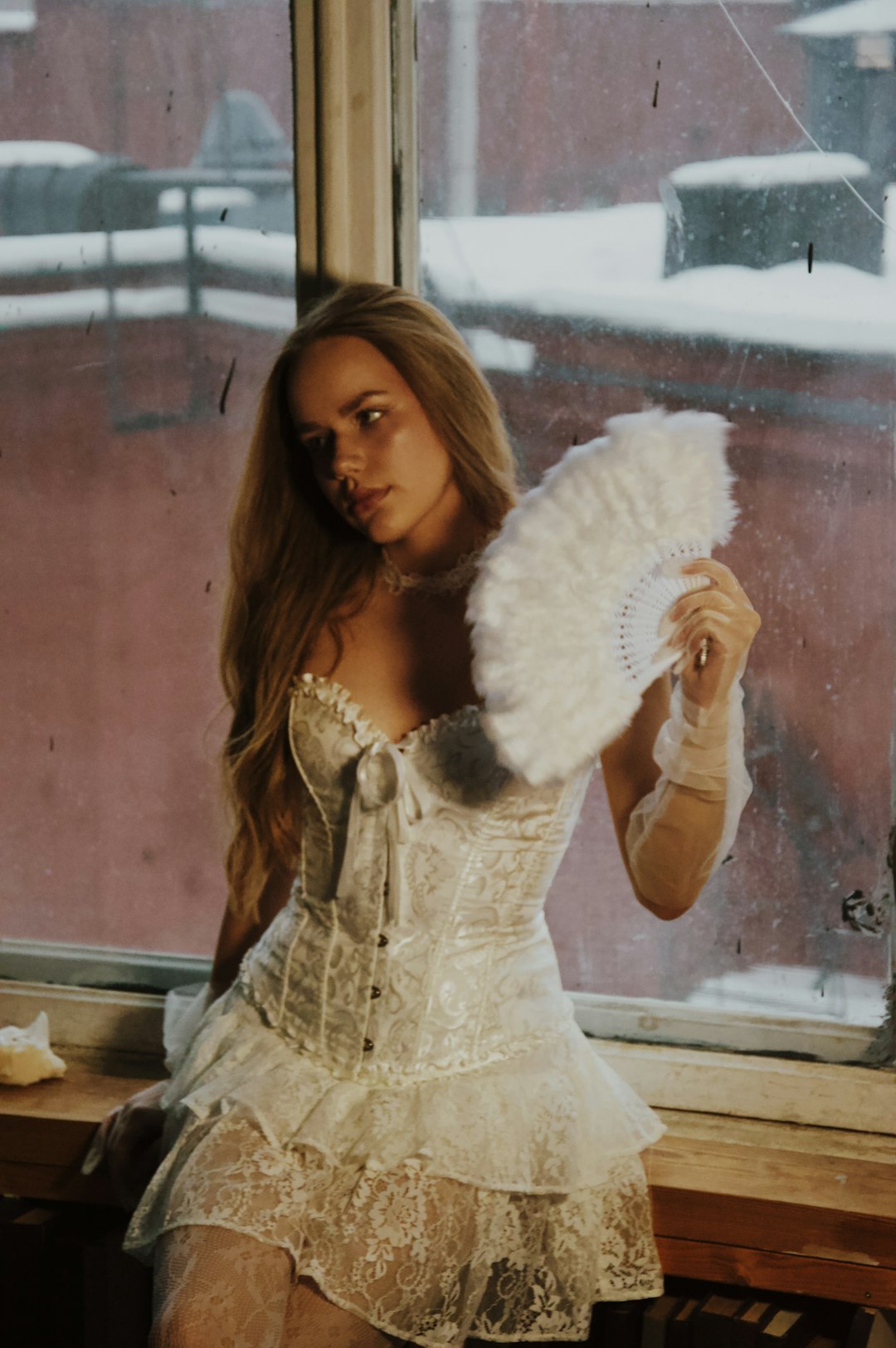
Yet a small number of women did seek extremely narrow waists and there is evidence to suggest that health problems did occur. Reports of autopsies taken from 19thcentury medical journals cited deformed ribs and shifted internal organs in a number of persistenttightlacers and the Smithsonian notes that on the whole, these instances were “statistically isolated,” but “outweighed in the discussion of medical as well as popular opinion.“Finally, the corsetiere-health debate was simultaneously a gender politics debate even references for looser corseting went hand-in-hand with redefinitions of women‘s role and appearance.
Social Class, Morality, and Daily Life
Corsets were deeply embedded in Victorian ideas of respectability and class. For middle‑ and upper‑class women in London, Paris, Berlin, or Boston, the corset was a marker of proper femininity—almost a prerequisite for appearing in polite society. A smooth, controlled silhouette signaled self-discipline and moral virtue. The Louvre Museum’s collections of 19th‑century portraiture show countless women from the French bourgeoisie and aristocracy posed with the poised bearing achievable only with structured foundation garments.
The experiences of working class women in corsets were more diverse. While many did wear corsets, they often chose shorter, more adaptable or made them less tightly laced when they were working in factories, domestic service or on the land. The clothes remaining at the Victoria and Albert Museum as part of the collections of adult clothing include “working corsets” examples of tougher cotton “with the minimal amount of detail” suggesting the emphasis was on support and durability rather than fashion. For going without a corset however could mark one out as impoverished, eccentric or sexually lax highlighting the complex social moral code that the item embodied.

Others dominated the day-to-day usage of corsets. Putting on the necessary underpinnings was a collaborative activity, often with a servant, sister, or mother helping the woman lace up, for example. The morning corset-ing mirror was also a site that cemented the authority of domestic hierarchies, particularly in large, urban homes such those in Belgravia in London or the 8th arrondissement in Paris. At the same time, the corset evoked a sense of reassurance or assurance; a mental comfort. Corsets were a stabilising constant without becoming indistinguishable from the sensual comfort they may have at times evoked; This dilemma-centric argument reflected, again, the conflicted attitudes to corsets found both in contemporary diaries and in the oral history interviews.
Innovation and the Path to Reform
By the late 19th century, the relationship between corsetry and modernity began to shift. New sports and physical culture movements encouraged women to take up cycling, tennis, and gymnastics, prompting demand for more flexible and health-conscious foundation garments. The introduction of the “health corset,” often lightly boned and cut to avoid pressing on the abdomen, reflected this change. Institutions such as the V&A hold examples of “ventilated” and “sports” corsets marketed explicitly as modern and scientific.
Dress reform in Britain, the United States, and some parts of Scandinavia put forward radical alternatives to the conventional corset. The Rational Dress Society in London (established 1881), for example, “proclaimed a holy war against… Any costume that deforms the figure, impedes the movements of the body, or in any way tends to injure the health.” Even many reformers did not overcome support in their own underwear. Reformists promoted softer, looser stays, reform bodices, or combinations that incorporated supportive gussets or co-ordinating drawers into the chemise or petticoat to be replaced by the 20th century brassiere.
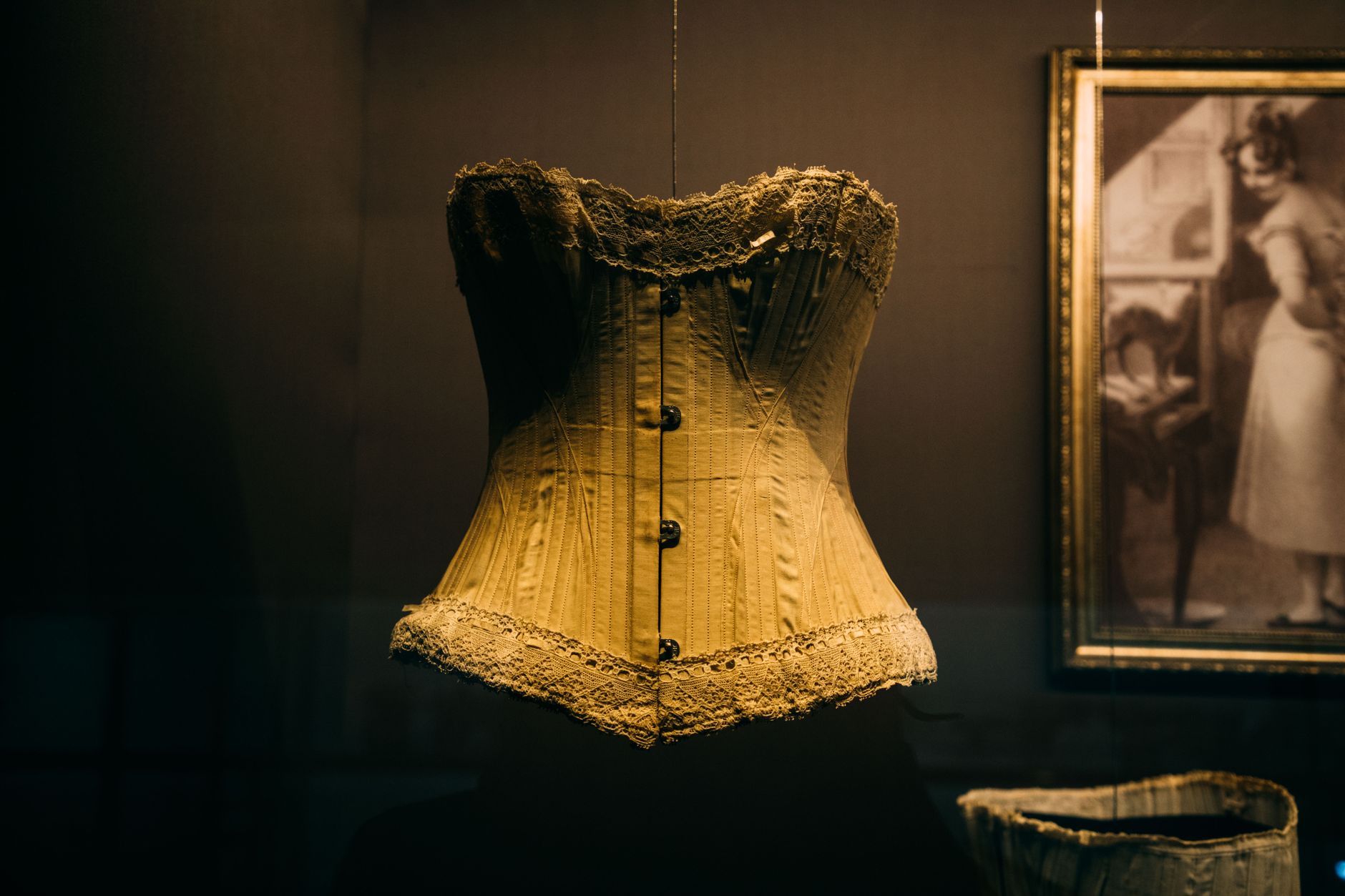
Mechanized advances also signaled the end for the corset. The emergence of elastic textiles in the late 19 th and early 20 th centuries permitted lighter and more comfortable clothing, a trend accelerated when the outbreak of the First World War meant a huge increase in women working (and working in a service capacity). Accordingly, as the Smithsonian points out, by the 1910s and 1920s many women in Europe and North America had moved to girdles and (by the 1920s) the first “bras”–“bringing the era of the corset as a nearly universal daily foundation garment to a close.
Key Characteristics of the Victorian Corset
| Feature | Typical Victorian Corset | Notes / Historical Context |
|---|---|---|
| Primary Period of Use | c. 1837–1901 | Aligned with the reign of Queen Victoria in the UK |
| Main Materials | Cotton coutil, linen, silk; baleen, then steel | Baleen phased out as steel boning and metal busks became cheaper |
| Silhouette Goal | Defined waist, smooth torso, uplifted bust | More hourglass than the conical 18th‑century stays |
| Construction | Multi‑panel seams, front busk, back lacing | Often 6–12 panels; spiral and flat steels used strategically |
| Social Usage | Widely worn across classes in Europe & N. America | Degree of tight‑lacing and decoration varied by class and activity |
| Health Debates | Significant medical and moral controversy | Extreme tight‑lacing rare but highly publicized |
| Regional Centers | London, Paris, Vienna, New York, Berlin | Major fashion and manufacturing hubs |
| Transition Out of Use | 1890s–1920s | Replaced by health corsets, girdles, and bras; accelerated post‑WWI |
Myths, Realities, and Modern Reassessment
Modern scholarship and museum collections have challenged many long‑standing myths about Victorian corsets. Not every woman fainted from tight‑lacing, nor did every corset force organs into grotesque positions. Close study of extant garments at The Met, the V&A, and the Smithsonian reveals substantial variation in size and stiffness. Many corsets are moderately shaped, pointing toward everyday comfort and practicality rather than theatrical extremes. As The Met notes in its costume collection notes, “Surviving corsets suggest a more nuanced reality than the caricatures of Victorian dress would imply.”
Yet at the same time, historians acknowledge that the corset was also, in the words of one historian, “one of the most effective instruments of social control ever devised.” It served to normalize standards for female appearance, posture and presence. Dressed in fashionable gear and corseted women needed hours, dollars, and a high degree of self-control to sustain that line a luxury that was easier for some women than others. Historians of gender and fashion note that late nineteenth-century criticism of women in corsets often became linked to campaigns for suffrage, education and labor interests for women, especially in Great Britain and the United States.
Modern corsetmakers and fashion designers, guided by historical research and surviving patterns, have also helped to revise the garment. Today, the corset is presented as both a place of constriction and inventiveness in museum shows at the V&A and the Louvre, with Valerie Steele quoting from a Smithsonian exhibition writing that “The corset was never simply a tool of oppression, but also a body technology… fashioned by and impacting upon women‘s lives in all kinds of complicated ways.”
Frequently Asked Questions
Were Victorian corsets really as tight as cartoons and films suggest?
Evidence from surviving garments and period photographs suggests that most women did not lace to extreme reductions. Fashion plates and satirical illustrations often exaggerated for effect. While some enthusiasts did pursue very small waists, these were a minority, and moderate lacing—2 to 3 inches reduction—was more typical.
Did corsets cause lasting health damage?
Extreme tight‑lacing could cause health problems, and some 19th‑century medical reports document rib and organ displacement. However, most women who wore corsets moderately likely experienced no more harm than wearers of later restrictive fashions (such as high heels). Modern historians urge distinguishing between sensationalized medical rhetoric and the everyday reality documented in museum collections and personal diaries.
Did working‑class women wear corsets?
Yes, many did, though styles and usage differed. Working‑class corsets were often shorter, more robust, and less heavily boned, enabling greater mobility. For some, a corset was also a prized possession and visible sign of respectability, particularly in rapidly industrializing cities like London, Manchester, and Chicago.
How were Victorian corsets cleaned and maintained?
Corsets were not machine‑washable. Women usually wore chemises or shifts underneath to protect them from sweat and body oils. Light surface cleaning, airing, and occasional spot washing extended a corset’s life. Wealthier women might own several corsets for different occasions—day, evening, sport—while others carefully maintained one or two.
When did the Victorian-style corset go out of fashion?
The transition was gradual. Health corsets and reform garments appeared in the late 19th century, and by the 1910s–1920s the rigid, heavily boned corset had largely given way to lighter girdles and bras. World War I, changing ideals of the female body, and advances in elastic textiles all contributed to this shift.
Where can I see authentic Victorian corsets today?
Major museum collections include: The Metropolitan Museum of Art (New York), the Victoria and Albert Museum (London), the Musée des Arts Décoratifs and the fashion collections associated with the Louvre (Paris), and the Smithsonian Institution’s National Museum of American History (Washington, D.C.). Many of these institutions offer digitized collections online.
Conclusion
The Victorian corset was neither a simple instrument of patriarchal tyranny nor a mere fashion frill. It was a carefully engineered garment shaped by industrialization, medical thought, social class, and shifting ideals of femininity across Europe and North America. Examined through surviving examples in institutions like The Met, the V&A, the Louvre-associated collections, and the Smithsonian, the corset emerges as a complex technology of the body—simultaneously restrictive and enabling, oppressive and desired. Understanding the Victorian corset in its full historical context helps untangle myth from reality and illuminates how deeply clothing can shape, and be shaped by, the societies that create it.
AI Notice: Some visual content in this article may have been created or enhanced using artificial intelligence (AI) for artistic, editorial or illustrative purposes. Learn more about our approach in our AI & Editorial Principles.