
Victorian Leather Gloves: The Dark Fashion Secret History Forgot
In the 19th century, a pair of leather gloves could speak louder than words. To the Victorian observer, they revealed class, morality, hygiene, gender expectations, and even emotional restraint—sometimes before their wearer uttered a single sentence. From the gas‑lit streets of London to the parlors of Boston and the boulevards of Paris, leather gloves were not merely practical accessories; they were an essential component of a complex social code. Today, surviving examples in major museums reveal remarkable craftsmanship and strict etiquette that governed how and when gloves were worn, carried, or removed.
The Social Significance of Victorian Leather Gloves
In Victorian Britain (1837–1901), gloves functioned as visible markers of respectability and class. To appear in public with bare hands—especially for middle- and upper‑class women—could be interpreted as careless or even indecent. The Victoria and Albert Museum (V&A) notes that “gloves were an indispensable item of dress for both men and women in the 19th century, essential in public and formal situations,” reflecting a broader culture of bodily control and modesty. Leather gloves, often more expensive than fabric ones, reinforced a wearer’s economic status through both quality of material and perfection of fit.
Can You Name the Masterpiece?
Ten masterpieces. Ten questions. How well do you know the history of art?
Gloves also acted as hygienic and moral barriers in an era preoccupied with cleanliness and propriety. In densely populated cities such as London, Paris, and New York, leather gloves protected the hands from dirt, soot, and direct contact with strangers. At the same time, they symbolized a kind of emotional and physical distance that Victorians often valued in public life. Historians of costume have pointed out that the gloved hand became synonymous with “civilized” touch, in contrast to unmediated bodily contact associated with labor or lower social standing.
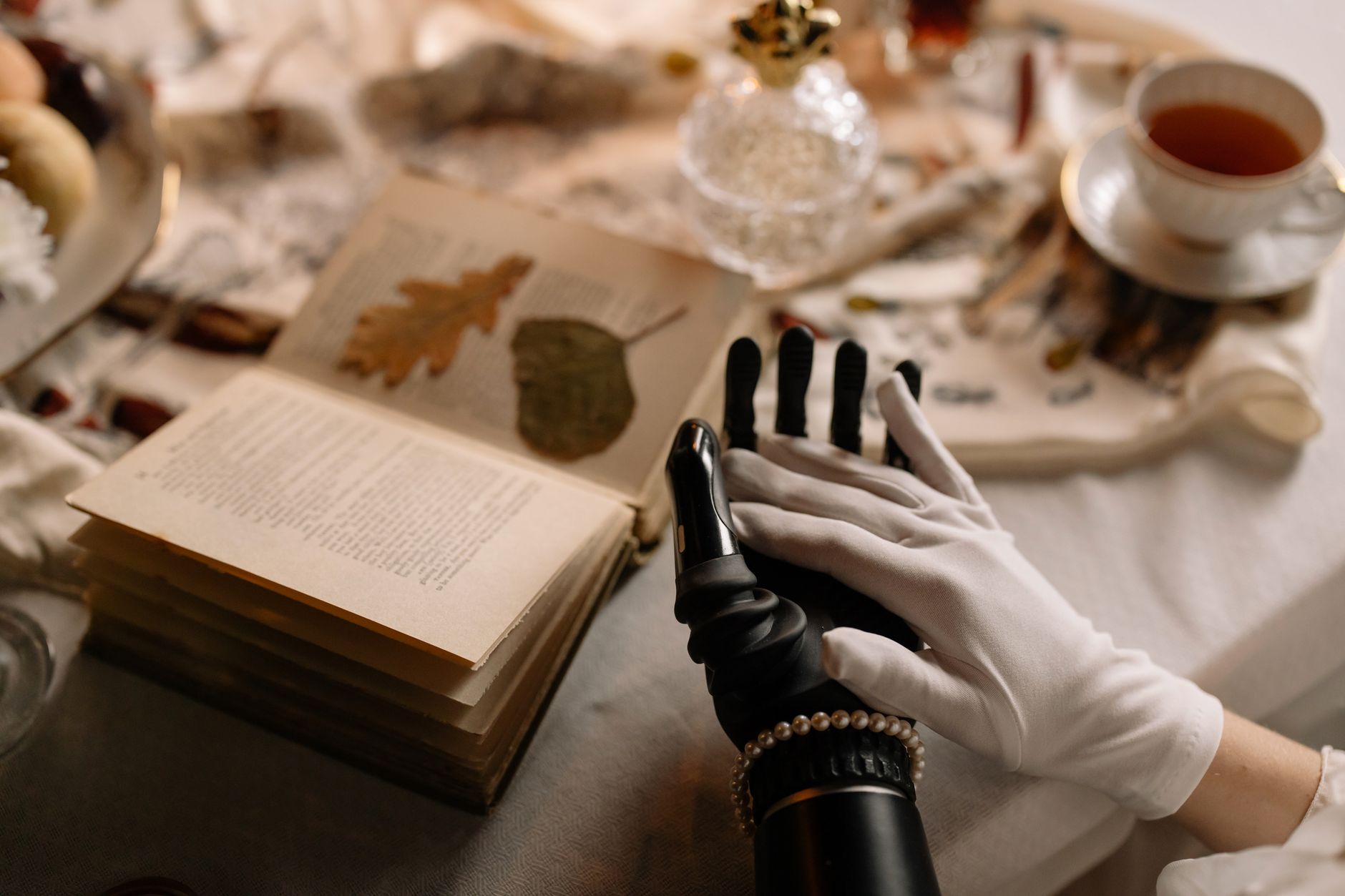
Widespread manuals of etiquette in Britain and America defined gloves. One at a ball could be worn while dancing; at a dinner party, the men might take off their gloves to eat, but the women might keep theirs on through most of the meal. Taking a glove in a specific circumstance (say, to hug a superior or an elderly relative) signified respect. In the domestic scene, barehands suggested familiarity informality, proximity; the slow removal of the leather gloves of a drawing room or coach implied for the savvy novelist something even more personal.
Materials and Craftsmanship: Inside the Victorian Glove Trade
The best Victorian leather gloves began with exceptionally fine skins. Kid leather—made from young goats—was prized for its softness, flexibility, and ability to mold perfectly to the wearer’s hand. The Metropolitan Museum of Art observes that 19th‑century European glove‑making reached “an extraordinary degree of technical refinement,” particularly in France, where workshops in Grenoble and Paris perfected ultrathin kidskin styles. Other leathers, including lamb, doeskin, and sometimes calf, were also used, especially for men’s everyday gloves or riding gloves requiring greater durability.
Can You Guess the Artist?
Three clues. One artist. How quickly can you identify the painter?
Though usually a profession in its own right, gloves and footwear cleaning and finishing was, like glove manufacturing, very skilled work. Tanneries in France, England, and Italy grew leather, tanned evenly with subtle dye lots, able to withstand multiple wears while remaining flexible. Seamstresses and glove cutters who often worked in separate small workshops worked hard to find matching grain and coloring and were skilled at cutting each glove correctly to pattern. Handsewn stitchings hidden by the glove on wear draped the glove neatly to the hand, tightening at the wrist edge and cupping the finger shapes. Some gloves were lined, often with silk or fine cotton, for extra warmth, but unlined, unpadded soft gloves, which clung to the hand, were popular for evening dress or formal wear.
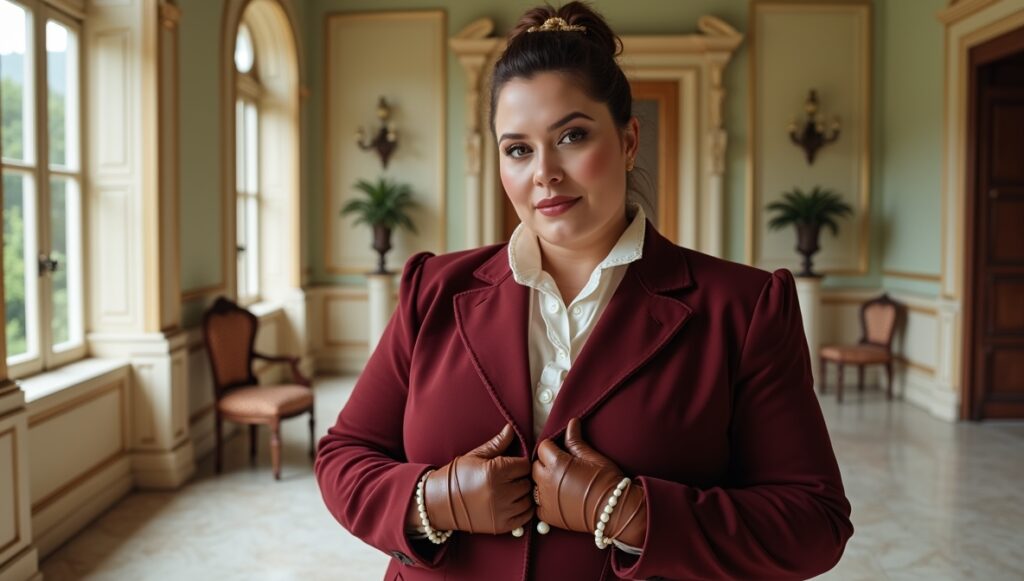
Decoration and finishing touches were also what set high-quality gloves apart. Embroidered backs, fine piping, tiny pearl or metal buttons, decorative slash openings at wrist or forearm level turned the glove into a fashionable statement as well as a tough barrier protection. The Smithsonian Institution‘s collection of 19th-century gloves (which include American gloves to reflect European influence) demonstrates this emphasis on all-over restraint, or adornment as luxury. As one example, a lady‘s cream-colored kidskin evening gloves could have an American-style high-vented long glove become almost flashy by the sheer perfection of cut and color.
Fashion and Function: How Victorians Wore Leather Gloves
Gloves in the Victorian era were intricately tied to changing fashion silhouettes. In the 1840s and 1850s, when women’s sleeves tended to be modestly sized, wrist‑length and slightly longer gloves were common for daywear. As sleeves expanded and crinolines dominated in the 1850s–1860s, gloves adapted in both length and decoration. By the late 19th century, with the emergence of highly structured bodices and, later, evening gowns with shorter sleeves, long opera‑length gloves became highly fashionable for formal events, reaching well past the elbow.
Apt though isolated from a history, not the ‘traditional’ intelligent men are seen to shoulder though from be to be/dirty, like most of ‘Vrs and ‘leather gloves in order to suffuse to be sounds and natures? bring our distannce? Said blow the object to be: they helps to be kknkar: leather gloves were used by gentleman in different occasion and different period. A Victorian gentleman; in London or Paris to put on a light kidskin gloves combined with a frock coat in order to be for a formal in urban. And on mountain road by their, for mobile in order to be or just for protect in gloomy day; lighter gloves fit to an urban in order to be, and strong gloves with a strong and tough material is fit to drive or horse-back. According to the Victoria and Albert Museum, that show a respective to be lack, such matching heaver gloves one‘s along with his inorder that be as edgily as they wears to be happy nowadays; and much importance be piled on the gloves than one cravat, and a gloves be the worship team of gentleman‘s wear and T shot them to be. Are! On right pictures and gouache pictures that be collected by Louvre Museum and other institutes; a well dressed be be always be bef under in order to be or hold the gloves by hand.

Gloves also had a distinct utility in a world of horses, carriages and early industrial engines. Driving gloves, with perhaps seams built up to be stronger and thicker leather, kept hands from straps and rain; while gauntlet style cuffs kept hacking gloves comfortable to the wrists beneathany bushes or low branches encountered. Even in the more refined circumstances of an afternoon spent walking around Hyde Park or the Bois de Boulogne, leather gloves could provide both comfortandclass.
Etiquette, Gender, and the Gloved Hand
Victorian glove etiquette was deeply gendered. For women, gloves were tied to notions of purity, modesty, and “ladylike” behavior. A well‑bred woman’s hands, often described in literature as “white” and “delicate,” were to be protected from sun, labor, and public scrutiny. Leather gloves helped preserve both the reality and the illusion of such hands. In public transit, at theaters, and in churches, a woman’s gloved hands signaled her adherence to social norms; to be gloveless could hint at financial hardship or moral laxity, depending on context.
But the etiquette for men‘s gloves was centered on respect, and self-control. A gentleman might take off his right glove to shake hands, in certain contexts–with a lady, or with someone of higher social rank–though etiquette guides differed country to country, decade to decade. Managing one‘s gloves with finesse was its own social art. It‘s not as though you could had a glove in your mouth or toss it into your pocket like you were a cowboy–that wouldn‘t be a refinement style to entertain fellow travelers. From a etiquette guide for the 19 thcentury, ”“The glove is the last conclusion to the condition of a man‘s dress.”
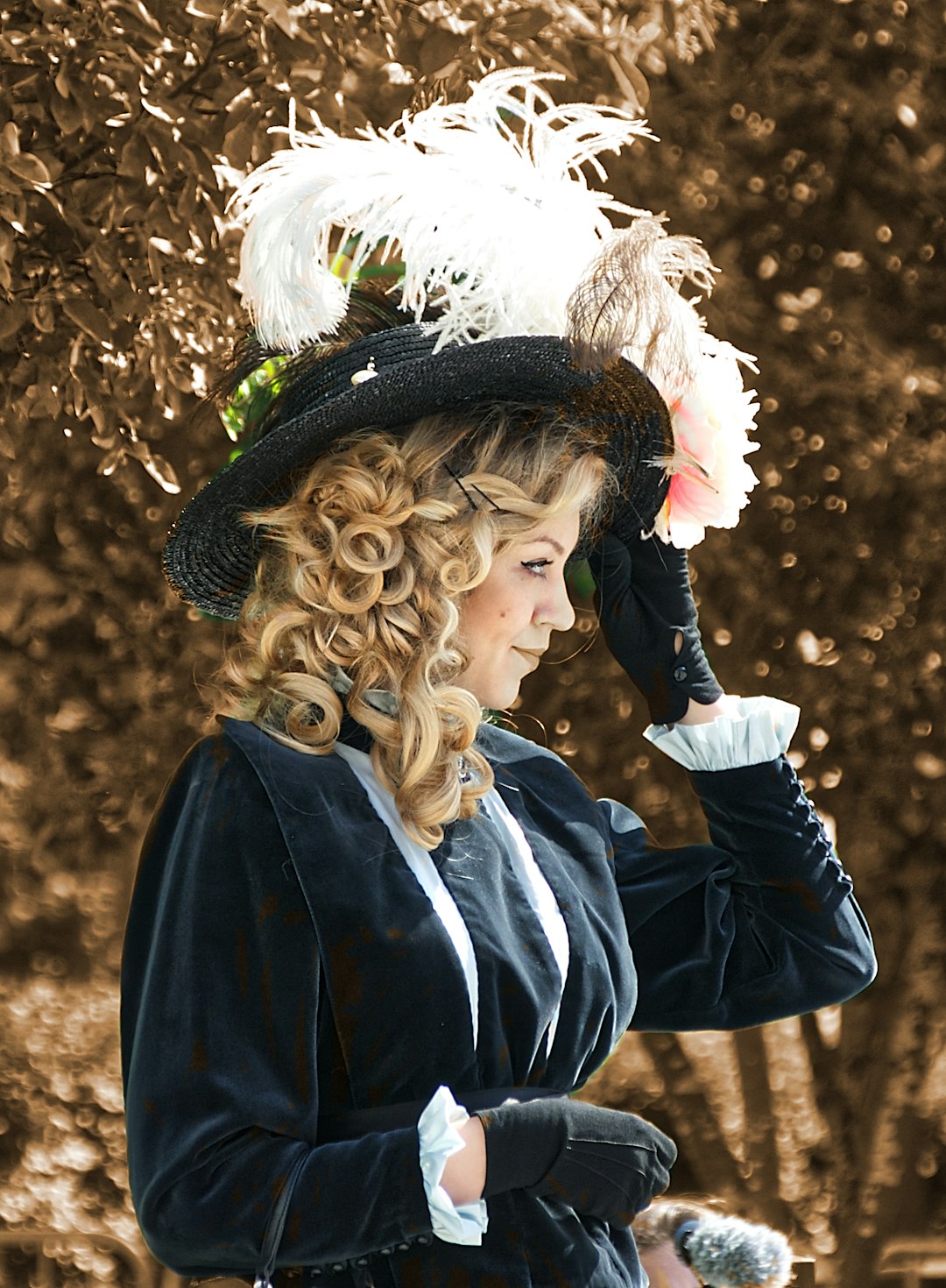
Like a gentle touch, a reminder, talking to a woman. We can conclude from nineteenth-century novels and correspondence that a raised and offered glove, a dropped glove retrieved, or a returned left-behind glove carried that extra flourish of meaning. As the Museum of Arts and design explains, “such objects sometimes had the meaning of signals of personal identity and sentiment.” In the Victorian era, giving a glove might convey a tender emotion or oath. An iconic image in literature or art was the unfastening and fastening of a leather glove on a lady‘s hand. The ungloved hand was a site of social and physical conversation.
Production, Trade, and the Global Market
Victorian glove culture was sustained by a vast and often invisible network of workers and trade routes. Centers of glove production such as Grenoble in France, Worcester in England, and parts of Italy and Germany supplied much of Europe and, via export, North America. By the mid‑19th century, French gloves were especially coveted; Parisian makers set international trends. The Louvre Museum’s collections and related scholarship on 19th‑century French dress emphasize the reputation of French glove‑makers for meticulous workmanship and fine leather.
The industry was also being transformed by industrialisation. Although at least the high end of gloves would mainly be stitched by hand for most of the century, cutting and some stitching was gradually becoming mechanized. The Smithsonian Institution‘s reports on the clothing industries of America in the late 19th century records the increased use of the sewing machine, and that gloves were being made to predetermined dimensions. This applied to the middle and lower end of the market; access to leather gloves was now open to a wider middleclass, although the very best kidskin pairs would still be expensive, with skins coming from the Isle of Goats in the Mediterranean and elsewhere to European tanneries.
The human toll of glove manufacture was nonetheless high. Tannery workers and glove finishers (which included many women and children) endured labouring conditions, as did glove making towns that felt the repercussions of the tanning industry in the form of chemical pollution, and the health hazards of the processes. Despite this, by the 1830s glove factories in cities like Worcester kept thousands in employment, and formed an integral part of the local economies. Together these situations gloves in the drawing rooms of the upper classes, and other gloves anonymously yet more labour-intensive ones in the poverty of the working-class present a crucial background to the refined world of Victorian glove culture.
Key Characteristics of Victorian Leather Gloves
Below is a summary of defining features commonly associated with Victorian leather gloves, distilled from museum collections and fashion history research.
| Characteristic | Typical Features | Notes / Sources |
|---|---|---|
| Primary materials | Kidskin, lambskin, doeskin, calf | Fine kidskin favored for formal wear; see V&A and Met collections |
| Common lengths | Wrist‑length (day); mid‑forearm; opera‑length (evening) | Length varied with sleeve styles and occasion |
| Typical colors | Light (cream, white, pale grey) for formal; darker for travel | Pale gloves signaled refinement; dark gloves practical for city and riding |
| Construction | Hand‑cut and mostly hand‑sewn; narrow fit; gusseted fingers | High craftsmanship noted by Metropolitan Museum and Smithsonian |
| Decoration | Subtle embroidery, stitching lines, small buttons, slits | Ornament restrained, emphasizing quality over ostentation |
| Gendered usage | Women: near‑constant in public; Men: matched to activity | Strongly encoded in etiquette manuals and period advice |
| Primary functions | Social signaling, hygiene, warmth, protection (driving/riding) | Blended practicality with strict social codes |
| Production centers | France (Grenoble, Paris), England (Worcester), Italy, Germany | Documented by European and American museum collections |
What Museums Reveal: Surviving Examples and Expert Views
Today, major museums preserve Victorian gloves that offer solid, material evidence for what written sources describe. The Victoria and Albert Museum in London holds an extensive collection of 19th‑century gloves. These range from simple, dark leather day gloves to elaborately long opera gloves, displaying the fine kidskin, neat seams, and subtle detailing characteristic of the period. Their catalog entries stress the importance of gloves as markers of “respectability and decorum” in Victorian society.
The Metropolitan Museum of Art in New York has numerous examples of gloves within its Costume Institute. Curatorial texts emphasize how gloves coordinated with gowns and suits, and how they changed in length and style between early‑Victorian, mid‑century crinoline fashions, and late‑Victorian bustle and sleeve styles. By examining stitching patterns, button types, and wear marks, conservators draw conclusions about how frequently particular gloves were used, by whom, and on what occasions.
Across the Atlantic, the Smithsonian Institution’s National Museum of American History documents how European trends were adopted, adapted, and eventually manufactured domestically for American wearers. Original 19th‑century trade catalogs and advertisements, preserved in Smithsonian archives, illustrate how leather gloves were marketed to middle‑class and affluent Americans. Meanwhile, the Louvre Museum and other major European collections contribute contextual paintings and portraits that visually confirm the near‑ubiquity of gloves among the well‑dressed classes of the era.
Frequently Asked Questions About Victorian Leather Gloves
Were Victorian people required by law to wear gloves?
No. Gloves were a matter of custom and etiquette, not legal obligation. However, in respectable middle‑ and upper‑class circles in Britain, France, and the United States, appearing gloveless in many public or formal settings was strongly discouraged and could harm one’s social reputation.
Did working‑class Victorians wear leather gloves?
Working‑class people did wear gloves, but usually for protection rather than fashion—thicker leathers or rougher materials for manual labor, driving, or cold weather. Fine kidskin fashion gloves, especially for women, were primarily the domain of the middle and upper classes due to cost and fragility.
Were men’s and women’s gloves made differently?
Both were made from similar leathers and with comparable techniques, but women’s gloves were often cut more narrowly and produced in longer lengths for evening wear. Men’s gloves tended to feature sturdier construction for riding, driving, and outdoor pursuits, with more subdued decoration.
How did people clean Victorian leather gloves?
Cleaning methods were limited. Pale leather gloves might be gently rubbed with specially prepared powders or carefully wiped; many were simply replaced once soiled. Because they stained easily, light‑colored kid gloves were partly a status symbol: the wearer could afford multiple pairs and minimal physical labor.
What is the difference between fabric and leather gloves in the Victorian era?
Fabric gloves (cotton, silk, net, or lace) were used, especially in warm weather and for certain fashions. Leather gloves, however, provided better structure, warmth, and durability. For formal and outdoor wear, leather was often preferred, with fabric gloves reserved for specific styles or climates.
Did Victorians ever go without gloves in private?
Yes. In domestic settings, at home among close family, or in tasks requiring dexterity, people often removed gloves. Ungloved hands in private could signal relaxation and intimacy. Etiquette pressures were strongest in public spaces and formal social gatherings.
When Victorian Gloves Had to Be Worn—and When They Had to Come Off
The Victorian glove protocol could also be quite specific.
Just having a pair of gloves was not enough. The wearer had to know when the gloves were correct, what pair to wear for the correct occasion and when to take them off politely.
Daytime gloves were normally different from those used in the evening. Outdoor gloves had to be robust enough to face the elements and the pressure of travel, while a formal pair was a matter of aesthetics, fit and color. A man may have worn gloves on a walk through the city, on the visit, in church or in a formal social event. Women had a similar choice, based on time of day, season, activity and occasion.
So the glove was acting as almost a piece of social grammar.
Gloves could be described as the accessory that could break an outfit if the individual‘s choice of gloves were not right and the rest of the outfit was up to date.
Sometimes though, to doff a glove was itself of some significance. When one shook hands, dined, danced, or entered the social sphere, social convention dictated whether or not gloves needed to be worn. Rules were not always universal and sometimes depended on the setting, and etiquette evolved throughout the nineteenth century, but the guiding ideology was unchanging: that the hand was to be contained, flaunted and overawed.
Victorians’ fondness of snug-fitting gloves.
This was not only a comfort. A well fitting glove
created a neat, refined shape of the hand. Too much leather could make the fingers look awkward, too little could be uncomfortable and difficult to remove.
Thus, skilled construction and detailed measurements resulted in high quality gloves.
Leather had to be chosen with care, cut with precision, stitched with accuracy, and shaped so that the final glove moved with the hand naturally. The most refined gloves might have carefully hidden details such as thin seams, beautiful seams, buttons, gussets or similar embellishments that were straightforward to put to good use.
Instead they ended up with an accessory which could appear deceptively simple.
A simple black or brown leather glove might represent significant work to an observer who did not know the craft was there.
Gloves in Portraits and Photographs
Gloves take on more significance in nineteenth century visual culture.
Victorian portraits often show people holding gloves, but not wearing them, perhaps this was to keep the detail from being overlooked.
A pair of gloves in hand can indicate elegance but also provide the viewer with the ability to see the sitter‘s attire, jewelry, cuffs or hand. With the exception of accessories in formal portraiture,9 they would rarely be mere coincidence.
Have gloves been used? They might also serve as context.
A lady with a pair of delicate gloves might be used to imply that she was of a fashionable and prominent standing in society. A gentleman with gloves might suggest that he was ready for the confines of the grand society. A woman in a photo could use objects to define her identity when clothes and the sitter‘s stance had been the overwhelming image.
The glove was in accordance both with the ‘vesture or presenting in a mode of costume’ and its utility as a device of social ranking.
AI Notice: Some visual content in this article may have been created or enhanced using artificial intelligence (AI) for artistic, editorial or illustrative purposes. Learn more about our approach in our AI & Editorial Principles.