A length of silk tulle cascading from a bride’s head to the floor might seem like pure romance—but in the Victorian era, a wedding veil was far more than decoration. It advertised class, piety, femininity, and even the reach of the British Empire, all in a single translucent garment. To understand the Victorian wedding veil is to understand an age obsessed with sentiment, morality, industrial progress, and visual spectacle. From the royal courts of London to middle‑class parlors in Manchester and New York, the veil became one of the defining symbols of 19th‑century marriage.
Origins of the Victorian Wedding Veil
The Victorian wedding veil did not appear out of nowhere in 1837 when Queen Victoria came to the throne. It drew on centuries of bridal veiling in Europe, from ancient Roman flammeum veils to the elaborate lace mantillas of Spain and the courtly veils of Regency England. Yet the Victorian period (1837–1901) transformed the veil from an occasional bridal accessory into an almost obligatory symbol of respectable matrimony. As the Victoria and Albert Museum notes in its collections of 19th‑century bridal costume, the wedding ceremony became an increasingly ceremonial and codified event, and the veil was central to that visual language.
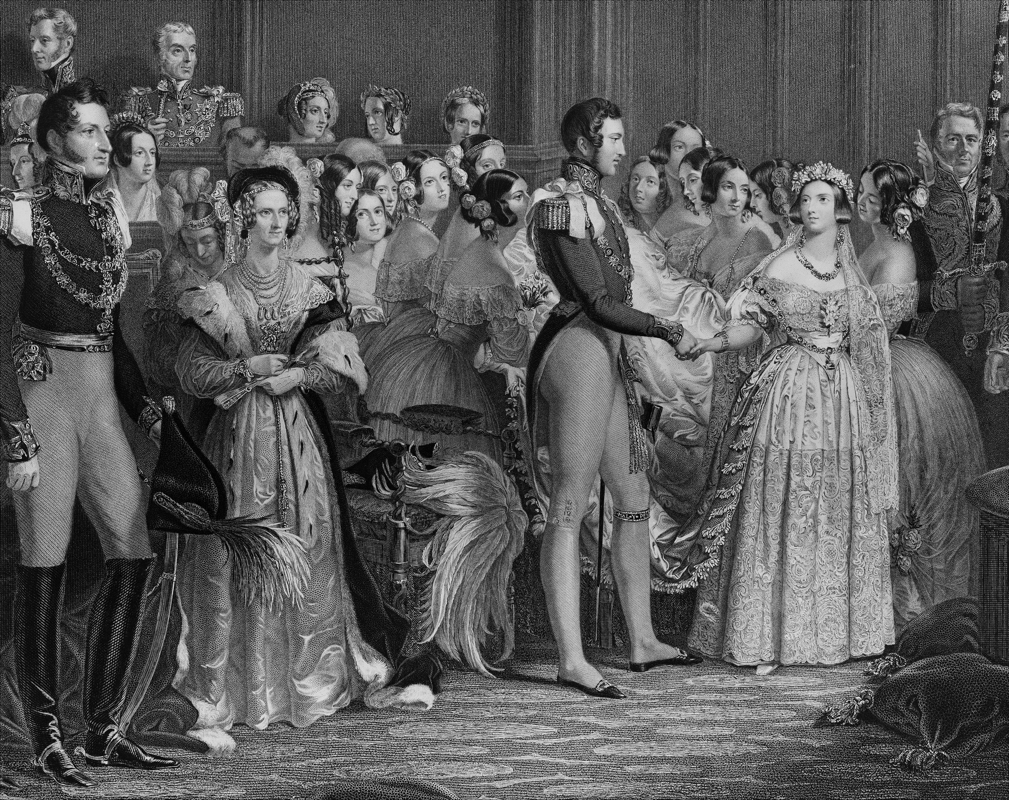
One defining moment came in 1840 when Victoria married the German Prince Albert. The bride herself chose a simple white Honiton lace veil, trailing from her hair, over face and shoulders. The Metmuseum (metmuseum.org) writes: Though uncomplicated by court standards (always given to excess), Victoria’s choice was revolutionary, introducing white (and veils) as symbols of death and restoration and aspirational ideal of bride purity, virtue, and respectability. Many other privileged young women, wealthy and middle class, though, emulated her, and bodies like the illustrators of the fashion magazines of the late 19th century paint the them as heavily veiled in white.

The craze for the veil was disseminated internationally through illustrated periodicals, fashion plates, and the proliferation of photographic portraiture. Middle-class brides in cities such as Paris, New York, and Boston copied the royal and aristocratic trends on a more affordable basis by replacing the costly lace with cheap tulle. By examining the Smithsonian Institution’s costume collections, one can see how quickly the myth traveled across the Atlantic; by the 1860s the bride wearing a veil was ubiquitous in American studio photographs of the period, indicating that the Victorian model bride had left Britain and had become globular.
Symbolism: Purity, Piety, and Property
For Victorians, the wedding veil was pregnant with meaning, which was generally well known without needing to be explicitly explained. In Victorian Protestant societywhite symbolized chastity and innocence I“it[ing] in whiteessence, a symbol of female virtue.“and the veil only heightened the effect, concealing both the hair and face (equal signs of female sexuality)and denoting “modesty, and the necessity of self-control.” Victorian etiquette manuals and sermons repeatedly called a bride whose head was coveredby the holy of holies a symbol of virtue; in the language of a 1870s Anglican sermon, “the white veil speaks to us of innocence and the hope of unsullied domestic life.”
Religious meaning was encoded in how “real” things were. As Dr. Thaving declared in English common law, “a wife is cover‘d” the term is powerful: before the marriage was complete she was “covered” by the groom‘s legal personage, enshrined beneath his coverture. The bride‘s physical act of being covered by her bridegroom‘s canopy of cloth created an intangible echo of this legal reality. The “married” woman‘s physical person gradually eclipsed her rights in the 1800s through the Married Women‘s Property Acts (mi)but this same signifier of woman‘s inseparability and wan protection endured. It is visually encoded in the paintings of nineteenthcentury French wedding scenes, including the wedding pictures of James Tissot show the overwhelming mass of clothdomed forms overshadowing and lightly informing such wedding pictures.

However, the veil was also a mark of wealth and status. The lace itself, the long trains, and the intricacy of the work required, were expensive and necessary signs of riches. In an extremely rigid class-conscious society, a richly-decorated veil demonstrated a family could organize a “decent” marriage and retain their daughter in the home, out of the workforce. As C. Willett Cunnington, author of one of the earliest guides to Victorian dress, states, “an overt display of delicacy in a woman shows that she belongs to a household which can afford to keep her out of the workshop.” The wedding veil, delicate and awkward, was the perfect emblem of this.
Materials, Design, and Craftsmanship
The materials and craftsmanship of Victorian wedding veils changed dramatically between the 1840s and the end of the century, mirroring broader shifts in industry, empire, and fashion. Early in the period, veils for wealthy brides were typically made from handmade lace—Honiton from Devon, Brussels lace from Belgium, or Chantilly lace from France—mounted on silk tulle or bobbinet. The Victoria and Albert Museum holds several mid‑19th‑century bridal veils showcasing delicate floral motifs, trails of orange blossoms, and dense scalloped borders, each pattern revealing regional traditions of lace‑making.
By mid-cenury, the effects of the Industrial Revolution and textile machinery had made a lighter-weight, more affordable net and tulle so widely available that middle-class brides could and indeed did appr up to the aristocrats. Although the Betons had the luxury, most of the veils at the Metropolitan Museum of Art, from the 1860s–1880s, are machine-embroidered with applied lace motifs and tambour embroidery that appear sumptuous on relatively inexpensive tulle. Indeed, this was one of the most notable features of Victorian consumer culture. Silk and lace, like porcelain dolls, were no longer exclusively aristocratic.

Designs were laden with symbolism and conventions. Ongs of real, wax or silk orange blossoms applied to the front of the headpiece where the veil was fastened symbolized fertility and the presumed virginity of the orange tree. The edges were often scalloped, frilled or plain cut, again varying with taste. Victorian veils earlier in the century, masked the face for the walk up the aisle and were lifted by the groom. By the 1890s magazine advertisements depict more veils worn tucked behind the head, highlighting the fashionable train back and elaborate coiffures. The many different styles of veil indicated a change in the fashion for the shape of the body and treatment of the veil in addition to questions of modesty, purity and the sacred as contrasted with cult and spectacle.
Table: Key Characteristics of Victorian Wedding Veils
| Feature | Early‑Mid Victorian (c. 1840–1870) | Late Victorian (c. 1870–1901) |
|---|---|---|
| Typical Length | Cathedral‑length, often longer than train | Chapel to cathedral‑length; more variety |
| Position on Head | High on crown; more likely to cover face | Further back on head; face‑covering less universal |
| Primary Materials | Handmade lace (Honiton, Brussels) on tulle | Machine‑made tulle/net with applied lace |
| Decoration Motifs | Orange blossoms, floral sprays, scallops | Floral, bows, sometimes geometric borders |
| Social Associations | Elite, royal imitation, moral respectability | Wider middle‑class adoption; fashion consciousness |
| Production | Artisan lace‑makers; slow, expensive | Industrial net; mixed hand and machine work |
Social Class, Empire, and the Global Veil
The Victorian wedding veil was not merely a personal garment; it was part of a wider system of global trade and imperial power. Raw materials for veils—silk, cotton, and sometimes imported dyes—moved along colonial trade routes linking Britain to India, China, and the wider world. As the Smithsonian Institution’s research on 19th‑century textiles notes, the expansion of British imperial markets helped drive down the cost of certain fibers and enabled higher volumes of production. While the lace itself might be made in Devon or Brussels, the threads often originated far beyond Europe.

At home, the veil signaled social status. In factory towns throughout England, Scotland, and the northeast states of America, working-class brides longed for the white dress and veil but often compromised by practicality and expense; renting from a dressmaker or photographer, borrowing from relatives, or downsizing to a shorter, plainer art-glass-cum-net that could be worn for church or black anything-else-necessitating to be worn in black to the funeral, the better to build the look…) For the middle classes, on the other hand, the picture was still of a complete outfit veil, train, gloves, and bouquet that would match the images of bride-success in popular magazines such as The Englishwoman‘s Domestic Magazine and Godey’s Lady’s Book.
Outside Britain and North America, the Victorian wedding veil combined with indigenous bridal customs in complex ways. [In colonial India], Britons adopted Anglican or Presbyterian rituals that culminated in the bride wearing white veils. Yet they persisted in residing in a society in which indigenous bridal attire, the pallu of the sari, for instance, or ghoonghat, were loaded with other meanings. Historian of empire have noted that for caricatures and free literature, European ideals like the veiled bride “found a perfect fit as metaphor for the ‘marriage’ of colonies to the imperial home”. In this sense, the Victorian bridal veil symbolized not only the personal and the domestic but also an emblematic signifier in the visual politics of the age.
Religious Practice and Ceremony
Victorian wedding veils were deeply embedded in Christian ritual practice, particularly within the Church of England and similar Protestant denominations. The Anglican Book of Common Prayer, of course, did not require the wearing of a veil, but its emphasis on solemnity and chastity, the sanctity of marriage itself, fostered an environment where veiling appeared fitting and was expected of the bride. Lavishly prepared church weddings in London, Edinburgh, and Dublin drew the eye to the bride by the stark contrast of her veiled appearance with the rest of the congregation in dark clothing.

In Catholic areas such as in France, Belgium and certain parts of Ireland the veil also acquired additional Marian connotations, underscoring the bride‘s humility and innocence, and revealing the hand of the Virgin Mary in her betrothal. As evidenced in the 19 th century genre and religious paintings at the Louvre Museum, where the bride enters or stands within at a church lit by only candles, the white of her veil sparkles and reflects depending in the light, thereby visually uniting them with their altarpieces and conveying the divine presence in her union.
The kinship of veil customs also changed. For instance, in some families the act of raising the veil was loaded with meanings, in the wedding implying the groom‘s endorsement of the bride or, in more patriarchal sensibilities, his “right” to her. In others, the veil was not raised until after the vows and blessings, emphasized that the bride‘s full “revelation” only took place within the context of a recognized marriage. By the late-Victorian years, as photographs of weddings became more common, the visual interests also had an impact: when photographers wanted a clear shot of the bride‘s face, some couples both kept the veil in place for the ceremony but arranged to have a different pose taken with the veil lifted or draped behind the bride‘s head.
From Victorian Era to Modern Bridal Fashion
The Victorian wedding veil’s influence did not end with Queen Victoria’s death in 1901. Many of the visual conventions established in the 19th century—white veils, trailing trains, orange blossom motifs—continued well into the 20th century and remain recognizable today. When Grace Kelly married Prince Rainier of Monaco in 1956 wearing a high‑necked lace gown and a tulle veil, fashion historians immediately noted the Victorian echoes. The Met’s Costume Institute, in its exhibitions on bridal fashion, has repeatedly drawn a line from Queen Victoria’s 1840 ensemble to modern royal and celebrity weddings.
Meanwhile, more contemporary brides are reshaping the Victorian veil in response to new attitudes toward gender, independence, and self-identity. Some forego the face covering entirely, refusing to participate in the Victorian act of transfer and the “unveiling” by the groom. Others simply choose modest short birdcage veils or a subtle swathe of tulle or lace that echoes older conventions without the constraints of 19th-century standards of modesty. When vintage-themed or heirloom weddings are in order, authentic Victorian veils from personal relatives or museum archives, or ritually accurate copies, can bridge bride and century.
Curators from the Victoria and Albert Museum and the Smithsonian suggest an extremely delicate approach to preserving Victorian veils: “delicate layers of fine tulle and lace deteriorate through age” and some original all-too-wearable pieces are in too fragile a state to be worn again. New versions are often reproduced in polyester/nylon tulle, maintaining Victorian motifs with contemporary material. By navigating through this fragile balance between authentic Victorian ideals and modern valuations, the Victorian veil has evolved from a mandate ofpath to a consciously aesthetic androgynous object of historical andart appreciation.
Frequently Asked Questions about Victorian Wedding Veils
1. Did all Victorian brides wear white veils?
No. While white veils became increasingly common after Queen Victoria’s 1840 wedding, not all brides could afford or chose them. Some wore colored dresses with matching or contrasting veils, especially in the early Victorian years. Others, particularly in working‑class communities, wore their “best dress” in dark silk or wool with a small bonnet veil, or no veil at all. The white‑veiled bride was a powerful ideal, but it was not universal in practice.
2. Were Victorian wedding veils always floor‑length?
Many fashion‑forward or elite brides favored cathedral‑length veils that extended beyond the train, but shorter styles existed throughout the period. Shoulder‑length or waist‑length veils were practical options, especially for smaller churches or modest homes. By the late 19th century, as skirt silhouettes slimmed and trains shortened, veils also varied more, with some brides choosing moderate lengths that could be reused for other formal occasions.
3. What happened to a Victorian bride’s veil after the wedding?
For wealthier families, the veil might be carefully stored as an heirloom, sometimes repurposed for christening gowns or veils, linking marriage and baptism in a chain of family ritual. Middle‑class brides might reuse elements of the veil in evening wear, or carefully unpick lace trims to adorn blouses and accessories. Some rental veils circulated through dressmakers and photographers. Surviving examples in museums come largely from families who preserved them, and from high‑status weddings whose garments were recognized as historically significant.
4. How do we know so much about Victorian veils?
Our knowledge comes from a combination of surviving garments, fashion plates, photographs, paintings, and written sources like etiquette manuals and personal letters. Institutions such as The Metropolitan Museum of Art, the Victoria and Albert Museum, the Louvre Museum, and the Smithsonian Institution preserve and study these artifacts. Curators and fashion historians analyze stitching techniques, fabric types, and patterns, and cross‑reference them with dated imagery and documents to reconstruct how veils were made, worn, and understood.
Conclusion
The Victorian wedding veil was a small, delicate object that carried an extraordinary weight of meaning. It embodied ideas about purity, gender, class, religion, and empire that defined the 19th century, and it helped create the visual template for the modern Western wedding. Examined up close—in a museum case in London, Paris, New York, or Washington—it reveals astonishing craftsmanship and global trade networks hidden in every thread. Examined in context, it shows how a seemingly simple piece of tulle could crystallize an entire society’s hopes, anxieties, and ideals about love and marriage.
AI Notice: Some visual content in this article may have been created or enhanced using artificial intelligence (AI) for artistic, editorial or illustrative purposes. Learn more about our approach in our AI & Editorial Principles.