
The Baroque era’s sound-world—its suspensions and sudden cadences, its emblematic dances and rhetorical laments—has long been narrated through a narrow canon of names. Yet the archives themselves, when read as carefully as one reads a cabinet of marquetry or a gilt-bronze mount, repeatedly disclose women who composed, performed, taught, and managed musical institutions. Their survival is often partial: a set of partbooks without a full score, a dedication leaf detached from its binding, a single printed opus preserved because it entered a convent library and was never “weeded.” To write about these composers with seriousness requires the same habits demanded by the decorative arts: attention to materials, provenance, workshop practice, condition, and the interpretive frameworks that turn objects—here, musical sources—into history.
The phrase ‘lost in the archives’, then, is not merely a figure of speech. It speaks to the reality of most women‘s work contained in composite volumes, miscatalogued, dispersed and lost to antiquarian sale; and to antiquarians who understand that research visibility does not equal intellectual priority, that a humble entry in a faded inventory may offer more than a celebrated masterpiece. Likewise, the music of Barbara Strozzi, Francesca Caccini, Elisabeth Jacquet de La Guerre, Isabella Leonarda, and others lives on both as repertory and evidence: a reminder of feminine activity in courts, cloisters, salons, and printing rooms.
Female Baroque Composers: Historical origins and time period
Can You Name the Masterpiece?
Ten masterpieces. Ten questions. How well do you know the history of art?
The temporal boundaries within which women‘s Baroque composition takes place include nearly two entire centuries: from the 1580s to the 1740s, if we take as our guide the categories of material culture study; the “long seventeenth century,” in which court spectacle, confessional allegiance and the print industry contributed to a new mode of cultural production in Europe. In Italy, the late Renaissance court and new operatic stage opened several opportunities for women as performers and composers; in France, the prime site of the consolidation of state-sponsored arts academies and the “prestige economy” of the salon, these same institutions created new discursive forms for public and yet policed authorship. In the nunneries of the peninsula, music became the penultimate devotion and institutional marker; manuscripts with regional ” signatures” show local identities as clearly as the furniture images.
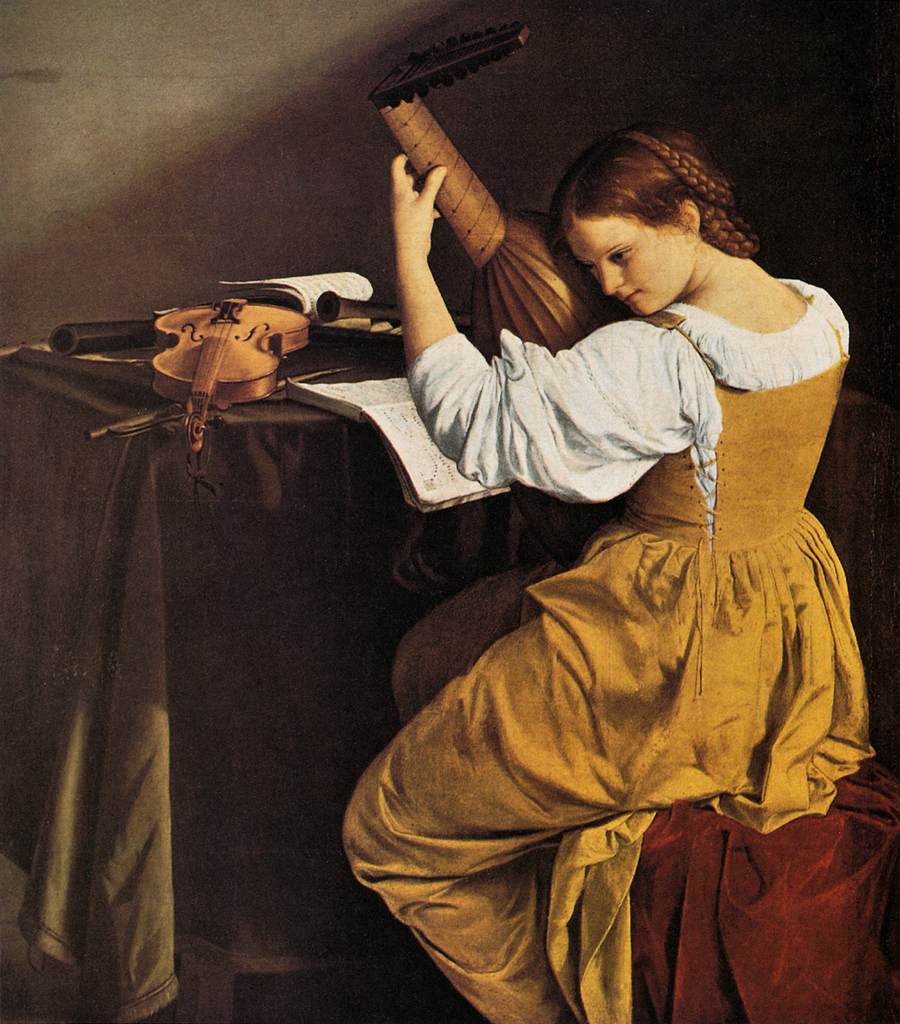
The early seventeenth-century court is crucial. Francesca Caccini (1587–c.1641), employed by the Medici in Florence, composed at a moment when the court spectacle—intermedi, masques, and early opera—was both propaganda and aesthetic experiment. Her La liberazione di Ruggiero (1625) stands not only as an operatic landmark but as a document of Medici cultural diplomacy and theatrical logistics: patrons, singers, copyists, and stagecraft folded into a single event. Such works were often designed to be ephemeral, but their survival in printed and manuscript forms allows us to reconstruct the machinery of power that produced them.
Venice’s print culture likewise altered the historical record. Barbara Strozzi (1619–1677) published multiple collections—an unusually robust print legacy for any composer of her generation, male or female. Her publications depend on the city’s commercial networks: engravers, booksellers, and the patronage structures that made a print run financially plausible. In the decorative arts we often trace how a workshop’s output expands when a market forms; Strozzi’s opus numbers reflect something similar—music conceived not solely for one patron’s cabinet but for a wider, though still elite, community of purchasers and performers.
Can You Guess the Artist?
Three clues. One artist. How quickly can you identify the painter?
More than courts, more than cities, the convent proved a significant archival habitation. Isabella Leonarda (1620–1704), a nun of the Ursuline Convent in Novara, composed large quantities of sacred music, including instrumental sonatas a genre most often associated as a ‘public’ and therefore masculine domain. Leonarda‘s prolific output demonstrates that convents were not cultural wastelands; they were disciplined establishments with their own economies, curriculum, and reputation to uphold. The reason that much convent music remains is that the convent itself saved it as a record of its own activity, like a guild archive of charters or pattern books.
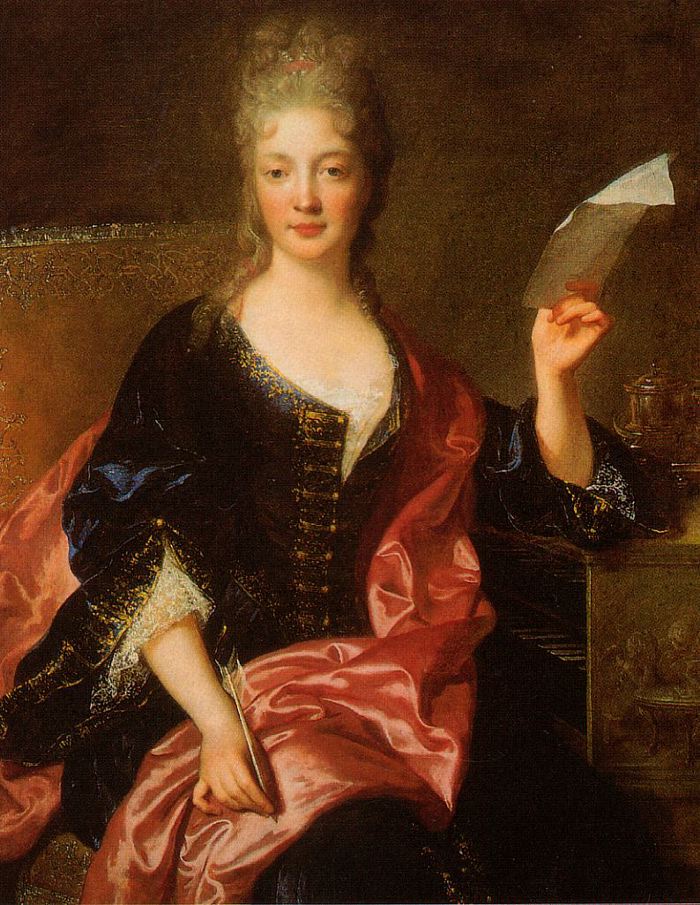
Public activity is becoming increasingly constitute of woman‘s compositional activity by the late Baroque. Through the career of Elisabeth Jacquet de La Guerre (1665–1729), the Parisian terrain of royal patronage, private instruction and publication her success demonstrates how ‘artistic authorship’ was forge by means of dedications, contexts of performance and calculated associations and compromises those tokens and emblems not unlike the heraldic allegories that adorned French furniture or the political symbols that decorated courtly tapestries. The historian must read these cultural codes of the situation as part of the music‘s history of origin.
Cultural and symbolic meaning
If women‘s writers’ composition is a symbol of anything, it is not just of composition by women, but of articulations of contradictions such as voices and masks, expense and moderation, religion and courtly display that characterize Baroque culture. In cantatas, lament arias and sacred motets, affect is constructed as argument. The sound the thing of the Baroque is the art of moderation in excess, gold piled on one another having structure to sustain it, dissonance resolving itself into consonance, excess of affect staged as rhetoric. But for women writers these intensities of articulations could be more than stylistic negotiations: they could also be social negotiations.
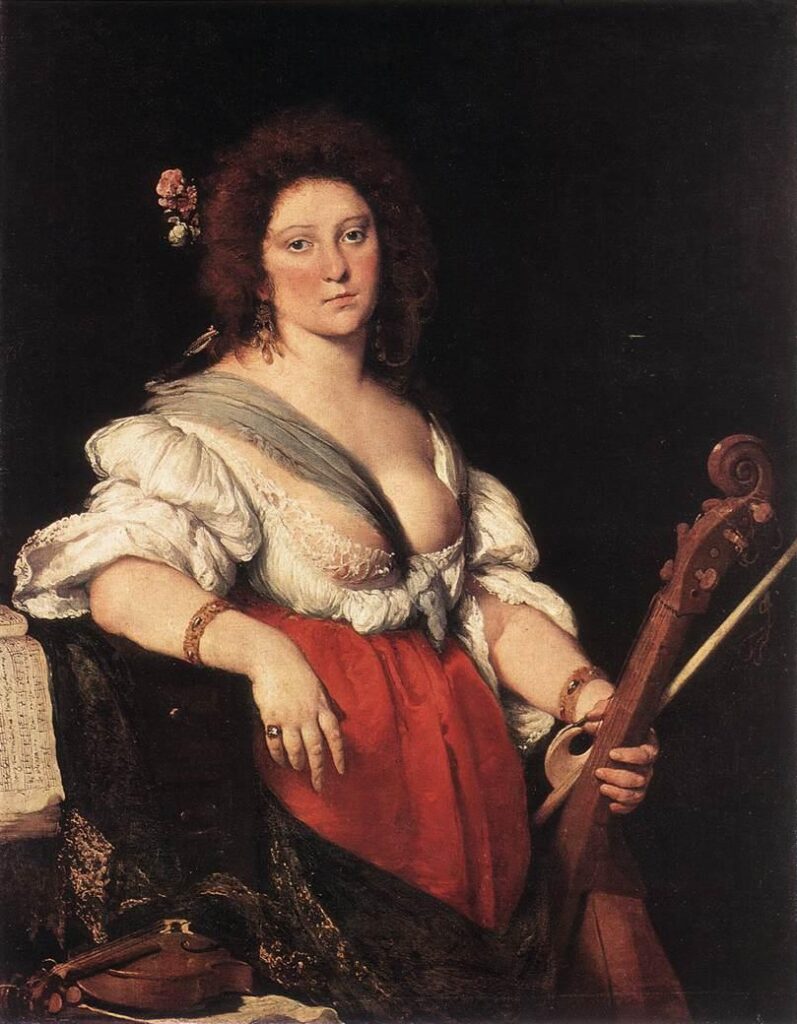
The answer to the generic figure of the Baroque, the choir of lament, where grief becomes a rising effect in itself in the formal performance of song and tears can be mastered and its truth trusted. One of the ways some of Strozzi’s cantatas operate, inevitably, is by putting the female voice at the top of this rhetorical hierarchy, a master of nuances not merely of consummate vocal technique, but of music-even-to-be. This is not ‘personal’ music-it is a vital symptom of the Baroque myth of theater as life. Its symbolic power is to work two effects: to bring the within-outside to bearing, a personal passion of art, and to demonstrate the composer’s skill in the conventions of collective, higher speech.
In sacred contexts, the symbolism shifts but does not diminish. Leonarda’s motets and sonatas participate in Catholic renewal, where sensory richness served devotion and institutional prestige. Convents commissioned and cultivated music to articulate their identity to the outside world—sometimes literally, through grilles separating nuns from congregations. The music becomes a kind of immaterial decoration, a sonic equivalent to embroidered vestments or carved choir stalls: beautiful, disciplined, and legible as a sign of piety and learning.
Jacquet de La Guerre’s work, especially within French tastes for clarity and measured ornament, illuminates another symbolic layer: the alignment of artistic virtue with moral virtue. Her published collections and the narratives that surround her—child prodigy, court performer, composer—operate like curated displays. As in a cabinet of curiosities, the selection and arrangement matter. The act of publishing, dedicating, and performing becomes a controlled presentation of self that answers a society eager to admire female talent yet anxious about its implications.
To read these works historically is to resist anachronism. The symbolic force is not primarily “proto-feminist,” though it can resonate with later frameworks; rather, it is embedded in contemporaneous ideas about eloquence, decorum, and social order. Women composers wrote within the same symbolic systems that produced emblem books, allegorical ceilings, and ceremonial furniture—systems that rendered meaning through conventions. Their achievement is not that they escaped convention, but that they used it with sophistication.
Craftsmanship and materials
Music is of course, as any kind of decorative art, intimately bound up with its material supports. For the Baroque composer the ‘object’ is I think often a printed partbook, or for a scholar, a manuscript sscore, or even just a dedication epistle, a bunch of parts giving some indication of performance. Engraving date and style, paper texture, watermark and binding structure are vital clues to, say, the provenance of an antique, as a washup dowel or spaceport timber might be.
The process of printing has a significant influence. In seventeenth-century Italian music printing, up to early-17th century editions still tended to use movable type for early-noteheads and use engraving for more flexible use of notation and sign of ornament. Clear engraved plates, well set staves, conventions of clef and accidentals may be identified as a “workshop hand,” as signatures, or as close to it as copies can manage. The very fact of printing in the cases of published collections of Strozzi, for example, was an announcement of professionalism: clean layout; formal dedications; the commerce of publishing.
Manuscripts, by contrast, often preserve the intimacy of institutional life. Convent sources may show pragmatic copying: corrections, pasted slips, changes in text underlay, and performance annotations. These are not blemishes but evidence of practice. A faded dynamic marking or a replaced leaf can tell us that music was sung repeatedly, adapted to available voices, or revised to suit liturgical needs. For a cultural historian, such signs function like wear patterns on a prie-dieu or repairs to a reliquary: they testify to lived use.
Instrumentation also implicates craftsmanship in a broader sense. Baroque women wrote for the instruments of their environments—violins in Italian sacred contexts, continuo instruments (harpsichord, organ, theorbo), and voices trained in particular schools. The sound of the work is thus shaped by the material culture of music-making: the availability of gut strings, the pitch standards of a city, the acoustics of chapels, and the training regimes of singers. To interpret the compositions without these conditions would be akin to judging a piece of lacquer without understanding humidity and handling.
A helpful reminder from the archive is that “authorship” itself is materially mediated. Copyists and engravers standardize, sometimes distort; patrons influence dedications and content; later binders recombine volumes, changing what appears “complete.” The historian must treat each surviving witness as a crafted artifact, not a transparent window onto an abstract work.
“The archive does not preserve the past; it preserves what institutions, accidents, and materials allowed to endure.”
—A principle familiar to curators of paper, prints, and music alike
Historical locations, museums, and archives
But the geographic map of women composers of the Baroque is only half the story; the map of archives where one‘s work is preserved is equally telling. Florences and Medici contexts endure for Caccini and his contingent, but traces of these areas are also found in the state and municipal archives around Italy, as well as in special libraries with music holdings. Searching for the histories of Venices Strozzi, for example, is often done best with a search of print editions (sometimes unique and all heavily marked with provenance from armorial bookplates to monastery and library stamps to comments and marginalia by former owners) stockpiled in European research libraries. Novar and other northern Italian citystates ground Leonarda‘s institutional universe, as church and public library archives may contain the most illuminative yet least digitized materials.
Paris, the center of French musical print, points us toward national collections of documents on court life. For, in addition to reading musical sources, Jacquet de La Guerre (through predocuments) reads privilege statements, dedication letters, and contemporary commentary equivalent to guild records or royal warrants in the decorative arts that reveal the workings of system of cultural valuation and control. When such materials exist in one place and in context, we are able to reconstruct networks with unusual accuracy.
Museums play a complementary role even when they do not primarily collect musical manuscripts. Institutions such as the Victoria and Albert Museum (London) or the Musée de la Musique / Cité de la musique (Paris) provide context through instruments, performance iconography, and decorative settings. An inlaid harpsichord case, a carved music stand, or a portrait of a singer are not mere illustrations; they are part of the same ecosystem that generated the compositions. The study of women’s works benefits from this interdisciplinary triangulation, joining sound to object and object to space.
In the reading rooms of major libraries—where climate control, handling protocols, and cataloging practices shape what can be known—scholarship often advances through small, forensic observations. A miscataloged name, a variant spelling, or a bound-in errata slip can shift attribution or chronology. Such work resembles the connoisseurship of prints and drawings: patience, comparison, and a willingness to be corrected by the object itself.
Below is a schematic view of how composers, contexts, and typical source-types often align:
| Composer | Primary context | Common surviving sources | Typical repository type |
|---|---|---|---|
| Francesca Caccini | Florentine court theater | Prints, court documents, libretti, performance records | State/municipal archives; research libraries |
| Barbara Strozzi | Venetian print and salon culture | Printed cantata/aria collections; dedications | National and university libraries; rare book rooms |
| Isabella Leonarda | Ursuline convent (Novara) | Manuscripts; printed sacred collections; institutional records | Ecclesiastical/local archives; specialized music libraries |
| Élisabeth Jacquet de La Guerre | Parisian court/salon/publication | Printed collections; privileges; contemporary commentary | National libraries; music departments; archival series |
Collector perspective
Collectors of musical sources mirror those of decorative arts: both holders are or may be shepherds and potential destroyers of fragile evidence, and the processes, which select for some and not for others, consequently memory-selective, may be destructive as well as preservational. For example, in the nineteenth and early twentieth centuries, when autograph collecting and composer icons as huge men and women drove acquisition, the works of women were more likely to be filed away in undervalued obscurities. An anonymous partbook was less likely to be collected; the work of a woman in a published partbook collection might be considered an oddity rather than as an under-used resource. It can be seen from the above that a situation of survival is not always the most historically valid in terms of time.
From an antiques perspective, the two most intriguing collector questions are completeness and association. Is the partbooks set historically complete? Are the dedications in full? If not, is a copy in its full original binding, or rebound to blend into its comfort zone in a later library? Marginalia fingerings, transpositions, names can lift a source from generic to specific: from being associated with a household to a chapel to a famous singer. These tangential clues can be the musical equivalent of the inventory number on the fridge or the shipping label on the end of a crate: small clues which root objects firmly in the world of human history.
Ethical considerations also matter. Many convent and ecclesiastical materials entered the market through dispersals that deserve scrutiny, especially when political upheavals or suppressions enabled sales. To acknowledge this is not to romanticize an earlier “pure” archive—archives have always been shaped by power—but to recognize that collecting has consequences. Modern institutional collecting increasingly emphasizes context-preserving acquisition and digitization, seeking to reduce the damage done by earlier extraction.
For private collectors, the challenge is stewardship. Paper is vulnerable to light, humidity, and handling; music prints are often trimmed or pressed; bindings can be altered. A responsible collector approaches such materials not as trophies but as study objects requiring controlled environments and, ideally, scholarly access. In this sense, the collector becomes a temporary curator, and the value lies in preservation of information as much as in possession.
Restoration insights
The conservation of musical sources is the conservation of paper, ink and structure closely analogous to the conservation of prints, drawings and binders. Inarching must be slimmed down, removable and recorded. Typical problems: corrosion arising in iron-gall inks, embrittled paper, tide lines, fungal infestation, instability in structures. Every case has its text-interpretation: a mistrust passage, hidden behind a smear of faded ink; a repaired collation, hiding original numbering or censorship.
Another dilemma recurring throughout manuscripts and the book arts more generally is the question of treatment of what is already part of its history may or should the complex effect of previous repairs and modifications be allowed to remain? Old tapes, acidic backing papers and amateur lamination are known to be damaging in the long term; but they also have a vital chronicle of their own which needs to be recorded and preserved by photography and notes, and consolidated by removal if feasible. The choice of approach parallels the guiding philosophy of best practice in all aspects of decorative-arts conservation the dictum of “stabilize first, beautify never”. A manuscript does not need to be returned to a “new” appearance in order to be read correctly, and in fact a too white and shiny surface can diminish the eloquence of its indication of age.
Bindings deserve special attention. Many seventeenth-century prints survive in later bindings, which may have protected them while also altering their original format. Rebinding is sometimes necessary for structural integrity, but it should respect the book’s historical configuration. Retaining original sewing where possible, using sympathetic materials, and preserving fragments of earlier endleaves can keep provenance information intact. In music sources, endleaves sometimes carry notes, accounts, or ownership marks—secondary texts as valuable as the primary one.
Digitization has become a form of preventive conservation, reducing handling of fragile originals while widening access. Yet digitization is not neutral: imaging choices affect readability of inks, watermarks, and impressions. Multispectral imaging can recover erased or faded text, but it must be paired with careful metadata to avoid creating “floating” images disconnected from physical realities. As with the photographic documentation of furniture and textiles, the goal is to record condition and context, not merely to produce attractive surrogates.
Market interest and collector demand
More interest in women‘s Baroque music exists in the marketplace, primarily through performance and scholarship. However, “for a large commercial trade in rare sources,” there are still few original prints or manuscripts, and when they do show up they tend to be mediated through dealers in rare books and music. Requirements of archivists and librarians who need to make the case with acquisition budgets, as well as of private-spirited accumulators and the limits of preservation, drive the market. In comparison to the more fluid markets for other types of objects (paintings, furniture), sources are more difficult to evaluate without a good knowledge of an edition‘s text-state, fecundity, or bibliographical references.
The undervaluing of the market has had paradoxical effects it was part of what led to neglect, but in some cases also meant that the material could survive quietly in a corner of a collection rather than undergoing modification or dispersal. Institutional buyers are now giving more weight to works that redress historic imbalance, but are increasingly frustrated by provenance and ethical policies. Even a musically valuable object may be rejected if it does not have a defined legal and custodial history, representative of general museum policy on antiquities and colonial material.
Collector demand is also mediated by scholarship. When critical editions appear, when archives digitize holdings, and when performers record repertory, the cultural visibility of these composers increases—and with it, the perceived importance of the underlying sources. This is not mere fashion; it is a reconfiguration of what counts as central evidence. In the decorative arts, a newly attributed workshop can transform a category; similarly, a clarified attribution or rediscovered print run can recalibrate the scholarly and collecting landscape.
It is worth noting that many of the most meaningful “market” developments are non-commercial: grants for cataloging, collaborative digital projects, and the integration of women’s works into standard repertory. These activities reduce dependence on private acquisition by making sources accessible and legible. The ideal outcome is not escalating prices but strengthened custodianship—materials conserved, described accurately, and made available for study and performance.
The Baroque women who left behind histories must, then, be reconstructed as living an experience a life of participation within the material and the sign staging power at court, shaping devotion in convent halls, transforming image and word into material with inks and presses, transmitting significance for eternity through their holdings and their archives. To retrieve them from obscurity is to perform all of these again, with a precision that probes the pores of paper as well as the cover of a bible, and the nail holes that hollow out its pages in the shape of institutional “success.” Their chronicle, if finally not canon, expands our sense of period as well as style.
What is ‘missing’ are not simply the music but our habits of interpretation, the patience to trace out variant spellings in catalogues, the grace to handle a badly worn partbook as if it is a holy relic, the humility to accept the degree of contingency in what survives. In an age obsessed with access and image, these composers matter because they reveal that a cultural achievement can be at once celebrated in its time and fragile thereafter. The archive does not speak unless we study its languages material, institutional, symbolic and when we do nothing is regained but not just names. The hue and cry of historical vibrancy! The sound of a world in which women with intellectual stamina and craft and upstart ambition composed, in defiance of all social or political forces, works that we still have the power to shape as we imagine the past.
AI Notice: Some visual content in this article may have been created or enhanced using artificial intelligence (AI) for artistic, editorial or illustrative purposes. Learn more about our approach in our AI & Editorial Principles.