
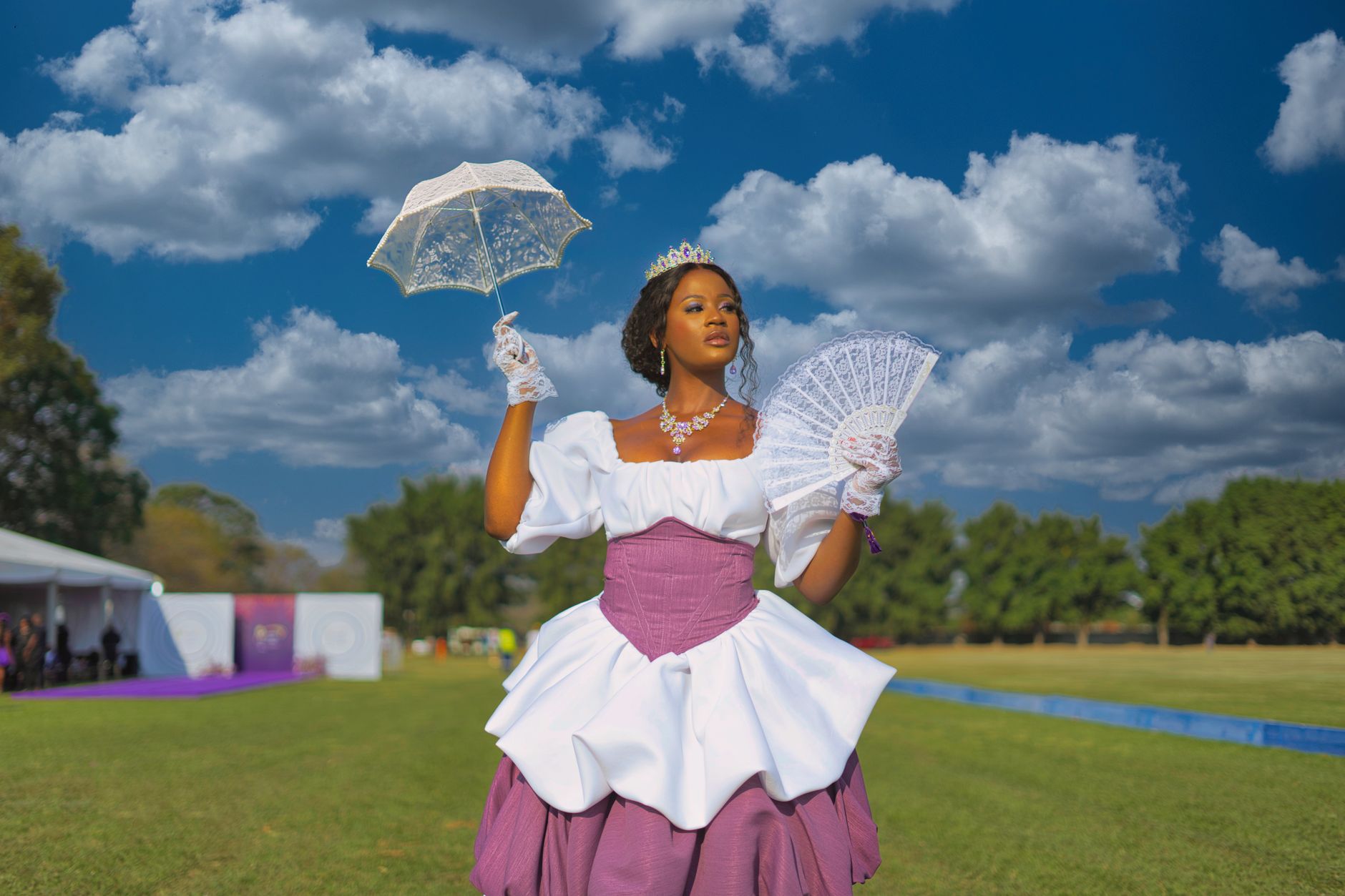
Victorian Walking Dress: The Surprisingly Bold Fashion Trend You Missed
On a damp London morning in 1875, a middle‑class woman stepping out for a stroll was making a statement long before she spoke a word. Her walking dress—carefully cut wool, a sturdy yet elegant skirt, a fitted bodice, gloves, hat, and practical boots—announced her respectability, her class, and even her views on womanly propriety. In an era when a lady’s presence in public spaces was still a subject of scrutiny, the Victorian walking dress emerged as the carefully negotiated uniform of visibility: modest, mobile, and unmistakably stylish. More than just clothing, it was a social technology that let women inhabit the street without appearing to challenge social norms.
The walking dress (or “walking costume”) was a style in its own right on the highly codified 19 th century woman’s wardrobe. Unlike the ball gown, which was grouped with candlelit rooms and gleaming polished floors, or the tea gown, which was associated with least formal entertaining and situated indoors, the walking dress was “customedesigned for the outdoors…parklands, seaside walks, city boulevards, and visits by daylight”. As the V&A describes, for 19 th century fashion, clothing in “various times of the day and for different types of activity” was normative of its strict etiquette, with walking dress playing a key part in the program.
Can You Name the Masterpiece?
Ten masterpieces. Ten questions. How well do you know the history of art?
Meanwhile the progress of walking dress charts larger currents running through Victorian society: industrialisation, the demography of the city, the expansion of the middle classes, the attitude to women, health, and their own mobility. These dresses, as seen in the garments held in the Metropolitan Museum of Art in New York, the V&A in London and the Smithsonian Institution, Washington D. C., record a trail from the modish, unwieldy crinolines to simpler, tailormade lines that reflect women‘s growing involvement in the public arena in the late 19th century.
Defining the Victorian Walking Dress
In its simplest terms, a Victorian walking dress was a day dress specifically intended for outdoor wear, typically during morning and afternoon hours, and designed for relative practicality compared with indoor or evening fashions. The Metropolitan Museum of Art describes an 1870s walking ensemble in its collection as “a sturdy wool costume, trimmed but not lavishly decorated, suitable for public appearance without ostentation.” This emphasis on appropriateness—visibly respectable yet not extravagant—was key to the form. Walking dresses were often made of durable fabrics like wool, cashmere, serge, or sturdy silks, with colors tending toward darker or muted tones that would withstand the dust and dirt of city streets.
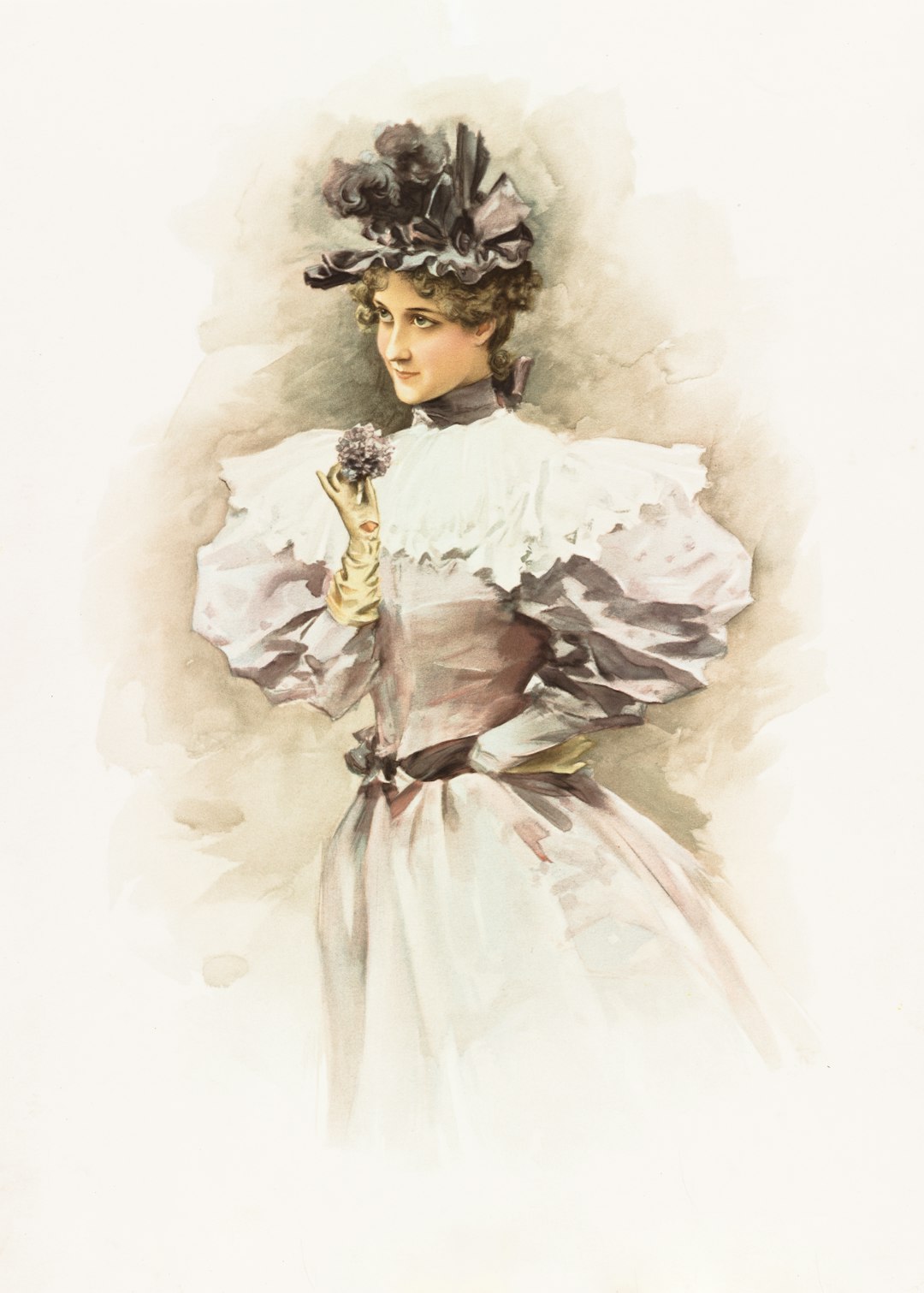
The shape and structure of the walking dress was also considerably different to evening or formal wear. Although skirts were still long, they tended to be cut only moderately shorter than ball gowns, in order not to catch on the ground. The Smithsonian Institution, an online fashion site (www.si.edu/archives) suggests the walking dress was often made with “less voluminous skirts and, later in the century, reduced bustle supports,” allowing the wearer to walk more comfortably. Bodices were highnecked, long sleeved, as was fashionable and were often tailored with militarystyle fittings and details such as braiding or elaborately stitched frogs.
Can You Guess the Artist?
Three clues. One artist. How quickly can you identify the painter?
Similarly, the coordination of outer garments and accessories was significant. Walking dresses often needed to be complemented by a short jacket, cape, or mantle for warmth and completeness, along with a hat or bonnet more utilitarian than fulldress headwear. As the V&A demonstrates in its costume displays, “the total effect of dress, outerwear, headwear and accessories created the socially legible code of a ‘lady’ in public.” In this way, a walking dress can only be understood as one element in a-co-ordinated ensemble, the visual focus of which was the street.
Periods and Places: How Walking Dress Evolved
The form and function of the walking dress changed significantly between the early reign of Queen Victoria (1837–1901) and the fin‑de‑siècle. In the 1840s and 1850s, when large crinoline skirts were fashionable, walking dresses mirrored the bell‑shaped silhouette but tended toward plainer trimmings and more robust fabrics than dinner or evening dress. The Louvre Museum’s Costume and Textile collections—focused mainly on French fashion but highly influential in Britain—include mid‑century promenade dresses whose broad skirts and fitted bodices show how Parisian taste shaped British walking styles. These garments emphasized a romantic femininity, though the massive skirts could still be impractical on crowded or muddy streets.
By the 1860s and 1870s the crinoline had been replaced by the bustle; walking dresses were remodelled as a result. A number of surviving examples from London and Paris fashion houses reveal the characteristic fullness at the back that had often been gathered or supported internally, although perhaps not as extreme as for reception dresses. The Metropolitan Museum of Art describes an 1872 walking dress where the ‘bustle is pronounced yet controlled’, and notes that walking dresses continued to be designed so as not to compromise movement. The rapid growth of some cities notably London, Liverpool and Manchester and the success of seaside resorts including Brighton and Scarborough, meant that a greater number of middle class women were walking regularly in public locations.

In the 1880s and 1890s, however, a combination of changing forms of industrialization, department store culture, and the introduction of readymades changed the way in which a woman purchased her walking dress and how the walking dress looked. The businesslike late Victorian “tailormade” walking suit a wool tweed or serge skirt and jacket, often matching was, according to the V&A, “closely related to menswear tailoring and was ‘associated with the independent modern woman’” wearing walking suits to travel, do “shopping, attend[ing] to business, or to work for pay in an office or shop.” In London’s West End or Paris‘s grands boulevards, this walking dress would have been an indicator of a new, if still limited, kind of female freedom to participate in public life.
Social Codes and Etiquette in Public Dress
Walking dress was as much about social signaling as it was about weather protection or bodily comfort. Victorian etiquette manuals and fashion periodicals like The Englishwoman’s Domestic Magazine and Godey’s Lady’s Book in the United States carefully prescribed appropriate garments for specific times and spaces. A woman in London’s Hyde Park or New York’s Central Park in the 1870s needed to be correctly dressed to be recognized as respectable. Overly elaborate fabrics, low necklines, or excessive jewelry would be criticized as vulgar for daytime walking, while too informal or shabby a dress could draw suspicion or social exclusion.
The range of 19th-century periodicals and books of Victorian etiquette in the collection of the Smithsonian Institution exemplifies this deeply refined system. An often-reiterated Victorian rule stated that “the promenade dress should be distinguished by quiet elegance, without either the careless neglect of home attire or the glare and glitter of evening costume.” This was the essence of a walking dress: it was the social middle ground between attracting too much attention and attracting none at all.
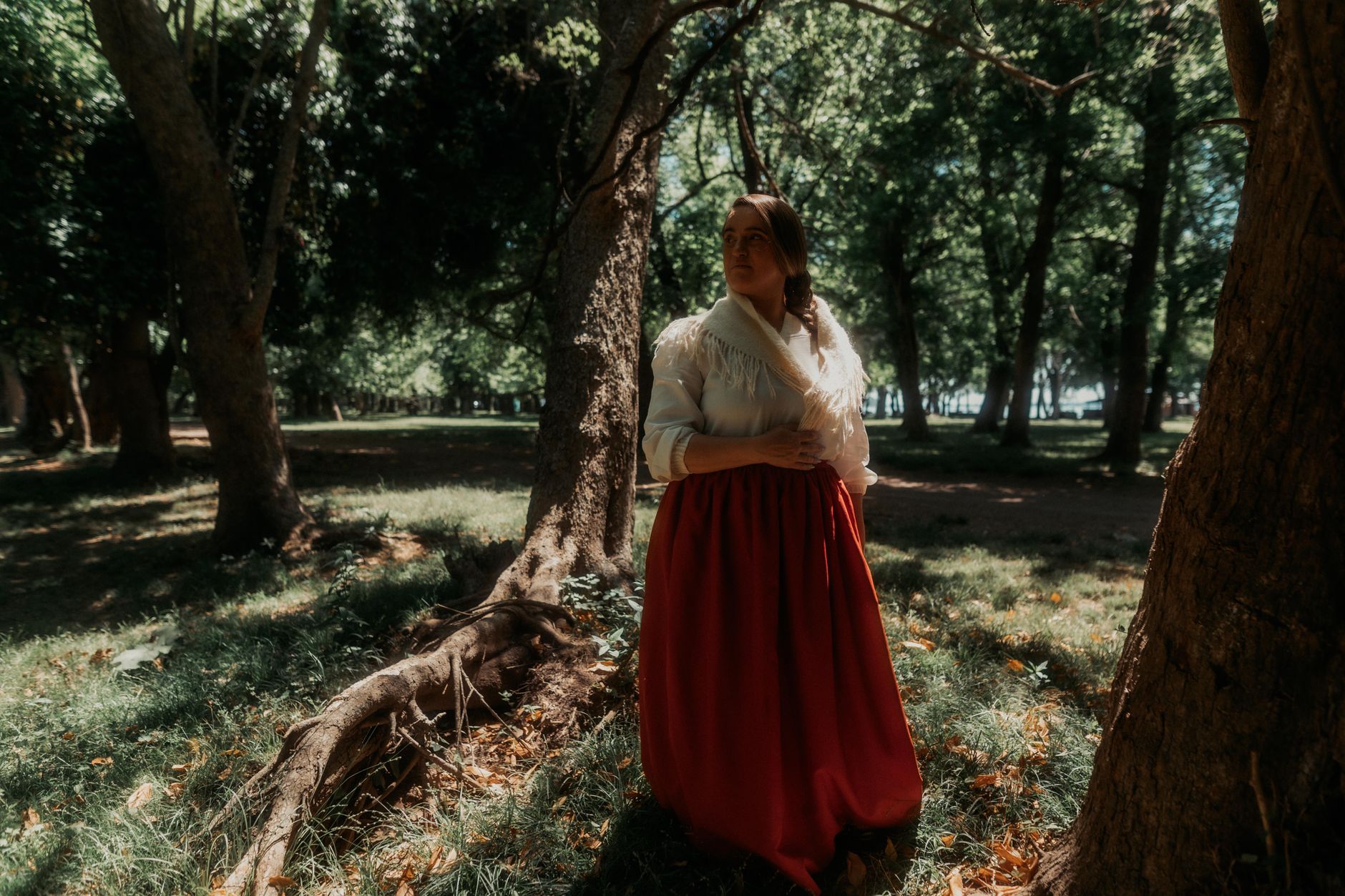
These codes also crossed class boundaries. Middle-class women, who increasingly became a regular sight through ventures into shopping, charity visits and social calls, then, made use of walking dress especially to establish their respectability and morality. Working-class women could have austere or more sensible versions, but the concept of a dedicated walking toilette was primarily an U and M phenomenon. In places like Edinburgh, Dublin and Boston, the variations fabrics, cuts, accessories provided subtle distinctions of class and respectability.
Construction, Fabrics, and Key Features
From a technical perspective, walking dresses were triumphs of tailoring designed to reconcile style with the demands of the street. Dressmakers across Britain, France, and the United States built bodices with carefully fitted seams, often boned to maintain shape, and skirts with multiple panels allowing controlled fullness. The Metropolitan Museum of Art’s object records detail how many walking skirts of the 1860s and 1870s were cut with gores that provided an elegantly flared line without excessive fabric bulk at the waist, crucial for comfortable walking and climbing in and out of carriages or omnibuses.
Cloths were generally hardy, weatherproof. Wool broadcloth, cashmere, merino and heavy silk taffets and faille were regular fabrics, usually in sombre colours like dark navy, brown, green or maroon though lighter ones might be used in the less formal summer walking dresses. Cotton would sometimes be used in summer day-wear, usually on lighter printed fabrics, but these were still not very formal. Trimmings braids, fringes, passementerie, or even modest lace would add interest but not cross over into the realm of evening luxury. As the V&A notes about a walking suit from the 1870s: ‘the ornamentation is strategically placed at hemlines and cuffs, where it frames the figure without attracting unnecessary attention’.
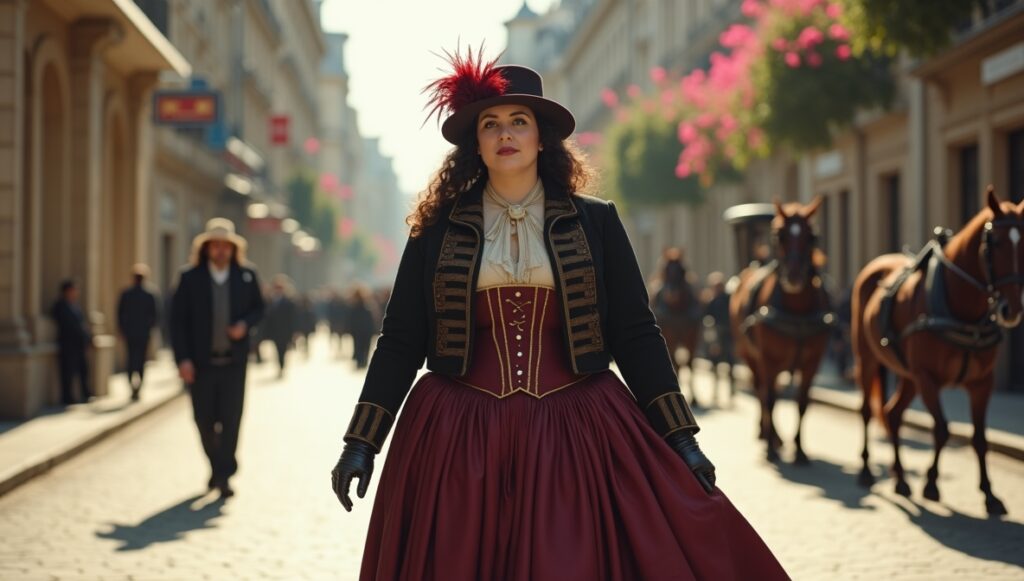
Accessories gave the walking dress its practical role. A rough practical walk might have been accompanied by stout boots, leather with a small heel, kid or cloth gloves, a parasol, or a reticule or purse. A costume would be completed with one of a variety of exterior garments, such as jackets and short coats, paletots, dolmans and mantles; many would have been lined or interlined. As the century advanced, show of the effect of increased travel is apparent, for many walking costumes were worn as an alternative to travelling dress: there would be openings for hidden pockets and dealing would be robust so as to be practical for use by train across Britain and abroad.
Health, Mobility, and the Woman in Motion
Underlying the design of walking dress were contemporary debates about women’s health and physical activity. Mid‑19th‑century medical critics argued that tight corsets and enormous skirts impeded breathing and movement. Reformers, especially in Britain and the United States, began advocating for more rational dress. While full‑scale dress reform (such as the notorious bloomer costume) met with widespread ridicule, elements of its philosophy filtered quietly into mainstream walking dress. As the Smithsonian Institution’s commentary on 19th‑century women’s clothing notes, “incremental changes in cut and support structures allowed slightly freer movement without overtly challenging fashionable norms.”
Walking itself was touted as a healthful activity for women, particularly middle class women. Parks and promenades had been constructed for the purpose of promenading in cities such as London, Paris and Glasgow. As part of this trend, where walking was encouraged, the walking dress could now be associated with benign, controlled exercise. A doll would have to be a dogged walker to succeed in such a long, heavy skirt with a decreased crinoline/bustle and a shoe tough enough to account for the challenge.
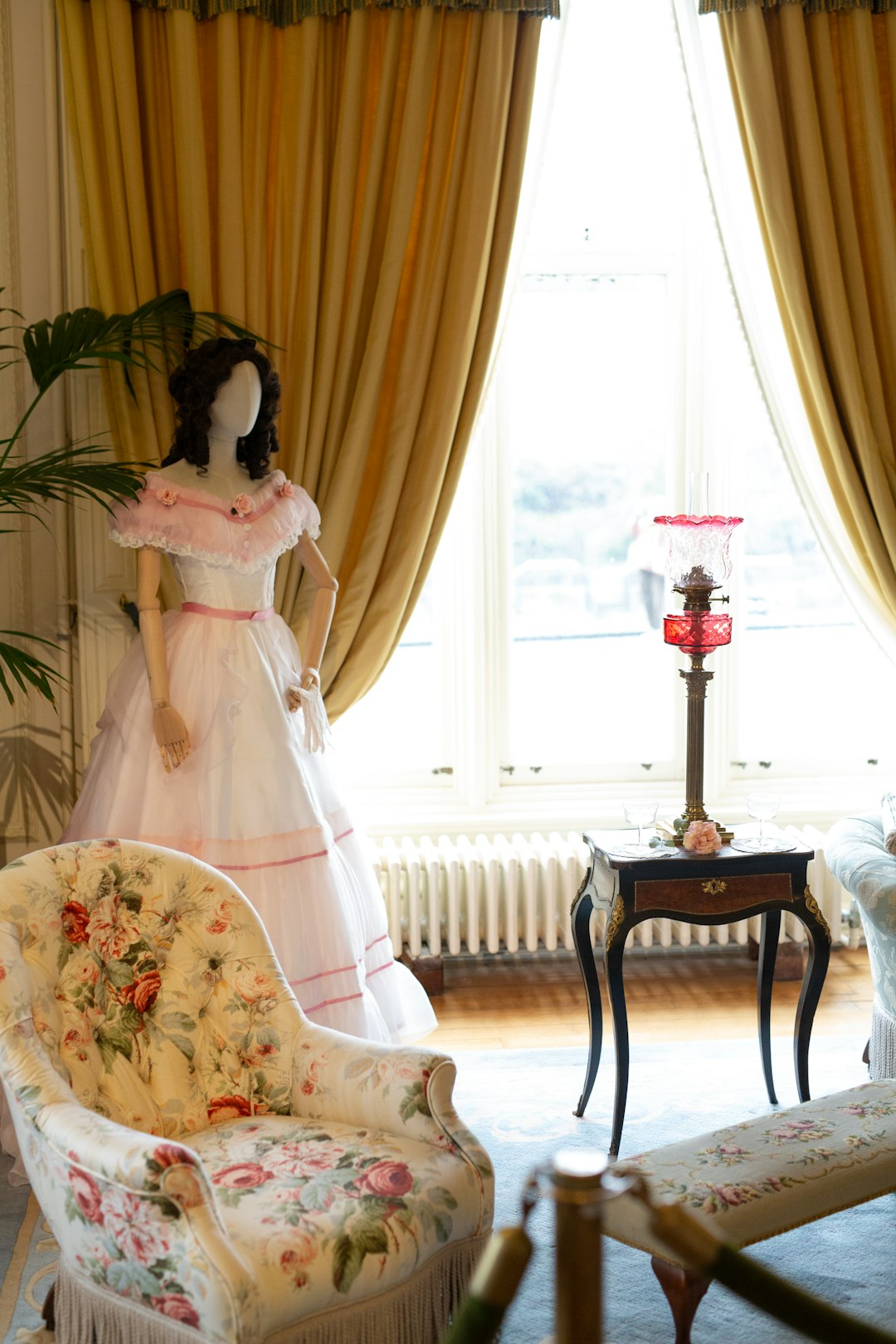
However, by the end of the Victorian period, this link had become clearer. Tailormade walking costumes, based on riding, golfing, or other sporting clothes, began to signal that there was a fresh type of femininity still perfect and flawless, but also with a hint of responsibility, travel, and even a small level of independence. According to the V&A, an 1890s wool walking suit created “the feeling of purposeful modernity”, quite a different impression than mid-century clothing, which was “breaking apart like a breakable doll”. Walking dress indeed gradually broadened the range of how it was possible to be present, and look active, in public.
Key Characteristics of Victorian Walking Dress
| Feature | Typical Qualities | Significance |
|---|---|---|
| Primary Use | Daytime outdoor wear: promenades, visits, shopping | Marked respectability and correct participation in public life |
| Silhouette | Moderately full skirt (crinoline, then bustle, then slimmer); fitted bodice | Balanced fashion with mobility |
| Fabrics | Wool, cashmere, serge, strong silks; darker hues | Durability, dirt resistance, and subdued elegance |
| Bodice Design | High neck, long sleeves, boned and tailored | Daytime modesty and structural support |
| Skirt Length | Slightly shorter than evening dress, yet floor‑length | Reduced soiling; facilitated walking |
| Outerwear | Jackets, mantles, capes, dolmans | Warmth, weather protection, visual completeness |
| Accessories | Sturdy boots, gloves, hat/bonnet, parasol, small bag | Completed the social and practical function |
| Decoration | Moderate trimmings; minimal sparkle | Avoided the “glare and glitter” of evening dress |
| Social Coding | Associated with middle‑ and upper‑class respectability | Communicated class, morality, and adherence to etiquette |
Authoritative Voices on Victorian Dress
Institutions with major costume collections have been instrumental in shaping our understanding of Victorian walking dress and its meanings. The Victoria and Albert Museum, whose fashion galleries in London span centuries of European dress, emphasizes that 19th‑century clothing was “governed by strict social conventions, which dictated what might be worn when, by whom, and for what activity.” This principle is particularly visible in the carefully calibrated design of walking dress, poised between practicality and propriety.
Very often the 19 th century section of the Catalogue, published for the Costume Institute at the Metropolitan Museum of Art, reiterated the association of portable fashion with shifts in culture and society. In the catalogue‘s notes on walking costumes, the invisible processes of fashioning them was read into a ‘complex negotiation between fashion and the freedom of movement…’ that the clothes would facilitate. In illustrating that process, even the length of hem, the d. o. Pockets, or the cut of a jacket, were examined.
The Smithsonian Institution through the National Museum of American History gives us a transatlantic view. Its holdings reveal the manner in which European styles, transmitted through American conditions and hierarchy, created an American variation of the walking dress that was at once similar to and different from European solutions. Urban areas, such as New York, Boston and Philadelphia arrived at their own Victorian walking dress through the incremental borrowing and pragmatic adaptation of British and French styles, illustrating the transnationalism and local flexibility of this fashion type. When considered together, the institutions featured here enable historians, designers and the general public to read the walking dress as complex rather than stereotypically clichd.
Frequently Asked Questions
1. How was a Victorian walking dress different from an everyday “house dress”?
A house dress (or morning dress) was intended for wear inside the home and for informal tasks, often in lighter fabrics and simpler cuts. Walking dresses, by contrast, were more structured, made of sturdier materials, and styled to meet public standards of respectability. They were usually worn with outer garments and more formal accessories than a purely domestic dress.
2. Did all Victorian women own a separate walking dress?
Not all. The idea of distinct garments for different times of day and activities was most fully realized among the middle and upper classes, who had the means and social need to maintain such wardrobes. Working‑class women might adapt a best dress for multiple uses, including outdoor wear, without a dedicated “walking” ensemble.
3. Were walking dresses really practical, given the long skirts and corsets?
By modern standards, they were still restrictive, but within the Victorian system they represented a more practical option. Skirts were usually a bit shorter and less voluminous than evening wear, and support structures were often reduced for walking. Corsets remained standard, but their tightness and cut varied; some women chose slightly looser lacing or corsets designed for greater mobility.
4. Did walking dress styles differ between Britain and continental Europe?
Yes and no. Paris was the dominant fashion capital, and French styles strongly influenced British and European dress, including walking costumes. However, local preferences and climates led to variations. British walking dresses, for example, often emphasized heavier wools suitable for damp weather, while French promenade dresses might feature more decorative trimming. Museums like the Louvre and the V&A document these subtle regional distinctions.
5. How did the walking dress evolve into modern streetwear?
The late Victorian tailor‑made suit, with its coordinated skirt and jacket, is a direct ancestor of early 20th‑century women’s street and work wear. As women increasingly entered higher education and the workforce, such suits became everyday clothing rather than specialized walking attire. The shift from elaborate skirts to more streamlined silhouettes in the Edwardian period further blurred the line between “walking dress” and modern daywear.
Conclusion
The Victorian walking dress sits at the crossroads of fashion, social history, and the politics of space. Crafted to navigate the streets of London, Paris, and beyond, it balanced aesthetic ideals with the practicalities of movement, weather, and public scrutiny. As preserved and interpreted by institutions like the Metropolitan Museum of Art, the Victoria and Albert Museum, the Louvre Museum, and the Smithsonian Institution, these garments reveal how something as seemingly simple as “what to wear for a walk” encoded complex messages about gender, class, health, and modernity. To study the walking dress is to watch the 19th‑century woman take her carefully measured steps into the public world.
AI Notice: Some visual content in this article may have been created or enhanced using artificial intelligence (AI) for artistic, editorial or illustrative purposes. Learn more about our approach in our AI & Editorial Principles.


