
This Forgotten Detail Made Victorian Ball Gowns Irresistible
The Victorian ball gown is one of fashion history’s most evocative garments: an engineered silhouette that fused industrial-age textiles with age-old handcraft, a public costume that announced wealth, etiquette and identity, and a ritual garment designed to be seen under gaslight and chandeliers. From the hoop-supported skirts of the 1850s to the bustles of the 1870s–1880s and the sleek evening silhouettes at the close of the century, the ball gown evolved as rapidly as the social world that produced it. Studying these dresses illuminates not only the materials and techniques of couture but also class structure, gender performance, and the institutions—palaces, opera houses, and museums—that preserved them.
Historical context: courts, industry, and the evolving social calendar
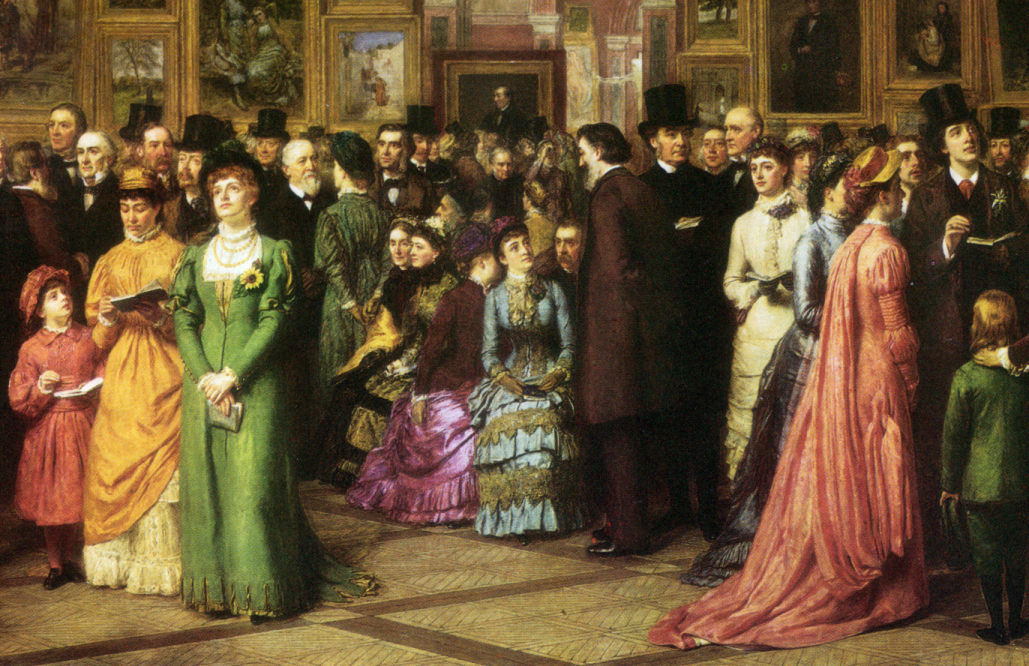
The Victorian period (1837–1901) spans Queen Victoria’s reign and overlaps with major shifts in British and European society: industrialization, urbanization, and expanding imperial networks. Balls—whether aristocratic court balls at Buckingham Palace, private assemblies in provincial Britain, or diplomatic entertainments in Paris and Vienna—remained central rituals of sociability. These events demanded distinctive evening dress that differed in cut, fabric and ornament from daywear and reflected changing norms for visibility, propriety and display.
Can You Name the Masterpiece?
Ten masterpieces. Ten questions. How well do you know the history of art?
The rise of mass-produced textiles and advances in dye chemistry and pattern-cutting during the mid-19th century made new fabrics and brighter colors available to a broader elite beyond hereditary nobility. Simultaneously, fashion dissemination intensified: fashion plates, magazines, and ateliers in Paris and London shaped tastes across Europe and the United States. Institutions such as the French court under Napoleon III and the British royal household set standards that trickled down through society and were recorded by newspapers and costume journals.

Court protocol and new forms of public entertainment—opera, theatre, and grand charity balls—expanded opportunities for display and heightened the importance of a gown’s theatrical presence. The ball gown’s function was performance: to read well at a distance, to reflect light, and to harmonize with jewelry, gloves, and hair—components governed by both local conventions (e.g., Viennese vs. Parisian styles) and international trends reported by leading fashion authorities.
Design and construction: silhouette, structure, and tailoring
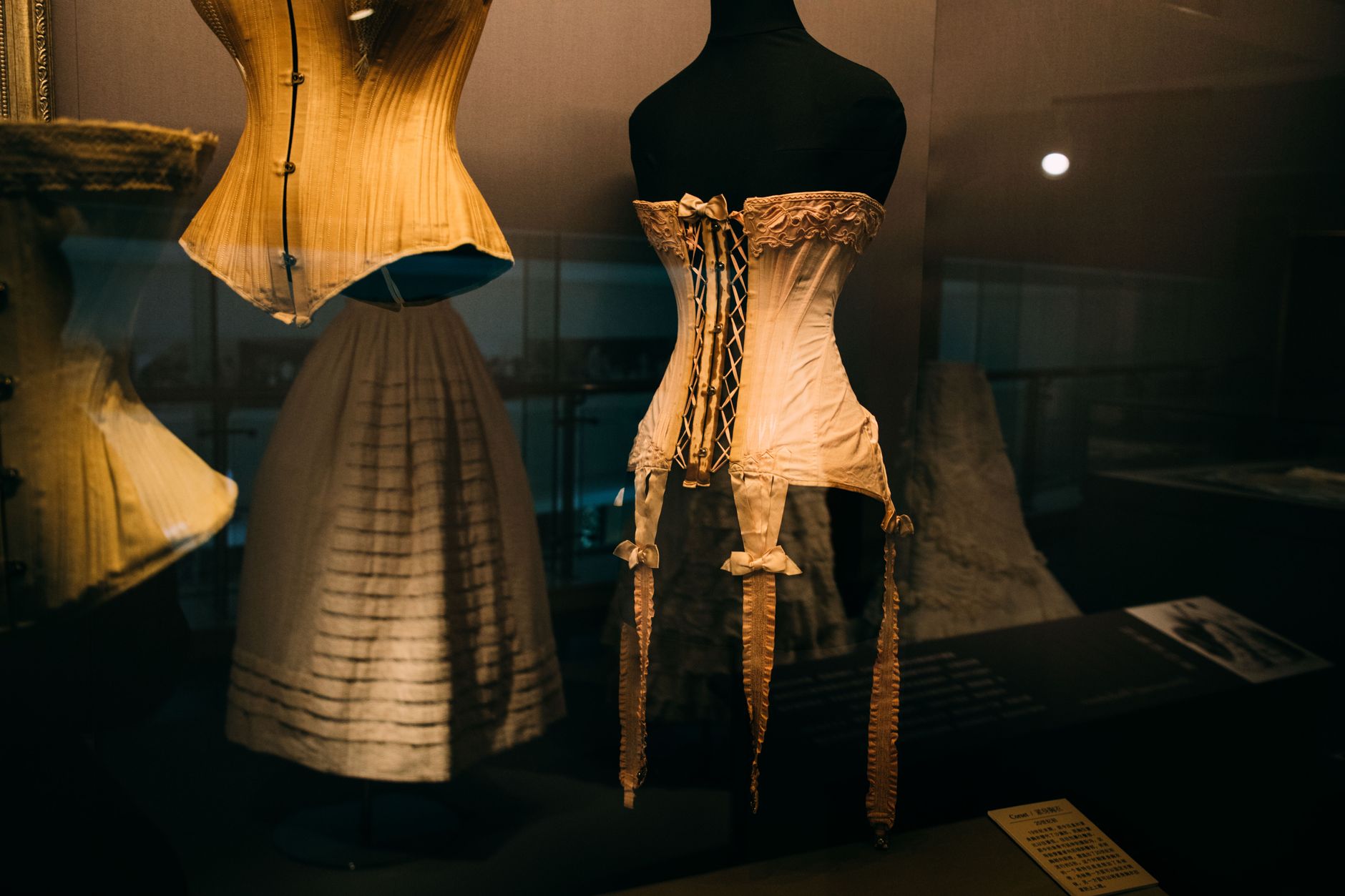
The defining visual arc of Victorian evening dress is silhouette, which changed in clear phases. In the 1840s–50s the hourglass with very full skirts supported by crinolines or cage hoops dominated; by the 1870s the bustle shifted fullness to the back; and in the 1890s leg-of-mutton sleeves and narrow waists articulated a different kind of drama. Tailors, dressmakers and corsetiers—often working within couture houses in Paris or bespoke ateliers in London—manipulated pattern-cutting and support structures to achieve the era’s idealized lines.
Can You Guess the Artist?
Three clues. One artist. How quickly can you identify the painter?
Construction combined machine and handwork. Sewing machines from the 1840s onward sped seam production, but much of the fine finishing—embroidered trims, beaded motifs, and delicate hand-sewn facings—remained artisanal. Internal engineering was critical: boning (whalebone and later steel), padded busts, stiffened hems, and multiple petticoats or caged crinolines distributed weight and kept heavy fabrics from collapsing. Surfaces were as important as structure; pleating, ruching and flounces required precise handcraft to read correctly under candle or gaslight.
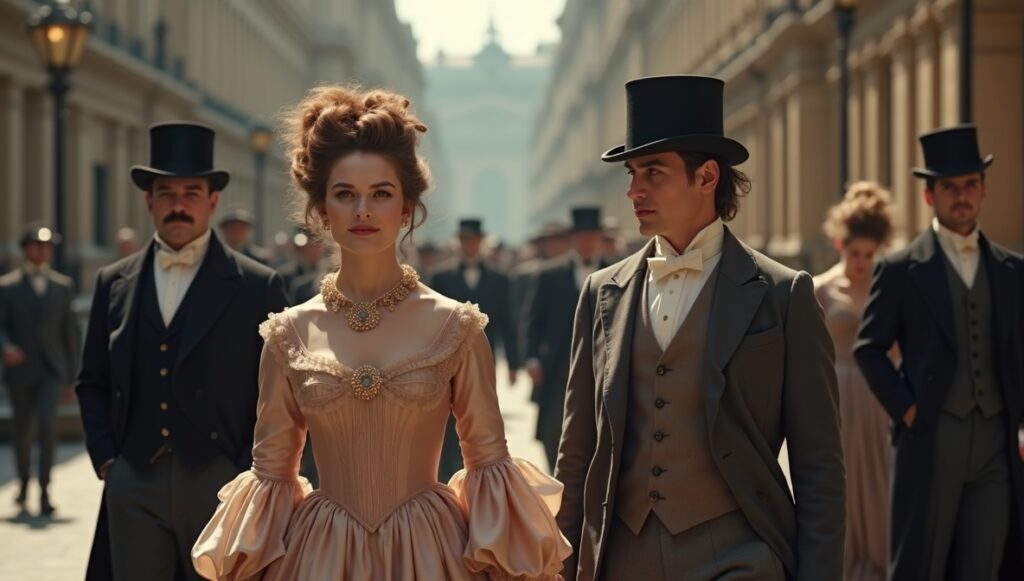
A ball gown’s lifecycle also involved fit adjustments, seasonal remodelling and reuse. Wealthy families often employed dressmakers in domestic service or maintained relationships with Parisian houses to alter fashionable pieces each season. Museums that preserve Victorian gowns emphasize this mutable nature: many surviving dresses bear evidence of alterations made to accommodate changing fashions or different wearers over decades.
Table: Key characteristics of Victorian ball gowns
| Characteristic | Typical examples (mid-19th to late-19th c.) | Purpose/notes |
|---|---|---|
| Silhouette | Crinoline (1850s), bustle (1870s–1880s), narrow skirt (1890s) | Structured shapes for visual drama |
| Support structures | Cage crinolines, horsehair interlinings, boning, bustles | Maintain profile and distribute weight |
| Fabrics | Silk taffeta, satin, velvet, muslin, Chantilly lace | Reflect light; indicate status |
| Decoration | Hand embroidery, beadwork, passementerie, lace overlays | Visual richness for close and distant viewing |
| Color palette | Bright magentas, deep blues, black for evening in later 19th c. | Dyes improved over century; colors signaled taste |
| Accessories | Long gloves, tiaras, fans, muffs (early), opera cloaks | Complete the ensemble; governed by etiquette |
Fabrics, ornamentation, and color: materiality of display
Victorian ball gowns showcase the interplay between newly available materials and traditional ornament. Silk remained the pre-eminent luxury fiber—taffeta and satin offered sheen ideal for low light—while velvet, lace and delicate chiffons provided contrasting textures. Lace-making centers such as Brussels and Honiton continued to supply trims, even as machine-made laces became more common and accessible.
Decoration was a mark of both skill and status. Embroidery—often silk, metallic threads or glass beads—added pictorial motifs, while passementerie (fringes, cords and tassels) articulated hems and bodices. Colored trims and applied lace could be layered to create depth; jeweled clasps and paste stones (and for the affluent, diamonds and pearls) elevated a gown into high spectacle, especially in court settings where the jewelry collections of families and royals were an integral component of a woman’s appearance.
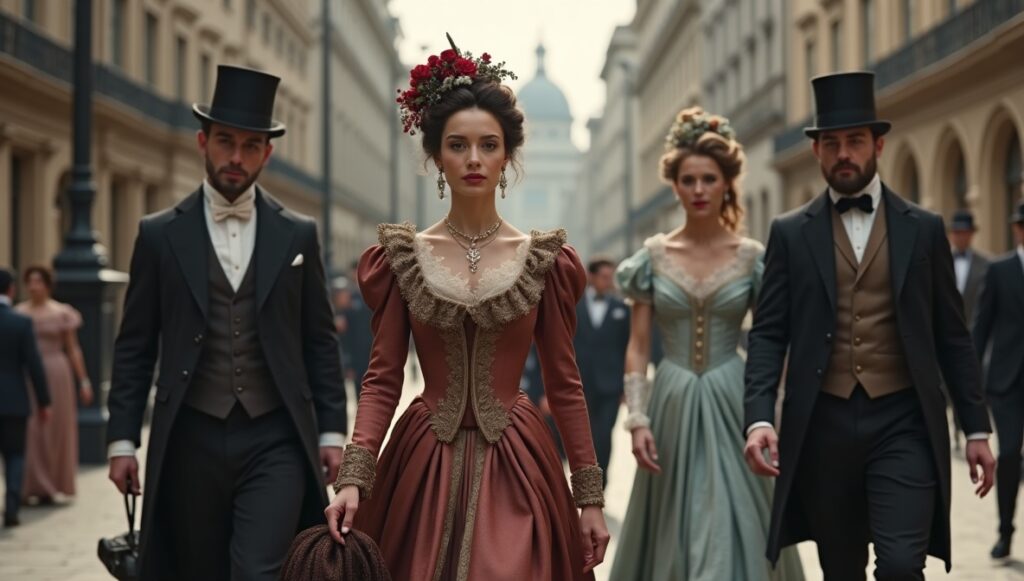
Color evolved with dye technology. Early Victorian palettes favored muted tones and black for evening mourning dress, but the discovery of synthetic aniline dyes in the 1850s expanded bright color options (mauves, brilliant greens, “Garibaldi” red). Museums such as the Victoria and Albert Museum document these changes and preserve examples showing both fashionable shades and the degradation or fading that dyes can undergo over time.
Social function and etiquette: what a gown communicated
A ball gown signified more than fashion; it signalled social position, marital prospects and adherence to etiquette. Balls were arenas for display where seating arrangements, introductions and dance cards followed strict protocols. A woman’s ability to present a perfectly tailored, well-lit gown spoke to her family’s resources and her preparedness for public life—attributes crucial in a society that linked appearance to respectability.
Gender norms were inscribed into the gown’s form. Corsetry and the extreme silhouettes of the mid-century emphasized a small waist and full skirt, reinforcing ideals of femininity that were both aesthetic and prescriptive. Yet the gown was also a form of agency within constraints: fashionable women used color, ornament, and novel fabrics to differentiate themselves, and some patrons commissioned unique designs from Parisian maisons to cultivate individuality within prescribed codes.
Regional and institutional contexts mattered. At the Paris Opéra or the Vienna Hofburg the visual language of costume could differ—French couture encouraged cutting-edge innovation, while British court dresses often emphasized sobriety and rank. Diplomatic balls in 19th-century cities such as Paris, London and St. Petersburg were key sites where national taste and international influence intersected, as recorded in contemporary newspapers and museum archives.
Preservation, museums, and scholarship: how institutions guard and study gowns
Major museums house the best-preserved examples and support scholarship that decodes materials and provenance. The Metropolitan Museum of Art’s Costume Institute, the Victoria and Albert Museum in London, the Louvre’s Department of Decorative Arts, and collections held by the Smithsonian Institution all maintain documented holdings of Victorian dress and publish research on manufacturing techniques, social histories and conservation. These institutions also curate exhibitions that contextualize gowns within broader cultural histories.
Conservation presents specific challenges: fragile silk degradation, dye migration and metal thread corrosion require controlled environments and specialized treatments. Museum conservators employ scientific analysis (fiber microscopy, dye analysis, X-radiography) to understand construction without excessively invasive sampling. Conservation reports—such as those published by the Met and the V&A—serve as primary resources for scholars and reenactors interested in accurate reconstruction.
Authoritative voices underscore the gown’s cultural significance. As the Victoria and Albert Museum notes, “19th-century dress is a record of the innovations of its age—industrial, technological and social.” The Metropolitan Museum of Art has observed that gowns are “documents of identity,” revealing information about class, gender and consumption. The Smithsonian emphasizes the domestic and international networks—manufacturers, merchants and ateliers—that supplied materials and labor to create these garments. These institutional perspectives combine material analysis with social interpretation in line with current scholarship.
Recognizing originals, reproductions, and ethical wearing today
Identifying an authentic Victorian ball gown requires attention to construction details: hand stitching patterns, periods of available materials (e.g., presence of steel rather than later plastics), and provenance records such as family papers, probate inventories or museum acquisition histories. Labels, maker’s marks and period photographs (albumen prints, cartes de visite) also help tie a garment to a date and wearer. Conservators caution that many surviving gowns have been altered—shortened, relined, or restyled—so critical assessment is essential.
Reproductions for theatre, film or historical reenactment must balance visual fidelity with modern wearability and ethical sourcing. Accurate reproductions benefit from consulting museum collection catalogues (Met’s Heilbrunn Timeline of Art History, V&A’s online collection) and scholarly monographs on corsetry and period tailoring. Ethics also demand careful use of authentic materials: museums discourage the removal of components from original garments, and conservators recommend using non-invasive techniques and conservation-grade materials when creating display mannequins or mounts.
Wearing Victorian styles today is a form of historical dialogue. Costume historians and ethical reenactors emphasize transparency: distinguishing modern garments inspired by Victorian gowns from originals, crediting sources, and acknowledging the original social contexts—including inequalities—embedded in those clothes. Museums play a role by making high-resolution images and conservation reports available to the public, enabling informed reproduction and interpretation.
Frequently Asked Questions
Q: What dates define a “Victorian” ball gown? A: Broadly, Victorian dress refers to garments worn between 1837 and 1901, but specific gown types align with sub-periods (e.g., crinoline era c. 1850s, bustle era c. 1870s–1880s). Museum catalogues at the Met and V&A provide precise dating criteria. Q: How can you tell an original from a reproduction? A: Look for period construction techniques (hand stitching, original boning materials), evidence of age, and provenance documentation. Scientific analyses by museums (fiber tests, dye analysis) can confirm materials consistent with 19th-century manufacture. Q: Are Victorian gowns wearable? A: Some are too fragile for wear; conservators at institutions such as the Smithsonian recommend using replicas for public events and reserving originals for study and controlled display.
Authoritative sources and further reading
- The Metropolitan Museum of Art, Costume Institute collection and Heilbrunn Timeline of Art History. – Victoria and Albert Museum, Fashion Collection and online research resources. – The Louvre, Department of Decorative Arts holdings and catalogues. – Smithsonian Institution, National Museum of American History costume collections and conservation reports. These institutions publish catalogues, conservation studies and online images that exemplify best practices in research and preservation.
Conclusion
Victorian ball gowns are complex artifacts at the intersection of technology, craft and social life. They require interdisciplinary attention—material science to read their fabrics, archival research to trace their owners, and cultural history to interpret their meanings. Museums such as the Met, the V&A, the Louvre and the Smithsonian continue to deepen our understanding by conserving examples, sharing documentation and framing gowns as windows onto a transformative century.
AI Notice: Some visual content in this article may have been created or enhanced using artificial intelligence (AI) for artistic, editorial or illustrative purposes. Learn more about our approach in our AI & Editorial Principles.