Victorian Day Dress Secrets: What Everyday Women Really Wore
The rustle of tightly pleated skirts, the gleam of jet buttons in winter light, the whisper of starched cotton as a woman crossed a drawing room—Victorian day dress was as much architecture as it was clothing. Built on whalebone, steel, and countless yards of fabric, it both shaped and constrained women’s bodies and lives. Yet behind its apparent rigidity lay a world of nuanced social codes, industrial innovation, and quiet acts of self-expression. To understand Victorian day dress is to read, in textile form, the story of a century marked by empire, technology, and shifting ideals of femininity.
1. Historical Context: When and Where “Victorian Day Dress” Emerged
Victorian day dress refers broadly to women’s garments worn during daytime activities in the reign of Queen Victoria (1837–1901), primarily in Britain but heavily influencing Europe and North America. From drawing rooms in London’s Belgravia to boulevards in Paris and parlors in Boston, the day dress was the visual language of respectability for middle- and upper-class women. It was distinct from evening, ball, and dinner dresses in cut, fabric, and modesty, and closely regulated by time of day and occasion.
Can You Name the Masterpiece?
Ten masterpieces. Ten questions. How well do you know the history of art?
In the early Victorian period (1830s–1850s), dresses featured full, bell-shaped skirts supported by petticoats, high but demure necklines, and long, tight sleeves. The mid-Victorian period (1850s–1870s) introduced the steel crinoline, which created enormous hoop-like shapes for new barrel-shaped silhouette. In the later Victorian period (1870s–1890s), the bustle replaced the round skirt by pushing all remaining fullness to the back, but by the 1890s, shape had shifted again to the cocoonlike, upright, corseted hourglass form. Each shape reflected contemporary notions of propriety and technological advances.
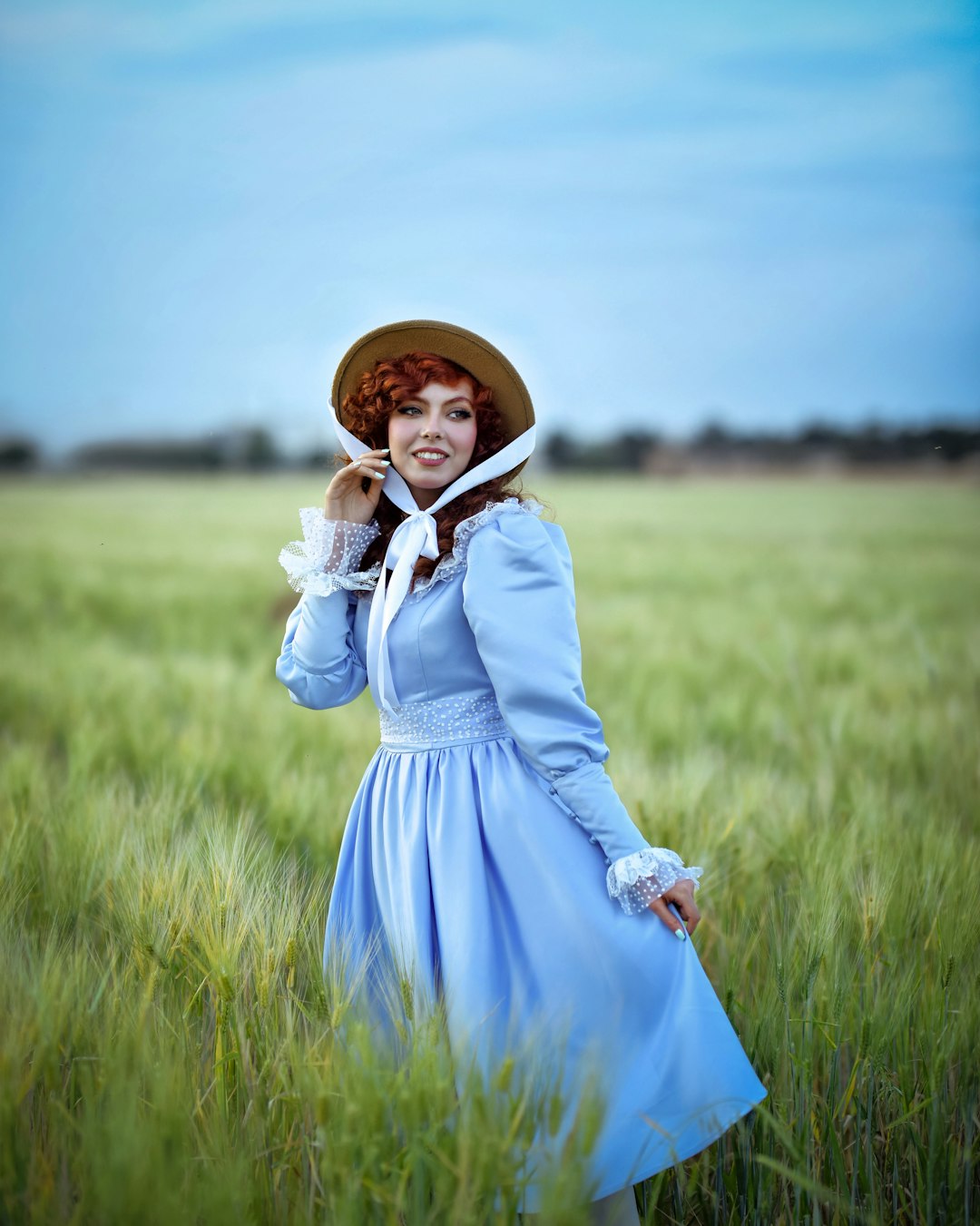
And this was also an age of industrialization and empire. Textile manufacturing flourished in aging industrial cities like Manchester and Lyon; London department stores and Parisian maisons de couture such as house of Charles Frederick Worth-credited by the V&A as ’ the godfather of haute couture’-made standard and made-to-measure garments available to the wealthy. Concurrently, a proliferation of fashion magazines, such as The Englishwoman ’ s Domestic Magazine and Godey ’ s Lady ’ s Book, created a transatlantic exchange of ideas about what constituted a ’ proper ’ day dress and what it was meant to be worn with.
2. Anatomy of a Victorian Day Dress
Underlying every Victorian day dress was a highly structured foundation. A woman of fashion did not simply put on a dress; she built a silhouette. The typical underpinnings included a chemise, drawers, corset, petticoats (or a crinoline or bustle, depending on the period), and often a corset cover. Over this framework came the dress itself, usually in two parts: a bodice and a skirt. According to the Metropolitan Museum of Art, “dress from this period cannot be understood without recognizing the fundamental role of the corset and crinoline in constructing the fashionable figure.”
Can You Guess the Artist?
Three clues. One artist. How quickly can you identify the painter?
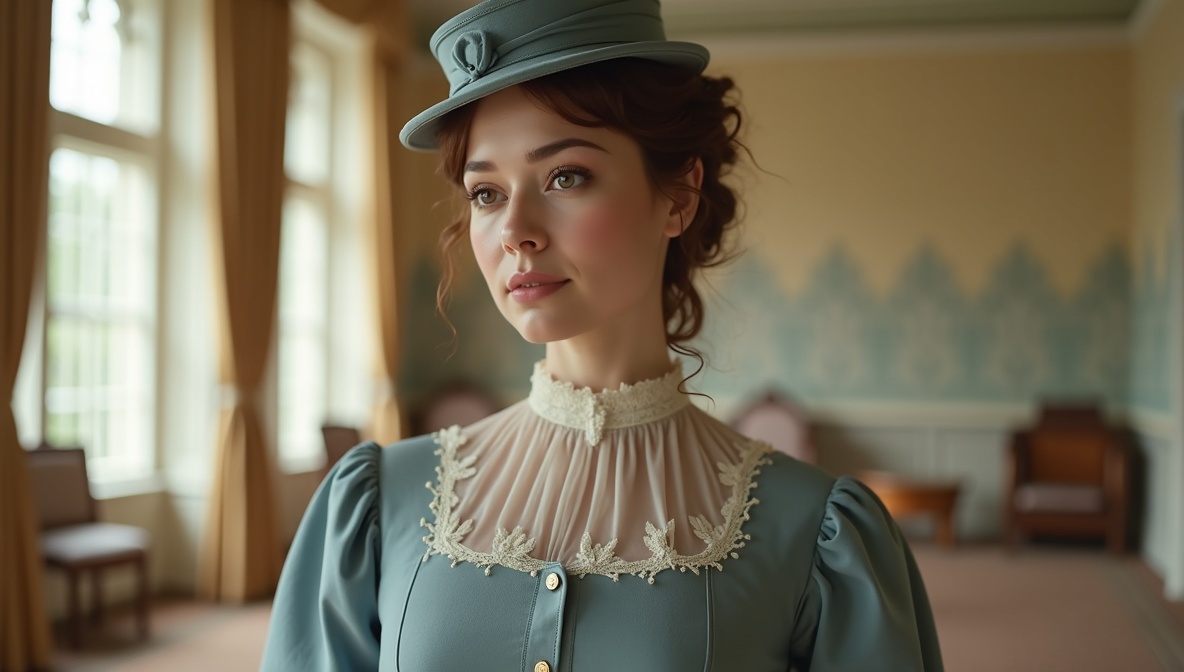
The day bodice was high-necked and long-sleeved (or at least had a lot of sleeves covering most of arm), in accordance with the sort of modesty required at the time. Bodices could be boned for support, and fastened with hooks, buttons or lacing. Skirts were pleated or gored to match the changing bodies, full and bell-shaped in the 1850s, sweeping back over a bustle in the 1870s, and more vertical in the 1890s. Pockets were not often present; instead women carried chatelaines and small carrying bags with which to access their needs the shape and form of clothing was also a way of controlling and constraining the body.
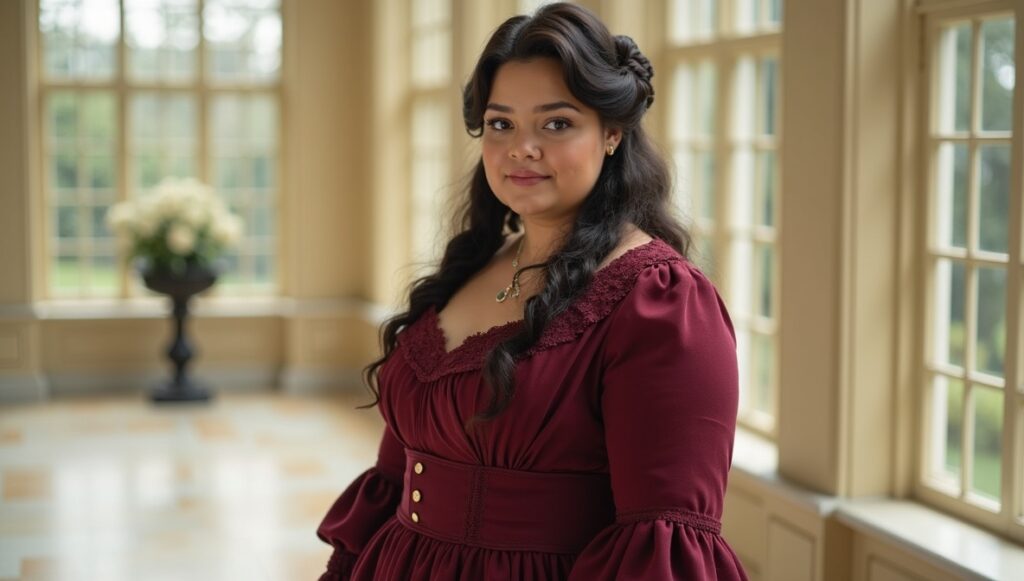
Accessories and surface adornment finished the outfit. Collars and cuffs of white linen or lace could be detached and cleaned, ensuring the usefulness of the dresses. Belts, brooches, watch chains and modest pieces of jewelry identified “respectability and conformity to social norms” equally to the dress‘s cut, according to the National Museum of American History at the Smithsonian Institution.
3. Social Codes and Etiquette: Reading a Day Dress
In Victoria time the way one dressed was a form of visual etiquette. There were accepted styles for morning, afternoon visiting, walking, travelling and mourning dress. A plain dark wool daydress with little adornment would work for a day at home or dealing with household business while an afternoon visiting dress would be more ornate and be made of a finer fabric with modest adornment. As the Victoria and Albert Museum notes ‘dress was a language, and Victorian women were expected to be fluent in its nuances’.
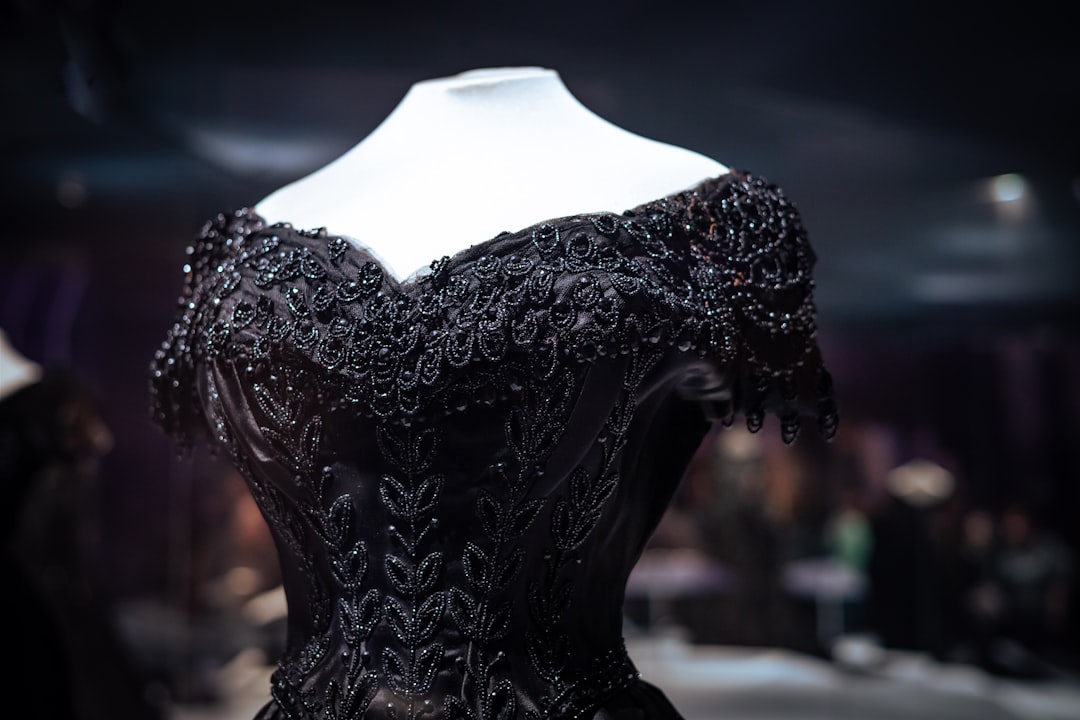
Few topics can illuminate the intricacies of this code as well as mourning dress. In the homes of the recently bereaved, women were required to practice a series of coded signs of mourning the color of the dress (initially very deep matte black, later a grayed mauve when in half-mourning), the fabrics (dull crepes instead of shiny, sumptuous silks), and the length of time for mourning. The rules regulating mourning practices listed in etiquette guides and reaffirmed by numerous fashion magazines completely transformed the way women wore their clothes, turning day wear into a very public display of private feeling. The Smithsonian archives hosts several mourning dresses of the American middle class a prospect that offers enlightening parallels to the imported mourning wears of the British and French middle class, with whom the transatlantic middle class was closely linked.
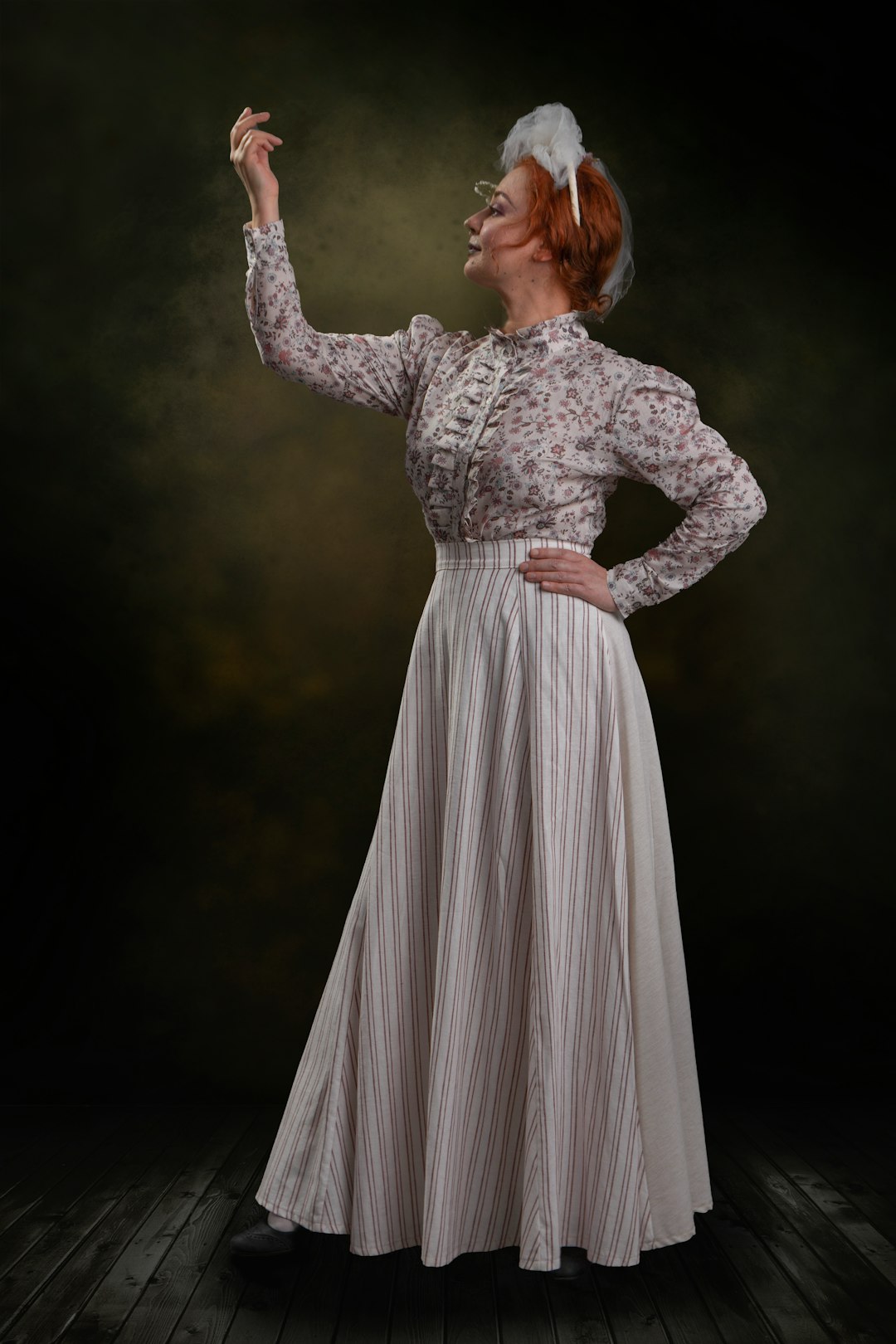
Social distinctions and occupational differences were just as visible. A Manchester factory worker or a Parisian seamstress would not have covered themselves in the same fabrics, certainly not the same amount of cloth, as a Mayfair aristocrat or a bourgeois wife on the Boulevard Haussmann. However, as the Met‘s historians point out, the expanding world of printed cottons and machine-made trimmings permitted women who wanted to be middle-class to copy upper-class modes on a limited budget. The day dress became the forum for aspirations, anxieties and social tensions to be reflected in stitch and seam.
4. Fabrics, Colors, and Technology
The Victorian era coincided with massive advances in textile and dye technology, which left a direct imprint on day dress. In the early decades, women’s day dresses were often made of printed cotton, wool, or silk, with colors derived from natural dyes such as madder, indigo, and cochineal. These required skill and expense to produce, limiting the intensity and range of hues. The Louvre Museum’s textile collections include early-19th-century printed cottons that show the restrained palettes common before synthetic dyes.
Work on the aniline dye, mauveine, by William Henry Perkin in 1856 changed the course of color; orange was no longer the newest, brightest, most stable color on the block, instead it was purple and later a list of other vibrant colors. According to the V&A, these purple and green dyes “revolutionized the palette of those who prescribed to the modern taste from the mid-19th century onwards”, green aniline dyes, followed by magenta and ultramarine, began to appear in the fashion pages and the shops. However, while color was changing in the realm of fashion, for the general population, particularly for middle and upper class women, the new colors, for everyday wear, were still quite muted, mainly browns, dark blues, dark grays, greens and large prints.

While mass manufacturing was altering fashion on the outside, it altered textiles as well. Mechanized looms in the United States and Europe produced lighter, less expensive cotton and wool blends, allowing more women to afford elegant dresses. Simultaneously, innovations in steel production reduced the heft of crinoline hoops and bustles, visually transforming the silhouette without adding the wearer‘s weight. ”[T]he marriage of engineering and dressmaking” was responsible for the skirts of middle-century fashions, though women still carried the load.
5. Silhouette Through the Decades
There is no understanding of Victorian day dress without following the continually evolving silhouette of decade to decade. From the 1840s, the cult of the beautifully sloped shoulder, sharply pointed Bodice and gathered but not exaggeratedfull skirt held sway for day wear, and the fashionable figure was gradually becoming more and more defined by a petticoated fullness. This dramatic shape was only exacerbated by the steel cage crinoline from the 1850s and early 1860s which galvanized the bell shape beloved by all Netherlandish painters and happily preserved in Museum collections such as the Met and V&A. Day Bodices were relatively modest, revealing a high neck and long sleeve.
In the late 1860s and 1870s, fullness shifted backwards. Crinolines flattened at the front and the back of the skirt pulled over wire work or padded pads called bustles. The Louvre’s fashion collection holds day dresses, made at the end of the period, that display highly ornamental drapery falling into train-like back skirts fit for a drawing room and promenade but still setting curvaceous luxury and ingenuity in stone. Bodices were similarly ornate with crowding or asymmetrical closures and fabrics.
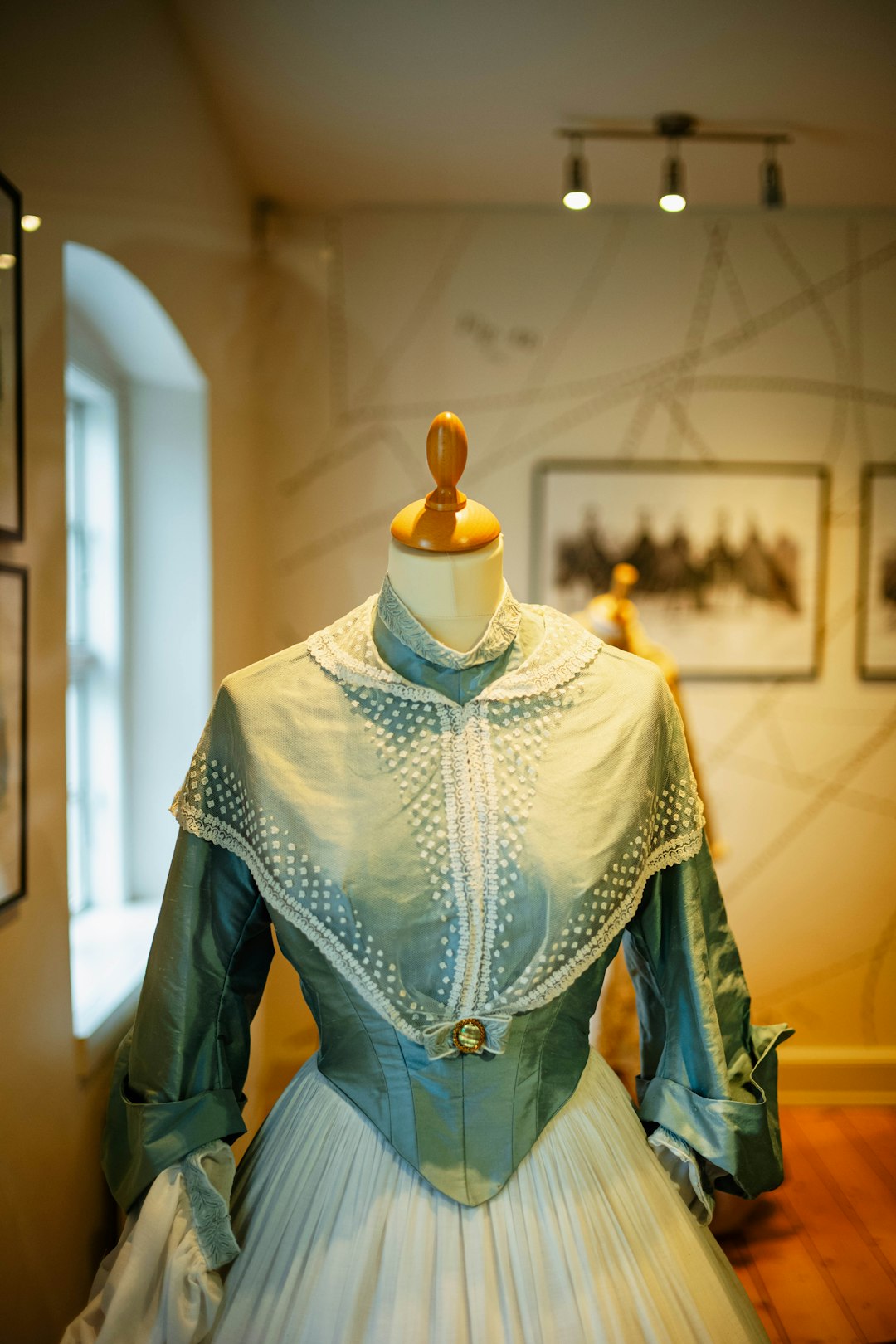
By 1880s and 1890s, the silhouette was decidedly more upright. Bustles still decreased in size, then re-emerged in ever-more-elaborate finery in the mid-1880s, before being replaced by the flowing, sinuous “S-curve” and hourglass shape. Sleeves bloomed into the distinctive “leg-of-mutton” shape of the 1890s, while skirts became narrower and flared modestly at their hem. Day gowns, such as pictured in the Smithsonian collection, show that while corsets still reigned supreme, a more upright, athletic ideal of womanhood was emerging and was still girded by stays.
6. Day Dress in Practice: Domesticity, Work, and Mobility
Victorian day dress was not purely aesthetic; it mediated daily life. For middle- and upper-class women, clothing had to accommodate domestic responsibilities, child-rearing, charitable work, social visits, and, increasingly toward the end of the century, certain forms of paid or public labor such as teaching or office work. The complexity and fragility of some garments, particularly those with extensive trimming or trains, limited movement and required servants or family help to maintain.
In the home, women frequently opted for have a less structured and looser fitting version of their dress, which was washable fabric including wool or cotton or sometimes a wrapper or ‘tea gown’. The tea gown had developed partly as a result of the art dress movements of the time and partly influenced by the Japanese, and the Met mentions that it ‘almost blurs the boundary between on display and privacy’ although they quickly disappeared in the public space.
However, a day dress for the working-class woman needed to be much more functional. Lacking the luxury of wait to determine body shape, surviving garments and photographs of working women in Britain, France, and America from industrial cities depict these women in shorter and less puffy skirts, heavier fabrics, and aprons; but the same bodice-and-skirt structures survived. The Smithsonian‘s American collection of women‘s workwear illustrates this principle well, as the practical dress is still fashionable in a less elaborate fashion narrower skirts, minimal adornment, and darker shades help hide the grime and wear.
Table: Key Characteristics of Victorian Day Dress
| Feature | Early Victorian (1837–1855) | Mid Victorian (1856–1875) | Late Victorian (1876–1901) |
|---|---|---|---|
| Silhouette | Bell-shaped skirt with petticoats | Wide crinoline; then bustle moves fullness to back | Reduced bustle; more vertical, corseted figure |
| Bodice | Pointed waist, sloping shoulders, long sleeves | Fitted bodice, often heavily boned | Highly structured, sometimes jacket-like bodices |
| Neckline (day) | High neck, collars, modest | High neck, often with removable collars | High neck, sometimes standing collars |
| Fabrics (typical) | Printed cottons, wools, silks | Cotton, silk, wool; more variety via industry | Wool, silk, mixed fabrics; tailored weaves |
| Colors (day wear) | Muted prints, browns, blues | Broader palette; still subdued for day | Dark solids, checks, stripes; richer but practical |
| Support structures | Petticoats, early corded supports | Steel crinolines, then bustles | Smaller bustles, corsets, sometimes pad or none |
| Social emphasis | Respectable domesticity | Display of prosperity, elaborate etiquette | Respectability + emerging modernity and mobility |
7. Authority, Scholarship, and How We Know What We Know
Our understanding of Victorian day dress rests on a combination of surviving garments, fashion plates, photographs, written accounts, and modern scholarship. Major museums and research institutions have been central in assembling, preserving, and interpreting this evidence. The Metropolitan Museum of Art’s Costume Institute, for example, holds hundreds of 19th-century dresses, many of which are accessible through its online collection with detailed curatorial notes.
The Victoria and Albert Museum in London is particularly authoritative on British dress. Its curators emphasize that Victorian clothing must be understood in the context of “industrialization, global trade, and changing roles for women,” not simply as decorative objects. The V&A’s permanent fashion galleries and publications, such as Nineteenth-Century Fashion in Detail, serve as key references for scholars and costume historians.
The Louvre, though better known for painting and sculpture, holds significant collections of historic textiles and garments that illuminate French interpretations of these fashions. Meanwhile, the Smithsonian Institution’s National Museum of American History preserves American day dresses that show how Victorian styles were adapted across the Atlantic. As the Smithsonian observes in its collections commentary, 19th-century clothing is “a primary source that reveals the daily realities and aspirations” of those who wore it, from elite women to shopgirls and farmers’ wives.
Frequently Asked Questions about Victorian Day Dress
Q1. What is the main difference between Victorian day dress and evening dress?
Day dress was designed for modesty and practicality: high necklines, long sleeves, darker or more subdued colors, and durable fabrics. Evening dress typically featured lower necklines, shorter or puffed sleeves, lighter or more luxurious fabrics (such as silk taffeta or satin), and more elaborate decoration suitable for candlelit settings and formal occasions.
Q2. Did all Victorian women wear crinolines and bustles?
No. While fashion plates and high-society portraits emphasize extreme silhouettes, working-class women and those with limited means often wore fewer petticoats, smaller hoops, or none at all. As the Met notes, the most exaggerated shapes “belonged primarily to those with the leisure and resources to indulge them,” though simplified versions filtered down widely.
Q3. Were Victorian women always tightly corseted?
Corsets were a normal foundation garment for most middle- and upper-class women, but extreme tightlacing was less common than popular myth suggests. Surviving corsets in the V&A and other museums vary in size and stiffness, and written accounts indicate that many women laced moderately for support and fashion rather than severe waist reduction.
Q4. How did women care for their day dresses?
Most dresses were not frequently washed in full, especially if made of silk or wool. Instead, removable collars, cuffs, chemises, and petticoats were laundered regularly, while the dress itself was brushed, aired, and spot-cleaned. Dress linings often took the brunt of perspiration and wear. Wealthier women relied on servants and, later, professional cleaners and dressmakers for maintenance and alterations.
Q5. What did a typical middle-class woman’s wardrobe include?
A respectable middle-class Victorian woman might own several day dresses (for morning at home, afternoon visits, walking or travel), one or two evening dresses, outerwear such as cloaks or mantles, and specialized garments for mourning or special events. Fashion magazines and etiquette books, preserved in institutions like the Smithsonian Libraries, often specified “minimum” wardrobes for women of different incomes.
Q6. Can we see original Victorian day dresses today?
Yes. Major museums around the world hold extensive collections. Notable examples can be viewed at:
- The Metropolitan Museum of Art (New York), The Costume Institute
- The Victoria and Albert Museum (London), Fashion and Textiles
- The Louvre Museum (Paris), Department of Decorative Arts and Textiles
- Smithsonian Institution (Washington, D.C.), National Museum of American History
Many of these institutions offer searchable online databases with high-resolution images and scholarly descriptions.
Conclusion
Victorian day dress was far more than a picturesque costume of long-ago ladies. It encoded the values, hierarchies, technologies, and tensions of a rapidly changing world. From the steel frames of crinolines forged in industrial cities to the subtle shifts in necklines that marked the boundary between morning and afternoon, every detail of these garments carried meaning. Thanks to the meticulous work of institutions like the Metropolitan Museum of Art, the Victoria and Albert Museum, the Louvre, and the Smithsonian, we can read those meanings today, stitch by stitch, and better understand how an entire era clothed its days.
AI Notice: Some visual content in this article may have been created or enhanced using artificial intelligence (AI) for artistic, editorial or illustrative purposes. Learn more about our approach in our AI & Editorial Principles.