Why Black Goth Wedding Dresses Are the Bold New Bridal Obsession
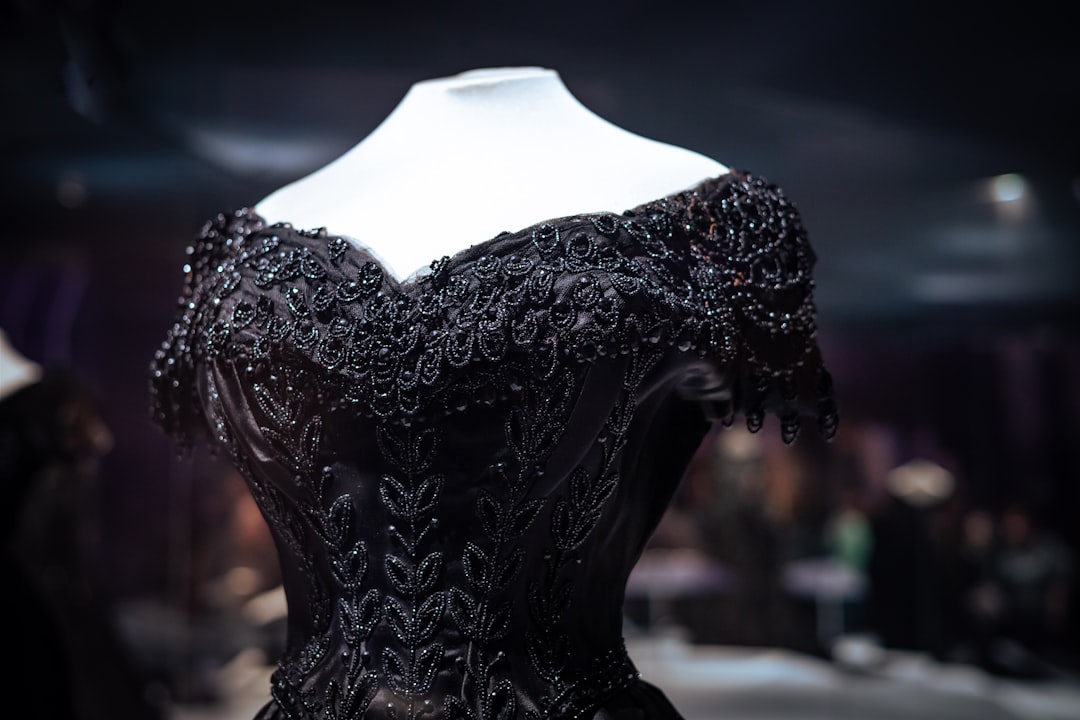
Black wedding dresses were once symbols of mourning and scandal; today, a black goth wedding dress can be the ultimate expression of individuality, romance, and power. When a bride walks down the aisle in layers of inky lace, velvet, and tulle, she isn’t merely defying convention—she’s drawing on centuries of fashion history, from Victorian funerary gowns to medieval court dress and avant‑garde couture. A black goth wedding dress doesn’t reject the idea of marriage; it recasts it as something intensely personal, dramatic, and unapologetically aesthetic.
The Allure of the Black Goth Wedding Dress
A black goth wedding dress occupies a unique space where romance, rebellion, and history intersect. Deep black fabric dramatically frames the skin, jewelry, and bouquet, making every detail more vivid—red roses appear blood‑bright, silver jewelry glows like moonlight, and lace patterns become architectural rather than merely decorative. For many goth brides, black is not simply a “dark” choice; it’s a color of depth, mystery, and emotional honesty.
Can You Name the Masterpiece?
Ten masterpieces. Ten questions. How well do you know the history of art?
Part of the dress’s power comes from its refusal to conform. Western bridal fashion has been dominated by white since the mid‑19th century, especially after Queen Victoria’s 1840 wedding gown, preserved and discussed by the Victoria and Albert Museum, set a new standard for bridal purity and simplicity. Choosing black is therefore a deliberate, visible departure from a long‑standing tradition—and that decision often resonates with brides who see marriage as a partnership of equals rather than a performance of innocence.
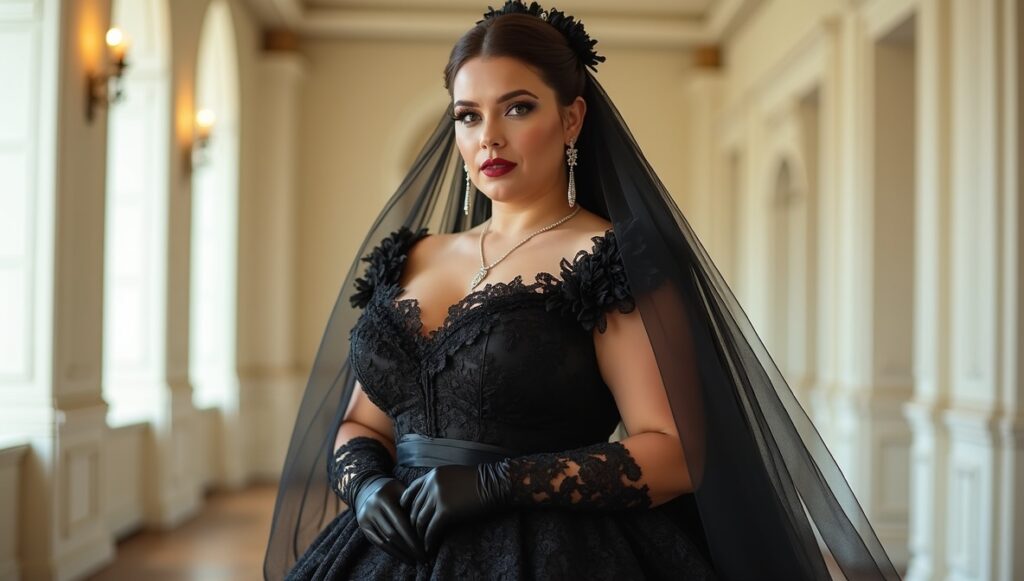
Yet the black goth wedding dress is not only a rebellion; it’s also a love letter to romance in its most dramatic form. Gothic literature—from Mary Shelley’s “Frankenstein” to the Brontës—has long used darkness as a backdrop for intense emotion. Goth fashion channels that sensibility into clothing, and the wedding gown becomes the ultimate canvas. Lace, corsetry, veils, and trailing trains amplify the emotional stakes of the day, creating a bridal look that feels like it belongs in a Pre‑Raphaelite painting or a silent film rather than a generic catalog.
Historical Roots: From Mourning Dress to Modern Goth Bridal
Black has a long and complex history in Western dress, particularly as a color of solemnity, status, and refinement. The Metropolitan Museum of Art notes that in the 16th and 17th centuries, high‑quality black dyes were so expensive that black clothing often signified wealth and rank, especially in Spain and the Low Countries. Portraits from the Spanish Habsburg court or the Dutch Golden Age—many held at The Louvre and the Rijksmuseum—show noblewomen in sumptuous black gowns with intricate lace collars and cuffs, projecting gravity and prestige.
Can You Guess the Artist?
Three clues. One artist. How quickly can you identify the painter?
In the 19th century, black became closely associated with mourning, especially after the death of Prince Albert in 1861. Queen Victoria wore black for the rest of her life, setting a powerful cultural precedent. The Smithsonian Institution and the Victoria and Albert Museum both hold extensive collections of Victorian mourning dress, characterized by matte black fabrics, crape, and strict etiquette about how long widows were expected to wear black. While this history might seem at odds with a wedding, it contributed significantly to the visual vocabulary of goth style: veils, high collars, and trailing skirts have clear roots in mourning attire.

By the late 20th century, punk and goth subcultures reclaimed black from its exclusively somber connotations. Bands, club nights, and alternative fashion scenes in cities like London, Berlin, and New York turned black clothing into a symbol of creative resistance and emotional depth. The goth wedding dress emerges from this lineage—borrowing Victorian shapes, medieval references, and funereal textures—but it transforms them into something celebratory. Today’s black goth bridal wear echoes the severity of historic mourning dress while inverting its meaning: the bride mourns nothing; she is fully present and choosing her path.
Key Elements of a Black Goth Wedding Dress
A black goth wedding dress is defined as much by silhouette and texture as by color. Many designs draw on historical shapes: corseted waists, off‑the‑shoulder necklines, bishop sleeves, and full skirts reminiscent of Victorian or Edwardian evening gowns. Others lean into sleeker, more architectural lines inspired by 1920s bias‑cut gowns or 1930s Hollywood glamour. What unites them is their deliberate drama—the sense that the dress is part costume, part couture.
Fabrics play a crucial role in achieving a goth aesthetic. Velvet, with its deep, light‑absorbing pile, evokes medieval and Renaissance luxury, as seen in historic garments preserved by The Metropolitan Museum of Art. Chantilly or Alençon lace creates delicate, web‑like overlays that can look either romantic or sinister depending on styling. Tulle and organza add volume and translucency, ideal for layered skirts and veils. The interplay of matte and sheen—crushed velvet against glossy satin, opaque bodices against sheer sleeves—creates visual depth even in a monochrome black palette.
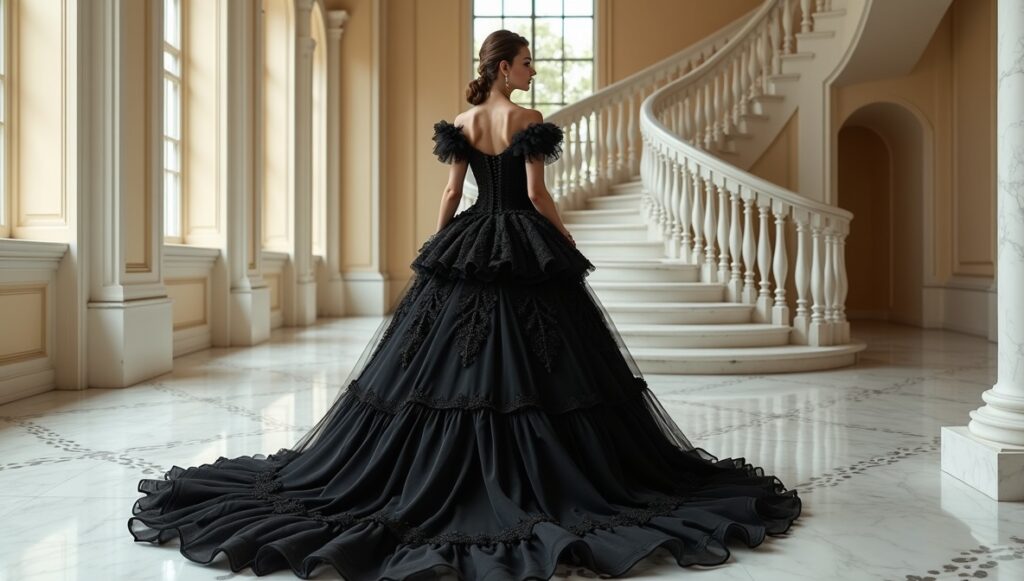
Embellishment can range from minimal to highly ornate. Some goth brides favor clean, almost monastic lines that reference ecclesiastical garments and nun’s habits, an echo of religious history and iconography. Others embrace maximalism: jet beading, embroidery of bats, ravens, or thorny roses, and metallic appliqué. Accessories—corset belts, chokers, gloves, and capes—extend the impact of the dress. A black lace cape, for example, can function like a modern twist on the historical mantilla, a Spanish lace veil tradition noted in collections at institutions such as the Victoria and Albert Museum.
Table: Key Characteristics of a Black Goth Wedding Dress
| Element | Typical Features | Historical / Cultural References |
|---|---|---|
| Color Palette | Deep black, charcoal, occasional dark red/purple | Spanish court dress; Victorian mourning; goth subculture |
| Silhouette | Corseted, A‑line, ball gown, mermaid, or column | Victorian & Edwardian gowns; medieval and Renaissance dress |
| Fabrics | Velvet, lace, satin, tulle, organza, brocade | Courtly luxury textiles in Europe; 19th‑c. formalwear |
| Details | High collars, long sleeves, trains, dramatic veils | Mourning dress, ecclesiastical garments, gothic architecture |
| Embellishment | Jet beading, black embroidery, metal hardware | Late‑Victorian jewelry; punk and goth aesthetics |
| Accessories | Chokers, gloves, capes, headpieces, dark bouquets | Gothic literature, religious iconography, club and alt fashion |
Symbolism: What Does a Black Wedding Dress Mean?
A black goth wedding dress is rich with layered symbolism. In color psychology, black is often associated with strength, authority, and formality. Historically, it also signified dignity and restraint: as The Metropolitan Museum of Art has observed in its exhibitions on 19th‑century fashion, black evening dress emerged as a sophisticated alternative to brighter colors among the European elite. For a bride, choosing black can signal confidence and self‑possession rather than submissive purity.
There is also an inherent romanticism to black in the goth imagination. Gothic novels and films use darkness to heighten emotion rather than suppress it: moonlit ruins, candlelit corridors, and stormy skies are emotional amplifiers. A black wedding gown continues that visual language. Instead of presenting marriage as a pastel fairy tale, the bride frames it as a profound, sometimes ominous commitment—“’til death do us part” not as a polite phrase but as a serious vow. As some goth couples express, the wedding is not an escape from darkness but a promise to face it together.

At the same time, black can carry spiritual or philosophical meanings. In many traditions, black is the color of the unknown, of potential and transformation. In alchemical imagery, the nigredo (blackening) is the first stage of profound change. For some brides, a black dress resonates with this idea: marriage as a transformation of identity and life path. As fashion historian Valerie Steele, director of The Museum at FIT, has famously said, “Black is simultaneously modest and arrogant. Black is lazy and easy—but mysterious.” That tension between modesty and mystery is central to the appeal of the goth bridal look.
Drawing from Real History: Period Inspirations
Designers of black goth wedding dresses often mine specific historical periods for inspiration. The Victorian era (1837–1901) is especially influential: corseted bodices, bustle backs, and lace overlays all reference silhouettes documented extensively by the Victoria and Albert Museum and institutions like the Fashion Museum Bath. A black gown based on an 1880s evening dress pattern, rendered in velvet and lace, can instantly evoke a darkly romantic, “gaslamp” atmosphere.
Medieval and Renaissance styles are equally popular, particularly in dresses featuring long bell sleeves, square necklines, and flowing, columnar skirts. Paintings in The Louvre—such as portraits of French and Italian noblewomen—often show dark, richly embellished gowns that translate beautifully into modern goth bridal wear. These references also tie into fantasy and role‑playing traditions: brides who love historical reenactment, Renaissance fairs, or fantasy literature frequently gravitate toward these shapes.
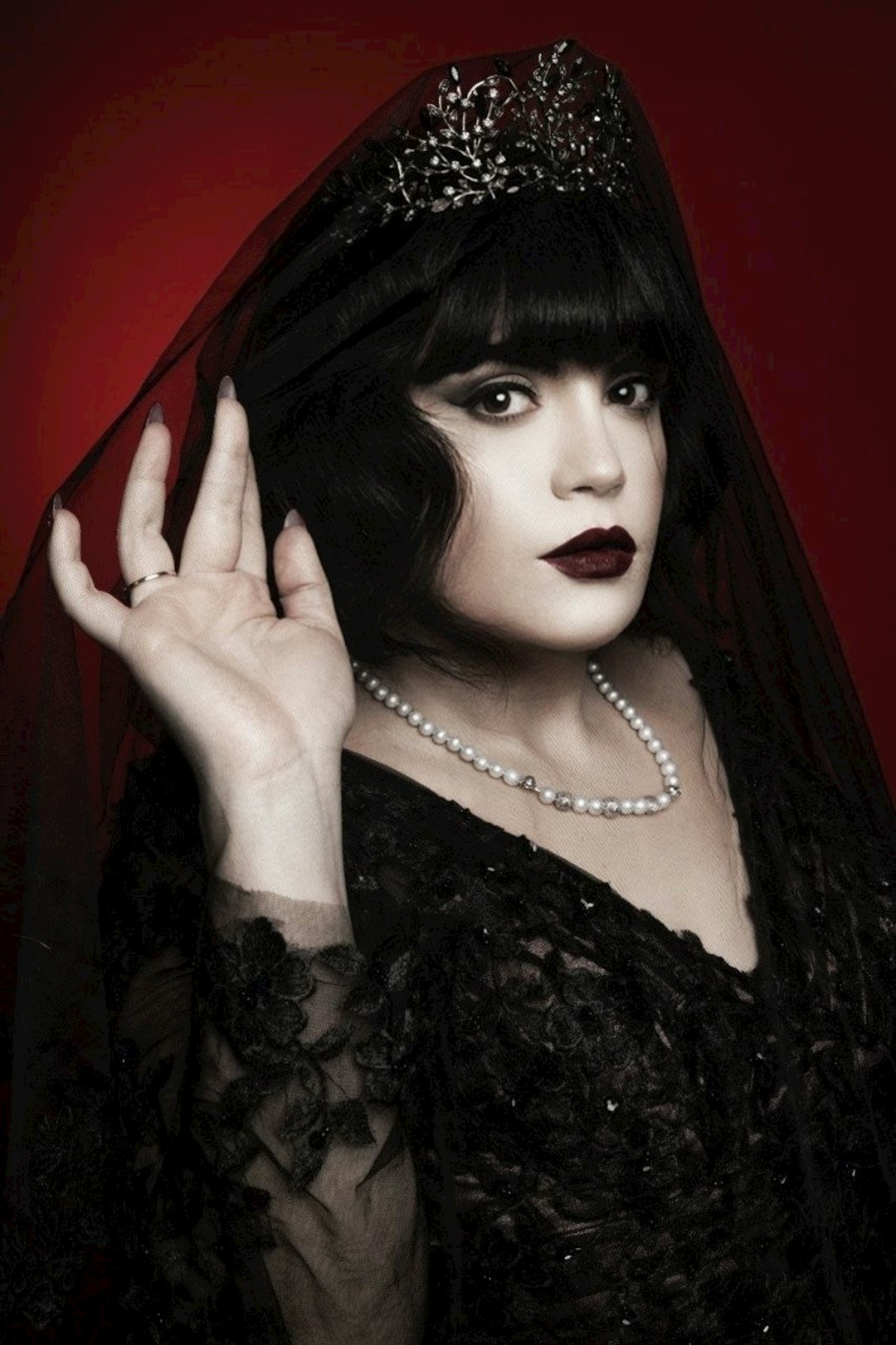
The early 20th century offers another, slightly more understated, source of ideas. Bias‑cut gowns from the 1920s and 1930s, preserved in collections at The Metropolitan Museum of Art and the Victoria and Albert Museum, drape close to the body and create a slinky, spectral elegance when executed in black satin or silk. Paired with a cathedral‑length black veil or a beaded cape, such dresses achieve a striking fusion of old Hollywood glamour and goth minimalism.
Designing or Choosing Your Own Black Goth Wedding Dress
Selecting a black goth wedding dress begins with clarifying your aesthetic priorities. Do you imagine a historically inspired gown with clear Victorian or medieval echoes, or a more contemporary, minimalist silhouette rendered in black? Consider your venue and ceremony style: a candlelit historic church or castle invites more elaborate, period‑influenced designs, while a modern gallery or industrial loft may suit a sleek, architectural gown with sparse embellishment.
Fabric choice is crucial for both comfort and effect. Heavy velvet and brocade look spectacular in photography and cool‑weather weddings but can be overwhelming in hot climates. Lightweight options like chiffon or tulle maintain drama without excessive warmth. If you’re ordering custom, ask your dressmaker for fabric swatches and test how they look under the lighting conditions of your venue—black can appear flat in low light, and mixing textures (matte velvet with glossy satin, or opaque lining with sheer lace) helps maintain visual interest.
Finally, consider how your dress will age—in photographs and in memory. Timeless design cues taken from historical garments documented by reputable institutions such as The Metropolitan Museum of Art or the Victoria and Albert Museum tend to date more gracefully than overly trendy details. A simple, well‑cut black gown with carefully chosen gothic accessories can make as strong a statement as an elaborately constructed dress, and it offers more flexibility if you plan to re‑wear it for future events or anniversary shoots.
Authoritative Perspectives and Sources
Fashion historians and museum curators have increasingly recognized the significance of black in the evolution of Western dress. The Metropolitan Museum of Art’s Costume Institute has mounted several exhibitions that highlight black garments as central to understanding formality and modernity in fashion, emphasizing how black evening wear became synonymous with elegance in the 19th and 20th centuries. This institutional scholarship helps legitimize black wedding dresses as part of a broader fashion narrative rather than a mere trend.
The Victoria and Albert Museum in London has extensively documented bridal and ceremonial dress, noting that white has not always been the default wedding color worldwide. In some European regions in the 19th century, practical darker colors were common for brides who needed to re‑wear their wedding dress afterward. This historical context supports the idea that a wedding gown’s color is a cultural construct, open to reinterpretation—in this case, by goth brides reclaiming black as celebratory rather than somber.
Institutions like the Smithsonian and The Louvre further illuminate how black clothing has been used symbolically in art and society over centuries—as a sign of piety, power, professionalism, or protest. When a modern bride steps into a black goth wedding dress, she is participating in this long, complex history. Her choice resonates with what museum collections have been showing for decades: that black clothing has always carried meaning far beyond fashion alone.
Frequently Asked Questions About Black Goth Wedding Dresses
Is it “bad luck” to wear black as a bride?
No credible historical or religious authority universally condemns black wedding dresses as bad luck. The idea is largely a modern superstition tied to the 19th‑century association of black with mourning. Before white became dominant, brides in Europe and elsewhere often married in their “best dress,” regardless of color. Choosing black today is a cultural and personal choice rather than an omen.
Will a black goth wedding dress look inappropriate in a church or formal venue?
Appropriateness usually depends on local customs and the expectations of your officiant or institution. Many historic churches, castles, and manor houses used as wedding venues host black‑clad brides without issue, especially when the dress is elegant and modest in cut. If you’re concerned, discuss your plans with the venue in advance. A high‑necked, long‑sleeved black gown can appear more formal and respectful than a very revealing white one.
How can I style a black goth wedding dress so it still feels clearly bridal?
Several design choices signal “bridal” even in black: a veil (especially fingertip or cathedral‑length), a train, delicate lace, and a bouquet that contrasts with the dress, such as white, red, or dark burgundy flowers. Jewelry in silver, gold, or pearls, and hair styling that’s more polished than everyday goth club looks, also help mark the occasion as special and ceremonial rather than simply another night out.
Conclusion
A black goth wedding dress is far more than a style preference; it’s a thoughtful engagement with fashion history, symbolism, and personal identity. Drawing on centuries of black garments—from Spanish court dress to Victorian mourning and modern couture—it transforms what could be a standard ritual into a deeply individualized statement. Supported by the scholarship and collections of institutions like The Metropolitan Museum of Art, the Victoria and Albert Museum, The Louvre, and the Smithsonian, the black bridal gown stands not outside tradition, but in dynamic conversation with it. For the bride who chooses it, black is not the absence of light, but the presence of all her complexity, love, and resolve.
AI Notice: Some visual content in this article may have been created or enhanced using artificial intelligence (AI) for artistic, editorial or illustrative purposes. Learn more about our approach in our AI & Editorial Principles.