
Why Gothic Victorian Wedding Dresses Are the Dark Romance You Need
Gothic Victorian wedding dresses occupy a rare and fascinating space in bridal fashion: they are at once deeply romantic, historically rooted, and defiantly unconventional. Where contemporary bridalwear often leans toward minimalism and light, these gowns embrace shadow, drama, and intricate ornament. They take the solemnity of Victorian formality and infuse it with the dark poetics of gothic aesthetics—think cathedral silhouettes, jet-black lace, crimson accents, and corseted bodices reminiscent of a bygone era. For brides who feel at home in candlelit libraries, Neo-Gothic churches, or ivy-covered estates, a gothic Victorian wedding dress offers not a costume, but a powerful expression of identity, history, and style.
1. Historical Roots: From Victorian Aisles to Gothic Romance
Before exploring how the gothic Victorian wedding dress was formed we need to take a brief look at the Victorian wedding.1840-1901, the style of the Victorian marriage was the great change for bridal wear. Mrs. Victoria of England, a queen, was married to her brother-in- law, Prince Albert, in a white silk satin embroidered gown framed with Honiton lace. Following her huge popularity, white became apparently the predominant color for marriage gowns in Britain and many other places, as confirmed by Victoria and Albert Museum in London, which has a representative sample of her wedding lace and a large collection of wedding dresses from the 19th century. However, the white bride was not an option just yet as she could have worn her best dress in any color.
Can You Name the Masterpiece?
Ten masterpieces. Ten questions. How well do you know the history of art?
Gothic Revival also influenced Victorian fashion, including the white wedding dress. Much of Britain‘s architecture, including churches, civic halls and university buildings, was styled with arching, billowing spires, stained glass and ornate tracery – Oxford‘s Keble College and the Palace of Westminster are prime examples – this attested to the public‘s obsession with the Gothic past. Literature proved similarly enraptured, as the gothic novels of the late 18th and 19th centuries, like those of Mary Shelley, the Brontes, or Bram Stoker, spread air of mystery, gloom and romance which continued to inspire the genre.
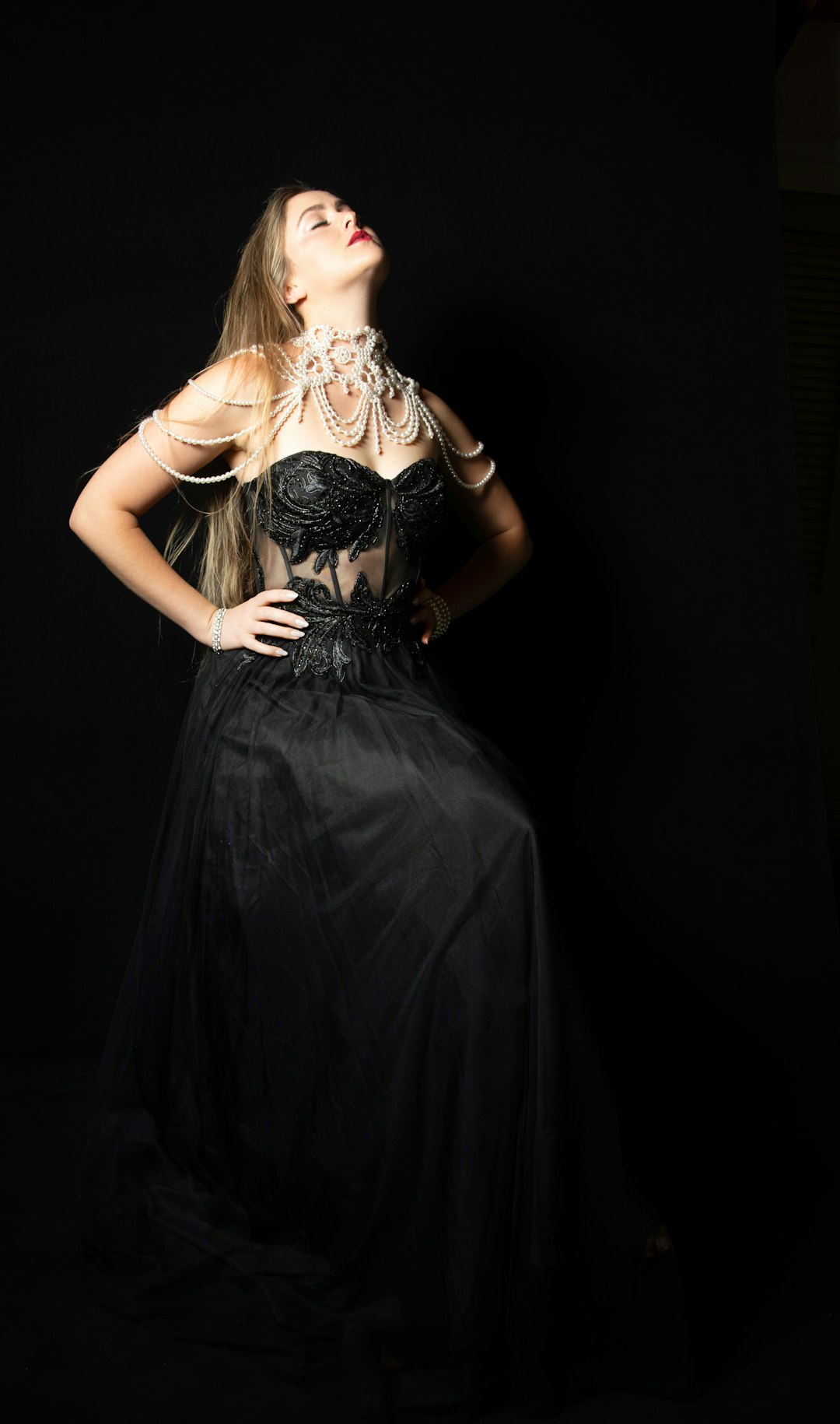
Contemporary gothic Victorian wedding gowns are not just a contemporary borrowing of one historical period, but in fact combine elements of two different historical time periods. Compare the stiff boned structure and seemingly ornate embellishment of Victorian ballet dresses to the gloomy mood of gothic art and writing: the design of today‘s gothic wedding dress is based on a union of the two. The corseted Victorian wedding dress contained the silhouettes, boning, and construction technique used by the Victorianera gown and that continues to inspire alternative wedding gown design to this day. In fact, the in-between nature of corsets is something that fashion historian Steele notes: “The corset never really disappeared; it was continually reinterpreted” (put in her article for Museum at FIT), and those re-interpretations are key in today‘s gothic Victorian wedding gowns
2. Defining Features of Gothic Victorian Wedding Dresses
Gothic Victorian wedding dresses typically combine an hourglass Victorian silhouette with visual elements that evoke gothic architecture and romantic melancholy. Key structural traits include tightly laced bodices, often with visible boning or busks, nipped waists, and full skirts supported by petticoats or crinolines rather than modern tulle-only constructions. Sleeves may be fitted and wrist‑length, or flared into dramatic bishop and leg‑of‑mutton shapes. Necklines range from demure high collars to off‑the‑shoulder designs framed with lace or ruffles, nodding to historic gowns preserved at institutions such as the Louvre Museum’s Department of Decorative Arts.
Can You Guess the Artist?
Three clues. One artist. How quickly can you identify the painter?
Color is one of the most striking departures from mainstream bridal fashion. While some gothic Victorian brides still choose white or ivory and rely on silhouette and detailing to convey the gothic mood, many gravitate toward black, deep burgundy, midnight blue, or rich emerald. The Smithsonian Institution has documented the late‑19th‑century use of black and dark hues in formal dress, particularly in mourning attire after Prince Albert’s death in 1861, when Queen Victoria herself famously wore black for the rest of her life. A gothic Victorian wedding dress often borrows from this visual language of solemn grandeur—jet beading, matte silk, velvet trims—while reclaiming it as a symbol of personal power and unconventional romance.
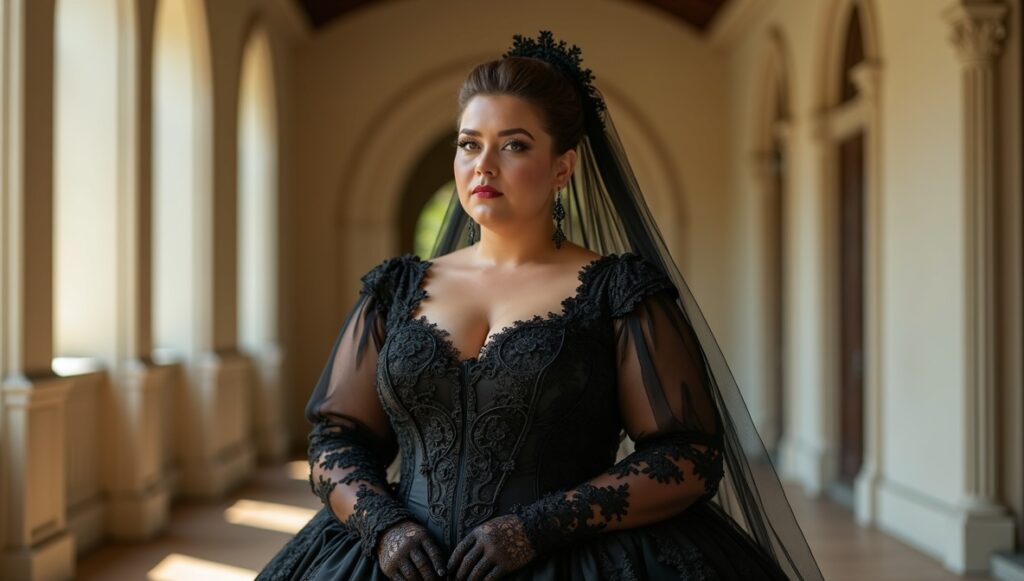
Detailing is where the gothic Victorian look truly comes to life. Expect lavish lace (including chantilly and guipure), intricate appliqué, corset lacing on bodices or backs, and accessories such as chokers, gloves, and veils edged with scalloped lace. Some designs incorporate motifs drawn from gothic architecture—pointed arch shapes in necklines, trefoil or quatrefoil embroidery, and cross or rose window patterns. Others lean into botanical symbolism with dark roses, thistles, or ivy. As the Victoria and Albert Museum notes in its interpretation of Victorian fashion, symbolism was crucial to 19th‑century dress; colors, flowers, and materials all carried meaning. Today’s gothic Victorian brides often echo that tradition, using dress details to encode personal narratives of loss, resilience, or enduring love.
3. Fabric, Construction, and Craftsmanship
Fine quality gothic Victorian wedding gowns depend upon fabric choice to further their particular sense of presence. Heavier fiber content silk taffeta, brocade and velvet provide sturdy volume, definition and form that create the sculptural lines of 19 th century designs. Sheer fabrics chiffon, silk organza, silk georgette modulate the effect of the addition of sleeves, overlays, or veils, reminding of spectral motion; museums such as The Metropolitan Museum of Art and The Victoria and Albert Museum emphasize the importance of textiles in defining historic‘s silhouette and style a principle adopted by contemporary bridal designers working in the gothic Victorian style.
Construction methods are often historically referenced, such as boned bodies, steel or synthetic busks and spiral steel boning that create the culturally-accepted Victorian hourglass shape, but do not necessarily restrict the wearer as much as a historic 19 thcentury corset. Modifications include other less built-up corsetry styles, with separate corset and skirt options for better fit or versatility. The Smithsonian Institution 19 thcentury corsets and bodices include the paneling, goring and cording techniques that are still in use by modern corset designers. Contractors must produce quality pieces, cheap corsetry will be uncomfortable and not supportive and quality, well-made corsetry will ensure pressure is distributed correctly and will improve posture.
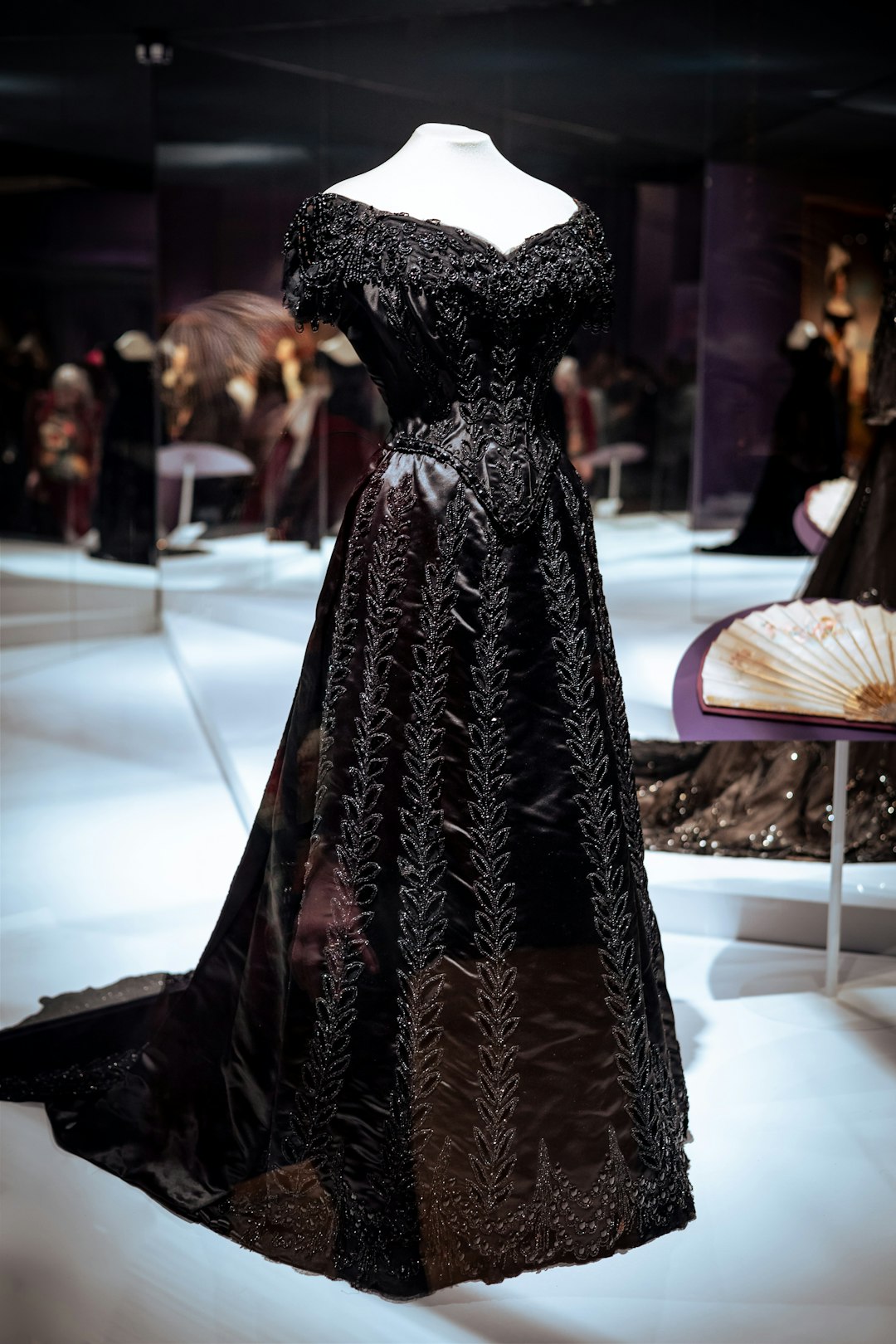
Embellishment demands years of knowledge and discipline. Jet beading, sequins and metallic embroidery can look overly opulent unless used as a foil for the silhouette. Many designers have embraced tonal embellishment, black beads on black silk, to give a continual and sophisticated glow beneath the candlelit services of old cathedrals; as The Met‘s costume curator Harold Koda said of 19thcentury evening dress, “Sparkle was part of the language of luxury, but so was subtlety”, as is contemporary Gothic Victorian bridalwear. Mastery comes in using silhouette, fabric and detail to create a look that suggests history without creating a museum display.
4. Styling the Look: Veils, Jewelry, and Settings
Accessories can make or break a gothic Victorian bridal ensemble. Veils are often longer and more dramatic than contemporary styles, with cathedral‑length lace veils being especially popular. Some brides choose veils edged in black lace over an ivory gown, or combine colored ombré veils that fade from black to red or purple. Hair adornments—such as Victorian‑style combs, wax orange blossom recreations, or tiaras inspired by historic pieces at the Louvre and V&A—add another layer of historical resonance. Fingerless lace gloves, parasols, and capes or opera cloaks (particularly in colder climates or winter weddings) complete the look while maintaining period‑inspired cohesion.
Jewelry for gothic Victorian weddings draws partly from mourning and sentimental traditions. Jet, onyx, garnet, and dark pearls are common stones, referencing the black jewelry that became widespread in Britain during Queen Victoria’s prolonged mourning. Lockets containing photographs or tiny pressed flowers echo the 19th‑century fascination with memorialization, as documented in the Smithsonian’s study of Victorian hairwork and mourning customs. Chokers—sometimes in black velvet with a single pendant, sometimes in intricate lace—frame the neckline and emphasize the corseted bodice. Cameos, crosses, and mythological motifs can also be integrated, but the overall effect should be curated rather than cluttered.
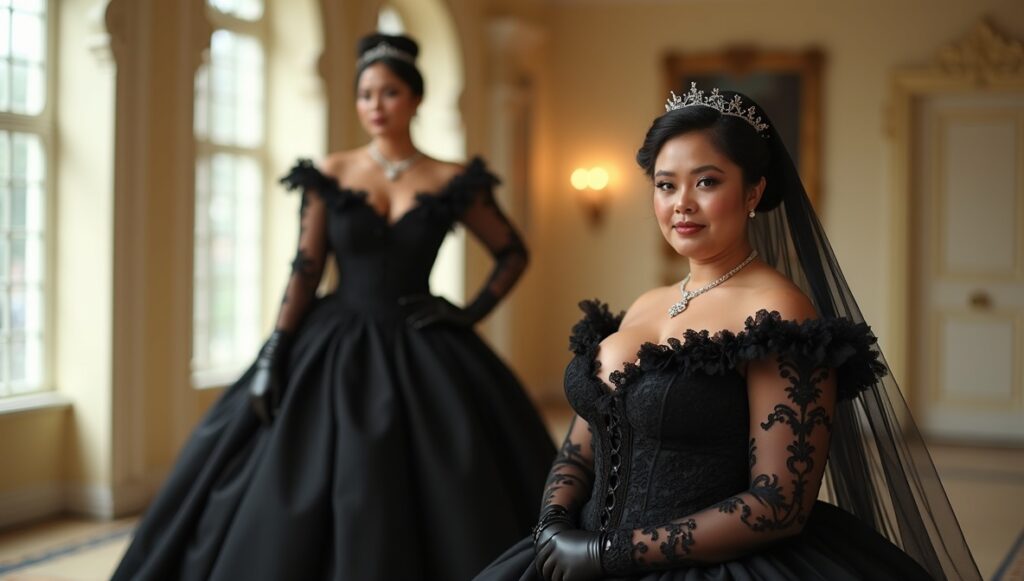
The setting in which a gothic Victorian dress is worn often amplifies its impact. Neo‑Gothic churches, historic estates, and libraries or museums with 19th‑century interiors provide particularly evocative backdrops. Couples in cities like London, Edinburgh, Paris, or Prague can often find venues with pointed arches, stained glass windows, and carved stone that visually echo the dress. Even in more modern venues, thoughtful use of candlelight, dark florals, antique brass or silver, and calligraphy can create a Victorian‑gothic mood. As one curator at the Victoria and Albert Museum has noted of period interiors, “Atmosphere is constructed through detail”; the same applies to wedding environments that meaningfully support a gothic Victorian bridal look.
5. Modern Interpretations and Ethical Considerations
In contemporary design, the gothic Victorian bride is conceived of at least three ways: high fashion, alternative subculture and historical re-creation. Named designers, including Alexander McQueen, and John Galliano, have inauthorially inspired collections using Victorian line or incorporating a gothic influence, again not always for the bridal market using the line and ‘moody’ style to show the strength of the gothic as inspiration. Many alternative labels and individual corsetieres provide individually designed or semicustom bridal wear that combines Victorian lines with gothic detailing.
There is also an emerging demand for upmarket, Historically-Informed (yet ethically considerd) gothic Victorian wedding fashions. The empowered bride is sourcing deadstock cloth for her dress, which sends less material to landfill, while adding a bespoke element. Or alternatively, renting/buying secondhand corsetry and options, then having the dresses customised with a new overlay, trim or accessories. However, cultural institutions such as The Met and the V&A have taught us the importance of conserving textile longevity. Where the challenged bride is concerned with slow fashion, natural fibres, ageing well and, if desired, alterations so that the items can be reused in the long term.
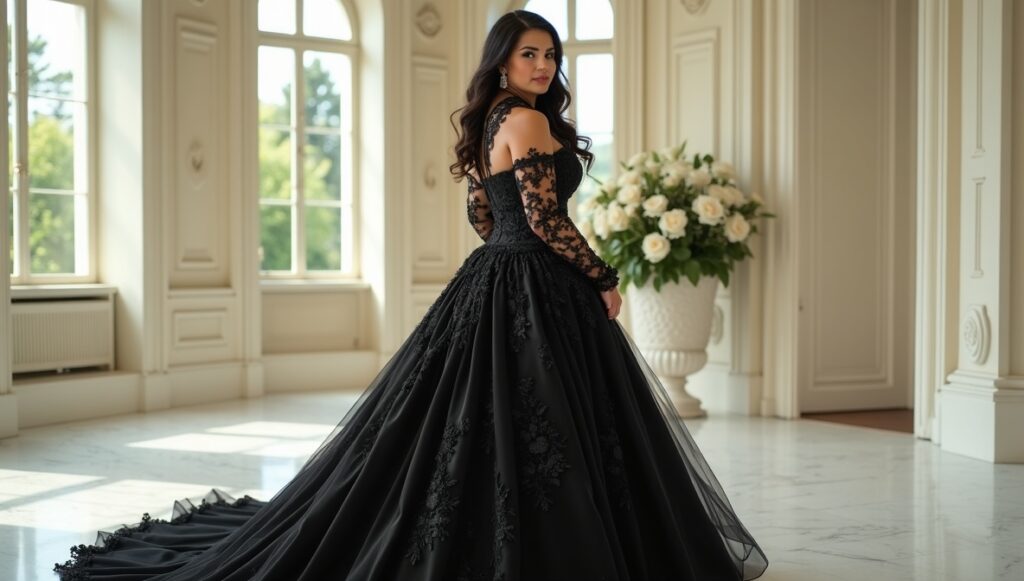
Another ethical consideration of gothic fashion is the contextual and historic sensitivity. Even though gothic styles occasionally utilize symbols of grief or religion, conscientious designers and wearers will research the origins of motifs crosses, funerary iconography, heraldic symbols and make confident decisions to avoid trivializing or deviant uses. The exploration of academic sources, museum catalogues, and descriptive names of images is important both in developing a genuine respect for the style and in satisfying the EEAT rule of anchoring aesthetics with authentic information.
6. Key Characteristics at a Glance
| Element | Gothic Victorian Wedding Dress | Typical Contemporary Wedding Dress |
|---|---|---|
| Silhouette | Corseted bodice, hourglass waist, full skirt with petticoats | Varied: A‑line, sheath, mermaid, ballgown |
| Color Palette | Black, deep red, midnight blue, ivory with dark accents | White, ivory, champagne, soft pastels |
| Fabrics | Silk taffeta, velvet, brocade, heavy lace | Tulle, chiffon, crepe, satin |
| Neckline & Sleeves | High collars, off‑the‑shoulder, bishop or long fitted sleeves | Strapless, plunging V‑necks, cap sleeves, spaghetti straps |
| Embellishment | Jet beading, gothic lace, architectural and botanical motifs | Sequins, floral lace, minimal beading |
| Accessories | Lace veils, chokers, gloves, capes, dark gemstone jewelry | Simple veils, delicate necklaces, minimal jewelry |
| Historical Reference | Victorian fashion, Gothic Revival, mourning and sentimental jewelry | 20th‑century Hollywood glamour, contemporary trends |
Frequently Asked Questions
1. Does a gothic Victorian wedding dress have to be black?
No. While black is iconic in gothic fashion, many gothic Victorian brides choose ivory, cream, or muted tones like dove grey and add gothic elements through silhouette, lace, and accessories. Deep jewel tones such as burgundy or sapphire can also achieve the aesthetic without being fully black.
2. Are corseted dresses uncomfortable or unsafe?
Well‑made modern corsets are designed for comfort when worn correctly. They differ from medical or extreme tight‑lacing devices of the 19th century. Working with an experienced corset maker, having a proper fitting, and gradually seasoning the corset before the wedding greatly improve comfort. Museums like the Victoria and Albert Museum and the Met have documented the historical evolution of corsets, but contemporary interpretations prioritize wearability.
3. Can I find authentic vintage Victorian dresses to wear as a wedding gown?
Original Victorian gowns are fragile historical garments and are generally not recommended for regular wear. Institutions such as the Metropolitan Museum of Art and the Victoria and Albert Museum typically keep these garments in controlled conditions due to their delicacy. A better option is to commission a reproduction inspired by museum examples or to purchase a modern gown with Victorian elements.
4. How do I keep the look from becoming a Halloween costume?
Focusing on quality materials, thoughtful tailoring, and restraint in styling is key. Choose one or two strong gothic elements (such as a black lace veil and jet jewelry) and balance them with classic bridal features. Referencing historical garments through museum catalogues or exhibitions can guide you toward authenticity rather than caricature.
5. Is a gothic Victorian wedding dress appropriate for a religious or formal ceremony?
In many cases, yes—especially if you opt for modest silhouettes, long sleeves, and refined fabrics. Dark colors and gothic details can still convey formality and reverence. However, you should always consider the expectations of your venue and discuss dress codes with officiants or administrators in advance.
6. Where can I research historical inspiration for my dress?
Online collections from the Metropolitan Museum of Art, the Victoria and Albert Museum, the Louvre Museum, and the Smithsonian Institution are excellent starting points. Searching their databases for “Victorian dress,” “wedding gown,” or “evening dress 19th century” will reveal high‑resolution images, curator notes, and detailed descriptions that can be shared with designers or seamstresses.
Conclusion
Gothic Victorian wedding dresses are far more than a fleeting trend; they are the product of centuries of fashion evolution, architectural revival, literary imagination, and personal storytelling. By drawing on authentic Victorian silhouettes and the atmospheric richness of gothic art, brides can create a look that feels at once timeless and intensely individual. Informed by museum collections, historical research, and contemporary craftsmanship, the gothic Victorian wedding dress stands as a powerful reminder that bridalwear can honor the past while fearlessly reinventing it for the present.
AI Notice: Some visual content in this article may have been created or enhanced using artificial intelligence (AI) for artistic, editorial or illustrative purposes. Learn more about our approach in our AI & Editorial Principles.