
Victorian Aprons Are Making a Comeback – The Surprising Reason Why
Few garments say as much about the Victorian age as the humble apron. Worn in kitchens and factories, nurseries and drawing rooms, on servants and respectable housewives, Victorian aprons were far more than simple cloth barriers against dirt. They were coded garments that revealed a woman’s work, class, respectability, and even her aspirations. Today, surviving examples in museums from London to New York allow us to read Victorian aprons almost like documents: rich with information about industrialization, domestic ideology, and the powerful social divisions of the nineteenth century.
The Social Meaning of the Victorian Apron
In Victorian Britain (1837–1901), the apron was deeply entangled with ideas of respectability and the “proper sphere” of women. For middle‑class housewives, a clean white apron symbolized moral as well as physical cleanliness, echoing the period’s obsession with order, hygiene, and domestic virtue. The apron and the home became linked in the popular imagination, supported by influential conduct literature such as Sarah Stickney Ellis’s The Women of England (1839), which insisted that “domestic life is the chief source of a nation’s strength.” In this moral universe, an apron worn over a tidy dress signaled a woman’s virtue and diligence.
Can You Name the Masterpiece?
Ten masterpieces. Ten questions. How well do you know the history of art?
But the apron was also a signifier of class. For working women and maids it was a public signifier of their role in G20http://20.kiasu.sg/ society and their place within it; the material, cut or manner of wear could instantly reveal class, an apron that was stained and mended betraying a manual worker at work within a relatively comfortable household or a glittering, pressed pinafore betraying the Victorian nursery maid or housekeeper. As the Victoria and Albert Museum has noted in its essay on domestic service dress, uniforms and aprons, ‘they… Helped to crystalize social distinctions within the household… And maintained… Proper decorum’.
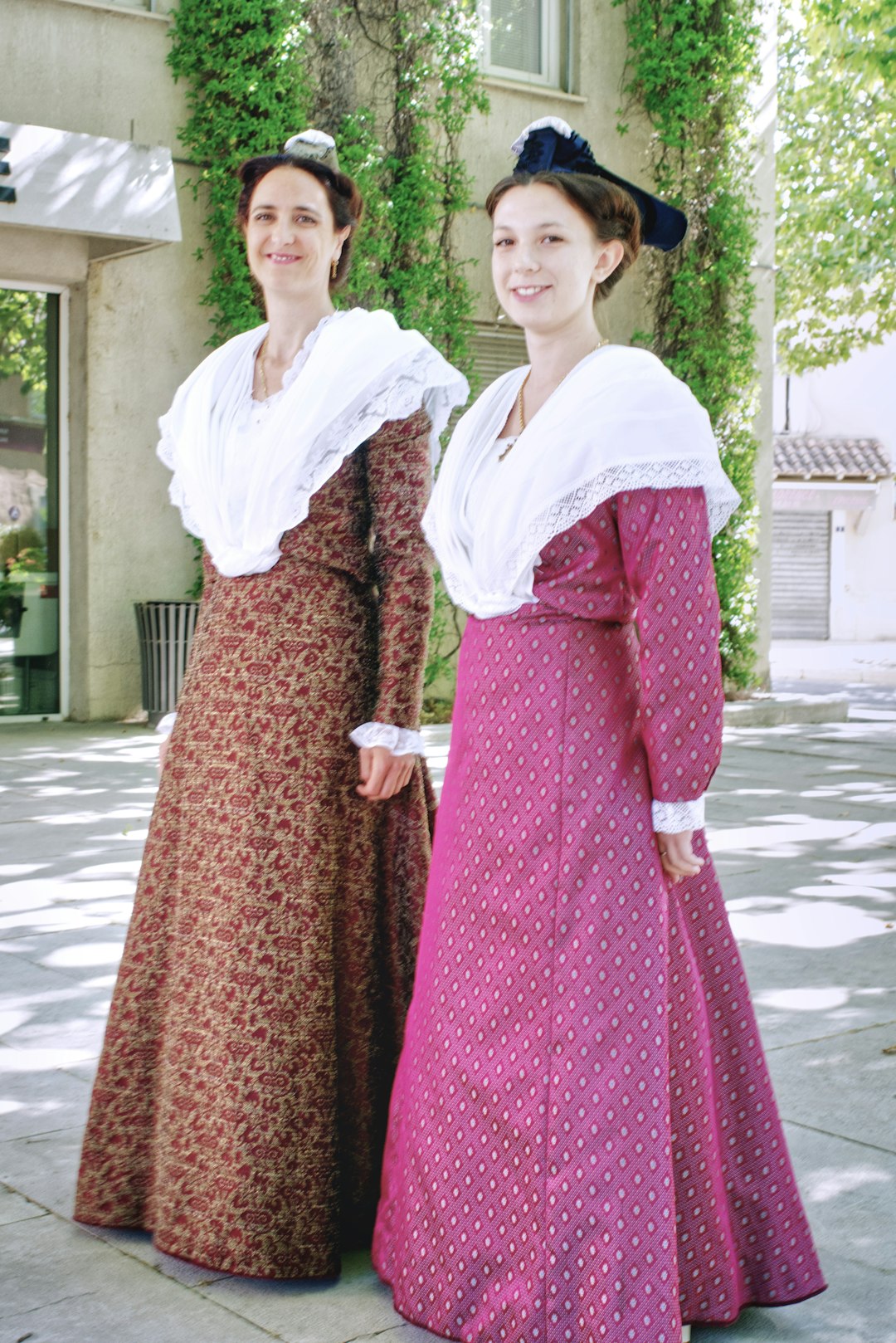
The apron as well was there; a part of the emerging language surrounding women and their professionalism:“at hospitals, schools and charitable institutions, aprons (alongside caps) came to symbolize achievement and responsibility.” (From the Smithsonian Institution‘s collection of nurse‘s uniforms, by the end of the Victorian era “the white apron and cap had become powerful symbols of trained nursing” and “no longer [were]…the handmaiden of.”)
Types of Victorian Aprons: From Kitchen to Drawing Room
Victorian aprons varied greatly depending on the wearer’s role and social class. In middle‑class homes, housewives commonly wore practical bib aprons for cooking, cleaning, and laundry—often in sturdy cotton or linen. These aprons provided full frontal coverage and were tied firmly at the back, protecting dresses that were relatively expensive to launder. During the early Victorian period, fabrics tended to be plain, but toward the later nineteenth century, printed cottons and trimmings appeared, as industrialization made textile production cheaper and more varied.
Can You Guess the Artist?
Three clues. One artist. How quickly can you identify the painter?
Though, aprons worn by domestic servants could become rather more standardised and identical: a house maid working in a wealthy London townhouse or large country estate might wear, for instance, a white apron and cap over a dark dress, and change during the course of the day to maintain a neat vestal appearance. From the V and A‘s domestic service collection, such aprons, for dusting, serving or attending, might have had ruffles, straps or a bib: they would be shorter for dusting and serving, and longer when waiting. Kitchen maids and cooks tended, however, to wear darker, heavier, twilled or coarse linen aprons.

Decorative and semiceremonial aprons also exist. During the late Victorian and Edwardian periods, attractive half-aprons sometimes of lawn, lace, or embroidered muslin were widely worn as the fashionable “apron du jour” while adjourning wearers to parlors or drawing rooms for tea service or other less-than-formal forms of entertaining at home. They did nothing to safeguard clothes but always announced the homemaker‘s surely considerable skills of catering and embroidery. As surviving examples such as those in the Costume Institute at the Metropolitan Museum of Art suggest, these aprons kept a tension between performance and practice: the fine work in white-work embroidery, insertion lace, and delicate ties suggested that what they represented was going into work and always out of.]
Materials, Construction, and Decoration
The most common materials for Victorian aprons were sturdy, washable fabrics: plain‑weave linen and cotton, checked or striped cottons, and, for heavy labor, coarse twills or canvas. White cotton remained the ideal for many household aprons, not because it was easy to keep stain‑free, but because it could withstand boiling and bleaching. The Metropolitan Museum of Art notes that the expansion of the cotton industry and improvements in laundering technology in the nineteenth century “allowed white textiles to become everyday items for a broader public,” and aprons are a prime example of this shift.
Designs ranged from the very basic to the carefully thought through. In its simplest form an apron for heavy work might have been a broad rectangular panel gathered to a narrow band to tie round the waist, with the occasional pocket at centre-front. More sophisticated bib aprons would have been curved around a shaping bodice, with shoulder straps or cross back support. Child care and nursery aprons were designed to give greater coverage over the shoulders and round the neckline to keep splashes to a minimum. Recipes for home-sewn aprons appeared in popular women‘s magazines such as The Englishwoman‘s Domestic Magazine., to standardise some shapes.
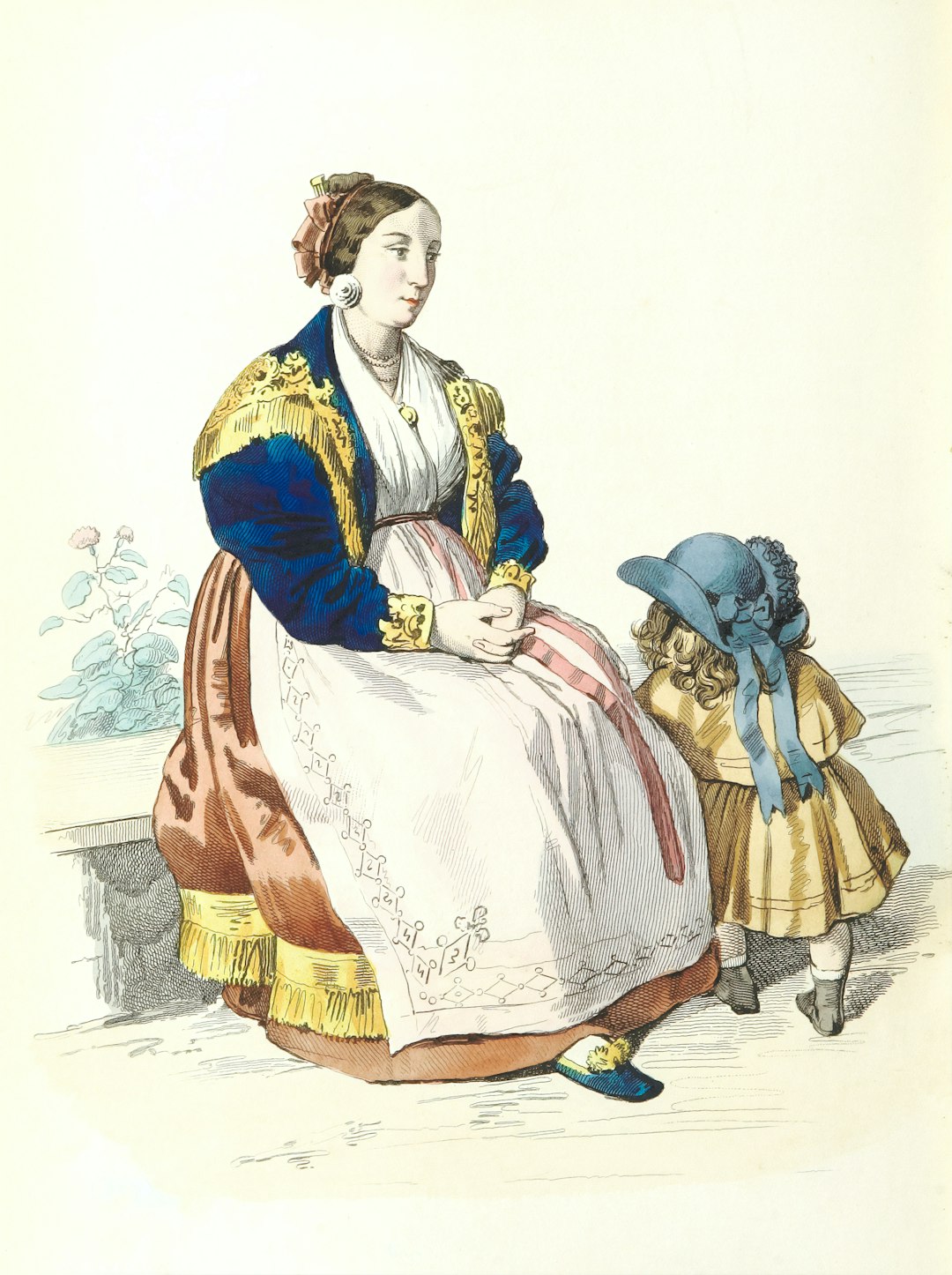
Decorative elements could also show good taste and social standing. While working aprons were usually simple, “an apron of the better sort might be delicately bordered with narrow tucks, a little embroidery, initials in mono., or a fine lace edging”. (22) Were embroidery to be found on an apron it was an activity that Victorian ladies would have mastered, and that practice was also provided by the apron itself. As the textile collections and interpretive materials of the Louvre reveal in more general terms about nineteenth-century household textiles, decoration of useful objects was a means of “composing their usefulness with the aesthetic and moral elements of the bourgeois home”. (23) This might be as subtle as a scalloped hem or embroidered border on an apron that was not regularly worn.
Class, Gender, and Power Stitched into Cloth
The Victorian apron cannot be understood outside the rigid class structures of the period. In large urban centers such as London, Manchester, and Glasgow, households often employed several tiers of female servants, each distinguished partly by her apron. A lady’s maid might wear a finer and less soiled apron than a scullery maid; the nursemaid’s apron would be different from the parlor maid’s. This visual coding maintained strict boundaries between those who served and those who were served. As historian Judith Flanders notes in her work Inside the Victorian Home, “the servant’s apron was a mobile boundary line, as visible and as significant as any wall.”
And gender norms affected apron usage of course. Working-class men could seldom justify wearing their leather or heavy cloth aprons when working at blacksmithing, butchering or carpentry, whereas the feminine domestic cloth apron was a defining feature of Victorian ‘angel in the house’ ideology. Analysed in contra-distinction to the idealised apron-wearer, conduct manuals and moral tracts extolled the apron-donning angel that “blossoms in the home”- a halcyon myth that veiled the reality of domesti everyday grind. The apron was part of a culture of pleasant, service-orientated self-sacrifice.

Alongside this, the apron may have also acted as a clandestine form of exercising agency. In certain trades (e.g. Nursing, teaching) the apron was a uniform that might bestow a certain status on woman employees working within established institutional surroundings. Florence Nightingale‘s efforts in the Crimea (1853 1856) and beyond, and the subsequent up-take of the nurse profiled the white apron as the visible emblem of trained care, in the words of the Smithsonian Institution: ‘A Uniform for Discipline and Self-Respect and for a New Class of Women …’
Victorian Aprons in Museums and Material Culture Studies
Surviving Victorian aprons are widely represented in museum collections, where they are studied not just as clothing but as material evidence of social history. The Victoria and Albert Museum in London, which holds extensive collections of nineteenth‑century dress and textiles, uses aprons in its displays of domestic life and service. Labels and catalog entries emphasize how these garments illustrate “the working lives of women and the hidden structures of the Victorian household.”
At the Costume Institute, Met museum of Art, New York, there are also Victorian aprons of many sorts from heavily embroidered, delicate items to coarse and uniformed institutional apron wear. The Museum record give an insight into the diversity of usage Victorian apron-teen aprons, to iron on aprons, and the popular use of pictorial sources, fashion-plates, enable the historian to visualise the apron in its intended environment.
Within institutions that primarily preserve fine art – for example The Louvre Museum – assembling an archive of textile and decorative arts at the museum enables the enrichment of knowledge; although the Louvre’s collection is primarily not Victorian (1850-1900) British-appropriate clothing, the collection of European nineteenthcentury household linens and work wear at the Louvre reveal similarities across industrializing nations. Alongside the collection at the Smithsonian Institution (especially in the American domestic life section) I am able to trace apron forms’ and functions’ movement over space and time, their involvement with developments in technology and standards of hygiene, and, interestingly, the occupation of gender roles.
Key Characteristics of Victorian Aprons
Below is a concise overview of typical Victorian aprons, illustrating how form followed function and social meaning:
| Type | Typical Fabric | Coverage/Shape | Primary Wearers | Function & Meaning |
|---|---|---|---|---|
| Kitchen / Work Apron | Coarse cotton, linen, twill | Full front, often bib, long skirt | Cooks, maids, working‑class women | Heavy protection; sign of manual labor and utility |
| Housewife’s Domestic Apron | White cotton, printed cotton | Half or bib; ankle‑length | Middle‑class housewives | Protects dresses; symbol of domestic virtue and respectability |
| Servant’s Uniform Apron | White cotton, sometimes with lace | Bib with straps, ruffles, starched | Housemaids, nursemaids, parlor maids | Visual marker of service role and rank in household |
| Nursery / Childcare Apron | Sturdy cotton, sometimes gingham | Full coverage, shoulder to hem | Nursemaids, mothers, children | Protection from spills; associated with caregiving |
| Fancy / Tea Apron | Fine lawn, muslin, lace | Small half‑apron, decorative | Hostesses, upper‑middle‑class women | Minimal protection; display of needlework and femininity |
| Institutional / Nursing Apron | White cotton, linen | Full bib, often with straps, standardized cut | Nurses, some teachers | Part of a uniform; symbol of discipline and professionalism |
Victorian Aprons in Art, Literature, and Photography
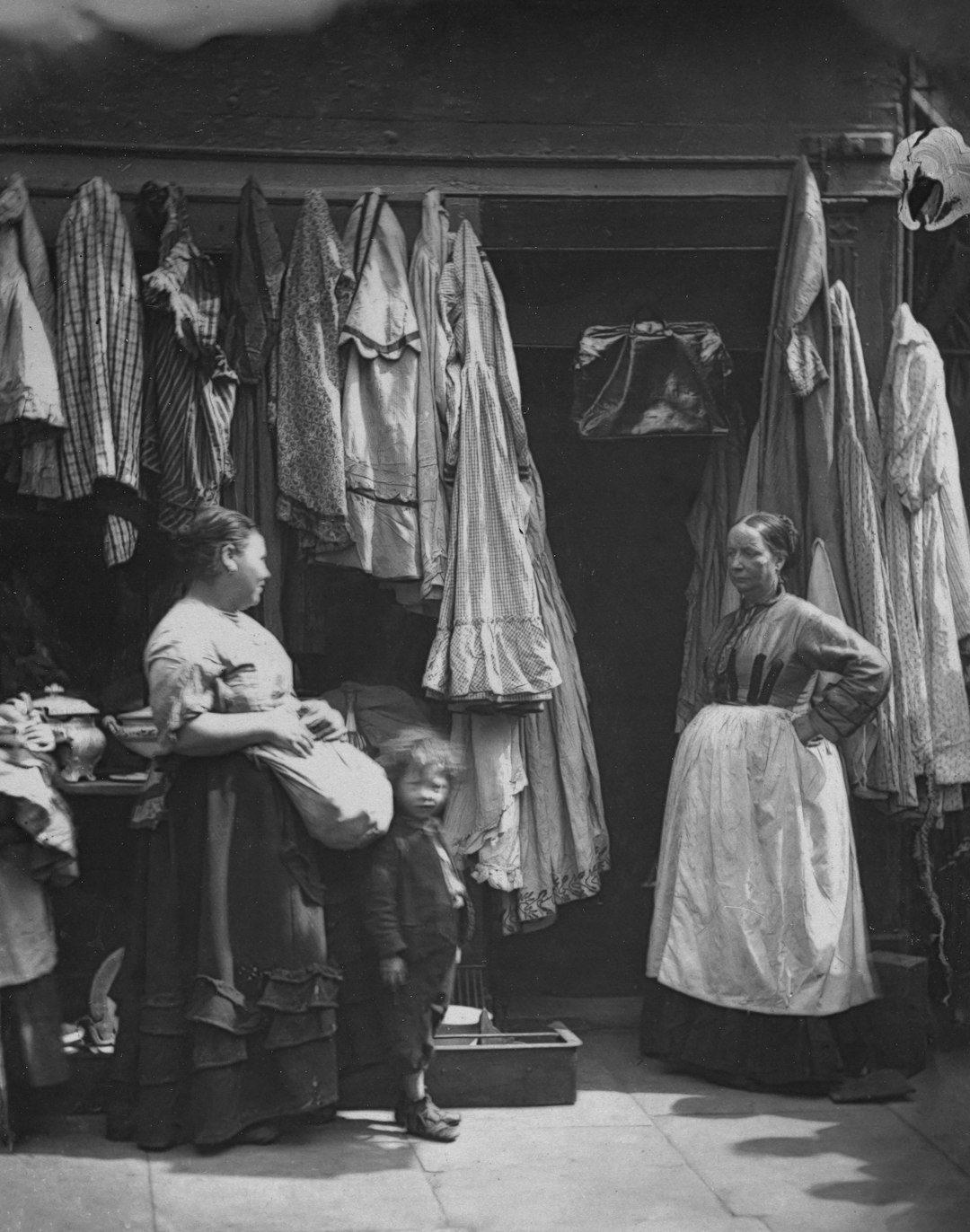
Aprons appear frequently in nineteenth‑century visual culture, where they help viewers instantly decode social roles. Victorian genre paintings—many of which are preserved in institutions like the V&A and the Louvre—commonly depict servants, kitchen scenes, and sentimentalized domestic moments featuring apron‑clad women. These images often idealize domestic life, presenting tidy kitchens and serene mothers, even when real Victorian households were noisy, crowded, and labor‑intensive.
Photographs, but still quite a formal sort of shot, offer a more immediate indication of apron use after 1850. Photos taken in studios of domestics, nurses, working women from Britain and North America depict the mothers and workers with brilliant white cloths and fastidiously neat bows, to demonstrate all the virtues of order and decency. The Smithsonian Institution’s image bank, for example, contains a number of photographs of late nineteenth-century American nurses in which, quite alone in the image, their immaculate starched aprons and caps comfortably occupy the focal point of the shot.
Literature also used the apron as a signifier of social class. Dickens, Gaskell and Hardy used the apron in their writing to show character and class, a neat and tightly fastened apron could imply a resourceful middle class heroine, one that was dirty or frayed may imply destitution and failure and willingness to protest. These literary and visual examples and descriptions enable the historian to compare the historical jackets still in existence with the existing historical examples in order to understanding Victorians views of the apron.
Frequently Asked Questions about Victorian Aprons
Were all Victorian aprons white?
No. While white cotton aprons were highly valued—especially for housemaids, nurses, and middle‑class housewives—working aprons often used darker or patterned fabrics that hid dirt. Checked or striped cottons were common in kitchens and among working‑class women.
Did Victorian men wear aprons?
Yes, but mainly in trade and industrial contexts. Blacksmiths, butchers, cobblers, and other craftsmen wore leather or heavy cloth aprons for protection. In domestic settings, however, the cotton apron was strongly associated with women’s work.
How often were aprons washed?
Frequency depended on class, resources, and type of work. In households with servants and access to laundry facilities, visible aprons—especially white ones—might be changed daily or more. Working‑class women with limited resources often had few garments and washed less frequently, prioritizing aprons because they were simpler to launder than full dresses.
Were children in the Victorian era made to wear aprons?
Commonly, yes. Children’s pinafores—essentially apron‑like garments—were widely used to protect clothing. Many museum collections, including the V&A and the Met, preserve Victorian children’s pinafores that illustrate everyday childcare practices and attitudes toward cleanliness.
How can we be sure how these aprons were worn and understood?
Researchers combine evidence from surviving garments, laundry manuals, pattern books, photographs, paintings, and written sources like letters and novels. Institutions such as the Metropolitan Museum of Art, the Victoria and Albert Museum, the Louvre, and the Smithsonian Institution provide carefully documented objects and interpretive scholarship that anchor these interpretations in material evidence.
Conclusion
Victorian aprons were simple objects with complex meanings. Cut and sewn from inexpensive cloth, they nonetheless carried powerful messages about class, gender, labor, and morality in a rapidly changing nineteenth‑century world. Today, their presence in major museum collections and historical studies underscores their value as primary sources. To look closely at a Victorian apron—its fabric, stains, stitches, and shape—is to glimpse the lived realities behind the era’s grand narratives of industrial progress and domestic virtue.
AI Notice: Some visual content in this article may have been created or enhanced using artificial intelligence (AI) for artistic, editorial or illustrative purposes. Learn more about our approach in our AI & Editorial Principles.