Why Victorian Corsets Are Making a Shocking Comeback Today
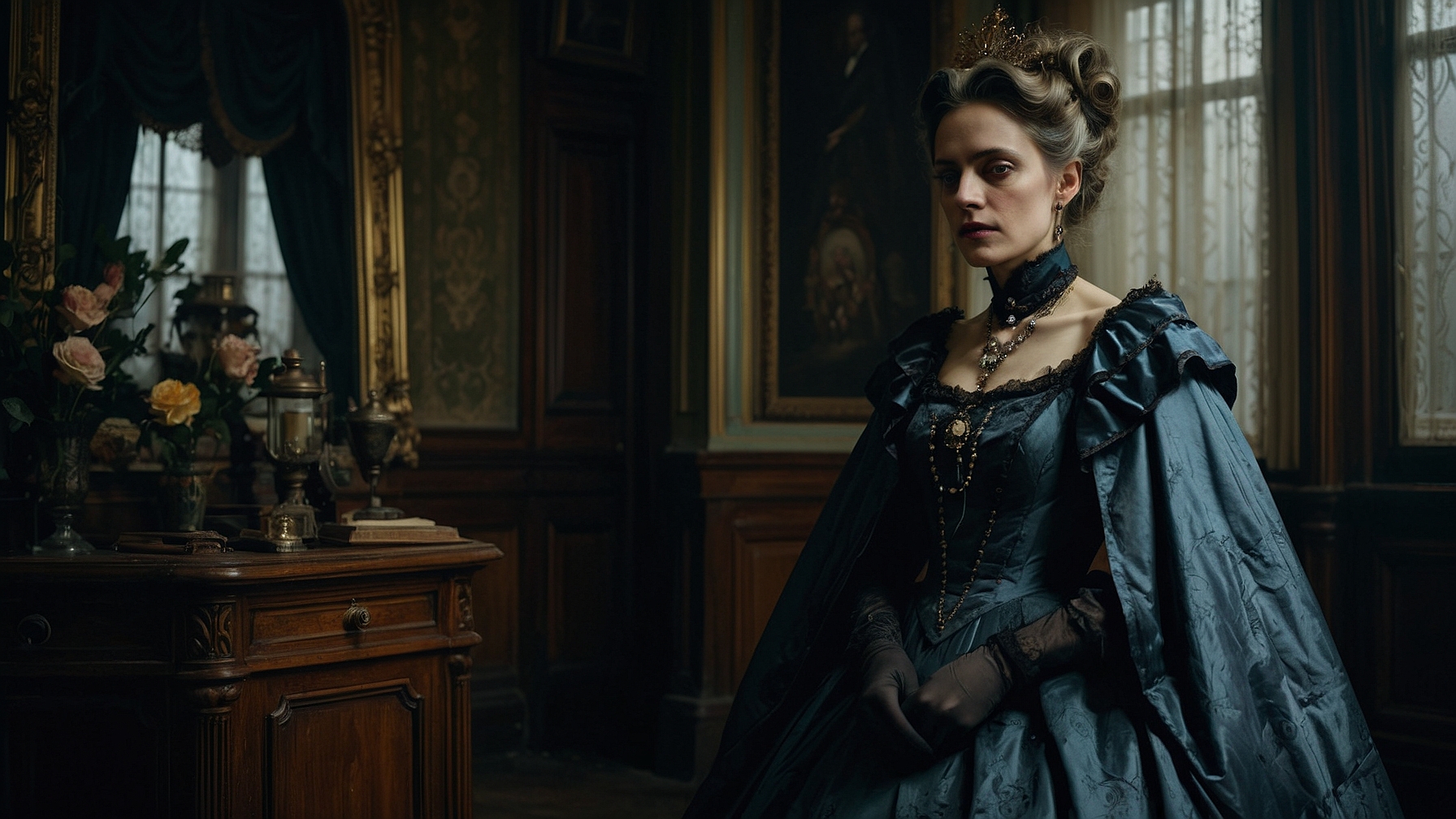
Few garments have shaped both bodies and imaginations as powerfully as the Victorian corset. To its advocates, it symbolized elegance, discipline, and social respectability. To its critics, it epitomizes oppression, physical harm, and the literal constriction of women’s lives. Yet the truth of the Victorian corset is more complex than either stereotype allows. Emerging at the crossroads of industrial innovation, shifting ideas about health, and strict class codes in nineteenth‑century Britain (1837–1901), the corset is as much a story of technology and fashion as it is of gender and power. Understanding what Victorian corsets were, how they were made, and who wore them reveals a nuanced history that still shapes our clothing and cultural debates today.
What Exactly Is a Victorian Corset?
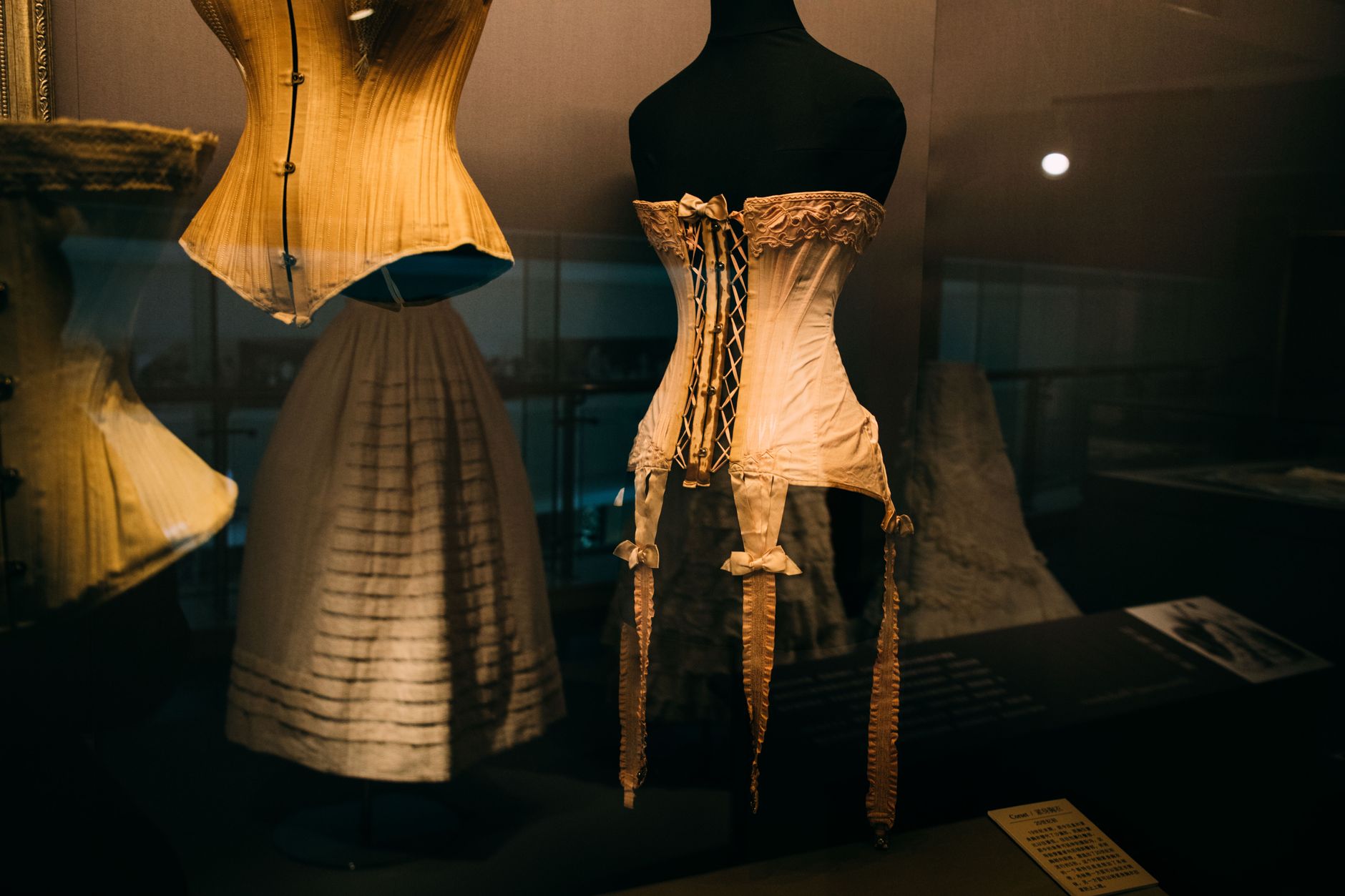
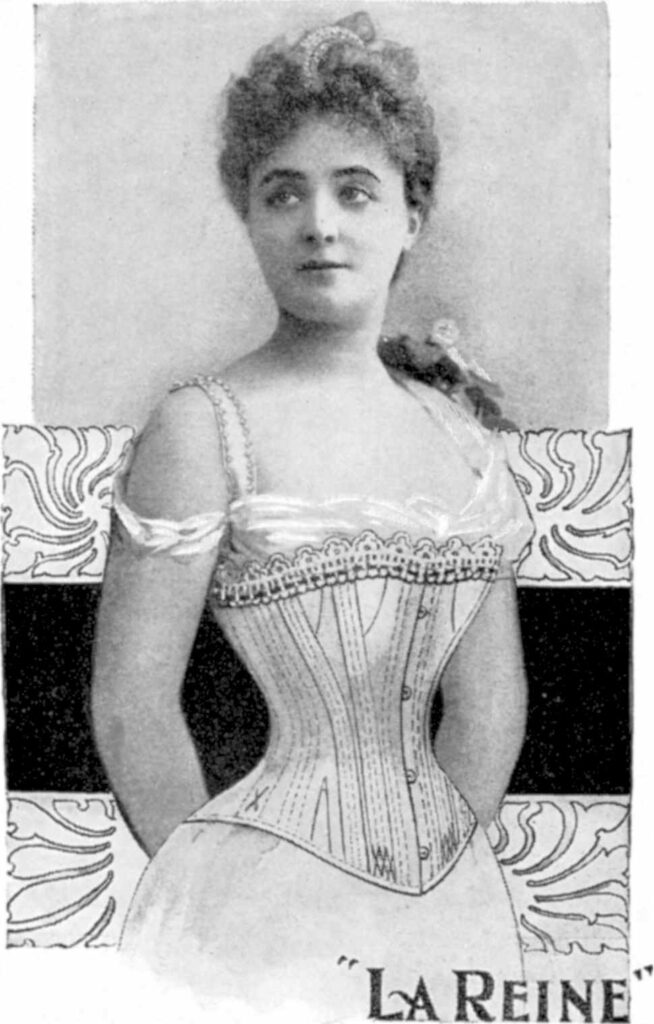
When historians refer to the “Victorian corset,” they mean the structured, close‑fitting undergarments worn primarily by women in Britain and across the Western world during the reign of Queen Victoria (1837–1901). These corsets extended from the bust to roughly the hip or upper hip, using whalebone, steel, or cording to shape the torso into the fashionable hourglass silhouette. They evolved during the century, growing shorter, longer, stiffer, or more flexible depending on changing ideals of beauty and advances in textile technology.
Can You Name the Masterpiece?
Ten masterpieces. Ten questions. How well do you know the history of art?
The Metropolitan Museum of Art in New York describes nineteenth‑century corsetry as “a complex engineering of the body” that combined tailoring, material science, and aesthetics to achieve “an idealized form” (Metropolitan Museum, Heilbrunn Timeline of Art History). Unlike earlier eighteenth‑century “stays,” which created a conical torso and flattened bust, Victorian corsets gradually emphasized a narrow waist with a more protruding bust and curving hips. This shift reflected not only new fashion trends but also the influence of Romanticism and later the so‑called “Aesthetic” and “Natural Form” movements.
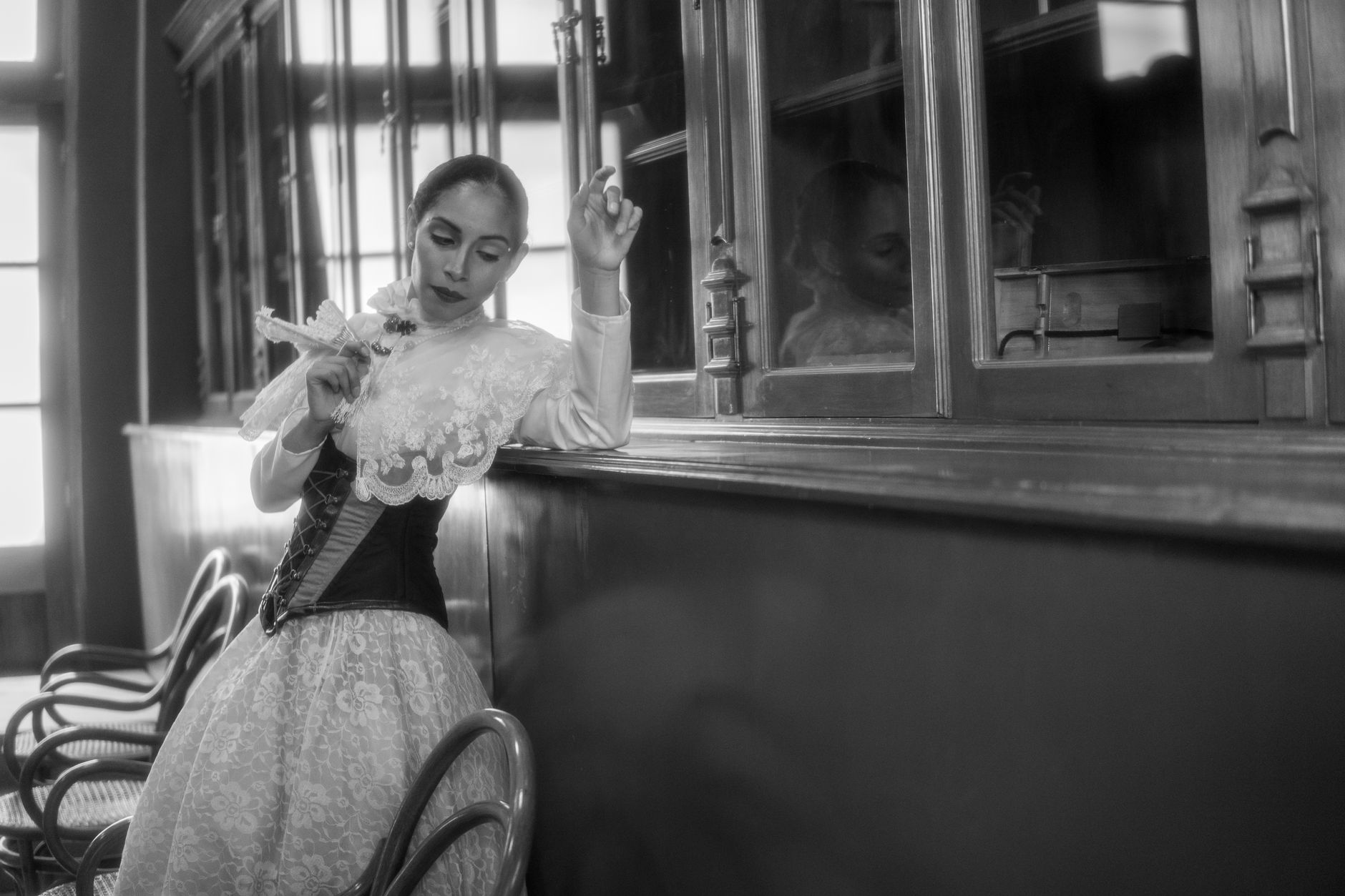
Crucially, a Victorian corset was not a single, universal item but a category of garments. Working‑class women in Manchester or Leeds might wear inexpensive, machine‑stitched corsets of cotton drill, while Parisian or London society women commissioned custom‑made silk corsets from prestigious corsetieres. The Victoria and Albert Museum (V&A) in London notes that corsets ranged from “practical support garments” to highly decorative items embroidered, flossed, or embellished with lace, carefully hidden under multiple layers of clothing yet symbolically central to a woman’s respectability and style.
Historical Context: Corsets in the Victorian Era
Victorian corsets did not appear in a vacuum; they developed within a rapidly changing nineteenth‑century world. Britain’s Industrial Revolution transformed textile production, and by mid‑century cities like Manchester, Birmingham, and London were major hubs for corset manufacture. Sewing machines, patented in the 1840s and 1850s, allowed mass production of corsets at lower cost, making them accessible to a broader range of women. Ready‑made corsets could be ordered by mail from catalogues or purchased in department stores such as London’s Whiteleys or Paris’s Le Bon Marché.
Can You Guess the Artist?
Three clues. One artist. How quickly can you identify the painter?
At the same time, social norms about modesty, class, and femininity made the corset a near‑universal part of respectable women’s wardrobes in Britain, France, and much of Europe, as well as North America. The Smithsonian Institution notes that by the late nineteenth century, corsets were so widespread in the United States that they were advertised in women’s magazines alongside soap and household goods. For middle‑ and upper‑class Victorian women, appearing in public without a corset could be considered improper or even scandalous, an affront to the rigid moral climate of the era.
Yet the Victorian period also saw growing debate about the health effects and social meaning of corsetry. Medical professionals, dress reformers, and women’s rights advocates questioned tight‑lacing and the exaggerated “wasp waist.” Organizations such as the Rational Dress Society, founded in London in 1881, campaigned against “any fashion in dress that deforms the figure, impedes the movements of the body, or in any way tends to injure the health.” These debates reveal that not all Victorians agreed on corsetry’s role, even while the corset remained central to mainstream fashion.
Construction and Materials: Engineering the Victorian Body
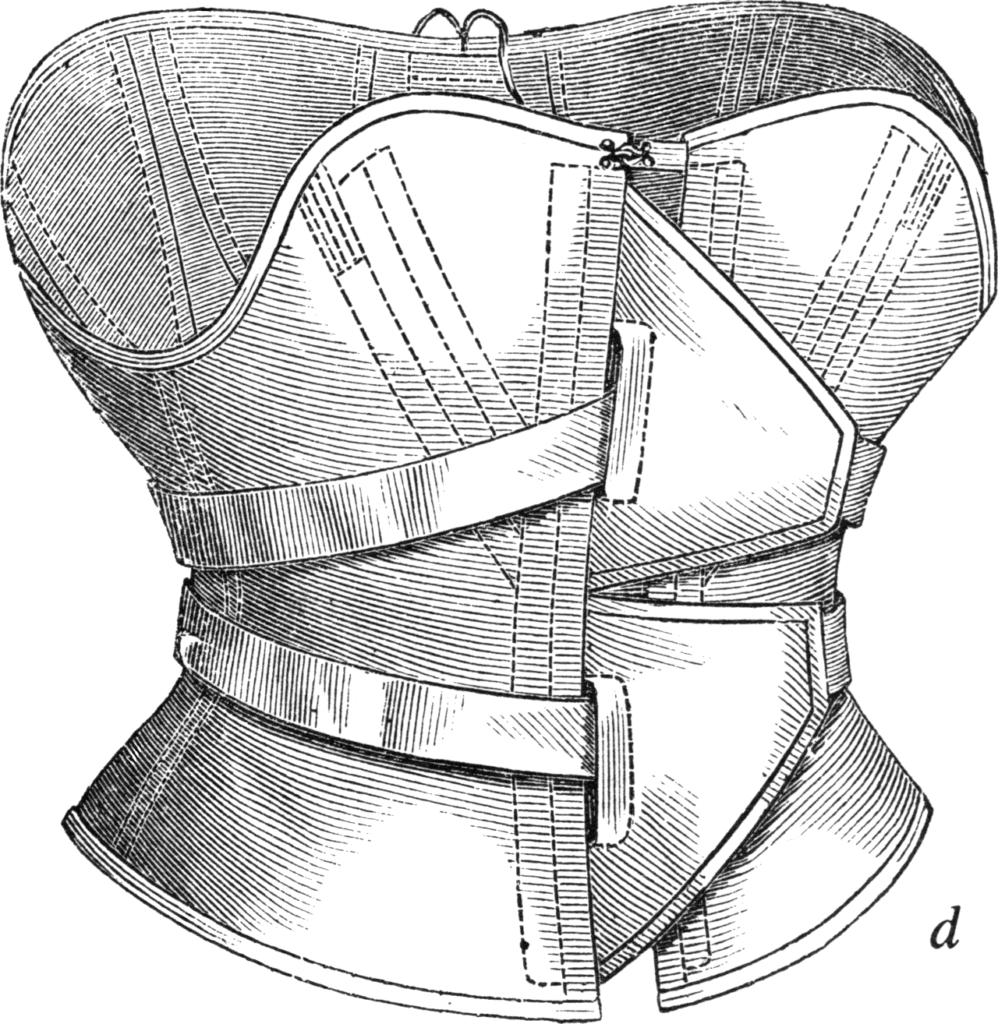
Victorian corsets were sophisticated constructions that balanced rigidity and flexibility. The typical corset consisted of several shaped fabric panels—often cotton coutil, a tightly woven, durable textile—stitched together and reinforced with “bones” inserted into narrow channels. Early in the period, these bones were often made from baleen (commonly called whalebone), a keratinous material from the mouths of baleen whales, prized for being both flexible and resilient. As whaling declined and industrial metalworking advanced, steel and sometimes cane or cording replaced whalebone, especially after the invention of the steel busk.
The busk—a central front fastening, usually made of steel by the mid‑nineteenth century—revolutionized how corsets were worn. Before the busk’s widespread use, corsets had to be laced entirely from the back, making dressing a slower and more dependent process. With the busk, a woman could hook and unhook her corset at the front while the back lacing adjusted the fit. The V&A’s collection includes several mid‑century corsets demonstrating this innovation, which allowed more nuanced control over tightness and simplified daily wear.

Decoration varied with the wearer’s means and purpose. Working or maternity corsets were often plain, made from sturdy fabrics such as jean or twill. Fashion corsets for wealthier women might be made from silk satin, brocade, or fine cotton, stiffened with dozens of bones, and embellished with colored flossing (decorative embroidery that also reinforced bone tips), lace trims, or even embroidery. Linings were usually softer cotton placed against the skin. This complexity of construction underscores corsetry as a specialized craft: Paris, London, and Vienna were renowned centers of corset‑making, and institutions like the Musée des Arts Décoratifs in Paris and The Louvre’s Department of Decorative Arts preserve examples showing the extraordinary workmanship involved.
Health, Myths, and Realities of Tight‑Lacing
Few aspects of the Victorian corset are as controversial as its impact on health. Popular images—from caricatures in satirical magazines like Punch to modern costume dramas—show women fainting or suffering collapsed ribs due to extreme tight‑lacing. There is genuine historical evidence that some women, particularly in elite circles during certain decades (notably the 1850s–1870s), pursued dramatically small waist measurements, sometimes below 18 inches, by cinching corsets very tightly.
However, historians and costume experts stress that these extremes were not the daily norm for most women. The Met’s curatorial texts point out that while “medical writers of the period cautioned against tight‑lacing,” many corsets in museum collections show wear patterns and shapes suggesting moderate, supportive use rather than severe compression. As the Smithsonian has noted in discussions of nineteenth‑century fashion, many reported health problems were likely due to a combination of restrictive clothing layers, poor posture, limited physical activity, and pre‑existing conditions, not simply the corset alone.
Modern scholarship also questions some of the more sensational claims about permanent organ displacement or universal rib deformity. There is evidence of skeletal changes in some long‑term, tight‑laced wearers, but these cases appear exceptional rather than general. More importantly, Victorian women’s experiences with corsets were diverse: some complained of discomfort and ill‑health; others described their corsets as necessary support, particularly during pregnancy or heavy work. This variety underscores the need for nuance when interpreting both historical medical commentary and later moralizing against the corset.
Social Symbolism: Class, Gender, and Respectability
Beyond its physical effects, the Victorian corset was a potent social symbol. It functioned as a visible‑invisible marker of respectability. The presence of smooth, structured lines beneath a woman’s gown signaled that she adhered to contemporary norms of femininity and decorum. In late nineteenth‑century London, Paris, and New York, it would have been almost impossible for a middle‑ or upper‑class woman to attend a formal event at institutions like the Royal Opera House or the Théâtre de l’Opéra without being corseted.
The corset also played a crucial role in class differentiation. Working‑class and rural women did wear corsets, but often looser and more practical versions, and sometimes only for special occasions. Middle‑class women, whose lives increasingly emphasized domestic display rather than manual labor, used corsetry and elaborate dress to signal their distance from physical work. As social historians have observed, the tiny waist became a visible proof that a woman did not engage in strenuous activity—a form of embodied luxury.
At the same time, dress reformers and early feminists criticized the corset as a tool of patriarchy. Figures associated with the Rational Dress movement argued that rigid, heavy garments impeded women’s education, employment, and physical independence. The British physician Dr. William Henry Flower, lecturing at the Royal College of Surgeons in the 1880s, called tight‑laced waists “monstrous distortions” that interfered with breathing and organ function. Yet it is important to recognize that many women actively desired and chose corsets; they were not merely forced into them. The corset was both an instrument of social control and a site of agency, where women negotiated public image, self‑discipline, and personal taste.
Styles Across the Victorian Period
Victorian corsets changed significantly between the 1840s and the turn of the twentieth century. Early Victorian corsets (c. 1837–1850) often preserved elements of earlier stays, emphasizing a conical torso and relatively low bust line, worn under the wide, bell‑shaped skirts supported by crinolines. From the 1850s to the 1870s, the fashionable ideal gradually shifted toward a narrower waist and slightly higher bust, in line with the romantic, highly structured fashions of mid‑century.
The 1870s and 1880s saw the rise of the “hourglass” figure associated with bustle dresses and complex drapery at the back of the skirt. Corsets lengthened over the hips to smooth the line of the torso and to support the increased weight and complexity of skirts. By the 1890s, the so‑called “health” or “straight front” corset, popularized by designers like Madame Gaches‑Sarraute in Paris, aimed to redistribute pressure from the waist to the hips and support a more upright posture. The V&A notes that these corsets “claimed to be more hygienic,” reflecting growing interest in anatomy and physical well‑being.
Regional and cultural differences also mattered. Parisian corsets, often considered the most fashionable, were exported across Europe and the United States, while British and American manufacturers produced competing styles for their own markets. Institutions like the Victoria and Albert Museum in London and the Musée de la Mode de la Ville de Paris preserve examples that highlight subtle variations in cut, boning, and decoration, revealing corsets as dynamic, evolving garments rather than static symbols.
Key Characteristics of the Victorian Corset
| Feature | Typical Victorian Corset (1837–1901) | Notes / Variations |
|---|---|---|
| Primary function | Shape torso, support bust, define waist | Also signaled respectability and class |
| Materials (fabric) | Cotton coutil, jean, twill; silk or satin for luxury | Working corsets more utilitarian; fashion corsets decorative |
| Materials (boning) | Baleen (whalebone), later steel, sometimes cane or cording | Steel predominates after mid‑century |
| Structure | Multiple shaped panels, front busk, back lacing | Some with side lacing or additional adjustment points |
| Silhouette | Evolving from conical to hourglass, then longer “straight front” | Reflects changing fashion trends |
| Users | Primarily women; some men for posture or stage use | Children’s and maternity corsets also existed |
| Social meanings | Femininity, discipline, class status, respectability | Also a target of dress reform critiques |
| Geographic centers | London, Paris, Vienna, New York, industrial cities like Manchester | Exported widely across Europe & North America |
Victorian Corsets in Museums and Scholarship
Today, some of the most important evidence for understanding Victorian corsetry can be found in museum collections and scholarly catalogues. The Victoria and Albert Museum in London holds an extensive array of nineteenth‑century corsets, many of which are featured in its publication Corsets and Crinolines by Norah Waugh and in its online catalogue. The museum’s curators emphasize close study of seams, wear marks, and alterations to reconstruct how these garments were actually worn and adjusted over time.
The Metropolitan Museum of Art’s Costume Institute in New York preserves a comparable range of European and American corsets. Its Heilbrunn Timeline of Art History provides context, highlighting the corset’s role in the broader evolution of Western dress. These institutions, along with the Smithsonian’s National Museum of American History, which holds late nineteenth‑century American corsets, anchor modern research in concrete, physical artifacts rather than myth or moral panic.
While The Louvre Museum in Paris focuses primarily on fine art, its Department of Decorative Arts and neighboring institutions like the Musée des Arts Décoratifs hold fashion collections that include corsets and related garments from the Second Empire and Belle Époque eras. Historians draw on these collections, along with period medical texts, fashion magazines such as La Mode Illustrée and The Englishwoman’s Domestic Magazine, and satirical prints, to piece together a more balanced, evidence‑based view of Victorian corsetry—one that recognizes both harm and pleasure, constraint and creativity.
Frequently Asked Questions about Victorian Corsets
Were all Victorian women forced to wear corsets?
No. Corsets were widely worn among middle‑ and upper‑class women and many working‑class women in Britain, Europe, and North America, but not literally universal. Some women, especially in reform circles, avoided them or wore looser stays. However, strong social expectations meant that going entirely without a corset in respectable public settings was unusual, particularly in urban middle‑class society.
Did Victorian corsets always cause serious health problems?
Not always. Extreme tight‑lacing could contribute to health issues, and some medical writers documented problems such as restricted breathing, fainting, or digestive trouble. But many women wore corsets more moderately as supportive garments, similar in some respects to modern shapewear or orthopedic support. Museum corsets often show evidence of practical wear rather than extreme constriction. Individual experiences varied widely.
How small were Victorian waists in reality?
Surviving corsets and dresses show that some fashion‑conscious women did achieve very small waists (18–20 inches), especially in elite circles, but these sizes represent the more extreme end of the spectrum. Many everyday corsets correspond to more moderate waist reductions of a few inches from the natural measurement. It is also important to remember that heavily edited fashion imagery and exaggeration in satire contributed to the legend of the universally “wasp‑waisted” Victorian woman.
Did men wear corsets in the Victorian era?
Yes, though much less commonly and for different reasons. Some Victorian men used corsets or “stays” for posture correction, to smooth the line under tightly tailored coats, or for stage performance, especially in theatre and opera. Military posture braces sometimes resembled corsets as well. However, male corsetry was not a central, normative expectation in the way it was for women.
When and why did Victorian corsets go out of fashion?
Corsets gradually declined in the early twentieth century, particularly after 1900–1910, as new elasticized fabrics, changing ideals of a more athletic female body, and the rise of brassieres reshaped women’s undergarments. World War I accelerated this shift as practicality, wartime economies, and women’s increased participation in work outside the home made rigid corsets less desirable. By the 1920s, the traditional Victorian‑style corset had largely been replaced by girdles and separate bras in mainstream fashion.
Conclusion
The Victorian corset is neither a simple instrument of oppression nor a harmless relic of quaint fashion. It is a complex technological, social, and cultural artifact that both shaped and reflected nineteenth‑century ideas about gender, class, health, and beauty. Through surviving garments preserved at institutions like The Metropolitan Museum of Art, the Victoria and Albert Museum, the Smithsonian, and collections associated with The Louvre, we can move beyond myth to see how real women lived with corsets—sometimes suffering, sometimes empowered, often both at once. In doing so, we gain a clearer view not only of the Victorian past but of our own continuing debates over how clothing molds the body and the self.
AI Notice: Some visual content in this article may have been created or enhanced using artificial intelligence (AI) for artistic, editorial or illustrative purposes. Learn more about our approach in our AI & Editorial Principles.