

Victorian Corset Tops Are Back: The Styling Trick Fashion Insiders Swear By
Few garments stir the imagination quite like the Victorian corset top. Part fashion, part engineering, it has been praised as an emblem of elegance and condemned as a tool of restriction. Today, the “Victorian corset top” has re-emerged on runways, in historical dramas, and on social media—often stripped of context, reduced to an aesthetic. Yet behind the ribbons and busks lies a complex story of technology, gender, medicine, and craftsmanship that spans from the drawing rooms of London to the ateliers of Paris and the boarding houses of New York. Understanding the Victorian corset top means looking not only at its shape, but also at the society that created—and then critiqued—it.
What Exactly Is a “Victorian Corset Top”?
In strict historical terms, Victorians spoke of “stays” (earlier in the 19th century) and “corsets” rather than “corset tops.” Today, however, “Victorian corset top” is often used to describe both historically inspired corsets and modern tops that borrow Victorian styling—boning channels, lacing, curved seams, and sometimes a visible busk at center front. These garments imitate the silhouette popular between roughly 1837 and 1901, the years of Queen Victoria’s reign in the United Kingdom, when the ideal figure was a narrow waist, uplifted bust, and smooth torso.
Can You Name the Masterpiece?
Ten masterpieces. Ten questions. How well do you know the history of art?
Unlike generic “bustiers,” Victorian-style corset tops are usually structured with multiple panels, each cut to follow the contours of the body. Steel or synthetic whalebone substitutes are inserted into stitched channels to create rigidity. This panel-and-boning construction is what allowed 19th‑century corsets to mold the body—modestly or drastically—depending on fit and tightness of lacing. The Metropolitan Museum of Art notes that by the mid‑19th century, “the corset was a highly engineered garment, shaped not only by fashion but by developments in textile and metal industries.”
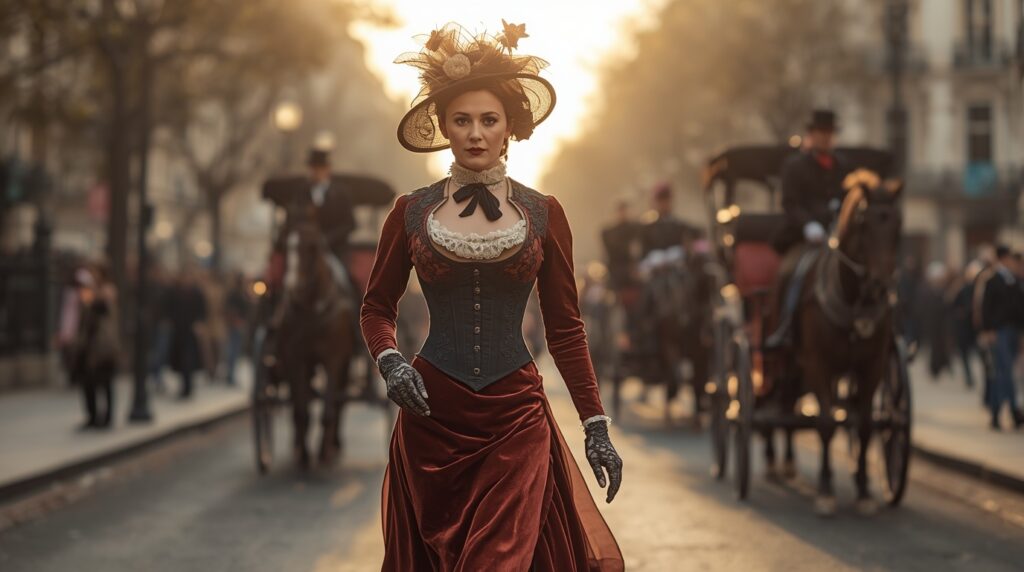
Modern interpretations often alter this engineering for comfort and wearability. A corset top intended as outerwear may be lightly boned, cut slightly shorter, and shaped to accommodate modern posture and undergarments. While the Victorian original was usually hidden under layers of chemises, petticoats, and bodices, the contemporary corset top often functions as the focal point of an outfit. The tension between historical authenticity and modern adaptation is central to how designers, costumers, and enthusiasts talk about “Victorian” corset tops today.
Historical Roots: From Mid‑19th Century England to Parisian Couture
The Victorian corset did not emerge in a vacuum; it grew from centuries of European body‑shaping garments. Early‑19th‑century “stays” were transitioning from the rigid conical torsos of the 18th century to softer, more natural shapes. By the 1840s and 1850s, as seen in examples at the Victoria and Albert Museum in London, corsets had developed a distinctive hourglass form with a defined waist and rounded bust, aligning with the era’s romantic ideals of femininity.
Can You Guess the Artist?
Three clues. One artist. How quickly can you identify the painter?
Industrialization played a critical role. Advances in steel production allowed for the mass manufacture of steel busks (the front fastening) and spiral steels (flexible boning), making corsets more supportive and, paradoxically, more comfortable in some respects. Textile mills in England and France produced tightly woven cotton coutil—still the standard fabric for many high‑quality corsets—precisely because its strength resisted stretching. Parisian couture houses, notably those around the Rue de la Paix, refined corset shapes to complement the new high‑fashion silhouettes emerging in the Second Empire and Belle Époque periods.
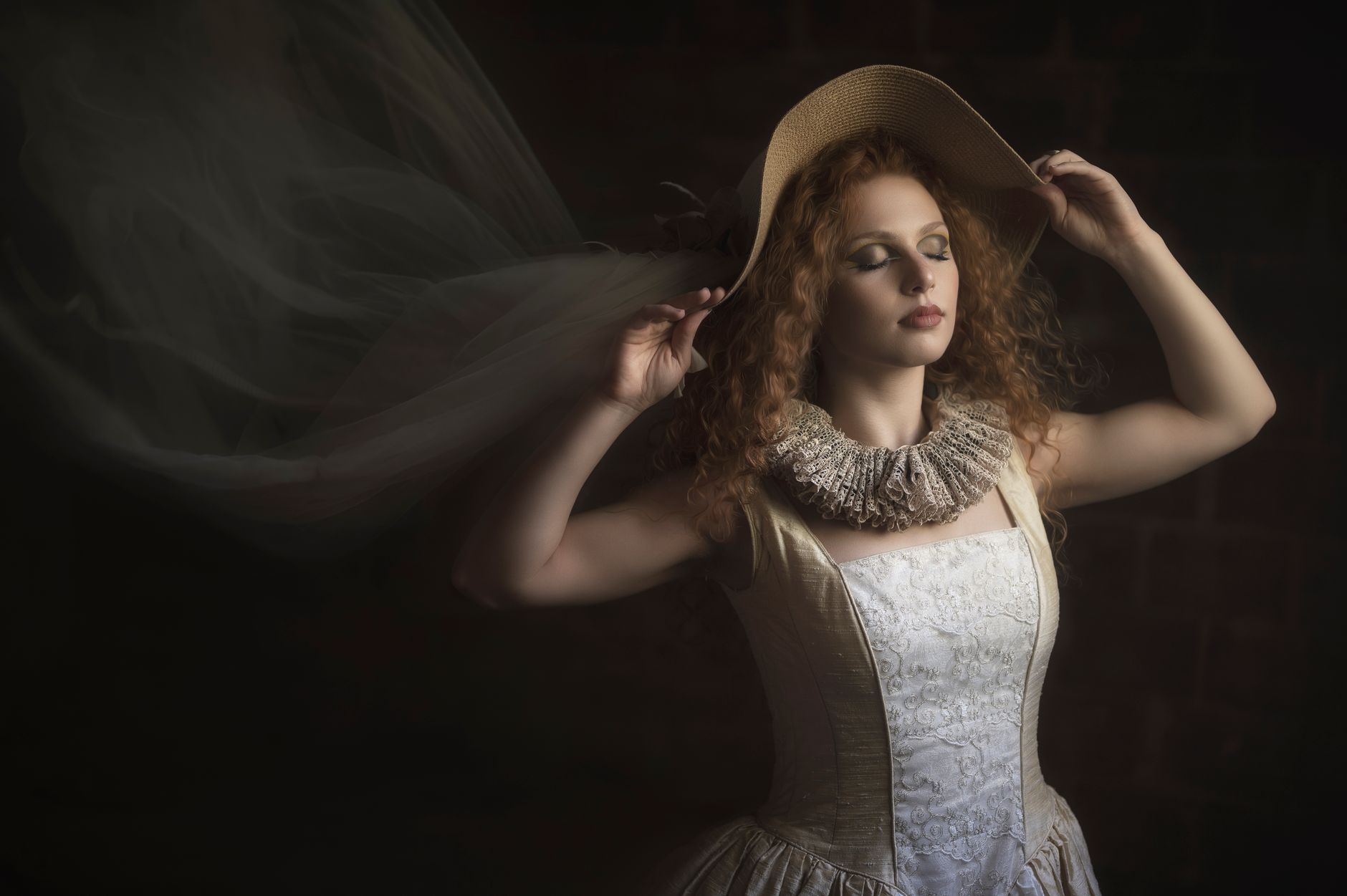
Institutions such as the Musée des Arts Décoratifs and the Louvre in Paris preserve corsets by couturiers like Charles Frederick Worth, whose designs illustrate how tightly clothing trends and corset shapes were intertwined. A late‑Victorian corset from c. 1890–1900 at the Los Angeles County Museum of Art, for example, reveals the fashionable “S‑bend” silhouette just on the horizon, with more pronounced bust support and a curving, forward‑tilting torso. These garments were not marginal accessories but central structural elements of the fashionable wardrobe.
Craftsmanship and Construction: Engineering the Silhouette
The hallmark of an authentic Victorian corset top is its complex construction. A typical corset might have between 10 and 18 pattern pieces (5–9 per side), each carefully shaped and seamed to form a three‑dimensional torso. The Victoria and Albert Museum notes that late‑19th‑century corsets “show remarkable skill in pattern cutting,” as every seam contributes to redistributing flesh to achieve the desired silhouette. Even a simplified corset top that is historically inspired must respect this panel logic to fit properly.
Materials were carefully chosen to balance strength and comfort. Coutil remained the gold standard foundation fabric because of its dense weave and durability. Whalebone (baleen) was widely used earlier in the century, but by the later Victorian period, steel boning had largely taken over in Europe and North America. The Smithsonian Institution’s National Museum of American History houses several American‑made corsets from the late 19th century, which show the use of both flat steel (for straight support) and spiral steel (for flexible curves), a combination still favored by contemporary corset makers.

Construction also involved meticulous handwork. Boning channels were stitched, eyelets reinforced, and decorative flossing (embroidery over bone ends) added both beauty and reinforcement. Some corsets were lavishly embellished with silk, lace, and embroidery for trousseaux or evening wear, while working women’s corsets tended to be plainer but still structurally sophisticated. The level of craftsmanship led fashion historian Valerie Steele, Director of The Museum at the Fashion Institute of Technology, to describe the corset as “a masterpiece of technical design as well as an instrument of fashion” (Steele, The Corset: A Cultural History, Yale University Press, 2001).
Health, Controversy, and Misconceptions
No discussion of Victorian corset tops is complete without addressing the long‑running debate over health and restriction. Physicians and dress reformers in the late 19th century vocally condemned “tight‑lacing,” warning of compressed organs, deformed ribs, fainting, and hysteria. Medical journals in London, Paris, and New York published alarming case studies of extreme corset wear, and movements like the Rational Dress Society in Britain (founded 1881) advocated looser, less restrictive clothing.
Yet, as modern scholarship has shown, much of the anti‑corset rhetoric focused on extremes rather than the daily experiences of most women. The Metropolitan Museum of Art notes that while “tight‑lacing was a real practice, it is likely that far fewer women engaged in it to an extreme degree than satirical cartoons and moral tracts suggest.” Surviving corsets in museum collections rarely reflect the impossibly tiny waists caricatured in Victorian cartoons; many accommodate more moderate reductions of 2–4 inches, comparable to modern shapewear.

At the same time, it would be misleading to romanticize the corset as entirely benign. Poorly fitted or overly tight corsets could indeed cause discomfort, shortness of breath, or long‑term musculoskeletal issues, especially during adolescence when bodies were still developing. The Smithsonian Institution’s educational materials on historical dress note that young girls in the United States often began wearing lightly boned stays early, normalizing the sensation of compression. The real story lies between sensationalized horror and idealized nostalgia: corsets were tools of both conformity and self‑presentation, their impact shaped by fit, fashion, and social pressure.
Victorian Corset Top vs. Modern Corsetry
The modern “Victorian corset top” sits at a crossroads between historical undergarment and contemporary outerwear. Unlike their 19th‑century counterparts, which were usually worn over a chemise and under layers of clothing, today’s corset tops are often designed to be seen. Designers may omit or soften features that historically ensured durability and health, such as a full‑length busk, waist tape, or ample lacing gap, in favor of a sleek fashion silhouette manageable without assistance.
Another key difference lies in expectations for wear time and activity. Victorian women—across classes—might wear some form of corset daily and undertake a full range of activities, from domestic labor to cycling, in garments specifically cut to allow movement. Modern corset tops are seldom worn for continuous, day‑long support. Instead, they are used for evening wear, cosplay, historical reenactment, or as occasional style statements. Consequently, many ready‑to‑wear corset tops rely on light plastic boning and stretch fabrics, sacrificing structural integrity for comfort and affordability.
Enthusiasts of historical dress and bespoke corsetry, however, are reviving traditional methods. Independent makers across Europe and North America produce custom Victorian‑style corsets using steel boning, coutil, and historically informed patterns. Some follow extant garments from museum collections, such as those at the Victoria and Albert Museum or The Metropolitan Museum of Art’s Costume Institute, replicating seam lines and shapes with remarkable fidelity. For these makers and wearers, the corset top is not just a trend but a craft and a dialogue with the past.
Key Characteristics of a Victorian‑Style Corset Top
Below is a summary of typical features of a Victorian‑inspired corset top compared to generic structured tops:
| Feature | Victorian‑Style Corset Top | Generic Structured Top / Bustier |
|---|---|---|
| Patterning | Multi‑panel, curving seams to sculpt torso | Fewer panels, simpler shaping |
| Boning | Steel (flat and/or spiral) in multiple channels | Often plastic or minimal boning |
| Fabric | Strong, non‑stretch (e.g., cotton coutil) | May include stretch fabrics, lighter weaves |
| Front Opening | Metal busk or laced front (historically busk) | Zipper, hook‑and‑eye, or none |
| Lacing | Back lacing with eyelets or grommets; adjustable waist reduction | Sometimes decorative; limited adjustability |
| Length | Extends below natural waist; can be longline over hips | Often ends at waist or high hip |
| Function (Historical) | Foundation undergarment; posture and bust support | Primarily decorative outerwear |
| Function (Modern) | Outerwear or costume; sometimes waist training | Fashion top; minimal body shaping |
Cultural Legacy and Modern Aesthetics
The image of the laced corset is deeply embedded in Western visual culture. Paintings, fashion plates, and later photography from London, Paris, and New York in the 19th century fix the corseted figure as a symbol of femininity and respectability. Today, major institutions display corsets to illustrate not only fashion history but broader social dynamics. The Victoria and Albert Museum’s Fashion gallery, for instance, juxtaposes corsets with reform dress and later sportswear, highlighting the changing expectations placed on women’s bodies.
In contemporary fashion, the Victorian corset top often embodies tension and transformation. It can be styled romantically with lace and floral prints, or subversively in leather and PVC within goth and fetish aesthetics. High fashion designers from Vivienne Westwood to Alexander McQueen have drawn on Victorian corsetry, sometimes using historical pattern cutting techniques while destabilizing the original garment’s associations with modesty and control. As fashion curator Claire Wilcox notes in relation to Westwood’s work at the V&A, reimagined corsets “question the boundaries between underwear and outerwear, tradition and rebellion.”
The corset’s afterlife in film and television—from period dramas set in Victorian London to fantasy worlds inspired by 19th‑century Europe—further cements its iconic status. Costumers rely on resources and study days from institutions like the Smithsonian and The Metropolitan Museum of Art to build believable silhouettes. The resulting looks, in turn, shape popular conceptions of what a “Victorian corset top” should be, even when the on‑screen garments are hybrid creations mixing eras and aesthetics.
How to Approach Victorian Corset Tops Today
For those attracted to the look or historical resonance of Victorian corset tops, an informed approach begins with context. Examining digitized collections from The Metropolitan Museum of Art, the Victoria and Albert Museum, the Louvre’s fashion‑related holdings, and the Smithsonian Institution offers a grounding in authentic shapes and construction. Each institution provides detailed photographs and catalog descriptions, often including dates, materials, and provenance, allowing you to distinguish between early‑, mid‑, and late‑Victorian styles.
If you intend to wear a corset top, prioritize fit and health. A well‑made Victorian‑style corset or corset top should distribute pressure evenly, support the bust without cutting into the ribs, and allow for comfortable breathing when modestly tightened. Ethical makers will often advise gradual seasoning (breaking in) and emphasize that extreme waist reduction is neither necessary nor advisable. For purely aesthetic wear, lightly boned or fashion‑fabric corset tops can offer a nod to the Victorian line without significant compression.
Finally, consider the garment’s symbolic dimension. Wearing a Victorian corset top can be a way to explore historical femininities, reclaim restrictive garments as expressions of autonomy, or simply enjoy a particular silhouette. Awareness of the garment’s mixed legacy—both as a product of patriarchal norms and as a site of agency, self‑fashioning, and craft—adds depth to what might otherwise be only an Instagram trend. As Valerie Steele observes, “The corset is too deeply implicated in issues of sexuality, gender, and power ever to be a neutral garment.”
Frequently Asked Questions About Victorian Corset Tops
1. Were Victorian women really forced to wear extremely tight corsets?
Evidence from extant garments in museums suggests that while some women did practice severe tight‑lacing, many wore their corsets relatively moderately. Surviving examples at The Metropolitan Museum of Art and the V&A show realistic waist measurements rather than the impossibly tiny sizes popularized in caricatures and moralizing literature. Social expectation did encourage corset wear, but degrees of tightness varied widely by class, occupation, age, and personal preference.
2. Is a modern Victorian‑style corset top bad for my health?
A well‑constructed, properly fitted corset top worn occasionally and not laced excessively is unlikely to cause harm for most healthy adults, especially when compared to daily Victorian use. Problems arise from poor fit, rigid materials digging into flesh, or extreme and sustained waist reduction. If you have respiratory, circulatory, or musculoskeletal conditions, it is wise to consult a medical professional and err on the side of very light shaping or alternative garments.
3. How can I tell if a corset top is truly “Victorian‑inspired” rather than just vaguely vintage?
Look for multiple curving panels, steel or substantial boning in separate channels, and a firm, non‑stretch body fabric. A front busk and back lacing with eyelets or grommets are strong indicators of Victorian influence. Checking product descriptions for references to historical patterning, materials like coutil, and construction details can help. Comparing the garment with images from museum collections—such as those at the V&A or Smithsonian—will quickly reveal whether it reflects Victorian shapes or just uses decorative motifs.
Conclusion
The Victorian corset top sits at the intersection of history, technology, and personal expression. Born in the workshops of 19th‑century Europe and North America, refined by industrial innovation and couture artistry, it has traveled through time to become a modern fashion statement and a subject of scholarly debate. Whether you approach it as a meticulously reconstructed historical garment or a contemporary reimagining, understanding its origins, construction, and cultural meanings transforms a piece of clothing into a rich artifact of human experience.
AI Notice: Some visual content in this article may have been created or enhanced using artificial intelligence (AI) for artistic, editorial or illustrative purposes. Learn more about our approach in our AI & Editorial Principles.