
Why Victorian House Dresses Are Quietly Taking Over Modern Fashion
A silk ball gown in a museum case is easy to admire. What’s harder to imagine is the dress a woman actually lived in—what she wore to stoke the fire, teach a child to read, or write a letter at the dining table. The “Victorian house dress” has long stood in the shadow of crinolines and court trains, yet it shaped daily life for millions of women across Britain, Europe, and North America. Far from being a mere “work frock,” the house dress reveals how women navigated class expectations, industrial change, hygiene, and domestic labor from roughly 1837 to 1901. Reconstructing its history from surviving garments, paintings, photographs, and fashion plates offers a more honest—and more interesting—picture of Victorian womanhood.
Defining the Victorian House Dress
Victorian house dress (often called a wrapper, morning dress, or simply a “print dress”) referred to garments worn primarily in the private sphere for domestic tasks and informal family life. These garments were distinct from the formal day dresses worn on the street or for visiting, and from the elaborate evening gowns that dominate museum displays. As the Victoria and Albert Museum (V&A) notes, nineteenth‑century wardrobes were “rigorously structured around time of day and social activity,” and the house dress occupied the most intimate, least documented part of that system.
Can You Name the Masterpiece?
Ten masterpieces. Ten questions. How well do you know the history of art?
Unlike the tailored walking suits and visiting gowns that followed strict fashion cycles, house dresses privileged practicality. They might follow broad silhouettes of the time (from the wide crinolines of the 1850s to the cuirass bodices of the 1870s), but they often lagged a few years behind high fashion, reused older skirts, or adapted worn garments. Surviving examples in collections such as the Metropolitan Museum of Art in New York and the Smithsonian Institution in Washington, D.C. show simpler trims, washable cottons, and construction details—like front button closures—designed for ease of wear.
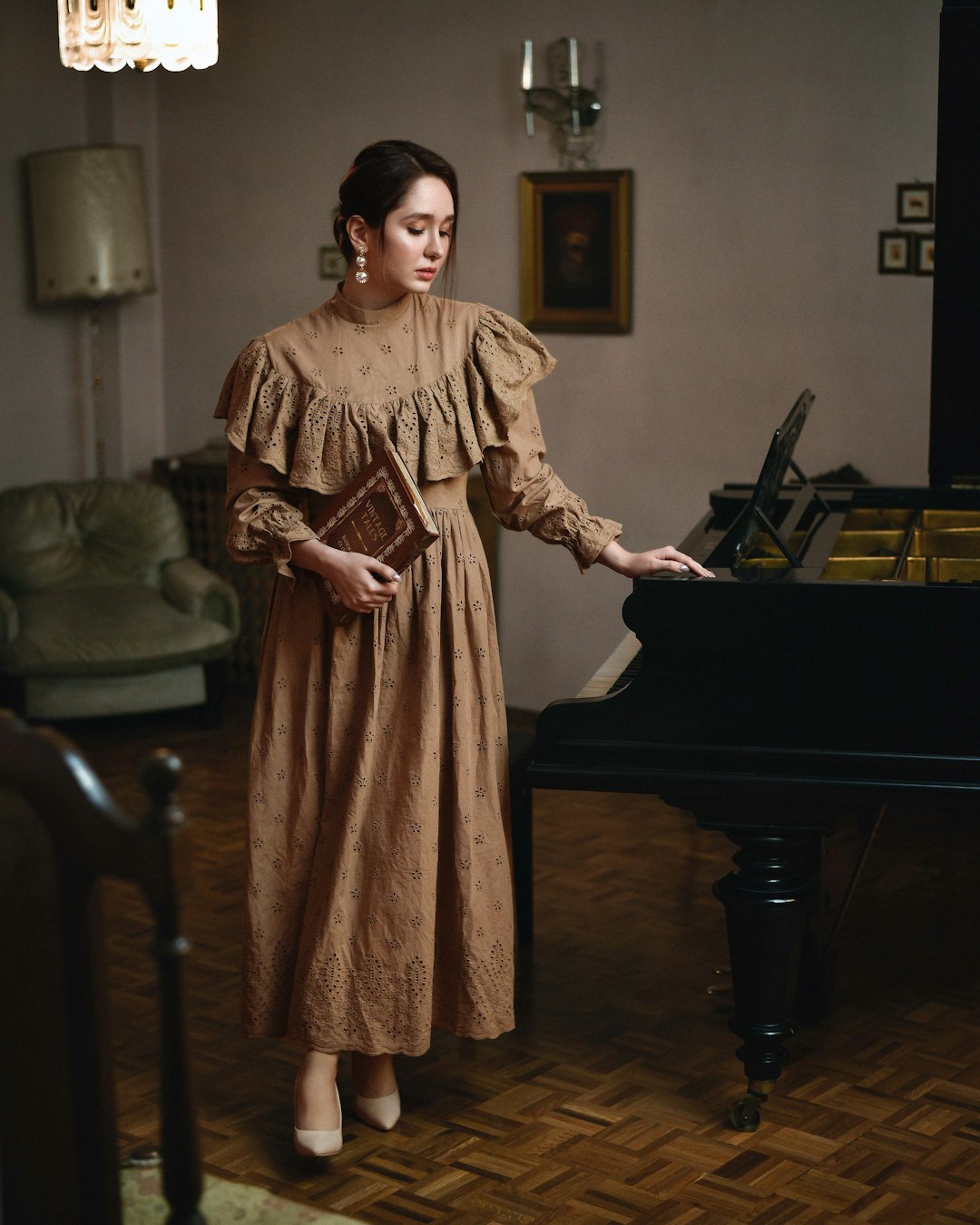
Terminology varied by class and by decade. In mid‑century Britain, phrases like “morning dress” or “breakfast dress” often meant the clothes worn inside the home before a lady “dressed for the day.” In the United States, catalogues and sewing manuals referred to “wrappers” or “house dresses,” highlighting their wrap or loose construction. Yet across regions, the underlying idea remained constant: a garment that allowed a woman to manage her household duties while maintaining a standard of modesty and respectability appropriate to the Victorian ideal of domesticity.
Historical Context: From Early to Late Victorian
The early Victorian decades (1830s–1850s), were followed by a prolonged process of accelerated industrial growth in Britain, and by urbanization on a of scale in North America and Europe (Anderson 4). The textile industry underwent a severe restructuring as spinning and weaving became mechanized, as a result, printed cottons were cheaper than they ever been. Anderson writes in the V&A, by the 1840s, cotton prints were “within the reach of the lower middle classes”, and this was also the reality for house dresses: washable printed cotton was assigned to the bride.
Can You Guess the Artist?
Three clues. One artist. How quickly can you identify the painter?
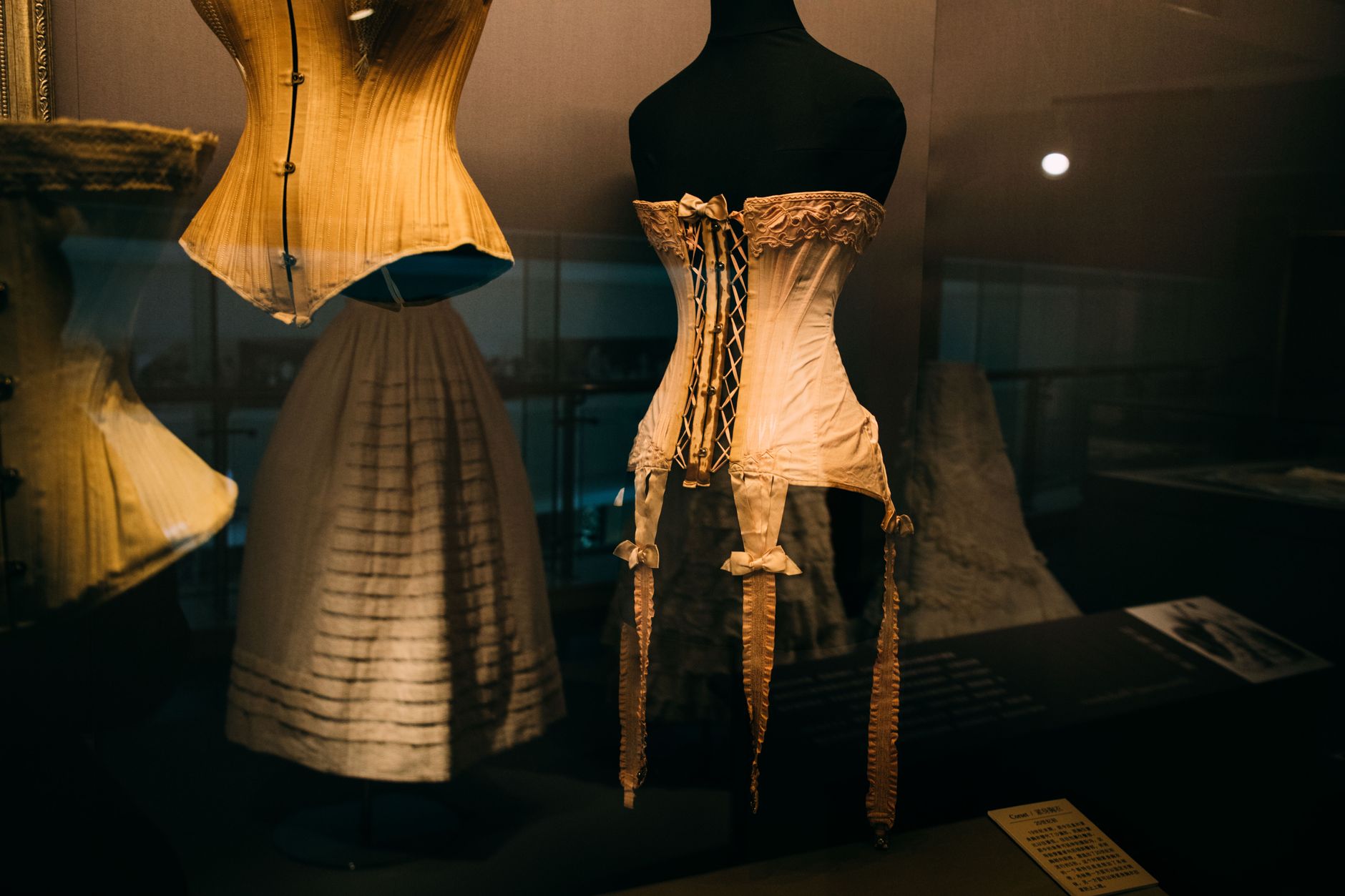
In the 1840s–1850s, silhouettes were characterized by hourglass-shaped, narrow-waitedbodices and full skirts supported by petticoats first and steel crinolines later in the mid 1850s. House dresses followed the same silhouette, but in a much more moderate way. Often, a woman might wear her largest crinoline while entertaining or attending church and only wear a few petticoats for housework. It is clear from the collection of costumes in the collection ofThe Metropolitan Museum of Artthat wrappers from the period had less constricted waists, front fastenings, and more modest high necklines, providing a compromise between everyday fashion and structural comfort.
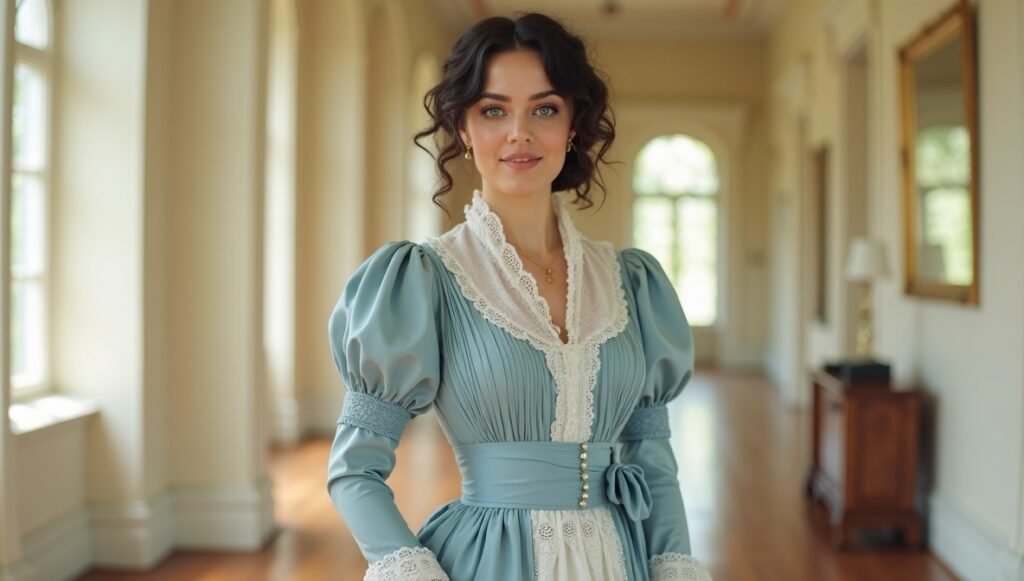
In late Victorian society (1870s 1901) hemlines raised once again as the female ideal changed from the back projecting bustle to the long, sleek princess line, and dress forms readjusted once again. Once more, the house dress adapted as the fashionable silhouette changed. However, Smithsonian collections also include latecentury cotton house dresses with a subtle bustle or gored skirt, but reinforced the principles of washability and freedom of movement. Concurrently, the rising influence of the Arts and Crafts movement and the Aesthetic Dress movement within Britain can be seen as a critique of constrictive corseting and excessive decoration, with some middleclass womenk seeking out the looser, more artistic athome look, particularly within intellectual and artistic circles.
Fabrics and Construction: Practicality Meets Respectability
Fabric selection was also fundamental to the form of the Victorian house dress. While visiting dresses might be of silk taffeta, a wool challis or a silkwool blend, house dresses could be made from cotton: printed calico, unbleached muslin, percale and eventually ‘gingham’ checks and stripes. Cotton was, after all, relatively cheap, cool, comfortable and, most importantly, machine washable, as the several surviving examples in the Met attest as ’‘cotton print wrapper’ /’ cotton morning dress’: washability was a necessity for household clothing during a period of coal fires and handwashing.
Construction details show how garments balance modesty, mobility and the “bustlog” (contemporary silhouette). House dresses frequently fasten in the front as with buttons, hooks and eyes, or a wrapped under-panel so that they can be pulled on or off by the wearer or the hands of a domestic worker, without the need for skilled fastenings. Sleeves are darted, but not tight, and often with a band at the sleeve head or arm hole, so they can be lifted or scrubbing, so a practical height for the occupational needs of women. Skirts are cut in panels, often with extra fullness across the back, but not in formal widths. Garments often incorporated: in were conceived of as internal taping or bands, which supported the petticoats but did not add volume to the outside figure.
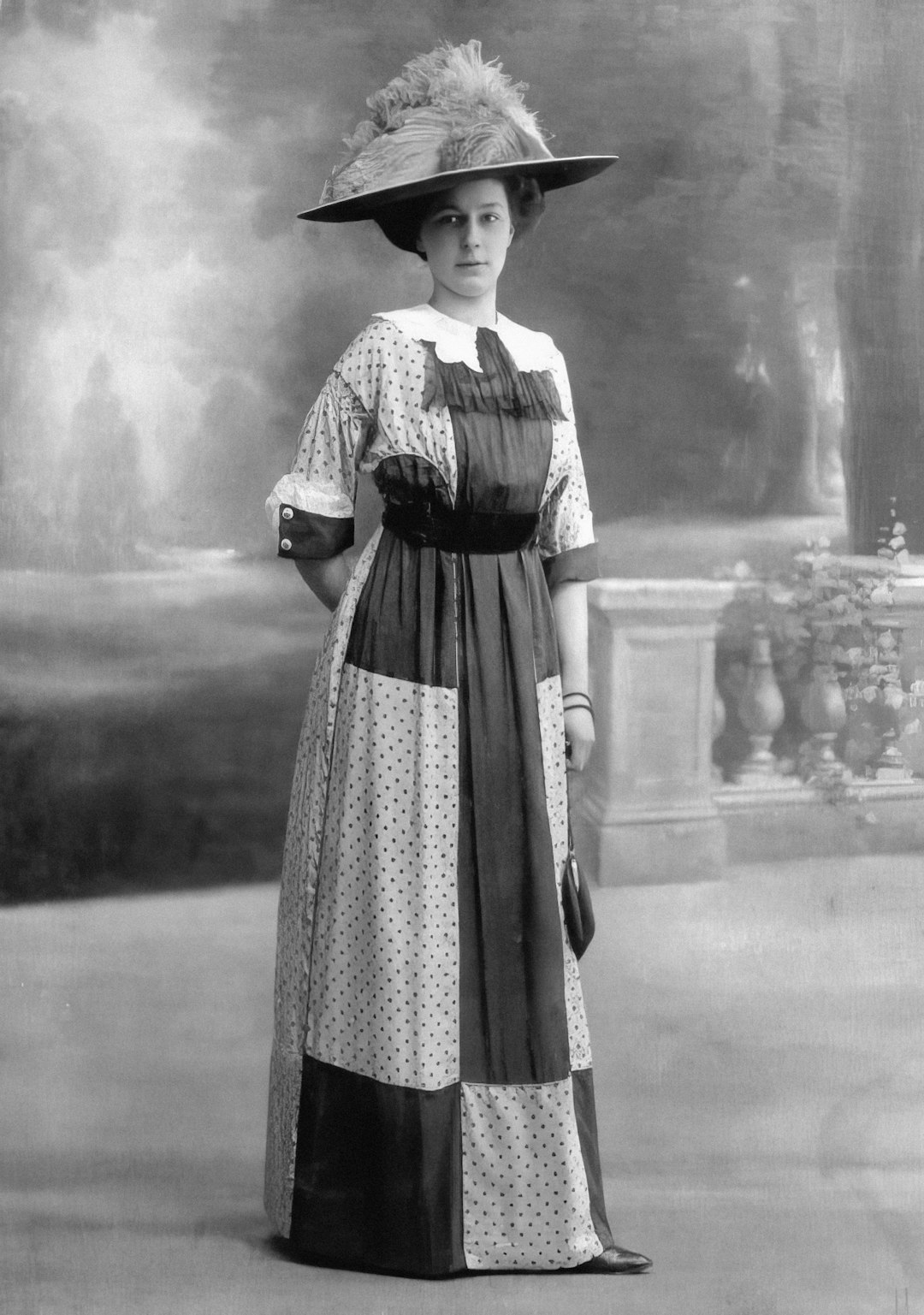
Trimmings on house dresses for middleclass women could be elegant but subtle (there were never no frills about middleclass gentility). Narrow flounces, ordinary braidwork or contrasting cuffs and collars, could add a dash of brightness without getting caught on the work-top, or snagging every minute. The V&A has observed that “mid-century cotton dresses were elegant but moderate”. The ‘tasteful austerity’ (as one historian has called it) was firmly Victorian, since “even the plainest dress could be tidy and morally respectable” which were “closely associated with the ideal middleclass woman the angel of the house” . For workingclass women, above all, “clothing had to be tough, and hence often practical and plain”, and this meant ‘rough’ stockinette, reinforced seams, non-fade grey, patched panels, and linen threads.
Social Class, Privacy, and Domestic Ideology
A house dress meant something different for women of different social classes. To middle and uppermiddleclass women in the United States, London, or Paris, the house dress was constructed as part of the domestic ideology disseminated through conduct books and magazines. It was summarized in these publications as that a woman should pay close attention to her home apparel and “dress neatly, though without ostentation,” a definition that meant favoring order and selfdiscipline over vaingloriousness. As a 1860 issue of Godey‘s announced, “The wife and mother should never be in such a state of dishabille that she would shrink from seeing a friend of her husband‘s enter the parlor unexpectedly.…”
When Women with domestic servants wore the house dress, it did not always indicate manual labor. It meant that they were available to oversee and instruct the children and entertain visitors within the home. In such circumstances, fabric, cleanliness and cut communicated class. For Louvre’s collection of portraits, late-nineteenth-century domestic settings also are included, with women or girls dressed in comfortable yet well fitting athome dresses: even a “private” dress could make a public statement of social standing, however.

Those in the workingclass seemed to have a different experience. Many did not have as specific a category of wardrobe at all, opting instead to modify one or two “best” dresses for constant wear, eschewing the “house“lump in their wardrobe entirely and “wearing (their) calico work-pinafore ” and “just keeping it clean”. Even so, even workingclass women had the concept of a “good“dress for church or visitors and that those dresses would probably be recycled as someone else‘s work dress. The Smithsonian institution, for example, displays a threadbare, patched, late nineteenthcentury American farmwork dress that is evident was formerly a betterclass costume. This recycling points to financial constraints but also to the Victorian obsession with never having to give up that one dress which can be worn out in “respectable“public.
Health, Hygiene, and Changing Attitudes
House dresses in the Victorian era came into contact with increasingly progressive notions about health and hygiene. Throughout the ninteenth century, there was mounting fear about ventilation, cleanliness, and corsetry; as doctors and reformers labeled tight corsets especially dangerous for women who undertook vigorous activity at home, the loosely fitting, wash-ability house dress was tacitly approved as a sort of medical necessity. An English health reform paper of the 1870s lauded ‘the simple print dress, properly loose, for allowing the chest to expand and the limbs to move in household occupations.’
Improvements in both laundry technology and the domestic water supply (such as were happening in most urban areas, notably London, Manchester and Paris) in the late Victorian period made washing cotton house dresses a much more routine affair by the late 19 th century. The V&A explains that, by the 1890s, “more and more middleclass homes had special laundry machines or employed a laundress,” making these cotton garments ever more popular (71). Such washing was costly and time-consuming, and many other garments (like those made of silk or fine-wool) remained difficult and expensive to clean.

Simultaneously, there was also the ascendancy of the rational dress movement and the Aesthetic movement, which also pushed the boundaries of acceptable fashion. In some institutional and high-art circles (for example, the institutional clubs attached to London‘s Bloomsbury area, or college towns across the US), women occasionally wore domestically at least tea gowns or aesthetic “reform” dresses without corsets and cumbersome bustles. These dresses would have been worn by the most educated of women, and so could contribute to the debate about what upper-class women “should” wear at home, giving them a certain amount of moral and intellectual legitimacy.
Regional Variations: Britain, France, and the United States
Though united by broad trends, house dresses varied across regions. In Victorian Britain, printed cotton “wash dresses” dominated among the lower and lower‑middle classes, while more affluent women might own several morning dresses in lighter wools, cottons, and, for summer, washable piqué. The V&A’s British collections highlight characteristic details such as modest high necklines, long sleeves, and discreet trimming that aligned with Protestant ideals of restraint.
In France, house dresses intersected with Parisian fashion culture. Dressmakers in Paris and provincial towns produced informal “robes d’intérieur” and “robes de matinée,” which often displayed more overtly fashionable cuts while still using practical fabrics. French fashion plates, some preserved in the Louvre’s related archives, depict women in elegant at‑home wrappers with ruffled fronts and soft sashes, visually bridging the gap between strict domestic practicality and Parisienne chic.
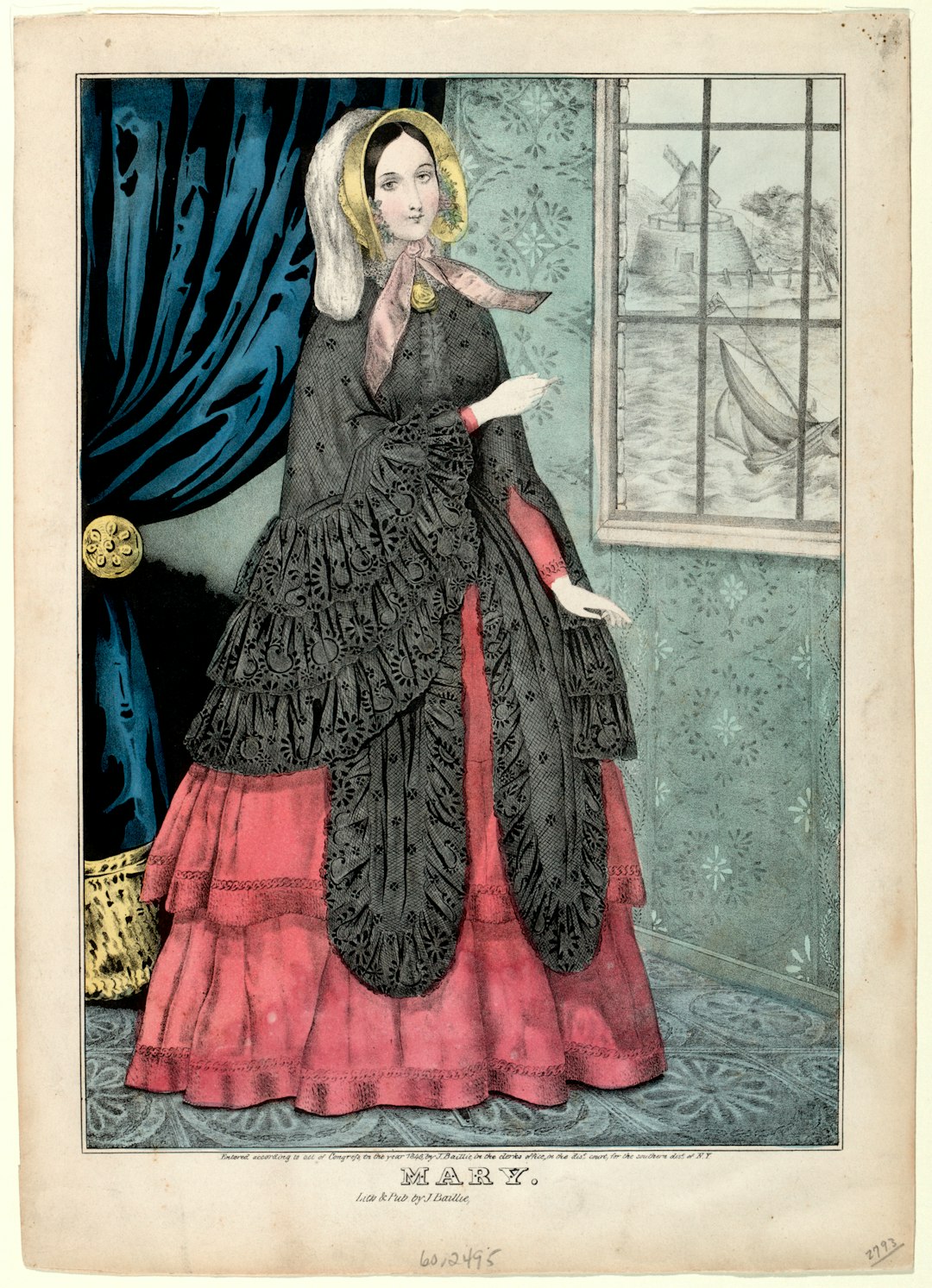
In the United States, particularly after the Civil War, ready‑made house dresses and wrappers became more widely available through mail‑order catalogues and urban department stores. The Smithsonian’s collections of late‑nineteenth‑century American clothing include mass‑produced calico wrappers marketed to farm wives and small‑town homemakers. These garments typically featured loose, A‑line cuts, simple stand collars, and practical patch pockets—details that reflect the realities of large households, child care, and subsistence work in a rapidly industrializing nation.
Key Characteristics at a Glance
| Feature | Typical Victorian House Dress | Formal Day / Visiting Dress |
|---|---|---|
| Primary Setting | Inside the home, domestic tasks, informal family life | Public outings, social visits, church |
| Common Fabrics | Printed cotton, muslin, percale, gingham | Silk taffeta, fine wool, silk‑wool blends |
| Silhouette | Echoed current fashion but less extreme | Closely aligned with contemporary high fashion |
| Closures | Front buttons, hooks, or wrap closures | Back or side closures, often requiring assistance |
| Trimming | Minimal: narrow ruffles, simple braid, contrast cuffs | Rich: lace, fringe, elaborate drapery and trim |
| Washability | High—designed for frequent laundering | Limited—many fabrics not easily washable |
| Mobility | Prioritized; sleeves and skirts cut for movement | Sometimes restricted by tight bodices, heavy skirts |
| Class Markers | Quality of fabric, cleanliness, tasteful simplicity | Fabric expense, fashionable cut, elaborate detail |
Voices from the Period: Contemporary Perspectives
Contemporary written sources help illuminate how Victorians themselves thought about domestic dress. Advice literature, in particular, provides insight. Isabella Beeton’s famous “Book of Household Management” (1861), while focused mainly on food and domestic order, reflects the broader expectation that a mistress of the house appear appropriately dressed, stressing that “the face of the household” must convey both neatness and capability.
Women’s magazines frequently offered guidance on at‑home clothing. An 1858 issue of Godey’s Lady’s Book notes: “For morning dress, a simple printed cotton, well‑made and scrupulously clean, is far more becoming to the true lady than a soiled silk.” This statement, often quoted by costume historians, encapsulates the moral dimension assigned to house dresses: cleanliness and simplicity could outweigh sheer cost or luxury.
Museum curators and historians underscore this point today. The Metropolitan Museum of Art’s Costume Institute has written that “the garments that saw the most use—work dresses, wrappers, and everyday wear—rarely survived in proportion to their importance,” emphasizing the need to study what little remains with particular care. The Smithsonian’s curators similarly note that surviving house dresses “offer crucial evidence of women’s labor and daily experience,” pushing researchers to look beyond the museum‑worthy ball gown.
Frequently Asked Questions
1. Did Victorian women wear corsets under house dresses?
In most middle‑ and upper‑middle‑class contexts, yes. Corsetry was considered a basic foundation garment, worn under nearly all kinds of dress. However, the degree of tightness could vary. Some at‑home corsets were lighter or worn more loosely, and certain reformers and artistic circles experimented with uncorseted or lightly boned tea gowns in private. Working‑class women might loosen or remove corsets during heavy labor, but social pressure to maintain a corseted shape remained strong throughout most of the era.
2. How many house dresses would a typical Victorian woman own?
This depended heavily on class and income. A comfortably middle‑class woman in late‑nineteenth‑century London or Boston might own several wash dresses or wrappers, alongside separate morning and afternoon dresses. A working‑class woman or farm wife often had one main dress for work, one for better occasions, and perhaps an older garment kept for the roughest tasks. Diaries and probate inventories studied by social historians suggest that having “three or four” dresses in regular rotation was common for modest households, while wealthy women had far larger wardrobes.
3. Are any Victorian house dresses on display in major museums?
Yes, though they are fewer than ball gowns or formal wear because they were worn out and rarely preserved. The Metropolitan Museum of Art, the Victoria and Albert Museum, and the Smithsonian Institution all hold examples of wrappers, wash dresses, and morning gowns in their textile collections. These are sometimes rotated into exhibitions focusing on everyday life, women’s history, or the history of work. The Louvre, whose primary focus is fine art rather than dress, contributes indirectly through paintings and prints that depict women in informal domestic clothing, providing crucial visual evidence of how such garments were worn.
Conclusion
The Victorian house dress may lack the drama of a Paris couture ball gown, but it tells a deeper story. In the quiet folds of printed cotton and the practical line of a front‑buttoned wrapper lie the realities of nineteenth‑century domestic life: labor, respectability, class aspiration, and emerging ideas about health and comfort. Collections at institutions such as the Metropolitan Museum of Art, the Victoria and Albert Museum, the Louvre, and the Smithsonian continue to refine our understanding of this overlooked garment. By paying attention to what women actually wore at home, we gain a more honest, humane portrait of the Victorian world—one in which everyday elegance, rather than spectacle, defined much of a woman’s life.
AI Notice: Some visual content in this article may have been created or enhanced using artificial intelligence (AI) for artistic, editorial or illustrative purposes. Learn more about our approach in our AI & Editorial Principles.