
The Secret History of Victorian Women’s Lingerie and Undergarments
Underwear in the Victorian era was very different from what we wear today. Let’s just say there was a lot more of it. It covered almost the entire body except for the ankles and arms. Underwear that came into direct contact with the skin was supposed to be changed regularly,
ideally every day.
Women wore a chemise, pantaloons, stockings, a corset, and petticoats as undergarments.
Interestingly, a woman wearing a chemise was not considered indecent. For example, this look was used in soap advertisements, and it was considered appropriate.

Can You Name the Masterpiece?
Ten masterpieces. Ten questions. How well do you know the history of art?
Pantalons became widespread after the crinoline came into fashion in 1856. Before that, women wore multiple underskirts that clung to the body. These skirts were lavishly decorated with lace and embroidery. Pantalons, when worn with underskirts, were uncomfortable—especially when using the restroom—and offered little practical benefit.
The crinoline, consisting of a frame made of steel and cotton ribbon, separated the skirt from the legs. It made it easier to use the restroom. However, new problems arose: any careless step or gust of wind could lift the crinoline, exposing a woman’s legs. Therefore, pantaloons not only helped retain heat but also ensured modesty in such situations.
At the same time, until about the 1880s, pantaloons were not fully joined between the legs, which also made trips to the restroom easier. It was only toward the end of the century that the legs of the pantaloons began to be fully joined.

Cultural Shift
Can You Guess the Artist?
Three clues. One artist. How quickly can you identify the painter?
Reading out changes of the fashion of underwear in the society after French revolution in the late 18 th century. The first pantaloons that are combined into the usual wearings of the duchesses showed up about 1820s. And it seems that they were not very useful. “I think this is the most ugly thing I ever do see; they is cooler, and I never wear them again…

I seem to have swept the foot path with the bottom of my heaven, for fear that anybody might see them…my first pair of pantaloons was of callicoe, with real Swiss lace, quite beyond everyone…but now I have lost one of my calves, it is quite past all bearing to stoop and pick it up, so I walk away and leave the last leg in the middle of the street, nor can I easily take it up as the lace cost six shillen a yard; and last week I saw the same lace fastened on the odious Mrs. Spring…with ruffles on her camisoles with it…
Curiously, Queen Victoria also appreciated pantaloons. All of the pantaloons she wore survived including, not surprisingly, no complete sewings between the legs. Each pantaloons had an discreet GD monogram.

As an intimategarment, pantaloonswere generally home sewn. It was cut as simply as possible. A woman needed only a very simple pattern to make her pantaloons.
Some late Victorian pantalons included lace, but were generally long and useful. It is more typical of the Edwardian period to find the pantalons complex and ornamented.
Chemises and pantaloons were eventually worn with a slip from the late 1870s onwards. By the turn of the century, the slip had almost entirely superseded the combination of the ‘shirt and bloomers’. Notably, the slip was free of the bulk of the gathered white muslin of the bloomers around the hips and waist. It was this development that represented the beginning of a new era in the history of women‘s underwear.

These were, however, bought, not made at home, unlike shirts and trousers. In 1837 machine made stockings were high in sales. They were manufactured in different materials including silk, made from wool and cotton. Wool was the warmest and cheapest, but it was also the most beneficial to the health as it was very insulating.
Only the rich could afford silk, which was very delicate material, which was difficult to maintain, especially when soiled.

The various shades of stockings. During the first half of the nineteenth century, white stocking gained dominance. By the end of the century however, it was black stocking that gained popularity.
Before the 1880s, stockings were normally supported with separate garters wrapped around the leg just above the knee an absolutely bizarre idea. If the garters were tied too tightly blood flow to the leg would be cut off, but if the garters were not tied tightly enough then you risked being humiliated by falling down in the street and letting your stockings and garters hit the ground. They were replaced by the garter belt.
Most professional made corsets were composed of even more panels (usually 8), so in addition to the main bust panel would have had additional boning insert at the front, back and all seam seams between fabric panels. This type of corset would allow the the lacing to be pulled in much more than the women actually did.
All women wore at least two petticoats over the corset. The first was the most basic and humble cotton petticoat without any hem was the easiest to wash.
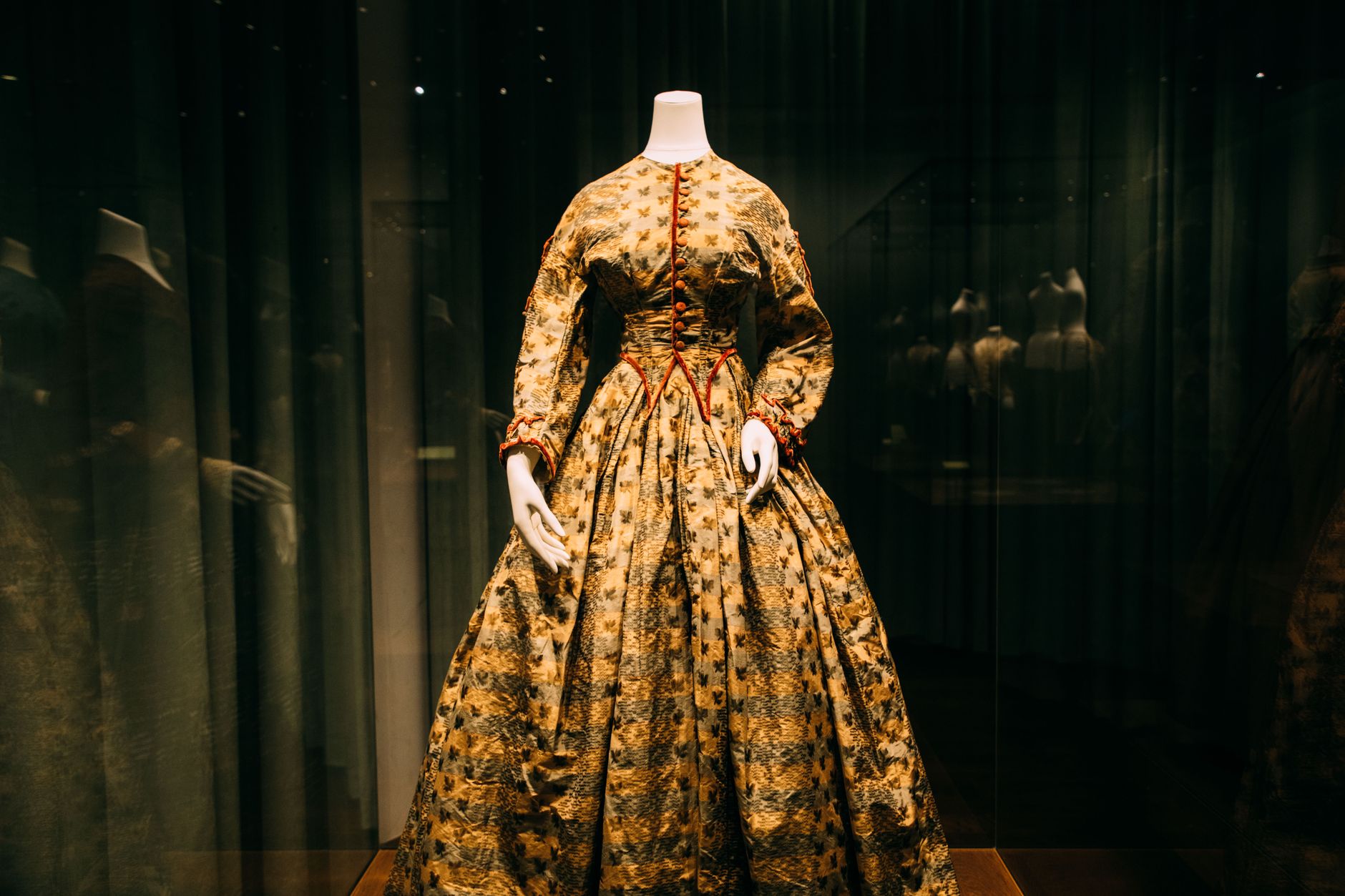
The second was a flannel skirt which was often shorter, but already could be decorated with modest trimming. All classes wore these two types of underskirts, but the fashionable women would need something more: a special underskirt with laces which would allow the skirt to be quickly adjusted to the fashionable shape. We have the renowned crinoline to look as such.
AI Notice: Some visual content in this article may have been created or enhanced using artificial intelligence (AI) for artistic, editorial or illustrative purposes. Learn more about our approach in our AI & Editorial Principles.