
Disclosure: This article contains Amazon affiliate links. As an Amazon Associate, we earn from qualifying purchases.
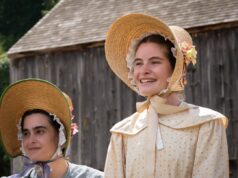
A Victorian woman never simply “put on a hat.” When she tied the ribbons of her bonnet under her chin, she stepped into a carefully scripted performance of class, modesty, and modernity. From the gas‑lit streets of London and Paris to the parlors of Boston and the promenades of Melbourne, the Victorian bonnet framed the female face and signaled who a woman was—and who she aspired to be. Today, surviving examples in the Metropolitan Museum of Art, the Victoria and Albert Museum, the Smithsonian Institution, and other collections reveal a world in which a few inches of silk, straw, and ribbon carried enormous social weight.
1. The Social and Historical Context of the Victorian Bonnet
The Victorian era (1837–1901), defined by the reign of Queen Victoria in the United Kingdom, was a time of rapid industrialization, expanding empires, and intense concern with morality and respectability. Clothing became a visible marker of this moral order. Bonnets, more than almost any other female accessory, reflected prevailing ideals about womanhood: modest, domestic, and decorous. In cities like London, Manchester, and Glasgow, the bonnet’s brim protected a woman’s face from the dirt of industrial streets and, symbolically, from the perceived moral “contamination” of public life.
Historians have pointed out that the Victorian bonnet must be viewed in the context of a larger ideology of ‘separate spheres’. As middle and upperclass women were to occupy the private, domestic sphere, men moved about in the public and political worlds. Headwear as the Victoria and Albert Museum (V &A) notes was ‘integral to the concept of propriety and high social standing throughout the nineteenth century’ and as such was an outward symbol of compliance with these rules. Entering the private ‘comfortable’ world of the home or the drawing room was often signified by the removal of the bonnet, as a hairs [hat].
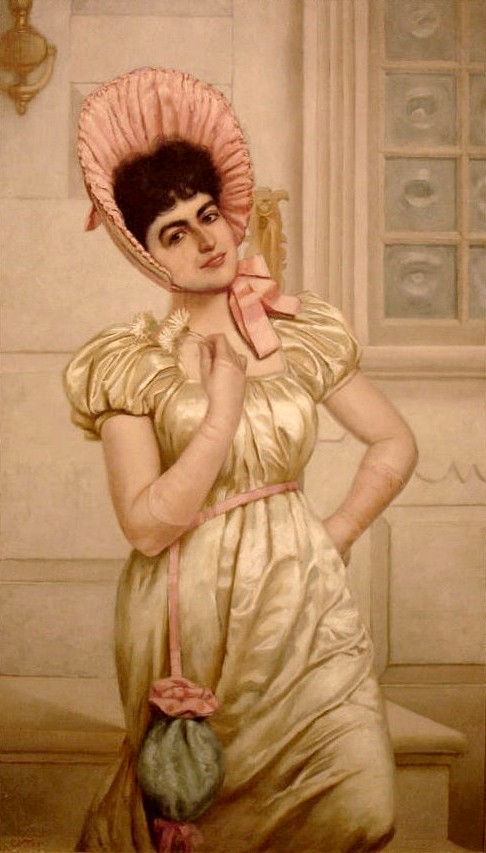
Outside Britain, the craze for bonnets travelled through imperial and other cultural networks. Paris milliners tailored international styles to local markets, while American cities from New York to Washington advertised bonnets in women‘s magazines such as Godey´s Lady´s Book and Harper´s Bazar. The Smithsonian Institution‘s collection of American headwear from the 19 th century shows how these styles migrated across the Atlantic, altered to some degree by climate and available materials but retaining their signals of class, religion, and feminine propriety.
2. Evolution of the Victorian Bonnet: From Modest to Magnificent
Victorian bonnets changed dramatically between the 1830s and the end of the 19th century. Early Victorian styles, influenced by late Georgian tastes, tended to be large and enveloping. Deep poke bonnets, with their projecting brims almost hiding the wearer’s profile, dominated the 1840s. The Metropolitan Museum of Art notes that these early forms “created an aura of demure seclusion,” emphasizing modesty and privacy. Such bonnets often required elaborate hairstyles to balance their volume, integrating hair and headwear into a single sculptural silhouette.
In turn, by the 1850s and 1860s, when the cage crinoline broadened women‘s skirts into a bell-shape, bonnets began to shrink in size and become steeper – not projecting out into space, but rising to enclose the face more, while revealing greater portions of it. The Victoria and Albert Museum notes how this change enhanced facial visibility while maintaining the associations of modesty. It was also, believed, a point of great ornamentation: sewing silk ribbons and lace, dyed plumage and artificial roses from Paris.
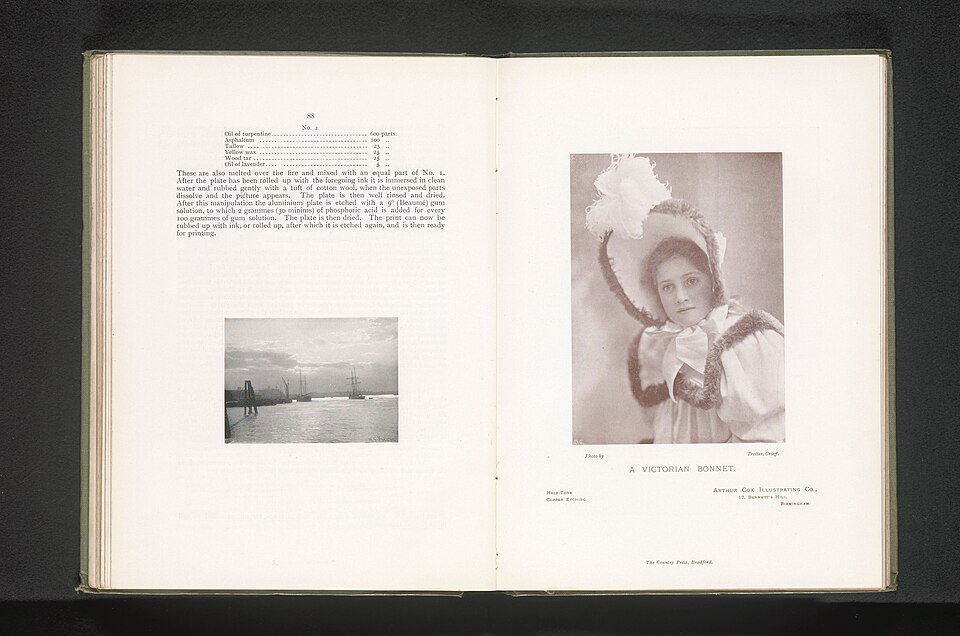
Towards the end of the Victorian era, such as in the 1870s to 1890s, traditional bonnets were competing with hats. Although the design of the bonnets often became more backward tilting, with the foundations now sitting toward the crown of the head rather than enclosing it, “the line between a bonnet and hat began to become blurred” The Smithsonian explains in this period as “attitudes about women‘s mobility and presence in public life shifted.” Older women and working class groups however continued to wear the traditional tied under the chin bonnet whereas younger women followed fashion and wore the smaller “perched” headpieces.
3. Materials, Techniques, and the Art of Millinery


The making of a Victorian bonnet was a skilled craft, typically overseen by milliners—often women—who ran small workshops or worked in larger urban establishments. Straw was a staple, especially for spring and summer wear. Fine Italian straw and English plaited straw were shaped over wooden blocks, stiffened, and trimmed. Silk in various weaves (taffeta, satin, grosgrain) covered frames of wire and buckram, allowing more complex shapes. The Metropolitan Museum of Art’s 19th‑century bonnet holdings demonstrate the precise engineering behind what appear, at first glance, to be purely decorative objects.
The choice of decoration was purely a matter of style and economy. Top-rated bonnets bore silk flowers (usually imported from Paris), velvet ribbons, lace lappets, ostrich or egret feathers, and sometimes jet or glass beading. Cheaper bonnets sometimes had cotton ribbons, paper or wax flowers, and rougher straw. According to the Victoria and Albert Museum, “trimmings were oft en changed, so that a bonnet could be dressed according to the latest mode without requiring the complete remake of the structure.” Millinery thus became a kind of permanent interaction in the relationship between wearer and maker.
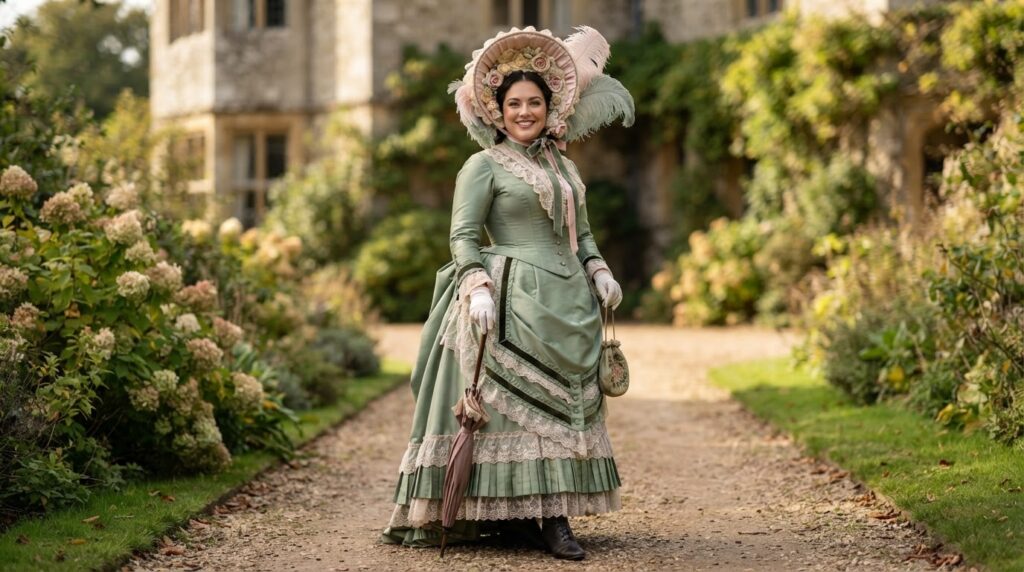
While industrialization undoubtedly transformed such bonnet types as cold-weather coverings, it did not kill off handcraft entirely. Machine-embroidered ribbons, cheap synthetic dyes (notably after the mid-19 th century discovery of aniline dyes), and uniformed buckram and wire resulted in numerous variations in accessories, while the actual construction, sewing, and trimming were often very time-consuming and poorly remunerated. In fashion centres such as London, Paris, and New York, the prosperous cities’ millinery shops were among the biggest employers of urban working women. As one 19 th -century observer in London‘s The Times lamented: ‘The elegance of the bonnet is wrought at great cost to the eyes and fingers of the milliner’, the disguised labor behind fashionable display was alluded to.
4. Symbolism, Etiquette, and the “Language” of the Bonnet
Beyond style and construction, Victorian bonnets were dense with symbolic meaning. Etiquette manuals and fashion magazines prescribed when, where, and how they should be worn. Daytime, street, and visiting bonnets differed from more decorative evening headwear. A respectable middle‑class woman in London or Edinburgh would rarely appear outdoors without some form of bonnet or hat, as bareheadedness suggested impropriety or low status. The Smithsonian Institution notes that “headcoverings remained central to the presentation of respectable womanhood in 19th‑century America,” mirroring British norms.
Color and ornament might knowingly hint at life stages and feelings. Mourning bonnets whole category, great diversity of them were governed by meticulous rules. Widows in heavy mourning would wear plate black crepe bonnets with absolutely no ornament, sometimes with a heavy veil obscuring their face. Over months, tiny accents of white, gray or lilac might show up. The examples of mourning bonnets at the Metropolitan Museum of Art show this shift from austerely plain to more usual decoration over time. These were a way of showing grief without speaking out of turn according to taste.
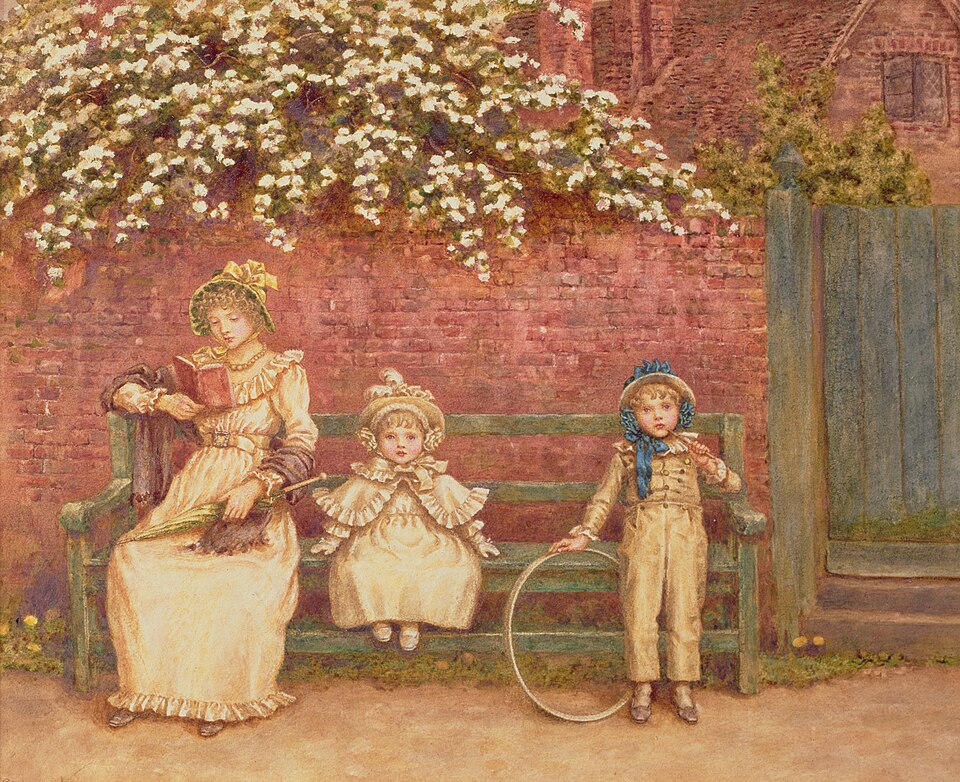
Age, marital status and class were influential in determining bonnet style. For instance, the young unmarried woman could sport paler shades, more blossom or bolder ribbons so long as they did not cross the line into absurd flamboyance. The married woman, meanwhile, often opted for more muted colors and more conservative shapes particularly for church or calling visits. The workingclass (including domestic servants) would generally wear plainer, more affordable styles. The Victoria and Albert Museum succinctly characterises this trend: “Headwear in the Victorian period was a visual shorthand for social position, with subtle variations in size, trim and quality conveying information instantly to the informed observer.”
5. Regional Styles and Global Variations
While the term “Victorian bonnet” often conjures images of British fashion, the style took distinct forms across Europe and the wider world. In France, milliners in Paris’s Rue de la Paix created some of the most coveted bonnets in Europe. These pieces emphasized delicacy, artful asymmetry, and luxurious trimmings. French influence is evident in collections at the Louvre Museum, which, although better known for fine art, also holds 19th‑century costume and accessories that showcase the interplay between Parisian fashion and broader European trends.
In North America, the bonnet became associated at once with frontier and rural life and with city fashion. The iconic “pioneer bonnet” of the American western landscape a broad-brimmed, utilitarian sunbonnet was a relative of the more stylish city types. The Smithsonian‘s National Museum of American History holds a number of examples some modest, unadorned cotton sunbonnets worn by farm women, others ornately beaded and ribboned silk bonnets owned by Boston, New York, and Philadelphia high society. Comparatively harsh sun intensified by shifting seasons created a need for functional changes, but not at the expense of Victorian gender standards.
In Australia, New Zealand and South Africa the bonnet evolved separately for the colony and the settler societies. In the hotter Australian climate, shapes became wider at the back or the brim favored straw or light cottons for comfort. In the cooler New Zealand and South African climates, straw and light cottons appeared less frequently. Missionary women and wives of colonial governors stuck to more traditional British designs as a visible sign of their culture whereas the utilization of regionally produced textiles or grasses emerged gradually and demonstrated the localization and internationalization of Victorian attire.
6. Comparing Bonnets Across the Victorian Era
The diversity of Victorian bonnets can be summarized by looking at their evolution, materials, and social meanings across the century:
| Period | Typical Shape & Size | Common Materials | Social & Cultural Notes |
|---|---|---|---|
| 1830s–1840s | Large, deep poke bonnets; face partially hidden | Plaited straw, silk covers, cotton linings | Emphasis on modesty and seclusion; strong rural influence |
| 1850s–1860s | Slightly smaller, more upright brims | Straw, silk, artificial flowers, ribbons | Growing ornamentation; aligned with crinolines and wide skirts |
| 1870s–1880s | Back‑tilted, smaller, perched on back of head | Wire + buckram frames, velvet, feathers | More visibility of the face; rising influence of hats |
| 1890s | Hybrid forms, often close to hats in design | Mixed textiles, elaborate trimmings | Women gaining mobility; cycling, work, and sports affect headwear |
Institutions such as the Victoria and Albert Museum and the Metropolitan Museum of Art use such typologies to date and interpret individual pieces. As fashion curator Harold Koda of The Met has observed in discussing 19th‑century dress, “Silhouette and surface treatment are our primary evidence for reading the social language of clothing.” Bonnets, with their shifting brims and changing trimmings, offer one of the clearest “texts” in that language.
7. Victorian Bonnets in Museums and Modern Imagination
Today, Victorian bonnets are prized objects in museum collections, costume departments, and historical reenactment communities. The Metropolitan Museum of Art in New York and the Victoria and Albert Museum in London both maintain extensive holdings of 19th‑century headwear, catalogued with details on provenance, materials, and construction. These artifacts allow researchers to corroborate written sources—fashion plates, advertisements, etiquette manuals—with actual surviving objects, strengthening the historical record in line with evidence‑based research standards.
The Smithsonian Institution among others emphasize the interpretive potential of bonnets. They can document developments in technology (e.g. the arrival of synthetic dyes), international commerce (e.g. Imported straw and feathers), and the place of women in the workplace (e.g. millinery factories). The Smithsonian remarks that other institutions are willing to give “accessories [such as bonnets] a voice when individuals themselves are silenced through the passage of time, or unable to address issues publicly because of class, gender, race, and age,” quoting the anecdotal evidence of rural and workingclass women as silent witnesses.
Images of Victorian bonnets have also largely entered the domain of the romantic in popular culture published in period dramas, in heritage tourism, and novelist‘s historical novels. Many recent adaptations of Jane Austen novels (although technically Regency rather than Victorian) and programmes based on the works of Charles Dickens or Elizabeth Gaskell feature women in bonnets, sometimes compressing or combining styles from across the Victorian /Edwardian decades. This has the potential to confuse the viewer with inaccurate visual associations of styles, but can also be used to keep Victorian dress in the public mind, so that museum collectors can attempt to preserve accurate examples and only make reproduction hats from surviving photographs. replicas, often drawing on museum research, are also used in living history sites, such as at the Museum of London or Colonial Williamsburg, to communicate the actual physical demands of the hat in wearing it.
Frequently Asked Questions about Victorian Bonnets
1. Were Victorian women legally required to wear bonnets?
No. There were no legal mandates, but powerful social and religious expectations made headcoverings almost obligatory for “respectable” women in many communities, particularly in Britain, continental Europe, and North America. Going bareheaded in public was widely read as improper or suggestive of low status.
2. How heavy and uncomfortable were Victorian bonnets?
Weight varied greatly. Simple straw or cotton bonnets could be quite light. Highly ornamented silk or velvet bonnets with wire frames, heavy ribbons, and feathers could be more cumbersome, especially in wind or rain. Surviving examples in the Metropolitan Museum of Art and the V&A show that while some were surprisingly light, others were structurally complex and likely required practice to wear gracefully.
3. Did working‑class women wear the same bonnets as upper‑class women?
They followed the same general shapes and trends but used cheaper materials and less ornament. A wealthy woman in London or Paris might own several bonnets per year, while a domestic servant or factory worker would make one serviceable bonnet last for seasons, refreshing it with new ribbons or a fresh lining. Museum collections and 19th‑century photographs from the Smithsonian illustrate these class differences clearly.
4. When did bonnets go out of fashion?
By the late 19th century, especially the 1890s and early 20th century (the Edwardian era), hats largely displaced traditional bonnets for younger and fashion‑forward women. Older women and conservative communities continued to wear bonnets into the early 1900s, particularly for church. By the time of World War I, the classic Victorian bonnet had largely become an emblem of the past.
5. How do historians and curators date bonnets accurately?
They combine stylistic analysis (shape, brim angle, decoration) with material and construction details (types of straw, ribbons, dyes, sewing methods) and provenance information. Museum records, fashion plates, and trade catalogues from the period are cross‑referenced. Institutions such as the Victoria and Albert Museum and the Metropolitan Museum of Art provide detailed online catalog entries explaining their reasoning.
Conclusion
The Victorian bonnet was far more than a charming relic of old‑fashioned femininity. It was a complex artifact at the intersection of industrialization, gender ideology, global trade, and daily life. From deep poke bonnets of the 1840s to the hat‑like styles of the 1890s, these objects chart shifting notions of how women should appear—and behave—in public. Studied today in leading museums such as the Metropolitan Museum of Art, the Victoria and Albert Museum, the Louvre Museum, and the Smithsonian Institution, Victorian bonnets offer a tightly focused yet richly revealing lens on 19th‑century society, reminding us how much history can be read in the curve of a brim and the knot of a ribbon.