
Victorian Handbags Are Back: The Surprising Details You’ve Never Noticed
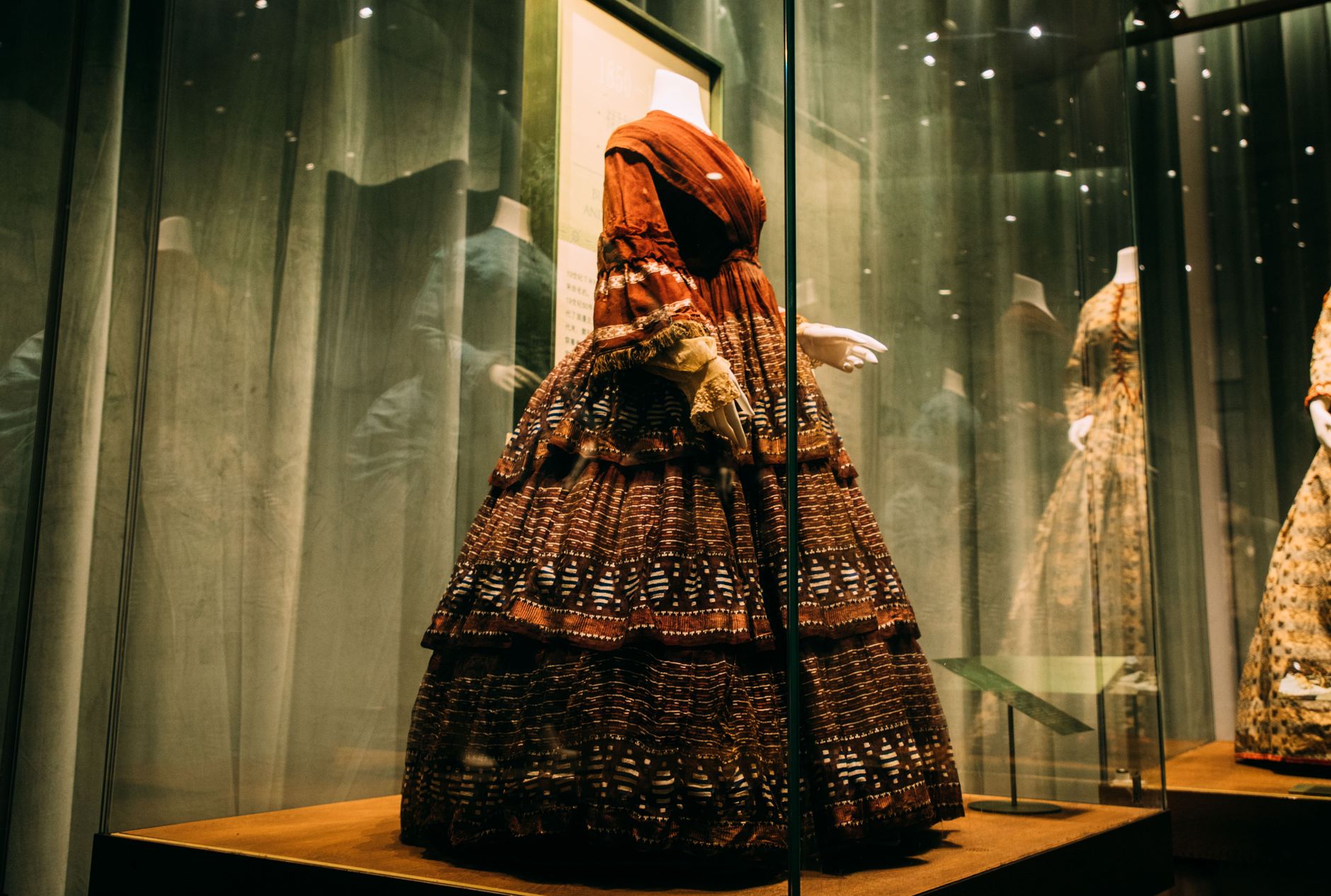
Victorian handbags are deceptively small objects that open up an enormous window into nineteenth‑century life. In an era defined by strict social codes, expanding global trade, and rapid industrialization, what a woman carried on her arm said almost as much as the clothes on her back. From embroidered silk “reticules” to heavily beaded evening bags and practical carpetbags for travel, these accessories were never mere containers; they were declarations of class, morality, and modernity. Today, scholars and curators use them as rich primary sources to understand gender, labor, empire, and consumer culture in the United Kingdom, Europe, and the United States during Queen Victoria’s long reign (1837–1901).
The Social Meaning of Victorian Handbags
Victorian handbags existed at the intersection of etiquette and emancipation. In early nineteenth‑century Britain, women’s clothing lacked integrated pockets, so any personal object—keys, a handkerchief, calling cards—had to be carried separately. The small drawstring “reticule,” popular from the late Georgian into the early Victorian period, was both a fashion necessity and a subtle declaration that a woman had personal possessions under her own control. As the Victoria and Albert Museum (V&A) notes in its fashion collections, these accessories developed in tandem with “the emergence of the modern consumer and the increasingly public role of women in society.” Handbags thus mirrored shifting expectations of femininity and public presence.
Can You Name the Masterpiece?
Ten masterpieces. Ten questions. How well do you know the history of art?
Meanwhile, the Victorian code of morality required that women be seemingly private and selfcontained. Purse had to be attractive without being gaudy, elegant yet unobtrusive; it was for this reason that they had to be neither too small nor too bulky and were fabricated by fragile materials that should reveal that the carrier was free of work, tools and money of any size, inspiring the Victorian middle-and-upper class image of the “angel in the house”. This can be contrasted with the bag of working men, drawn from the capacious, stronger leathers and fabrics of the sack and carpetbag. As the proceedings archive of the Met reports, in the case of many Victorian women, purse was “more for decoration in plain view than for use in concealment”.
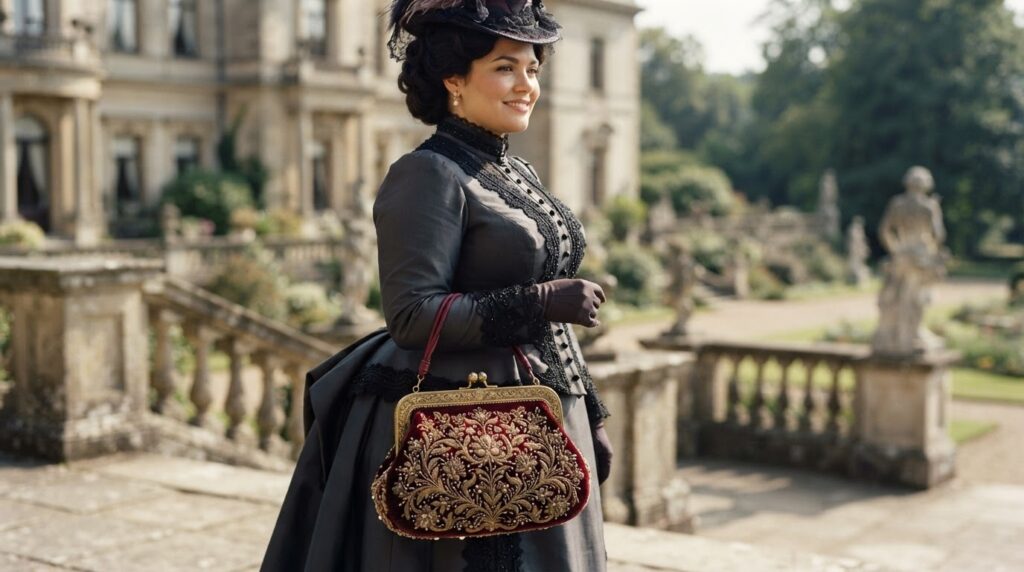
Geography and social class also strongly determined the use of the handbag. Rich women in London, Paris, or New York wore constantly more fashionable and elaborate bags for going to the opera or strolling through Hyde Park or the Bois de Boulogne. Poorer women in the country used simple, more durable ones or kept their jewelry and cash in their sewing boxes or workbaskets at home. London milliners’ shops on Regent Street or the Rue de la Paix in Paris were fashion laboratories where new shapes and materials were introduced each season, with records reaching the Smithsonian’s National Museum of American History. Place like these connected British, American, and French high society to each other in a rapidly globalizing fashion network.
Materials, Craftsmanship, and the Industrial Revolution
Victorian handbags vividly chart the impact of industrialization on fashion. Early in the century, many bags were handmade at home or by small specialist workshops; cutwork, Berlin woolwork, and tambour embroidery were common signs of skilled needlework. A well‑embroidered reticule functioned as a calling card of a woman’s domestic virtues and artistic refinement. According to the V&A’s collections on nineteenth‑century needlework, such projects were often taught in institutions like ladies’ academies and charity schools, where girls were trained to become “accomplished” in decorative arts. The handbag was, in effect, a portable exhibition of that training.
Can You Guess the Artist?
Three clues. One artist. How quickly can you identify the painter?
By the turn of the century, technological innovations had altered handbag production. The sewing machine, which had been developed and commercialized by mid-1800s, allowed for quicker, more regular construction of handbags, not only from textiles but from leather as well. New developments in hardware-producing sped the production of cast steel frames, clasps and chains and brought them into the reach of a broader market. Once extremely rare, handbags turned from custom-made objects into desired, semi-standardized goods that could be sold in department stores such as London‘s Harrods (est. 1849) or Paris‘s Le Bon Marche. According to the Smithsonian Institution, ‘the recent availability of ready-to-wear fashions, in any number of styles and diverse price ranges, prompted middle-class women to wear accessories at a level of popularity only occasionally attained in the past.’
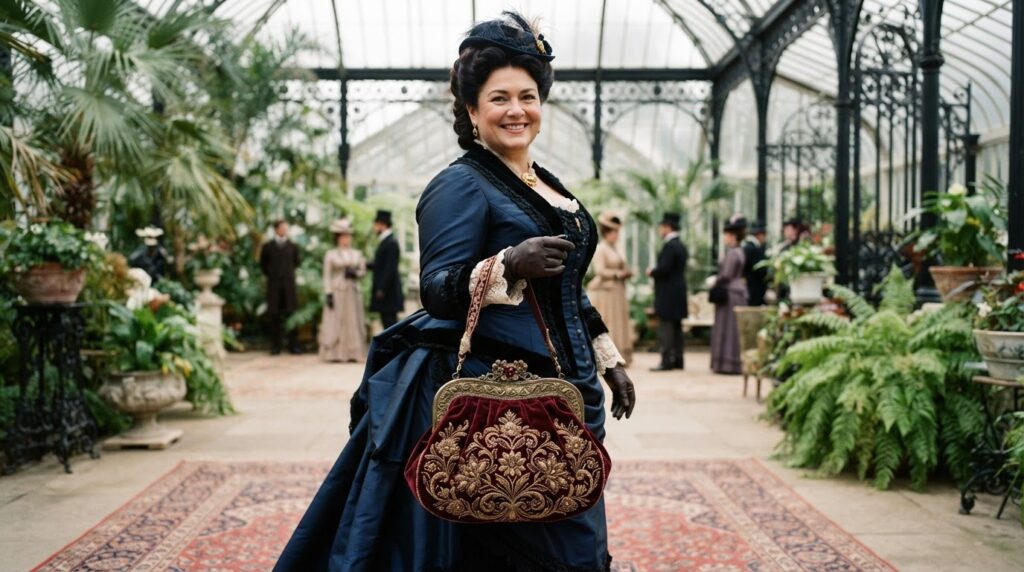
Even as the scale of machine manufacturing increased, high class handbags were still rich in artisanal detail. Luxury handbags could still feature handdelivered embroidery, embossed or tooled leather, inlaid mother of pearl, or handpainted ivory plaques. In its holdings of the decorative arts, the Louvre Museum demonstrates how French craftsmen, by adapting methods from bookbinding, jewelry making, and silver chasing, raided the techniques of “fine” and “applied” arts to fashion accessories in a way that continues to appeal to collectors. It is the highly artisanal nature of many surviving Victorian handbags (in the collections of The Met, for example), that makes them so valuable as historical objects.
Forms and Functions: From Reticules to Carpetbags
The Victorian era saw a striking variety of handbag forms, each suited to specific occasions and social rituals. The early Victorian reticule—often silk, velvet, or beaded, with a drawstring—was ideal for carrying handkerchiefs and calling cards to social visits. By mid‑century, more structured purses and chatelaines (decorative belt hooks holding small tools and sometimes tiny purses) gained popularity. Chatelaines, widely documented in The Met’s Costume Institute, allowed women to carry household tools like scissors, thimbles, and keys, signaling their domestic authority while keeping them ready at hand.
More drastic changes in handbag design came about due to changing trends in travel. The development of the railway system in Britain (from the 1830s onwards), and later elsewhere in Europe and the US, made luggage more necessary and portable bags more desirable. The then fashionable carpetbag, in thickwoven carpet fabric with a leather frame, was a travelling fashion signifier of modern mobility although many women used smaller versions or matching travel handbags when travelling from city to country house, or as part of the new fashion of seaside holidays at Brighton or Dieppe. The Smithsonian’s travel and transportation collections highlight the tendency to use carpetbags so that ‘more people industrial middleclass women could each enjoy greater choice and mobility’.
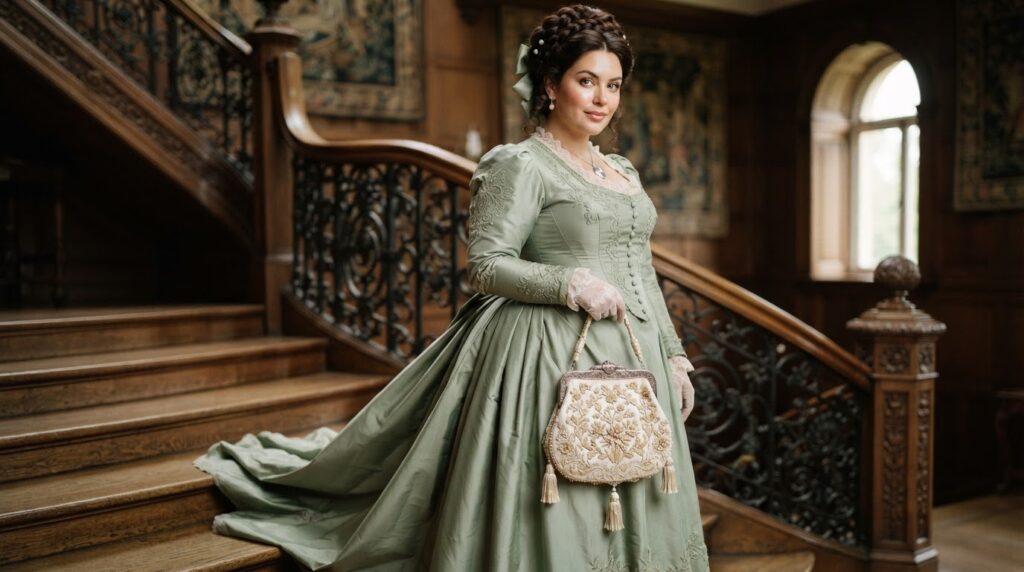
Evening and ceremonial handbags began to develop their own language, too. Miniscule beaded or metalmesh clutch bags with delicate neoclassical or floral patterns complemented the light silk balls and opera nights its rich users attended. One cannot imagine how awkward it must have been to carry around such a miniscule bag, but again it was a design feature: they insinuated to the ownership that they would not be working or carrying out mundane household tasks, their owner was more interested in socializing. Indeed The Met‘s curators have observed that these objects “served as much as jewelry as they did as containers,” many, it appears, being constructed from “silver or gold frames, gemstones for minute fastenings, or long chains which sparkled in bright gaslights at London‘s Royal Opera House or the Palais Garnier in Paris.”
Table: Key Characteristics of Victorian Handbags
| Aspect | Typical Features | Historical Significance |
|---|---|---|
| Core time frame | c. 1837–1901 (reign of Queen Victoria) | Aligns with major changes in industry, gender roles, and travel |
| Primary forms | Reticules, purses, chatelaines, carpetbags, evening bags | Reflect different social settings and functions |
| Common materials | Silk, velvet, wool, beadwork, leather, metal frames, carpet fabric | Show mix of domestic craft and industrial production |
| Typical decoration | Embroidery, bead patterns, monograms, floral and geometric motifs | Encode class, taste, and feminine “accomplishment” |
| Users | Primarily women; some travel and work bags for men | Reveal gendered divisions of labor and mobility |
| Production methods | Hand sewing, embroidery, later sewing machines and metal casting | Mark shift from artisanal to semi‑industrial fashion |
| Key institutions holding examples | The Met, V&A, Louvre, Smithsonian | Provide curated, documented collections for study and preservation |
Gender, Class, and the Politics of the Purse
Victorian handbags cannot be understood without examining gender and class structures. In a society where married women in Britain and many parts of Europe lacked full legal control over property for much of the century, handbags functioned within constrained bounds of autonomy. A small purse holding a few coins or a train ticket represented limited—but meaningful—economic independence. Historian Leonore Davidoff has argued that such objects are part of a “material language of separate spheres,” expressing the division between public (male) and private (female) domains. Handbags were one of the few sanctioned ways for women to participate visibly in public life while conforming to respectable norms.
Class distinctions were as important. An aristocratic woman in Mayfair, or the Faubourg SaintGermain, might opt for a bespoke silk bag embroidered with a family crest, but a lowermiddle class governess would carry a coarse leather purse with minimal decoration. Factory workers, and domestic servants who owned a bag at all, would be more likely to possess a hardwearing, practical item than an ontrend fashion item. The records of the V&A, and the Smithsonian, Museum of American History, demonstrate this difference in their comments that whilst a few eighteenth and nineteenthcentury handbags have survived family heirlooms, bought or inherited by wealthier peoples, working class peoples possessions were far more likely to have been ‘worn through’, and therefore not survive.

However, even more interesting is the way in which these handbags intersected with very early organized forms of women‘s political activism. By the 1890s, when the women‘s suffrage movement was theoretically strengthening both in Britain, the US and elsewhere in Europe, certain women carried petitions, pamphlets and organizational documents in folio-sized document cases and carry-all shoulder bags. The most famous examples of these early “suffragette handbags” date just a few years later. But their form and symbolic significance owe a great deal to their Victorian precedents. As one The Met curator has pointed out, ”[t]he handbag became a means for women to not only carry personal effects, but carry important political messages” and even leave the house.
Collecting, Curating, and Studying Victorian Handbags Today
Museums today treat Victorian handbags as vital artifacts of social history, design, and technology. The Metropolitan Museum of Art in New York holds numerous nineteenth‑century bags in its Costume Institute, many digitized and available online with detailed provenance and materials analysis. Descriptions often reference contemporary fashion plates, trade catalogues, and surviving invoices from makers in London, Paris, and Vienna.
One of the most comprehensive sources on Victorian accessories is the V&A Museum in London, which has one of the UK’s most longstanding and comprehensive Textile and Fashion collections. Its exhibitions and bibliography include not only bags but also clothing, footwear and jewelry, making clear the range of compounds that contributed to a single unobtrusive presentation. The V&A‘s curators have the advantage of a strong providing expertise in textile conservation, costume history and material culture; their books, Bags: an Illustrated History are standard text for collectors and shopowners. The Museum‘s conservation laboratories are at the forefront in developing techniques to conserve silk and early synthetic dyestuffs, ensuring Victorian bags are preserved for future research.
Various other institutions provide valuable additional viewpoints. The Louvre Museum in Paris exemplifies how handbags fit into broader forums of decorative arts, linking the craftsman of Renaissance coffers to the nineteenth-century purse-maker. The Smithsonian Institution in Washington, D. C., particularly the National Museum of American History, provides the potential to connect the handbag to the wider issues of U. S. industry, commerce, and the working life of women. There is now a multinational scholarly sphere in which Victorian-era handbags can be understood by audiences not as curiosities in isolation, but as part of transnational systems of production, distribution, and symbolism.
Frequently Asked Questions About Victorian Handbags
1. What were Victorian handbags typically made from?
Victorian handbags were crafted from a range of materials including silk, velvet, wool, beadwork on canvas, leather, and sturdy carpet fabric. Metal frames and chains—often steel, silver, or gilt metal—became common as industrial metalworking advanced. Luxury examples might feature ivory plaques, mother‑of‑pearl, or semi‑precious stones. Institutions like The Met and the V&A provide detailed materials breakdowns in their online catalogues.
2. Did all Victorian women carry handbags?
No. Handbag ownership and use varied by class, geography, and occupation. Middle‑ and upper‑class urban women were most likely to own multiple handbags for different occasions—visiting, evening events, and travel. Working‑class women might rely on aprons, baskets, or simple purses rather than fashionable handbags. Surviving objects in museums tend to come disproportionately from wealthier families, which can give a misleading impression of universality.
3. How can you identify an authentic Victorian handbag?
Authenticity is usually determined by examining materials, construction techniques, and stylistic details, often supported by provenance. Hand‑sewn seams, certain embroidery styles (like Berlin woolwork), period‑appropriate metal frames, and natural dyes can indicate nineteenth‑century origin. However, high‑quality reproductions and later revivals complicate the picture. Collectors are advised to consult specialist literature and, where possible, compare pieces with documented examples from institutions such as the V&A or The Met.
4. Were handbags considered respectable for Victorian women?
Yes, provided they conformed to social norms. Small, delicate handbags that coordinated with a woman’s dress and did not suggest commercial activity were entirely respectable. Large, utilitarian bags—especially those associated with trade or manual work—could be seen as inappropriate for middle‑ and upper‑class women, who were expected to appear unburdened by economic concerns. This distinction underlined class and gender expectations in Victorian society.
5. How did Victorian handbags influence modern bag design?
Many modern handbag conventions have Victorian roots: framed purses with kiss‑lock clasps, beaded evening bags, structured leather handbags, and travel bags evolved out of nineteenth‑century experiments with shape, closure, and material. The rise of the handbag as a standard component of women’s dress, rather than an occasional accessory, is closely tied to Victorian developments in urban life, transport, and consumer culture. Modern designers often reference Victorian motifs—such as floral beadwork or embossed leather—in contemporary collections.
Conclusion
Victorian handbags are small but extraordinarily revealing artifacts. They embody the tensions of a century that celebrated domestic femininity while quietly expanding women’s access to public space, travel, and consumer choice. Their fabrics and forms trace the story of the Industrial Revolution; their embroidery and beadwork speak to unseen hours of female labor and creativity; their preserved examples in museums from London to New York and Paris to Washington attest to the value we now place on everyday objects as historical testimony. To study a Victorian handbag is to hold, quite literally, a condensed history of fashion, technology, and social change in the palm of one’s hand.
AI Notice: Some visual content in this article may have been created or enhanced using artificial intelligence (AI) for artistic, editorial or illustrative purposes. Learn more about our approach in our AI & Editorial Principles.