What Did Victorian Ball Gowns Really Look Like? Hidden Details Revealed
Victorian ball gowns are so closely tied to visions of glittering chandeliers, mirrored ballrooms and swishing silk skirts that it’s easy to forget they were also complex feats of engineering, status display and social control. Built on rigid corsets and vast crinoline or bustle structures, these gowns reshaped the body, dictated how a woman moved and even how she could dance or sit. To understand what Victorian ball gowns looked like is to step into the heart of nineteenth‑century ideals of femininity, class and empire—from London’s royal courts to Parisian couture houses and American parlors.
The Shape of Splendor: Silhouettes Across the Victorian Era
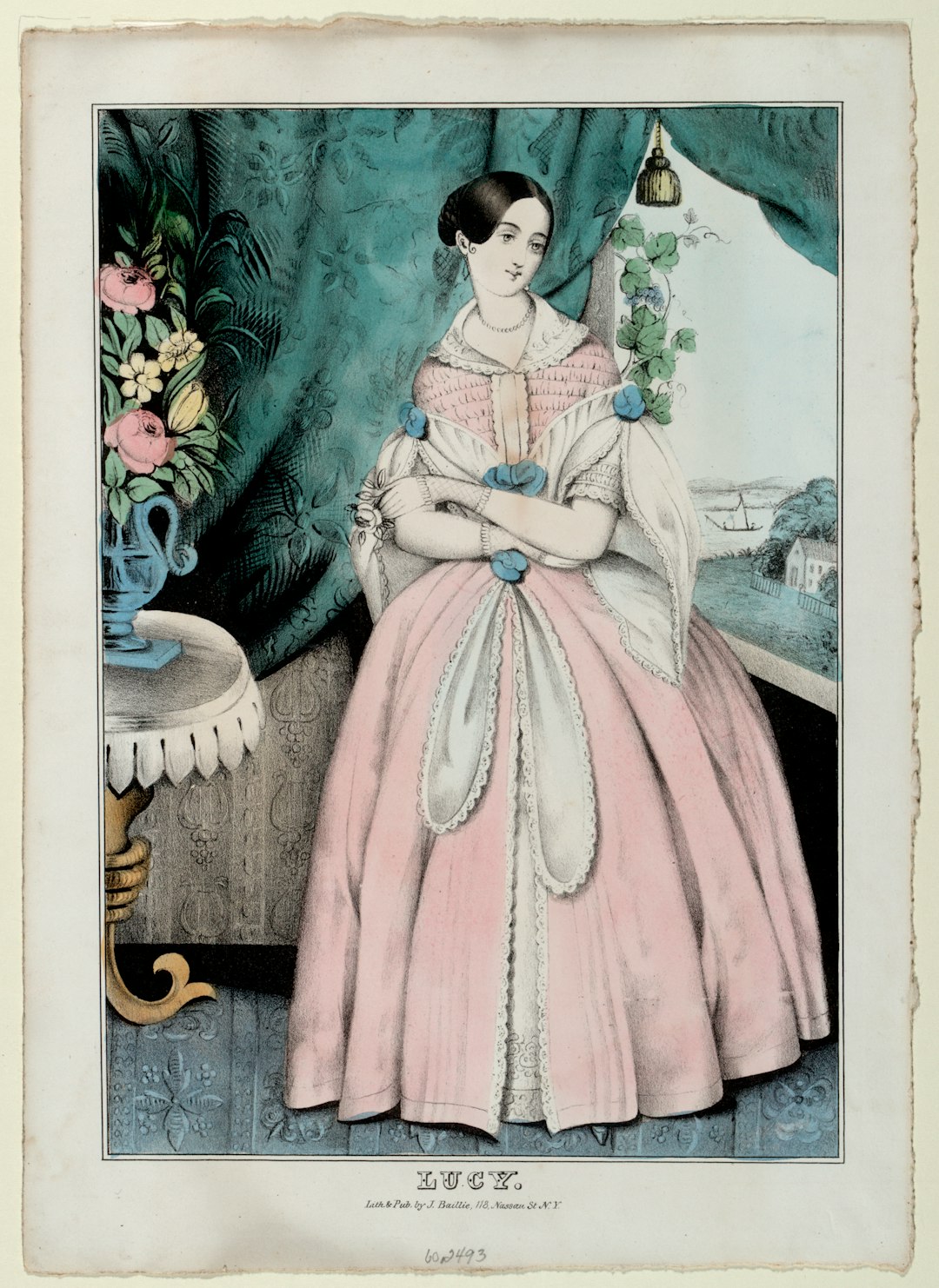
When people say “Victorian ball gown,” they often imagine a single look: a tiny waist and a huge skirt. In reality, the silhouette shifted dramatically between 1837 and 1901. Early Victorian gowns (late 1830s–1840s) retained something of the Romantic era, with sloping shoulders and conical skirts supported by layers of petticoats. By the mid‑1850s, the crinoline—lightweight steel hoops—revolutionized evening dress, pushing skirts to breathtaking diameters. Later, the bustle of the 1870s and 1880s relocated volume to the back, creating a very different, more architectural outline.
Can You Name the Masterpiece?
Ten masterpieces. Ten questions. How well do you know the history of art?
The Metropolitan Museum of Art notes that the mid‑century crinoline “redefined the fashionable female silhouette into a bell shape of sometimes absurd dimensions.” This applied doubly to ball gowns, where drama was not just permitted but expected. A woman entering a ballroom at Buckingham Palace or a grand Parisian hôtel particulier brought with her a moving sculpture of fabric and steel, one that occupied physical and visual space in ways that signaled privilege: only those who did not need to work or travel on crowded omnibuses could afford such impractical dress.
By the 1890s, ball gowns adopted the hourglass figure familiar from the “Gibson Girl” image, with relatively smaller skirts, gored panels for a smooth fall over the hips and large leg‑of‑mutton sleeves creating width at the shoulders. This late Victorian look is well documented in the collections of the Victoria and Albert Museum and the Smithsonian, where evening bodices from the 1890s show deep, pointed waists and sculpted busts. Across the era, then, Victorian ball gowns were not a single look, but a succession of silhouettes that charted changing technologies, aesthetics and moral codes.
Foundations and Structure: Corsets, Crinolines and Bustles
Beneath every Victorian ball gown lay an invisible infrastructure. The ball dress the eye sees is only the surface; the true “shape” begins with the corset. Victorian corsets were not primarily designed to crush the waist to mythical extremes, but to create a smooth, conical torso, uplift the bust and provide an anchor for heavy skirts. The V&A observes that the corset “gave the fashionable figure, supporting the bust and emphasizing the smallness of the waist by contrast with the full skirts and sleeves.” For evening wear, corsets were closely fitted and often reinforced to withstand hours of dancing.
Can You Guess the Artist?
Three clues. One artist. How quickly can you identify the painter?
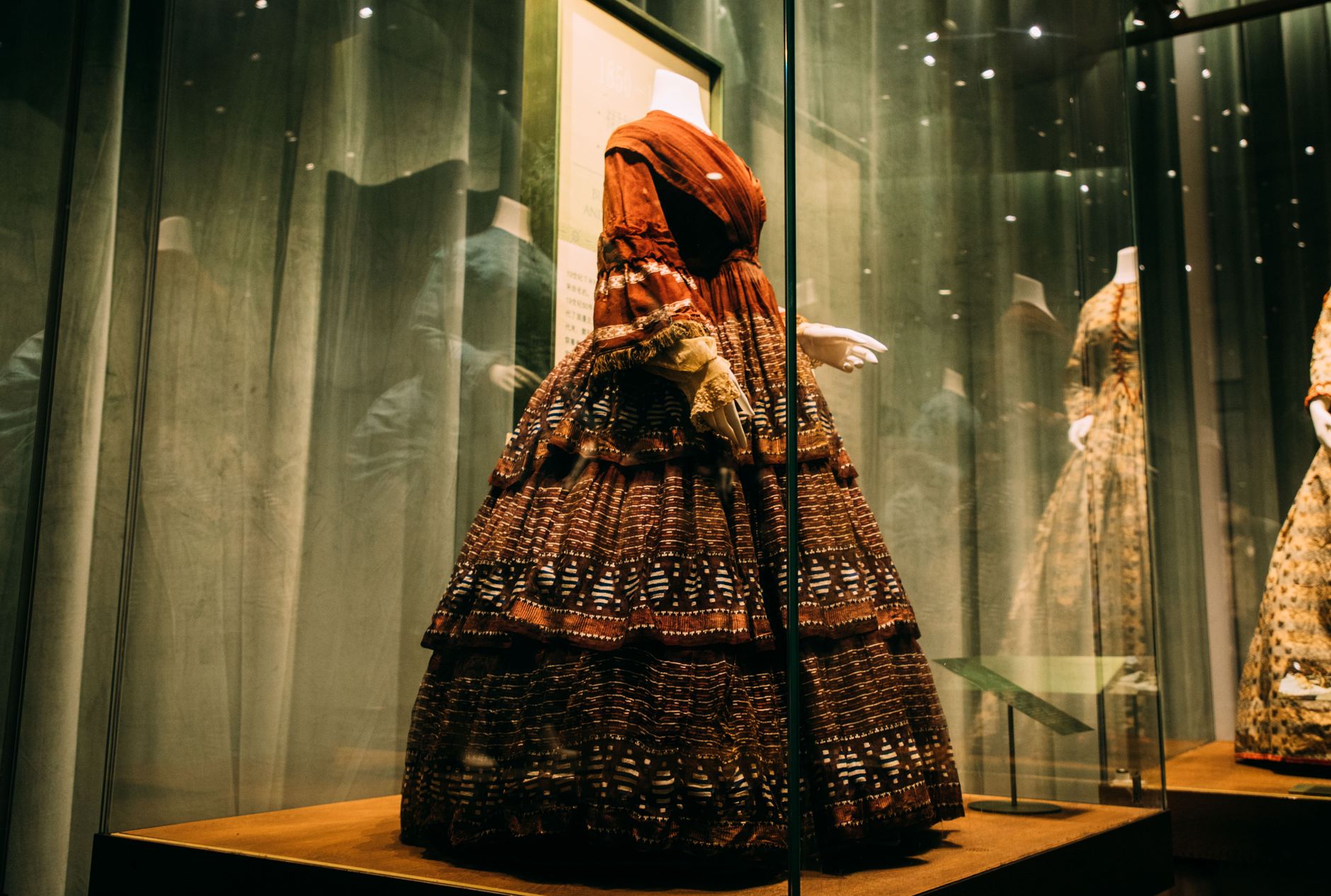
In the 1850s and 1860s, the cage crinoline (or hoop skirt) became standard for ball gowns. Constructed of concentric steel or whalebone hoops suspended from a waistband, crinolines could span more than 150 cm across. They lifted the heavy silk and tulle away from the wearer’s legs, paradoxically making movement easier than under masses of petticoats alone. Contemporary critics, however, mocked their size and potential hazards; the satirical magazine Punch regularly caricatured women stuck in doorways or sweeping everything off tables with their skirts.
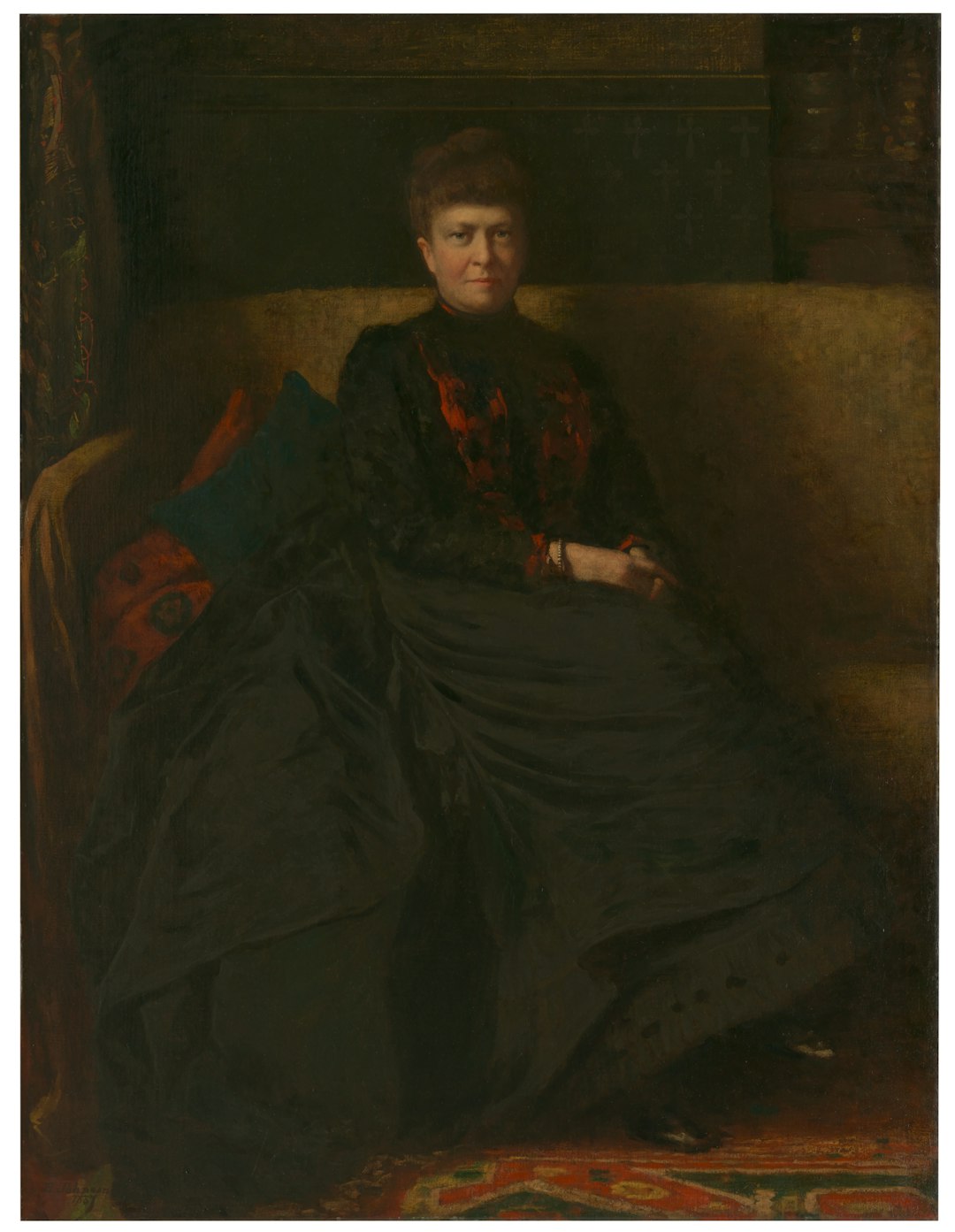
From the late 1860s onward, the bustle gradually replaced the dome‑shaped crinoline. This metal or padded structure, worn at the back of the waist, created a pronounced projection behind, often draped with pleats, swags and elaborate trains in ball dress. The Louvre’s fashion holdings include French evening gowns by houses such as Worth that display the tour de force of bustle construction: the front of the skirt falls relatively straight while the back explodes into cascades of silk and lace. No matter the decade, however, the Victorian ball gown was always a collaboration between outer beauty and hidden engineering.
Necklines, Sleeves and Bodices: The Language of the Upper Body
If the skirt announced a Victorian ball gown from across the room, the bodice and neckline communicated more intimate messages about age, marital status and propriety. Evening dress traditionally exposed more of the shoulders and chest than daywear, but the degree and shape of exposure shifted. Early and mid‑century ball gowns typically featured wide, off‑the‑shoulder necklines, often cut straight or slightly dipped at the center front, framed by short puffed sleeves or tiny lace bertha collars. The Metropolitan Museum of Art’s mid‑1850s English ball gowns demonstrate this low, horizontal line designed to showcase the collarbones and jewelry.
By the 1870s and 1880s, as the bustle era matured, bodices became more structured and princess‑seamed, often with square, heart‑shaped or V‑shaped necklines. Many evening bodices were boned almost as thoroughly as corsets, creating a rigid base to which the skirt was attached. The Smithsonian Institution’s holdings of American ball gowns from this period show tightly tailored bodices, sometimes with faux lapels, pleated fronts or contrasting panels to emphasize the waist. Sleeves ranged from barely‑there cap sleeves to short ruffles, while long gloves completed the line of the arm for formal balls.
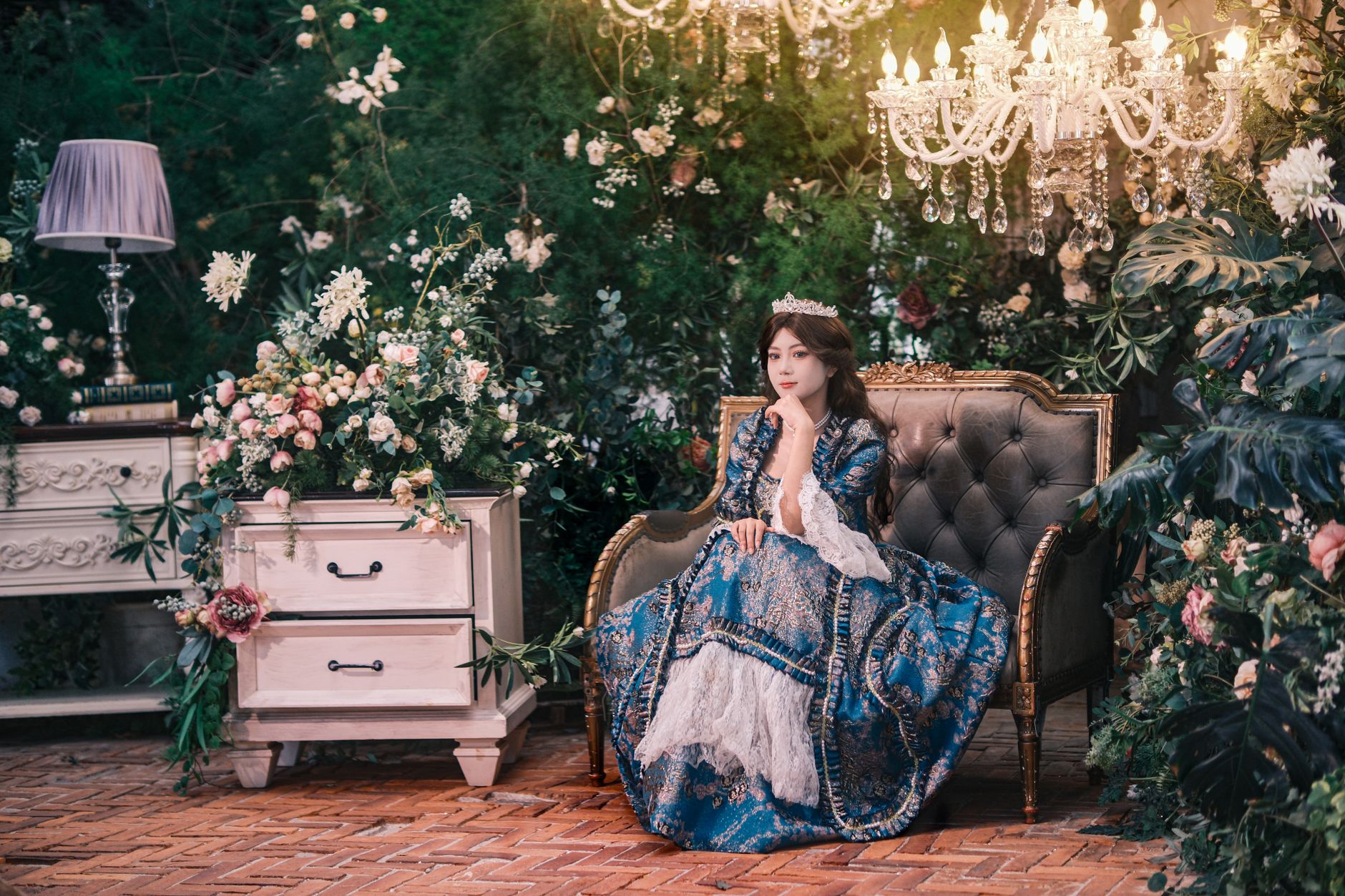
Late Victorian ball gowns of the 1890s brought back sleeves in a dramatic way. The fashion for leg‑of‑mutton sleeves created significant volume at the upper arm, narrowing to a fitted lower sleeve or ending above the elbow for evening wear. This silhouette balanced the wider skirts of earlier decades with a new emphasis on shoulder width. As the V&A notes in its overview of 1890s dress, “the broad shoulder and full bosom were now the focus of interest.” Even within the strict etiquette of evening wear, neckline and sleeve choices gave subtle signals about modernity, modesty and participation in the latest Parisian or London trends.
Fabrics, Colors and Ornament: Luxury on Display
Victorian ball gowns were unapologetically luxurious, using expensive textiles and lavish ornamentation to communicate wealth and taste. Silk—taffeta, satin, faille and moiré—dominated, often combined with fine tulle, net and lace. Velvet appears in some winter ball gowns and as trimming, but full velvet skirts were heavy and less suited to dancing. The Victoria and Albert Museum’s 1860s evening gowns frequently combine silk satin skirts with tulle overskirts, creating depth and shimmer under gas or early electric lighting.
Color choices evolved over the century. Early Victorian taste leaned toward rich, deep tones—royal blue, crimson, emerald—alongside soft pastels. By the mid‑century, artificial aniline dyes (first commercially available in the late 1850s) introduced intense new shades such as mauve and magenta. The Met points out that these “new bright colors were particularly popular in fashionable evening wear,” though they also sparked debates about garishness versus elegance. White and ivory remained associated with debutantes and brides, but colored ball gowns were far more common for married women and older attendees.
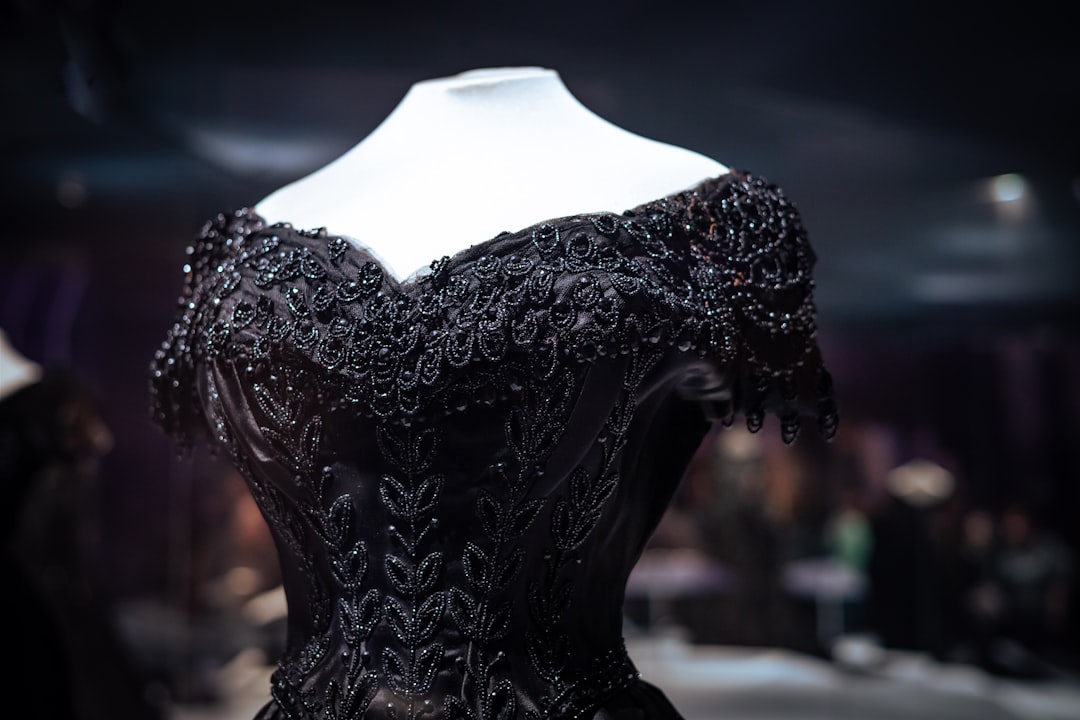
Ornament was essential. Trims might include hand‑applied lace, silk fringe, ribbon bows, artificial flowers and beadwork. Many ball gowns featured separate bertha collars—wide, decorative lace pieces that softened the neckline—and detachable trains or overskirts that could be rearranged to refresh a dress for multiple seasons. The house of Worth and other Parisian couturiers, whose work appears in collections at the Louvre and the Met, were famed for their use of elaborate embroidery and appliqué, sometimes incorporating metallic threads or sequins to catch the light. These gowns were meant to dazzle from every angle, transforming the wearer into a moving, glittering spectacle.
Etiquette and Function: How Ball Gowns Were Worn
Victorian ball gowns were not merely aesthetic objects; they were designed for a very specific social function. Court presentations at Buckingham Palace or Windsor Castle, charity balls in London’s Grosvenor Square, and subscription balls in cities from Paris to Boston all operated under detailed dress codes. Queen Victoria’s own court regulations, preserved in British archives, stipulated white or light‑colored gowns for unmarried women, with specific requirements for trains and feathers. Adhering to these rules signaled respectability and belonging to a particular social world.
Movement was a crucial consideration. Although crinolines and bustles look cumbersome to modern eyes, their wearers danced intricate quadrilles, waltzes and polkas in them. Dressmakers cut ball gowns to allow full motion of the arms and some freedom at the hips, despite the corset. As the Smithsonian’s Fashion, Costume, and Textiles collections demonstrate, many bodices show gussets or clever seaming under the arm for ease. Trains could be caught up on the wrist or buttoned to allow freer movement during the more vigorous dances of the late century.
There was also a moral and symbolic dimension to ball dress. A revealing neckline for evening was acceptable precisely because it was constrained by the rules of place and time: a chaperoned young lady in a public, supervised ballroom, her body both displayed and controlled by the architecture of corsetry and etiquette. As fashion historian Valerie Steele has observed, “the corset and evening dress together expressed a paradoxical combination of erotic display and moral discipline.” The Victorian ball gown thus operated at the intersection of desire, decorum and display.
Table: Key Characteristics of Victorian Ball Gowns by Period
| Period | Silhouette & Structure | Bodice & Neckline | Typical Fabrics & Ornament |
|---|---|---|---|
| Early Victorian | Full skirts with many petticoats; no hoops | Sloping shoulders; modest but wide necklines, short sleeves | Silk taffeta, lightweight wool; moderate trimmings, some lace |
| c. 1837–early 1850s | Conical torso from corset | Often off‑the‑shoulder but not extremely low | Embroidery, simple bertha collars |
| Crinoline Era | Very wide bell‑shaped skirts over cage crinolines | Very low, wide, off‑the‑shoulder necklines; short puffed sleeves | Silk satin, taffeta; lace, artificial flowers, ribbons; brighter aniline dyes |
| c. 1850s–mid‑1860s | Emphasis on tiny waist and dome skirt | Bertha collars common | Elaborate flounces, tulle overskirts |
| Late Crinoline / Early Bustle | Skirts narrower in front, volume at back emerging | Necklines still low but more varied (V, heart‑shaped) | Rich silks, some velvet; increasing drapery and fringe |
| c. mid‑1860s–early 1870s | Transition to focus on back fullness | Bodices more tailored, longer in waist | Heavier decoration at back and hem |
| Bustle Era | Pronounced bustle at back, trained skirts | Structured bodices, often square/V necklines; tiny sleeves | High‑quality silk, lace, beading; dramatic back drapery |
| c. 1870s–late 1880s | Relatively flat front, architectural back | Boned like corsets for rigid fit | Parisian couture flourishes, metallic trims |
| Late Victorian | Hourglass figure; smaller, gored skirts; some back fullness | Deep V or heart necklines; large leg‑of‑mutton sleeves | Smooth silks, chiffon; restrained but sophisticated embellishment |
| c. 1890s–1901 | Balanced proportions (broad shoulders, small waist, moderate skirt) | Emphasis on bust and shoulders | Embroidery, lace inserts, fewer heavy flounces |
Voices from the Period: Contemporary Views
Period commentary helps bring Victorian ball gowns to life. In 1863, the English magazine The Queen observed the dominance of the crinoline: “The ball dress of the season is incomplete without the wide cage, for no number of petticoats, however ample, can rival the perfect circle of the steel skirt.” This remark underlines how technology, not just fabric, defined fashionable volume.
Charles Frederick Worth, the Paris‑based English couturier often credited as the father of haute couture, was widely quoted on the importance of form and line over mere surface decoration. As cited by fashion historians and echoed in the collections of the Louvre and the Met, Worth insisted that “the dress must first be a work of architecture, then a work of art.” His ball gowns, with their carefully proportioned skirts and bodices, embody this principle.
The moral tensions of Victorian evening dress also appear in literature. In Anthony Trollope’s 1867 novel “Phineas Finn,” a character reflects disapprovingly on a young woman’s ball dress: “There are some dresses which seem to tell all the world that the wearer of them delights in having her beauty discussed.” The line captures how ball gowns functioned as public statements open to scrutiny, admiration and censure.
Frequently Asked Questions about Victorian Ball Gowns
Were Victorian ball gowns really that uncomfortable?
They could be, but not always in the way modern people imagine. Corsets, when properly fitted, were more about shaping and support than extreme constriction. The Met and V&A collections show signs of careful tailoring for movement. However, the combined weight of heavy silk, multiple layers and metal structures could be tiring over long evenings, and heat and restricted sitting positions were genuine issues.
Did all Victorian women wear such elaborate gowns to balls?
No. The most extravagant ball gowns belonged to the aristocracy and wealthy upper middle class, particularly in major cities like London, Paris and New York. Middle‑class women might have simpler gowns, sometimes remodeled from older dresses or made with fewer trimmings. Rural or smaller‑town balls often saw less extreme silhouettes than those at court or in capital‑city high society.
How many ball gowns would a fashionable woman own?
It varied by wealth and social calendar. A woman attending the London Season might require several ball gowns per year, particularly if she were a debutante. However, gowns were often altered, re‑trimmed or re‑bodiced to follow changing fashions. The Smithsonian’s textile collections include examples of dresses that began as 1860s crinoline gowns and were later converted for 1870s bustle use, showing how garments were adapted rather than simply discarded.
Conclusion
Victorian ball gowns were theatrical, technically sophisticated garments that translated the century’s ideals and anxieties into silk and steel. Their changing silhouettes—from bell‑shaped crinolines to jutting bustles to sculpted hourglass forms—tell a story of industrial innovation, shifting aesthetic priorities and tight social codes. Institutions such as the Metropolitan Museum of Art, the Victoria and Albert Museum, the Louvre and the Smithsonian preserve these dresses not just as beautiful objects, but as evidence of how people once imagined femininity, status and the very shape of a perfect night. To picture a Victorian ball gown is to see both the glittering surface and the intricate, sometimes contradictory culture beneath it.
AI Notice: Some visual content in this article may have been created or enhanced using artificial intelligence (AI) for artistic, editorial or illustrative purposes. Learn more about our approach in our AI & Editorial Principles.