
Victorian Formal Dresses Are Back: The Elegance Trend You Must See
Victorian formal dresses were never just “pretty gowns.” They were feats of engineering, walking diagrams of social hierarchy, and polished statements of moral respectability. From the candlelit ballrooms of London to the parlors of Boston and the salons of Paris, these dresses translated a woman’s class, taste, and even her values into fabric and steel. To understand Victorian formal wear is to understand an era obsessed with progress and propriety: an age in which steam engines transformed cities while corsets and crinolines transformed bodies.
The Victorian Formal Dresses: Context
The Victorian era, named after Queen Victoria (reigned 1837–1901), was a period of rapid industrialization, expansion of the British Empire, and profound social change. London, Paris, and New York became centers of fashion production and consumption. Textile mills in northern England and Lyon, France, provided the fabrics, while department stores such as London’s Liberty (founded 1875) and Paris’s Le Bon Marché (expanded under Aristide Boucicaut in the mid-19th century) made fashionable goods more accessible than ever before. Formal dress became a tangible expression of these economic and cultural shifts.
Can You Name the Masterpiece?
Ten masterpieces. Ten questions. How well do you know the history of art?
Within this context, clothing acted as social code. For upper- and middle-class women, formal dress for balls, dinners, the opera, and court presentations followed intricate rules that dictated sleeve length, neckline depth, fabric choice, and even appropriate colors for certain times of day or stages of life. A ball gown worn in Mayfair or at the Paris Opéra was instantly readable to those in the know, signaling not only wealth but also a woman’s marital status and adherence to etiquette. “Dress was a language, with its own vocabulary and grammar,” notes the Victoria and Albert Museum in its overview of 19th-century fashion.
The period also saw the global flow of materials that shaped formal dress. Silk from China, cotton from India and the American South, and fine wools from Australia and New Zealand passed through industrial centers to be transformed into garments. Institutions such as the Smithsonian’s National Museum of American History highlight how these dresses were embedded in imperial trade networks, making the gown in a London ballroom indirectly dependent on plantation labor, transoceanic shipping, and mechanized looms. Victorian formal dresses were, in many senses, global objects.
Silhouettes Through the Decades: From Domes to Hourglasses
Victorian formal dress silhouettes changed dramatically across the 19th century. Early Victorian styles of the 1840s and 1850s favored bell-shaped skirts supported first by numerous petticoats and later by the newly patented cage crinoline (1856). The Metropolitan Museum of Art notes that this lightweight steel-hoop structure “revolutionized women’s fashion” by creating enormous skirts without the weight and heat of multiple layers of fabric. These wide, dome-like skirts became the hallmark of early Victorian formal wear, often paired with tight, pointed bodices and low, sloping shoulders.
Can You Guess the Artist?
Three clues. One artist. How quickly can you identify the painter?
By the 1860s and 1870s, the silhouette shifted to emphasize the back of the dress. The crinoline gradually flattened in front and expanded rearwards into the bustle, creating a pronounced projection at the back of the skirt. Formal evening gowns from this period—many preserved at the Louvre Museum’s Musée des Arts Décoratifs—display elaborate trains, cascades of ruffles, and complex drapery gathered over structured bustles. The focus on the rear view aligned with the choreography of social life: women ascending staircases, promenading, and dancing all highlighted the back and sides of the gown.
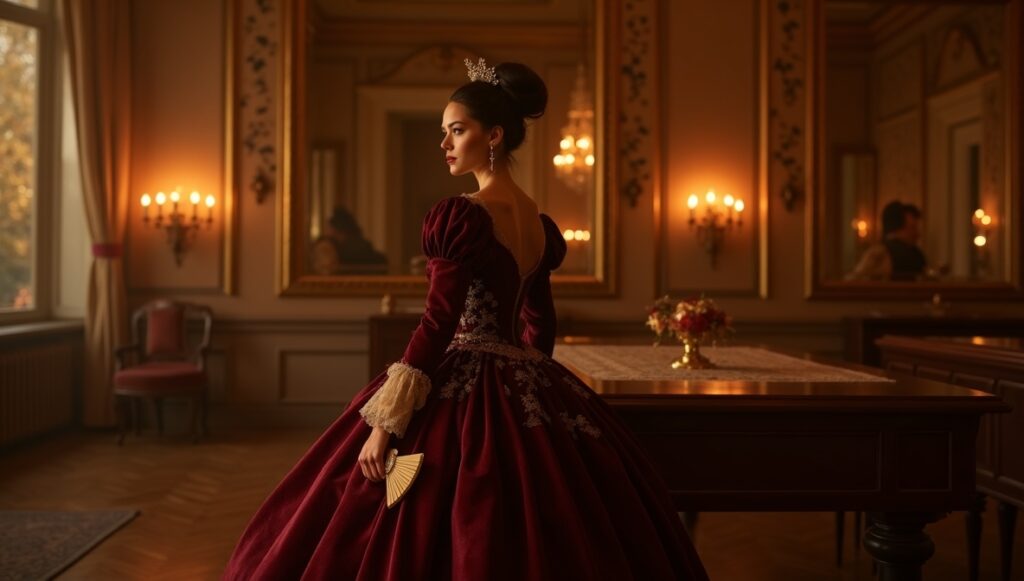
In the 1880s and 1890s, the silhouette tightened again into a pronounced hourglass, with even narrower waists and less extreme skirt volumes. Formal dresses of the late Victorian period embraced longer, slimmer lines, often with princess seams that created a continuous column from shoulder to hem. Sleeves evolved from close-fitting styles to the dramatic “leg-of-mutton” sleeves of the 1890s. According to the Victoria and Albert Museum, this late-century style “balanced broad shoulders with flared skirts, emphasizing an assertive, modern femininity” while still adhering to the rules of formality and decorum.
Structure Beneath the Silk: Corsets, Crinolines, and Bustles
The dramatic shapes of Victorian formal dresses relied on rigid understructures. Central among these was the corset, which shaped the torso into a conical or hourglass form. While corsets existed before the Victorian age, industrial manufacturing and new materials such as steel stays and metal eyelets allowed tighter lacing and more standardized sizing. As the Metropolitan Museum of Art observes, “the corset was integral to the fashionable silhouette,” redistributing flesh to achieve a small waist and smooth foundation for the bodice. For formal events, corsets were often more heavily boned and precisely fitted.
Supporting the skirt required its own architectural system. The 1850s cage crinoline, made of concentric steel hoops connected by tapes, allowed skirts to reach immense circumferences while remaining relatively light. The Smithsonian Institution holds several American examples that demonstrate how these structures expanded fashion from Europe to the United States. Later, the bustle replaced the all-around crinoline. Constructed from steel, whalebone, horsehair, or padded rolls, bustles concentrated volume at the back, enabling intricate drapery without weighing down the entire skirt.
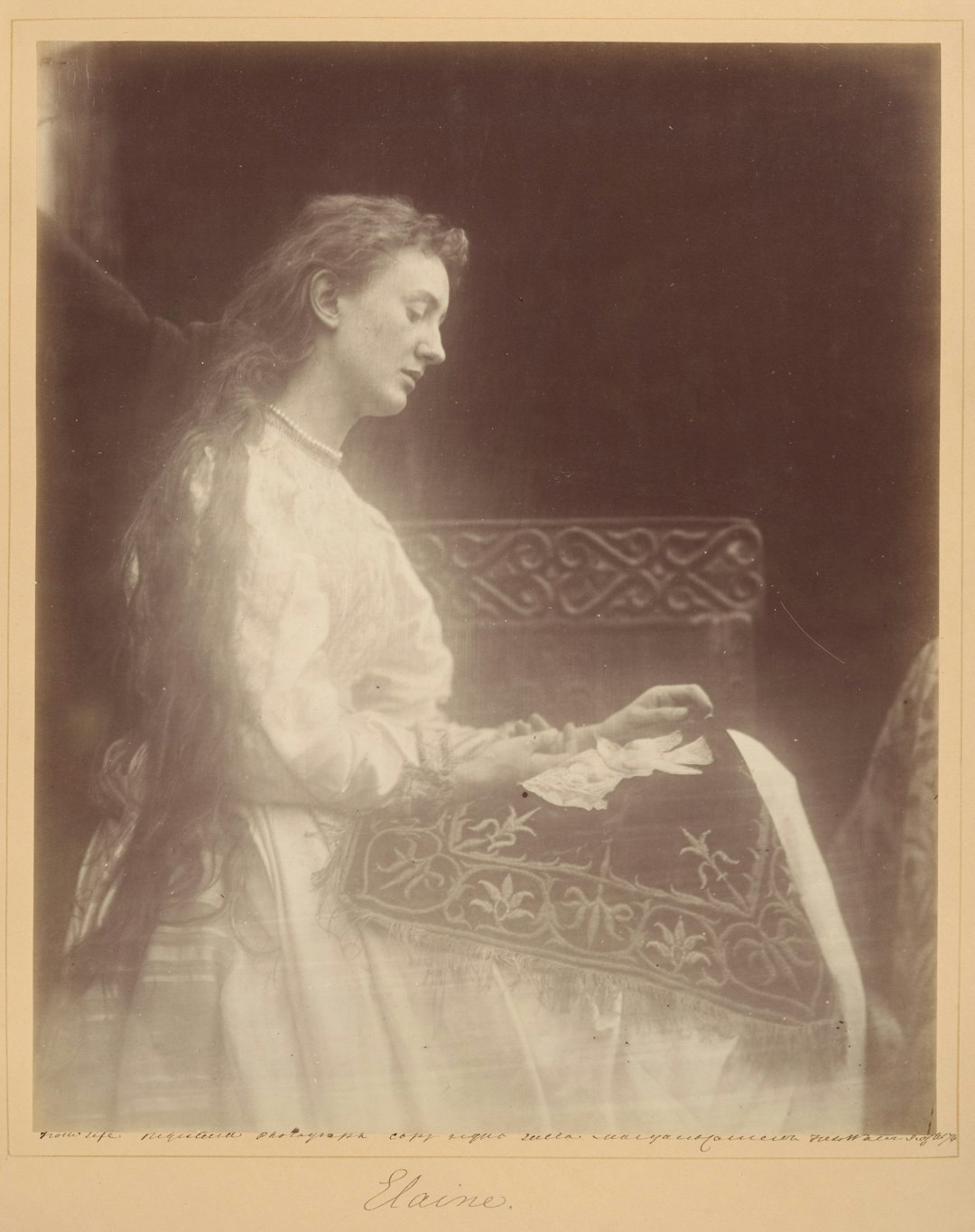
These understructures were not invisible in their social meaning. They required specialized makers, fitters, and sometimes medical criticism. Contemporary physicians and reformers argued that tightlacing could damage internal organs or impede breathing, though modern scholarship suggests everyday wear was usually less extreme than the most notorious examples. Nonetheless, the time, skill, and cost involved in constructing and maintaining corsets, crinolines, and bustles underscored the class dimension of formal dress: only women who did not perform manual labor could accommodate such clothing in their daily lives.
Fabrics, Colors, and Ornament: Material Language of Status
Victorian formal dresses used the most luxurious textiles available, especially silk taffeta, satin, moiré, and velvet. The expansion of the silk industry in Lyon and the development of power looms meant that patterned silks became more affordable to the burgeoning middle class, although the finest brocades and figured silks remained the preserve of the wealthy. The Louvre’s textile collections illustrate the richness of these fabrics, from complex Jacquard-woven designs to shimmering moirés that mimicked the ripples of water. For evening wear, light-reflective surfaces were prized because they glowed under candlelight and, later, gas and electric lighting.
Color choices were also loaded with meaning. Deep jewel tones such as emerald, garnet, and sapphire became more available after the introduction of synthetic aniline dyes in the 1850s. However, etiquette texts recommended white or pale tints for young unmarried women at balls, emphasizing youth and purity, while married women and widows selected darker, more subdued hues. Black, especially in silk, became a powerful formal option after the 1861 death of Prince Albert, when Queen Victoria’s prolonged mourning made dark clothing a symbol of dignity and respectability. Museums such as the Victoria and Albert Museum document how “mourning etiquette” created a specialized category of formal dress for bereavement.
Ornament was both aesthetic and symbolic. Lace—often handmade in centers like Brussels or Nottingham—trimmed necklines and sleeves. Beadwork, jet, and sequins added sparkle to bodices and skirts, particularly for evening. Floral motifs, whether woven, embroidered, or applied as silk flowers, connected the wearer to ideals of natural beauty and domestic virtue. As the Met notes in its catalogue of 19th-century dress, “surface decoration served not merely to embellish but to articulate the garment’s function and the wearer’s social role,” differentiating day and evening wear, youth and maturity, celebration and solemnity.
Etiquette, Gender, and the Social Life of Formal Dress
Victorian society imposed strict dress codes for different occasions, and formal dresses were governed by especially rigid rules. Ball gowns required low necklines and short sleeves, exposing shoulders and arms, while dinner dresses permitted slightly higher necklines. Court dresses worn for presentation to Queen Victoria at Buckingham Palace adhered to even stricter regulations, including required trains of specified lengths and often the wearing of ostrich feather headdresses. The Victoria and Albert Museum describes these as “the most elaborate and codified garments in a woman’s wardrobe,” designed to navigate the complex rituals of royal ceremony.
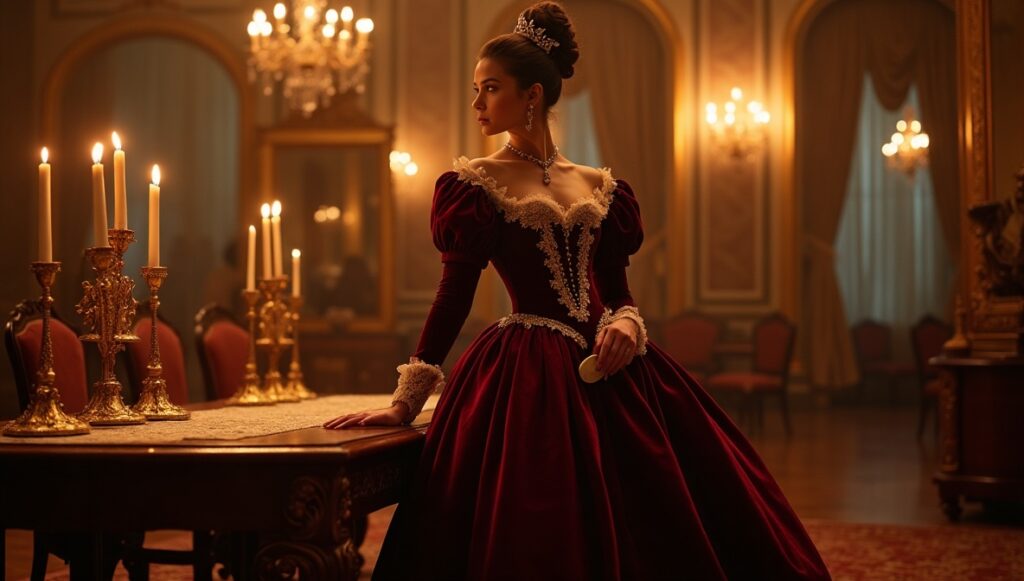
These rules were not arbitrary. They upheld gender ideals that equated femininity with modesty, beauty, and display within carefully controlled contexts. A woman’s ability to dress “correctly” signaled her knowledge of social norms and her family’s respectability. Manuals such as Mrs. Beeton’s Book of Household Management (1861) dedicated entire sections to appropriate dress for various occasions, reinforcing class boundaries: those who could not follow the rules—for lack of means or information—were visibly marked as outsiders. Formal dress functioned as a gatekeeping mechanism within the ballroom, the opera house, and the drawing room.
At the same time, formal dresses could offer women limited avenues of self-expression. Choices of color, trim, and cut allowed personal taste within the boundaries of propriety. Wealthy women might commission gowns from leading couture houses in Paris, such as Charles Frederick Worth, who is often credited by the Metropolitan Museum of Art as “the father of haute couture.” Such custom-made gowns allowed clients to collaborate with designers, adapting fashionable silhouettes to their own bodies and preferences, demonstrating how even within strict norms, clothing could be a negotiated space.
Regional Variations and International Influence
Although “Victorian” primarily refers to Britain, the influence of its formal styles extended across Europe and North America, with each region adding distinct nuances. In Paris, the fashion capital of the 19th century, couturiers like Worth and later Jeanne Paquin shaped silhouettes and details that were adopted and adapted in London and beyond. The Louvre and Musée d’Orsay hold numerous examples of gala gowns depicted in paintings and preserved in collections, illustrating how French taste often led international trends in color and cut, even as British etiquette governed many social rules.
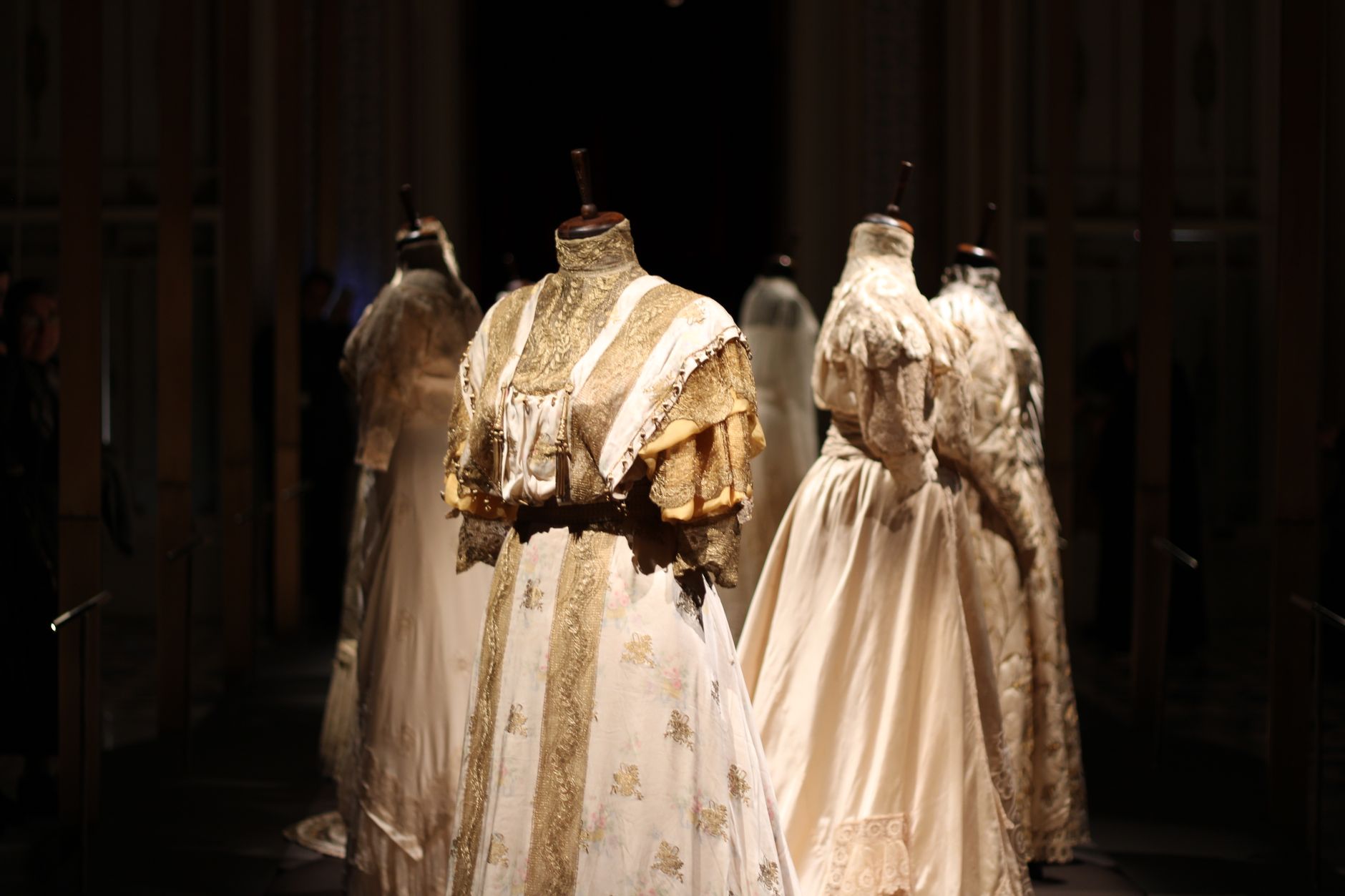
In the United States, Victorian formal fashion traveled via illustrated fashion plates and imported garments. The Smithsonian Institution has documented how American women in cities such as New York, Boston, and Philadelphia eagerly followed European styles, while dressmakers adapted them to local climates and materials. Gowns for formal occasions in the American South, for instance, might reflect the same silhouettes but be constructed in lighter fabrics better suited to heat and humidity. Regional textile production, including American silks and cottons, also shaped the material reality of “Victorian” dress outside Britain.
Across the British Empire, formal dresses served as visible markers of colonial hierarchies. British and European women in colonial centers—Calcutta, Cape Town, Melbourne—wore gowns that mirrored metropolitan styles, sometimes incorporating local textiles or motifs. Institutions such as the Victoria and Albert Museum and the National Gallery of Victoria (Melbourne) have explored how these garments both asserted imperial presence and absorbed influences from colonized cultures. The result was a complex visual language in which Victorian formal dress became a global phenomenon, mediated by trade routes, colonial policies, and local adaptation.
Key Characteristics of Victorian Formal Dresses
| Feature | Early Victorian (1840s–1850s) | Mid Victorian (1860s–1870s) | Late Victorian (1880s–1890s) |
|---|---|---|---|
| Silhouette | Bell-shaped skirt, narrow waist | Bustle emphasis at back, trained skirts | Hourglass figure, slimmer skirts, back interest |
| Support Structure | Petticoats, then cage crinoline | Bustles, tournures, sometimes remaining crinolines | Smaller bustles or padding, complex corsetry |
| Bodice Style | Pointed bodice, low shoulders | Fitted bodice, often cuirass style (longline) | Princess-line bodices, sometimes separate bodices |
| Sleeves (Formal) | Short for evening, narrow for day | Short evening sleeves, varied day sleeves | Leg-of-mutton sleeves (1890s), elaborate shapes |
| Fabrics | Silk taffeta, satin, fine wool | Rich silks, velvets, heavier brocades | Mixed fibers, lighter silks, novelty weaves |
| Ornament | Lace, simple trimmings | Abundant ruffles, fringe, drapery, beadwork | Embroidery, appliqué, jet beading, lace inserts |
| Colors (Evening) | White, pastels, some deep hues | Broader palette, synthetic dyes popular | Jewel tones, sophisticated darks, black evening |
| Social Context | Courtship, strict etiquette | Height of empire, elaborate social rituals | Modernization, rising ready-to-wear industry |
Authoritative Perspectives and Sources
Museums and scholars have devoted extensive research to Victorian dress, providing an evidence-based foundation for understanding these garments. The Metropolitan Museum of Art’s “Heilbrunn Timeline of Art History” emphasizes that 19th-century dress “mirrored and magnified the social and technological transformations of the Industrial Revolution,” linking specific garments to broader historical processes. This framing highlights that formal dresses were not isolated curiosities but part of a larger system of cultural production.
The Victoria and Albert Museum, home to one of the world’s most important fashion collections, states: “Nineteenth-century fashion is characterized by rapid and profound change, driven by industrialization, social mobility, and the emergence of the modern consumer.” Its detailed catalogues of Victorian gowns provide technical analysis of cut, construction, and materials, anchoring interpretations in object-based research.
Similarly, the Smithsonian Institution and the Louvre Museum contribute important cross-Atlantic and continental perspectives. The Smithsonian’s holdings of American-made gowns reveal how Victorian aesthetics were localized in the United States, while the Louvre’s decorative arts collections document the interplay between fine art, interior design, and fashion in France. By consulting these institutions, historians can cross-check styles, materials, and dates, yielding a more accurate, globally informed picture of Victorian formal dress.
Frequently Asked Questions About Victorian Formal Dresses
1. Were Victorian women really unable to breathe in their corsets?
Not typically to the extreme portrayed in popular media. While some individuals practiced tightlacing, most women wore their corsets laced to a comfortable support level. Studies of surviving corsets in the Victoria and Albert Museum and the Met show measurements consistent with moderate waist reduction rather than extreme constriction. That said, expectations for posture and the weight of layered garments could certainly feel restrictive, especially during long formal events.
2. How many formal dresses would a Victorian upper-class woman own?
The exact number varied by wealth and social activity, but an affluent woman might possess multiple ball gowns, dinner dresses, reception dresses, and at least one court dress if she moved in royal circles. Wardrobes were supplemented by altering older gowns, changing trimmings, or reusing costly fabrics. The Smithsonian’s research on 19th-century wardrobes reveals that even wealthy women frequently remade garments to keep up with changing fashions while conserving expensive materials.
3. Were Victorian formal dresses all handmade?
They were usually made by professional dressmakers or, for the very wealthy, by couture houses, but by the 1860s most incorporated machine stitching. The widespread adoption of the sewing machine transformed dressmaking, allowing seams to be sewn by machine while finishing details and ornament remained hand-done. Institutions like the Met and V&A often identify the combination of machine and hand stitches when analyzing garment construction, demonstrating the hybrid nature of late-19th-century dressmaking.
4. Did working-class women wear similar formal dresses?
Working-class women rarely had access to the full range of formal wear seen in museums. They might own a “best dress” that imitated current fashions in a simplified, less voluminous form and in cheaper fabrics. Borrowing, hiring, or remaking older garments were common strategies. Many of the elaborate silk gowns we associate with the Victorian era were worn by middle- and upper-class women attending social functions beyond the reach of most of the population.
Conclusion
Victorian formal dresses were intricate products of their time: shaped by industrial innovation, enforced by social etiquette, and animated by global trade networks. Their silhouettes evolved from vast crinolines to sculpted bustles to sleek hourglasses, each stage reflecting shifting ideals of femininity and status. Behind the silk and lace lay steel frameworks, expert craftsmanship, and unspoken rules governing who could wear what, where, and when. Thanks to the work of major institutions such as the Metropolitan Museum of Art, the Victoria and Albert Museum, the Louvre Museum, and the Smithsonian Institution, we can read these garments today as primary sources—textiles that document the ambitions, anxieties, and aspirations of the Victorian age.
AI Notice: Some visual content in this article may have been created or enhanced using artificial intelligence (AI) for artistic, editorial or illustrative purposes. Learn more about our approach in our AI & Editorial Principles.