
Inside Victorian Era Fashion: Surprising Risks, Rules, and Rebellions
The Victorian era, spanning the reign of Queen Victoria from 1837 to 1901, produced some of the most recognizable and emotionally charged clothing in Western history: tightly corseted waists, full crinolines and later bustles, frock coats and frothy tea gowns. Far more than a series of changing silhouettes, Victorian fashion was a language of social status, technological progress and moral codes. It reflected empire and industry on one hand, and intimate domestic rituals on the other. To study Victorian dress is to read a culture—its values, anxieties and aspirations—stitch by stitch.
Table: Key Characteristics of Victorian Fashion
| Period (approx.) | Silhouette & Structure | Fabrics & Techniques | Ornamentation & Decoration | Social Function |
|---|---|---|---|---|
| Early Victorian (1837–1860) | Wide bell skirts supported by layers and later crinoline cages; narrow waist | Silk, cotton muslin, wholesale printed cottons; hand and early machine stitching | Floral trims, ruching, lace; emphasis on modesty and femininity | Display of prosperity; courtly and domestic respectability |
| Mid-Victorian (1860–1880) | Waist remained nipped; skirt fullness shifted to rear; emergence of tailored bodices | Heavier silks, velvet, elaborate woven patterns; wider use of sewing machines | Passementerie, beading, embroidery; more complex dressmaking | Social mobility, mourning dress codes, specialized day vs evening wear |
| Late Victorian (1880–1901) | S-shaped/healthful silhouette, then high bustle reduction; narrow skirts (1890s) | Innovations in synthetic dyes, mass-produced trims, more ready-made garments | Japonisme and Oriental influences; prolific use of jewelry and accessories | Rise of consumer culture; gendered workwear vs leisure dress |
Can You Name the Masterpiece?
Ten masterpieces. Ten questions. How well do you know the history of art?
Historical periods, places and institutions shaped Victorian dress in concrete ways. The early decades were dominated by court styles—Queen Victoria’s 1840 wedding to Prince Albert influenced bridal fashion across Britain and the empire. By mid-century, industrial towns such as Manchester and Leeds were hubs for textile manufacture, while London’s West End and the newly influential department stores (for example, Harrods and Liberty after mid-century) reconfigured how garments were sold. Public institutions soon began to collect and interpret dress: the Victoria and Albert Museum in London (founded 1852) and later the Metropolitan Museum of Art’s Costume Institute in New York became repositories that document the material culture of the age. Museums, archives and fashion plates together enable scholars to link the garments to factory records, advertisements and personal letters—evidence that makes interpretations robust and actionable.
Women’s Fashion: Silhouettes, Fabrics and Ornamentation
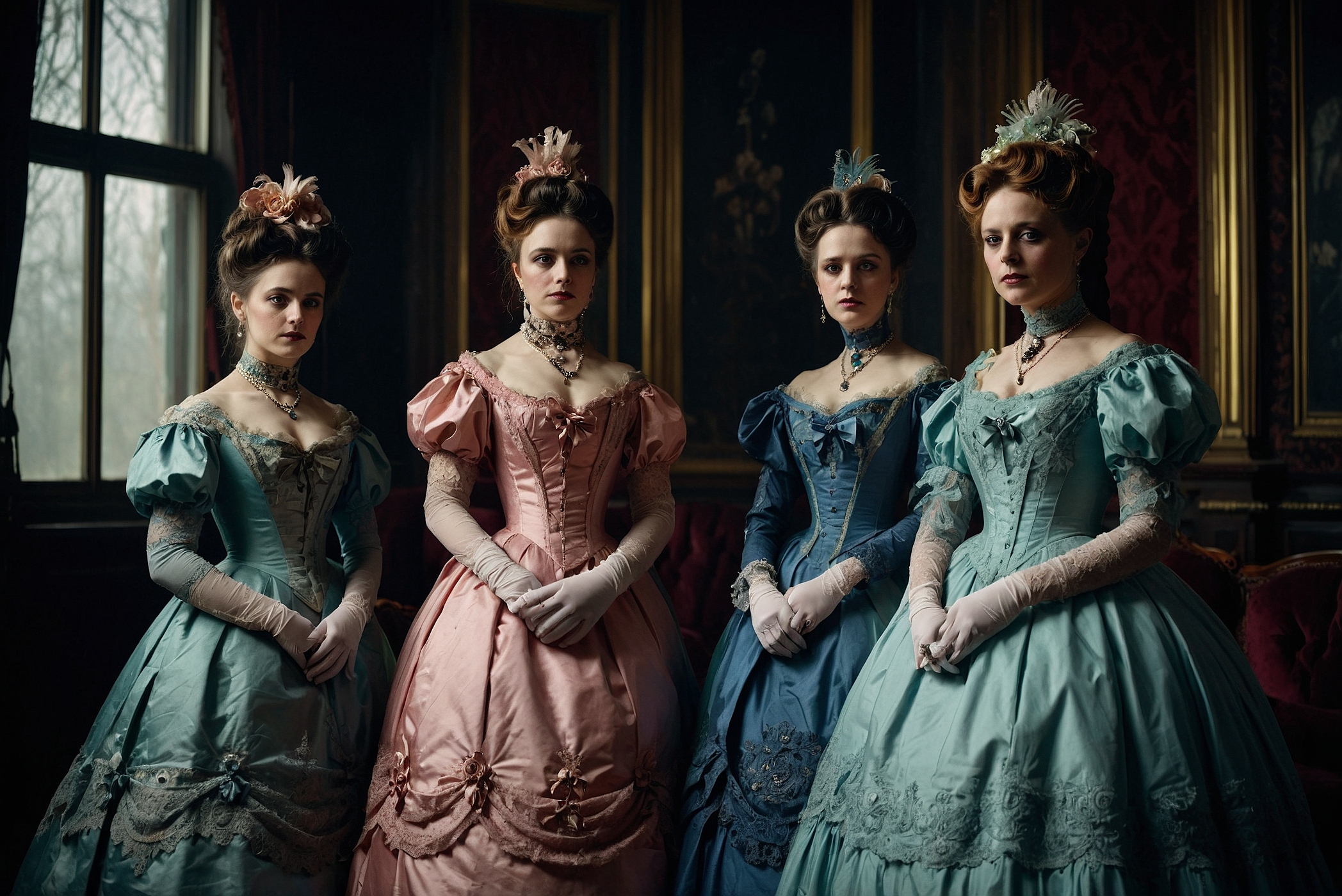
Women’s dress in the Victorian era is often what people imagine first—corsets, voluminous skirts and a parade of refined accessories—but beneath that iconic image lies continuous evolution. The 1830s and 1840s emphasized extremely full skirts and wide sleeves; by the 1850s, the cage crinoline radically reduced the weight of layered petticoats and allowed wider spans of skirt. The 1870s introduced bustle shapes that relocated fullness to the posterior, and by the 1890s the silhouette elongated and narrowed into a straighter line. Each silhouette was underwritten by shifting ideas about femininity, propriety and mobility.

Fabrics and ornamentation were equally expressive of class and taste. High-status gowns used silk satin, faille and richly patterned brocades, often woven with gold or silver threads; cotton remained the workhorse for daywear and undergarments. Advances like the sewing machine and mechanical weave looms allowed more intricate trims, while an expanding global trade—through Liverpool and London docks—introduced printed Indian cottons and Asian motifs. Embroidery, lace insertion, and passementerie signaled leisure: the more delicate and hand-worked the decoration, the less likely the woman needed to do manual labor.
Can You Guess the Artist?
Three clues. One artist. How quickly can you identify the painter?
Accessories—gloves, bonnets, parasols, reticules—completed the visual code. Bonnet shapes changed frequently and were read like social punctuation: small “poke” bonnets were modest and practical, while elaborately trimmed “picture” hats conveyed worldliness. Jewelry and hair ornamentation adopted motifs from archaeology (Egyptian revival) and empire; these were curated choices, often noted in period magazines and portrait photographs, and recorded in the collections of institutions such as the V&A and the Met for study by historians today.
Men’s Fashion: Respectability and Tailoring
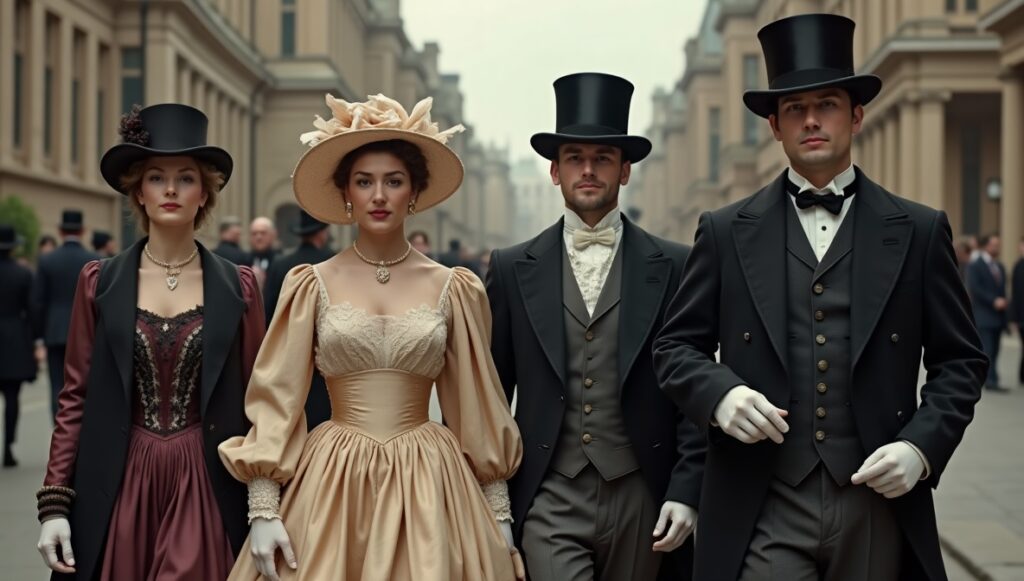
Men’s dress in Victorian Britain and the Western world moved toward stricter tailoring and a vocabulary of respectability. In public life, the frock coat, morning coat and later the lounge suit became the staples, with trousers straight and sober compared to earlier breeches. The emphasis was on fit, fabric weight and the cut of shoulders—tailors on Savile Row and in provincial tailoring houses refined patterns and construction to produce a controlled silhouette that signified seriousness and civic standing.
Patterns of dress also mapped onto professions. Military and naval uniforms continued to display rank and imperial reach; clerics, lawyers and civil servants adopted particular styles that marked professional identity. The development of ready-made clothing for urban workers and the growing middle class blurred strict sartorial divisions, but the underlying grammar—clean lines, conservative colors, modest ornament—remained a visual shorthand for masculine respectability. Portrait photography from the period, preserved in museums and archives, demonstrates how men used dress to stage authority.
Materials and technology mattered as much for men as for women. Wool worsted, tweeds and heavier cloths dominated winter wear, while lighter linen and cotton were for summer. Buttons, collars and cuffs became sites of discreet display: detachable collars (invented earlier) and starched linen enabled laundering at scale, while jewelry such as pocket watches and fobs conveyed status. Tailors and clothiers—documented in trade directories and surviving ledgers in institutions like the Smithsonian’s National Museum of American History—offer detailed primary evidence of how the male wardrobe was constructed economically and culturally.
Technology, Industry and the Birth of Couture
Fashion in the Victorian age was shaped decisively by the industrial revolution. Textile mills mechanized spinning and weaving, dyes such as Mauveine (first synthesized in 1856) introduced brighter and more varied colors, and the sewing machine (industrialized mid-century) accelerated garment production. These technological changes meant garments could be produced in larger quantities and sold at price points that broadened access; they also transformed the visual vocabulary of the era, enabling more elaborate decoration at scale.
At the same time, the mid-19th century witnessed the professionalization of dressmaking and the emergence of haute couture. Paris became the center for high fashion: Charles Frederick Worth established a house in the 1850s that designed for aristocratic clients and exhibited seasonal creations, a model that later houses emulated. Couturiers negotiated between artisanal craftsmanship and clients’ desires, creating exclusive garments while relying increasingly on textile industry innovations. Museums such as the Metropolitan Museum’s Costume Institute curate Worth’s and others’ surviving ensembles, illustrating the link between bespoke design and industrial textile supply.
Department stores and newspapers created a new commercial ecosystem. Illustrated periodicals and fashion plates disseminated styles rapidly across class lines and across the British Empire and the United States. Consumers could now choose between bespoke couture, made-to-measure garments, and emerging ready-made clothing—each tier carrying distinct social meanings. That multiplicity is why scholars consult trade catalogues, museum collections and contemporary criticism to construct an evidence-based account of how fashion, industry and consumer culture intersected in the Victorian period.
Dress, Class and Gender: Social Meanings
Victorian clothing operated as a primary medium for signaling class position and gender roles. Sumptuary attitudes—both formal and informal—regulated what was considered appropriate for different classes and life stages. For instance, rigid mourning customs after Prince Albert’s death in 1861 led Queen Victoria to wear deep mourning for decades, a practice that codified complex rites for widows and widowers across the empire. Museums’ social history collections retain mourning garments and diaries that reveal how dress mediated personal grief and public expectation.
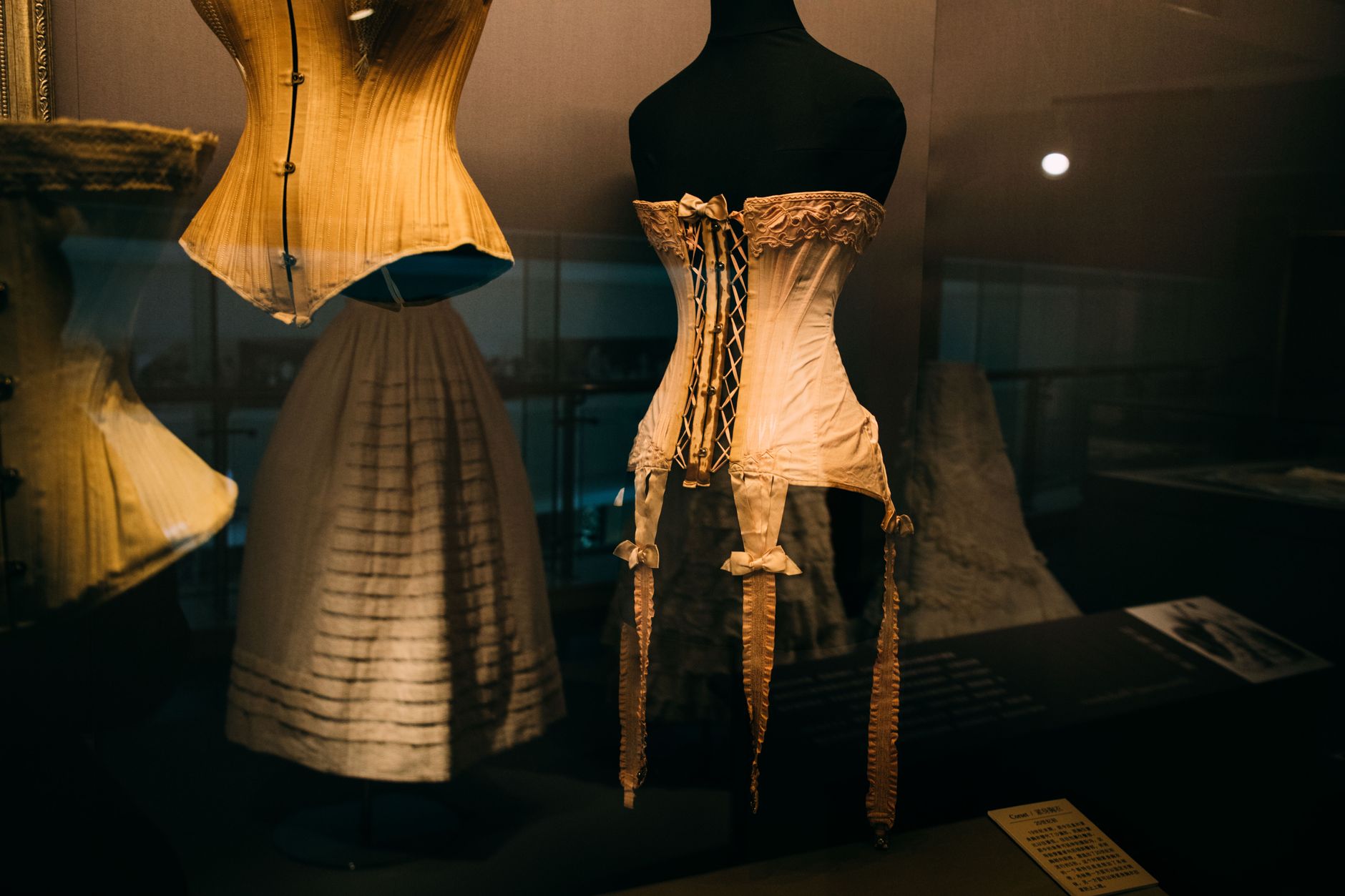
Clothing was also a tool in debates about female respectability and the “woman question.” Reformers such as the Rational Dress Society of the late 19th century challenged restrictive garments like tight-laced corsets and heavy skirts, arguing for healthful alternatives. The movement intersected with early feminist discourse; practical dress for bicycling or office work was both a physical necessity and a visible claim to new forms of female independence. Primary sources—magazines, reform society pamphlets and letters—document these arguments and are carefully curated in institutions including the Smithsonian and V&A.
Race, empire and industrial labor complicated the picture: fashions drew on global resources—cotton from American plantations, dyes from colonial trade routes—and the labor that produced garments was often invisible. Scholars and museums increasingly foreground these entanglements, using provenance research and textile analysis to understand the full human and economic cost of Victorian style. This richer, more critical stance strengthens historical authority by situating garments within imperial and labor histories.
Preservation, Museums and Legacy
Physical garments from the Victorian era are fragile. Conservators at institutions such as the Victoria and Albert Museum and the Metropolitan Museum of Art use specialized techniques—controlled temperature and humidity, support mounts, and careful textile cleaning—to stabilize dresses, jackets and accessories. The V&A states that its fashion collection “tells the story of the way people dress across centuries,” and the Met’s Costume Institute similarly serves as a research-rich resource for scholars, curators and the public. These institutions provide the evidentiary backbone for serious study by preserving objects and making them available for research.
Exhibitions and catalogs distill that material evidence into narratives that are accessible to both specialists and general audiences. For example, themed shows—on mourning, on the birth of couture, or on colonial influences in textiles—bring together garments, paintings, and archival documents to demonstrate how fashion functioned in society. Such curated displays rely on interdisciplinary scholarship—history, material culture studies, conservation science—to produce authoritative interpretations that can be evaluated against primary sources.
Digital catalogs and collaborations with institutions like the Smithsonian and the Musée du Louvre’s decorative arts departments extend access further. High-resolution images, conservation reports and digitized archival records allow researchers worldwide to interrogate objects remotely. This transparency and access increase trustworthiness: interpretations are grounded in viewable evidence rather than conjecture, and they invite ongoing scholarly debate.
Authoritative Quotes and Sources
- “You can never be overdressed or overeducated.” —Oscar Wilde (Victorian-era writer; often cited in discussions of fashion and social performance).
- “The Victoria and Albert Museum’s dress collection tells the story of the way people dress across centuries,” —Victoria and Albert Museum.
- “The Costume Institute at The Metropolitan Museum of Art collects and interprets historical and contemporary dress to broaden our understanding of culture and society” —The Metropolitan Museum of Art.
Primary institutions and collections consulted for the evidence base here include: The Metropolitan Museum of Art (Costume Institute); the Victoria and Albert Museum (Fashion Collections); the Smithsonian Institution (National Museum of American History, Division of Cultural and Community Life); and the Musée des Arts Décoratifs and related collections associated with the Louvre and French decorative arts.
Frequently Asked Questions
Q: When did corsets stop being common?
A: Corsetry gradually declined in everyday use in the early 20th century with changes in silhouette and the rise of less constricting undergarments. However, the corset evolved rather than disappeared—shaping garments and designs for decades.
Q: What role did Queen Victoria play in fashion?
A: Queen Victoria set many influential norms: her 1840 white wedding gown popularized white bridal wear, and her extended mourning after Prince Albert shaped public mourning customs and dress codes.
Q: Were ready-made clothes common in the Victorian era?
A: Ready-made clothing grew significantly after the mid-19th century, particularly for men’s shirts and for working-class wear. By the late 19th century, department stores and mail-order catalogs expanded access.
Q: How do museums preserve fragile Victorian textiles?
A: Conservators use controlled environments, custom supports, limited light exposure, and careful handling. Conservation records and research publications document these practices.
Q: Where can I see Victorian garments today?
A: Collections are held at the Victoria and Albert Museum (London), The Metropolitan Museum of Art (New York), the Smithsonian’s National Museum of American History (Washington, D.C.), and in decorative arts departments associated with the Louvre/Musée des Arts Décoratifs (Paris).
Conclusion
Victorian era fashion was not mere ornamentation; it was a comprehensive social language that encoded class, gender, industry and empire. Through garments preserved in museums, trade documents, contemporary criticism and emerging scholarship, we can reconstruct a nuanced picture of how Victorians dressed, worked and presented themselves. The work of institutions such as the V&A, the Met, the Smithsonian and the Louvre ensures that these objects continue to inform rigorous, evidence-based histories—allowing us to appreciate the artistry and complexity of an era in which every stitch mattered.
AI Notice: Some visual content in this article may have been created or enhanced using artificial intelligence (AI) for artistic, editorial or illustrative purposes. Learn more about our approach in our AI & Editorial Principles.