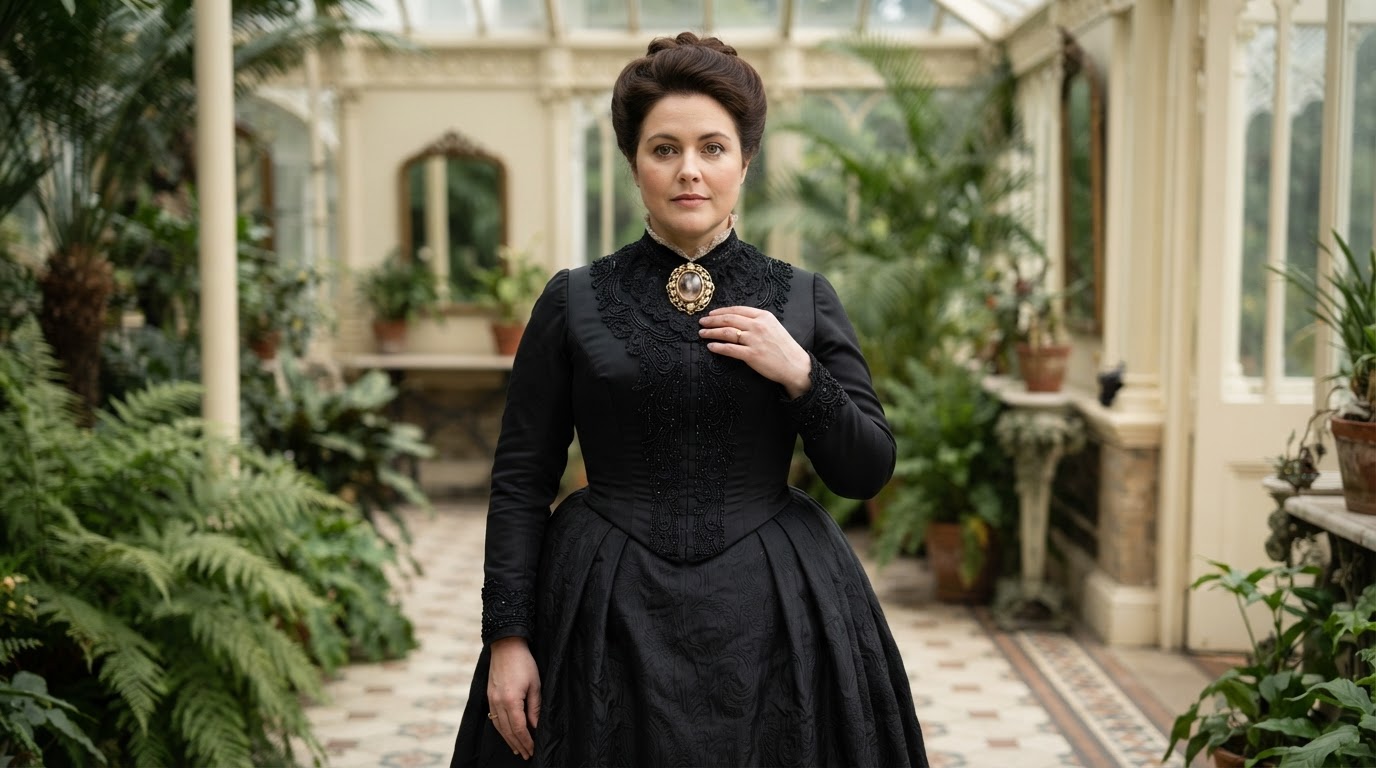
Few objects capture the emotional intensity of the nineteenth century as vividly as the Victorian mourning brooch. At once ornament and obituary, fashion and funerary relic, these small pieces of jewelry condensed grief, devotion, status, and belief into something that could be worn on the body. To hold an authentic mourning brooch today—often dark with jet or enamel, sometimes holding a curl of hair or a faded portrait—is to touch the lived experience of bereavement in Victorian Britain and beyond. Far from being merely morbid curiosities, these brooches illuminate a world where death was omnipresent, remembrance was ritualized, and jewelry became a powerful language of memory.
The Historical Context of Victorian Mourning Jewelry
Victorian mourning brooches emerged from a long European tradition of memorial jewelry, but it was the nineteenth century—especially in Britain under Queen Victoria (reigned 1837–1901)—that elevated mourning adornment to unprecedented prominence. Earlier Georgian mourning pieces existed, often featuring skulls, coffins, or hourglasses as “memento mori” symbols. Yet the Victorian period transformed this from a relatively niche practice into a widespread social custom shaped by industrialization, expanding middle classes, and new consumer markets in London, Birmingham, and beyond.
A major event was Prince Albert‘s death in 1861. Queen Victoria‘s mourning for her consort for years had a strong impact on society‘s views on mourning and dress. The Victoria and Albert Museum states, “Victoria‘s prolonged mourning for Prince Albert made daily black wear and mourning jewellery commonplace in the upper-middle and middle classes of society”, demonstrating the effect of the royal example at home on the middle class abroad. Even under strict regalia, there were expectations of at what point it was appropriate to wear what in a celebrity, and certainly in a widow. Jewelry and brooches signified ones’ standpoint in time according to the progression of grief.

The same customs did not only take place in the United Kingdom. Mourning rituals thrived in cities such as Paris, New York or Boston thanks to the enormous number of casualties and increasing photographic technological advances in the United States. As the Smithsonian Institution commented, losing tens of thousands of Americans in the Civil War, on top of the boom in photographic technology meant there was greater demand for memorial objects and mourning jewelry. Consequently, the fact that the “Victorian” element is solely associated with Britain, the mourning brooch represents a culture at the nineteenth-century Western world where death was faced with increasing acceptance, at the same time as new perceptions on sentimentality, family and identity were emerging.
Materials, Motifs, and Techniques in Mourning Brooches
Victorian mourning jewelry is easily identifiable by the materials and images used. Black was the characteristic color of mourning jewelry: Whitby jet, a fossil coal stock from Whitby in North Yorkshire, vulcanite, guttapercha, black enamel, and onyx were among the most popular materials. The Metropolitan Museum of Art, states that carving soot came a ‘thriving industry’ in response to a need for ‘thin, marquetry like jewelry which would not be too heavy to wear yet striking on the eye.’ Gold was used in mourning jewelry too, especially in higher-end pieces, either as an undergilded material, solid or gold-faced over base metal, often sharp contrasting black enamel lines provided minimal detailing in innocent trappings. Later-stage mourning jewelry sometimes used appropriate colored pearls, which symbolize tears, when restrictions on combing mourning jewelry were less strict.
Symbolism was very important. Brooches often revealed common themes, such as weeping willows, crumbling columns, urns and clasped hands. Iconography acted as a language mourning symbolizes grief, remembrance and the hope that the loved one will meet them again in the afterlife. The Victoria and Albert Museum explains that “motifs in mourning jewellery often communicated coded messages of grief and affection”. Such images told a story as profound as a poem, whilst inscriptions (‘In Memory Of’, the initials of the deceased, or miniatures in enamel) echoed the language printed on century-old gravestones.

Victorian jewelers, of course, had several expert traditions to draw upon: elaborate enamelling; glass-fronted compartments; or fine etching. But above all they used hairwork. This involved braiding, weaving, grinding, and mixing hair with glue to create embroidered patterns or representative images. As theSmithsonian Institution notes, hairwork occupied a particular place in Victorian mourning jewelry: it ‘survived long after death, making it the perfect medium for mementos intended to preserve the physical presence of a loved one’. Many mourning brooches, then, contain a lock of hair encapsulated in glass or crystal: an actual embodiment of the dead person.
Fashion, Etiquette, and the Culture of Mourning
In Victorian society, mourning was not only an emotional state; it was a social performance governed by explicit etiquette. Manuals and household guides prescribed appropriate dress, color, materials, and duration for each phase of mourning, particularly for women. During “deep” or “first” mourning, jewelry was severely restricted. As time passed, certain pieces, including small brooches in jet or matte black enamel, became permissible, eventually giving way to more elaborate items as one moved into “half‑mourning,” when subdued purples, grays, and pearls might appear.
These guidelines behaved both as nature, and as ideals in giving those in more comfortable circumstances the opportunity to commission custom-made brooches from clearly-established jewelers in London, Birmingham, or Paris; and also to relate more generalmass produced-produced items through the trade archives of jewelers catalogues, city department stores, or specialist mourning warehouses. Society and MOd is on display, the written and visual records of the Louvre Museum‘s decorative arts collections, reveal the-close relationship between fashion and mourning, with fashions originating in the Parisian ateliers, regularly filtered into the popularis magazines and pattern books. Even the most modest of households could own a simple mourning brooch, which, if they were lucky, might be a gift from relatives or purchased to commemorate a death in the family.

Judiciously, mourning brooches also expressed the changed attitude of using jewelry to be demonstrative of domestic sentiment. During the late eighteenth and nineteenth centuries, the “cult of sensibility” heightened, stressful, expressive feelings in family relationships. Victorians even practiced the cult of sensibility with death, memorializing jewelry that expressed feelings openly. As a nineteenth century mourning handbook instructed, “To wear the memorial is to avow the constancy of the heart.” In other words, a brooch that fastened to a dress or shawl publicly broadcast the affections.
Personal Memory: Hairwork, Portraits, and Inscriptions
The most poignant mourning brooches are often the most personal. Hairwork brooches—those containing the actual hair of the deceased—developed into an art form in their own right. Hair could be woven into mini‑braids, formed into floral motifs, or arranged in intricate patterns visible through a crystal front. Some families commissioned professional hairworkers, while others followed instructional booklets to craft keepsakes at home. The Metropolitan Museum of Art highlights instructional manuals from the era that taught women how to transform hair into jewelry, framing it as both a domestic skill and an expression of affection.
Photographic technology added further notes of intimacy. By the mid-nineteenth century small photographic pictures sometimes had a place in brooches and replaces or accompanied hand-painted miniatures. Carte de visite and tintype pictures could be cut out and mounted into a picture frame under glass, so that the wearer literally carried the face of the dead close to their heart. A lock of hair might be placed under the glass behind the picture, combining copy with relic. This combined with the wider craze for post mortem photography, largely in the US and France, in which photographs of the dead were carefully preserved.

Inscriptions were another means of making each piece personal. Quite often brooches were inscribed with names, dates of birth and death, with religious verses, or short phrases like “Not Lost But Gone Before” or “Thy Will Be Done.” Some inscriptions could be metal or hard to read, some paper and laid in the back of the hair or picture. The Victoria and Albert Museum commented that such inscriptions “transformed” jewelry into “portable memorials, carrying the story of a life even in its abbreviated version.” As one turns over a mourning brooch one comes face to face with a brief history a reminder that jewelry could also be a miniature grave.
Collecting, Authentication, and Conservation Today
Today, Victorian mourning brooches are sought after by collectors, historians, and jewelry enthusiasts alike. Their appeal lies not only in their aesthetics but in the powerful stories they embody. Auction houses, antique dealers, and online marketplaces regularly list mourning pieces, and institutions such as the Victoria and Albert Museum, the Metropolitan Museum of Art, and the Smithsonian Institution preserve exemplary works in their collections. However, the popularity of these objects means that accurate dating and authentication require careful scrutiny of materials, construction, and stylistic details.
A major concern for buyers is to differentiate the real Victorian mourning brooches from copies, or from mourning jewelry made of nonmourning materials jet, for example, may be mistaken for glass, vulcanite or modern plastics. Brooches of the period can be distinguished by handengraving, oldstyle “Cclasps” or tube hinges, whereas the majority of reproductions are constructed using current hardware; fonts on inscriptions, hairwork style, and iconography are also useful guides. Catalogues and databases of museum collections such as those of the V&A, the Met and the Louvre, which are also presented online are excellent sources of comparison.

It also poses a number of more questions, one of which is to do with the hairwork. Hair is organic material and, although very strong, it can be damaged by water or light, or simply by careless handling. Museums tend to keep these brooches in a museum environment, in relatively low light, sometimes with custom fitments keeping glass in a position that does not stress the fragile metalwork. Private collectors are advised to observe these same principles; do not use abrasive cleaners to remove tarnish, keep the piece out of direct sunlight, minimize handling. Such advice, from the Smithsonian Institution‘s programme of conservation, reminds us that maintenance is more important than the fear of altering the object‘s appearance to make it “like new.”
Key Characteristics of Victorian Mourning Brooches
| Feature | Typical Characteristics | Notes & Historical Context |
|---|---|---|
| Primary Materials | Whitby jet, black enamel, onyx, vulcanite, gutta‑percha, gold | Jet from Whitby (England) became a major industry after the 1850s. |
| Color Palette | Predominantly black; later stages allow white, gray, mauve, pearls | Reflects strict mourning etiquette, especially for widows. |
| Iconography | Weeping willows, urns, broken columns, clasped hands, crosses | Symbolic language of grief, faith, and remembrance. |
| Personal Elements | Hairwork, miniature portraits, photographs, initials | Hair signified enduring presence; portraits individualized memory. |
| Inscriptions | “In Memory Of,” names, dates, religious phrases | Often engraved on reverse; acts as a portable epitaph. |
| Construction Details | C‑clasps, tube hinges, hand‑engraving, beveled glass fronts | Useful clues for dating and authentication. |
| Social Function | Visible sign of mourning status and respectability | Shaped by etiquette books and royal influence (e.g., Queen Victoria). |
| Geographic Centers | Britain (London, Birmingham, Whitby), France (Paris), U.S. cities | Reflects industrial and artistic networks of the 19th century. |
Victorian Mourning Brooches in Museum Collections
Major museums around the world have recognized mourning jewelry as vital evidence of social history, design, and emotional life. The Victoria and Albert Museum in London holds a significant collection, including brooches with hair compartments, enamel inscriptions, and jet carvings. Their catalogued pieces often come with provenance that links them to specific families or regions, making them crucial reference points for scholars. The V&A’s curators emphasize that such jewelry “reveals not only changing fashions but shifting attitudes to death, memory and domestic life.”
In America, the Metropolitan Museum of Art in New York has brought mourning jewels into galleries on European and American decorative arts. Its collections include memorial miniatures of the early nineteenth century and later examples of high Victorian jet. The museum’s publications have tried to place memorial jewelry within a chronology of materials and iconography, revealing as it progressed a succession of jewelry styles Neoclassical, Romantic, and the late-Aesthetic Movement. Its acquisitions show that mourning jewels were not freaks in old age, but that Mourning jewelry wasomers.
Elsewhere in America and France, the two exhibitions extend this focus further. The Smithsonian Institution in Washington DC boasts one of the globe‘s largest collections of American decorative arts and documents; thus, its holdings dealing with American history, particularly its Civil Warera ones, exemplify the way mass death affected local practices of bereavement. The Louvre Museum demonstrates the French situation, where mourning and material fashion remained integral to the Parisian monopoly of luxury trades. Collectively, these institutions prove that the Victorian mourning brooch need to be appreciated not only as worn and worn in homes, but as complex objects linking together art history, cultural history and history of feelings.
Frequently Asked Questions
Were all black Victorian brooches used for mourning?
No. While black was strongly associated with mourning, not every black brooch is a mourning piece. Some were simply fashionable accessories. Genuine mourning brooches typically feature specific symbols (such as urns or willows), inscriptions (“In Memory Of”), or personal elements like hair or initials.
How can I tell if my brooch is made of real Whitby jet?
Whitby jet is lightweight, warm to the touch, and can produce a faint brown streak if lightly rubbed on unglazed porcelain (a test best left to experts to avoid damage). Glass imitations feel colder and are heavier. Comparing your piece with documented examples from museums like the V&A or the Met, and consulting a reputable antique jewelry specialist, is the safest approach.
Is it safe or ethical to wear antique mourning jewelry today?
Most specialists consider it ethically acceptable to wear antique mourning pieces, provided they are treated with respect and not altered irreversibly. Many collectors view wearing such jewelry as a way of honoring the craftsmanship and the memories embedded within. However, significantly modifying or dismantling historical pieces is discouraged by conservators and museum professionals.
Did men wear mourning brooches as well as women?
Yes, though less frequently and usually in more subdued designs. Men might wear small mourning pins, stickpins, or watch fobs incorporating hair or black materials. Women’s participation in highly codified mourning fashion, however, means that most surviving mourning brooches were designed for female attire.
Are hairwork mourning brooches always made from the deceased’s hair?
Not always. Some hairwork jewelry was created to celebrate living relationships—romantic, familial, or friendship. Context clues such as inscriptions, dates, and associated documents help determine whether a piece commemorated a death or simply embodied sentiment.
Why did mourning practices decline in the early twentieth century?
Several factors contributed: changing fashion ideals, critiques of ostentatious mourning as excessive or morbid, the upheavals of World War I, and shifting attitudes toward death and privacy. By the early twentieth century, elaborate, long‑duration mourning rituals became less practical and less socially expected, and mourning jewelry fell largely out of fashion.
Conclusion
Victorian mourning brooches occupy a unique place at the intersection of art, fashion, and deeply personal experience. These small, often understated objects distilled an era’s confrontation with mortality into wearable form—combining industrial production with intimate relics like hair and portraits, and public etiquette with private emotion. As preserved and interpreted by institutions such as the Metropolitan Museum of Art, the Victoria and Albert Museum, the Louvre, and the Smithsonian Institution, they continue to shed light on how nineteenth‑century individuals navigated love, loss, and remembrance. To study or wear a mourning brooch today is to engage with that history of feeling—an enduring testament to the human desire to keep the dead close, even in their absence.
AI Notice: Some visual content in this article may have been created or enhanced using artificial intelligence (AI) for artistic, editorial or illustrative purposes. Learn more about our approach in our AI & Editorial Principles.