
Rococo Table Secrets: The Unexpected Design Trend Making a Comeback
Rococo tables are some of the most expressive pieces of furniture ever created—light, curving, almost theatrical objects that seem to dance on their own legs. Born in 18th‑century Parisian salons and royal apartments, these tables were not merely surfaces for tea or writing; they were status symbols, technical marvels, and bold artistic statements. Today, collectors, designers, and museum curators treat them as key documents of European cultural history. Understanding what makes a table “rococo” unlocks a deeper appreciation of the entire Rococo movement, from the palaces of Versailles to the townhouses of the Parisian elite.
Quick Answer: What Is a Rococo Table?
A Rococo table is an 18th‑century (or 18th‑century–inspired) piece of furniture characterized by asymmetrical curves, elaborate carving, and a sense of lightness and movement. Typically associated with France during the reign of Louis XV (1715–1774), rococo tables were designed for elegant interiors—salons, boudoirs, and reception rooms—rather than for heavy, formal ceremonial spaces. Their forms reflect the broader Rococo aesthetic: playful, intimate, and richly decorative.
Can You Name the Masterpiece?
Ten masterpieces. Ten questions. How well do you know the history of art?
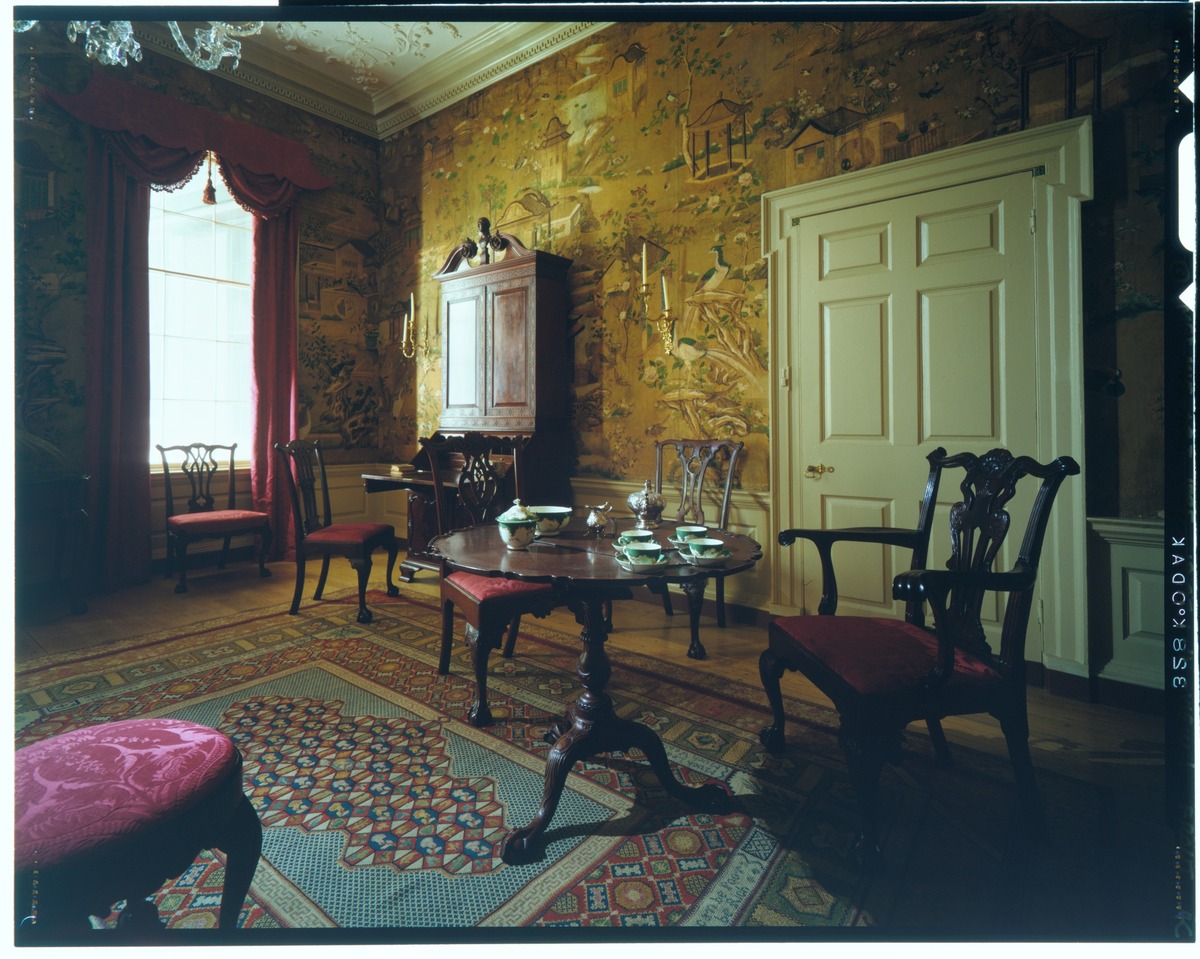
Most rococo tables also have cabriole legs, shell and scroll decoration, with floral garlands and chinoiserie or pastoral groups in marquetry or lacquer. In contrast to the grand scale and formality of the Baroque, the rococo is more than happy with asymmetry and comfort on the human scale. The tables could serve as writing desks, side tables, gaming tables, tea tables and dressing tables depending on what social ritual they were used to.

According to The Met, ‘the characteristics of furniture made during the rococo period emphasized sinuous curves and lightness in form’ suggesting ‘a move toward smaller, more intimate private rooms’. Put simply, a rococo table is a style as well a response to contemporary ideas of luxury, intimacy and life in early modern Europe.
Historical Context: Rococo Tables in Time and Place
Rococo style appeared in France starting about 1720: during the Regency and early reign of Louis XV, when authority moved from the stern court of Louis XIV toward a more personal, aristocratic existence in Paris. The new interior reflected this change: rooms grew in size again, but they were more softly colored and filled with furniture designed for relaxation and conversation. Of course, tables were at the heart of this new scheme: they were adapted for cards, writing letters, drinking tea, and bringing people together.
Can You Guess the Artist?
Three clues. One artist. How quickly can you identify the painter?
This aesthetic became popular in other parts of Europe, starting with Germany, Austria and Italy. The spread of rococo furniture to Central Europe was rapid, and cabinetmakers in Munich, Dresden and Vienna adapted it to the local materials and techniques. According to the Victoria and Albert Museum, London, the style of rococo ‘quickly became an international style’, and many English craftsmen, including Thomas Chippendale (born 1718), adopted it in their furniture, using the same rococo forms and decoration on the Table of the Director pattern book of 1754. The tables were still curvilinear and richly decorated, but the proportions, veneers and fittings were tailored to local currents.

However, by the end of the 18 th century (c 1760–70s) Rococo was gradually retiring and was replaced by the orders of Neoclassicism with their cleaner and straighter lines and allusions to Classicalism. Yet, rococo tables did not just go by. They were left to be used, some were remodeled while others were preserved in perfect condition. Today, the top five museums in the world: the Louvre Museum, Paris, (readily available on the Internet) and the Musee des Arts Decoratifs, the Metropolitan Museum of Art, New York, the Victoria and Albert Museum, London, and the Smithsonian Institution in Washington, D. C., all of which have permanent collections featuring rococo tables.
Defining Features of a Rococo Table
For a period table to be genuine rococo, the eye needed only to look at the profile. Almost to a piece, rococo tables had cabriole Legs (outward and inward in the animallike kneelike manner). Even the general profile was lively and haphazard, with serpentine fronts or shaped tops in place of rectangular. Its wandering rhythms were essential: as the V and A remarks in its collections notes on Rococo furniture, the style “adopted the asymmetrical and the fanciful… pausing from mirror-image rhyme.”

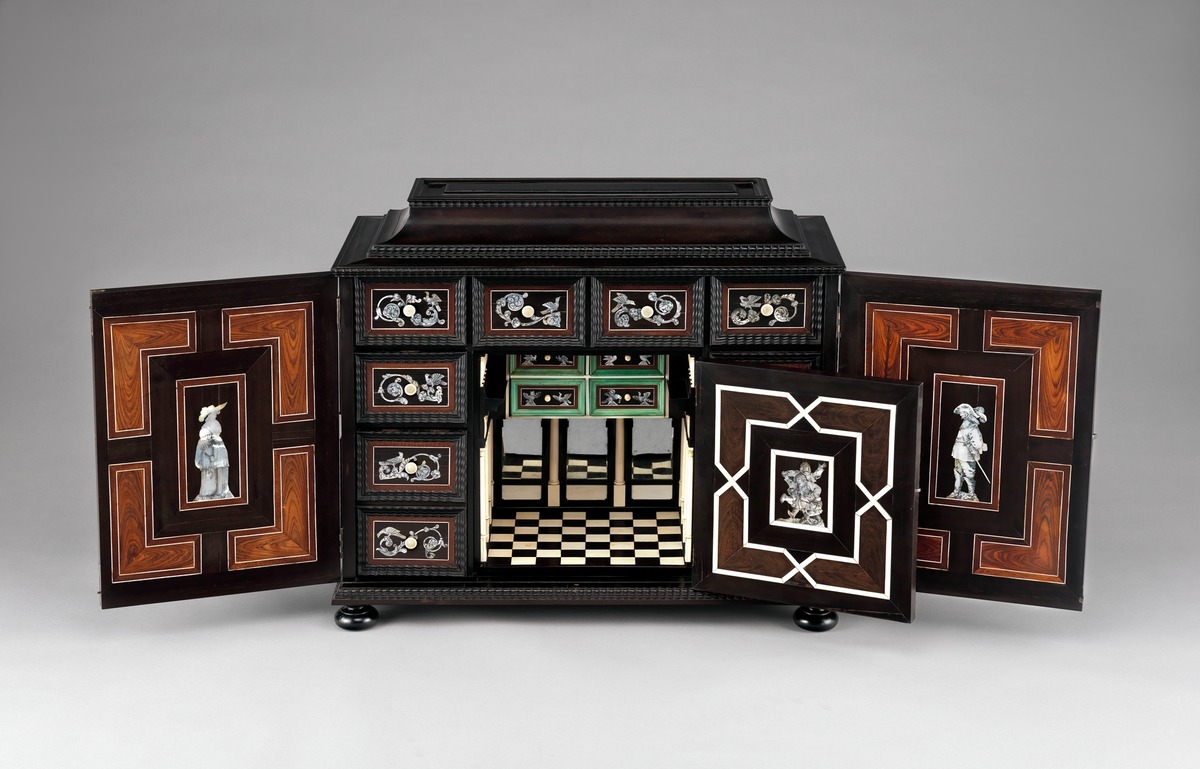
Ornamentation is equally idiosyncratic. Carvings are often adorned with C-scrolls, S-scrolls, shells( rocaille in French, from which ‘rococo’ seems to originate), acanthus, rockwork, and trailing flowers. Gilding is present on many objects, especially French ones intended for more palatial homes. Marquetry, veneered top in kingwood, tulipwood with inlay, some are surfaced with lacquer panels or Sevres porcelain plaques for magnificent commissions by the king or queen of France . Many gaming tables inlaid with concealed chessboards, or backedgammon boards and card surfaces inside stripped back the obvious display of ornamentation.
In principle, the rococo tables are precisely the kind of meticulous joinerer‘s and marquetrier‘s work that the Metropolitan Museum of Art often showcases in their packs on the Parisian ebenistes. These metal-marked works by craftsmen like Bernard II van Risenburgh and JeanFrancois Oeben show similarly complex layering of exotic veneers, along with ingenious dimensions, mechanisms and forms by which a table could fold, slide, change into a machine: fold-out aids for gaming, extendable writing surfaces, shifting game-table top, hidden drawers, device-free, sophisticated locks. In the rococo style, the table is as much a machine as it is a sculpture.
Types of Rococo Tables and Their Uses
A range of ornamental tables existed to fulfill all manner of requirements given the diverse needs of the Rococo society. The en chiffonniire or work table was a small table, often three-tiered that was used for the numerous domestic tasks associated with the use of the bedroom or boudoir, including writing and sewing. The table of toilette, meanwhile, was a dressing table, with both mirrors and pouches or compartments for cosmetics and jewelry. Much more compact and personal, these intimate pieces show the growing priority placed on personal privacy and the daily ceremonies of the wealthy aristocrats and bourgeoisie.

In even the more open or accessible rooms, a great variety of tables were used, including gaming tables and occasional tables. Folding card tables ( tables a jeu) could be easily deployed for an evening playing cards, covered with green baize or leather, and additionally incorporating a candle stand often. There were also tables a the used to serve tea, as well as gueridons, small pedestal tables acting as helps for candleabras, sculpture or porcelain. Clearly, these objects cooperated to support the social life of the salon, where conversation, music and games kept Paris and other major European capitals lively
One of the most elaborate types of rococo tables were also those that were mechanical or multi-functional. For example, a ecrire (writing table) might have a sliding leather writing surface, the provision for storing paper and ink pots, and even concealed drawers. The intricate sliding mechanisms and marquetry mythological scenes discovered on Jean-Francois Oeben‘s writing tables (a number of which are now in the Louvre and the Musee Conde at Chantilly) serve as powerful examples. Such tables in effect functioned as technological advertisements, broadcasting the wealth, learning, and purchasing power of their owners.
Materials, Craftsmanship, and Ornament
Rococo tables often unite structural woods (oak, beech, or walnut) with luxurious surface materials. French ebenistes in Paris operated under the restrictions of the guild system. All pieces had to be stamped and of a certain quality. These noils were show in the exotic veneers used including Kingwood, tulipwood, amaranth and satinwood. Florid marquetry and geometric patterns were produced or a combination of both. Numerous examples of these veneers can be found at the Smithsonian Institution’s Cooper Hewitt, Smithsonian Design Museum, where the pictorial often consisted of a series of canvases placed in a single field on surface.

Carved gilding was of course another characteristic feature. Carvei frames, aprons, and legs in beech or lime wood could be gilded using gesso, bole and gold leaf to produce an illuminated, glazed surface. The pieces from the royal commissions of Louis XV at the Louvre illustrate how gilding augmented the contrast of light and shade across the convex shapes, heightening the illusion of movement and opulence. Shells, scrolls and foliaged in deep relief throw the light, generating intense shadows.
These super-prestigious tables tended to include even more “luxury” materials: marble tops (Breccia, Rouge Griotte, Carrara), lacquer panels from the Far East (or their European FP imitation, known as “japanning,” introduced in the mid-18th century) and later on, porcelain plaques. All these combinations of materials reaffirm that this was not minimalism, but was, as the V&A said, “a celebration of craft, materials and surface”. A table was not just a support, but something to be seen by all who entered the room. It was there to wow visitors, and prove the good taste and wealth of the owner.
Rococo Tables in Museums and Collections
Today, leading museums across the world use the rococo table as a critical example of 18 thcentury decorative arts. The MET (New York) owns numerous signature examples by Bernard II van Risenburgh, as well as other Parisian inspired marquetry craftsmen. His rococo table, for example, is known for it “delicately scrolling cabriole legs and a profusion of gilt-bronze mounts,” allowing us to see the seamless combination of carving and metal work celebrated in the genre. Such interesting catalogues entries offer great research insights.

The Victoria and Albert Museum (London) approach broadens the European context to include French, German and English rococo tables within their galleries. Their interpretation stresses the circulation of prints, pattern books and craftsmen; pointing out the export of ornaments by French ornamentists such as JusteAurele Meissonnier, to foreign artisans from London to Lisbon. The V&As Rococo galleries not only display tables but the more general interior contexts within which they were used, showing how they functioned with wall panelling, textiles and lighting.
The Louvre Museum in Paris, especially its Departement des Objets d’Art houses perhaps the most well-known and opulent rococo tables commissioned for the French court or aristocracy, including some associated with royal residences, Versailles and Fontainebleau. The Louvre supplies a significant portion of material to the other distinguished Parisian collections, the Musee Nissim de Camondo and the Musee Carnavalet and, together they represent one of the most comprehensive studies of Parisian rococo of the period. For those unable to visit in person, the Museum websites (Met, V&A, Louvre, Smithsonian) all produce high quality images along with significant research essays and such should be a first port of call for any serious researcher.
Key Characteristics at a Glance
| Feature | Typical Rococo Table Characteristics | Notes / Examples |
|---|---|---|
| Period | c. 1720–1775 (primarily Louis XV era) | France first; then Germany, Austria, Italy, Britain |
| Form & Silhouette | Curved, asymmetrical, cabriole legs, serpentine fronts | Light, dynamic, avoiding heavy rectilinear mass |
| Decoration | Shells, scrolls, rockwork, foliage, floral garlands, rocaille | Often deeply carved, sometimes gilded |
| Materials | Oak/beech frame; veneers of kingwood, tulipwood, etc.; marble tops | Luxurious surfaces; exotic woods and imported stones |
| Techniques | Marquetry, parquetry, carving, gilding, lacquer, gilt-bronze mounts | Highly skilled ébénisterie and menuiserie |
| Functions | Writing, gaming, tea, dressing, occasional use | Specialized forms: table à jeu, table de toilette, chiffonnière |
| Geographic Variants | French, German, Austrian, Italian, English rococo | Local materials and motifs; English often adapted via Chippendale designs |
| Social Role | Symbols of status, taste, and cosmopolitan culture | Central to salons, boudoirs, and private apartments |
Collecting, Authenticity, and the Market Today
For collectors and institutions, distinguishing an 18th‑century rococo table from 19th‑ or 20th‑century revivals is crucial. Original pieces often bear stamps from Parisian makers or guild marks, visible on the underside or inside drawers. Construction details—such as hand‑cut dovetails, tool marks, the oxidation of wood, and the wear patterns on gilding—provide further evidence. Auction houses and museum conservation laboratories use a combination of documentary research, stylistic analysis, and scientific testing to confirm authenticity.

Demand for high quality rococo tables is still brisk, particularly for documented tables by the leading ebenistes. While the market is very strong for documented tables with royal or aristocratic provenance,1some sell at auction for in the seven figures, and others still at six figures, at major international auction houses. There is, however, a healthy market for 19thcentury rococo revival tables which, at a more affordable price, can provide the appearance and feel of the style, but without the same pedigree.
The other challenge for collectors is restoration. Many rococo tables will have been restored through the centuries, with veneers replaced, surfaces regilded, new marble tops added. One must return to the principles of good conservation the kind done by the best museums (Met. Or V&A, for example) which is to preserve and respect the material while fully recording the remaking. The best advice for private collectors is to check with qualified conservators and buy from reliable dealers and auction houses.
Rococo Tables in Contemporary Interiors
Though these tables originated in European homes in 18thcentury, the rococo tables now work even in contemporary rooms. Modern designers use dramatic rococo tables as a feature stand for decorated rooms, and the contrast between the modern and the old is often very effective. For instance, a gilded console table under a modern painting or a working gaming table as a side table would add interest.
Another common explanation is that small-scale rococo tables are so versatile, easier to fit into whatever size apartment or house is currently on offer.
Their small scale and multiple functions (side table, bedside table, entrance table) enable the tables to fit into both large and small spaces, while the hand-made quality and overt details relate to a newfound respect for objects- both traditional crafts and durable design think. Meanwhile, todays practitioners re-interpret rococo tables. Arching scrolls and shells are somehow re-mixed with contemporary materials like steel, resin or glass. They hear out the 18 th century playfulness in rococo but tend to appeal to 21st century tastes. Playfulness and virtuosity is what makes a rococo table interesting to me.
Frequently Asked Questions About Rococo Tables
1. How can I recognize a genuine rococo table?
Look for curving cabriole legs, asymmetrical ornament (shells, scrolls, foliage), and high-quality craftsmanship in joinery and marquetry. Authentic 18th‑century pieces may bear maker’s stamps, especially French examples. Comparing with documented tables in collections at the Metropolitan Museum of Art or the Victoria and Albert Museum is an excellent starting point; their online catalogs include detailed photos and descriptions that help train the eye.
2. What’s the difference between Baroque and Rococo tables?
Baroque tables (late 17th to early 18th century) tend to be larger, heavier, and more symmetrical, emphasizing grandeur and power—think of early Versailles under Louis XIV. Rococo tables, by contrast, are smaller, lighter, more intimate, and often asymmetrical. The Louvre and other institutions emphasize this shift as a move from state ceremony toward private comfort and sociability, a difference you can immediately see in the scale and ornament of the furniture.
3. Are rococo tables practical for everyday use today?
Yes, with reasonable care. Many rococo tables were originally made for regular use—writing, card games, tea—so their basic structures are robust. However, delicate veneers, gilding, and marquetry benefit from protection: use coasters, avoid direct sunlight, and keep away from extreme humidity or temperature changes. Museums like the Smithsonian Institution’s conservation departments stress preventive care as the best strategy for preserving historic furniture in both institutional and domestic settings.
Conclusion
The rococo table stands at the intersection of art, craft, and social history. Born in the salons and boudoirs of 18th‑century Europe, it transformed the humble tabletop into a vehicle for technical brilliance and aesthetic wit. From the gilded masterpieces in the Louvre and the Metropolitan Museum of Art to more modest revival pieces in private homes, rococo tables continue to captivate because they embody a worldview: one that values grace, intimacy, and the sheer pleasure of beautifully made objects. Understanding their history and characteristics not only deepens our appreciation of these remarkable tables but also connects us more directly to the people, places, and rituals that shaped the modern idea of interior life.
AI Notice: Some visual content in this article may have been created or enhanced using artificial intelligence (AI) for artistic, editorial or illustrative purposes. Learn more about our approach in our AI & Editorial Principles.