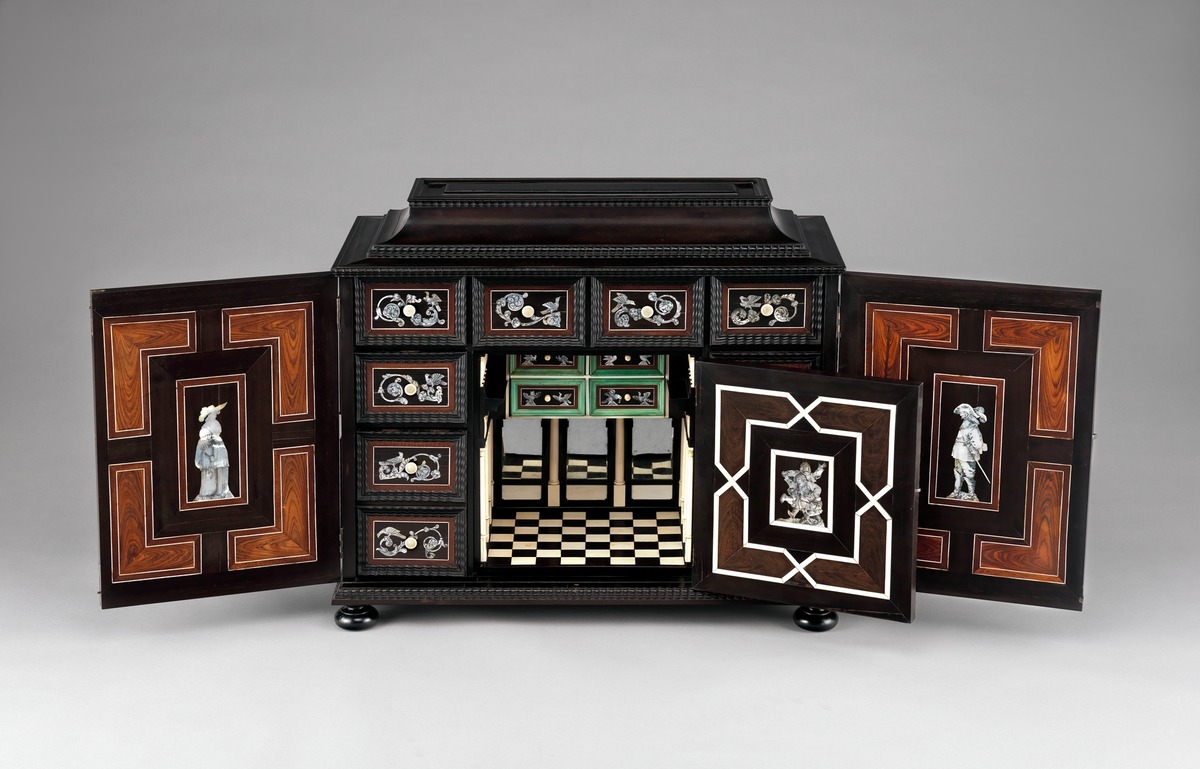

The Secret Details to Check Before Buying an Antique Dressing Table
Antique dressing tables are more than ornate furniture: they are intimate witnesses to changing ideals of beauty, privacy, and domestic life. From candlelit Georgian bedrooms to the grand, mirror-filled boudoirs of 19th‑century Paris, these pieces reflect how people prepared to face the world—and how artisans, designers, and patrons shaped interior culture. For collectors and homeowners today, an antique dressing table offers not only craftsmanship and materials that are increasingly rare, but also a tangible link to specific historical periods, workshops, and social customs.
What an Antique Dressing Table Is (and Why It Matters)
An antique dressing table is typically a bedroom or dressing-room table designed for personal grooming, often with drawers for cosmetics, jewelry, and tools, and frequently paired with a mirror—either attached, swinging, or placed above as a separate glass. In the English-speaking world, “dressing table” is often synonymous with “vanity,” while in French contexts you may encounter related forms such as the toilette or the more elaborate coiffeuse. As collections at institutions like the Victoria and Albert Museum (V&A) demonstrate, the category includes a wide range of types: from compact tables with a single drawer to architecturally complex pieces incorporating mirror mechanisms and hidden compartments.
Can You Name the Masterpiece?
Ten masterpieces. Ten questions. How well do you know the history of art?
In a larger historical context, the dressing table is also part of wider changes to the house and to social manners. In 17th and 18th century Europe, new categories of rooms were introduced (like bedchambers and dressing rooms), which led to furniture designed for the purposes of grooming, as well as the storing of personal belongings. In the grandest households, such furniture could also denote status and taste often using precious materials (veneers, lacquers, gilt-bronze fitments) within a utilitarian structure.
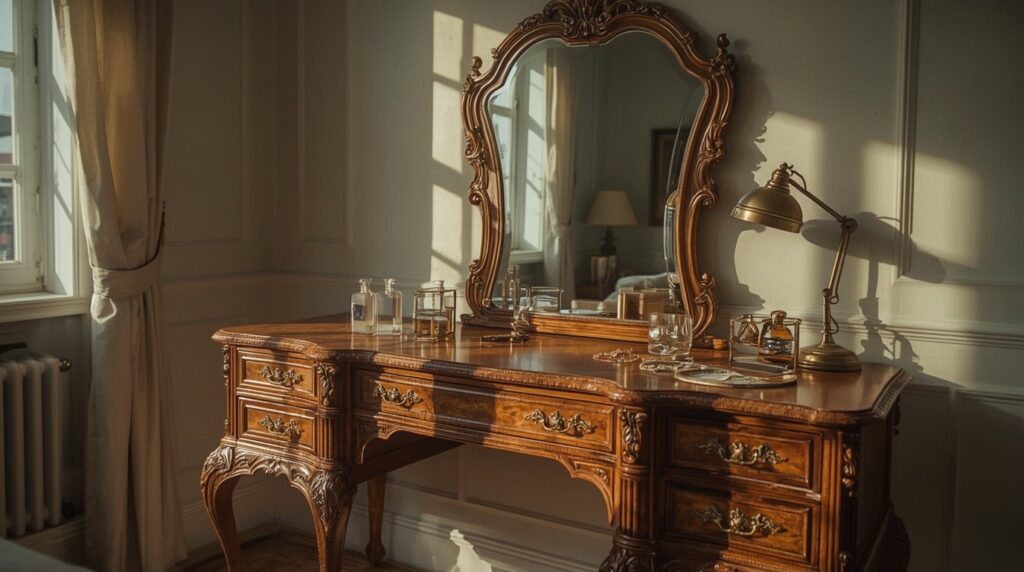
Museums emphasize the significance of such pieces in decorative arts history as they bring together many trades. An antique dressing table, for example, might combine cabinetmaking, marquetry, metalwork, glassmaking, upholstery and even porcelain or lacquer crafts. In fact, the art of European furniture is best seen as a social art: workshops and trades collaborated to make pieces for the homes and clients for whom they were intended, as The Met‘s European Decorative Arts collection resources reveal.
Historical Periods and Styles You’ll Encounter
Many of the most sought-after antique dressing tables trace to the Georgian era in Britain (1714–1837) and the Louis XV and Louis XVI periods in France (18th century). Georgian examples may show walnut or mahogany construction, restrained carving, and elegant proportions aligned with Palladian and later Neoclassical taste. French Rococo dressing tables (toilettes) from the Louis XV period often feature curved forms, floral marquetry, and gilt-bronze mounts; by Louis XVI, lines become straighter and ornament becomes more classical—garlands, fluting, and delicate inlays.
Can You Guess the Artist?
Three clues. One artist. How quickly can you identify the painter?
The 19th century witnessed growing industrialisation and a broader market. Victorian Britain had dressing tables as part of larger “toilet sets,” with their associated mirrored dressing set of box, jar, perfume bottle etc. Mass-production was becoming available, although high-end workshops still produced top-quality wares. In Second Empire France (Napoleon III, mid 19th-century), revival styles prevailed, and dressing tables could be an amalgam of Renaissance, Rococo and Neoclassical. In America, dressing furniture went hand in hand with an increasing trend for middle-class homes. The Smithsonian Institution ( Washington D. C.) has relevant research into how changes to household items mirrored American social and economic transformations.
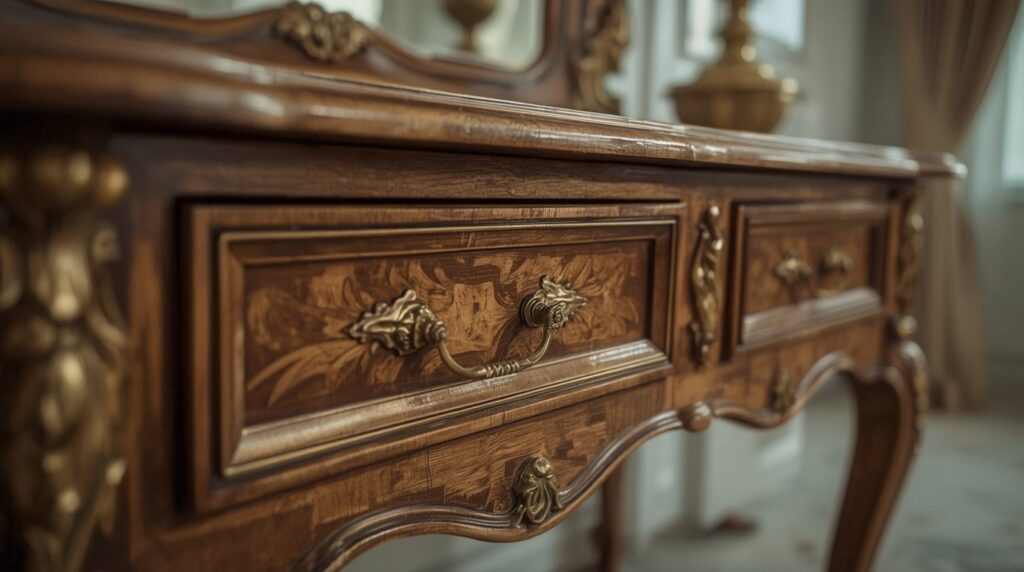
An important consideration for collectors is that an “antique” does not come with a single visual profile the variation between an English late-18th-century chair, for instance, and a 19th-century French revival chair could be extreme. Museums, such as the Louvre (known for decorative arts in French royal and aristocratic contexts) and the V&A (Victoria and Albert Museum) offer important visual benchmarks for judging form, detail of ornamentation, and method of construction against known historic examples.
Key Characteristics to Evaluate (Materials, Construction, and Condition)
Materials are among the clearest indicators of quality and period. Early pieces frequently use solid timbers (walnut in earlier 18th century; mahogany becoming prominent later), while many high-style European examples use veneers over secondary woods. Look for consistent, period-appropriate wear: edges softened by handling, drawer fronts with honest patina, and hardware that makes sense for the piece. Extremely crisp carving on a purportedly 18th‑century table, or bright, uniform finishes, can signal heavy restoration or later manufacture.
This is where I get into genuine antiques versus reproductions and copycats. Dovetail drawers that have uneven, hand-sawn sides are real. Old hardware. Traditional joints. On the other hand, all of the joinery on a cabinet that is uniform and perfectly milled via machines likely means it was made at a much later date (unless it‘s a very late 19th century cabinet, in which case it could actually be machine-made and still be a genuine antique). The mirror in a cabinet is another key feature. Mercury glass mirrors were all hand-made and can even be toxic to health, and they also break readily. Many cabinets were actually fitted with mirrors after they were constructed, so replacing the mirror does not necessarily mean you won‘t have an antique, but it should be disclosed, and the value adjusted.
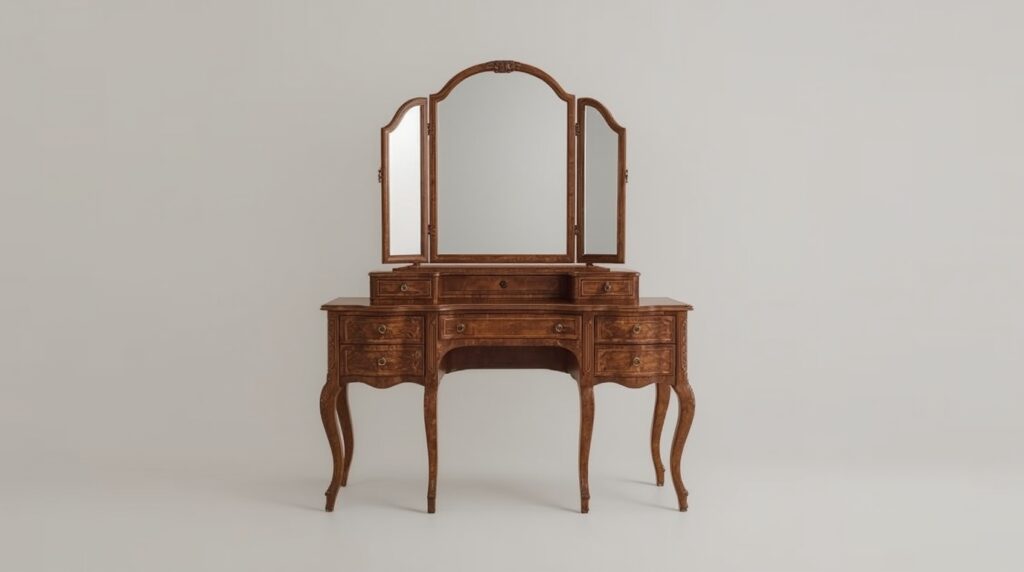
Conservation treatment should be considered through a conservatorial lens. Museums usually encourage the retention of original surfaces whenever feasible, as these tell us something about the history of the object. Original materials and surfaces are valuable records of how an object was made and used; as the V&A‘s conservation philosophy often emphasizes, aggressive stripping and re-finishing can remove evidence of history. Sometimes, a sound repair is preferable to a “like new” re-finish which can remove tool marks, rounding, and original character.
Summary Table: Key Characteristics of an Antique Dressing Table
| Feature | What to Look For | Why It Matters |
|---|---|---|
| Wood & veneer | Period woods (walnut/mahogany), well-laid veneer, age-appropriate patina | Indicates era, quality, and authenticity |
| Joinery | Hand-cut dovetails, pegged joints, tool marks | Suggests pre-industrial workmanship |
| Hardware | Brass pulls/escutcheons consistent with style; signs of long use | Replaced hardware affects value and integrity |
| Mirror | Original mounting method; age-consistent glass (often replaced) | Many mirrors are later additions; impacts authenticity |
| Ornament | Marquetry, carving, gilt mounts consistent with period | Helps place piece in style and region |
| Condition | Stable structure; honest wear; documented restoration | Preserves value and historical evidence |
Provenance, Museum Standards, and Ethical Collecting
Provenance—the documented history of ownership—can elevate an antique dressing table from attractive furniture to an object of serious historical interest. A paper trail may include estate inventories, auction records, gallery invoices, or historic photographs. Museums such as The Metropolitan Museum of Art and the Smithsonian Institution set the benchmark: strong provenance and transparent documentation are central to responsible collecting and scholarship, especially for objects that might have crossed borders during periods of upheaval.
Ethical collecting also means understanding what “attribution” really means. Dealers may describe a piece as “in the manner of” a famous maker or style; that is not the same as a confirmed workshop attribution. When possible, compare your piece to catalogued examples in museum databases (The Met, the V&A, and the Louvre all provide collection information online). If a seller cites a famous cabinetmaker or royal provenance, ask for the supporting documentation, not just verbal tradition.
Authoritative perspectives from museums reinforce why careful documentation matters. The Met’s decorative arts materials consistently frame furniture as historical evidence—objects that can be studied for techniques, taste, and social context. Likewise, museum conservation departments stress reversible, well-documented repairs over cosmetic transformation. As the Smithsonian’s collections research illustrates, domestic objects gain meaning through context—who made them, who used them, and how they circulated over time.
Buying and Caring for an Antique Dressing Table
When buying, start with a clear goal: daily use, decorative impact, or long-term collecting. For practical use, prioritize structural integrity (sound legs, stable joinery, smoothly operating drawers). For collecting, prioritize originality and documentation. Reputable dealers should provide condition reports, explain restorations, and allow close inspection of construction and underside surfaces—areas where authentic age is more legible.
Transport and placement are crucial. Avoid direct sunlight, radiators, and damp basements; wood movement is the enemy of veneer and joints. Use coasters and protective mats under perfumes and cosmetics—many contain alcohols and oils that can permanently mark historic finishes. If you intend to use the piece as a working vanity, consider a removable glass top cut to fit, so the original surface remains protected.
For conservation, minimal intervention is usually best. Dust with a soft cloth; avoid silicone-based sprays. If the table has loose veneer, lifting inlay, or active woodworm, consult a qualified conservator rather than attempting DIY fixes. Museum practice—seen across institutions like the V&A and The Met—favors treatments that stabilize while preserving original material, because the “surface” of an antique is part of its history, not merely decoration.
Frequently Asked Questions
How old does a dressing table need to be to be considered “antique”?
In many markets, “antique” commonly means 100 years or older, though definitions can vary by country, dealer, and legal context.
Is a replaced mirror a deal-breaker?
Not necessarily. Mirrors were often broken or updated. A replacement should be disclosed; value depends on how sensitively it’s done and how original the rest of the piece remains.
What styles are most commonly faked or reproduced?
High-demand looks—especially French Rococo (Louis XV) and ornate Victorian forms—are frequently reproduced. Construction details and patina are key authenticity checks.
Can I use an antique dressing table daily?
Yes, if it’s structurally sound and protected from moisture, heat, and harsh chemicals. A fitted glass top is a practical, reversible safeguard.
Where can I verify period details?
Consult online collection entries and publications from the Metropolitan Museum of Art, Victoria and Albert Museum, Louvre Museum, and the Smithsonian Institution. Their catalogues provide reliable comparanda for form, ornament, and materials.
An antique dressing table condenses history into a functional object: craftsmanship, social ritual, and design taste meeting in wood, metal, and glass. By learning period styles, checking construction honestly, and following museum-informed standards for documentation and care, you can choose a piece that is both beautiful and historically credible—an heirloom that still earns its place in daily life.
AI Notice: Some visual content in this article may have been created or enhanced using artificial intelligence (AI) for artistic, editorial or illustrative purposes. Learn more about our approach in our AI & Editorial Principles.