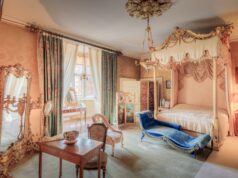
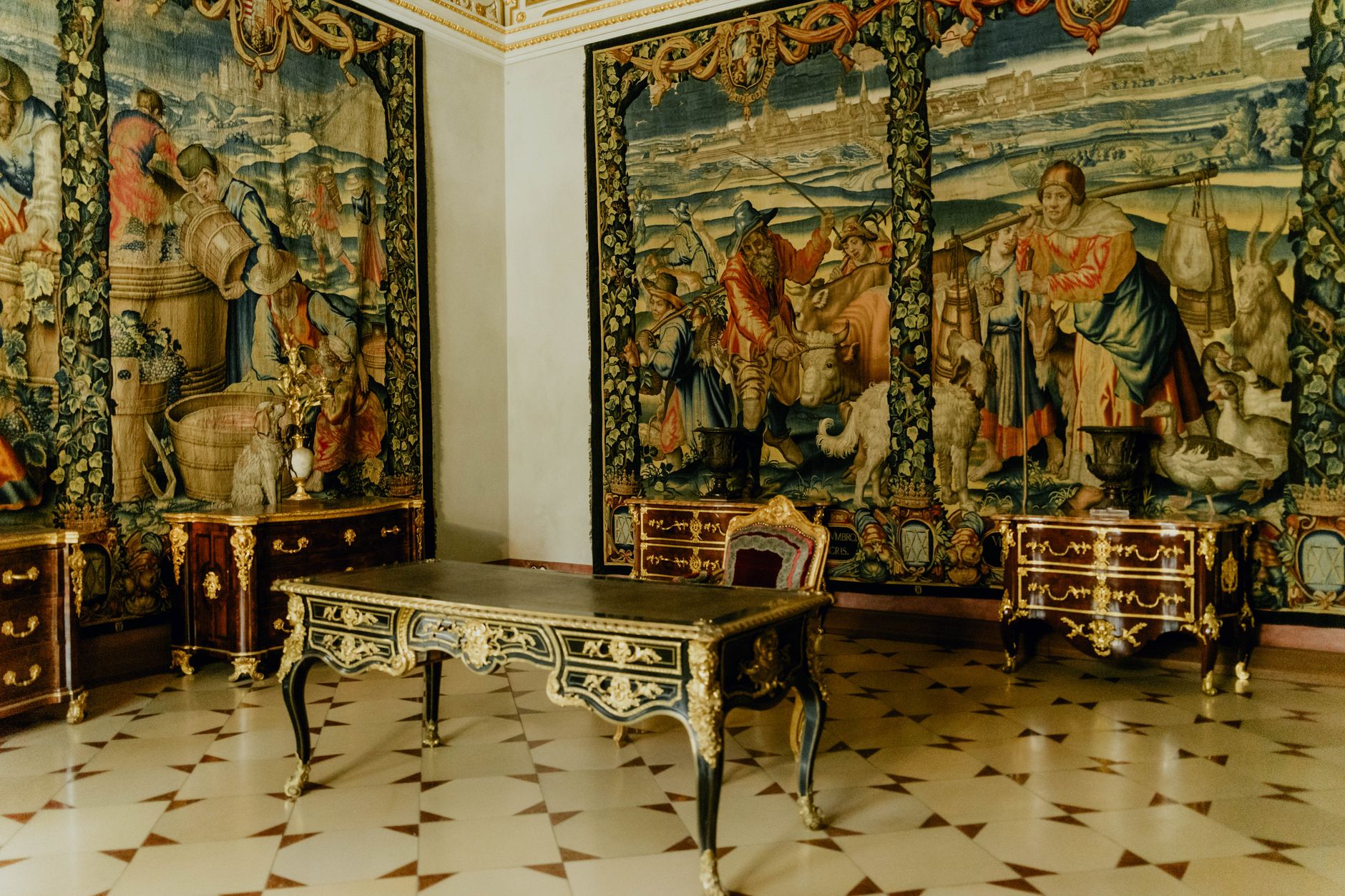
The door closes with a sigh of silk and the world of the public sphere collapses. Within this grand boudoir, light is reflected from gilded scrolls which brush the edge of a chaise discerning these unaware, perhaps, that it appears to lounge with its occupant. Not one piece of rococo furniture would be called intimidating, but the suite works together like a dance to create intimacy. Here, politics diffuses like bath-water into gossip, power ices itself as charm, and the court drama performs as a bedroom. More than a room, the grand boudoir is a script written in furniture; a conscious articulation of culture that reveals how a frivolous style profoundly documented the sedimentation of the Enlightenment from Versailles to the worlds within.
From Courtly Whimsy to Salon Chic: Origins of Rococo
Rococo starts undeniably as a reaction to grandness. Following the ceremonial absolutism, heightened civic and baroque grandeur of Louis XIV, the French aristocracy had tired of straight lines and moral seriousness. During the Régence (about 1715–1723), which was characterized by the relaxation of etiquette and consequently of interiors, apartments became smaller, protocols became more flexible and the focus of power shifted from the throne room to the salon and boudoir.

The new developing taste appreciated informality, chatter and spectacle. Designers like Germain Boffrand and Juste‑Aurèle Meissonnier explored asymmetry, more easily flowing lines and lighter decoration, particularly in the private rooms of Parisian hôtels particuliers. Wall boiseries were broken into panels which were carved like growing vines inviting the furniture to follows.
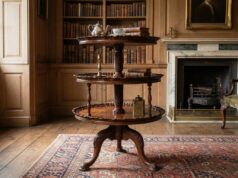
More important is that following this paradigm shift the furniture designed for it. Chairs were to repose in between long conversations rather than sit through stiff rituals; little tables hovered in between a variety of pursuits: gambling, writing, grooming. The boudoir, often located right next to the bedroom was a semi-private space needing furniture that recognized a full-bodied presence, its ease, its flirtations, its vulnerabilities. Thick with superficiality was an underlying weight of a cultural change: the once stern face of power, now cloaked in friendly garb.
Curving Lines and Gilded Shells: Decoding Rococo Forms
Rococo furniture is mocked as just a mass of curls and shells but so complex and precise a language is actually being used. The rocaille is the signature motif, a fusion of rock and shell forms, composing a spiraling, unbalanced motif that looks organic rather than contrived. These shapes tumble across chair rails, burst out at the knees of cabriole legs and unfurl along the fronts of commodes.
The line is always in motion: Cabriole legs are curved with a pleasing articulation of the knee, ending in hoof or scroll feet. The absence of stretchers sets a delicate lightness in the air. Chairs fauteuils, bergères, marquises open their arms to the sitter, the line of their backs sinuously echoing the trace of the human body.

Surfaces do a double act of structure and fantasy. Veneered commodes feature kingwood, tulipwood or amaranth in complex marquetry, with panels sometimes bundling around a cartouche as a sort of miniature theatre. Carving is wildly undercut, shadowing each filament of acanthus. Gilding can be rock-hard flat dazzle or a subtly shaded flesh: bruised matte and burnished areas redrawn their relationships with light as you circumnavigate.
Aesthetically, what works about rococo is the feeling of inevitability. Thatthe asymmetry works , that it is not haphazard, but moderated chaos. Like a musician rehearsing a flawed improvisation to perfection. That the spectator perceives movement and spontaneity, but that the geometry still makes sense.
Boudoirs, Bergeres, and Bidets: Furniture in Intimate Life
The grand boudoir is where rococo furniture reveals its most complex role—not as status symbol, but as accomplice. This is the territory of the bergère à oreille, cradling the head for confidential conversation; the low chaise longue for reading or reverie; the discreet screen shielding a dressing ritual from full view yet acknowledging its presence.
Each typology corresponds to a nuance of behavior. The coiffeuse—a dressing table with pivoting mirrors—supports the elaborate toilette, a spectacle and a negotiation of identity. Tables à écrire fold and slide to conceal letters and diaries. Even the notorious bidet appears in refined forms, upholstered and portable, signaling a new intimacy with hygiene and the body, framed in luxury rather than shame.
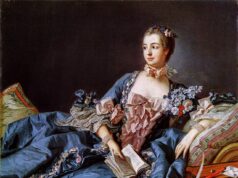
These pieces translated new ideas about privacy into wood and textile. As the Enlightenment nurtured interiority and sentiment, interiors became stages for sensibility. Painted panels might show pastoral seductions by Boucher or Fragonard, while the seating beneath hosted conversations no less charged. In this context, rococo furniture’s softness and mobility were not incidental. They allowed the room to be constantly re-scripted: a reading retreat at dawn, a salon of confidantes by afternoon, an erotic theater by candlelight.
Craftsmanship, Color, and Comfort in Grand Boudoirs
The sensuality of a rococo boudoir is as technical as it is visual. Joinery and veneering craftsmen working within the menuiserie and ébénisterie guilds forced materials to their limit in terms of appearance and tactual experience. Beech and walnut responded deeply to crisp carving, then were obliterated beneath multiple gesso and gold applications. Oak carcasses were adorned with marquetry, spruce marquetry “skins” of exotic veneers, butterfly-matched to produce glistening symmetrical grain designs over flowing curves.
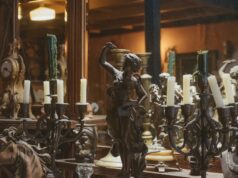
This tactility was further heightened with textiles. The shape of chair frames is increased with mass of padding and then covered with silk damasks, lyon brocades, painted taffetas or embroidered panels. The schemes in forum and impressive boudoirs tend to look more powdered and silvery than the overall Palais style: pale, mythically green celadon, pale, misty pink, pale luminous pearl grey and tender milkier amber, often accompanied with gilt mouldings, mirror plate-glass. Observed seen from candles, it is not a harsh glare, it is soft molten glow, emotioned with levels of saturation and tone: everything is at that point.
Finally, comfort–a given lesser regard in 17th century court furniture was now a goal. Deep seats, seats angled backs, and feather cushions suggested time spent reading, prolonged lounging, intimate discussion. Smaller pieces moved around without difficulty in response to temptation. The final product was aroom tuned toward a womans presence: surfaces built to be used, proportions ordered for the body, ornament designed to compliment its occupant.
Reviving Rococo Today: Opulence for the Modern Interior
Contemporary interiors rarely accept historical styles whole, yet rococo continues to whisper its seductions. What resonates today is less the full 18th‑century ensemble than specific principles: the embrace of the curve, the prioritizing of comfort, the idea that rooms can stage intimacy, not just display design credentials.
In a modern grand boudoir—a dressing room, private library, or luxurious bedroom suite—rococo can appear as a single gilded bergère against lacquered walls, or a serpentine commode reinterpreted in high-gloss lacquer and clean brass. The palette may shift to smoky neutrals and inky blues, but the play of light on curved surfaces and layered textures still creates that distinct sense of private theater.
Designers borrowing from rococo often abstract its motifs: shell forms become sculptural lighting, boiserie translates into pared-back paneling with subtly irregular frames, while traditional silk damasks give way to velvets and moirés in contemporary tones. The key is the choreography of space around the body—seating that encourages reclining, corners that invite confidences, mirrors that frame fragments rather than the whole.
What endures, more than the gilding or the ornament, is the rococo conviction that luxury is most persuasive when it feels personal, slightly secret, and tailored to the rituals of a single, imagined inhabitant.
Rococo furniture and the grand boudoir remind us that design is never neutral; it encodes how a culture understands pleasure, privacy, and power. Behind every coquettish scroll lies a serious question: where does the public self end and the private begin? In 18th‑century Paris, that boundary was negotiated on velvet seats and marquetry surfaces, under painted ceilings and within rooms that encouraged confession as much as display.
Today, the historical boudoir has largely dissolved, but its logic persists in every carefully curated retreat—a dressing room, a reading niche, a quiet corner flooded with flattering light. The enduring appeal of rococo lies in its promise that interior space can respond intimately to the body and the imagination, turning daily life into a quietly glamorous performance.
AI Notice: Some visual content in this article may have been created or enhanced using artificial intelligence (AI) for artistic, editorial or illustrative purposes. Learn more about our approach in our AI & Editorial Principles.