Victorian Cloaks: The Romantic Fashion Secret Making a Bold Comeback
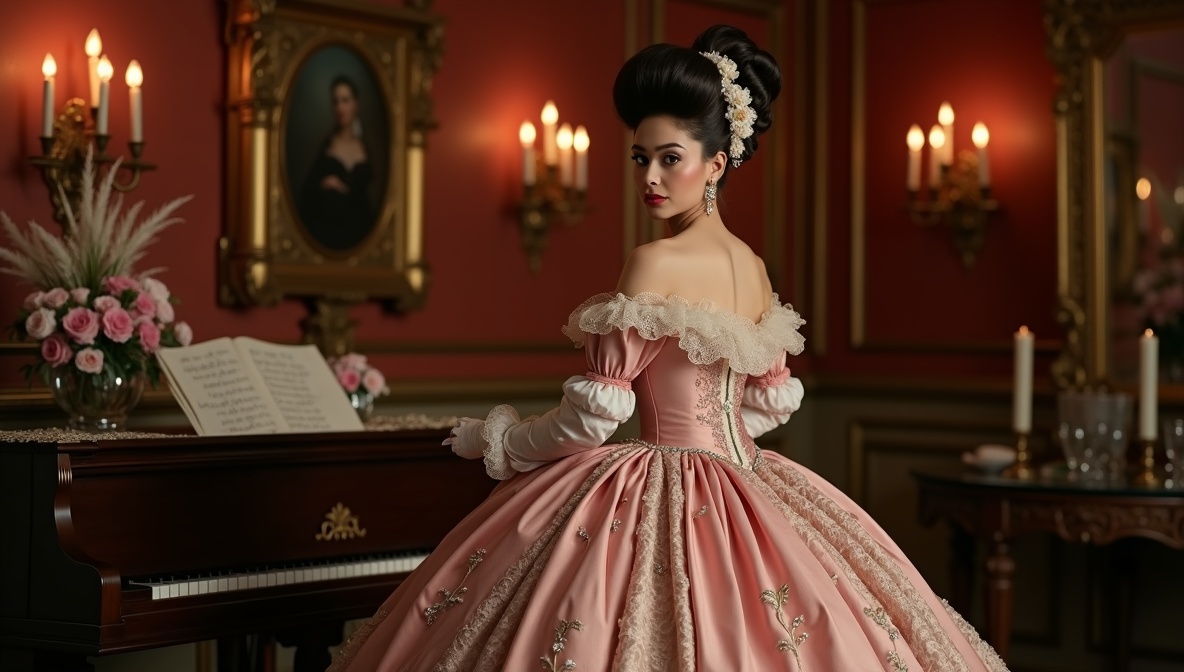
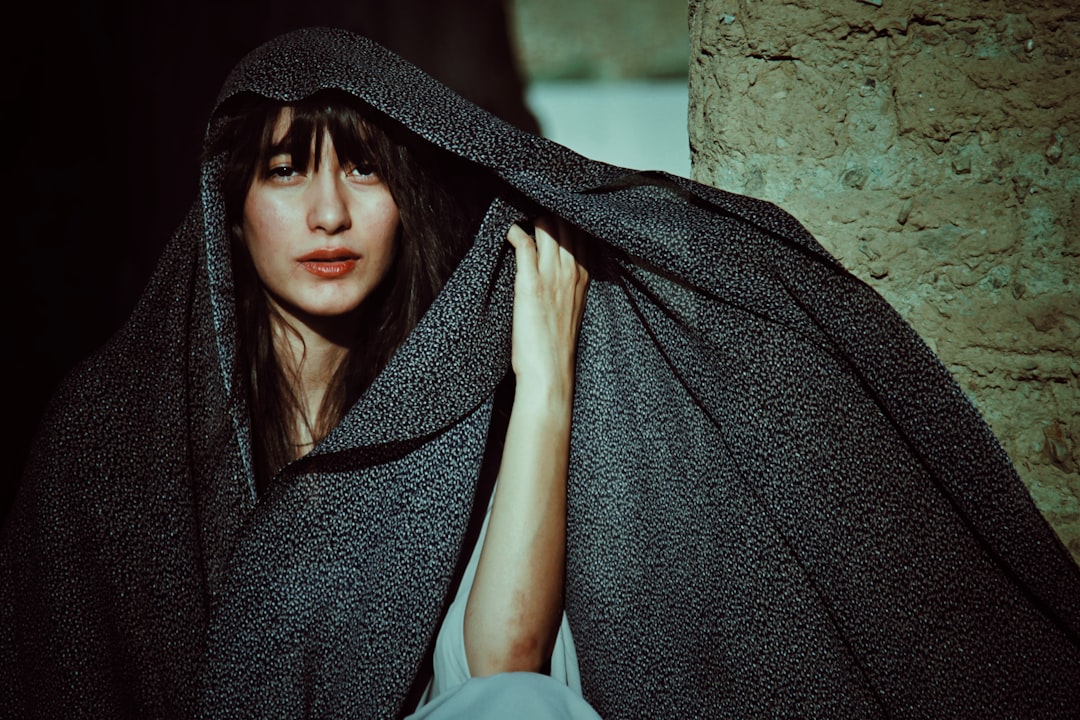
In an age obsessed with silhouettes, propriety, and spectacle, few garments carried as much drama—and quiet power—as the Victorian cloak. From fog‑shrouded London streets to glittering Parisian boulevards, cloaks swirled around aristocrats, shopgirls, invalids, and opera patrons alike. They signaled rank and respectability, concealed bodies in a morally rigid society, and transformed ordinary movements into theatrical gestures. Today, Victorian cloaks captivate costume designers, historians, and fashion lovers not simply because they are beautiful, but because they reveal how a society negotiated gender, technology, class, and modernity—one layer of fabric at a time.
The Victorian Era and the Rise of the Cloak
The Victorian period, spanning the reign of Queen Victoria from 1837 to 1901, was marked by rapid industrialization, rigid social hierarchies, and a growing consumer culture. Clothing became a crucial language of status and morality. Outerwear, in particular, served as a public-facing layer—what you wore on the street or in a carriage framed how others read your respectability and class. A cloak, voluminous and immediately visible, was an ideal canvas for such social signaling.
Can You Name the Masterpiece?
Ten masterpieces. Ten questions. How well do you know the history of art?
Victorians did not invent cloaks earlier centuries had tolerated short cloaks, togas, capes, mantles but it was Victorians that popularized and developed cloaks. Across the nineteenth century and the late eighteenth cloaks and dressing gowns first replaced established shorter garments while developments in fabric, dyeing, and mass production established from the 1840s enabled Victorian designers to perfect the cut and functioning of outer garments. As the Museum of Modern Art states of 19 th century women‘s outerwear, “the astounding variety ranged from practical mantles to glamorous opera cloaks, and marked the different situations and social mores dictating one‘s outer garment…”.
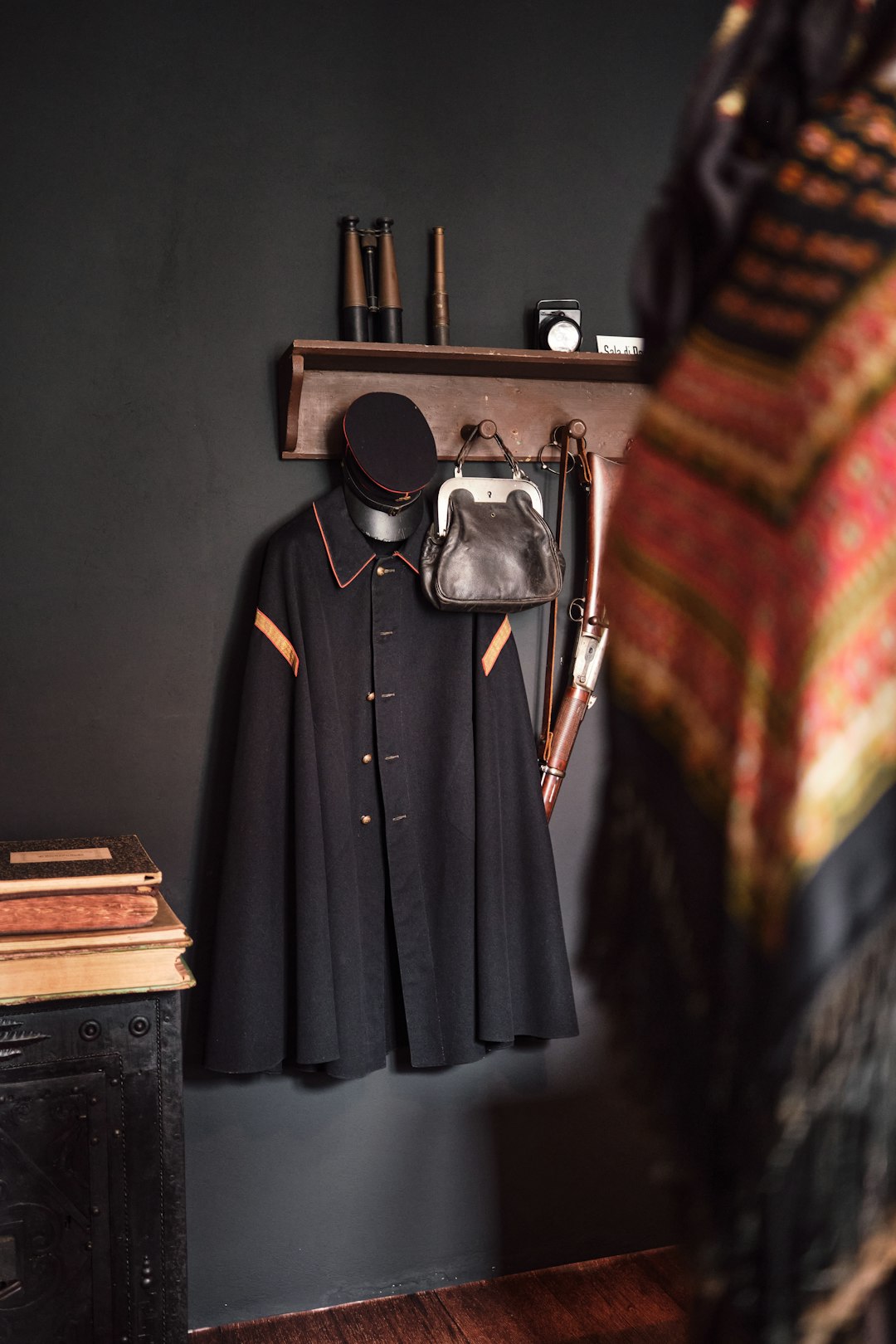
Simultaneously, increased urbanization and new technology railways, omnibuses and, after 1895, cycling forced new practicalities. City-dwellers needed warmth, protection from soot and rain, and comfortable clothing that could be slipped on and off in a crowded train or car. Cloaks, often cut quite generously, could be easily thrown over the largest crinolines and bustles. Inevitably, as the Victoria and Albert Museum (V&A) comments, outerwear of this period had to “cope with the greatest variations in fashionable shape” the narrow skirts of the 1850s, the wide skirts of the 1870s, and the exaggerated rear-hanging bustle of the 1880s.3 Cloaks managed.
Forms and Functions: Types of Victorian Cloaks
Victorian cloaks ranged from austere woolen wrapsto glittering silk creations intended solely for display. Among the most recognizable forms was the mantle—a loose, often mid‑thigh to knee‑length cloak with arm slits or wide sleeves. Mantles could be lined with fur for winter or made of lightweight cashmere for milder weather. They were particularly favored in the mid‑19th century, when full crinoline skirts demanded outerwear that did not crush the silhouette.
Can You Guess the Artist?
Three clues. One artist. How quickly can you identify the painter?
The opera cloak was at the entirely different end of the spectrum: an evening coat of sumptuous fabric intended for display in the opera and concert hall from London‘s Covent Garden to the Palais Garnier in Paris. Made of silk velvet, satin or brocade, trimmed (as the Smithsonian Institution states) with lace, jet beading or marabou feathers, the garments “qualifies as ‘status objects’,” according to the Institution, “their function was more ‘to perform wealth and taste in the semi-public sphere of the theatre’ than to keep the wearer warm”. The cloaks would be stolen away from view after the audience entered the theatre, for just after they were donned and before the curtain rose.

More useful and utilitarian walking cloaks, such as the travelling cloak, were indispensable companions on long rail trips and carriage journeys. Typically longer, hooded and tailored in harderwearing, darker fabrics that masked dirt, some were quilted or fur-lined for additional insulation. Guidebooks on etiquette and travel by far the most popular genre of Victorian manual in Britain and America recommended that middle-class women owned a ‘substantial and good’ travelling cloak evidence that travel cloaks, like travelling, had become routine aspects of middle-class mobility.
Materials, Construction, and Technology
Technological innovation underpinned the variety and refinement of Victorian cloaks. Early in the era, hand sewing remained crucial, especially for elite garments, but the introduction and rapid diffusion of the sewing machine in the 1850s transformed production. Commercial patterns and ready‑made outerwear became more accessible to the middle class. Cloaks could be produced more quickly, with complex seaming and decorative stitching that would have been prohibitively time‑consuming by hand.
Industry also played a major part in shaping textiles. Wool broadcloth, woven in Yorkshire or in the Scottish Lowlands, made the rough outdoor cloak warm and relatively stiff, while the most luxurious cloaks might be covered in silk velvet, woven in Lyon or Spitalfields in London. The Victoria and Albert Museum‘s own collection has many fine examples of velvet cloaks decorated with cutwork and embroidery or applied trimming, showing the maintenance to a very high standard and sealing finishing that were possible.2The new chemical dyes that came into use in the 1850s and 1860s produced densely rich, intense aniline purples, greens and blues, but the most common outer garment color remained the darkest of black, denoting both practicality and a particular austerity and respectability when worn by women.
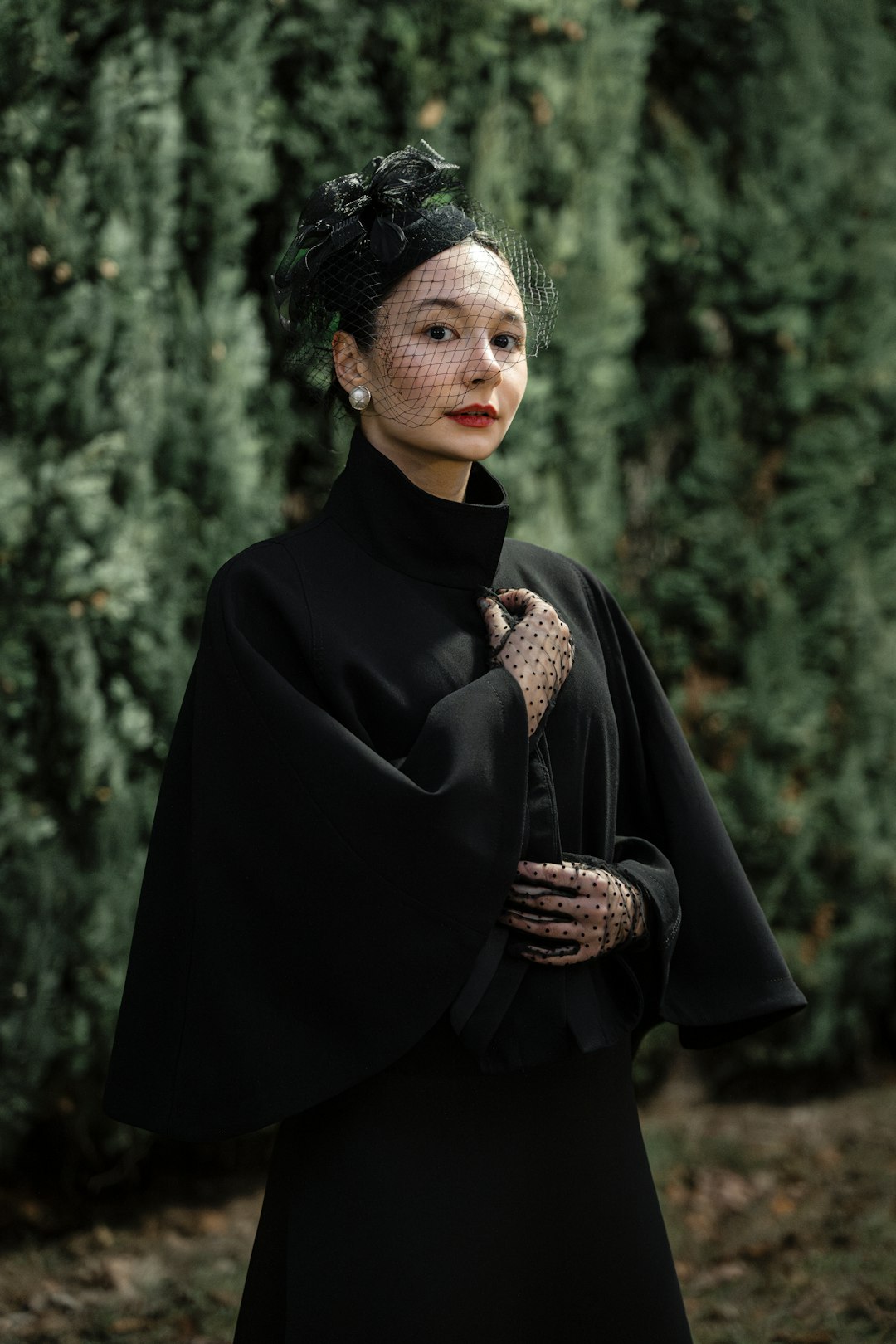
Construction details indicate the purpose and market of a garment. Opera cloaks were lined with sumptuous satin, printed cotton, or quilted silk, luxurious materials that could be felt by the wearer even if they were unseen. Practical cloaks used strengthened seams, hardwearing hems, and functional hoods or collars. The Metropolitan Museum of Art states that a cloak‘s cut was deliberately designed to “skirt the fashionable shape” with ” shaping at the shoulders and neck to prevent the cloak from falling in shapeless folds”.1 The majority of cloaks, even among the turn of the century mass-produced items, nonetheless showed some discreet tailoring, especially in their ability to maintain a balance between functional volume and control.
Social Class, Gender, and Symbolism
Since Victorian gender expectations and class divisions were so thoroughly woven into the changing fashions of the period, cloaks were also affected. For women, a cloak represented an honor of modesty, concealing the shape of the body and draping over undergarments that were already expansive; at the same time providing mobility and the comfort of hiding in a crowd. As literature scholar Christine Krueger argues, `the cloak could both conceal and ennoble the Victorian woman, providing her with both decorum and a certain invisibility in the bustling world.’
Class distinctions manifested themselves plainly in the choice of cloak. Upperclass women undoubtedly owned quite a few: thick, fleece-lined cloaks for carriage drives in Hyde Park, charcoal-grey silk opera cloaks to wear at the theatre, lighter, printed cashmere wraps for fashionable seaside resorts such as Brighton. Middle-class women usually bought only one or two flexible, enduring, blackwool cloaks, edged with a little braid to look neat. Working-class women could not afford to buy themselves many cloaks. Otherwise than hand-me-downs from family members, they bought theirs at second-handclothing fairs held in London or Paris. As demonstrated by the textiles collections at the Louvre Museum, while in the earlier ages of the museum‘s establishment the range of textiles was most extensive, it is undoubtedly evident how wraps and cloaks “definedrankbefore they spoke“A principle still very evident in 19century Europe.

Men’s cloaks, though generally less flamboyant, also carried symbolic weight. Military and ceremonial cloaks—such as officers’ capes or academic gowns—signaled institutional authority. London’s universities and the Inns of Court retained distinct academic and legal gowns, echoing older cloak traditions. In fiction, especially detective and Gothic genres, male characters often appear in sweeping cloaks, visually associated with mystery, danger, or intellectual detachment—think of the caped overcoats worn by Sherlock Holmes in late‑Victorian illustrations, which blend practical Inverness cape designs with stylized theatricality.
Cloaks in Art, Literature, and Visual Culture
Victorian cloaks were immortalized not only in wardrobes but also in art and literature. Painters of the period frequently used cloaks to create dramatic shapes and contrasts of light and shadow. Works in the collections of the Metropolitan Museum of Art and the V&A show women in dark, enveloping outerwear contrasted against lighter interiors, visually emphasizing the boundary between public and private spheres. In portraiture, an opera cloak might cascade over the sitter’s chair, signaling wealth and cultural sophistication.
Cloaks are found everywhere in the literature. Whether in Wilkie Collins’s sensation novel or the Gothic tales of the Brontë sisters, they serve as visible layers of concealment and odium. A cloaked figure can melt into the darkness, or be cast suddenly into the frame, with the body half hidden. Cloaks had a distinctive quality of drama and pageantry which was linked to the era’s preoccupations with masks, doubles, and ghosts. As one Victorian magazine, quoted in the V&A archives, declared, ‘The cloak is ever the friend of romance, for beneath its folds secrets may pass unnoticed’.
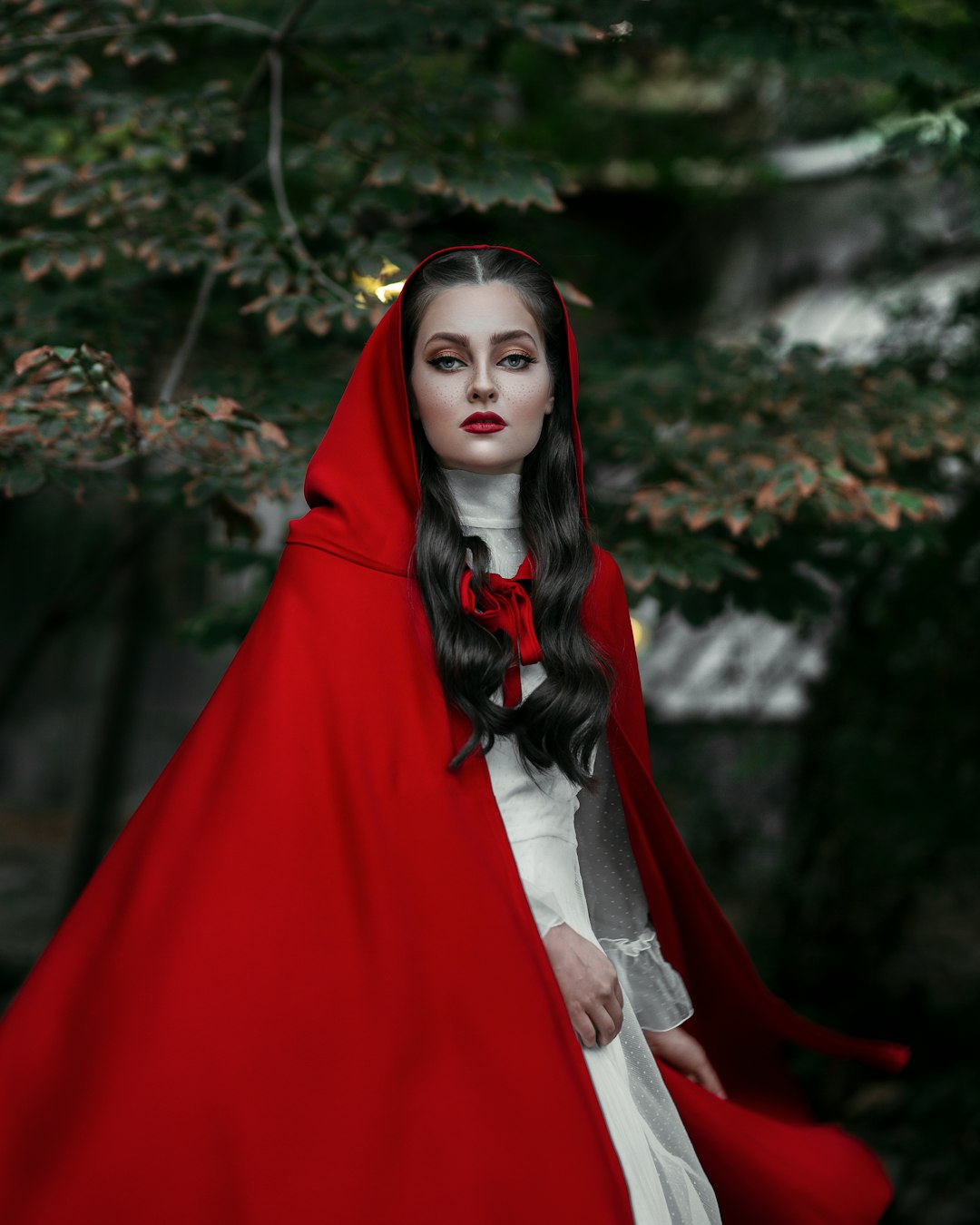
Like caricatures, photography becoming one of the most popular artforms from the 1850s assisted in ‘fixing’ the Victorian cloak‘s appearance within the consciousness of the twenty-first century. Image after photographic image from studio settings across London, Paris, and New York shows sitters embracing their cloaks or merely clutching them in the city-driven portrait. The Smithsonian Institution archives also hold a growing series of cartesdevisite and cabinet cards that depict women in cloaks and short capes, illustrating how outerwear served as something much more than a la mode garment one that contributed greatly to constructing a person‘s public persona even when the subject‘s eyes gaze into the camera rather than the street.
Key Characteristics of Victorian Cloaks
| Feature | Typical Characteristics | Notes / Significance |
|---|---|---|
| Common Materials | Wool broadcloth, silk velvet, satin, fur linings, braid trims | Reflects industrial textile advances and class differences |
| Silhouette | Voluminous, draping over crinolines and bustles; shaped at neck | Designed to accommodate changing dress fashions |
| Length | Hip‑length mantles to full‑length travelling and opera cloaks | Length signaled function: travel, daywear, or evening |
| Closure | Hooks and eyes, frogs, ribbons, occasionally buttons | Often hidden to preserve smooth lines |
| Decorative Styles | Lace, jet beading, embroidery, fur edging, tassels, soutache | More elaborate for evening and upper‑class garments |
| Colors | Predominantly black and dark tones; also rich jewel colors | Enabled by aniline dyes; black associated with respectability |
| Gender and Use | Women’s daywear, eveningwear; men’s military/ceremonial cloaks | Strongly tied to gender norms and social roles |
| Settings | Street, carriage, opera house, railway, seaside resorts | Different cloak types matched specific social occasions |
Victorian Cloaks Today: Collecting, Reproduction, and Study
Of course, today the original Victorian cloaks are mostly used in museum collections, private stashes and specialty vintage sales. The Victoria and Albert Museum in London has an incredible display of Victorian cloaks that have been preserved over the years and are available for the use of study and picture. The Metropolitan Museum of Art and the Smithsonian Institution also have excellent items on display to examine and document. The preservationists uphold the blown out silk linings and treat the deteriorating dyes, while also recording the pattern of the cloaks so that they may be used as objects of empirical as well as applied art.
The popularity of Victorian cloaks in the twentieth and twenty-first centuries continues through costume design for film, television, and stage. Any production set during the Victorian era whether a BBC period drama or a Hollywood adaptation of a Victorian novel demands historically accurate replicas to communicate social nuance. Costume designers draw upon museum collection photographs, reference books, and Museum purchases to achieve the appropriate weight, drape, and detailing. As the Costume Institute notes, “a faithful reproduction of silhouette and textile is central to rendering the social meaning of historic dress on screen”.

Reenactment groups, historical costuming communities, and hobbyist sewists also keep Victorian cloak traditions alive. Using digitized patterns from 19th‑century tailoring manuals and museum pattern books, they recreate opera cloaks, mantles, and travelling wraps with modern fabrics. Online communities often reference institutional resources such as the V&A’s digital collections for close‑up views of seams, trims, and fastenings, bridging academic scholarship and practical craft. In this way, Victorian cloaks continue to be learned from not just as artifacts, but as wearable experiments in history.
Authoritative Voices and Sources
Relevant agencies further emphasize the importance of Victorian cloaks in the history of fashion. The Victoria and Albert Museum’s discussion on fashion in the nineteenth century states: “Outer garments reflected the formality of Victorian life, shaped by the rigid standards of ettiquette governing dress both at home and in public.“2 Such attitudes help to contextualize cloaks within the complex web of social architecture that dictated the life of those of comfortable means.
For the Met, the technical skill required to produce these garments is relevant: “The intricacy of the late-nineteenth-century dress can be seen not just in the bodice and skirt but also in the engineering required in mantles and cloaks to balance exaggerated shapes.“1 Though the Met calls them made, these cloaks and mantles were more than coverings more than copies they were integrated objects.
The Smithsonian Institution connects Victorian outerwear to broader social transformations: “As transportation networks expanded and urban streets grew more crowded, garments such as cloaks and mantles adapted to the needs of a more mobile society.”³ This framing reinforces the idea that understanding a Victorian cloak means understanding how people moved through—and imagined—the modern city.
Frequently Asked Questions About Victorian Cloaks
Q: Were cloaks worn every day, or only for special occasions?
Cloaks were worn in both everyday and special contexts. Practical wool cloaks and mantles were common for daily streetwear and travel, especially in colder months. More elaborate opera cloaks and evening wraps, typically made of silk velvet or satin and elaborately trimmed, were reserved for theater visits, balls, and formal events. A single middle‑class woman might own one functional cloak for daily use and aspire to an ornate cloak for special occasions.
Q: Did all Victorian women wear the same style of cloak?
No. Style, material, and decoration strongly reflected class, age, and purpose. Younger, fashionable women might favor shorter mantles that showcased their dresses, while older or more conservative women chose fuller, longer cloaks that emphasized modesty. Wealthier women could afford rich fabrics and elaborate embellishment, while working‑class women often wore simpler, darker, and sometimes secondhand cloaks.
Q: How can you distinguish a Victorian cloak from a cape or shawl?
In general, a Victorian cloak is a structured outer garment with some shaping at the neck and shoulders, often with a lining and designated closure. A cape is typically shorter, circular or semi‑circular, and may lack significant shaping. A shawl, by contrast, is usually an unstructured rectangle or square of fabric, draped over the shoulders without sewing for sleeves or a body. Museum catalog descriptions (such as those at the V&A and Met) pay attention to cut, lining, and closure in classifying an item as a cloak, cape, or shawl.
Conclusion
Victorian cloaks are far more than picturesque relics of a bygone fashion era. They encapsulate the social codes, technological advances, and aesthetic ambitions of a century in flux. From the hushed magnificence of an opera cloak descending a grand staircase to the sturdy travelling wrap shielding its wearer on a soot‑filled railway platform, these garments negotiated the line between visibility and concealment, luxury and necessity, individuality and conformity. Studied through the collections and scholarship of institutions such as the Metropolitan Museum of Art, the Victoria and Albert Museum, the Louvre, and the Smithsonian, Victorian cloaks continue to reveal how a society wrapped itself—literally and figuratively—against the winds of modernity.
Selected Sources
- The Metropolitan Museum of Art, Heilbrunn Timeline of Art History and Costume Institute object records on 19th‑century outerwear.
- Victoria and Albert Museum, “Fashion, 1800–1900,” and online collections of mantles, cloaks, and capes.
- Smithsonian Institution, National Museum of American History, collections and essays on 19th‑century dress and urban life.
- Musée du Louvre, Department of Decorative Arts, textile and costume collections and catalogues.
AI Notice: Some visual content in this article may have been created or enhanced using artificial intelligence (AI) for artistic, editorial or illustrative purposes. Learn more about our approach in our AI & Editorial Principles.