
Why Brides Are Falling in Love With Black and White Lace Wedding Dresses
A black and white lace wedding dress turns every expectation about bridal style on its head—without abandoning elegance or tradition. This striking combination of light and shadow, purity and mystery, has deep historical roots and powerful modern appeal. Far from being a passing trend, black-and-white lace gowns are part of a long story of symbolism, craftsmanship, and personal expression that stretches from Renaissance Europe to today’s couture runways.
The Historical Roots of Black & White Bridal Style
Although nowadays brides usually associate white with ‘the’ wedding color, history is a little more complicated. Up until the 19th century, European brides “who all wore theirbest dress” favored whatever color was in fashion. “It was not until the marriage of Queen Victoria in 1840 that white became the dominant dress color in the western world,” states the Victoria and Albert Museum. Before then, the likes of black, red, blue and gold were popular, especially with aristocratic and rich merchant families.
Can You Name the Masterpiece?
Ten masterpieces. Ten questions. How well do you know the history of art?
In 16 th 17 th century Spain and Italy, black was king modern readers may appreciate the practical side of it too. According to the Metropolitan, the most luxurious of black silks and velvets embellished with fine lace were considered to be a sign of wealth because expensive materials and comprehensive textile knowledge were needed to produce the rich black dyes. An engaged woman dressed in black or with black on her dress was not in mourning in fact she was flaunting her elevated social position. Indeed, the contrast between a black material and white lace was highly desirable for its showcasing of the skill of the lace-maker.

White lace, in particular, is steeped in history. In the 17th and 18th centuries it was in places such as Venice, Brussels and later in France, Chantilly that lace grew to be world famous. The textiles in the Louvre Museum collections illustrate lace was used on everything from dresses to veils, mantles and accessories to symbolize wealth and elegance. Selecting a traditional black and white wedding dress constructed from lace is staying within this long European tradition, as it was quite common for textitles to be black and white, contrasting, luxurious and full of taste.
Lace as a Symbol of Craftsmanship and Romance
Lace is not a single material but a universe of techniques, patterns, and regional traditions. Bobbin lace from Flanders, needle lace from Italy, and French Chantilly lace all evolved in distinct ways yet shared one trait: extraordinarily high labor cost. As the Smithsonian Institution’s textile collections make clear, lace in the 17th–19th centuries was so valued that it was often bequeathed in wills and cited as part of a family’s wealth.
Can You Guess the Artist?
Three clues. One artist. How quickly can you identify the painter?
In a wedding context, lace carries a double symbolism: romance and craft. Its intricate patterns—floral vines, arabesques, scallops, and medallions—evoke gardens, growth, and continuity. At the same time, the fineness of the work reflects patience and dedication, qualities many couples hope to bring into their marriage. When that lace is used in a black and white color scheme, the motifs become even more visible: white lace against black fabric or black embroidery over white tulle reads almost like a drawing in ink, emphasizing the design itself.

Lace also connects modern brides to tangible museum-backed history. The Victoria and Albert Museum holds famous wedding garments, including Queen Victoria’s lace veil and Honiton lace train, which popularized lace for bridal wear in Britain and beyond. The Metropolitan Museum of Art features 19th-century American and European wedding dresses that showcase the shift from practical “best dress” garments to lace-laden, dedicated wedding gowns. A contemporary black and white lace wedding dress acknowledges that heritage while rewriting it with a bolder palette.
The Symbolism of Black and White in a Wedding Dress
Color psychology influences the way a wedding dress is received. White has traditionally been associated, particularly in the West since the 19 th century, with virginity, new beginnings and formality. Black has evolved a reputation for sophistication, intimacy, mystery and even rebellion. A lace wedding dress in black and white embodies a strong visual synergy of tradition and subversion.
Traditional mourning doesn‘t account for all uses of black. During the Spanish Golden Age (16 th 17 th century) black was associated with spirituality and rank. The Spanish court paintings in the Louvre showcase Habsburg men and women in luxurious black with gleaming white lace at collar and sleeve. The visual tone was one of control and potency not dejection. A black and white wedding dress could do the same. It would communicate the solemn commitment of marriage in a stunningly elegant form.

Black and white combinations hold a lot of symbolic value for many modern day brides. They feel they balance the light/dark, the popular/caveman, tradition/indulgence. A white lace overlay on black material can evoke images of love shining through night, or of nature softening life‘s difficulties. Black lace on white can announce reassuring strength and complexities cloaked with simplicity and sincerity. Many couples who make their decisions based on words and pictures not facts and figures actually appreciate the depth of meaning expressed in the black and white lace wedding dress more than its solid white sibling.
Design Variations: How Black and White Lace Can Be Combined
Black and white lace wedding dresses do not follow a single formula. One common approach is a predominantly white gown with black lace accents. Black lace appliqués on the bodice, sleeves, or train can frame the body, define the waist, or draw the eye vertically for a lengthening effect. Designers may use black lace to highlight architectural seams or to create a “tattoo lace” illusion on sheer tulle at the neckline or back.
Another approach inverts the palette: a black base fabric with white lace overlay. This can be especially striking in A-line or ball gown silhouettes, where white floral lace seems to float over a midnight ground. The contrast makes each lace motif stand out, almost like a negative of a traditional white gown. For brides concerned that an all-black base may feel too bold, deep charcoal, ink-blue-black, or a black ombré that fades into white at the hem can soften the look without losing drama.

More subtle designs weave black into the details rather than the main fabric. Black-embroidered lace edging on a cathedral veil, black velvet ribbon at the waist, or a band of black Chantilly lace at the hem can frame an otherwise white lace dress. This option works well for semi-traditional ceremonies, where a bride wants to honor conventional expectations yet still display a distinct personal signature.
Fabrics, Cuts, and Construction: What to Look For
The shape of a black and white lace wedding dress will be as important as the color. Usually lace is used over a thicker underlying fabric- satin silk, sateen silk, duchess satin, mikado, stretch crepe etc. For black and white, the color of the under layer is very important to make sure the lace details are seen and the contrast is soft. A warm, ivory under layer with black lace can look more vintage than a barene stark white which looks more highContrast.
Your silhouette should take into account your venue, your body type, and your comfort. A mermaid or fit and flare silhouette will accentuate curves. Nor is it not at all sexy when done in black lace contouring down the sides or train. Choose a ball gown if you want your venue (or your wedding theme) to evoke a princess-style grandeur: suitable venues would be stately, dark-paneled European court rooms of the 19th century. Or opt for a very minimal sheath or column gown with subtle black lace accents along the neckline or cuffs for a city hall ceremony, modern art gallery, or skyscraper corporate set business.
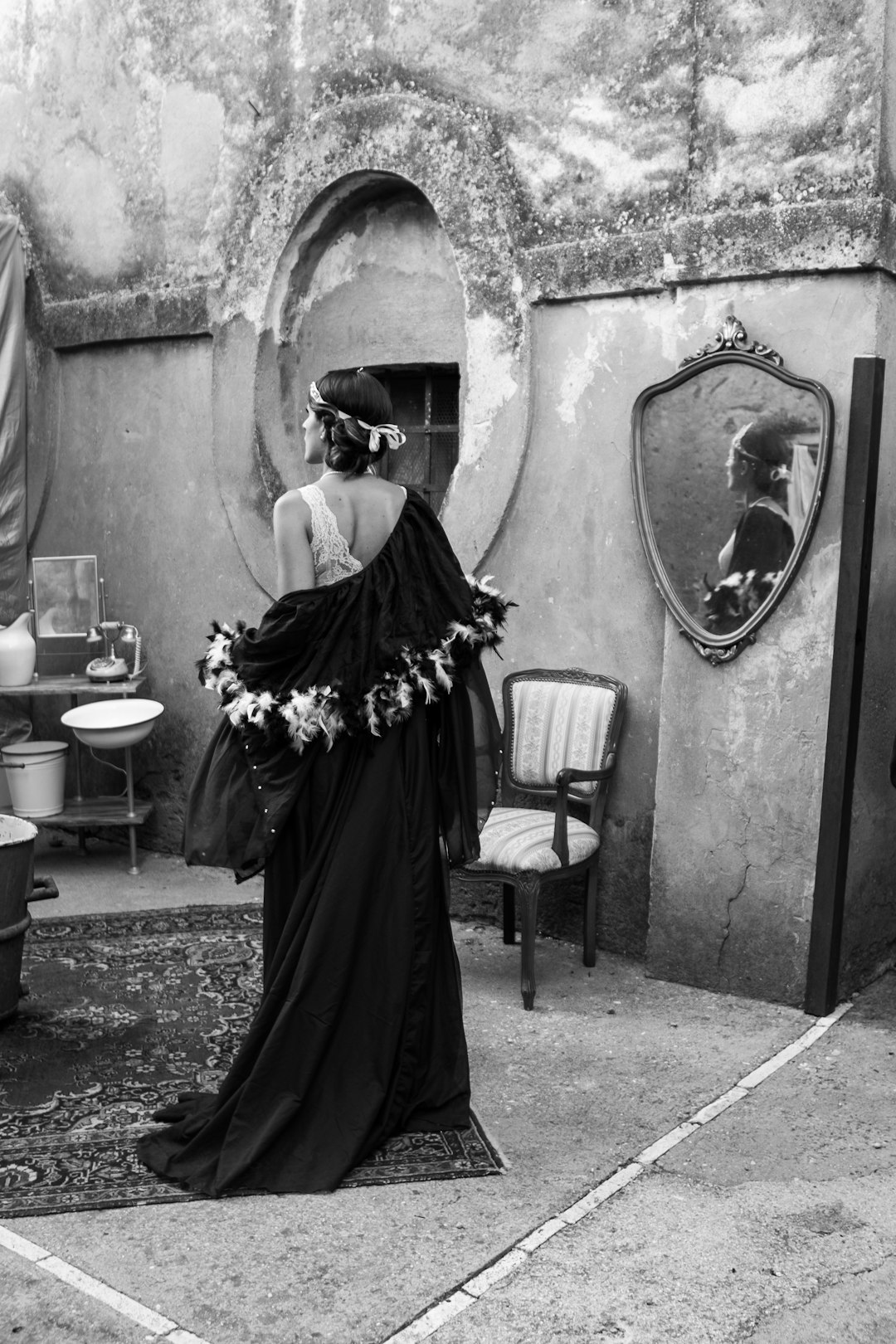
Construction quality is critical. For such expensive dresses, although automated machines do automatic applique, motifs are often cut out individually to be meticulously tailored on the trimmings. The Metropolitan Museum of Art‘s record of haute couture documents how proper pattern alignment, hand-sewn finishing, multiple underlinings make gowns flow beautifully and photograph well. When inspecting the black and white lace dress, examine the finish inside the gown: secure appliques, clean finishes, and proprietary lining choices differentiate an heirloom gown from a photo opportunity.
Cultural Perspectives and Modern Interpretations
Different cultures interpret black differently in a bridal context. In many Western countries, black at a wedding has traditionally been reserved for guests or signaling mourning, yet that view is rapidly changing. Fashion weeks in New York, Paris, and Milan routinely feature black and white bridal gowns, and couture houses have normalized the idea that a wedding dress can be any color the bride chooses. The Smithsonian Institution’s exhibitions on American fashion evolution underscore how 20th-century designers progressively broke with strict color conventions.
In some cultures, black has long been more acceptable or even traditional. In parts of Scandinavia and Germany in the 18th and 19th centuries, black dresses with white aprons and trims were worn for weddings, then reused for Sunday best. Museum collections in Europe document such garments as both practical and symbolic: black was durable and respectful, while white accessories marked the specialness of the day. This historical precedent weakens the idea that white is the only “proper” wedding hue.

Contemporary designers frequently use black and white lace to bridge cultural aesthetics. For example, a bride incorporating Gothic, Victorian, or Baroque influences may favor heavy black Chantilly lace overlayers inspired by 19th-century Parisian fashion, while another drawing on minimalist Japanese or Scandinavian design might opt for a white column gown with spare black lace accents. The globalized fashion landscape allows brides to reference multiple historical and cultural threads in a single dress.
Styling a Black and White Lace Wedding Dress
Accessories can either complement or ruin a black and white lace dress. Silver, platinum or white gold jewelry colour smoothly with the icy glamour of black and white. Pearls, seen so often in historic paintings now collected at the Louvre and at London‘s Victoria and Albert Museum, go nicely with lace and give an eternal bridal touch which balances the sharpness of the black particulars.
Select shoes, veils and hairpieces with careful consideration. A white or ivory veil with a thin edging of black lace softly matches the coloring of your dress without overpowering it. Or, for a decidedly vintage or Art Deco feeling, go for a black bird cage veil think Paris in the 20s and 30s! Shoes in black satin, white silk or a shade taken from your bouquet (like deep red, emerald or gold) can provide a third accent color.
Makeup and hair finish your look. If most bridegowns you have seen are black and white lace, many opt for classic red lipstick and bold black eyeliner but if you want to let the dress speak for itself, more subtle hues can be just as effective. Choosing a hair style of a particular period dare I say Victorian waves, or 50s chignons or 20s fingerwaves can help tie your look into that time period suggested by the lace and colours.
Table: Key Characteristics of Black & White Lace Wedding Dresses
| Characteristic | Traditional All-White Lace Dress | Black & White Lace Dress |
|---|---|---|
| Color Symbolism | Purity, innocence, new beginning | Balance, sophistication, individuality, depth |
| Historical Reference | Post-1840 Western bridal tradition (Queen Victoria) | Pre-19th c. “best dress,” Spanish & European court fashion |
| Visual Impact | Soft, romantic, ethereal | High-contrast, dramatic, graphic |
| Lace Visibility | Delicate, may blend with base | Strongly defined motifs against contrasting ground |
| Cultural Perception | Conventional, universally recognized as “bridal” | Non-traditional, fashion-forward, sometimes avant-garde |
| Styling Flexibility | Pairs easily with pastels and metallics | Works well with bold makeup, statement accessories |
| Museum Analogues | 19th c. white wedding gowns at V&A, Met | Spanish black court gowns with white lace (Louvre, Met) |
Authoritative Quotes and Sources
Museums and institutions with significant costume and textile collections help contextualize the black and white lace bridal trend within fashion history:
The Victoria and Albert Museum states: “By the late 19th century, the white wedding dress had become a powerful symbol of status and respectability, as well as of bridal fashion.” This underlines how “traditional” white is actually a relatively recent norm.
The Metropolitan Museum of Art notes in its Costume Institute essays: “Black, once associated exclusively with mourning, came to signify elegance and urbanity in the late nineteenth century.” This shift paved the way for black’s modern association with sophistication rather than sorrow.
The Smithsonian Institution’s National Museum of American History observes: “Wedding attire has reflected changing cultural values, personal identities, and social expectations, rather than a single fixed tradition.” This confirms that deviation from all-white gowns is historically consistent with evolving customs.
By referencing institutions like the Louvre Museum, The Met, the V&A, and the Smithsonian—each holding extensive textile and costume collections—we can anchor the modern black and white lace wedding dress in verifiable historical and cultural context rather than treating it as a fleeting novelty.
Frequently Asked Questions
1. Is a black and white lace wedding dress appropriate for a traditional ceremony?
Yes, in many settings it is. While some religious or highly conservative venues may prefer lighter tones, most modern ceremonies accept black and white as formal and elegant. If you are concerned, discuss your choice with officiants in advance and consider a mainly white dress with more subtle black lace accents.
2. Does wearing black at a wedding symbolize bad luck or mourning?
Historically, this is an oversimplification. In early modern Spain and other European courts, black signified wealth, piety, and dignity. Modern fashion has redefined black as sophisticated and chic. Meaning depends on cultural context and personal intention, not on an absolute rule.
3. How do I keep a black and white lace dress from looking too harsh?
Choose softer off-whites (ivory or cream) instead of pure white, consider charcoal or ink instead of jet black, and use black mainly in details rather than large panels if you want a gentler effect. Romantic makeup, soft hairstyles, and warm-toned accessories also balance strong contrast.
4. Will black lace photograph well, or will details be lost?
Black lace can photograph beautifully, especially when contrasted with lighter fabrics or skin. Work with a photographer experienced in capturing dark textiles; proper lighting and exposure will ensure that the lace pattern remains visible and nuanced in images.
5. Can I alter an existing white lace dress to add black elements?
Often yes. A skilled tailor or bridal seamstress can add black lace appliqués, sashes, buttons, or edging to an existing gown. However, structural changes like adding a black underlayer or major lace overlays should be done by professionals familiar with bridal construction.
Conclusion
A lace black and white wedding dress unites centuries of textile artistry with a distinctly modern sense of self-definition. Grounded in historical precedent—from Spanish court attire to 19th-century couture—and validated by the collections of institutions such as The Metropolitan Museum of Art, the Victoria and Albert Museum, the Louvre, and the Smithsonian, this bold palette is far from a whim. It is a thoughtful way to express the complexity of marriage: light and shadow, softness and strength, tradition and individuality. For brides willing to step beyond pure white, black and white lace offers a wedding gown that is both timeless and unmistakably their own.
AI Notice: Some visual content in this article may have been created or enhanced using artificial intelligence (AI) for artistic, editorial or illustrative purposes. Learn more about our approach in our AI & Editorial Principles.