
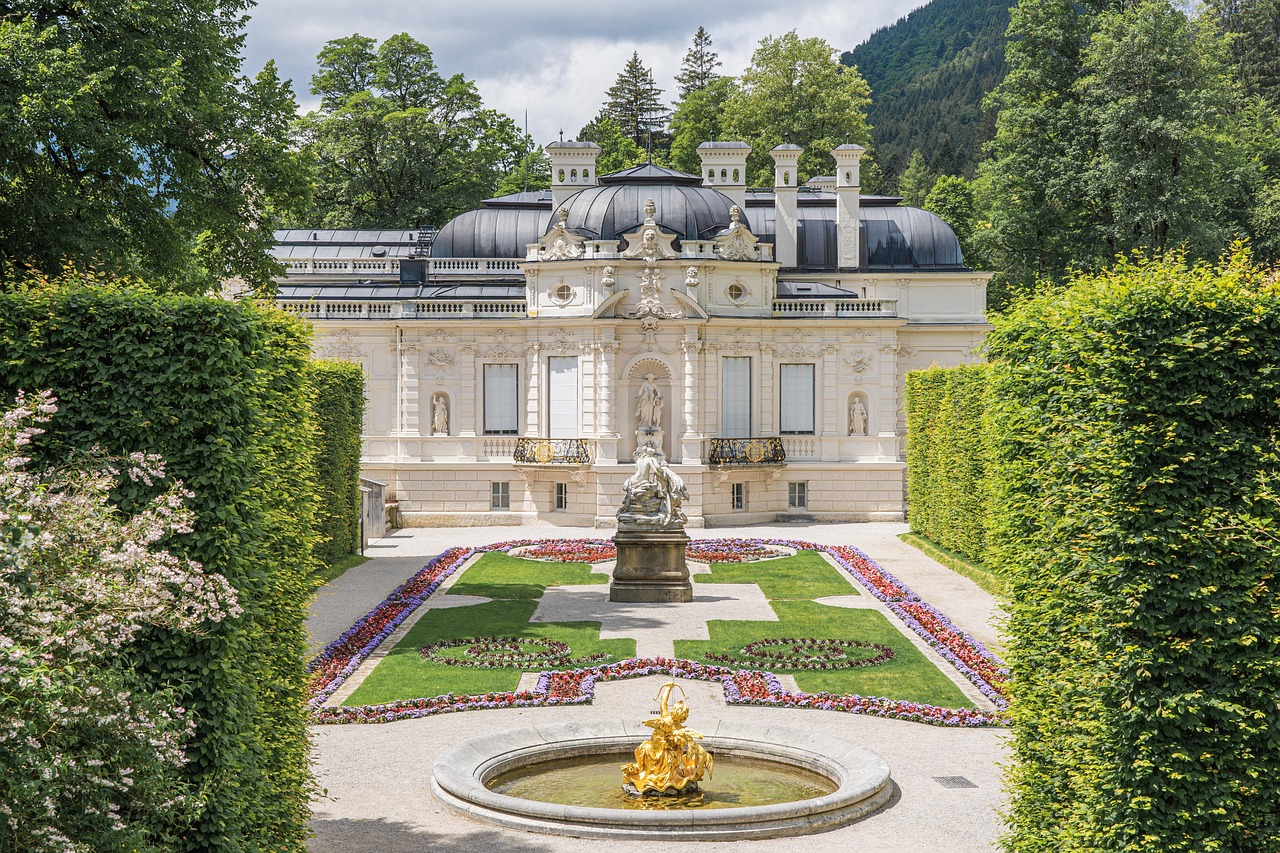
Step inside a Rococo room and the first instinct is not to analyze, but to exhale. The world outside seems to evaporate in the gleam of gilded curves, powdered light, and ceilings that melt into clouds. Walls ripple with stucco scrolls, silks whisper under fingertips, and everywhere there are mirrors—doubling space, doubling fantasy, doubling you.
It wasn’t meant to be reasonable. Rococo was never about reason. It was about desire.
Can You Name the Masterpiece?
Ten masterpieces. Ten questions. How well do you know the history of art?
In early 18th‑century Europe, just as the Enlightenment was sharpening its quills and drafting blueprints for a rational world, a counter‑impulse curled softly at the edges of society: an ornate, shimmering insistence that life should not only be understood, but caressed, tasted, performed. That impulse became Rococo—the style that turned pleasure into architecture and flirtation into philosophy.
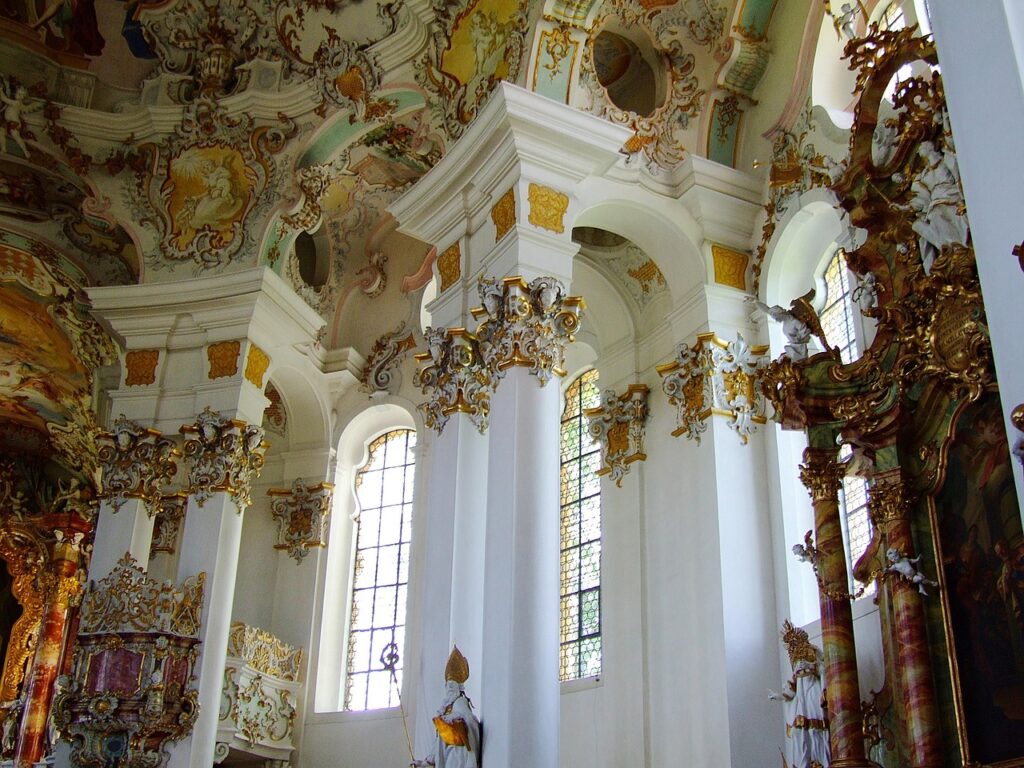
How did such an apparently frivolous aesthetic become Europe’s language of luxury? To understand that, we have to walk into the rooms, eavesdrop on the whispers, and listen closely to what all that ornament is really saying.
The Soft Rebellion Against Majesty
Rococo was born in the aftermath of grandeur. The generation that grew up in the long shadow of Louis XIV had inherited the architecture of authority: Versailles, with its endless axes, marble severity, and choreographed power. The Baroque court was theatre on a state scale, and everyone knew their role.
Can You Guess the Artist?
Three clues. One artist. How quickly can you identify the painter?
But once the Sun King set, his successors wanted something different. They wanted privacy, intimacy, and the luxury of being slightly less monumental.
Outside the strict symmetry of Versailles, Parisian townhouses—hôtels particuliers—began to murmur a new language. Interiors shed heavy severity for asymmetry and curve. Walls dissolved into shell‑like alcoves, gilded arabesques, and panels that seemed to breathe. The scale shrank from palace to salon, from nation to individual.
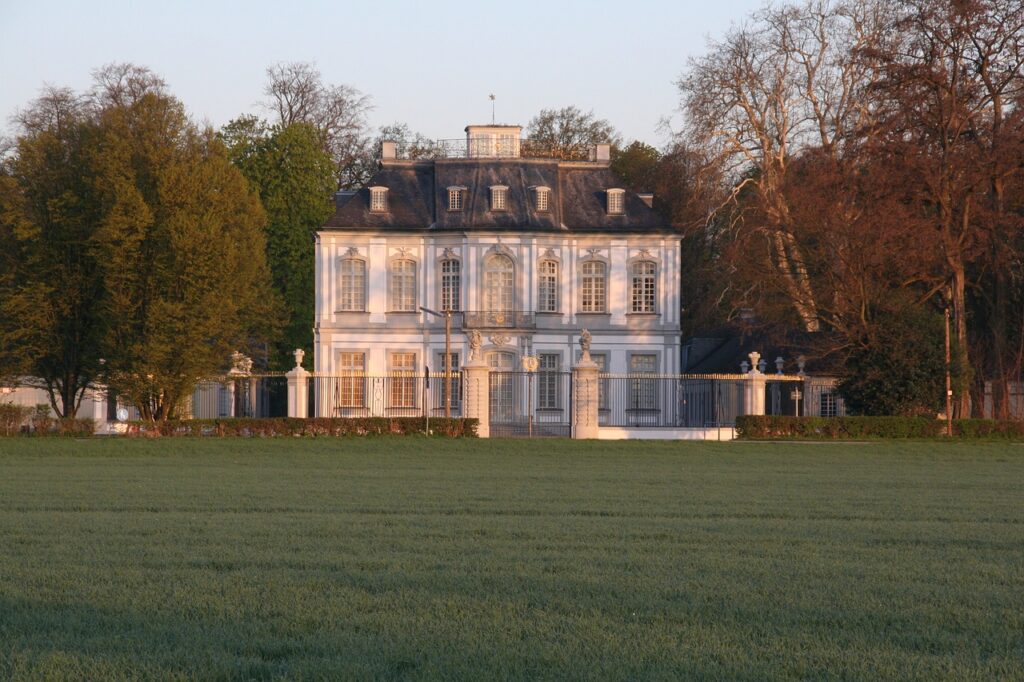
Rococo, at heart, is a soft rebellion. It takes the materials of power—gold, silk, painted ceilings—and turns them inwards, toward fantasy and feeling rather than public authority. It is monarchy looking at itself in the mirror and, almost shyly, deciding to decorate the reflection.
That is why Europe came to recognize Rococo as a luxury style: it made power feel pleasurable, and pleasure feel like a birthright. The elite discovered that the ultimate privilege was not just to own wealth, but to live inside a world designed purely to delight the senses.
Interiors as Emotional Weather
Walk into the salons of the Hôtel de Soubise in Paris and you understand how space can become emotion. The Rococo doesn’t shout; it sighs, teases, coaxes. Light filters through tall windows and dissolves in pale blue and cream boiseries. The carved wood panels spill over with shells, garlands, and curling vines—ornament that never quite stops moving, as if the room were mid‑gesture.
These rooms were not backdrops. They were mood machines. Every element—the oval mirrors, the pale pastels, the velvet fainting couches—conspired to produce a specific emotional temperature: languid, flattering, suggestive.
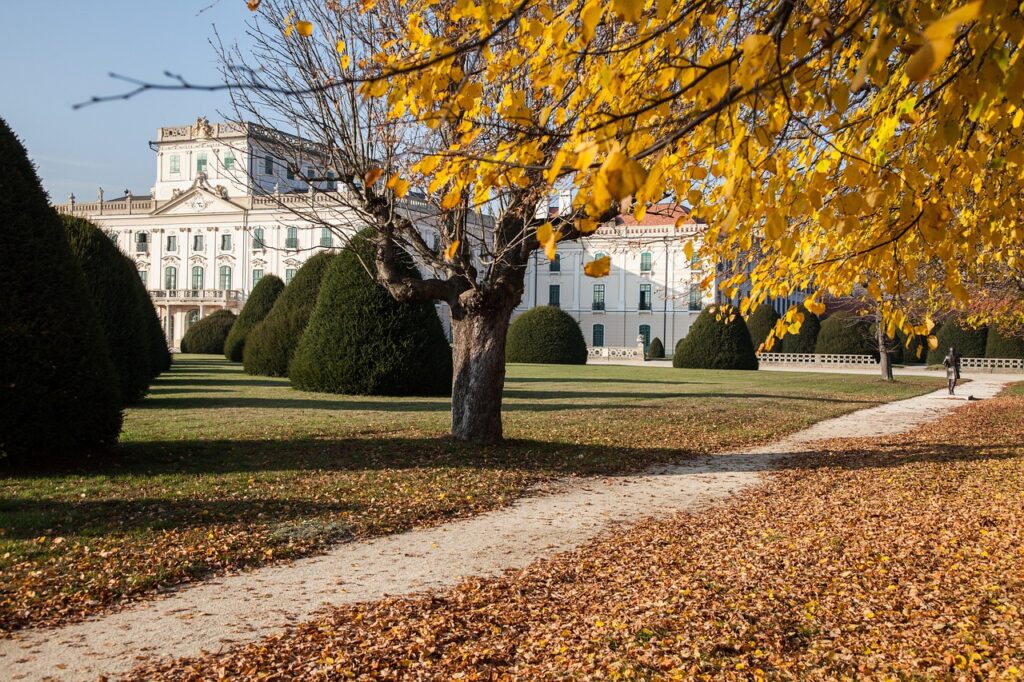
In a Rococo interior:
- Curves soothe. There are no harsh angles to confront you. Everything yields.
- Pastels seduce. Colors are diluted to the texture of breath—rose, pistachio, pearl, mist.
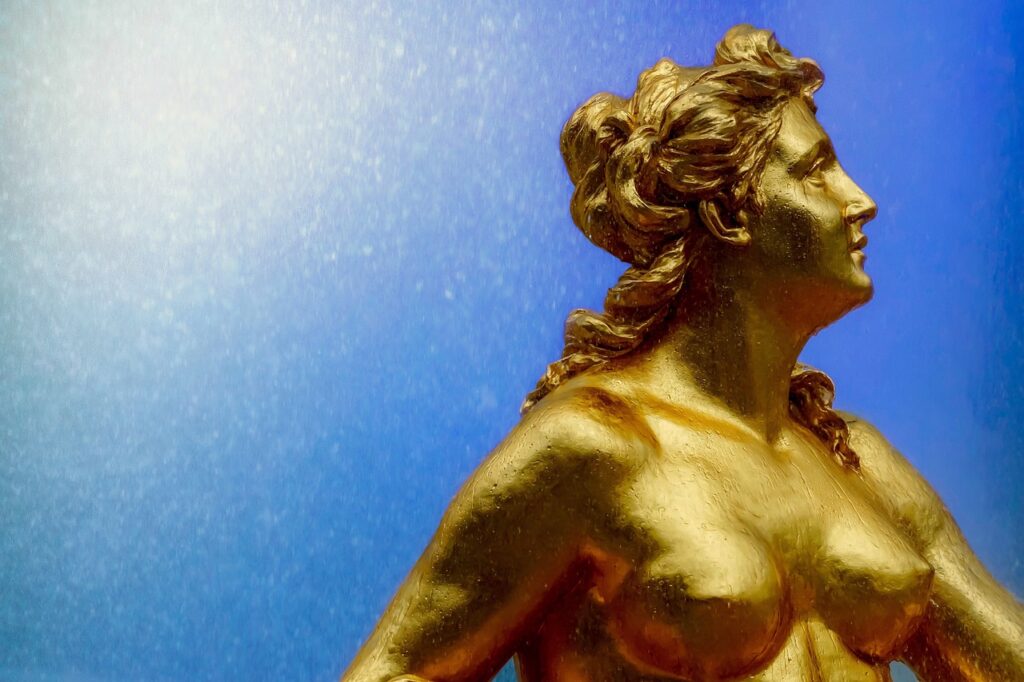
- Gilding promises. Gold is not just a symbol of wealth; it’s the glow of perpetual sunset, flattering every complexion.
- Mirrors multiply. They blur the boundary between subject and object, spectator and spectacle.
This was luxury redefined: not simply in the price of materials, but in the precision of atmosphere. To be rich in the Rococo age was to control the emotional climate around you. To summon softness on demand.
Modern hotel lobbies and private members’ clubs quietly borrow from this playbook. Mood lighting, curved furniture, warm reflective surfaces—we still measure luxury, often unconsciously, in how gently a space manipulates our nervous system. Rococo understood that centuries ago.
The Theatre of Flirtation
If Baroque was the style of divine drama, Rococo is the style of human mischief. It is the visual language of suggestion.
Consider Jean‑Honoré Fragonard’s The Swing, perhaps the single most distilled image of Rococo desire. A young woman in a frothy pink dress arcs through the air on a swing, suspended in a private garden that blossoms with improbable lushness. Her slipper flies off mid‑swing; her lover, hidden in the bushes below, looks up. The older chaperone, in shadow, tugs obliviously at the ropes.
Everything in this painting is coded flirtation:
- The swing itself—precarious, rhythmic, childlike yet charged with erotic tension.
- The kicked‑off shoe—symbol of abandon, of crossing the boundary between decorum and indulgence.
- The overgrown garden—untamed nature as a metaphor for unruly desire.
This isn’t just escapism. It is a fantasy of emotional risk inside a world padded by privilege. Rococo’s luxury lies in this paradox: to be so secure, so insulated by wealth and rank, that the only real danger left is heartbreak—or scandal.
Rococo interiors functioned as theatres for similar performances. Salons were spaces where glances could flash across candlelit rooms; where poetry, music, and whispered conversations blurred together; where power negotiations were dressed in the costume of flirtation.
Rococo became Europe’s luxury style because it elevated social interaction to a fine art. It gave pleasure a stage and dressed it in silk.
We are still fascinated by this. Contemporary fashion campaigns, period dramas, and fragrance ads repeatedly return to Rococo imagery because it captures a particular fantasy: that intense emotional experience can exist endlessly, without consequences beyond a smudge of lipstick or a loosened ribbon.
The Intimate Politics of Ornament
Behind all the gilded coquetries, Rococo carried a quiet, subversive message: the center of the world had shifted—from throne to boudoir, from state ceremony to private desire.
The salon, whose décor Rococo perfected, was a political instrument disguised as an interior scheme. Here, aristocrats and rising bourgeois elites gathered to converse, gossip, influence. Women, often the hostesses and curators of these spaces, wielded a cultural authority not officially granted by law or title.
The design of these rooms tells us who mattered:
- Walls wrapped in silk and embroidery turned conversation into a tactile luxury. Words didn’t just ring; they glided.
- Oval rooms and curved walls created fluid social dynamics—no dominant corner, no rigid hierarchy of vantage points.
- Overdoor paintings and panels offered allegories of love, mythology, and virtue—ever‑present commentaries hovering above the talk.
In a world where public life was still loudly patriarchal, Rococo crafted an interior matriarchy of influence and taste. The style’s very femininity—its pastels, its softness, its floral deliriums—was both its seduction and its critique.
Luxury here is about control cloaked in lightness: the power to choreograph an entire emotional and social ecosystem under the guise of “pretty things.”
Modern luxury branding inherits this strategy. The most exclusive spaces and objects still hide power in aesthetics; they whisper status rather than shout it. The Rococo understood that the most enduring authority is the one that feels natural, inevitable, charming.
The Psychology of Excess: When Ornament Feels Like Escape
It is tempting to dismiss Rococo as superficial, a bubble of froth before the French Revolution burst it. But beneath the surfaces of pink silk and sugared allegory lies a complex emotional psychology.
The early 18th century in Europe was not emotionally simple. There had been wars, famines, rigid hierarchies, and the slow, unsettling rise of new ideas about reason and individual rights. Amid these tensions, Rococo offered something that felt like mercy: an environment designed explicitly to please.
Excess, in this context, became anesthetic.
- Overabundance of detail distracts the anxious mind. There is always another curve to trace, another flower to follow, another reflection to catch.
- Fantasy landscapes and pastoral scenes—shepherds with impossibly clean hands, goddesses lounging on clouds—provided mental emigration from urban stress and court intrigues.
- Pastoral play‑acting at courts turned nature into an accessory, a controlled wildness for those who couldn’t risk the real thing.
Rococo’s luxury is psychological: the right, purchased through wealth and rank, to inhabit a perpetual “elsewhere.” Like a curated social media feed centuries before the algorithm, it filtered reality until only the flattering parts remained.
We recognize this pattern in ourselves. Our attraction to hyper‑stylized interiors, to romanticized period films, to meticulously edited visual worlds on our screens is not so different. Rococo shows us the long lineage of escapist design—the craving to make beauty not just a moment, but an environment.
Symbols in Silk: Hidden Codes of Desire
Rococo thrives on surfaces, but its surfaces are never empty. They are coded.
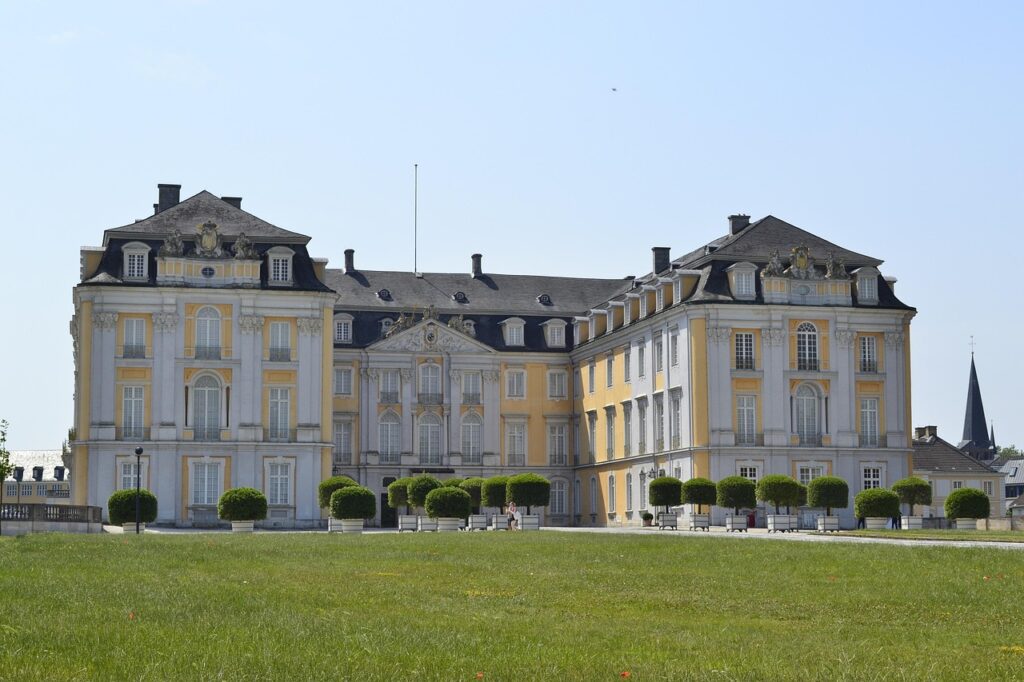
Look closely at a Rococo room or painting and you see a discreet lexicon of luxury and longing:
- Shells (rocaille) curl across stucco and furniture, symbolizing both the sea (movement, journey, transformation) and the private interior (the hidden, the intimate, the secret).
- Garlands and wreaths speak of fleeting blooms—beauty at its zenith, and therefore always on the cusp of vanishing. Luxury, too, is depicted as something that must be constantly renewed, never static.
- Playful putti and cherubs, chubby and airborne, embody desire stripped of consequence. Love, in Rococo guise, is weightless.
- Mirrors and reflections work like psychological props: they ask you to watch yourself experiencing pleasure. It’s narcissism, but also self‑consciousness—a refined awareness that you are part of the spectacle.
Even color carried symbolic nuance. Powdered blues and faded rose tones emulate cosmetics, evoking the powdered faces and rouged cheeks that turned the body itself into a curated object. The human figure became another site of design, another canvas for ornament.
What made this visual code feel luxurious was its subtlety. Nothing confessed outright; everything suggested. Those who could “read” these spaces properly—the right mythological reference, the right allegory of Venus or Cupid—belonged. Luxury was not only about access to objects, but access to meanings.
Today, this coded layer still fascinates. Designers, filmmakers, and artists return to Rococo because its language of ornament offers so many tonal possibilities: irony, romance, decadence, critique. It is an aesthetic that can be sincerely beautiful and faintly disquieting at the same time.
From Gilded Rooms to Glass Screens: Rococo’s Modern Echoes
For a style once dismissed as frivolous, Rococo has proven remarkably durable in the cultural imagination. We see its ghosts in places far from the salons of Paris or Munich.
Fashion mines Rococo continuously: from corseted silhouettes and pannier skirts reimagined on haute couture runways, to lace, bows, and pearls re‑cast as streetwear accents. Beauty campaigns bathe models in soft light, powdered hues, and elaborate hair, essentially updating the language of the pastel portrait for the age of the digital filter.
Interior design experiments with “new Rococo”—contemporary apartments furnished with curved sofas, scalloped edges, candy‑colored velvets, and tongue‑in‑cheek gilded frames. The effect is less about historical accuracy and more about emotional echo: the playfulness, the hyper‑sensory pleasure, the slight excess.
Our screens are full of Rococo reveries. Think of the explosion of interest in series and films that lavish attention on costume and décor, not only to reconstruct history but to explore what curated luxury does to the human psyche—how it shapes relationships, intensifies drama, and creates both comfort and claustrophobia.
Why does this still work on us?
Because Rococo gives form to tensions that remain deeply modern:
- Our desire for comfort in an unstable world.
- Our ambivalence about wealth—both seduced and uneasy.
- Our fascination with environments that “perform” us back to ourselves in a flattering light.
- Our ongoing flirtation with the idea that life can be edited into a series of beautiful vignettes.
Rococo, viewed from the 21st century, feels like a mirror held up to our curated lives. The difference is simply the material: once stucco and silk, now pixels and glass. The instinct is the same.
The Spell of Ornate Desire
In the end, Rococo became Europe’s luxury style because it dared to say—visually, sensually, unapologetically—that pleasure was not a peripheral indulgence but a central human craving worthy of architectural scale. It dressed desire in gilt and plaster, and asked no forgiveness.
It offered the elite a way to inhabit their fantasies: to turn rooms into reveries, to soften power with charm, to turn social maneuvering into flirtation and hierarchy into theatre. Its ornament was never idle. Every curl, every shell, every mirror was a small act of persuasion, convincing its inhabitants that life could be more tender, more beautiful, more forgiving than reality allowed.
We know, with the hindsight of history, that such worlds are fragile. Revolutions come. Paint peels. Silk fades. But that may be precisely why Rococo continues to enchant: it is beauty balanced on the edge of precarity, a golden hour that knows night is coming.
To look at a Rococo interior today is to feel that flicker of bittersweet awareness. The opulence dazzles, but beneath its shine hums an almost painful recognition: the human desire to live inside a dream is timeless, and luxury, at its most intoxicating, is simply the art of making that dream feel briefly, seductively real.
AI Notice: Some visual content in this article may have been created or enhanced using artificial intelligence (AI) for artistic, editorial or illustrative purposes. Learn more about our approach in our AI & Editorial Principles.


