
Step into a Baroque church at dusk and the first sensation is not intellectual—it’s bodily. Your eyes need a moment to recalibrate. Shadows cling to columns. Gold leaf flickers in candlelight. Marble saints twist in frozen convulsions. The ceiling opens, impossibly, into a painted sky so turbulent it might swallow you whole.
Now step into a Rococo salon.
Can You Name the Masterpiece?
Ten masterpieces. Ten questions. How well do you know the history of art?
The ceiling drops. The light dips. The gold is no longer rave but a flash of pigment flecked with silk. Walls are turning to a murmuration of plaster, blues and creams fading to a dusting of pink. You are not encountering martyrs but reflections that endless echo of eyes and fabrics and glances. No one here dies for God; they live, magnificently for themselves.
Baroque and Rococo are deposited as nearby genres in the cabinet of wonders of art history. But as penetrable worlds interiors they are not mere aesthetic genres. They are mental atmospheres. They set two turned-on, transitive, and dramatic stories of aspiration, domination, and transcendence: one brash-ascetic, and vertical; the other tender-relaxed, and horizontal. And that‘s what still fascinates us: the spaces are not merely ornamented rooms but psychological devices.

The Baroque Interior: Architecture as Command
Baroque interiors do not invite you in; they seize you.
Can You Guess the Artist?
Three clues. One artist. How quickly can you identify the painter?
Stand in the nave of Bernini’s Sant’Andrea al Quirinale in Rome and feel the architecture closing its grip: the oval plan funnels your body toward the altar like a magnetic force. Columns rise like a forest of authority. Above, painted heavens tear open. Golden rays pierce painted clouds. Angels lean perilously over the edge of painted architecture, reaching down into your reality.
The Baroque chamber rotates on the axis of power: altar to nave, throne to subject, ceiling to floor. It is unsubtle. It does not aim for comfort. It aims to make the viewer feel little, but hand-picked; dwarfed, but under scrutiny. This was the master plan of Counter-Reformation and absolutist monarchies: to co-ordinate faith and acquiescence through sensation.
It is also not innocent. Again, the cool, solid, permanent marble-anchoring the room to the ground-while the high-gloss gold continuously pulls your eyes upward the fierce struggle of heaven and hell, chiaroscuro in the full three dimensions, is experienced on the walls:

Symbolism in Baroque interiors doesn‘t whisper. A chapel ceiling where painted souls spiral towards heaven with a upward pull is not sharing a point of view, but shaping your near future. Every inch of the room acts as a sermon. Even secular Baroque palaces reenact this theological spectacle. Versailles’ Hall of Mirrors doesn‘t merely reflect Louis XIV but instead bends him so many times that he is everywhere: a divine repeating himself over every possible angle, making sovereignty seem inevitable.
There is psychological cunning here. Baroque interiors know how to seduce through awe. They understand that the fastest route to submission is not logic but astonishment. You don’t argue with a ceiling that opens into heaven. You simply tilt your head back and yield.
The Rococo Interior: Rooms for the Inner Life
Now leave the colossal nave and duck through an antechamber into a Rococo salon—say, the Salon de la Princesse in the Hôtel de Soubise, Paris.
Suddenly, you are no longer a subject in a cosmic drama. You are a character in a story of glances and secrets. The space shrinks to human scale. Corners round off. Lines soften. There are no straight corridors of authority, only curved, enveloping walls. The ceiling does not tear open to God; it dissolves into a muslin of pastel clouds and playful putti.
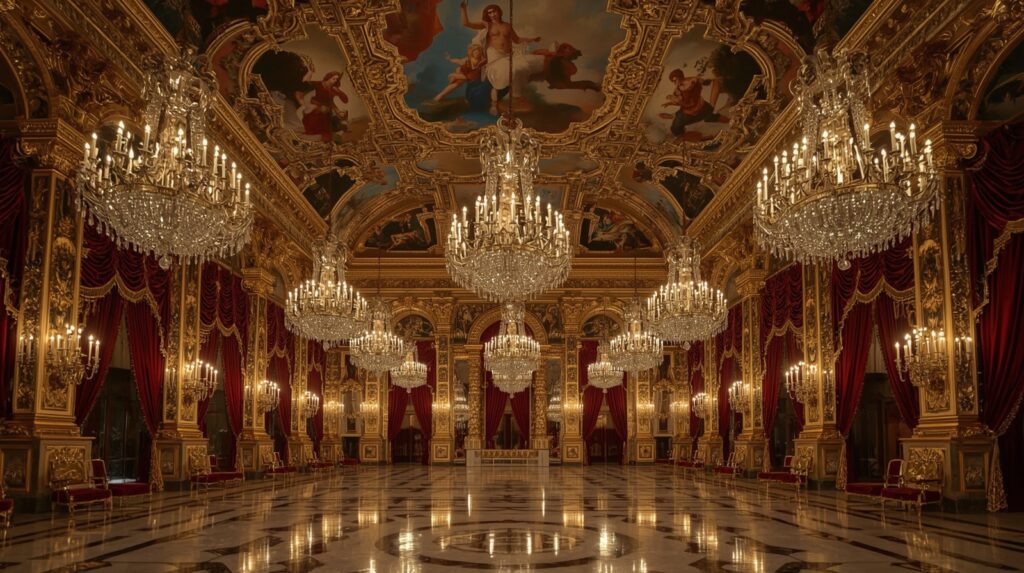
What Baroque does with thunder, Rococo does with a sigh.
This is a world less defined by church or state than by the aristocratic salon, that delicate ecosystem of clever talk, flirtation, and clandestine defiance. The Rococo interior moves the setting away from divine judgment to human desire. Its equity of force is not vertical God up above, man down below but horizontal: person to person, eye to eye.
All the ornamental persists in this new psychology. The asymmetrical scrolls that roil on the wall seem half-thoughts. Shells, surf & vine motifs selected for their natural, ever-nexting nervous movement echo the wandering track of speech, fantasy and seduction. Here, symbol requires seduction: gildedBirds indicate freedom & imprisonment within gilded cages; entwined garlands imply entrapment & unsprung emotion.
Mirrors are everywhere. In the Baroque they amplify their owners’ authority; in the Rococo they fracture our senses of self. You are invited to gaze at the outline of your own face while talking, but more importantly the face staring back at you, from behind. Rococo mirrors turn any space into a maze of the mind, where all are at once voyeur and observed.
The colors soften, and with them, the emotional register. Pistachio, pearl grey, pale rose, celadon—these are not just fashionable choices; they are a tuned color palette for private feelings. Baroque red is the color of martyrdom and majesty. Rococo pink is the color of a withheld confession.
Power vs Pleasure: Two Theaters, Two Scripts
Both styles are extravagant; both are excessive. But excess, in each, serves a different god.
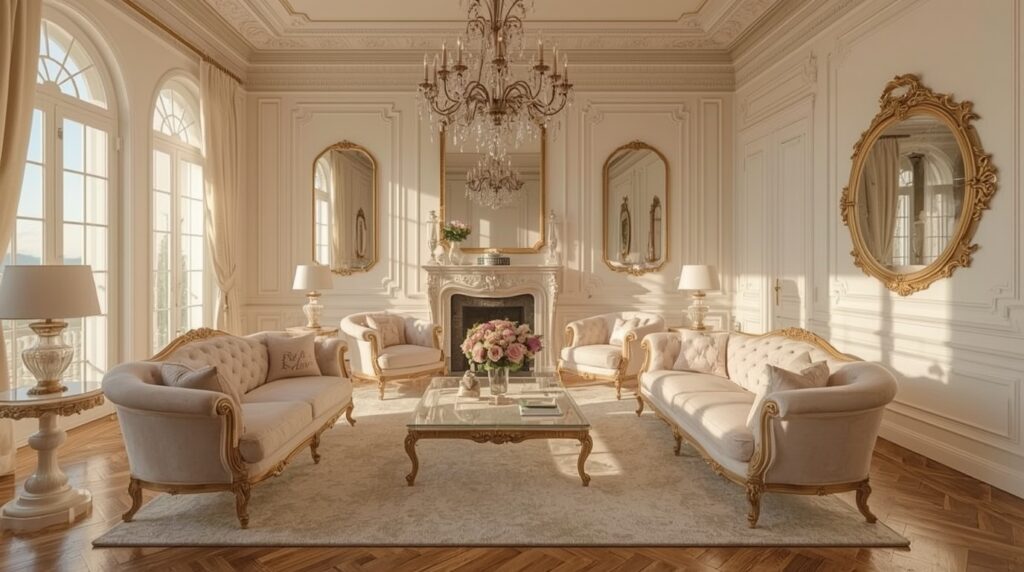
Within the absolute spaces of a Baroque interior, over-embellishment becomes an instrument of power. The proliferation of decoration, the magnitude of the ceilings, the sensation of infinite extension these are the spatial manifestations of absolute rule. The space cries: “You will become lost here, that is the intention.” Within a baroque church, your emotional energies are directed into a permitted track: fear, reverence, thankfulness. In a palace, your own aspirations are insignificantly pitted against the choreography of courtly succession.
Rococo, on the other hand, sends the glut away from the State and onto the private sphere of fantasy. Its surfaces are crowded not with martyrs and kings, but with lovers, myths, fêtes galantes and roguish cupids. The proliferation of decoration is not authoritarian but personal. It is not there to rule, but to entertain, seduce and comfort. You are to feel that the world is there to adorn yourself.
That change of focus is a gentle revolution. Baroque has you listening to what you‘re feeling. Rococo is free for you to sensate whatever perceptible thing arrives within the light-flooded, dewarred courtiership. In a rococo boudoir, the room is almost conspiratorial. The pastel walls appear to endorse your priory. The lacquered stucco seems to reverberate your transient sentiment.
If Baroque is the architecture of proclamation, Rococo is the architecture of subtext.
Bodies in Space: How Rooms Script Behaviour
Interiors are never neutral. They choreograph bodies, script gestures, and decide what kind of intimacy is possible.
The Baroque church choreographs submission: the long axis of the nave urges forward movement to the altar; pews organize bodies into ranks; hierarchies are spatialized farthest from the altar, farthest from salvation; even your pose is prescribed: stand, kneel, sit. Look up. Look forward. Wait.
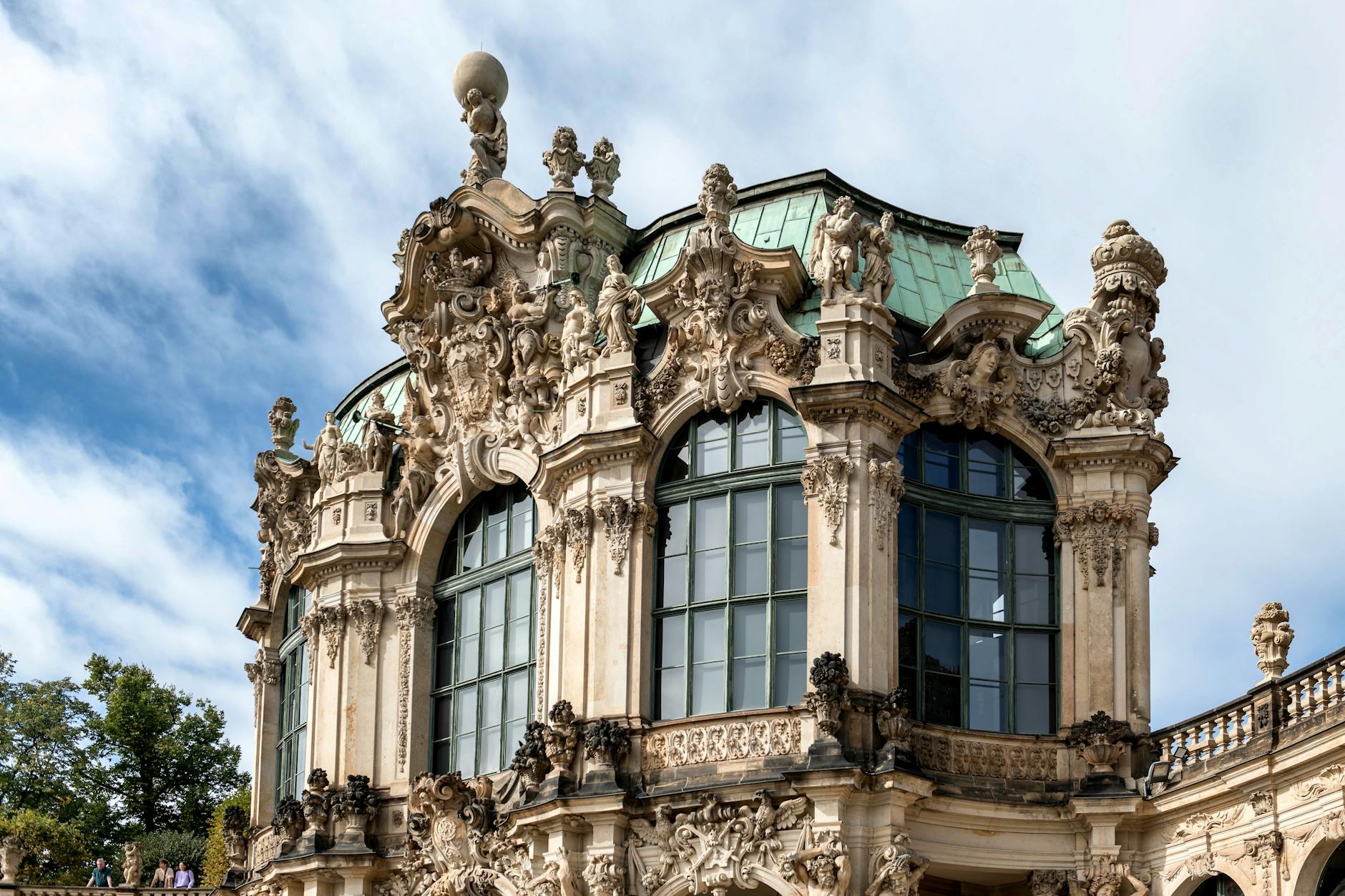
A palace of Baroque design path your route through its architecture. Your journey strips you along glorious enfilades and into chambers of greater rank. Your passage through this space is a performance of social order.
The designs of interior space of the Rococo effectively departs with those straight lines of command. It is not the processions of the salon that are concerned; it is the circulations. There is no single point where the eye meets, only dissipating conversations drifting toward the sofas, consoles, or living-room fires. Chair and table are thrust forward from the walls, long-arching islands of intimacy. The occupant subconsciously determines where to sit, whom to face. A far more delicate balancing of authority is witnessed, and as important, a discernible relaxation of it.
In fact, even in the extent of its detail there is a difference. The detail in the baroque might be appreciated at a distance; the inscriptions, the huge fresco cycles, the great statue. The detail in the rococo needs space; a small gilded bird; a unobtrusive carved flower, the contour of a stucco shell. These are experienced, not remarked. The whole room is at a remove.
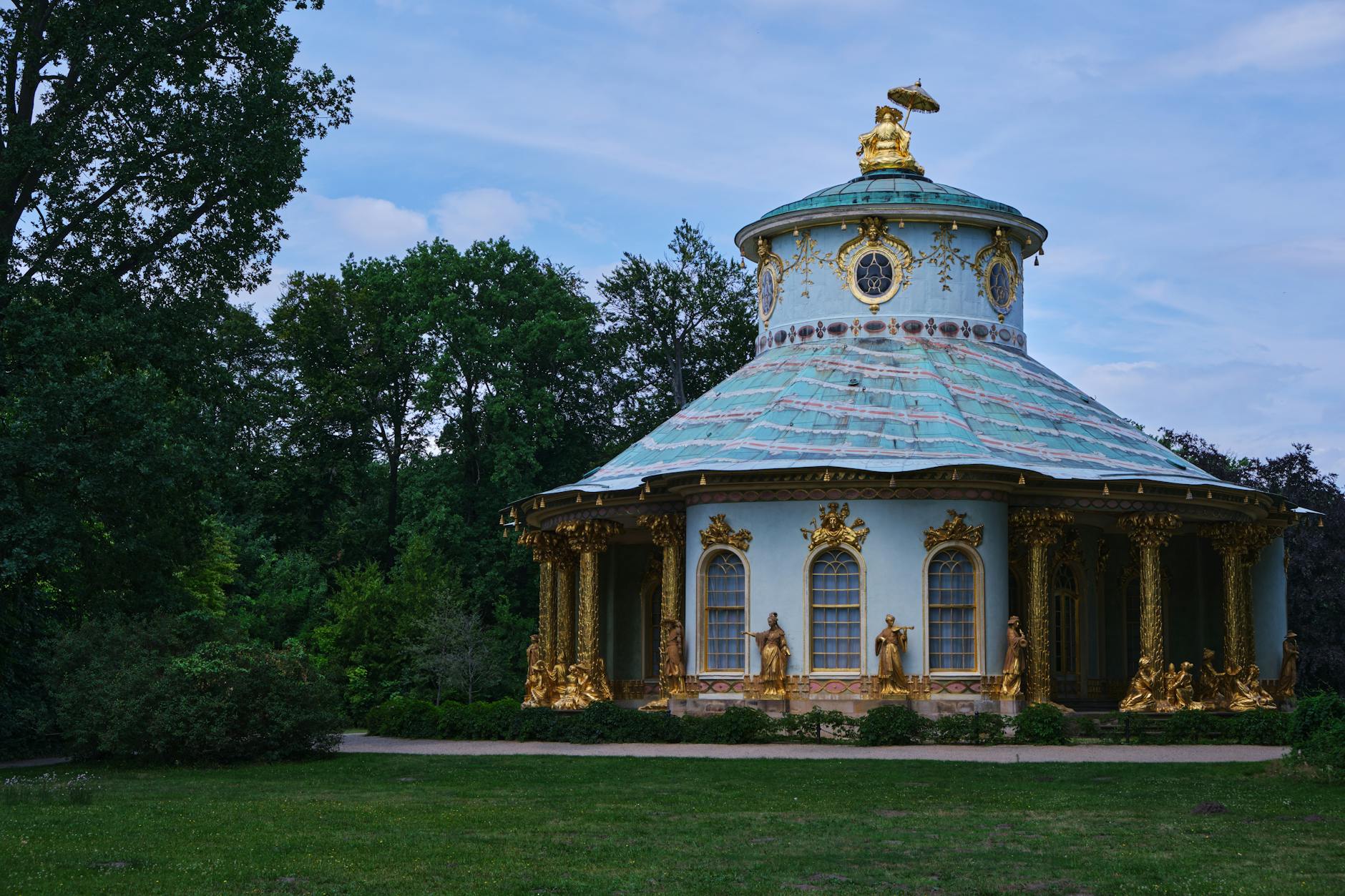
In that difference lies a profound psychological shift: from the collective body moved as one, to multiple individual bodies following their own, often conflicting, trajectories of pleasure, anxiety, and curiosity.
Divine Excess, Human Fragility
Even so, both the interiors of the Baroque and the Rococo have an obsession with excess that approaches a metaphysical state. Both push decoration to the point where it becomes nearly abstract a sort of visual static humming with its own subliminal meaning.
In Baroque, this excess reaches for the divine. On displayed over-wrought ornamentation tries to close the distance between us and God. Too much gold, too many angels, too many folds of drapery- all gesture toward something that cannot be shown but that must be. The desire is simple: If heaven exists, it must look like more. More light. More glory. More everything.
All that motoric feeling of Baroque is turned back on itself in the Rococo. Its surplus is unappeased, neurotic. Nervous proliferation of scrolls, shells and tendrils-is it exuberance, or defense? In the Rococo, pleasures are not quite secure; their asymmetry and unsatisfied shapes, the animating surfaces look like minds too restless to find repose: endlessly elaborating, decorating, improvising.
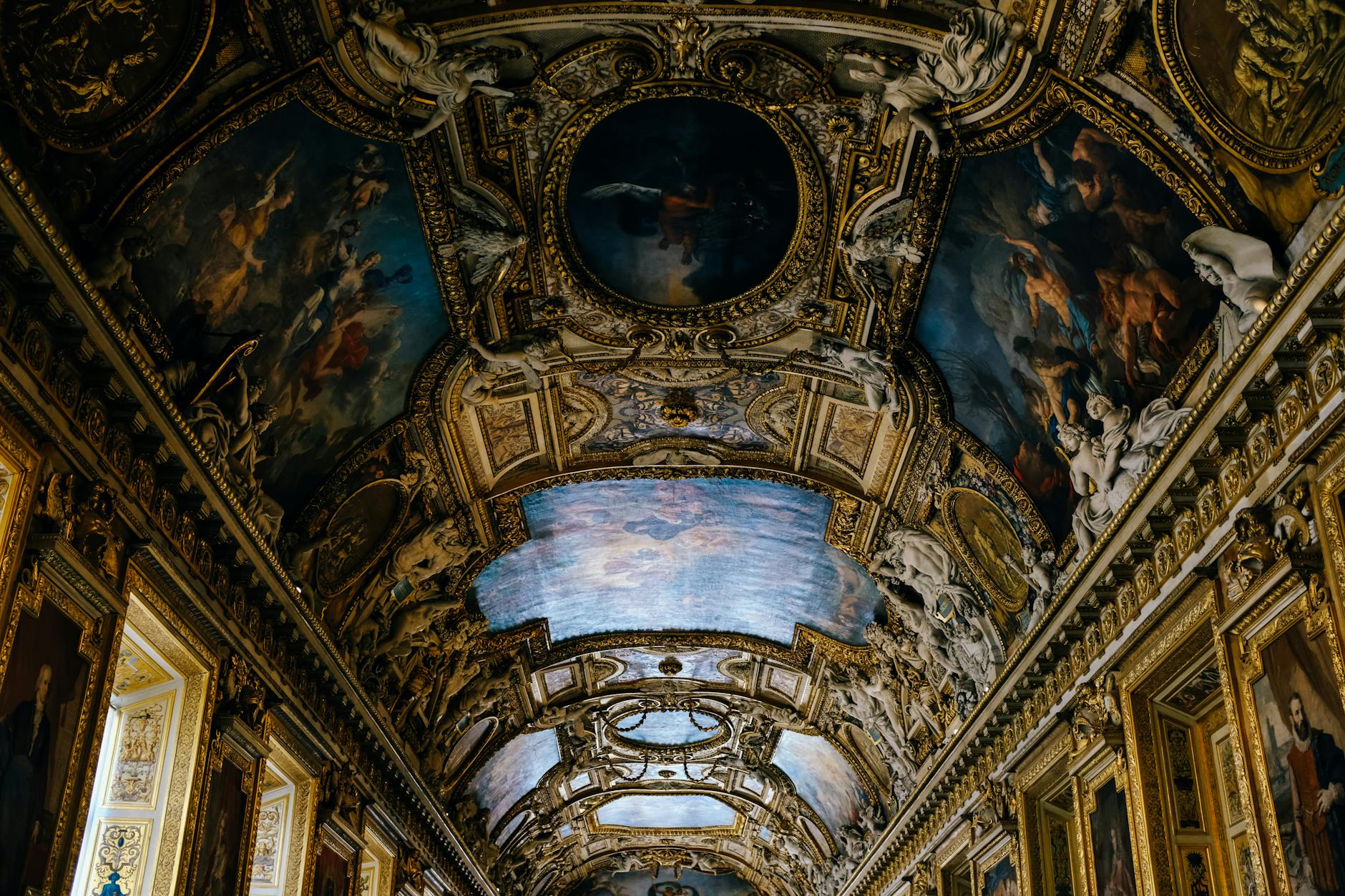
A Rococo boiserie is like a person‘s mind translated into wall: beautiful, fragile, and slowly coming apart… Desire, in this room, is not a flat line but dozens of alluvional arabesques. The room becomes a perfect topography of seductive digressions…
Perhaps that is why both styles can feel strangely moving today, beneath the gilt. Baroque expresses our longing for something larger to surrender to. Rococo expresses our fear that pleasure, no matter how exquisite, may be fleeting and fragile. Both are worlds of divine excess; one places divinity outside us, the other smuggles it into our private fantasies.
Why These Rooms Still Haunt Us
We live in an age that publicly worships minimalism, yet can’t stop photographing palaces and opera houses, or saving images of impossibly ornate ceilings on our phones. There is a reason.
Baroque interiors are answering in the moment of our present overwhelm. Into the Baroque church we enter our contemporary scale: the awareness of how small we are in an age of political, technological, informational systems so immense that they might as well be celestial. The Celestial Room makes this overwhelming mindscape comprehensible, but beautiful as well. It is a space where the chaos is structured, choreographed, and purposeful.
Rococo, vice versa, operates in a chilling proximity to the intimacy we have curated ourselves. Its salons are prototypes of our digital salons: aesthetic stage set-overs for performances, flirtations, curated self-inventions. The mirrors of Rococo turn into our screens; the salon‘s carefully aestheticized social meetings our social media pages. Everything is endearing, everything is carefully curated, everything is a little too-good-to-be-true and lurking beneath it all, an undercurrent of weariness.
Both are tempting, for their refusal to be contained. Maximalism, of the Baroque and Rococo, answers back with honesty about our human one. The hunger for meaning. The hunger for pleasure. The hunger for beauty even when you Know that it Will not save us.
In a culture that often denies or flattens these hungers, to stand in such a room—whether it’s a Roman church or a Parisian hôtel—feels like a confrontation with our own unconfessed excesses.
The Continuing Conversation Between Dark and Light
The opposition between Baroque and Rococo is often flattened into “heavy” vs “light,” “serious” vs “frivolous.” But the fascination of these interiors lies in how they complicate those binaries.
Baroque is not simply pious; it is also deeply sensual. The languor of a saint’s marble arm, the folds of a carved robe, the lushness of drapery—they eroticize faith, intentionally or not. Rococo is not simply frivolous; its delicacy often shades into a quiet awareness of transience. Those pastel skies, that soft light, the almost weightless furniture—all seem to anticipate disappearance.
In one, the divine is overwhelmingly present; in the other, it seems to have subtly withdrawn, leaving humans alone with their games and anxieties. Yet both are negotiating the same existential question: how do we live with excess—of feeling, of power, of desire—without being destroyed by it?
The Baroque answer: offer it up, vertically, to something higher. The Rococo answer: disperse it, horizontally, into small, exquisite experiences. Grand ecstasy vs cultivated delight.
Modern design tends to oscillate, knowingly or not, between these poles. The dark, immersive restaurant that swallows you in shadow and reflection is a secular Baroque chapel to desire. The pale, carefully “effortless” boutique hotel room, with its soft fabrics, diffused light, and curated informality, is a Rococo echo—interior design as emotional mood board.
Standing Between Two Worlds
Imagine yourself in a palace where both styles coexist—a Baroque chapel on one side, a Rococo boudoir on the other.
In the chapel, your heartbeat slows, then quickens. The weight of history presses downward. The room demands that you orient your inner life toward something beyond yourself—even if, for you, that “beyond” is only the idea of time and mortality.
In the boudoir, your body relaxes; your senses sharpen. You notice the coolness of silk against skin, the softness of light, the intimacy of scale. The room suggests that the real drama is here, in the fleeting negotiations of closeness and distance between people.
You move between them and understand that these interiors are not quaint relics, but enduring metaphors. Baroque: the part of you that wants to be overwhelmed into belief, into certainty. Rococo: the part of you that wants to escape into pleasure, into subtle games of self-invention.
The question is not which style is “better.” It is: which interior tells the truth about the life you are living now—and which one tells the truth about the life you secretly long for?
Somewhere between the golden thunder of Baroque and the shimmering whisper of Rococo lies our own interior world: pulled upward by the need for meaning, drawn sideways by the seduction of exquisite distraction, endlessly wandering among gilded columns and curved boiseries, still searching for a room that feels like home.
AI Notice: Some visual content in this article may have been created or enhanced using artificial intelligence (AI) for artistic, editorial or illustrative purposes. Learn more about our approach in our AI & Editorial Principles.