Gleaming from the lapels of 19th‑century gowns and the fichus of lace collars, the Victorian gold brooch was far more than a decorative pin. It was a language of love and loss, a badge of social status, and a miniature showcase of technical artistry in an age of rapid industrial and cultural change. To study a Victorian gold brooch is to peer into the values, technologies, and aesthetics of Queen Victoria’s Britain—an era that brought together romantic symbolism, archaeological fascination, and the rise of the modern middle class. Today, these pieces are coveted not just as antique jewelry, but as historical documents rendered in gold.
This article takes a provenance, design, craftsmanship and collecting view to Victorian gold brooches based on confirmed sources such as the V&A, The Met, the Louvre and the Smithsonian Institution. It will help you identify authentic period brooches from after market years, learn about important periods of style and understand the complex emotional and cultural arteries that existed to inspire the work. For collector, historian, jeweler or enthusiast there is an intriguing story behind the Victorian gold brooch.
In order to anchor this venture within deskundish and fact, we will be making referrals to the primary collections, and the curatorial literature on jewelry. TheVictoria andAlbertexplains that in jewelry, the 19thcentury “provid[es] reflections of the evolving fashions, social mores and technological developments of the age.” Victorian brooches are perhaps the clearest of these reflections not images, but a two-inch historical spectrum:
The Victorian Era and the Rise of the Gold Brooch
The Victorian era named after the reign of Queen Victoria, 1837-1901 occurred at a time of rapid economic and social change in Britain. The Industrial Revolution, penetration into wider markets through trade, and the expansion of the British empire, led to unrivalled access to raw materials. Gold, diamonds, and coloured stones from South Africa, India, and Australia experienced significant influx due to the discovery of new mineral veins. Furthermore, the California Gold Rush, 1848-1855, followed by the Australian gold rushes, from 1851, increased global gold supplies, contributing to a ‘democracy of gold”. The gold brooch was no longer solely aristocratic, but attainable for the education and emerging middle classes.

This broader use of gold combined with fixed, yet changing, notions of social decorum. Brooches played a prominent role in the decoration of women‘s dress, being used to affix capes, shawls and bodices, but also as focal point for personal adornment. According to The Met, the Metropolitan Museum of Art, ‘jewellery [in the 19th Century] was clearly much more than decoration; it was intimately linked to social identity and etiquette,’ with different examples worn for morning, afternoon, and evening wear. The gold brooch was versatile enough to serve all three purposes, understated in matte gold in the daytime and rich in gemstones at night.
Queen Victoria herself profoundly influenced jewelry trends. Her love for sentimental and symbolic jewelry, richly documented in royal collections and court portraits, helped drive demand for lockets, portrait brooches, and pieces adorned with coded motifs such as snakes (eternity), hearts (love), and anchors (hope). When Prince Albert died in 1861, Victoria’s prolonged mourning reshaped jewelry fashion across Europe, ushering in decades where black-enamelled and jet-accented gold mourning brooches became both statement and social obligation.
Early, High, and Late Victorian Styles in Gold Brooches
Jewelry historians commonly divide Victorian jewelry into three broad phases: Early (circa 1837–1860), High or Mid (circa 1860–1885), and Late (circa 1885–1901). Each phase exhibits distinct characteristics in gold brooch design, reflecting wider trends in art, technology, and social life. The Victoria and Albert Museum highlights this progression as a movement from Romantic and naturalistic themes to archeological and Renaissance revivals, and finally to more delicate, reform-oriented aesthetics.

Early Victorian gold brooches often display a soft romanticism. Naturalistic motifs—flowers, leaves, birds—were rendered in chased or repoussée gold, sometimes accented with small seed pearls or turquoise. Hairwork, in which a loved one’s hair was braided or woven and preserved under glass in a gold brooch, was extremely popular; the Smithsonian Institution’s collections include several examples of mid-19th‑century American and British hair jewelry, underscoring how widespread the practice was. These early pieces frequently have a hand-crafted feel, with irregularities that can help authenticate period production.
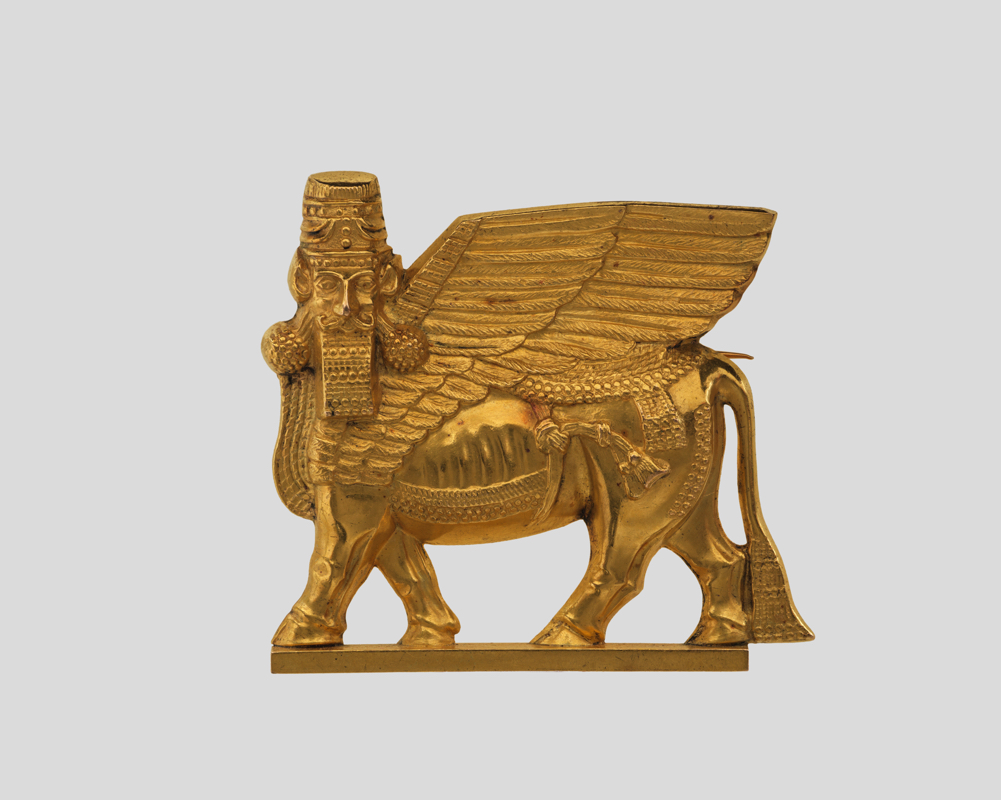
Victorian brooches became bolder and more elaborate. Revival styles sparked by archaeological excavations of 19 th-century Pompeii and the re-discovery of Etruscan tombs adopted styles of Greek, Etruscan and Roman jewelry. The goldsmiths of Rome and Paris, such as Castellani, popularized granulation and filigree work which, in Britain, was widely imitated. Brooches might feature classical cameos with jewelled frames worked to a high degree of craftsmanship or mitre work worked in micro-mosaic, heavily hammered into intricate ruins or a brooch encrusted with Egyptian, Etruscan and Roman inspired repousse scrollwork; ‘archaeological jewelry suggest they were in it for fashionable, archaeological cred’.

By the Late Victorian, light and-simple styles were emerging, prefiguring the flowing lines of the Art Nouveau period. The brooch often became smaller, more delicate, conveying an elegantness and restraint in the lines, abandoning dense gold masses. Diamond and colored gemstone hold continued to gain ground with gold acting as a somewhat more restrained setting, though late 19thcentury aesthetic movement and arts-and-crafts designers in Britain such as the circle of William Morris produced brooches in matt or colored gold with stylised flower, or medieval, inspired designs, bringing some restraint to a mass-produced excess. The variety of styles makes the term “Late Victorian” unhelpful, as it does not describe one style.
Materials and Techniques: How Victorian Gold Brooches Were Made
Victorian gold brooches were rarely pure gold; most were crafted in alloys such as 9k, 12k, 14k, or 18k, depending on the country and period. British jewelers often favored 15k or 18k gold until legal standards shifted later in the century. The color of the gold varied from rich yellow to soft rose, depending on alloying metals like copper and silver. The V&A’s technical notes on 19th‑century jewelry emphasize that advances in metallurgy and rolling mills enabled thinner sheets of gold and more consistent wire, facilitating both delicate filigree and economical mass production.

A variety of techniques created these brooches. Granulation( tiny balls of gold adhered to a surface), cannetille( spirals of gold wire), chasing and repoussé( hammering from front and back to produce raised and depressed areas), engraving, and engine-turning( mechanical guilloche patterns) are seen throughout quality work. Early pieces produced in the century were made by hand by expert bench jewelers. Later in the century, widespread manufacturing techniques used mechanical stamping to make decorative parts that could be assembled into brooches at less expense. Curators in the Smithsonian’s Museum of American History have shown how mechanization enabled greater production at the same time it allowed hand finishing.
Many gemstones and other materials had both symbolic and decorative purposes. Seed pearls, turquoise, garnets, amethysts, with later diamonds and sapphires, could be used in claw, collet, and pave settings. Enamels most commonly black for mourning, but also white, blue, green could add colour and contrast to jewelry. Glass pastes could be used in the same way as the more costly stones in some jewelry targeted at middleclass consumers. The most dramatic aspect of jewelry from the period, however, is the extensive use of non-gem materials: Whitbypropat, England; vulcanite; bog oak; coral; woven hair. Many examples of the use of these and other similar materials can be seen on the Continent; examples from the Louvre show that these bridged the Channel, and Britain should not be assumed to be pioneering its own, idiosyncratic, language of jewelry.
Symbolism, Sentiment, and Mourning in Gold Brooches
Victorian culture was steeped in symbolism, and gold brooches served as eloquent carriers of coded messages. From the language of flowers (floriography) to the arrangement of gemstones whose initials spelled out sentiments (for example, a “DEAREST” brooch using diamond, emerald, amethyst, ruby, emerald, sapphire, topaz), personal adornment became a discreet form of communication. As jewelry historian Charlotte Gere, writing for the V&A, notes, “Jewellery was not merely decorative; it could declare allegiance, affection, and status without a word being spoken.”

Mourning jewelry is among the most distinctive of Victorian brooch types. The death of Prince Albert provided a context in which Queen Victoria‘s more visible expressions of mourning were widely adopted, and her public observance of mourning helped inspire the creation of black-or black-accented gold jewelry to memorialize the dead. Mourning brooches often combined gold with black enamel or jet or onyx, and may have featured initials, dates, and death-related symbols such as urns, weeping willows, and crosses; some had compartments at the back for a fragment of hair or a miniature photograph. The Met collection has a variety of mourning brooches, which exemplify the emotional appeals and social conventions of Victorian mourning.
Also popular in a sentimental, but not necessarily sad way were brooches. Lover’s knots, clasps of hands (the ’fede’ motif), doves, forgetme-nots and anchors were often seen on gold brooches exchanged by lovers, friends and relatives. Also popular in a precursor to photographs, gilt-set miniatures attracted to the head of a loved-one while not necessarily celebrated, were commonly fastened within a gilded frame, and hung near to a bodice. Later in the century, photographic technology allowed for so-called daguerreotype and tintype produced images mounted in gold, making an even more realistic memento – unlike modern digital photographs – and further merging the genre of jewelry and portraiture.

Even what might seem to be religious and patriotic motifs (crosses, stars, national symbols) reveal a pronounced Protestant and imperialist sensibility. The Smithsonian‘s collection of Civil Warera American jewelry suggests that a common pattern though not an American one was that Victorian gold brooches served as tiny, portable shrines to belief and feeling. However, the common denominator emerges that Victorian gold brooches expressed identity as well as adornment.
Key Characteristics of Victorian Gold Brooches
The following table summarizes some of the most common characteristics seen in Victorian gold brooches across the three major phases of the era:
| Period | Approx. Dates | Typical Gold & Finish | Common Motifs & Features | Frequent Materials Beyond Gold |
|---|---|---|---|---|
| Early Victorian | 1837–1860 | 15k–18k yellow or rose; hand-worked | Naturalistic flowers, leaves, bows, hairwork, lockets | Seed pearls, turquoise, woven hair, enamel |
| High/Mid Victorian | 1860–1885 | 14k–18k; heavy, sculptural, chased | Archaeological revival, cameos, micromosaics, mourning | Jet, onyx, garnet, black enamel, Roman-style glass |
| Late Victorian | 1885–1901 | 9k–18k; lighter, more delicate forms | Aesthetic floral, geometric, small portrait/photo | Diamonds, sapphires, pearls, colored enamels |
These are broad trends rather than strict rules. Overlap between styles is common, and regional differences (for example, between London, Birmingham, and continental European centers like Paris and Vienna) can be significant. The V&A and Met both caution that stylistic analysis should be used alongside hallmarks and construction methods to date and authenticate a piece.
Collecting, Authenticity, and Care
For contemporary collectors, Victorian gold brooches offer a compelling combination of beauty, craftsmanship, and approachable historical research. Authentic pieces can still be found through reputable antique dealers, auction houses, and specialized fairs. Checking for British hallmarks—often including a maker’s mark, assay office mark (e.g., London’s leopard’s head or Birmingham’s anchor), fineness mark, and date letter—can provide clues to origin and age, though not all brooches are fully marked. Comparative study with documented examples in public collections, such as those at the V&A, The Met, and the British Museum, is indispensable.
Victoria has to be careful of constructional changes as well. Victorian original fittings tend to have a very simple “C” clasp and a long pin, which pokes out beyond the edge of the brooch, whereas the safety catch was introduced around the beginning of the 20th century. Old solderwork, replaced pins or added safety chains, are not intrinsically damaging, but must be disclosed. The vintage gold stain and wear, as well as the engrave design, settings, reflect the piece as Victorian or later work. The Museum of Metropolitan property jewelry curators notes that, “context, craftsmanship, and comparison” are the three clever tools they use to attribute a historical jewelry.
Appropriate conservation helps maintain the value and appearance of Victorian gold brooches. Gold is relatively inert but also very soft and Victorian brooches should be stored separately in acidfree, padded boxes so they do not scratch one another, as is often the case. Many Victorian brooches contain subject to damage in ultrasonics, harsh chemicals, and direct humid environments: enameled, jet or fired on hairwork. Gentle cleaning can simply be with a soft cloth, and where appropriate, the professional opinion and conservation advice should be sought. Advice is available on jewelry care from institutions such as the Smithsonian and the V & A, and should be accessed before attempting restoration or cleaning.
Authoritative Quotes and Sources
Throughout this article, several leading institutions provide foundational context:
The Victoria and Albert Museum emphasizes that 19th‑century jewelry “mirrors the changing tastes, social customs and technical innovations of the period,” making Victorian brooches valuable historical sources as well as adornments. (V&A, Jewellery Collection)
The Metropolitan Museum of Art notes that jewelry in the 1800s was “closely linked to social identity and etiquette,” which is particularly evident in the coding of mourning and sentimental brooches. (The Met, Heilbrunn Timeline of Art History: “Jewelry in the 19th Century”)
The Smithsonian Institution, through its National Museum of American History, has documented how technological advances “increased the availability of fashionable jewelry to the middle class,” a trend that strongly resonates with British Victorian production. (Smithsonian, Division of Home and Community Life)
The Louvre’s collection of 19th‑century French jewelry illustrates parallel developments in archaeological revival and sentimental motifs, situating British Victorian brooches within a broader European context. (Musée du Louvre, Department of Decorative Arts)
These institutions’ catalogues, essays, and digital archives offer reliable reference points for further study, with high-resolution images and provenance data that can aid both scholars and collectors.
Frequently Asked Questions About Victorian Gold Brooches
How can I tell if my gold brooch is genuinely Victorian?
Look for a combination of factors: period-appropriate hallmarks, construction details (such as C‑clasp and extended pin), stylistic features consistent with 1837–1901, and patina that suggests age. Comparing your piece with documented examples from the V&A or The Met’s online collections can be very helpful. When in doubt, seek an appraisal from a specialist in antique jewelry.
Were all Victorian gold brooches made of solid high‑karat gold?
No. While many high-quality pieces used 15k or 18k gold, others were made with lower karats (9k, 12k, 14k), gold fronts on base metal backs, or rolled gold. Middle‑class demand encouraged a range of price points. Hallmarks, weight, and visual inspection by a jeweler can help determine composition.
Why are so many Victorian brooches associated with mourning?
Mourning customs were highly codified in the 19th century, especially after Queen Victoria’s widely observed grief for Prince Albert. Jewelry became a socially accepted way to commemorate the dead, and brooches—being conspicuous yet restrained—were ideal. However, not all Victorian brooches are mourning pieces; many are purely decorative or sentimental.
Is it acceptable to wear a Victorian mourning brooch today?
Yes, many collectors and enthusiasts wear mourning jewelry as historical fashion rather than as active symbols of grief. Wearing such pieces respectfully—acknowledging their original purpose and handling them with care—honors their history. Museums like the V&A and The Met frequently display mourning jewelry as part of broader decorative arts narratives.
How should I clean and store a Victorian gold brooch?
Store it in a padded, individual container away from direct sunlight and humidity. Clean only with a soft, dry cloth unless a professional conservator advises otherwise. Avoid ultrasonic cleaners, harsh chemicals, and vigorous polishing, especially if the brooch has enamel, hairwork, or fragile stones.
Conclusion
Victorian gold brooches distill an extraordinary era into miniature works of art: the romance and rigor of social codes, the impact of industrial innovation, the dialogue between past and present in archaeological revival styles, and the deeply personal expressions of love and loss. In examining their gold surfaces, we see not just decoration, but the imprint of a society in transition.
By studying museum collections, understanding stylistic phases, and recognizing period techniques, today’s collectors and admirers can engage with these objects in an informed, respectful way. The best Victorian gold brooches reward close attention—with each chased leaf, granulated border, or hidden hair compartment revealing another layer of story from the 19th century’s gilded age.
AI Notice: Some visual content in this article may have been created or enhanced using artificial intelligence (AI) for artistic, editorial or illustrative purposes. Learn more about our approach in our AI & Editorial Principles.