
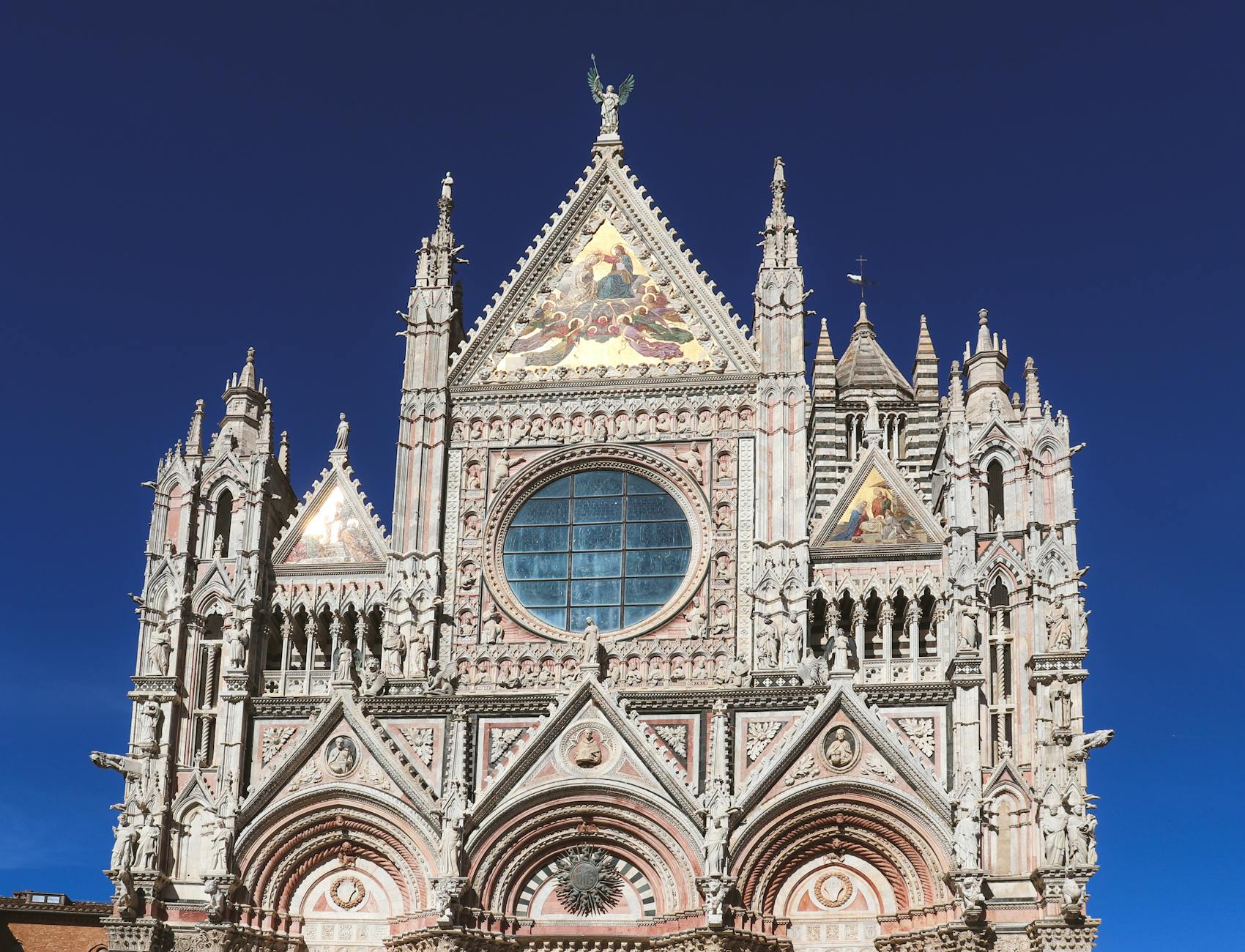
The Luxurious Gloom of Gothic Cathedrals: Beauty, Mystery, and the Sacred Imagination
Step inside a Gothic cathedral on a grey afternoon and the world outside dissolves like mist. The door closes; the city falls away. What remains is height, hush, and a strange, almost decadent darkness. Light doesn’t simply illuminate these interiors—it drips, seeps, and blooms, thin as silk, through panes of jewel-toned glass. Shadows collect in the stone ribs overhead, in the carved folds of saints’ robes, in the corners where no one ever looks.
It feels less like entering a building and more like being absorbed into another mind—one at once austere and extravagant. That paradox is the secret of the Gothic: it is luxury disguised as piety, opulence expressed not in gold leaf and velvet cushions, but in vertical space, silence, and carefully orchestrated gloom.
Can You Name the Masterpiece?
Ten masterpieces. Ten questions. How well do you know the history of art?
Why does this experience still feel so luxurious, so emotionally charged, to contemporary visitors who no longer share the medieval theology that built these spaces? The answer lies in the cathedral’s mastery of atmosphere, psychology, and the sacred imagination.
The Luxury of Height and Distance
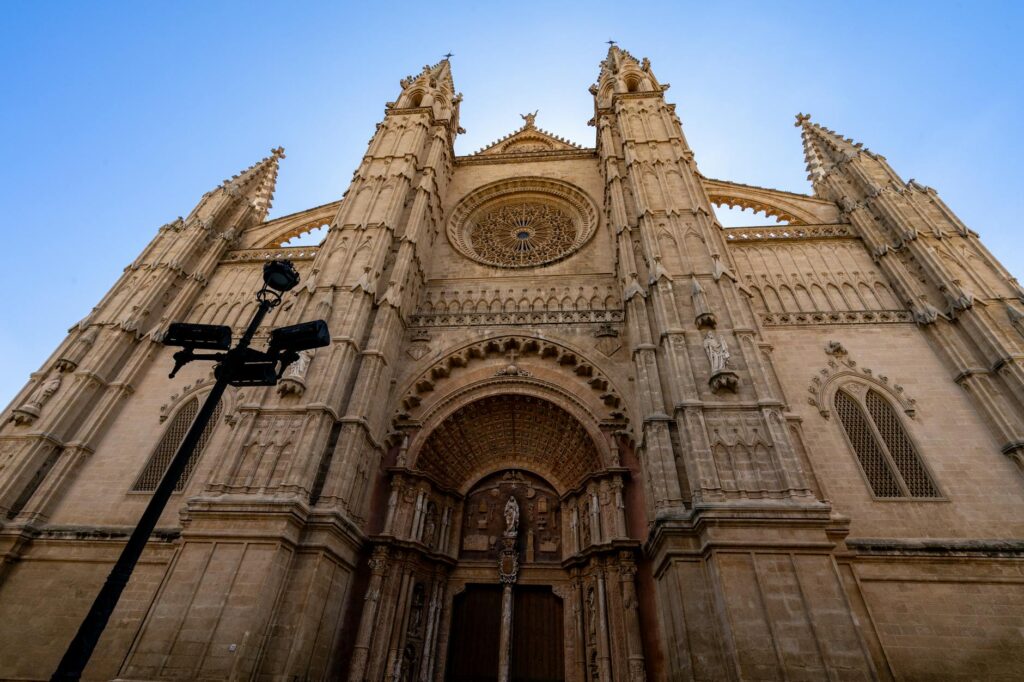
The first and most immediate sensation in a Gothic cathedral is upwardness. Space is not simply provided; it is flung above you. Vaults arch like the inside of some colossal, petrified forest. Columns soar like tree trunks that forgot to stop growing.
From a practical standpoint, this is engineering—pointed arches, ribbed vaults, flying buttresses. But experientially, it’s something more primitive, almost animal: a felt sense of smallness. In a culture increasingly optimized for comfort, convenience, and human scale, the cathedral’s deliberate disregard for our proportions feels lavish.
Can You Guess the Artist?
Three clues. One artist. How quickly can you identify the painter?
The luxury, here, is psychological. We live in interiors designed to flatter our bodies: ergonomic chairs, adjustable lighting, climate control at the touch of a screen. The Gothic interior offers no such flattery. It overwhelms. It induces vertigo. It asks you to confront your own scale against the incomprehensible.
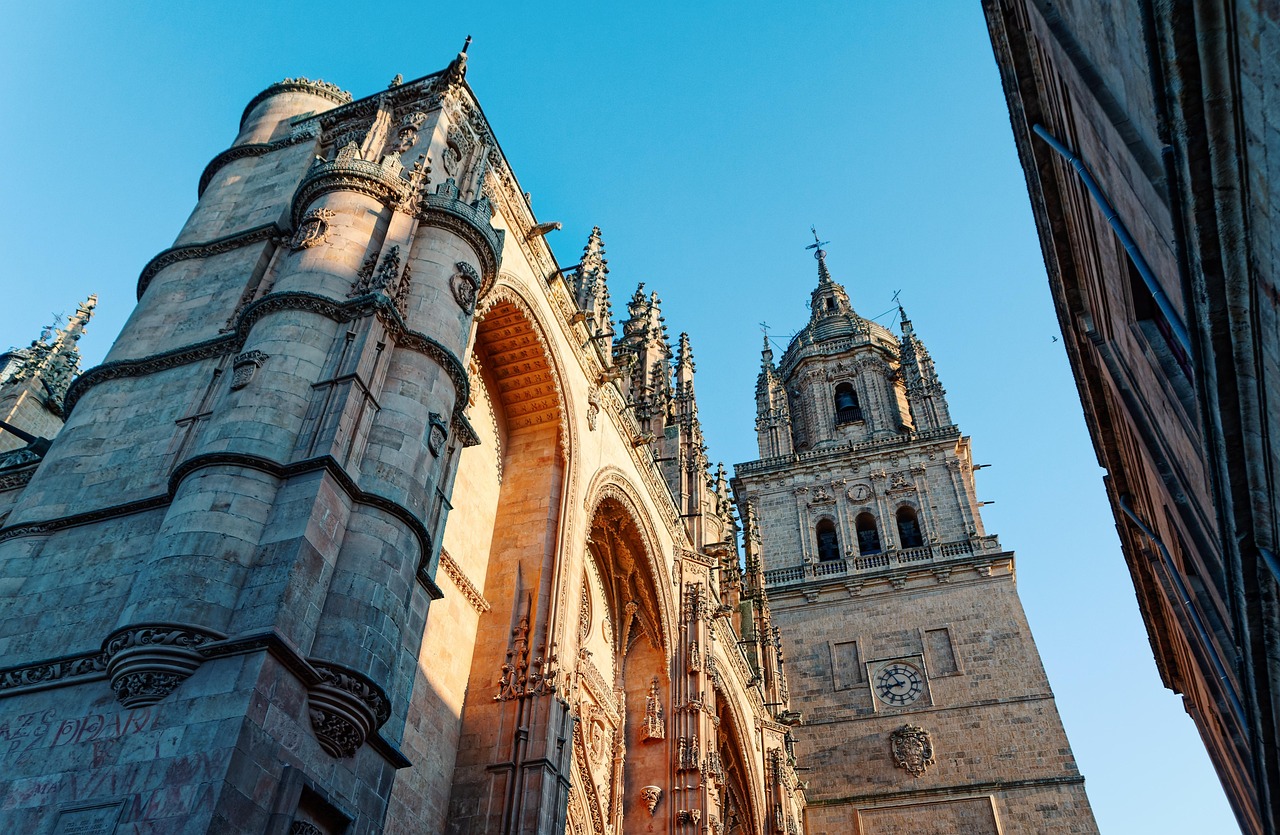
This is not minimalism’s restrained, white-cube serenity. It’s maximalism in stone—height as ornament, distance as decoration. To stand in a nave and feel your eyes dragged upward, higher than they comfortably want to go, is to experience space used not for function, but for emotion. That is a luxury.
Stone, Light, and the Drama of Being Small
The Gothic cathedral orchestrates one central drama: the human soul, terribly small, in the presence of something immeasurably vast. Everything in the space plays a part in this performance.
Listen to the acoustics. The slightest cough is magnified into a public confession. A footstep, a murmured conversation, the slow grind of a chair on stone—the building hears you and repeats you. Sound becomes ceremonious against your will. In a secular world where our words often dissolve into digital noise, this kind of audible consequence feels oddly opulent. You are not just making noise; you’re reverberating.
Look at the stone. It’s not smooth minimal planes; it’s crowded with detail: saints, grotesques, vines, angels, devils, animals—an entire carved ecosystem of symbols. The more you look, the more the building gives. Like a great novel, it never reveals all its content in one reading. This density of meaning is its own form of luxury: you are invited to spend time, to linger, to look again.
And then there is the light—never simply bright, never neutrally white. It arrives through stained glass as filtered, saturated, deliberate color. Not the harsh precision of LED luminance, but a soft, chromatic mist. Red falls on stone like wine spilled across a table. Blue pools in the shadows like late evening air. Here, illumination is aesthetic, not efficient. The result is not clarity, but atmosphere; not visibility, but mood.
We are used to buildings that try to be invisible: transparent offices, minimalist homes, architecture that prides itself on disappearing into its environment. A Gothic cathedral does the opposite. It claims your senses absolutely. That insistence on being felt, not just used, is what makes it feel so luxuriously excessive.
Gloom as Ornament
Gothic cathedrals are not dark in the way of unlit rooms. Their darkness is curated, textured, designed. It is less the absence of light than the presence of shadow—thick, layered, and alive.
Notice how the gloom collects in the side aisles, how it enfolds the smaller chapels, how it deepens behind altars and under balconies. In the main nave, light may fall theatrically from rose windows and clerestory glass, but in the recesses, shadows hold their own sovereign domain. This is not a flaw: it’s the point.
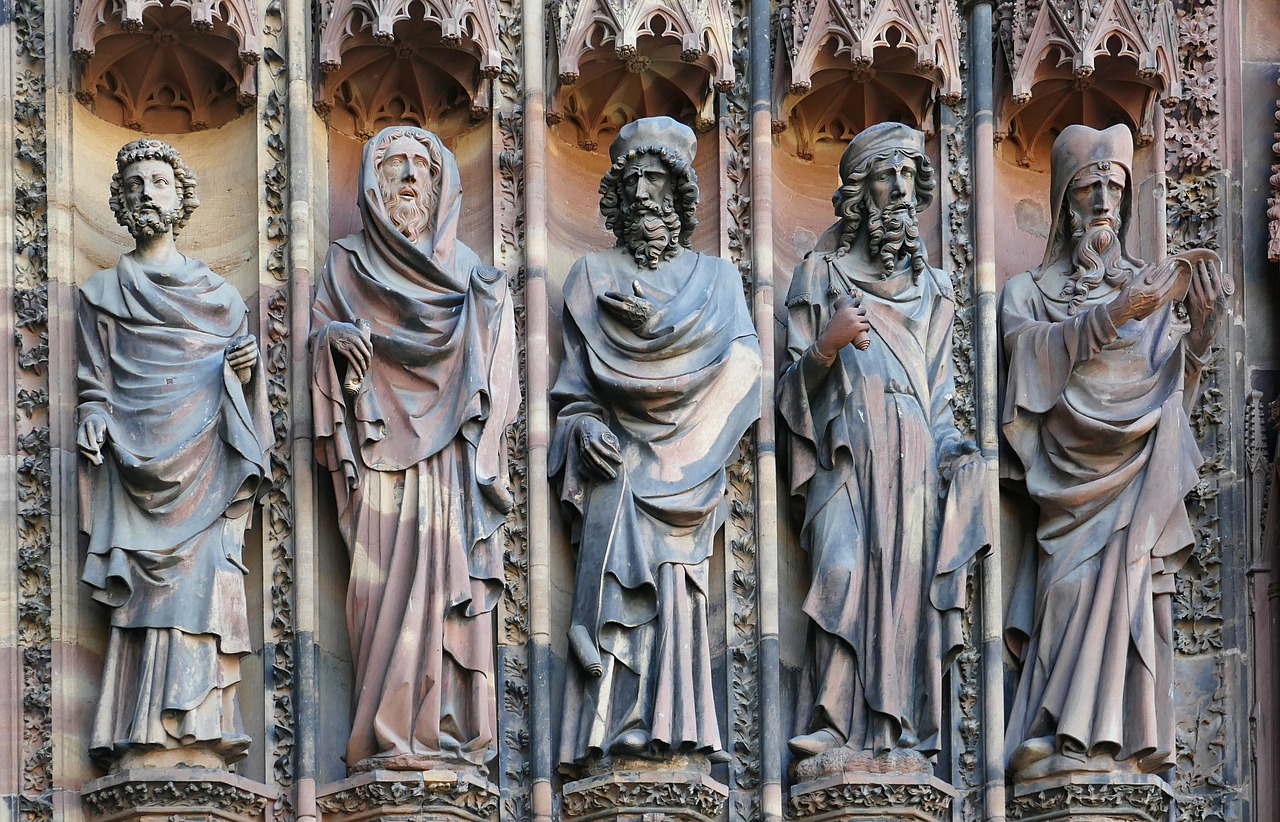
The medieval imagination was not afraid of darkness. It understood shadow as a necessary partner to revelation. Where there is glare, there can be no mystery. Where everything is visible, nothing is truly seen. Gothic architecture luxuriates in half-knowledge: the suggestion of a figure in the dimness of a niche, the indistinct narrative of a worn capital, the glimmer of a candle catching gold in a distant side altar.
In a contemporary world obsessed with transparency, lit screens, and endless exposure, this curated obscurity feels almost decadent. To be allowed not to see everything, not to know everything, is a rare privilege. The cathedral offers the sensuality of concealment.
Gloom, here, is ornamental. It frames the sacred, heightens the drama, and slows perception. We read the building as if by candlelight—even in the afternoon—and that slowness of seeing becomes its own kind of luxury: time thickened, perception dilated.
The Hidden Luxury of Labor and Excess
There is another kind of opulence in Gothic cathedrals, and it’s not immediately visible: the extravagance of labor and time.
To build one of these structures was to wager generations on a dream. Stone was quarried, hauled, carved, hoisted. Lives were spent shaping details that would sit a hundred feet above eye level, invisible to almost everyone. The sheer excess of this effort—work lavished where it would barely be seen—is strangely moving.
Luxury, at its core, is about surplus: more than necessary, more than practical, more than rational. A Gothic cathedral is surplus carved into stone. Structurally, it could exist with far less carving, far fewer stained-glass windows, fewer chapels, a simpler vault. But it doesn’t. Every surface testifies to an urge beyond utility.
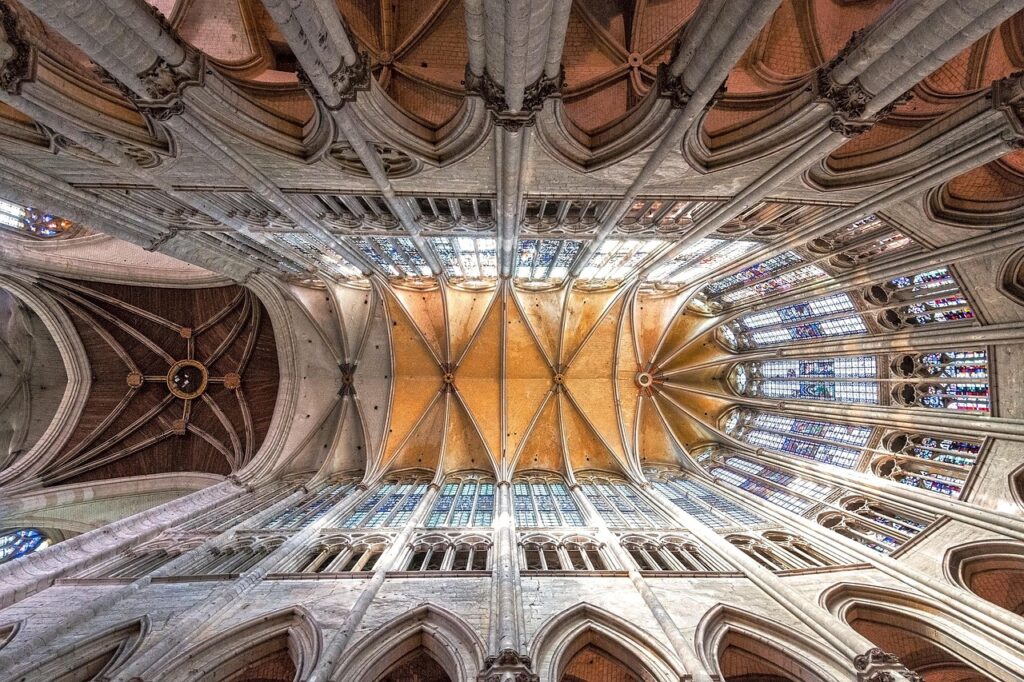
What remains for us, centuries later, is not only the physical result of this labor, but the emotional residue of intention. We sense, perhaps unconsciously, that the building is saturated with human effort. The worn steps, smooth from pilgrim feet; the polished depressions on pews; the patina on railings—these are a kind of slow, anonymous luxury, created not by money alone but by time and touch.
Modern luxury often declares itself through branding, exclusivity, and spectacle. Gothic luxury is the opposite: anonymous, collective, patient. No one signs a flying buttress. Yet the total effect is more powerful than any designer label: a space so precise, so excessive, so improbably coherent that it could only have been made by a culture ferociously committed to its own vision of the sacred.
Symbols, Stories, and the Velvet Weight of Meaning
If the stone is the body of the cathedral, its symbols are the perfume. They hang invisibly in the air, infusing the space with meaning that may not be consciously understood, but is deeply felt.
Everywhere, symbols overlap: the cruciform ground plan, the vertical axis reaching from crypt to vault (earth to heaven), the eastward orientation toward the rising sun. The rose window, with its radiating petals of glass, choreographs light into a cosmic mandala. The labyrinth set into the floor isn’t just a decorative pattern; it’s a walkable metaphor for the spiritual journey—complex, disorienting, continuous.
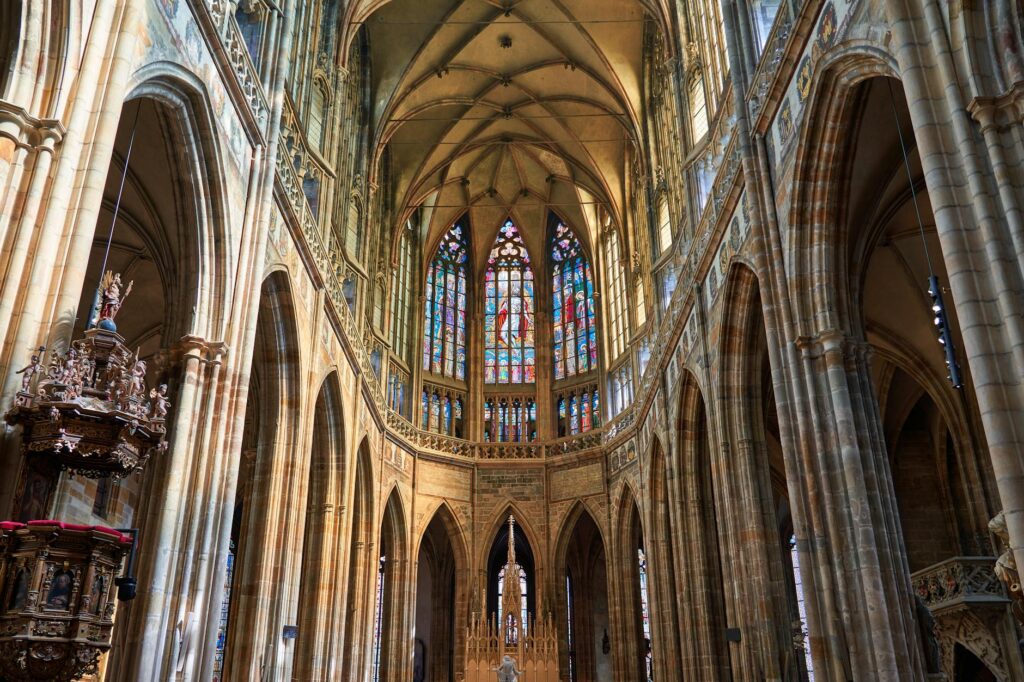
Statues of saints stare down with a mixture of serenity and severity. Gargoyles grimace from cornices not just as practical rainspouts, but as reminders that evil, ugliness, and chaos exist at the periphery of the holy. Angels appear in stone and glass with a human tenderness that undercuts their otherworldliness. Even the rhythm of pointed arches—repeating, ascending, retreating into distance—feels like a visual litany.
We may not read these symbols with medieval fluency, yet the sense of layered meaning, of an environment densely coded with stories, is palpable. In a culture addicted to speed and instant comprehension, entering such a semiotic jungle feels indulgent. You are invited to decode, to guess, to project, to imagine.
The Gothic cathedral doesn’t simply house symbols; it is a symbol. It stands for the human attempt to inscribe meaning onto the world, to carve narrative into stone and glass, to create a container big enough for God and doubt and fear and beauty all at once. That ambition, that refusal to reduce the world to the purely practical, is its deepest form of luxury.
The Psychology of Awe and the Sweetness of Submission
Walk far enough into a Gothic nave and a curious emotional shift occurs: your sense of self contracts. Not in a humiliating way, but almost with relief. You are no longer the protagonist of your own narrative, constantly performing, producing, self-curating. You are small. You are temporary. You are, in the best possible sense, irrelevant.
Psychologists call this experience awe: the encounter with vastness that transcends current understanding and forces a mental reset. Studies suggest that awe can make us more generous, less self-absorbed, more connected to others. The Gothic cathedral is a purposely constructed awe machine.
Its luxury, then, is not only aesthetic but psychological. It allows you to surrender the exhausting burden of centrality. In a world that constantly tells you to optimize, to hustle, to shine, the cathedral offers a different invitation: be quiet, be small, be a single human in a very large mystery. This is not the punishment of insignificance; it’s the sweetness of proportion.
The gloom, the height, the echo, the stories in glass and stone—all conspire to produce this emotional recalibration. You feel yourself both diminished and expanded: smaller in the face of the building, yet oddly enlarged by the alignment with something beyond your daily concerns. That inner stretching—that luxurious sensation of participating in a bigger storyline—is part of why these spaces haunt our memory long after we’ve walked back into the daylight.
Sacred Spaces in a Secular Age
Why do Gothic cathedrals still draw us now, when many of us no longer believe in the theology that financed them? What does “sacred” mean in a world of economy-class flights and open-plan offices?
Part of the answer is that the cathedral operates on levels older than doctrine. It speaks to the body before it speaks to the mind. You don’t need to understand Christian eschatology to feel your breath catch under a fan vault, or to stand transfixed before a window of ultramarine glass. The cathedral doesn’t require belief; it requires attention.
In that sense, it anticipates the modern museum, the luxury hotel, the concept store—spaces where architecture is deployed to choreograph emotion. Yet the cathedral differs in one crucial aspect: it is not primarily about you. It doesn’t flatter your individuality. It doesn’t promise that you will be transformed, optimized, or entertained. Instead, it asks that you adjust yourself to it.
In a time when so much architecture is either aggressively utilitarian or anxiously “iconic,” the Gothic cathedral’s refusal to negotiate with our convenience or our ego feels radical. It offers the rare, almost subversive luxury of encountering something that is not asking for your approval, your engagement, or your consumption. It simply is, on its own terms.
And still, we go. We line up, phones in hand, to step into the dimness, to tilt our heads back, to photograph light as if we could capture the experience. Behind the tourist impulse lies a quieter, more private desire: to be moved, to be stopped in our tracks, to feel again that there are things in the world that exceed us.
The Cinematic Cathedral: A Stage for the Inner Life
There is a reason filmmakers love to set scenes in Gothic cathedrals. These spaces do half the narrative work for them. A character stepping into the nave is suddenly reframed: their secrets, their guilt, their longing appear in sharper relief. The building becomes a visual metaphor for the interior drama.
We recognize this instinctively when we visit in person. The cathedral is not only a container for ritual; it’s a stage for our own unspoken stories. People sit alone in pews, not necessarily praying, but thinking. Tears appear—sometimes caused by faith, sometimes by music, sometimes by the strange permission the space gives to feel deeply without explanation.
The luxurious gloom is crucial to this. Shadows offer privacy in a public space. You are visible and hidden at once. You can look up and be overwhelmed, or look down and disappear. The cathedral accommodates both gestures with equal generosity.
This, perhaps, is why the Gothic remains so psychologically magnetic. It is not content to be admired as an artifact. It invites projection, confession, reverie. The building does not simply contain the sacred; it evokes the sacred imagination—the capacity to sense, if only fleetingly, that there is something more than what we can measure, purchase, or scroll past.
Why the Gloom Still Glows
In the end, the luxurious gloom of Gothic cathedrals is not a matter of nostalgia or architectural fandom. It is a living aesthetic and emotional experience that speaks, with surprising precision, to modern hungers.
We crave spaces that are more than functional, more than branded, more than comfortable. We crave depth, ambiguity, and that rare sense of standing in the presence of something that does not need us, yet somehow completes us. The cathedral provides all of this in one overwhelming gesture of stone, glass, and air.
Its luxury is not merely in its materials, but in its attitude toward human experience: that our fears, our doubts, our awe, our desire for meaning, deserve architecture grand enough to hold them. In a bright world of perpetual exposure and shallow immediacy, the Gothic cathedral dares to be dark, slow, and inexhaustible.
You step back into the street, blinking against the daylight. The city resumes its chatter. But something of the interior lingers—a remembered coolness on the skin, a vertical echo in the spine, colors floating behind the eyes. The gloom, it turns out, was not absence but fullness: an opulent, shadowed treasury of feeling that you carried out with you, hidden, like a secret relic of your own sacred imagination.
AI Notice: Some visual content in this article may have been created or enhanced using artificial intelligence (AI) for artistic, editorial or illustrative purposes. Learn more about our approach in our AI & Editorial Principles.


