The Hidden Psychology of Gothic Cathedrals
The first sensation is not visual. It is bodily.
You step inside and the air changes: cool, mineral, faintly scented with beeswax and old incense. The door thuds shut behind you and the city drops away as though someone has lowered a velvet curtain. Above, stone rises out of sight, not as a wall but as a vertical exhalation. Your chest tightens, your steps slow. You are no longer merely in a building; you are inside an emotion.
This is the secret genius of Gothic cathedrals. Long before psychology had a vocabulary, medieval builders understood how space could rearrange the human mind. They carved, stacked, and engineered not only for God, but for the tremor that runs through a human being when faced with scale, light, and mystery. Gothic architecture is not just a style. It is a carefully calibrated machine for awe.
Can You Name the Masterpiece?
Ten masterpieces. Ten questions. How well do you know the history of art?
To stand beneath a Gothic vault is to feel something that words struggle to hold. Yet those feelings are not random. They are the result of a hidden psychology written into stone.
Entering a Mind Made of Stone
Every Gothic cathedral begins with a threshold: a moment of passage where the everyday loosens its grip.
Outside, the façade is crowded, almost overwhelming. Rows of saints hover above the portal like a stone chorus. Angels, kings, sinners, monsters—each one fixed in their own eternity, peering down through a haze of car fumes and smartphone screens. The modern visitor might glance, snap a photo, move on. But the façade’s original function was more intimate and more unsettling: it was a mirror, carved in limestone, of the human condition.
Can You Guess the Artist?
Three clues. One artist. How quickly can you identify the painter?
Look again. The Last Judgment often spreads across the central tympanum: the dead rising from their graves; scales weighing souls; demons hauling the damned in grotesque delight. For the medieval mind, these were not distant legends. They were a compressed psychological drama played out at the very place where your body hesitates before entering.
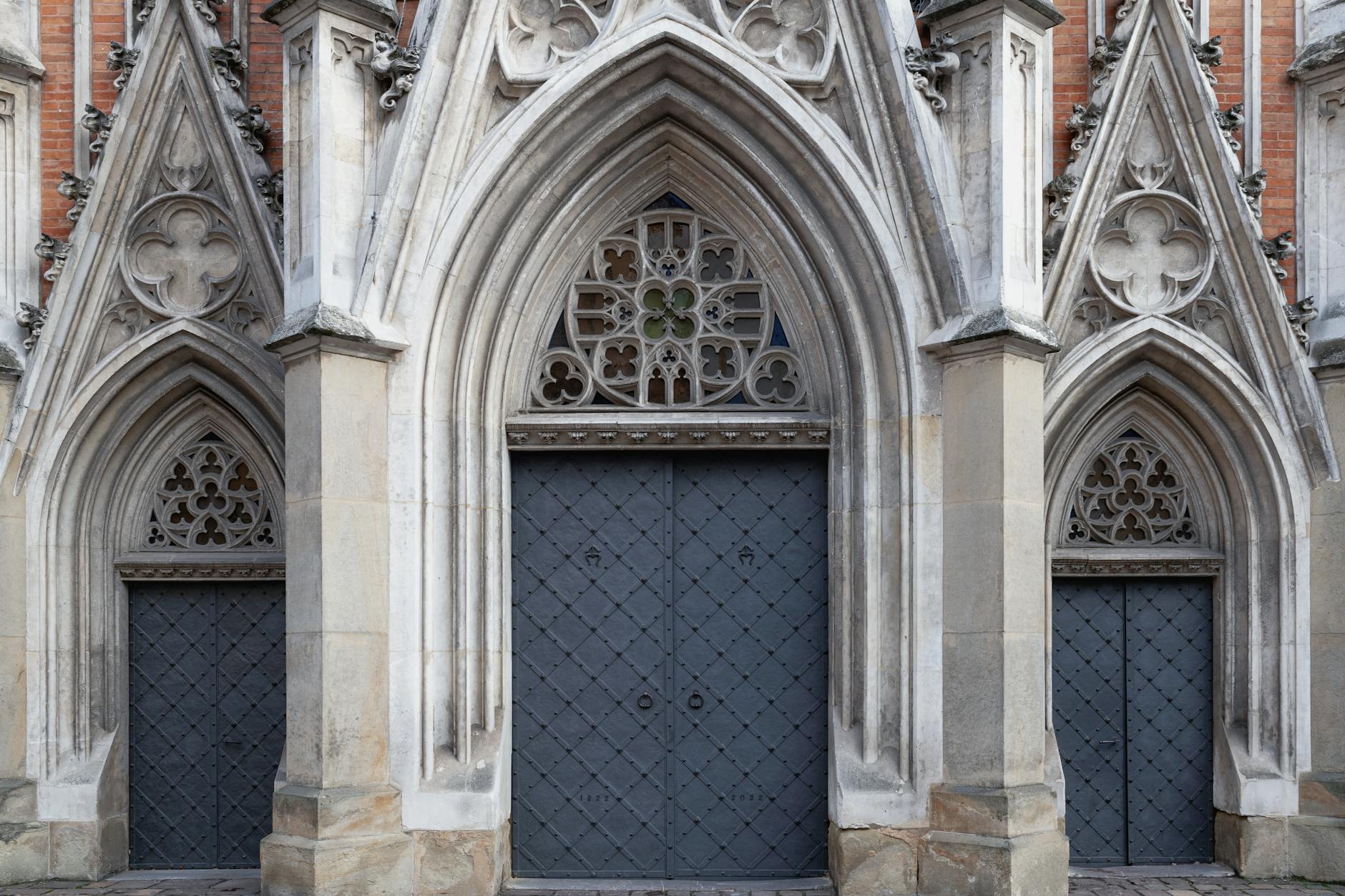
The façade demands a quiet question: Where do I stand in all this?
In psychological terms, it invites self-awareness—though with the sharp edge of fear. Awe, after all, is not purely pleasant. It lives in the borderland where wonder brushes against terror.
And then: you cross the threshold.
The doors give way to shadow and stone, and the interior stage-set of the psyche reveals itself. The sudden cooling of air, the dimness, the muffled sound of footsteps—this sensory reduction is not accidental. Gothic cathedrals were conceived to orchestrate transition: from outside to inside, from noise to stillness, from temporal chaos to a carefully controlled vision of order.
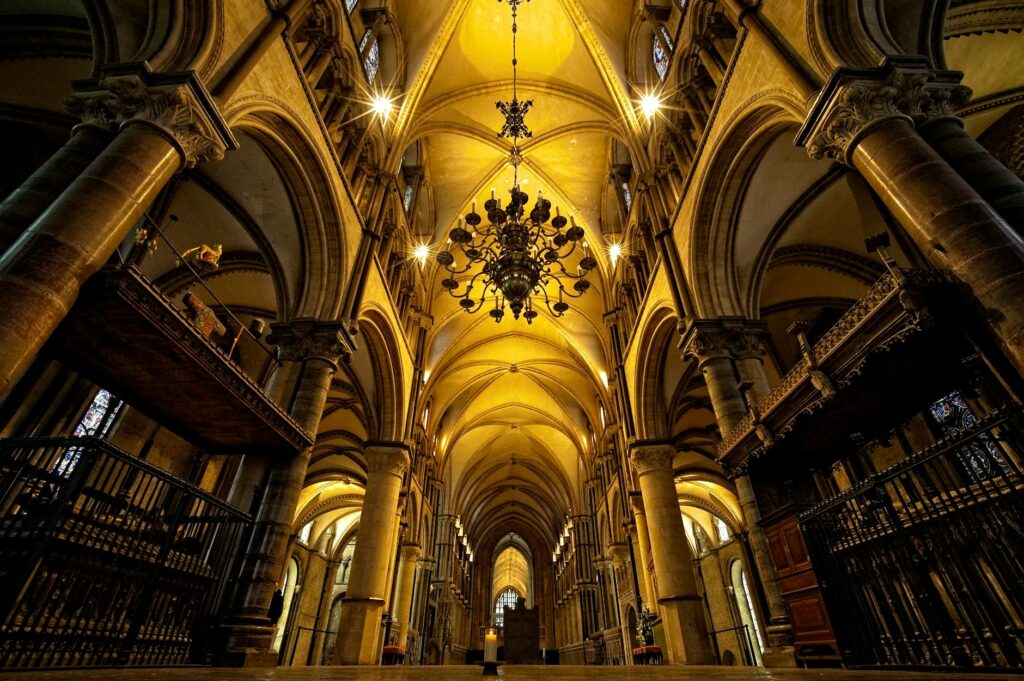
Stepping in, you are gently disoriented. Nothing behaves as it should. The columns are too tall, the windows too fragile to be true, the ceiling too far to quite believe. That subtle destabilization—of scale, of logic—is the opening move in the architecture of awe.
Vertical Longing: The Psychology of Height
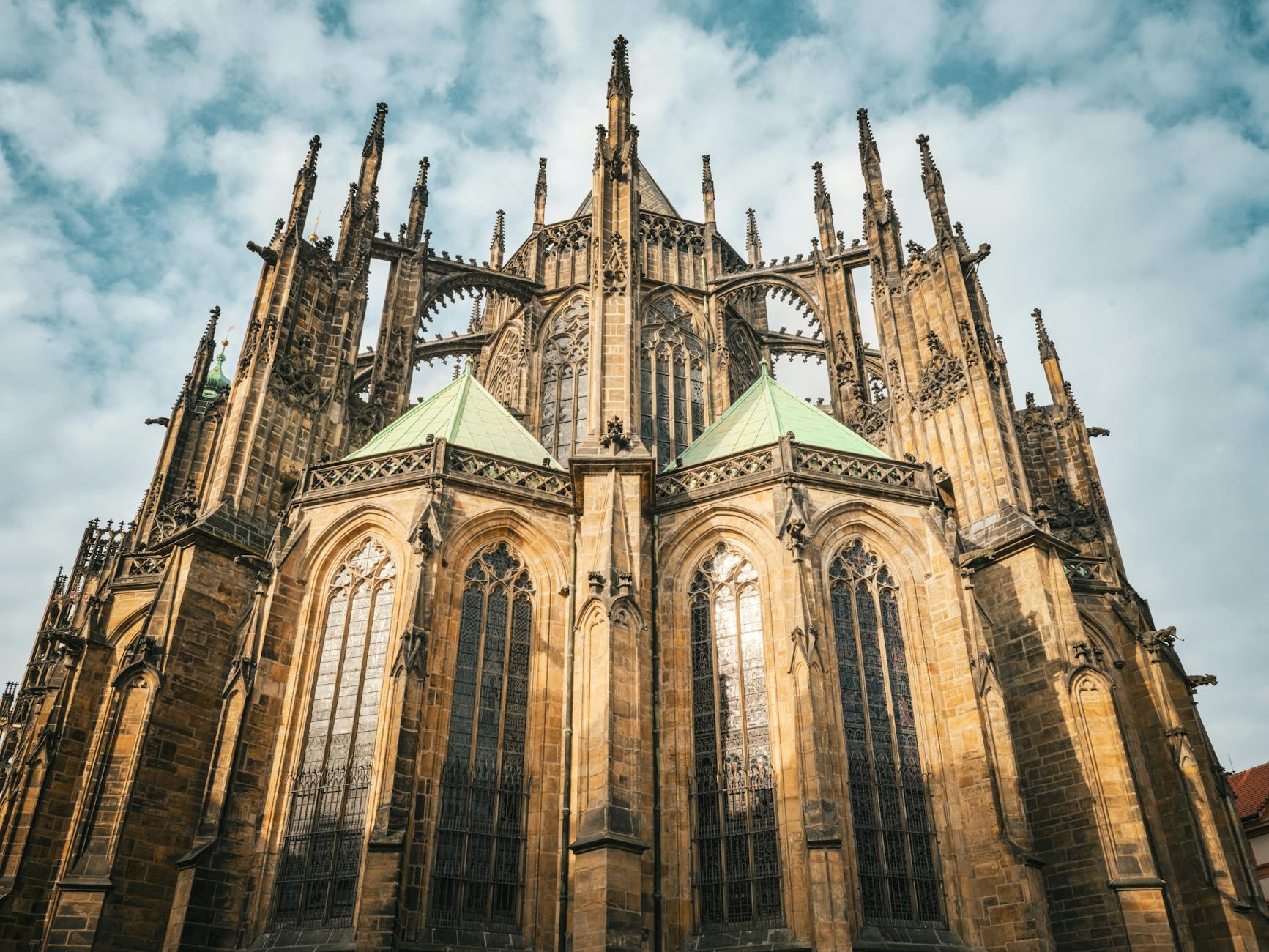
The Gothic revolution was, at its core, a manipulation of height and light. But beyond the engineering brilliance—pointed arches, ribbed vaults, flying buttresses—there is a deeper question: Why did height matter so much? What did medieval builders intuit about the human psyche?
We underestimate how instinctive our response to verticality is. Looking up triggers a primal cocktail of vulnerability and fascination. High cliffs, towering trees, mountains—these were once both shelters and threats, vantage points and dangers. Height calls us to attention.
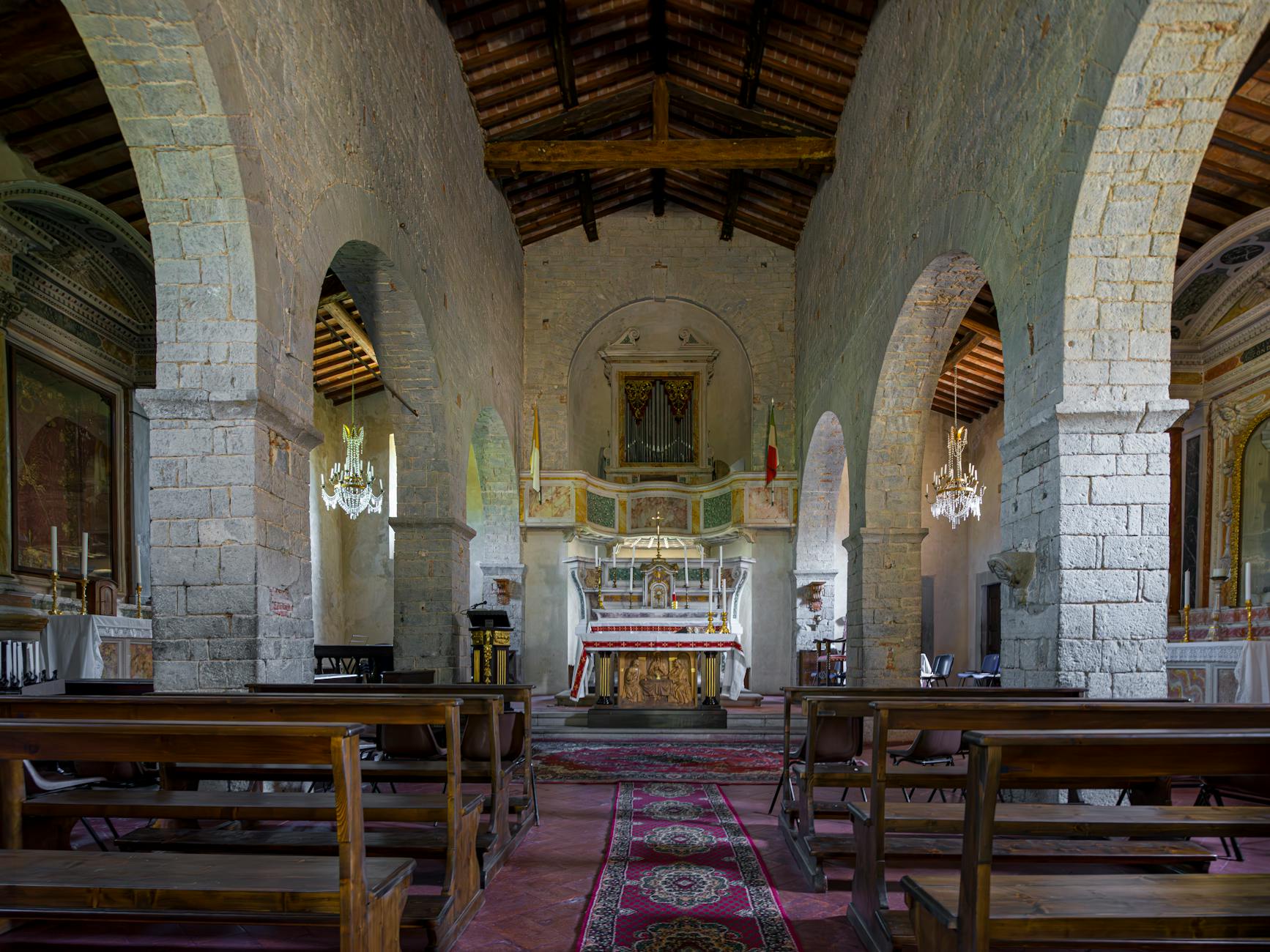
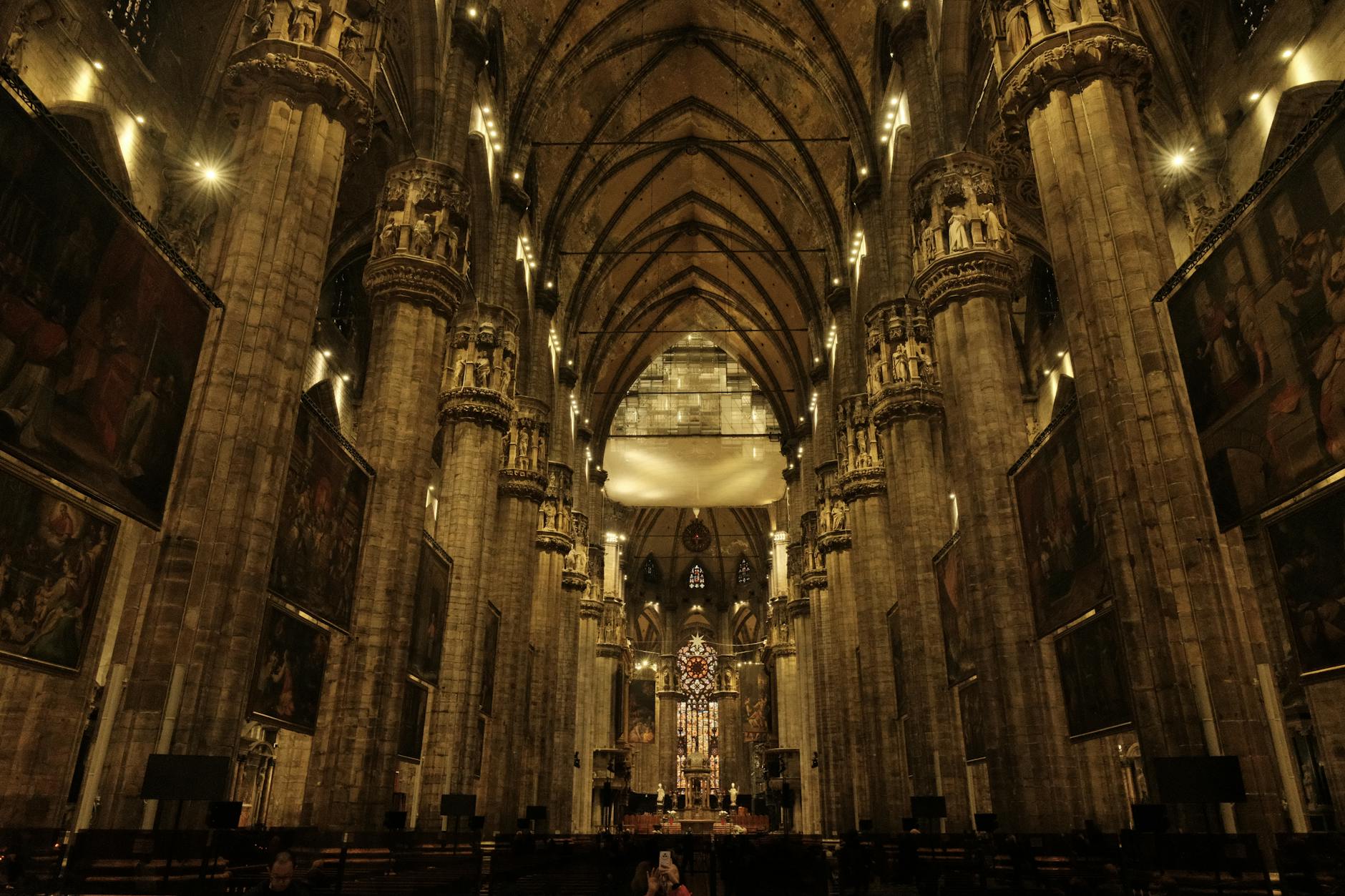
Gothic cathedrals amplify this biological reflex. The nave narrows as the walls rise, channels of stone guiding the gaze, insisting on an upward trajectory. The columns are not muscular Romanesque pillars but slender shafts bundled like reeds, dissolving into the ribs of the vault. They create the illusion that mass is being stretched, almost impossibly, toward a point beyond sight.
This is not just symbolic transcendence. It is a physical rehearsal of it. Your neck tilts, your eyes strain, your breathing adjusts. To look up is to expose your throat, to yield your posture. Subconsciously, you enter a receptive state.
Medieval theologians spoke of anagoge: the lifting of the mind from material to spiritual realities. Gothic architecture performs an anagogic gesture through space itself. By compelling the body to enact an upward movement, it coaxes the mind to follow. Height becomes a silent conversation: between your finiteness and the suggestion of something beyond it.
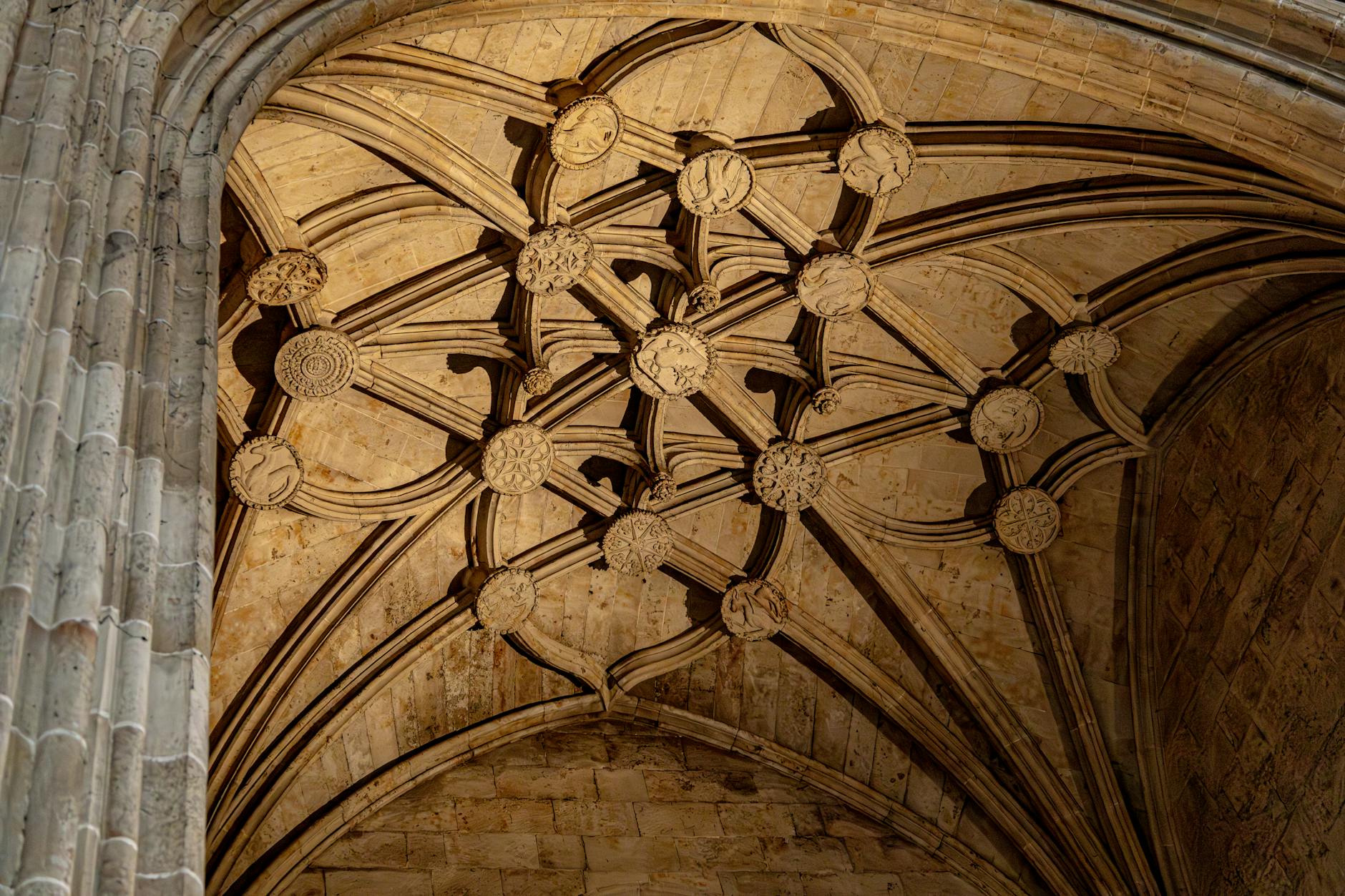
At the apex of the vaults, the ribs lock into a boss—a stone knot that anchors the upward rush. These are often gilded, carved with foliage, animals, or scenes from scripture. They are small, almost invisible from the floor, yet psychologically potent. The entire soaring system converges to a single point, a stone reminder that even in apparent infinity, the human mind craves a focus, a center, a place where all lines meet.
Light as Spiritual Weather
If height is the cathedral’s architecture of longing, light is its architecture of revelation.
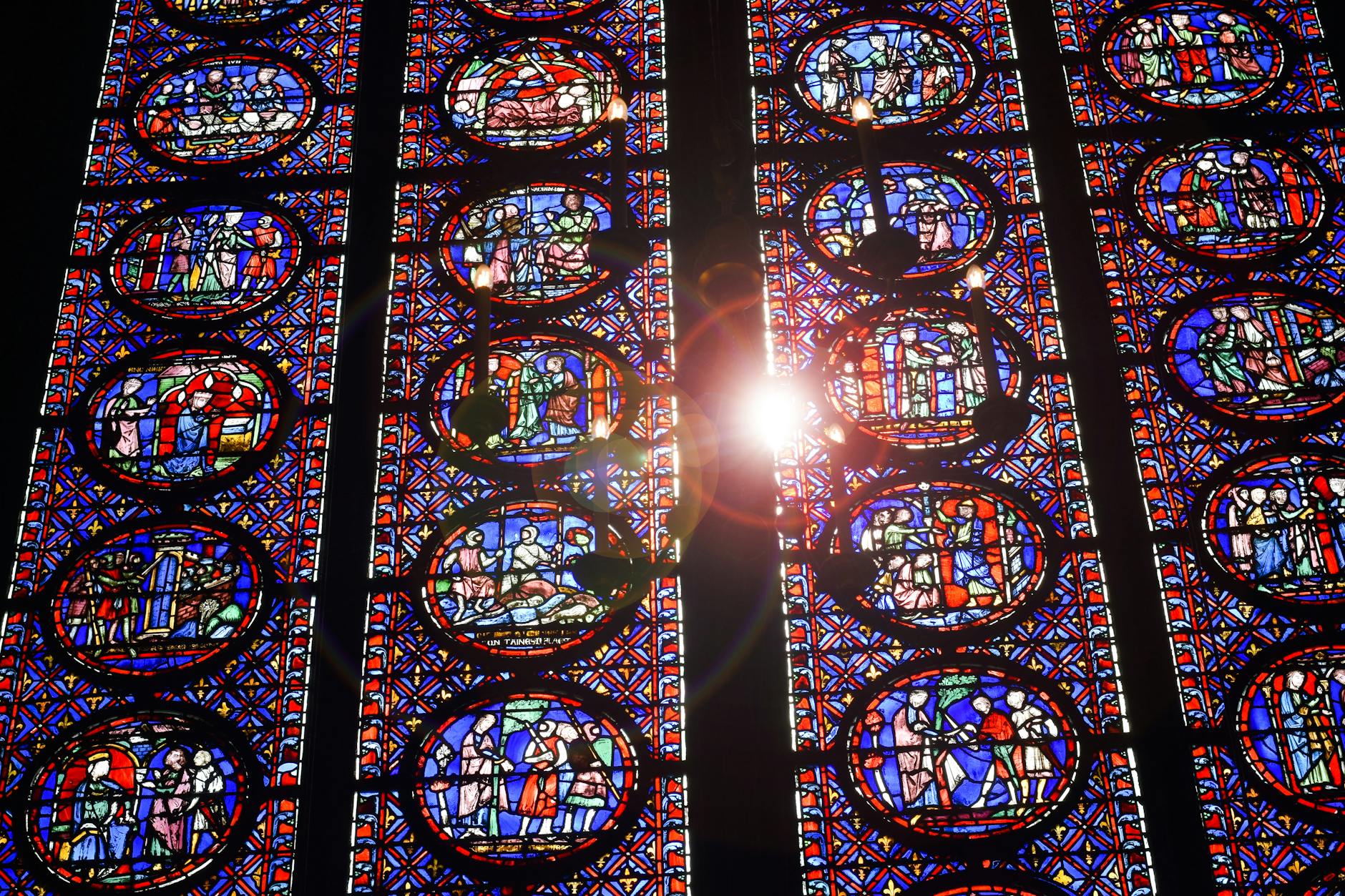
Gothic windows are not simply apertures. They are membranes between worlds. At Chartres, at Sainte-Chapelle, at Notre-Dame de Paris, stained glass transforms daylight into a slow, chromatic storm. Deep blues pool around the feet; rubies spill across columns; golds flicker across faces as though some invisible fire is playing upon the stone.
The glass does what all powerful art does: it makes us conscious of something we normally ignore. We rarely think about light until it changes. Inside a Gothic cathedral, we become aware not just of light, but of time made visible. Morning sun sets one transept ablaze; afternoon slides into the clerestory; winter light falls cold and thin, sharpening stone; summer floods the interior with honeyed warmth.
This moving weather of color and shadow lends a subtle instability to the space. The building is never quite the same twice. On some level, the mind understands: even here, in this fortress of permanence, change persists. Mortality enters the stone, though gently, in gradations of blue and gold.
There is a drama in how light is given and withheld. The lower walls are often sombre, encased in shadow. The human realm—the level of faces and feet—is kept deliberately dim. But high above, in the clerestory, light pours in unrestrained. It is as if illumination belongs primarily elsewhere, in a zone slightly out of reach. The spatial hierarchy echoes a psychological one: humans in penumbra, divinity in blaze.
This vertical distribution of light maps, in pure sensory terms, an inner landscape: doubt below, clarity above; confusion at ground level, meaning hovering overhead. The Gothic cathedral does not simply tell you that meaning exists beyond the visible; it lets you feel it on your skin.
Stone Bestiary of the Unconscious
Then there are the creatures.
It is easy to think of gargoyles and grotesques as medieval whimsy, or mere drain-spouts and decoration. Yet they are also a vivid externalization of what refuses to be sanctified inside. The Gothic cathedral, often read as a pure symbol of heavenly order, is rimmed with monsters.
Perched on balustrades, clinging to cornices, these hybrids of man, beast, and nightmare leer over the city’s roofs. They are the repressed made architectural: lust, gluttony, fear, mischief, chaos—condensed, fired, and fixed in place. The boundary between sacred and profane is not a clean line but a negotiation.
The grotesques are guardians, but their guardianship is ambiguous. They keep watch; they repel; they mock. By placing them outside the building, the medieval mind performs a kind of psychic sorting. The interior is for the ordered, the sanctified, the narratively coherent. The exterior is where the unruled energies live: weather, demons, laughter, decay.
Yet, crucially, they are not banished from the cathedral. They cling to it. The sacred building is not a sealed capsule of purity but a structure that acknowledges its own edges, its own shadows. In this tension, we see something profoundly modern: a recognition that wholeness requires more than light alone.
Walk slowly around the exterior of a cathedral, and the mood shifts from awe to something like complicity. You recognize yourself more easily in the grotesques than in the perfect saints. This is the architecture’s unspoken confession: the human psyche is a composite of both.
A Theatre of Stories, A Map of the Soul
If the Gothic cathedral feels psychologically rich, it is because it was designed as a total work of narrative art. In an age before mass literacy, its walls, windows, and floors were not decoration but education, yes—but also reflection, consolation, warning.
Rose windows, for example, are not just flamboyant ornaments. Their geometry borrows from flowers, wheel hubs, halos, and cosmic diagrams. To stand centered beneath a rose window is to stand under an ordered universe—a wheel of stories, a mandala of meaning.
Look closely and the radiating petals teem with scenes: prophets, angels, labors of the months, zodiac signs, parables. Medieval viewers would have recognized these motifs quickly; for us, they become a sort of antique cinema, frames frozen mid-film. But beneath the narrative specifics is a deeper psychological proposition: life is pattern, not chaos. There is a rhythm to human existence, mirrored in seasons, in stars, in the circling stone.
The floor plan itself is a sign. The Latin cross layout inscribes suffering into the very geometry of the building. Nave and transept intersect like wound and embrace. To move through the cathedral is to trace, often unconsciously, the outline of a body sacrificed. The path from the door to the altar becomes an enacted story: entrance (birth), passage (life), crossing (crisis), choir (contemplation), apse (mystery, or grace).
Pilgrims would carry their burdens through this symbolic landscape: sickness, grief, fear, unspoken desires. The building offered not a straightforward cure, but a script. Here is where you stand—in shadow, in mid-journey, under the tormented Christ or the serene Virgin. The architecture provided spatial metaphors for inner states long before therapy rooms did.
Silence, Sound, and the Inner Voice
We think of cathedrals visually, but their psychological power is also acoustic.
A whisper ricochets up the nave; a footstep echoes; a cough blooms into a brief embarrassment of noise. In such a space, you become acutely conscious of your own sound. The building makes you audible to yourself.
Chant, organ, and bell further shape the inner weather. Gregorian chant, with its slow, modal arcs, is exquisitely suited to the reverberant stone. Notes cling to the air longer than they should, overlapping with the next, softening time. Listening, your breathing naturally falls into a slower cadence. The body, once more, is coached into a receptive mode.
When the great bells toll, the psychological boundary between inside and outside collapses. Their vibration passes through walls, through bodies, through the city’s streets. The cathedral declares: this interior state is not limited to these stones. It spills outward.
Even in silence, the building hums. The faint rumble of distant traffic, the rustle of jackets, the click of a camera—all are swallowed and returned altered. There is a sense that the cathedral is listening back. You lower your voice. You measure your movements. The architecture draws out a more deliberate, more reflective version of you.
Why Gothic Still Haunts Us
In an age of glass towers and impenetrable screens, why do these medieval giants still exert such pull?
Partly, it is scarcity. Surrounded by the instant, the digital, the endlessly replaceable, we encounter in Gothic cathedrals an almost indecent density of time. Every stone laid by a forgotten hand; every window a survival of fire, war, iconoclasm. The building does not just house history—it is history, petrified.
But there is more. The psychology of Gothic speaks fluently to modern anxieties, even when we have forgotten its theology.
We live now in what could be called a horizontal culture: feeds that scroll sideways, buildings that stretch outward, screens that flatten everything into the same plane. Gothic cathedrals insist on the vertical. They are a rebuke to the purely lateral life. Look up, they whisper, not in pious obligation but in existential curiosity. What lies above your constants? What exceeds your field of view?
Their darkness, too, is newly relevant. Contemporary architecture is obsessed with clarity: open plans, transparent facades, daylight flooding every corner. The Gothic imagination understood that the human psyche needs shadow—rooms where not everything is immediately seen, where the eye rests and the mind wanders.
In these dim naves, we are permitted not to perform. No audience, no algorithm. You are, strangely, more alone with yourself than in any private room, precisely because you are also part of something larger. The anonymity within grandeur is liberating. You can feel small without feeling insignificant.
There is, as well, the intrigue of incompletion. Many cathedrals took centuries to build; some remain technically unfinished. Towers end abruptly; plans were altered mid-construction; façades tell mismatched stories. We are used to polished final products; the Gothic cathedral offers instead a living draft, a work in progress across generations.
For the modern visitor, this is quietly reassuring. Our lives, too, are in progress, our inner cathedrals wildly unfinished. Standing inside these vast, imperfect masterpieces, we sense a kinship: we are also half-built, cracked, patched, but still reaching upward.
Architecture of Awe, Architecture of the Self
Underneath the flying buttresses and traceried windows lies a simple, disarming truth: Gothic cathedrals are experiments in how space can move the human spirit. Their success is measured not in square meters, but in the subtle adjustments they make to our inner posture.
You walk out, eventually. The doors open; noise floods in. Everything beyond the parvis seems strangely thin for a moment—flat, overexposed. It passes, of course. You check your messages. You think about lunch.
Yet something lingers. A faint ache in the neck from looking up. The afterimage of deep blue and red on the inside of your eyelids. The memory of how small you felt, and how strangely whole.
The hidden psyche of the Gothic cathedral is, in the end, our own. Its height is our longing; its darkness, our unarticulated fears; its light, our fragile hopes that meaning might exist—somewhere, somehow—above the noise.
These buildings are not relics of a vanished faith so much as enduring instruments for an experience that remains urgently human: to be confronted, gently but unmistakably, with the vastness beyond ourselves, and to discover that awe does not diminish us. It enlarges the room in which our inner life can breathe.
AI Notice: Some visual content in this article may have been created or enhanced using artificial intelligence (AI) for artistic, editorial or illustrative purposes. Learn more about our approach in our AI & Editorial Principles.