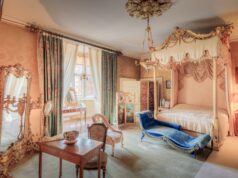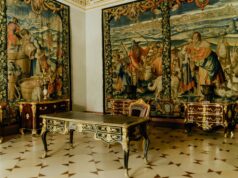

Rococo Revival furniture swept through 19th‑century drawing rooms like a theatrical encore—lavish, curvaceous, and unapologetically ornamental. At a time when Europe and the United States were undergoing rapid industrialization and social upheaval, this rebirth of 18th‑century French elegance offered a powerful fantasy: a return to aristocratic refinement, intricate craftsmanship, and sensuous forms. Today, collectors, decorators, and museum curators regard Rococo Revival not as a mere copy of the past, but as a distinct style that reveals how the 19th century reimagined luxury, status, and comfort.
Far from being a periodic nostalgic fad, Rococo Revival combined two worlds: the exuberant beauty of Louis XV France with the technological breakthroughs of Victorian Britain. Machinetooled parts, new upholsterers practices and growing middleclass markets crashed into sinuous shapes and exuberant carving. Today institutions like The Metropolitan Museum of Art, the Victoria and Albert Museum and the Smithsonian Institution have numerous exemplary examples of how refined and diverse a style can be.
Getting a grip on the Rococo Revival furniture means moving away from sweet serpents and shells to consider the social, economic and artistic movements that produced it. Who ordered them? Why were craftsmen in Paris, London, Philadelphia and Vienna all reviving rococo in the same period? How do you tell the difference between authentic 18thcentury rococo and revival rococo, or between the 19thcentury revival styles? The following article considers those issues from historic, design, and connoisseur perspectives using museum scholarship and concrete examples.

Origins of Rococo Revival: Nineteenth‑Century Nostalgia
Rococo Revival emerged in the early to mid‑19th century, roughly from the 1830s through the 1870s, as part of a much broader “revivalist” culture. Historicism became a guiding principle of design: Gothic, Renaissance, Elizabethan, and Louis XV styles were all revived to suit modern needs. The Victoria and Albert Museum notes that the 19th century was “remarkable for the eclecticism of its styles, drawing inspiration from many past periods and cultures.” Rococo Revival occupied a particularly glamorous niche within this eclectic trend, associated with fashion, sociability, and domestic display rather than religious or civic symbolism.
The rococo originated in 1730, established by Louis XV, in France. It was characterized by asymmetry, delicacy and humorous decoration. That means shells, Cscrolls, leaves or painted to depict all sorts of delicate flowery design. The rococo was replaced by more geometric classicism, when the 18 century drew to a close. The 19 century brought the renaissance of the rococo precisely because it was such a whaste from the archaeological classicism of the previous century. The growth in industrialcities and in population of middle classes bought a romanticism that could be found in this intimate and informal ornament, promising affectiong away to a comfortable, luxurious domestic world.

The revival was hastened by cultural events. Exhibitions throughout the world, such as Great Exhibition of 1851 in London, the Exposition Universelle of 1855 and 1867 held in Paris, brought historicist furniture to the masses. The Louvre Museum and other prominent European collections increasingly exhibited 18th century French interiors, causing demand to increase for compatible objects. Those able to afford them bought furniture which incorporated designs from the past into the practical necessities of a 19 th Century lifestyle with heavier upholstery, more comfortable spring seats and curious shapes like the “parlor suite”.
Defining Features: What Makes Furniture Rococo Revival?
Rococo Revival furniture is visually dramatic but stylistically coherent once you know what to look for. The hallmark is the use of rocaille ornament—shell‑like scrolls, C‑ and S‑curves, and elaborate foliage—applied to mid‑19th‑century forms. Unlike the relatively light, small‑scale pieces of the 18th century, Rococo Revival items are often larger, more robust, and more heavily upholstered. The Metropolitan Museum of Art describes mid‑19th‑century revival furniture as “more monumental and weighty” than its 18th‑century predecessors, even when repeating similar motifs.

Curved outlines are also important: balloonback chairs, cabriole or serpentine legs, sweeping crest rails surmounted with carved shells, flowers or pierced scrollwork. Sofa and armchair fronts often appear as ‘slipper’ or front rails following the curve of the back. Comfort is also an issue. Deep cushioned seats, tufted backs and broad proportions distinguish the Rococo Revival from more formal styles such as Neoclassical and Empire. Where original rococo had been light, the Revival is often rich.
Surface finishes and other materials also indicate the style. In France, gilded beech or painted woods persisted in the 19 th century, but Britain and the United States preferred sombre dark woods such as walnut, rosewood and mahogany. Some sumptuous fabrics such as brocades, silk damasks and, with time, machine-woven velvets would further an almost theatrical effect. The National Museum of American History at the Smithsonian Institution notes that American Rococo Revival parlor suites such as were produced in New York and Philadelphia “combined exuberant carving with the latest in upholstery technology,” making them “sumptuously decorated but surprisingly comfortable domestic interiors.”
A Comparative Snapshot: Key Characteristics
The following table summarizes defining traits of Rococo Revival furniture and contrasts them briefly with original 18th‑century rococo:
| Feature | 18th‑Century Rococo (Louis XV) | 19th‑Century Rococo Revival |
|---|---|---|
| Period | ca. 1730–1760 | ca. 1830–1870 |
| Typical Materials | Gilded beech, walnut, marquetry, silk covers | Dark walnut, rosewood, mahogany, heavy upholstery |
| Scale & Proportions | Light, relatively small, elegant | Larger, heavier, more monumental |
| Primary Motifs | Shells, rocailles, C‑scrolls, flowers, asymmetry | Same motifs, often more densely and symmetrically applied |
| Construction Techniques | Hand‑carved, traditional joinery | Mix of hand‑carving and machine‑assisted production |
| Comfort & Padding | Moderately padded seats | Deep cushions, sprung seats, tufted backs |
| Typical Forms | Fauteuils, bergères, commodes, console tables | Parlor suites, sofa sets, étagères, side chairs, center tables |
| Visual Effect | Airy elegance, playful lightness | Lush, theatrical, richly domestic |
Understanding these distinctions is crucial for attribution and valuation. Many 19th‑century pieces closely emulate 18th‑century precedents, but their construction details—machine‑cut screws, standardized components, and more regular joinery—betray their later date. Museums and auction houses rely heavily on such construction evidence, alongside stylistic analysis, to differentiate original rococo from revival works.
Centers of Production: Paris, London, Vienna, and Beyond
Paris remained the symbolic heart of Rococo Revival, drawing upon its 18th‑century heritage and unmatched tradition of luxury craftsmanship. Ébénistes and menuisiers (cabinetmakers and chairmakers) produced suites of furniture inspired by royal models held in the Garde‑Meuble and later in public collections like the Louvre. Elite Parisian firms such as Jeanselme and Émile Pignatelli combined rococo motifs with state‑of‑the‑art upholstery, often collaborating with interior decorators to create unified ensembles of furniture, textiles, and wall coverings.

London, however, provided a more popular, primarily commercial, reading, with the flourishing Victorian furniture business in them. Workshops in Clerkenwell and Shoreditch supplied a materials-mad, burgeoning middle class with Rococo Revival for any room setting, both practical and fashionable, all eager to reflect aristocratic style and taste. British parlour suites today, at the V&A pictured, can be seen to include a walnut and rosewood with exuberant carving of rococo motifs and Victorian floral exuberance. Where 18thcentury pre-revolutionary French aristocrats were the true, frozen-in-time patronal dynasty, it is clear that during means of catering for the burgeoning middle classes, at best, simplified, accessible Rococo Revival became.
Centers in Vienna, Berlin and elsewhere in Central Europe developed several variations of their own, combining rococo characteristics with Biedermeier or Neorococo tendencies in much of the same period far into the age of Biedermeier and Aestheticism well into the second half of the 19th century. The most unusual in the Revival style, however, were major American cities such as New York, Boston and Philadelphia, which produced some of the most individualistic examples of the styles. Best known among furniture-makers were John Henry Belter, Alexander Roux and J. & J. W. Meeks, who earned a reputation for intricately carved walnut and rosewood parlor furniture. As the Smithsonian Institution states, when something could not be done by hand, Belter‘s patents on the new lamination process allowed “incredibly intricate, pierced carving that could neither support itself nor be constructed in purely solid wood, yet remained remarkably stable a technological first for American furniture as a whole.”
Notable Makers and Iconic Pieces
Several names dominate scholarly and collector discussions of Rococo Revival, particularly in the United States. John Henry Belter, a German immigrant working in New York, stands out for his technical ingenuity and distinctive visual language. By laminating multiple thin sheets of rosewood and then carving them as a composite block, Belter achieved deep, delicate, and sometimes openwork designs that would have been difficult or impossible in solid wood. The Metropolitan Museum of Art owns several Belter pieces, including a celebrated rosewood sofa whose crest bristles with fruit, flowers, and scrolls—nearly sculptural in effect.

In Europe the most prolific of styles and most popular among the artisans were still the major manufacturers. Workshops in Paris regularly branded or labeled the work, thus preserving a record of the craftsmen involved, and the demand that stimulated such practice. Items can still be seen to this day in the Louvre or the Musee des Arts Decoratifs in Paris, where the frames have been re-upholstered with 19thcentury fabric, and so the fine delineation of the rococo is lost. The odd workshop such as Gillows of Lancaster and London also manufactured items in a Rococo Revival style but are far more widely associated with the Gothic and Renaissance revival.
Research published in catalogues and archives from museums is also vital to the identification of these works. Commentary found in publications by the Victoria and Albert Museum on its own holdings of furniture often stresses that revival styles should not be seen “as imitative, but as creative expressions which are driven by their own time and by the spirit of its contemporary technology.” This conceptual change shifts the idea of Rococo Revival away from one of derivative style, towards its understanding as a language that exists within the context of the 19thcentury, acknowledging its relationship to the past while as much to the new industrial modernity that engendered it. Such items as Belter laminated settees, Parisian style gilt parlor furniture, and British walnut balloonback chairs have come to serve as benchmarks to those wishing to identify or interpret revival style furniture.
Collecting, Authentication, and Conservation Today
For contemporary collectors and decorators, Rococo Revival furniture offers an appealing intersection of historical character and practical usability. Unlike some fragile 18th‑century originals, many mid‑19th‑century pieces were robustly constructed and can still serve as functional seating or display furniture once appropriately conserved. Auction catalogues from major houses frequently feature Rococo Revival suites, with American laminated rosewood pieces by Belter or Roux commanding strong prices due to their rarity and craftsmanship.
Authentication though, should be approached with a degree of caution. It is no doubt possible to distinguish between going both backwards and forwards in time for a particular design, but this requires expert knowledge and input in the majority of cases. Construction techniques (such as the effects of machine cut screws, the presence of lamination, the use of saw marks etc), the species of wood used and details of the upholstery history can all provide clues for dating, and several institutions such as the Museums of Fine Arts in the United States have published technical studies and guides. The Smithsonian Institution for example says of American furniture ‘the use of tools used, and materials are often more reliable for dating than stylistic details’.
There are particular problems associated with conservation. Heavy upholstery and deep buttoning may conceal defects, whilst details such as carving may be prone to breakage and inappropriate reenayling in the absence of specialist knowledge. Modern conservators seek to reconcile the desire to preserve as much original fabric and finish as possible, including original upholstery, with the requirement that the piece should remain stable and usable (VD & A, 1981). The Victorian Furniture Museum for example promotes minimum intervention, compatible materials and comprehensive documentation so that any solution can be undone if more appropriate methods become available in the future. In order to retain the value of collectors items owners are advised to seek out expert furniture conservators rather than simply taking furniture to commercial refinishing or reupholstery practitioners.
Rococo Revival in Scholarship and Interior Design
In academic circles, Rococo Revival has moved from the margins of “Victorian taste” to a subject of serious design‑historical study. Curators and historians now treat it as a key case study in 19th‑century historicism, industrialization, and consumer culture. The Metropolitan Museum of Art’s exhibitions on 19th‑century decorative arts, and catalogues from the V&A and the Louvre, have contextualized the style within international networks of production and exchange. The result is a richer understanding of how furniture mediated ideas of class, gender, and domesticity in the Victorian era.
Today, rococo revival furnishings function as centerpieces – not as historically “correct” room elements. Interior designers will juxtapose a carved walnut sofa or balloonback chair against spare architecture, generating a conscious conflict between the sumptuous and the ascetic. The elaborate sculptural effect of rococo revival carving interests decorative arts collectors who identify these objects as wooden sculpture. When judiciously chosen, rococo revival objects can add visual excitement without sacrificing livability.
Simultaneously and additionally, during the 20 th century, sustainability and reuse has become more appreciated in design. Acquiring and preserving older furniture, such as Rococo Revival, years now over adopt a more eco-conscious approach to consume than the sale of mundane new furniture. Museums illustrate it by exemplifying using the long term preservation through their power to ensure that furniture built. And in this manner, Rococo Revival created in an age of industrial growth compare as significant as if now as readily disposed of objects.
Frequently Asked Questions
How can I tell Rococo Revival from original 18th‑century rococo furniture?
Look first at construction and materials. Original rococo (ca. 1730–1760) rarely uses machine‑cut screws, standardized parts, or laminated woods. Rococo Revival (1830–1870) often exhibits more regular machining, heavier proportions, and deeper upholstery. Consulting museum catalogues from institutions like the Metropolitan Museum of Art or the Victoria and Albert Museum can help you compare known examples.
Is Rococo Revival furniture valuable?
Yes, certain pieces are highly collectible. American laminated rosewood works by John Henry Belter and Alexander Roux, fine Parisian gilt suites, and well‑documented British or Central European examples can command significant prices. Condition, provenance, and quality of carving all strongly influence value. More modest, mass‑produced pieces are generally affordable and prized more for their decorative appeal.
Does Rococo Revival have to be used in period interiors?
No. While historically informed rooms can be compelling, many contemporary designers use single Rococo Revival pieces as statement items in otherwise modern or eclectic interiors. Their sculptural silhouettes and rich materials lend themselves well to contrast with simpler surroundings.
Conclusion
Rococo Revival furniture is far more than a nostalgic echo of Louis XV France. It is a distinct 19th‑century style born at the intersection of industrial progress, expanding consumer culture, and a deep fascination with the decorative past. From Parisian gilt salon suites to New York’s laminated rosewood parlor sets, these works reveal how designers and patrons reimagined rococo exuberance for a modern, comfort‑seeking age.
Museums such as The Metropolitan Museum of Art, the Victoria and Albert Museum, the Louvre, and the Smithsonian Institution continue to deepen our understanding of this rich chapter in design history. For today’s collectors and enthusiasts, Rococo Revival offers not only elaborate curves and ornate carving, but also a tangible connection to the social ambitions, technical innovations, and enduring artistry of the 19th century.
AI Notice: Some visual content in this article may have been created or enhanced using artificial intelligence (AI) for artistic, editorial or illustrative purposes. Learn more about our approach in our AI & Editorial Principles.