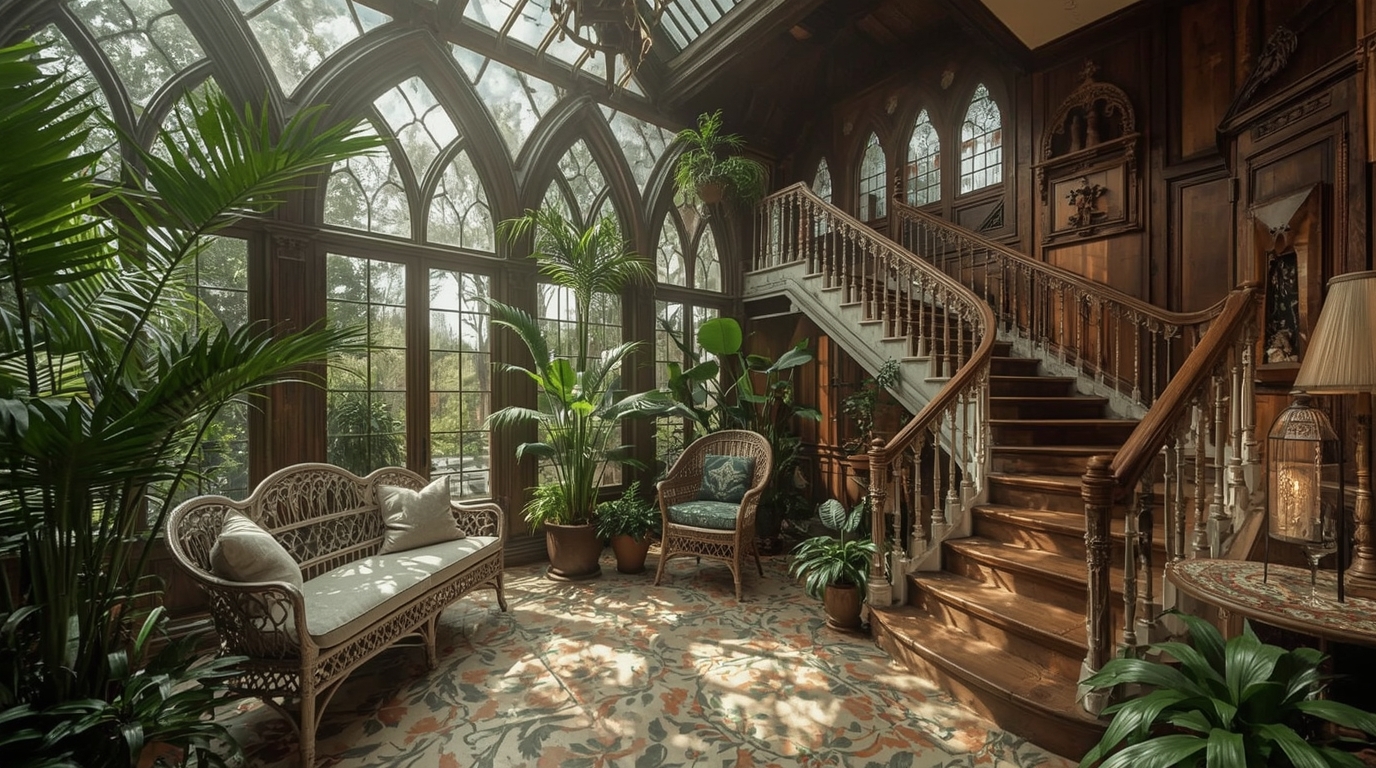

Move Over, Minimalism: French Rococo Sofas Are Dominating 2026 Interiors
French Rococo sofas are some of the most theatrical, sensual, and collectible pieces of seating ever made. With undulating frames, exuberant carving, and luxurious upholstery, they summed up the pleasure‑loving spirit of 18th‑century Paris. Today, a genuine Rococo canapé (the period term for a sofa) can anchor a museum gallery, transform an interior, and command six-figure prices at auction. Understanding what makes these sofas special—historically, stylistically, and technically—is essential whether you’re a collector, a decorator, or simply a design enthusiast.
Quick Answer: What Is a French Rococo Sofa?
A French Rococo sofa is an upholstered, usually wooden-framed seating piece from roughly 1730–1770 in France, characterized by asymmetrical curves, intricate carving, and a light, playful elegance. Often called a canapé, marquise, or bergère de canapé, these sofas were designed for refined socializing in aristocratic salons during the reigns of Louis XV and early Louis XVI.
Can You Name the Masterpiece?
Ten masterpieces. Ten questions. How well do you know the history of art?
You’ll recognize a French Rococo sofa by its serpentine silhouette, cabriole legs, and carving filled with C-scrolls, shells, flowers, and foliage. Frames were typically made of beech, walnut, or oak, often gilded; upholstery was silk damask, brocade, tapestry, or fine wool. Unlike heavier Baroque seating, Rococo sofas look as if they might almost float.

Institutions such as the Metropolitan Museum of Art, the Victoria and Albert Museum, and the Musée du Louvre hold benchmark examples. As the V&A succinctly notes about Rococo furniture: “Above all, it was about displaying elegance, grace and refinement in social settings.” A French Rococo sofa is the three-dimensional expression of that ideal.
Historical Context: Rococo France and the Rise of the Canapé
The French Rococo style emerged in the early 18th century, flourishing under Louis XV (r. 1715–1774). After the rigid formality of Louis XIV’s Versailles, the aristocracy shifted toward more intimate townhouses (hôtels particuliers) in Paris. Interiors became lighter, more personal, and more comfortable, and furniture followed suit. The sofa evolved from a ceremonial bench to a place for relaxed conversation and flirtation.
Can You Guess the Artist?
Three clues. One artist. How quickly can you identify the painter?
By the 1730s–1740s, the Parisian guild system, especially the menuisiers en sièges (chairmakers), had perfected the Rococo seat. These highly regulated craftsmen produced frames of superb quality, often stamped with their names, for elite clients at court and in major cities such as Paris, Lyon, and Bordeaux. Upholstery was carried out by separate guilds, creating a collaborative luxury product that defined French taste across Europe.

The Metropolitan Museum of Art summarizes the change succinctly: “Furniture of the Louis XV period became more curvaceous, more comfortable, and more intimately scaled than that of the preceding reign.” The canapé became the centerpiece of this new, comfort-focused interior culture, acting as both status symbol and social instrument in salons hosted by figures like Madame de Pompadour.
Key Design Features of the French Rococo Sofa
1. Curves, Asymmetry, and Movement
Rococo design is all about movement. A French Rococo sofa typically has a serpentine or camelback crest rail, gently concave or convex arms, and a flowing apron. The line of the frame is almost never straight; it sways and bends with a sense of rhythm and lightness that sets it apart from earlier Baroque or later Neoclassical forms.
Asymmetry was a hallmark of high Rococo. On some early and mid‑century sofas, the carved ornament is intentionally unbalanced—one side may carry a cluster of shells and flowers, the other a different arrangement of scrolls and foliage. This visual “improvisation” expresses what the Louvre characterizes in its Rococo galleries as fantaisie and caprice—a deliberate move away from strict classical order.

The cabriole leg, with its knee curve and inward scroll foot, is nearly universal on French Rococo sofas. It continues the flow of the frame into the floor, creating an uninterrupted, elegant line. The Victoria and Albert Museum notes that such legs “gave furniture a sense of liveliness and grace, as if poised to move.”
2. Carving and Ornamentation
Carving is the most obvious sign of quality in a Rococo sofa. Master menuisiers worked in dense hardwoods that could hold fine detail: beech was particularly favored in Paris. The frames were often left visible—gilded, painted, or waxed—to show off the sculptural skill. Common motifs include:
- C- and S-scrolls (basic Rococo building blocks)
- Shells (coquilles), a signature of the style
- Acanthus leaves and rocaille (rock- and shell-like forms)
- Flowers, buds, and garlands
- Cartouches and rococo masks in grander pieces
According to the Smithsonian Institution, Rococo ornament was “designed to delight the eye with elaborate, seemingly spontaneous decoration.” On a sofa, this decoration is strategically placed: at the crest rail, the arm terminals, the knees of the legs, and the center of the apron. The goal is to animate the frame without overwhelming its structure.

Differences in carving quality are one of the clearest indicators of authenticity and value. Sharp, undercut, crisp detailing suggests an 18th‑century or top-tier 19th‑century revival piece; blunt, shallow, or overly repetitive carving can point to later, lower-quality reproductions.
3. Upholstery, Textiles, and Comfort
While the wooden frame receives most of the scholarly attention, upholstery was crucial to the Rococo sofa’s function and appeal. Original 18th‑century upholstery survives rarely, but documentary evidence from Paris workshops and surviving fragments reveal favored materials: silk damask, brocaded silk, tapestry (often from Beauvais or Aubusson), and fine wools.
The canapé à la reine (with a tall, straight back) and canapé en cabriolet (with a concave back) were the basic forms. Seats were stuffed with layers of natural materials—horsehair, hogshair, tow, feathers—over webbing and springs (introduced mid-century) to improve comfort. En suite decoration meant the sofa upholstery usually matched or coordinated with chairs, wall panels, and window treatments.

As the Met notes: “Upholstery played a vital role in creating the overall color and texture of a Rococo interior.” On a period Rococo sofa, textiles would have been renewed several times over its early life to keep up with fashion. Today, sensitive reupholstery aims to evoke period materials while respecting the historic frame and any surviving original layers beneath.
Types of French Rococo Sofas and Their Functions
1. The Canapé
The word canapé is the period French term most closely equivalent to “sofa.” A classic Rococo canapé seats three or more people, with a continuous upholstered back and a carved wooden frame. Forms include:
- Canapé à la reine – straight or nearly straight back
- Canapé en cabriolet – curved back embracing the sitter
- Canapé confessional – with wing-like sides for intimacy
These sofas stood in drawing rooms and salons, arranged along walls or in conversational groups. Their role was more social than lounging: one sat upright, elegantly, to converse, be seen, and participate in courtly rituals. As the V&A observes, “Furniture was an essential part of the choreography of elite social life.”

The frames of important canapés are often stamped by known makers. Names such as Nicolas Heurtaut, Jean-Baptiste Tilliard, and Nicolas-Quinibert Foliot appear on masterpieces in the Louvre and other major collections. These stamps, typically found on the back of the front rail or under the seat, are central to scholarly attribution and market value.
2. Marquise, Duchesse, and Variants
Rococo taste thrived on variations. Aside from the standard canapé, several related forms developed for specific uses and postures:
- Marquise – a wide, deep armchair for one person, almost a miniature sofa
- Duchesse brisée – a two- or three-part daybed/sofa ensemble, sometimes separated into fauteuil and ottoman
- Canapé à oreilles – with “ears” or wings at the sides of the back, often used near fireplaces
These variations blurred the lines between chair, sofa, and daybed. The Musée du Louvre displays duchesses and marquises in period room reconstructions to illustrate how members of the French elite sprawled, reclined, and arranged themselves in conversation.
Such pieces also served semi-private functions. A duchesse or confessional canapé could be placed in an alcove or cabinet, enabling more intimate conversation away from the main salon. Furniture placement was part of the social code: the type of sofa and its position signaled who was expected to sit there and in what manner.

3. Provincial and Later Rococo
While the purest Rococo sofas emerged from Parisian workshops, the style filtered to provincial centers such as Lyon, Toulouse, and Nantes. Provincial Rococo sofas often feature simplified carving, less gilding, and the use of local woods such as walnut. They display the same language of curves and scrolls, but with a more robust, sometimes rustic character.
By the 1760s–1770s, a more rectilinear, classical look associated with Louis XVI began to replace full-blown Rococo. Sofas gradually straightened their backs and legs, trading shells and scrolls for fluting and laurel wreaths. Transitional pieces can show a Rococo silhouette with incipient Neoclassical ornament.
In the 19th century, particularly during the Second Empire under Napoleon III, Rococo enjoyed a robust revival. Many “Rococo” sofas on today’s market are, in fact, 19th‑century interpretations. Museums such as the Smithsonian’s Cooper Hewitt present both 18th‑century originals and 19th‑century revivals to illustrate how Rococo became a lasting symbol of luxury and sensuality.
How to Recognize and Evaluate a French Rococo Sofa
1. Structure and Construction
Authentic 18th‑century French Rococo sofas are constructed with mortise-and-tenon joinery, pegged joints, and hand-shaped members. Saw marks, tool marks, and irregularities on hidden surfaces signal pre-industrial production. Machine-cut elements, uniform screws, and plywood or composite components are red flags for later manufacture.

Look beneath the upholstery (or have a conservator do so) for original webbing, handforged tacks, and early stuffing. Even if textiles have been replaced, traces of old nail lines and tacking margins can indicate age. The oxidation and patina of the wood under the fabric often tell a more honest story than the visible surfaces.
Weight is also informative. Period beech and walnut frames are relatively dense but not excessively heavy. Overbuilt 20th‑century reproductions may feel cumbersome by comparison. As one curator at the Met has noted in catalog essays, “The delicacy of the Rococo frame is deceptive; properly constructed, it is both resilient and surprisingly light.”
2. Style, Proportion, and Carving Quality
Study the line of the frame. High Rococo sofas balance complexity with coherence: the curve of the back flows logically into the scroll of the arms and legs. On less accomplished pieces, curves may feel arbitrary or awkward. Good Rococo is fluid but never sloppy.
Carving should respond to the structure, not merely sit on top of it. Shells, scrolls, and foliage seem to grow from the wood, wrapping corners and emphasizing joints. The Louvre’s catalogues emphasize this integration as a hallmark of top-tier makers such as Foliot and Tilliard. Depth, undercutting, and sharpness of detail are crucial indicators of craftsmanship.

Proportions are typically elegant: relatively low backs, generous but not over-deep seats, and arms that welcome but do not engulf the sitter. Extreme exaggeration—extra-tall backs, overscaled ornament, or very deep seats—often points to later historicist interpretations meant more for visual drama than period-appropriate comfort.
3. Maker’s Stamps, Provenance, and Documentation
From 1743 onward, Parisian menuisiers en sièges were required to stamp their works. A legible stamp can transform a sofa from a decorative antique into an important historical object. Common locations include the underside of the seat rails or the rear of the front rail. Be aware that forgeries exist; stamps must be evaluated in context.
Provenance matters. Sofas documented as part of old European collections, or deaccessioned from institutions like the Victoria and Albert Museum or smaller regional museums, carry additional credibility. Auction catalogues from Christie’s and Sotheby’s often cite earlier sales, inventory records, or mentions in 18th‑century estate inventories to build a chain of custody.
Where possible, compare your sofa’s details with published examples in major museum catalogues:
- The Wrightsman Galleries for French Decorative Arts (The Met)
- French Furniture catalogues from the V&A
- Catalogues of 18th‑century French furniture from the Louvre and the Musée des Arts Décoratifs
As one V&A curator has commented, “The most reliable guide to authenticity is comparison with thoroughly documented museum pieces.”
Summary Table: Key Characteristics of a French Rococo Sofa
| Feature | Typical 18th‑Century French Rococo Sofa | What It Tells You |
|---|---|---|
| Period | c. 1730–1770 (Louis XV, early Louis XVI) | True Rococo origin |
| Frame Wood | Beech (most common), walnut, oak | French guild production, workable for carving |
| Silhouette | Serpentine or camelback, curved arms, cabriole legs | Hallmark Rococo movement and elegance |
| Ornament Motifs | C- and S-scrolls, shells, rocaille, acanthus, flowers | Stylistic signature of Rococo |
| Joinery | Mortise-and-tenon, pegged, hand-shaped components | Pre-industrial craftsmanship |
| Finish | Gilded, painted, or stained and waxed | Status object in elite interiors |
| Upholstery (original) | Silk damask, brocade, tapestry, fine wool | High-cost, luxury textile usage |
| Maker’s Stamp | Often present on Parisian pieces post-1743 | Identifiable menuisier, higher value |
| Provenance | Court, aristocratic, or notable bourgeois collections; documented sales | Adds historical and monetary significance |
| Comfort Profile | Upright but comfortable; designed for salon conversation | Social rather than lounging function |
Authoritative Quotes and Sources
Metropolitan Museum of Art:
“Furniture of the Louis XV period became more curvaceous, more comfortable, and more intimately scaled than that of the preceding reign.”
(From the Met Heilbrunn Timeline of Art History, essay on Rococo furniture)Victoria and Albert Museum:
“The Rococo style was above all about displaying elegance, grace and refinement in social settings.”
(V&A, European Furniture collections commentary)Louvre Museum:
“Le rococo célèbre la fantaisie, la courbe et l’abondance ornementale, au service d’un art de vivre raffiné.”
(“Rococo celebrates fantasy, the curve, and ornamental abundance, in the service of a refined art of living.”)
(Louvre, Rococo decorative arts introduction)Smithsonian Institution (Cooper Hewitt):
“Rococo designers sought to delight the senses through dynamic, asymmetrical forms and rich surface decoration.”
(Cooper Hewitt, Rococo design overview)
Authoritative institutional resources for deeper study include:
- The Met’s Heilbrunn Timeline of Art History (essays on French Rococo and Louis XV furniture)
- The V&A’s online collections for “French, furniture, 18th century, Rococo”
- The Louvre’s decorative arts catalogues, especially rooms dedicated to Louis XV interiors
- Smithsonian/Cooper Hewitt online collections and thematic exhibits on Rococo design
Frequently Asked Questions About French Rococo Sofas
Q1. How much is an authentic 18th‑century French Rococo sofa worth today?
Prices vary widely based on maker, condition, provenance, and quality. A stamped, documented Parisian canapé by a major menuisier can achieve six figures (USD/EUR) at major auctions. Provincial or anonymous examples, or those heavily restored, may range from the low five figures down to several thousand. Professional appraisal, ideally informed by comparison with museum and auction records, is essential.
Q2. How can I tell if my Rococo-style sofa is 18th century or a later revival?
Key clues include:
- Hand-cut joinery vs. machine-made parts
- Presence (and authenticity) of a maker’s stamp
- Wood patina and wear patterns
- Carving quality (depth, undercutting, crispness)
- Construction beneath upholstery (old webbing, tacks, stuffing)
A 19th‑century Napoleon III revival piece may be beautifully made but will usually show machine tool traces, different proportions, and sometimes mixed stylistic elements. When in doubt, consult a specialist in 18th‑century French furniture or a museum conservator.
Q3. Is it acceptable to reupholster a period Rococo sofa for modern use?
Sensitive reupholstery is common and often necessary for structural and aesthetic reasons. Best practice, following museum standards, is to:
- Document all existing upholstery layers
- Preserve any early or original materials beneath new coverings where possible
- Use reversible techniques and high-quality natural materials
- Choose textiles that harmonize with the period style (silk damask, wool, or subtle modern equivalents)
For very important or museum-quality pieces, conservation rather than full reupholstery may be recommended.
Q4. Are French Rococo sofas comfortable by contemporary standards?
Comfort expectations differ today, but a well-restored Rococo canapé can be surprisingly comfortable for upright sitting and conversation. Seats are usually firm but resilient; backs are supportive. However, they are not designed for deep, lounging relaxation like modern sectional sofas. Many owners combine a Rococo sofa in a living room or library with more casual contemporary seating.
Q5. Where can I see top-quality French Rococo sofas in person?
Outstanding examples are on view in:
- The Metropolitan Museum of Art (New York), Wrightsman Galleries
- The Victoria and Albert Museum (London), Europe 1600–1815 galleries
- Musée du Louvre (Paris), Department of Decorative Arts, Louis XV rooms
- Musée des Arts Décoratifs (Paris)
- Palace of Versailles (Versailles), period room settings
These institutions offer both original canapés and related seats in context, showing how they interacted with wall paneling, textiles, and decorative arts.
Conclusion
The French Rococo sofa is more than a beautiful antique; it is a distilled expression of 18th‑century French culture—its sociability, its pursuit of pleasure, and its mastery of craftsmanship. From the flowing cabriole legs to the intricate rocaille carving and shimmering upholstery, each canapé tells a story about the people who commissioned it and the artisans who made it.
Whether you are evaluating a piece for purchase, studying decorative arts history, or planning a historically informed interior, approaching the French Rococo sofa with an eye to structure, style, and context will repay the effort. By learning from museum benchmarks and authoritative scholarship, you not only protect yourself in the marketplace—you also gain a deeper appreciation for one of the most refined forms of seating ever created.
AI Notice: Some visual content in this article may have been created or enhanced using artificial intelligence (AI) for artistic, editorial or illustrative purposes. Learn more about our approach in our AI & Editorial Principles.