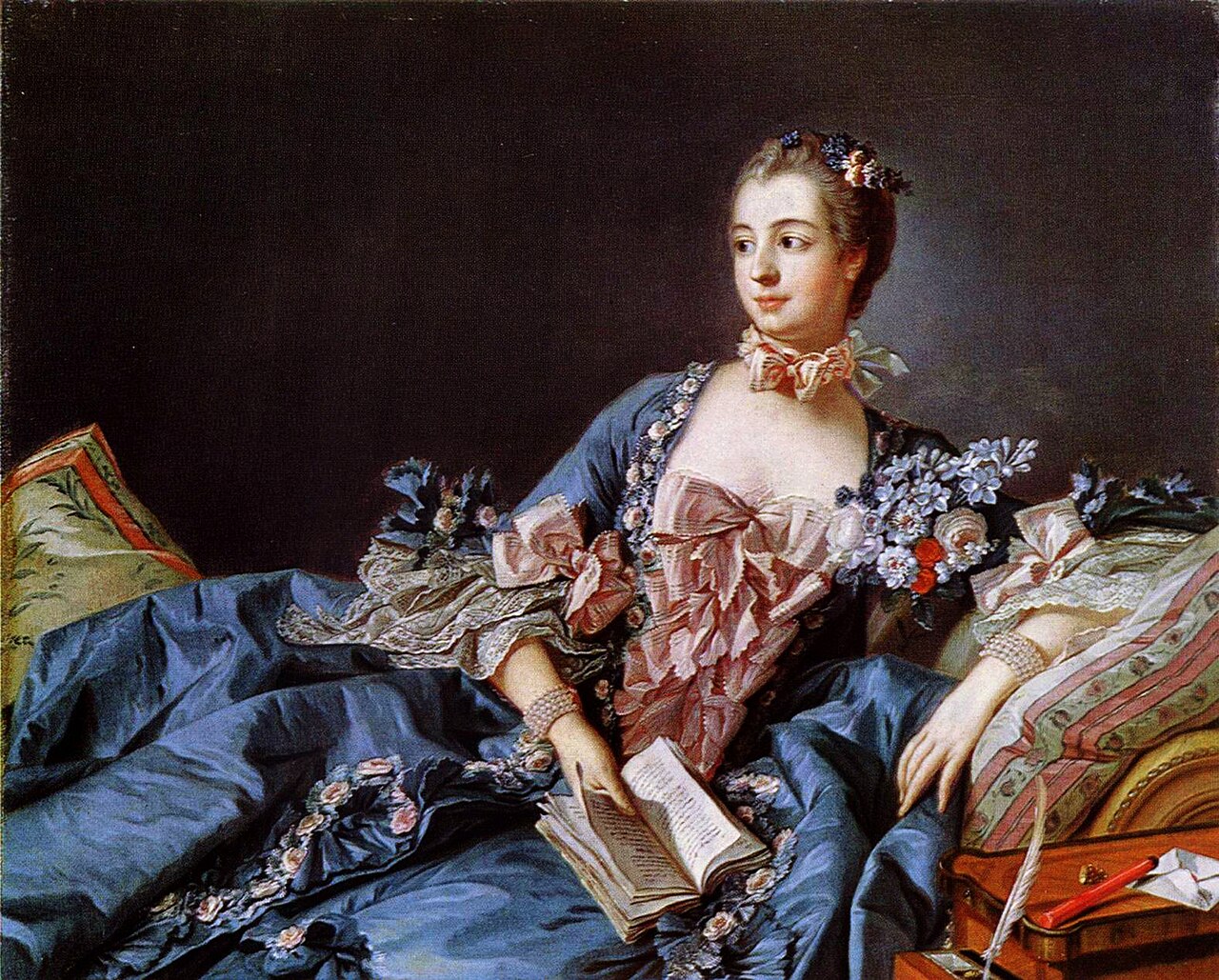
Jeanne-Antoinette Poisson, better known as Madame de Pompadour, was much more than the beautiful mistress of the King of France. She was born a nobody and by her own destiny end up as one of history‘s most powerful women who influenced the fashion, culture, and political climate from the center of Versailles itself. Glorified and condemned at the same time, Madame de Pompadour was the epitome of the Enlightment court of France in both appearance and attitude. Her personal life is a delightful story of fame, art and scandal and raises a captivating question: how can a girl of bourgeois origin influence over what is well in fashion?
Early life and background
Madame de Pompadour was born Jeanne-Antoinette Poisson, on December 29, 1721. Her family occupied the margins of respectability and aspiration. Her merchant banker father, François Poisson, suffered financial difficulties that resulted in exile. His wife, Louise-Madeleine de la Motte, was an ambitious woman who saw her daughter as a means of escape. Jeanne-Antoinette‘s education was extraordinary for a bourgeois girl: she learned music, drawing, dancing, and literature, and was familiarized with salons wherein writers and philosophers parleyed new notions.
From a tender age she was, deliberately it would seem, being prepared for greatness. A well-known soothsayer was said to have foretold that she would one day “rule a king’s heart”, a prediction her mother took very seriously. Whether this all transpired exactly as it sounds or not, it at least demonstrates that Jeanne-Antoinette’s life was conducted to a precise script, a picture-frame of a life that she could step in and out of like a theatre. Her marriage in 1741 to the immaculately wealthy tax farmer Charles-Guillaume Le Normant d’Étiolles, left her in a safe financial position within proximity to court, but she not stingy in her dreams, she perceived it as merely a station from which to draw nearer to Versailles.

Her adolescences point to an important part of her later power. She had never been aristocratic but she had learned to maneuver in the noble circles with a disarming grace and ease. This outsider-aspiration and insider-elegance revealed the court‘s foibles more acutely than her noble counterparts themselves ever could. She artfully constructed herself as an elegant middle-class soldier and trained herself for what was to come: Madame de Pompadour.
Rise to prominence at the French court
Jeanne-Antoinette’s rise from lady in the Parisian paraître to Anglomaniaque to royal favorite was a feat of patience and much calculated maneuvering. First she flirted her way into the king’s enviable forest of Sénart hunting parties, seducing him with her pink carriage and her airy, head-turning bright smile. Her cross-channel friends networked their way into the court by aligning themselves with the king’s cronies and then brought her along for the fete. In 1745, she was one of a handful of women who amused Louis at a masked-dance in celebration of the marriage of the Dauphine. With herself costumed a shepherdess, she succeeded in attracting the attention not only of the king but of his mind as well by engaging him in lively conversation and by carrying herself with high spirits.
In a matter of months, the Marquise de Pompadour was installed at Versailles, a brand new court, and created as a marquis to match her profile, her title being derived from a house bought specifically to enhance her social standing.. Her relationship with Louis was not only a love match, but also a meticulously crafted political and cultural partnership. As “maîtresse-en-titre” (official royal mistress), she was at the heart of the court, with members of her own faction and daunting enemies of disapproving and jealous Catholics, Bourbons and must have been able to adapt to court etiquette, promote artists and writers and spy on enemies almost overnight. Her success lay in her ability, not only to rise to the king‘s affections but also her marketing talents as an able coalition-builder who was capable of balancing counterweights of friends and enemies, including the ardent catholics who hated her for her past and the patronage she controlled.

She had risen to power more rapidly than anyone else in a society obsessed with genealogy, and her climb had disturbed the traditional aristocracy. Many noblemen also felt that her emergence demonstrated the dangerous potential of money, intelligence and beauty to upend the primacy of aristocratic blood and birth. But this was also her strength, and her importance, for in Pompadour‘s time there was a nascent, albeit marginal, challenge to the Old Regime‘s dogma that only the unadulterated line was deserving of considerations of rank, wealth, merit or culture. In court life, Pompadour placed herself well beyond the position of mere favorite she believed she had to be essential, both personally and politically, to the king.
Relationship with King Louis XV
Madame de Pompadour had a fraught and dynamic relationship with Louis XV. At first she was his mistress, his sole unwavering companion, the person who could offer him intimate conversations that the bestressed and pitiable king could find difficult to access elsewhere and who was consequently invaluable to him. She managed displays, feasts and entertainments that would appeal to him and was able to make the maze of Versailles into a private theatre in which he could relax.
By the early 1750s, however, relationships had become more intellectual than sexual, which may have spelled the end of her influence, but she was able to adapt to the change in her role. In fact she did not shrink away into anonymity, but became one of the king‘s advisors and a great con fident or as some historians have called her, the king‘s ‘chief of staff in a powdered wig.’ Louis XV even permitted her into secret political discussions and increasingly relied on her judgement when selecting ministers, dealing with factions and in delicate diplomatic negotiations. That such intimacy persisted as the affair fizzled out indicates that he prized her for more than just seduction.
This extraordinary rise from the mistress of Louis XV to the quasi-minister was at the same time both her most impressive aspect and her unending source of hostility. Later enemies who wished to blame her for military disasters and financial difficulties attributed to her the foreboding of a decadent and supposedly ill-run monarchy. The truth is complex: it is not wrong for instance to acknowledge her influence over appointments or her agenda for certain policies, though she was dependent on the system “nothing is more complex than the workings of the Old Regime” and the factors which affected her were many and varied. Her proximity to Louis XV exemplifies the anomaly of the Old Regime: in a time of apparently exceedingly weak and inconsistent institutions, personal partnerships held a great deal of political power.
Political influence and role in French politics
Pompadour‘s political importance was authentic, even if it was often inflated by her friends and foes. Though she was not a minister in any official capacity, she did hold a place at the center of political information and influence. It was understood that even ambitious men realized that if they were to succeed politically, they would need her patronage; if they failed to win her favor, they stood to lose it. Pompadour wielded influence in ministerial appointments, supporting the Duke de Choiseul, among others. She tends to favor those administrators who were sympathetic to her wider designs to make France a leading cultural and national power. Pompadour‘s salon was, in effect, a semi-official political laboratory, while the discussion proceeded along those anarchic lines of pleasure and social elitism.

Perhaps her most important role was as much in foreign policy as in domestic affairs specifically in pursuing peace by establishing a strong alliance with Austria, exemplified by the so-called ‘Diplomatic Revolution’ of 1756, when after centuries of xenophobia the French and the Habsburgs bargained to become mutual allies. She maintained a cordial correspondence with Maria Theresa, signing herself ‘your humble cousin and friend’, suggestions of Patronage as much as the embodiment of spurious female influence in the male-dominated court. Adequately equipped with enough political savvy to support, promote and defend the pro-Austrian party in the royal presence, she preserved the alliance after the mounting frustrations of the Seven Years War.
Her political legacy remains contentious because she became convenient repositories of blame for failures that were primarily systemic. Fails in the Seven Years’ War and loss of colonies were placed on her ‘feminine meddling’ by writers whose existing suspicion of the royal favorite and bourgeois upstart made them easy to blame. Today it is usually her aptitude as a political manipulator trying to contain an unstable system over which she had relatively little control that readers emphasize, a role which helps to explain the importance of informal power bases in the absolutist system and the ways in which notions of class and gender shaped political perceptions.
Patronage of the arts and culture
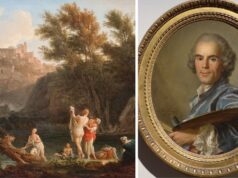
If Pompadour’s political influence remains debated, her impact on the arts is indisputable. She was one of the great cultural patrons of the 18th century, personally supporting painters, sculptors, architects, engravers, and writers. Under her influence, the Rococo style—delicate, ornate, playful—reached its peak in France. She commissioned works from François Boucher and Jean-Marc Nattier, who often depicted her in various allegorical guises: shepherdess, goddess, protector of the arts. These images were not simple vanity projects; they were sophisticated tools of image-making, positioning her as both ornament and orchestrator of the court’s artistic life.
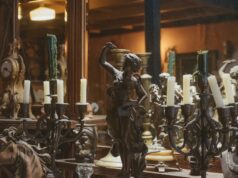
Pompadour understood that cultural prestige was an extension of national power. She supported the Sèvres porcelain manufactory, helping to turn it into a symbol of French luxury admired across Europe. The soft pastel colors and elaborate floral designs often associated with “Pompadour taste” were not random: they reflected a conscious aesthetic that combined refinement, technical innovation, and commercial ambition. She also took a serious interest in architecture and the decorative arts, backing projects that transformed royal residences and Parisian interiors into showcases of French craftsmanship.
Her patronage extended beyond visual arts to theater, music, and literature. She performed in private theatricals at Versailles, not merely as an indulgence but as a way to cultivate a more intimate, participatory court culture. She defended writers like Voltaire at critical moments, offering protection or intervention when needed, and encouraged the spread of Enlightenment ideas in a controlled way. That balance—cultivating modern intellectual currents while preserving monarchical authority—was delicate and ultimately unsustainable, but it shows her as a figure trying to modernize the court from within rather than simply decorate it.
Support for Enlightenment thinkers and philosophers
Her motives were pragmatic and honest. Madame de Pompadour was no revolutionist but she was receptive to the new empiricist, scientific and administrative ideas and projects, such as the ever-magnanimous Diderot and d‘Alembert endeavor of seeking to compile a systematic conceptual synthesis of all human knowledge, and became an avant-garde project in the mind of many conservative. Though she did not openly oppose the pressures exerted by both the church and her court, and her support saved it on a number of occasions, she saw the importance of the arts in France being indelibly linked to the position of power the King held in society.
Her relations with VOLTAIRE are particularly interesting. She obtained for him a commission as historiographer to the king and subsequently one as a chamberlain at court, giving him access and a regular salary. VOLTAIRE who, by contrast, admired her taste and power, clearly understood her as a sort of ‘roaring girl’ of the new court who appreciated truth and natural wit. Despite being likely to be deadly enemies (VOLTAIRE could be acrid and she calculating) they seemed to offer some kind of rapprochement between absolutist monarchy and enlightened critique, albeit through patronage and inter-patronage rather than by control.
Pompadour, insofar as she could be said to have kowtowed to some of philosophes, was attempting to ensure the court under Louis XV was on the right, or at least fashionable, side of history. She knew that science and intellectual superiority was about to become as significant a force for nay king as the power itself, but she only recognized elsewhere that she could never indulge her support for ideas which would fundamentally threaten the royal power. In theory, then, given the inherent contradictions of enlightened absolutism, one might even conclude that Louis XV‘s court was actually more, yet received, from enlightened ideas, insofar as they always used to offer thought and reform on one level or another of the hierarchy which would never have been disruptive to such a hierarchy.
Personal interests, taste and style
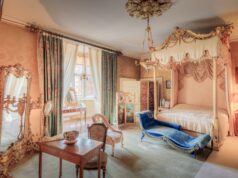
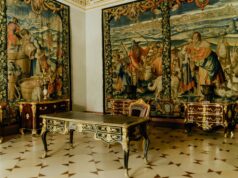
Behind the political and cultural influence was a woman with very specific personal tastes that came to define an era. Pompadour loved delicate colors—especially soft pinks and blues—intricate floral patterns, and intimate, human-scale spaces. In contrast to the heavy grandeur of Louis XIV’s generation, she favored interiors that felt lighter and more comfortable, adorned with tapestries, fine woodwork, and refined decorative objects. This aesthetic both reflected and shaped broader shifts in 18th-century life, as the aristocracy increasingly valued privacy, sentiment, and comfort alongside display.
Her interest in fashion was equally important. She popularized hairstyles, gowns, and accessories that balanced theatricality with elegance, turning herself into a trendsetter for Europe’s elite. Portraits show her surrounded by books, musical instruments, and works of art, signaling that true refinement, in her view, blended external appearance with cultivated interests. This was not mere posturing: she played the harpsichord, studied engraving, and took lessons in etching, demonstrating a hands-on engagement with the arts she patronized.
Pompadour’s personal style also had a strategic dimension. By carefully crafting her image—gentle yet intelligent, sensual yet respectable—she tried to neutralize criticism of her origins and position. Her taste became a kind of cultural diplomacy: persuading the world that France, under Louis XV and his favorite, remained the arbiter of elegance and sophistication. That her name is still attached to a particular shade of pink and to specific decorative motifs suggests just how completely she fused individual preference with collective visual memory.
Later years, illness and death
In her later years, Madame de Pompadour faced mounting challenges: political failures, personal illness, and growing hostility toward the monarchy. The costly and unsuccessful Seven Years’ War undermined the prestige she had helped build, feeding the narrative that the court was decadent and out of touch. Satirical pamphlets—libelles—circulated widely, attacking her as manipulative, greedy, and unnatural, often using coarse and sexist imagery. These attacks reveal as much about the anxieties of pre-revolutionary France as about Pompadour herself; she became a screen onto which broader social frustrations were projected.
At the same time, she suffered from chronic ill health, likely tuberculosis, which progressively weakened her. Despite this, she continued to attend to her duties at court, overseeing entertainments, advising the king, and maintaining her network of patronage. Her perseverance fed both admiration and resentment: some saw a devoted servant of the king, others a stubborn symbol of a system that refused to change. She remained acutely aware that her position depended entirely on the king’s continued affection and trust; without it, her world would collapse.
Madame de Pompadour died on April 15, 1764, at the age of 42, at Versailles. The king, who typically disliked public displays of emotion, reportedly watched from a window as her coffin left the palace in the rain, remarking quietly, “The Marquise will not have good weather for her journey.” It was a rare glimpse of tenderness from a distant monarch, and a sign of how deeply embedded she had become in his personal life. Her death removed one of the most stabilizing, if controversial, presences at court, leaving Louis XV more isolated and the monarchy more vulnerable to the storms ahead.
Meaning behind her legacy
Madame de Pompadour’s legacy is not just about an individual woman’s ascent, but about what that ascent reveals regarding power, gender, and culture under the Old Regime. She symbolizes the paradox of a system that could both rigidly enforce hierarchy and suddenly elevate a bourgeois woman to unprecedented influence. Her life exposes the way personal relationships could substitute for institutional strength, making monarchy simultaneously flexible and fragile. In that sense, she is a lens through which to read the slow crisis of the French state before the Revolution.
On a deeper level, she embodies the tension between appearance and reality in 18th-century France. The exquisite objects, paintings, and buildings she sponsored created a dazzling surface of civility and refinement, even as social inequalities and fiscal problems grew beneath. The Rococo elegance that bears her stamp can be read as both a genuine flowering of creativity and a kind of beautiful camouflage for a political order nearing its limits. Her support for Enlightenment projects—tempered, partial, but real—adds another layer, suggesting an effort to modernize from within that ultimately fell short.
Interpreting Pompadour also means confronting the persistent tendency to blame powerful women for structural problems. For centuries she was caricatured as a scheming courtesan who ruined France, a narrative that says more about misogyny and class anxiety than about actual governance. Reexamining her legacy today allows us to see her as a skilled cultural strategist and political broker operating in a deeply flawed system, not its primary author. The meaning of her story lies in its ambivalence: she was both a beneficiary and a victim of the world she helped adorn.
Why she remains famous today
Madame de Pompadour remains famous because she stands at the intersection of politics, culture, and myth. As a royal mistress, she embodies the intimate side of absolutist power, where affairs of the heart could reshape affairs of state. As a patron, she left a visible, tangible legacy in art, architecture, and decorative objects that still fill museums and influence design. As a social climber from bourgeois roots, she unsettles comfortable narratives about aristocratic dominance, showing how talent and ambition could, under specific conditions, bend even the rigid hierarchies of ancien-régime France.
Her image has proven remarkably adaptable. In some retellings she is a tragic romantic heroine, in others a cold manipulator, in still others a proto-feminist navigating a hostile world with wit and strategy. This mutability keeps her relevant: each generation can project its own concerns onto her story, whether about gender roles, class mobility, or the ethics of influence. She fascinates precisely because she resists simple categorization, occupying a gray zone between victim and architect, ornament and operator.
Culturally, her name has become shorthand for 18th-century French elegance. “Pompadour” evokes a certain shade of pink, a style of porcelain, even a type of hairstyle—proof that she succeeded in fusing her personal brand with the aesthetic identity of a nation. Her continued presence in films, novels, biographies, and exhibitions underscores a broader truth: she personifies the brilliance and the blindness of a world on the brink of revolution, making her a compelling figure for anyone trying to understand how great cultural refinement can coexist with deep political fragility.
Interesting facts about Madame de Pompadour
- She reportedly practiced appearing before the king by staging mock audiences in her home, rehearsing conversation and gestures like an actor preparing for a role.
- The famous “pompadour” hairstyle—high, swept back from the face—was named after her, even though later versions are often more exaggerated than what she actually wore.
- She was an accomplished amateur printmaker and studied intaglio engraving, unusual for a woman of her rank and a sign of her hands-on engagement with the arts.
- Pompadour helped make Sèvres porcelain a global luxury icon by encouraging daring colors and designs, and by personally showcasing the pieces at court.
- She maintained a personal theater at Versailles, where she acted in plays by Molière and others, sometimes provoking criticism for performing roles seen as too bold for a royal favorite.
Madame de Pompadour still matters because she illuminates the inner workings of power, culture, and image-making in an age that shaped our modern world. Her life reveals how informal influence, aesthetic choices, and personal relationships could steer a great kingdom as surely as laws and edicts. The art, architecture, and ideas she championed continue to define our vision of 18th-century France. Remembering her today means recognizing not only the seductions of elegance, but also the complex, often unseen forces that lie behind it.
AI Notice: Some visual content in this article may have been created or enhanced using artificial intelligence (AI) for artistic, editorial or illustrative purposes. Learn more about our approach in our AI & Editorial Principles.