
Queen Victoria and Prince Albert’s 9 Children: Names, Lives, and Legacies
Queen Victoria is regarded worldwide as the most iconic and outstanding monarch. Together with Prince Albert, they reigned for a long time and wisely, and the foundations of the British monarchy they laid remain in place to this day. However, did you know that the queen had as many as nine children, and that she perfectly balanced her roles as a mother and a monarch? Who were these royal offspring, and what are they best known for?
Victoria Adelaide Mary Louise
Victoria, “Vicky,” the eldest child of Queen Victoria and Prince Albert, captivated everyone from a young age with her keen intellect, fervent passion for learning, and mischievous sense of humor. Despite her emotional nature and occasional nervousness, she inherited her father’s analytical mind and love of reading, remaining his favorite.
Can You Name the Masterpiece?
Ten masterpieces. Ten questions. How well do you know the history of art?
Although Queen Victoria adored her daughter, she acknowledged with her characteristic honesty that Vicky could at times be “rebellious and wayward.” “I don’t think I’ve ever seen a more rebellious and wayward child or girl!” the queen once wrote to 17-year-old Vicky.

In 1858, Victoria married Prince Friedrich-Wilhelm of Prussia, the future German Emperor Friedrich III. This marriage led to disagreements with two of her siblings: the Prince of Wales and Alice. Alice’s marriage to the Duke of Hesse and the Prince of Wales’s marriage to Princess Alexandra of Denmark placed them on the losing side in the wars of conquest waged by Prussian Chancellor Otto von Bismarck.
Although the bonds of brotherhood and sisterhood remained strong, the division in national loyalties cast a shadow over family gatherings. During visits by all three to Windsor, Queen Victoria sometimes had to forbid any discussion of contentious issues.
Can You Guess the Artist?
Three clues. One artist. How quickly can you identify the painter?
About 30 years after their wedding, Vicky and Frederick ascended the throne. However, Frederick—by then unable even to speak in a whisper due to throat cancer—died after a three-month reign, taking with him the hopes for a liberal Germany allied with Britain.

Frederick was succeeded by Wilhelm II. He declared his admiration for Britain, but secretly viewed it as a rival for dominance in Europe. Later, the fate of another of Queen Victoria’s grandsons, King George V, bore witness to how Great Britain and Germany declared war on each other in 1914.
When Queen Victoria died in January 1901, she was surrounded by most of her children and grandchildren. However, Vicky, the widowed Empress Frederick, was unable to be at her mother’s deathbed. Suffering from spinal cancer, she was too ill to return from Germany. Vicky died on August 5, 1901, seven months after her mother.
She was the eldest child of the royal couple and was born in 1840. Her mom and dad often affectionately called her “Vicky,” a name that highlighted her rather sweet disposition. Intelligent and well-rounded, the girl did well in school, all thanks to her parents’ efforts to give her the best education possible. In fact, by the age of five, the little girl was already eager to learn French and German.
Edward VII
The second child in the family was Albert, also known as Edward, who was born in the fall of 1841. His parents affectionately called him “Bertie,” and he also became the first in line to the throne; thus, according to English law, he would have ascended to the British throne upon his parents’ death.

As a child, he had a reputation for being quite a mischievous boy who loved to get into all sorts of pranks. However, his parents were quick to put a stop to this and took charge of his education, hoping he would become a worthy ruler of his country.
In terms of personality, Bertie took more after his mother, which upset her: she considered him a “caricature” of herself.
As heir to the throne, Bertie was not allowed to pursue a career in the military. He was given honorary positions and, at age 20, briefly took part in military exercises in Ireland, where he had a brief romance with the actress Nellie Cliffden. When his parents learned of this romance, Prince Albert was very upset. Shortly before his death, Prince Albert traveled to see his son to discuss the relationship with him.
This prompted Queen Victoria, in a fit of hysteria, to accuse her son of breaking his father’s heart and thereby hastening his death. Their relationship cooled for a time. Victoria never ceased to lament his love of high society and “the good life,” but over time she acknowledged that he was “so full of good and pleasant qualities that it makes one forget and overlook much of what one might otherwise wish were different.”

In 1863, he married Alexandra, Princess of Denmark. The couple had six children. The marriage did not diminish Bertie’s amorous nature. His mistresses were widely known.
After his mother’s death in 1901, Bertie—who became King Edward VII—contrary to expectations, proved to be a successful and beloved monarch. He paved the way for an alliance with France. Although the French had sympathized with the Boers during the Anglo-Boer War, the king charmed the president, ministers, and people of France during a goodwill visit to Paris in 1903.
Known for his hearty appetite, King Edward suffered from various ailments in the last years of his life, including a chronic bronchial condition. He died of heart problems in May 1910 at the age of 68.
Princess Alice Maud Mary
In April 1843, the royal family welcomed a new addition—a girl named Alice. She was known throughout the world for her modest, sensitive, and deeply kind nature. It was she who cared for her own father when he fell ill before his death, and who comforted her mother as she mourned his passing.
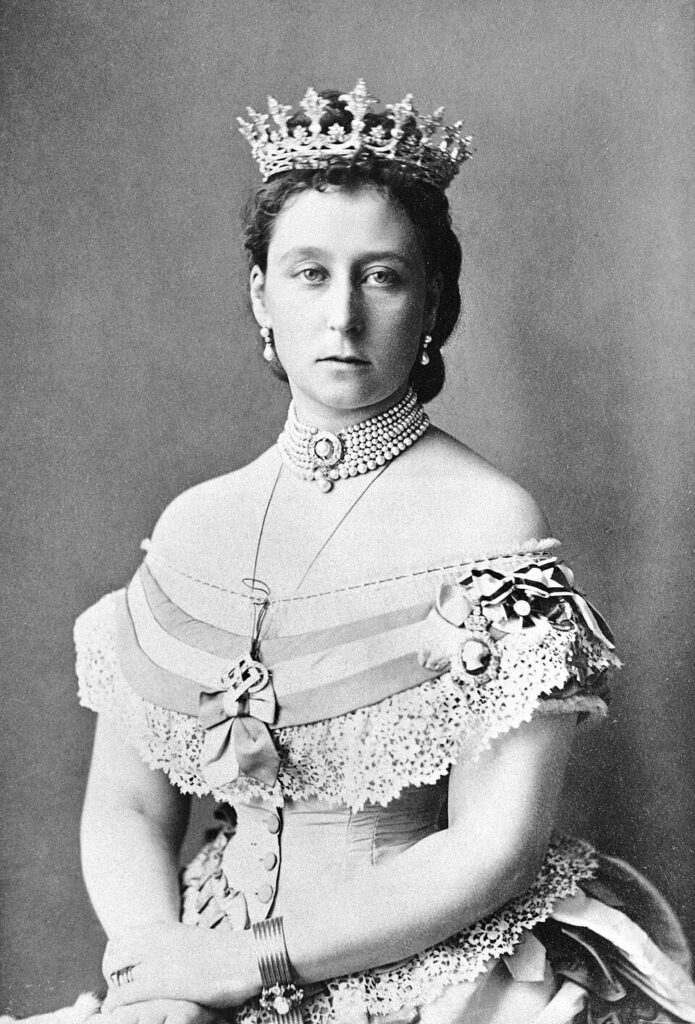
In the summer of 1862, Alice married Ludwig of Hesse, after which she moved to the small German town of Darmstadt. The couple soon had a large family with seven children—Victoria, Elizabeth, Irene, Ernst, Frederick, Alice, and Maria.
During family visits to Balmoral, the Scottish estate in the Highlands, she would visit local residents, bringing them food and clothing. Later, when her father, Prince Albert, was terminally ill, she devoted all her time to caring for him, striving to make his final days comfortable. After his death, Alice became a pillar of support for her grief-stricken mother. Nevertheless, shortly thereafter she married Prince Ludwig of Hesse and the Rhine.
Alice’s marriage was a very happy one. She sincerely loved her husband. They had a warm and very close relationship, which aroused genuine envy in her widowed mother. The couple had seven children.
During Germany’s wars against Austria and France in 1866 and 1870, her skills as a nurse were in high demand.

Alice was a thoughtful person who constantly pondered the meaning of life. She became friends with the theologian David Friedrich Strauss, whose unorthodox views on Christianity made him a controversial figure. Her association with him led some people to reject Alice, considering her an atheist.
Exhaustion and deep depression, triggered by the death of her young son Frederick from hemophilia, took a toll on Alice’s health. In 1878, on the 35th anniversary of her father’s death, she died of diphtheria, having lost her youngest daughter a month earlier. Alice was the first of Victoria and Albert’s children to pass away. Her daughter, Alice, later became the wife of the last Russian emperor, Nicholas II.
Alfred Ernest Albert
In the summer of 1844, the royal couple welcomed a new addition to their family—the birth of their second son, Alfred. His close friends simply called him “Affy,” and the boy himself was playful, bold, and even a touch cheeky.
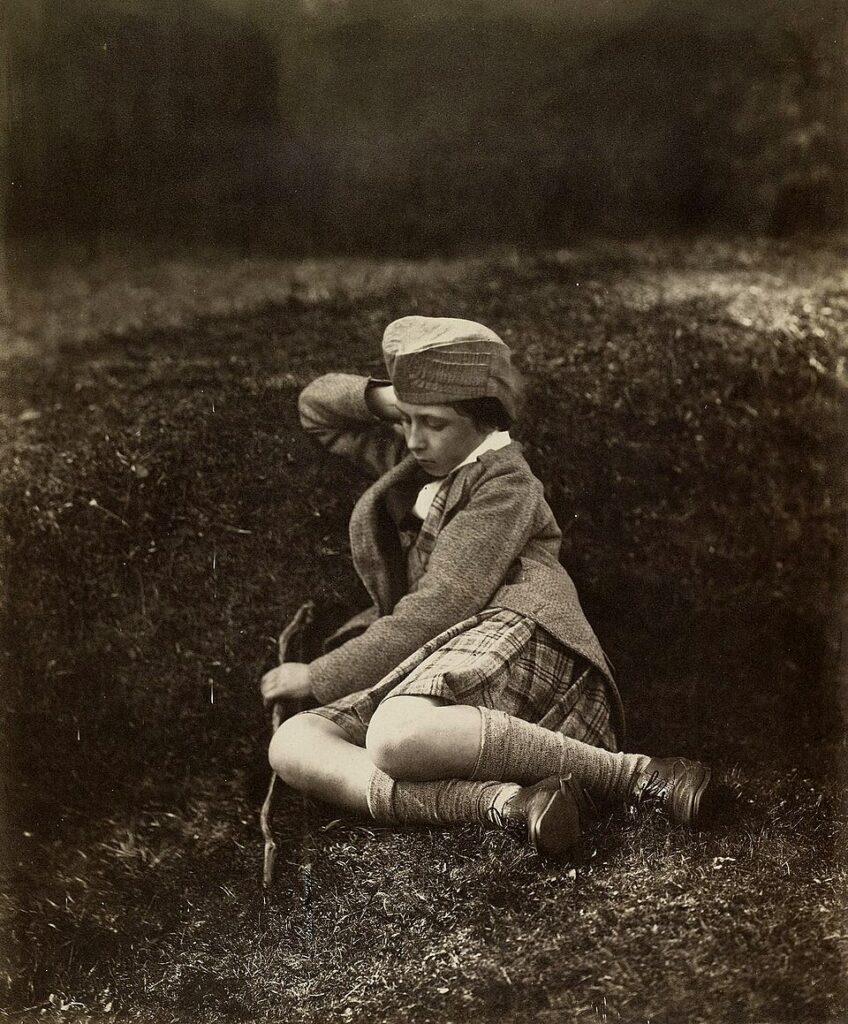
When the boy turned fourteen, he decided to try his hand at a military career. He climbed the ranks quite successfully, and in the winter of 1866, when he turned twenty-one, he was promoted to captain and acquired a ship with the colorful nickname “Galatea.” That same year, he officially received the title of Earl of Kent and Ulster.
In 1858, at the age of 14, he joined the navy. Gradually rising through the ranks, Alfred rose to the rank of admiral of the fleet.
In 1862, following the overthrow in Greece of the unpopular and childless King Otto, Alfred was elected to succeed him by an overwhelming majority. However, political considerations made it impossible for the British prince to assume this position.
Sharing Bertie’s love of high society, Alfred was sent on a lengthy round-the-world voyage in 1867, partly to shield him from potential trouble. During this voyage, he visited many countries as a representative of the Queen.

At an official event in Sydney, Australia, Alfred narrowly escaped an assassination attempt. An Irishman named Henry James O’Farrell, seeking revenge for the execution of three members of the Irish Republican Brotherhood for their involvement in a terrorist bombing in London, shot and wounded him. Although Alfred recovered quickly, he was forced to cut short his round-the-world trip and return to England to regain his strength.
In 1868, he resumed his travels, visiting Australia, Fiji, Japan, India, and South America once again, returning to England nearly three years later.
Throughout his life, Alfred played the violin (having learned to play from childhood). However, by general consensus, he did so “with exuberant originality, but paying little attention to the score.”
As the first member of the royal family to take up philately, Alfred laid the foundation for the Royal Philatelic Collection.
Having been chosen as the heir to his childless uncle, the Duke of Saxe-Coburg and Gotha, Alfred inherited the duchy after the duke’s death in 1893.
Alfred’s marriage to Grand Duchess Maria of Russia (concluded in 1874) proved to be an unhappy one. The couple had five children: one boy and four girls. Alfred’s only son committed suicide at a young age.
In the years that followed, Alfred struggled with alcoholism. He died of cancer in July 1900, six months before his mother’s death.
Princess Helena Augusta Victoria
The fifth child was Princess Helena, born in 1846. Her father and mother often called her Linchen, short for the full German version of her name—Helenchen. As a child, Helena was strong and spirited, and she had no qualms about wrestling with her brothers and sisters as an equal.

In the summer of 1866, she married Prince Christian of Schleswig-Holstein in a lavish ceremony at Windsor Castle. Helena decided to stay close to her mother, whom she assisted and for whom she carried out various small tasks. To do so, the newlyweds moved into a small house near Windsor Park. The couple had five children in total; however, tragically, the youngest, Harald, died eight days after his birth.
Together with her sister Beatrice, she served as her mother’s personal secretary.
Helena was actively involved in a number of charitable organizations. She was a member of the Women’s Committee of the newly established British Red Cross, the Royal British Nurses’ Association, and the Royal School of Needlework.
Helena also helped provide free meals to needy children and the unemployed in the Windsor area.
In addition to her charitable work, Helena was involved in literary pursuits.

She assisted in the writing of a biography of Prince Albert by translating letters from German into English for the author, Charles Grey. She also published an English translation of The Memoirs of Wilhelmina, Margravine of Bayreuth, a distant relative of hers.
After a severe bout of the flu and several heart attacks, Elena died in June 1923.
Princess Louise Caroline Alberta, Duchess of Argyll
In March 1848, the charming Lou—Duchess of Argyll—was born. Of all the Queen’s children, Louise was considered the most beautiful and also the most talented, for even as an infant, Lou had shown a passion for the arts.
In 1871, Louise married Duke John Campbell, Marquis of Lorn. At that time, it was quite rare for a princess to marry a young man who did not hold the title of prince. After some time, Victoria approved the union. She believed it would help make the British monarchs more popular in Canada.

Aspiring to a career in the arts (to the extent that her royal status allowed), Louise became the first member of her family to enroll in a public educational institution—the National Art School. Among her most famous works are a statue of Queen Victoria in her coronation robes, installed in Kensington Gardens; a memorial on the Isle of Wight to her brother-in-law, Prince Henry of Battenberg, who died of malaria in January 1896; and memorials to colonial soldiers who died in the Anglo-Boer War, which can be found in St. Paul’s Cathedral in London.
On March 21, 1871, Louise married John Campbell, who later became the 9th Duke of Argyll. Campbell served as a Member of Parliament for the Liberal Party and later for the Liberal Unionists, and also served as Governor General of Canada. Their marriage was childless, and the couple spent much of their time apart, but they apparently remained on friendly terms.
After her husband’s appointment as Governor General of Canada, Louise lived in Canada for five years. During her time there, she promoted the idea among wealthy Americans of spending the winter in the mild climate of the Bahamas.

She was actively involved in sculpture and even created a memorial to the soldiers who died in the Second Anglo-Boer War.
Like her sister Elena, Louise devoted her entire life to charity work. She died in 1939 at the age of 91.
Arthur William Patrick Albert
Soon, the world was introduced to one of Victoria’s favorites—Arthur. He was born in May 1850. The queen greatly appreciated the fact that the child had been very well-behaved practically from infancy and never caused her any trouble.
Arthur grew up dreaming of a career in the military. At sixteen, he was already studying at the Royal Military College, and after graduating, he was commissioned as a lieutenant. Through his work, he was able to see and experience a wide variety of countries around the world, visiting Asia, Africa, and the Americas.

In 1879, as the Duke of Connaught, he married Louise of Prussia. The extraordinary ceremony took place at Windsor, and soon their family grew to include three children—two daughters and a son, the heir apparent.
Even as a child, Arthur dreamed of becoming a soldier, a dream he eventually fulfilled. At age 16, he enlisted in the military and went on to have a distinguished career. He served in South Africa, Egypt, and India, and later became Inspector General of the British Army and, subsequently, Governor General of Canada.
Throughout his life, just as in his childhood, Arthur rarely caused the Queen any concern. He possessed a rare gift for getting along with all members of the family, including his nephew Wilhelm, the last German emperor, who often annoyed the rest of his relatives.
Thus, when Alfred learned in January 1901 of his mother’s serious illness, the emperor, full of jokes and optimism, insisted on accompanying him back to England, telling his entourage that “Uncle Arthur is so downcast that we need to cheer him up.”
Even in his old age, Arthur did not cease his service. By the age of 80, he had withdrawn from public life but continued to be involved in military affairs. Having outlived his wife (Princess Louise Margaret of Prussia) and two of his three children, he died in 1942 at the age of 91.
Leopold, Duke of Albany
Among the queen’s sons, Leopold, born in 1853, stood out in particular. From the moment of his birth, Leopold was diagnosed with hemophilia, a condition characterized by poor blood clotting and the risk of death from even the slightest scratch. Because of this, his mother zealously ensured that the boy did not play with his relatives, which meant that for quite some time, Leo was forced to live in isolation.

However, despite her fear for her son’s life, Victoria still allowed him to study at Oxford, where he became fascinated with a wide variety of subjects, including literature and art. Like one of his brothers, he loved to travel, and in 1880 he even traveled to the United States and Canada with his sister Louise.
Due to his poor health, Leopold was unable to pursue a military career. However, he was allowed to study at the University of Oxford, and later became a patron of the arts and literature, as well as his mother’s unofficial secretary for a time. Victoria always defended Leopold, much to his annoyance, and he would sometimes openly defy her out of sheer mischief. For example, on one occasion he refused to accompany her on her annual visit to Balmoral, claiming that he always found it “boring” there. His mother reluctantly allowed him to spend a few days in Paris instead, but upon arriving there, he announced that he would stay for a full two weeks.
Leopold not only surprised his mother by reaching adulthood, but also by getting married. His chosen bride was Princess Helena of Waldeck and Pyrmont. The couple married in 1882 and had two children: Alice, later Countess of Athlone, and Charles, later Duke of Saxe-Coburg and Gotha. Unfortunately, Leopold did not live to see the birth of his son, as he died suddenly at the age of 30 after a fall and subsequent cerebral hemorrhage.
Beatrice Maria Victoria Theodora
And finally, Queen Victoria’s last child was a girl named Beatrice, who was born on April 14, 1857. She was often called “Little One,” and she was an incredibly happy child who was doted on by both her parents and her brothers and sisters.
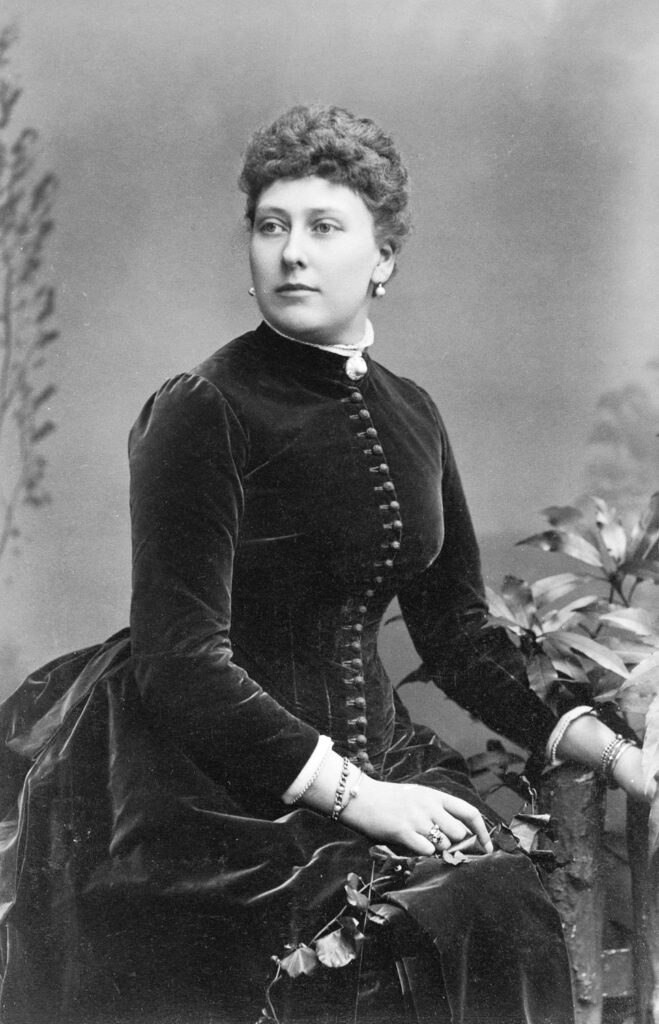
After her husband, Prince Albert, died, Queen Victoria devoted herself entirely to raising her little four-year-old daughter, forming a close, emotional bond with her that remained strong throughout their lives. From an early age, Bea was very attached to her mother and even promised her that she would never abandon her. A little later, as she grew older and more mature, she became her mother’s right-hand woman, handling all of her important—and not-so-important—matters.
At the age of five, Beatrice declared that she didn’t like weddings and would never get married, but would stay with her mother instead. For the next 20 years, she seemed to keep that promise. But in 1884, she fell in love with Prince Heinrich of Battenberg, whose brother Louis was married to one of her nieces, and insisted on getting married. Queen Victoria was stunned, but allowed the marriage to take place on the condition that Beatrice and Heinrich live with the queen. The couple had three sons and one daughter. Even after getting married, Beatrice continued to serve as her mother’s secretary.

In 1895, Henry set out on a military expedition to Africa, where he contracted malaria. He was sent back to England, but he died on the way home. After becoming a widow, Beatrice devoted herself entirely to caring for her mother.
Her mother was the center of Beatrice’s life, so Victoria’s death in 1901 had a devastating effect on her. For thirty years after her mother’s death, she worked on preparing her mother’s diaries for publication.
The final years of Beatrice’s life were marred by poor health, but she lived a long life and died in 1944 at the age of 87.
AI Notice: Some visual content in this article may have been created or enhanced using artificial intelligence (AI) for artistic, editorial or illustrative purposes. Learn more about our approach in our AI & Editorial Principles.