

Japandi living rooms look effortless on Pinterest, but trying to recreate that balance of calm, warmth, and minimalism at home can be frustrating. You buy “minimal” furniture, clear away clutter, and somehow the room still feels cold, flat, or awkward. The truth is, designers apply a few quiet rules and tricks that aren’t obvious from photos alone.
Understanding these “hidden” Japandi principles matters because your living room is where you recharge, connect with family, and unwind. When it feels off, you feel it: more stress, more visual noise, less rest. A well-designed Japandi space isn’t just pretty – it supports your mental wellbeing, focus, and even sleep quality, something health authorities like the WHO and many sleep researchers link closely to your daily functioning and long‑term health.
Below are the design secrets professionals use to create Japandi living rooms that look serene in photos and genuinely feel good to live in.
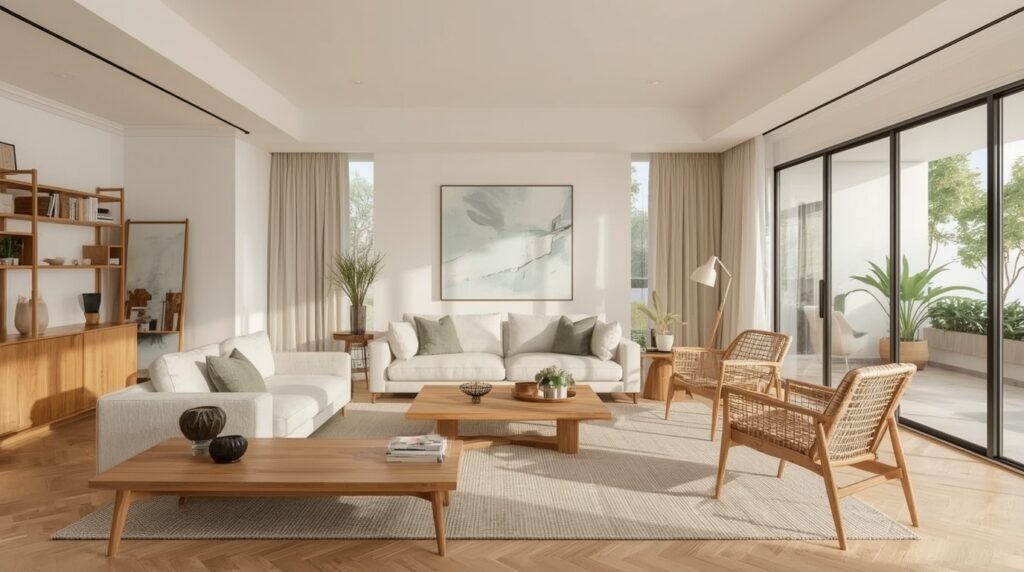
1. Start With Function, Not Aesthetic
Most people start by copying a look. Designers start by mapping how you live.
Japandi blends Japanese simplicity with Scandinavian comfort. Both traditions put function first. A designer studies how you actually use the room before picking a single chair.
What this means for you
Before buying anything, answer:
- Who uses this room daily? (Adults, kids, pets, guests?)
- What do you do here most? (Reading, TV, gaming, conversation, work?)
- At what times of day is it used most often?
- Do you need storage for toys, blankets, devices, books?
Then sketch a simple plan:
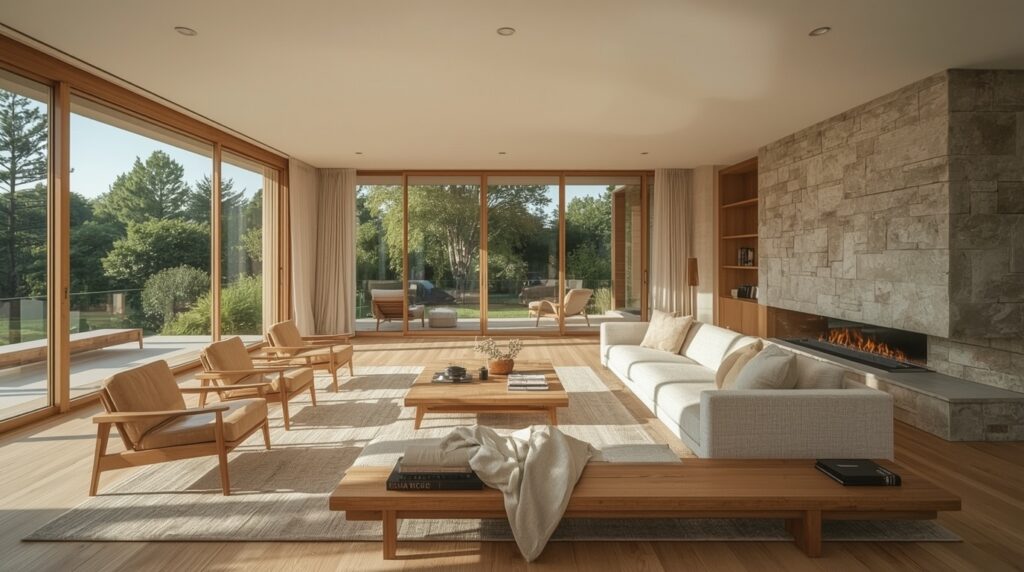
- Mark the main paths through the room
- Mark where you want quiet activities (reading) vs. social ones (conversation)
- Decide where the visual focus should be (view, fireplace, artwork, low media unit)
Designers quietly prioritize these decisions. Only then do they choose the “Japandi” pieces to support them.
When to be concerned
If you notice any of these, your layout is fighting you:
- Constantly moving things to sit comfortably
- Tripping over furniture or cables
- The TV dominates attention even when it’s off
- No convenient place to put cups, books, or remotes
What to do
Rearrange before you re‑decorate:
- Pull furniture off the walls and cluster around a focal point
- Create one clear, wide walking path
- Add surfaces (small tables, benches) where you naturally reach for them
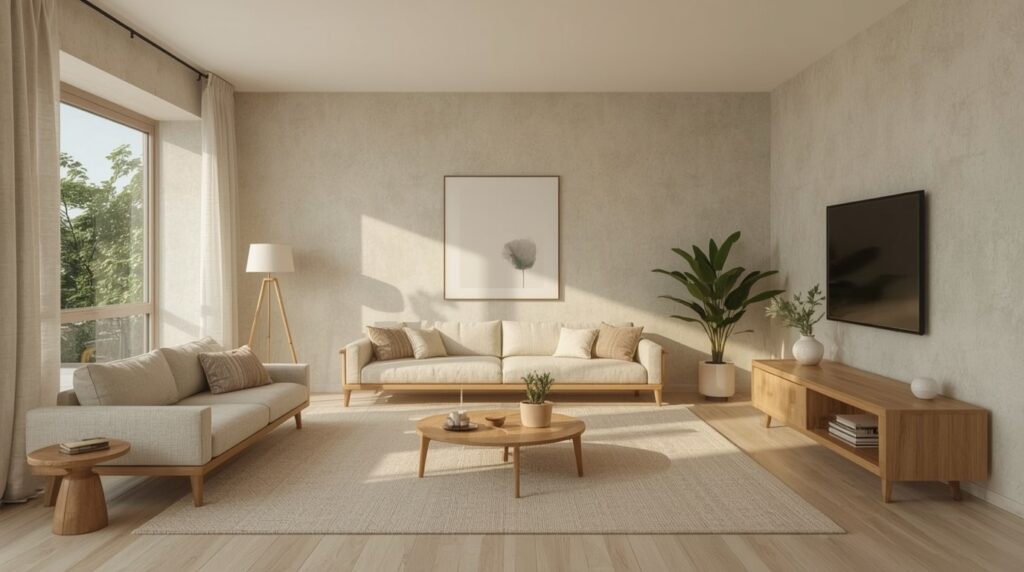
Once movement and use feel easy, the Japandi style will layer on smoothly.
2. Use “Soft Minimalism” Instead of Bare Minimalism
A lot of minimal interiors that people copy online are actually too sparse for daily life. Japandi is minimalist, but it’s not empty. Designers quietly add softness and small comforts you rarely notice at first glance.
Key secret: fewer objects, more comfort
You reduce the number of items, not the level of comfort. Designers make sure each remaining piece does more work:
- A low sofa with deep cushions instead of many small chairs
- One generous wool rug instead of three small mats
- A single large, soft throw instead of a pile of decorative pillows
This approach aligns with research on environmental psychology: calmer, less cluttered spaces can lower stress and help your brain process information more easily, which is something health bodies and mental health researchers repeatedly link to better wellbeing.
Practical guidelines
Aim for:
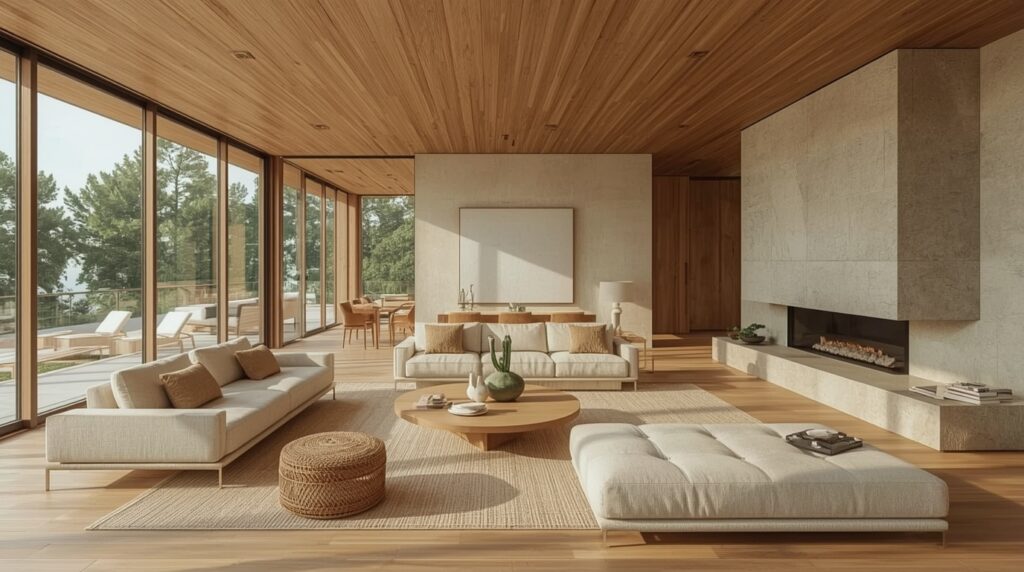
- Clear surfaces with only 1–3 meaningful items on each
- Enough seating for your real life, not for an imaginary party
- One or two soft textures per area (rug + throw, cushions + curtains)
When to be concerned
If your room feels:
- Echoey and cold, even after decluttering
- Visually “sharp,” with lots of hard edges and glossy surfaces
- Emotionally flat – beautiful, but you don’t want to sit there
Add softness:
- Natural fiber rug (wool, jute, cotton)
- Fabric curtains instead of just blinds
- A couple of larger, high‑quality pillows rather than many small ones
3. The Hidden Rule of “Three Neutrals + One Accent”
Japandi looks calm because designers control color very tightly. The secret is not “use neutrals.” It’s using a limited, deliberate palette.
The quiet color formula designers use
They typically follow something like:
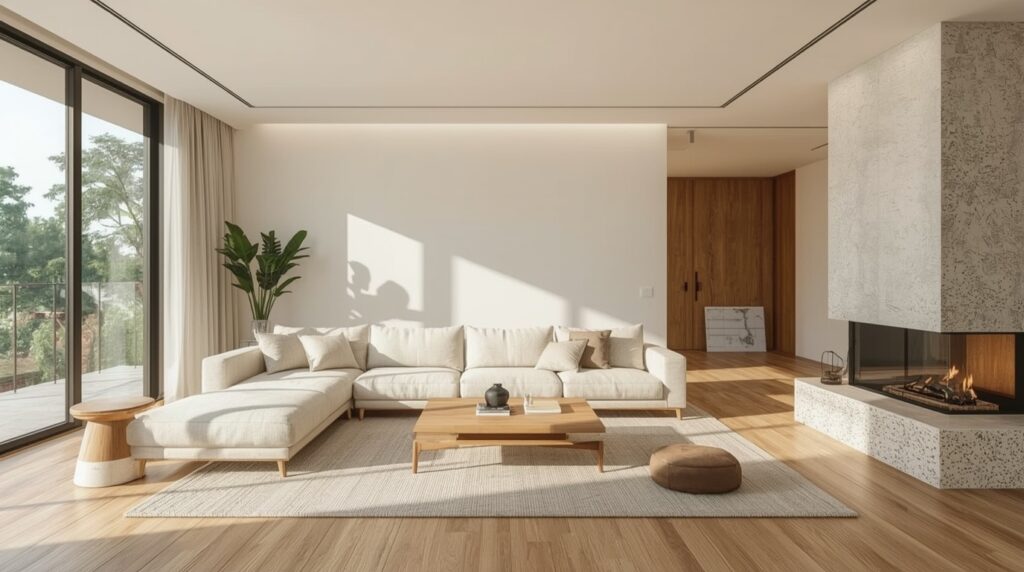
- One main light neutral (off‑white, warm beige, light greige)
- One mid‑tone neutral (mushroom, taupe, warm grey)
- One dark grounding neutral (charcoal, ink blue, espresso wood)
- One soft accent color (dusty green, muted clay, soft blue)
These appear in specific places:
- Walls and large surfaces in the main light neutral
- Sofa or rug in the mid‑tone
- Wood furniture or frames in the dark neutral
- Textiles or a single wall in the accent color
What this means for you
Instead of buying items piece by piece, decide your palette first. Write it down. Every new item must match one of these four tones.
This does more than look good. A controlled palette reduces visual clutter, which can help your space feel more restful. In turn, calmer surroundings support better relaxation and sleep hygiene, topics often highlighted by health organizations and sleep specialists.
When to be concerned
Signs your color scheme is off:
- You keep buying “one more cushion” to fix the look
- The room feels busy even without much furniture
- Photos of the space always look slightly chaotic
What to do
- Remove or relocate everything that doesn’t match your chosen palette
- Start with textiles: swap busy patterns for solid or subtle textures
- If repainting is possible, choose a warm off‑white rather than bright white
4. Balance Japanese and Scandinavian, Don’t Mix Randomly
Designers don’t throw in “Japanese” and “Scandi” pieces at random. They balance characteristics from both sides so the room feels cohesive.
Scandi brings:
- Light woods (oak, ash, birch)
- Cozy textiles and hygge comfort
- Simple, rounded forms
Japanese brings:
- Darker woods and strong contrasts
- Low, grounded furniture
- Clean lines and negative space
How designers blend them
They often choose one to lead and one to support:
Scandinavian base, Japanese detailing:
- Light flooring, pale walls, soft textiles
- Add dark wood coffee table, low media unit, simple black frames
Japanese base, Scandinavian softening:
- Darker furniture, lower seating, bolder contrasts
- Add pale wool rug, soft linen curtains, light wood side tables
Practical checklist
To keep the blend intentional:
- Pick a primary wood tone (light or dark), then repeat it at least three times
- Repeat black or dark accents in thin lines (frames, lamp stems, legs)
- Avoid too many ornate elements; stay with clean shapes
When to be concerned
Your Japandi mix may be off if:
- The room feels like a random mix of trends
- You have both very ornate and very minimal pieces together
- There are more than three different wood tones visible
Edit ruthlessly: remove the odd one out, repeat the tones and lines that work.
5. The Light Layering Trick Pros Rely On
Lighting is one of the biggest “hidden” secrets. In photos, Japandi rooms seem sun‑drenched and softly lit, but in real life many homes have harsh ceiling lights or dark corners.
Designers almost never rely on a single overhead light. They create layers.
The 3–4 layer lighting rule
Ambient light – soft, overall glow
- Ceiling lights with diffusers
- Wall sconces facing upward or toward walls
Task light – for reading, hobbies, or work
- Floor lamp beside the sofa
- Table lamp near an armchair
Accent light – to highlight texture and create mood
- Small lamp on a sideboard
- LED strip behind a low unit or shelf
- Candlelight (flameless if needed for safety)
Natural light – maximized, not blocked
- Sheer curtains to diffuse glare
- No bulky furniture blocking windows
Exposure to natural light during the day is linked by organizations like the CDC and many circadian rhythm researchers to better mood and sleep patterns. A Japandi room that supports daylight and soft evening lighting works with your body, not against it.
When to be concerned
- Strong shadows and glare from a single light source
- You can’t read comfortably without straining
- The room feels “dead” at night or too bright to relax
What to do
- Add at least one floor lamp and one table lamp with warm bulbs (2700–3000K)
- Use dimmers where possible
- Replace harsh cool‑white bulbs with warm‑white tones
6. Hidden Storage: The Unsung Hero of Japandi Calm
Designers know you can’t live clutter‑free all the time, so they design for everyday mess. The trick: build storage into the room so objects disappear easily.
Key principle: everything visible is intentional
What stays out is chosen; everything else has a home. In real life, this means:
- Media units with doors or drawers
- Benches with storage inside
- Baskets in natural fibers for toys, cables, or blankets
- A closed cabinet for “ugly” essentials (routers, chargers, paperwork)
Studies on clutter and stress often show that visual mess can increase cortisol levels and make it harder to relax, especially for people already under pressure. A Japandi living room with good storage protects you from constant visual “noise” without forcing perfection.
Practical steps
- Audit your living room items by category (tech, books, kid stuff, hobby items)
- Assign each category a dedicated storage spot
- Keep one or two attractive trays or bowls for daily essentials (keys, remote)
When to be concerned
- Surfaces are always covered, no matter how often you tidy
- You have nowhere to hide items quickly when guests arrive
- Cleaning the room feels overwhelming
Invest in one or two closed‑storage pieces and a few simple baskets in natural materials. This change often makes more impact than new decor.
7. Elevate the Senses, Not Just the Look
Japandi is as much about how the room feels as how it looks. Designers quietly style for your senses: touch, sound, and even smell.
Sensory details that make a difference
- Touch: mix smooth wood, soft textiles, and maybe one rougher element like a woven basket
- Sound: soft textiles (rugs, curtains, cushions) reduce echo and noise
- Smell: a subtle natural scent (wood, a single quality candle, or essential oil diffuser)
A calm sensory environment supports relaxation and can reduce the background stress your nervous system deals with all day. This aligns with broader health advice on creating restful, low‑stress home environments for recovery and mental health.
What this means for you
Focus on a few small upgrades:
- Add a large natural rug if you have hard floors
- Swap plastic storage for baskets or wooden boxes where possible
- Use one subtle scent rather than many competing fragrances
When to be concerned
If your living room:
- Feels “hard” or echoey, especially with kids or TV on
- Has strong, clashing fragrances from multiple sources
- Looks good in photos but you don’t enjoy spending time there
Soften, simplify, and standardize your sensory inputs.
Conclusion: Make Japandi Work for Real Life
A Japandi living room isn’t about copying a perfect image; it’s about designing a calm, functional space that fits how you live. Designers get those “effortless” rooms by quietly following a few rules:
- Start with function and layout
- Use soft minimalism, not emptiness
- Control color with a simple palette
- Intentionally balance Japanese and Scandinavian elements
- Layer natural and artificial light
- Hide everyday mess with smart storage
- Design for your senses, not just your eyes
If you apply even two or three of these secrets, your living room will start to feel calmer, more coherent, and easier to maintain. From there, you can refine details slowly. Japandi isn’t a one‑time makeover; it’s an ongoing way of making your home support your body, your mind, and your everyday life.
AI Notice: Some visual content in this article may have been created or enhanced using artificial intelligence (AI) for artistic, editorial or illustrative purposes. Learn more about our approach in our AI & Editorial Principles.