The Antique Writing Desk With Flip Top: The Hidden Feature Collectors Love
Antique furniture rarely feels as personal as an antique writing desk with flip top. Unlike monumental wardrobes or dining tables, these desks were built for the intimate routines of reading, correspondence, bookkeeping, and private reflection—then cleverly designed to close and conceal the work in an instant. The flip-top mechanism (often paired with compartments, pigeonholes, and fitted drawers) speaks to a time when paper was precious, ink was messy, and privacy mattered. For collectors today, a flip-top writing desk offers something equally compelling: it is both a functional object and a historical document, bearing the marks of changing tastes, technologies, and daily life.
What an Antique Writing Desk with Flip Top Is—and Why It Matters
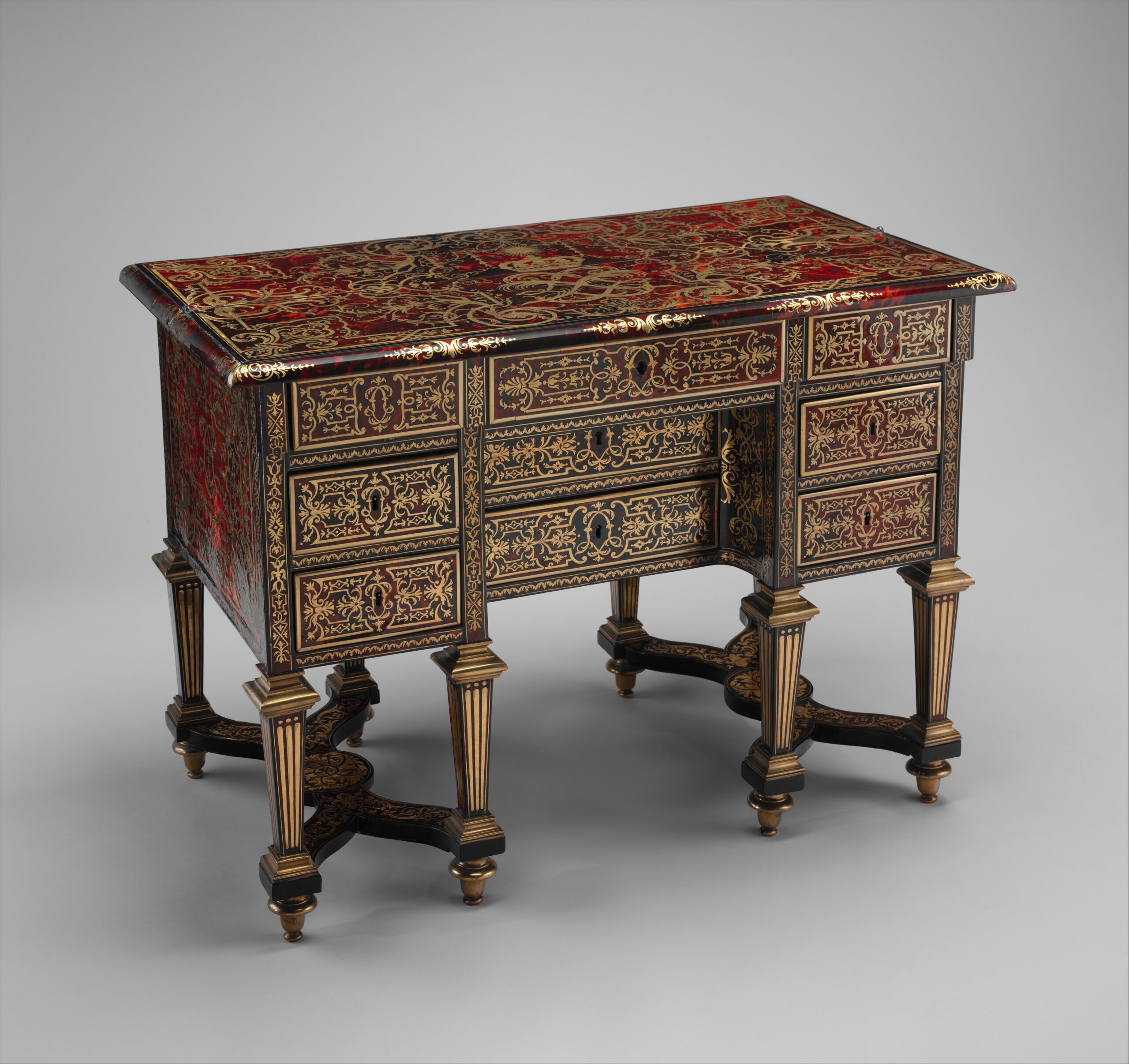
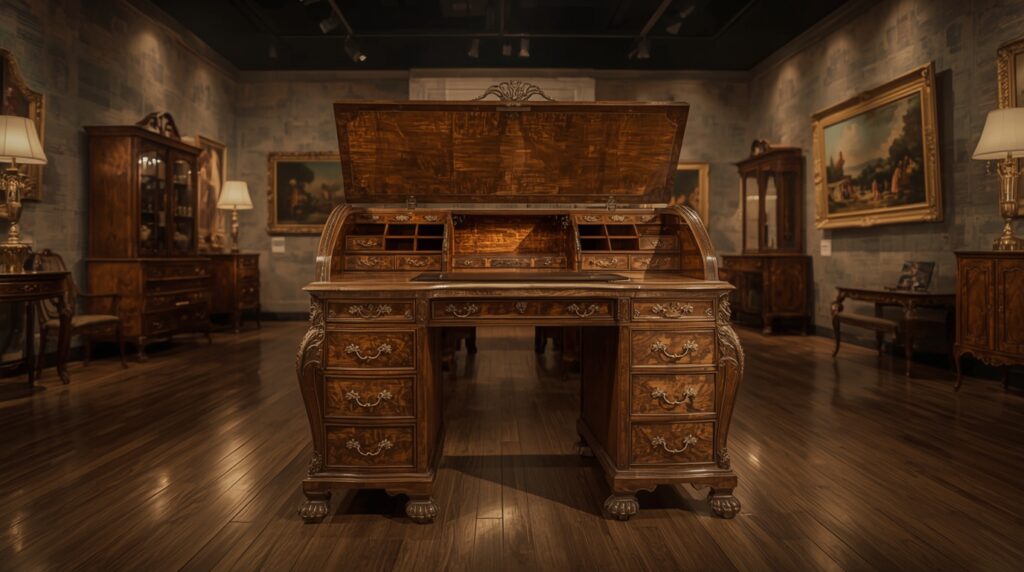
The antique flip top writing desk (or flip top table, sometimes) is a relatively small desk, characterized by a hinged top that flips up to expose a writing surface. While sometimes grouped into “fall-front” or “slant front” desk categories in English-language markets, “flip top” usually signifies a top piece that lifts upward, either presenting a slope, or opening to reveal interior compartments. This type of desk has variations in other parts of Europe and North America, such as secretaire desks in France, bureau cabinets in Britain, and early American colonial models.
Can You Name the Masterpiece?
Ten masterpieces. Ten questions. How well do you know the history of art?
These flip-top desks weren‘t a whim; they solved actual problems. A hinged top kept the papers dust and light free, kept ink and quills away from young children and cats, and let the same piece of furniture serve multiple purposes within a room. In the 18th century, a smaller desk could have a practical use as a writing area in the morning and as a tidy side table by night in keeping with the rise of private literacy and domestic order.
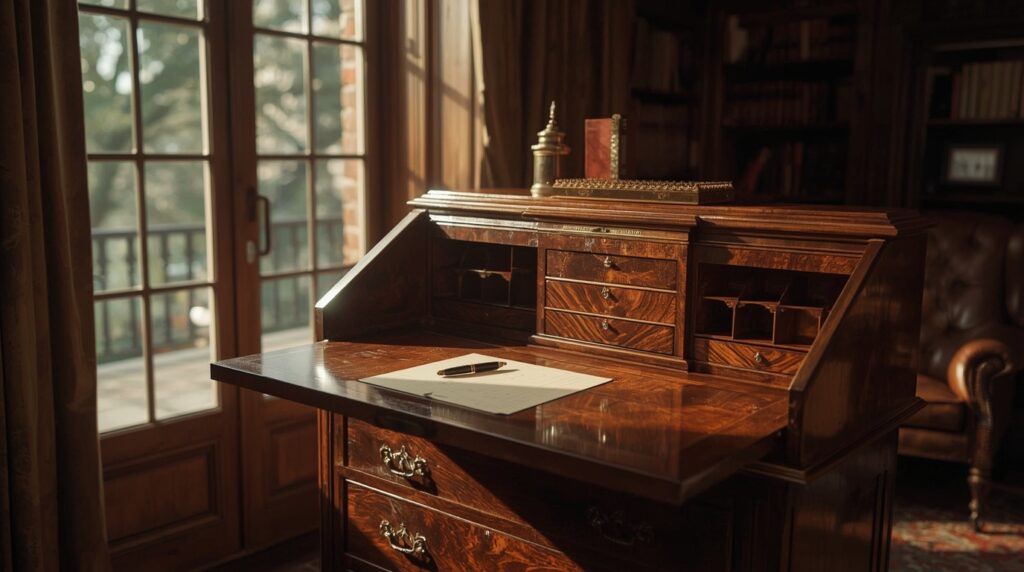
Museums also emphasize the importance of this culture, with institutions such as the Metropolitan Museum of Art and the V&A holding records of desks and writing furniture, as they document not only high-end taste but also craftsmanship, commerce, and domestic life. As the V&A describes its furniture collection, it traces “materials and techniques” and the interior social life exactly the kind of insights a flip-top desk can offer: the merging of work and domestic spaces with design.
Historical Origins: From European Craft to Atlantic Trade
Desk-like furniture with flip-tops and fall-fronts bloomed in tandem with the rise of literacy and commercial and bureaucratic recording. Mahogany imports to 18th-century Britain, filtering through places like London and Bristol, facilitated the production of case furniture such as writing desks with exquisite joinery and custom-fitted drawers. In France, especially within Paris, luxury cabinetmakers within the guild system (and later, the famous ebenistes), created writing desks that reflected aristocratic taste and administrative need.
Can You Guess the Artist?
Three clues. One artist. How quickly can you identify the painter?
In the colonies and the United States, desk forms were adjusted to local woods and tastes. In New England and the Mid-Atlantic, slant-front and fall-front desks, filled with compartmentalized drawers for papers, bills of sale, and personal letters, were made by furniture makers to respond to an increasing need for organization. The idea of closing it all up and being able to move on the flip-top was ideal in a household economy that used furniture for multiple functions.
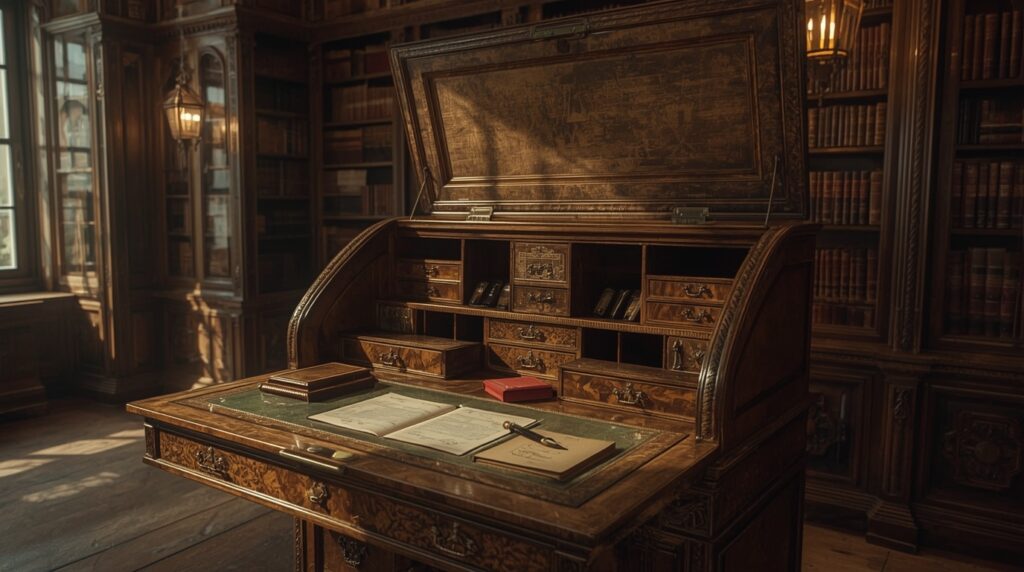
Some of the biggest institutions place the historical objects into context, using period rooms and decorative arts displays. Smithsonian explains the history of American furniture as a history of labor and trade, of domesticity. The Met and V&A provide a visual history of writing furniture within a lineage of European design and international material trade. And the Louvre adds to the prominence of writing furniture in the decorated spaces of state culture in early modern Europe.
Materials, Construction, and Identifying Authenticity
The construction of some flip-top desks show the maker‘s hand, and such construction is appreciated by collectors. Seek traditional joinery like dovetails on drawers and mortise-and-tenon construction, and check that lower cost secondary woods such as poplar, oak and pine have been used structually below veneers. Mahogany, walnut, oak and rosewood veneers, or indigenous hardwoods, were common on quality antique desks. Shellac or wax finishes might appear on older pieces.
Physical hardware is often a key indicator. Period pieces often have hand- filed lock plates, inconsistent screw threads (in earlier pieces), and genuine signs of wear and use, especially at the flip-top edge or the drawer pulls. Interiors can sometimes feature inkwells, pen trays, secret drawers or pigeon holes. But beware that is also where later “upgrades” happen to a piece, compromising its integrity and value.
In their descriptions of furniture, for instance, the Metropolitan Museum of Art notes materials, dimensions, and construction details so that a collector might compare it to authentic features of the period. “Close study of materials and techniques is the basis for all authentication and contextualization,” the museum notes in its collections guidance.
Key Characteristics at a Glance (Table)
| Characteristic | What to Look For | Why It Matters |
|---|---|---|
| Flip-top mechanism | Solid hinges; stable open position; consistent wear | Indicates original function and long-term use |
| Joinery | Hand-cut dovetails; mortise-and-tenon frames | Helps date and authenticate craftsmanship |
| Woods & veneers | Mahogany, walnut, oak; period-appropriate veneers | Reveals regional style and material economy |
| Interior fittings | Pigeonholes, small drawers, pen/ink spaces | Confirms writing-focused design |
| Hardware | Old locks, escutcheons, patinated pulls | Replacements affect value and integrity |
| Finish | Shellac/wax with age-appropriate patina | Over-refinishing can erase historical surface |
| Proportions | Compact footprint; ergonomic writing height | Tied to domestic use and period taste |
| Provenance | Labels, receipts, dealer records, prior collections | Strengthens credibility and market value |
Collecting and Valuation: What Drives Price and Desirability
Condition and originality are the first drivers of value. A flip-top desk with its original hinges, locks, and interior layout typically commands more than one with rebuilt components. That said, conservative repairs—especially to stabilize the top or address wood movement—can be acceptable when disclosed and professionally executed. Over-restoration, however, can flatten tool marks and remove historic finish, diminishing both scholarship value and collector appeal.
Style and period also matter. Georgian and Regency British examples, Louis XV/Louis XVI French writing furniture, and well-documented Federal American desks can be especially sought after. Regional scarcity, wood choice (notably figured walnut or high-grade mahogany), and decorative techniques such as marquetry further influence pricing. Pieces tied to known workshops or documented estates may command significant premiums.
Authoritative voices consistently emphasize careful evaluation. The V&A’s curatorial approach stresses understanding “materials and techniques,” while museum catalogues at institutions like the Met model how to describe and compare objects rigorously. In the antiques trade, that translates into a simple best practice: buy the object you can explain—materials, construction, and history—rather than the one that merely looks old.
Care, Conservation, and Ethical Restoration
A flip-top desk is mechanically active furniture: hinges, lids, and supports take stress. Keep it in a stable environment—avoid radiators, direct sunlight, and rapid humidity swings. If the flip top binds seasonally, do not force it; wood movement is normal in antiques, and forcing can split the lid or rack the carcass. Use blotters or desk pads if writing on the surface to protect original finish.
Cleaning should be minimal and reversible. Dust with a soft cloth; if needed, use a conservation-appropriate wax sparingly. Avoid silicone polishes, which can contaminate surfaces and complicate future conservation. For metal hardware, gentle cleaning is preferable to aggressive polishing that removes patina and historic character.
For repairs, consult a furniture conservator or a restorer experienced in period casework. Museum conservation ethics—seen across institutions like the Smithsonian and the Met—generally prioritize retaining original material, documenting changes, and making interventions reversible when possible. Those principles protect both the desk’s historical meaning and its long-term value.
Frequently Asked Questions
What’s the difference between a flip-top writing desk and a fall-front desk?
A fall-front (often called a secretary or bureau front) typically hinges downward to form the writing surface. A flip-top usually hinges upward or flips to reveal the writing area or compartments. Terminology varies by region and dealer tradition, so rely on mechanism and interior layout rather than labels alone.
How can I date an antique writing desk with flip top?
Dating is best done by combining clues: joinery type, wood species, tool marks, hardware, and stylistic features (feet, moldings, proportions). Cross-referencing with museum collection records—such as the Met or V&A online catalogues—helps anchor your observations in documented examples.
Does refinishing ruin value?
Often, yes—especially if it removes original surface, patina, and evidence of use. Light conservation (cleaning, waxing, stabilizing joints) is usually preferred. If refinishing is unavoidable, keep detailed records and preserve any original elements.
Are flip-top desks practical for modern use?
Many are, provided the mechanism is stable and the writing height suits you. Use protective pads, avoid heavy loads on the open top, and consider that antique drawers and compartments were sized for 18th–19th century stationery, not modern laptops.
What should I ask a dealer before buying?
Ask about provenance, restorations, replaced hardware, and any structural issues with hinges or the lid. Request detailed photos of joinery and the interior. Reputable sellers should be willing to discuss construction and provide condition reports.
The Evolution of the Flip-Top Writing Desk
The individual writing table emerged as literacy, commerce and the printing of personal letters grew. As writing became the significant aspect of life for merchants, statesmen, landowners and educated families during the late 17 th and throughout the 18 th, furniture makers designed small portable desks that could preserve papermaking and chancery documents and plug into the often multifunctional homes.
A simple writing desk or blotter would have been made from native oak, ash, walnut or elm by a local craftsman, but somewhat more expensive desks, ordered by a privileged customer, would be made using imported satinwood, rosewood or mahogany. A handsomely constructed flip-top was an ingenious piece of planning. Dressed when shut, the polished surface was flush and clean, but when flipped up it went into a fully functioning desk with pigeonholes, small drawers, sliding compartments and lockers to house letters, sealing wax, bottles of ink and a supply of nibs.
While furniture styles migrated across the Baroque, Georgian, Federal, Regency and Victorian art eras, the overall flip-top was one of the few designs to retain in its general design. Though detail varied significantly ranging from modest brass drawer pulls and cabriole legs to ornate carvings, veneering and inlaid marquetry the basic practicality of the flip- top remained desirable for generations of owners.
Hidden Compartments: More Than a Collector’s Curiosity
Perhaps the most interesting feature of an antique writing table with flip top is the element of hiding things away. Certain types of upscale desk featured secret drawers or hidden compartments that could only be reached by removing a small divider, activating an immaculately hidden catch or sliding part of the interior structure.
These cavities were not just cute decorating touches. Throughout the 18 th and 19 th century such cavities were quite functional, keeping sensitive papers, legal documents, financial accounts, jewelry or family jewels and locks of hair, away from theft and from prying eyes. During war or political turmoil, it was not unknown for the cavities to be used to store incriminating documents or valuable contents.
Today, one of the greatest pleasures of hunting for antique furniture is finding a blanked-out secret compartment. Sometimes they contain handwritten notes, receipts, old photographs, papers, or childhood toys that reveal intriguing details about the lives of past owners. Collecting these surprises is rare, but the appeal of the antique writing desk will always exist.
How to Identify an Authentic Antique Flip-Top Desk
Determining whether a writing desk is genuinely antique requires looking beyond its overall appearance. Experienced collectors pay close attention to construction techniques, materials, and evidence of age rather than relying solely on style.
Hand-cut dovetail joints, slight irregularities in craftsmanship, original brass hardware, solid hardwood construction, and natural signs of wear generally indicate earlier manufacture. Genuine antique desks often display subtle shrinkage of wood panels, oxidation around locks and hinges, and a rich patina that develops naturally over decades of careful use.
The interior frequently reveals even more information than the exterior. Original ink stains, worn writing surfaces, faded leather inserts, handwritten inventory numbers, or cabinetmaker’s labels can all help establish authenticity. Conversely, perfectly uniform machine-cut joints, modern screws, synthetic finishes, or freshly replaced interiors may suggest later reproduction or significant restoration.
Rather than diminishing a desk’s appeal, honest evidence of age often enhances its historical character. Small repairs, worn drawer runners, and gentle surface wear tell the story of a piece that served generations of owners instead of remaining untouched in storage.
Why Collectors Continue to Value Them
Growing consumer demand for an actual working piece of furniture rather than merely an object of display has led to a burgeoning appreciation of antique writing desks. As the majority of desirable decorative antiques become more and more merely to be looked at, working antique writing desks come into demand. Since many desirable antiques have no practical function, this is a welcome trend.
Owners commonly use these desks as office furniture at home, reading desks, laptop desks, or display pieces while admiring the craftsmanship that hardly exists in today‘s mass-mfg furniture. Smaller (relatively speaking), than their antique counterparts, they are comfortable fits in apartments, libraries, and smaller homes.
Of course, most significant of all is the knowledge that every antique writing desk has a life of its own behind it. The piece‘s lovingly polished edge, dulled from the years of seeking fingers; the rare ink spots beneath the lid, the meticulously built storage all express a time when writing by hand was an essential part of everyday life and a means to a personal end. It is that link to the common experience of history that makes the antique writing desk with flip top still one of the most popular collectible pieces of furniture.
An antique writing desk with flip top is more than a charming piece of décor—it is a compact artifact of literacy, privacy, and craftsmanship shaped by real historical forces in Britain, France, and the Atlantic world. By evaluating construction, materials, condition, and provenance—guided by the standards modeled by institutions like the Met, V&A, Louvre, and Smithsonian—you can choose a desk that is both historically credible and genuinely usable. Done well, collecting one is not just buying furniture; it is acquiring a small, hinged doorway into the past.
The Evolution of the Flip-Top Writing Desk
The winged writing table is just one aspect of a much wider history of furniture that developed out of the increased centrality of reading and writing within the home.
Earlier writing furniture might be quite basic: a portable writing slope, a small table or a cupboard with a surface for writing. However, with the growth of literacy and more home-based correspondence in rich people‘s lives, furniture designers moved on to more complex innovations.
The hinged top was particularly clever.
When opened it provided a compartment for writing, when closed it hid the contents and returned to the exterior appearance of a small table or cabinet.
This was a concept that made multiple appearances throughout Europe. In France, bakers’ secrétaires, in England, writes, hall bureaux and bureaux tables, and in central and western Europe what is sometimes called also “bureaus and escriboires” often consisted of a working surface and a place for storing writing material in either one country or another. Their construction varied widely, and the categories of today…. Should be understood as a generalized way of describing a type, rather than a particular category within the past.
Unlatching an antique writing desk can open up an entirely new world.
There may be cupboards, pigeonholes, shelves, compartments, document slots underneath the hinged surface and at times storage hidden away below the hinged surface. These accounted for the wide variety of tiny objects that were used with correspondence.
Quills or pens, sealing wax, letter, paper, notebook, ink pots, stamps and private papers, all had to be stored somewhere.
It was useful, but also had the potential to give off the impression of an individual space.
Since one of the locations in which private material could be hidden was a writing desk. At a time when a letter might hold details of money matters, family updates, love letters, political ideas or business deals, a locking or concealably writing area was clearly useful.
The desk was thus a working surface, record keeping system, and personal archive.
Unlatching an antique writing desk can open up an entirely new world.
There may be cupboards, pigeonholes, shelves, compartments, document slots underneath the hinged surface and at times storage hidden away below the hinged surface. These accounted for the wide variety of tiny objects that were used with correspondence.
Quills or pens, sealing wax, letter, paper, notebook, ink pots, stamps and private papers, all had to be stored somewhere.
It was useful, but also had the potential to give off the impression of an individual space.
Since one of the locations in which private material could be hidden was a writing desk. At a time when a letter might hold details of money matters, family updates, love letters, political ideas or business deals, a locking or concealably writing area was clearly useful.
AI Notice: Some visual content in this article may have been created or enhanced using artificial intelligence (AI) for artistic, editorial or illustrative purposes. Learn more about our approach in our AI & Editorial Principles.


