

Designing an outdoor space that actually helps you unwind is harder than it sounds. Many patios end up cluttered with random pieces, clashing colors, and furniture that doesn’t really invite you to slow down. Japandi style offers a different path: calm, intentional design that feels both warm and minimal.
This matters because your outdoor area can seriously influence how well you relax, focus, and recover from daily stress. Research summarized by the World Health Organization (WHO) notes that regular contact with natural spaces supports better mental health and reduces stress levels. Creating a Japandi-inspired outdoor retreat is not about chasing trends; it’s about building a quiet, functional space that actually supports your wellbeing.
What Is Japandi Outdoor Style?
Japandi is a blend of Japanese minimalism and Scandinavian comfort. In outdoor spaces, that means clean-lined furniture, natural materials, and a strong focus on calm, usability, and nature.
Core elements of Japandi outdoor design:
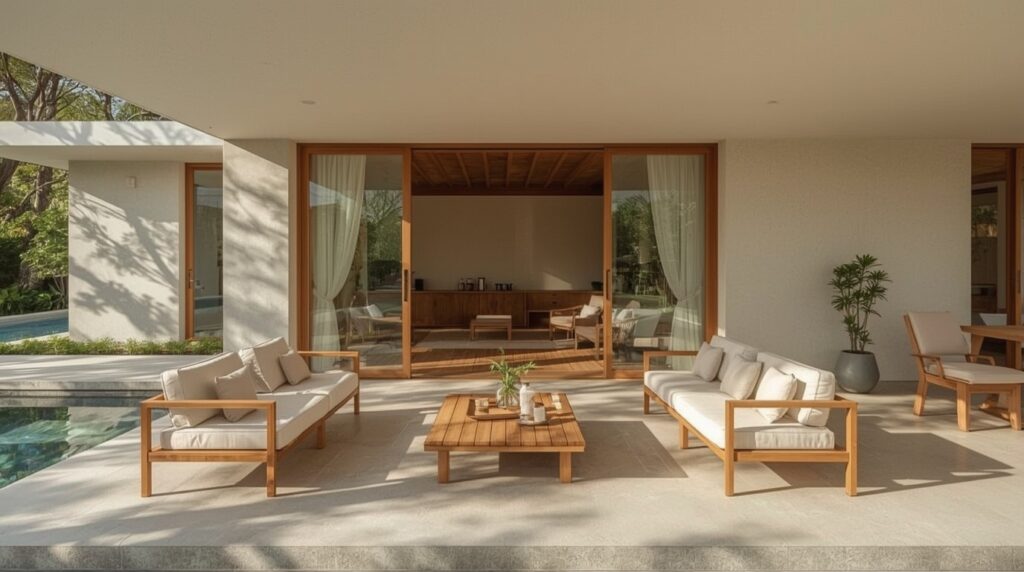
- Neutral, nature-based colors (sand, stone, charcoal, clay)
- Simple shapes with no unnecessary decoration
- Natural materials like wood, bamboo, stone, and cotton
- Lots of open space and visual breathing room
- Pieces that serve more than one function
What this means for you
Rather than stuffing your balcony or garden with furniture, Japandi encourages you to choose fewer, better pieces. The result is an area that feels:
- Easier to maintain
- Calmer on the eyes
- More comfortable to spend time in
- More connected to the natural environment
When to be concerned
If your outdoor area feels visually overwhelming, hard to clean, or you avoid using it because it feels chaotic, your space may be working against your relaxation instead of for it. That’s a sign it may be time to strip things back and re-think the layout through a Japandi lens.
1. Choosing Japandi-Friendly Outdoor Furniture
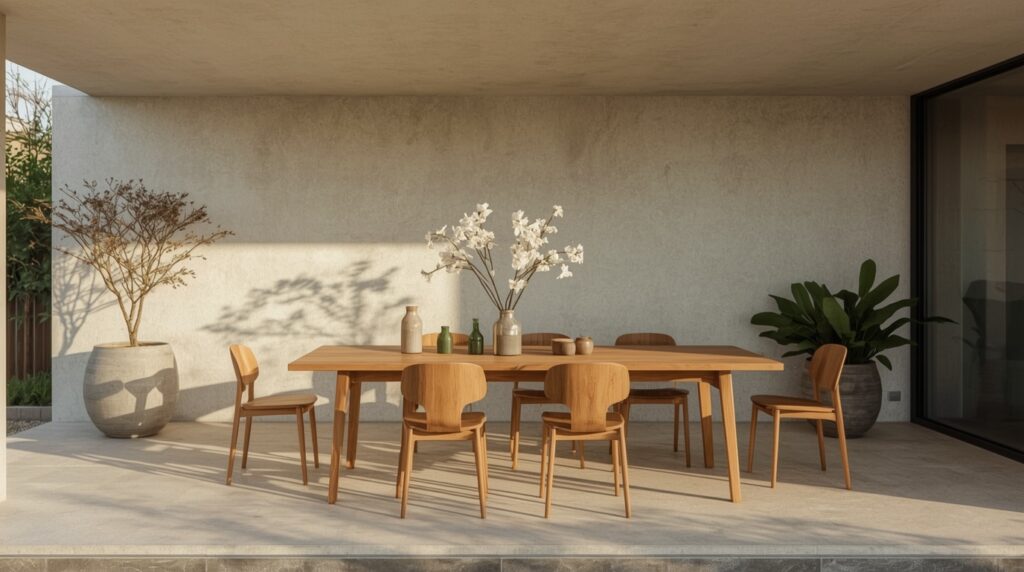
The foundation of a Japandi retreat is the furniture itself. Focus on pieces that are simple, durable, and timeless rather than trendy.
Go for low, grounded seating
Japanese interiors often favor furniture that sits closer to the floor, while Scandinavian design emphasizes comfort and ergonomics. Combine these by choosing low-profile, supportive seating:
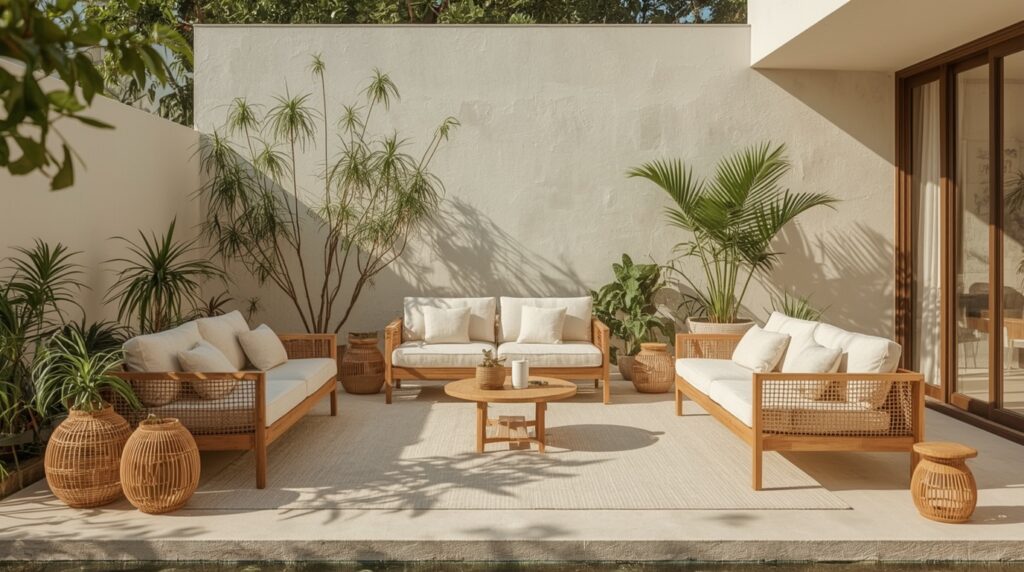
- Low outdoor sofas with straight lines
- Lounge chairs with slim, wooden or metal frames
- Floor cushions on a raised deck or rug
This low, grounded seating subtly shifts your posture and perspective, helping you feel more anchored and relaxed.
Prioritize durable, natural materials
Outdoor furniture must handle sun, rain, and temperature changes. Look for:
- Teak or acacia wood – naturally weather-resistant, ages gracefully
- Powder-coated metal – simple lines, long-lasting, low maintenance
- Bamboo – light, warm, and visually soft (best in covered areas)
- Weather-resistant fabrics – in cotton-like textures or linen blends
Practical tips
- Pick one main material (for example, teak) and one accent material (like black metal) to keep the look cohesive.
- Avoid overly shiny finishes; matte or satin finishes feel softer and more Japandi.
- Test furniture for comfort, not just aesthetics—Japandi is minimalist, not punishing.
When to be concerned
If your outdoor furniture wobbles, rusts, or fades quickly, you’ll spend more time fixing and cleaning than relaxing. Poor-quality materials also increase the risk of breakage or injury. In those cases, it’s worth replacing key pieces with fewer but sturdier items that will last.
2. Color Palettes: Calm Neutrals With Thoughtful Contrast
A Japandi outdoor space is calm but not boring. Color plays a big role in that balance.
Start with nature-based neutrals
Your primary color palette should echo natural elements:
- Warm wood tones (honey, oak, walnut)
- Stone shades (beige, sand, pebble gray)
- Charcoal, black, or deep brown for contrast

These colors mimic what you’d naturally see outdoors, which helps your mind relax. Studies in environmental psychology suggest that exposure to natural colors and textures can support lower stress and improved mood, especially when combined with real greenery.
Add minimal, muted accents
Use color sparingly and keep it soft:
- Sage or olive green cushions
- Dusty blue or slate throw blankets
- Terracotta planters or pottery
What this means for people
A restrained palette makes it easier for your brain to “switch off.” You’re not constantly processing intense contrasts or patterns, which can be subtly tiring.
Practical tips
- Limit yourself to 2–3 main colors and 1–2 accent shades.
- If you’re unsure, keep furniture neutral and use cushions and textiles for gentle color.
- Repeat the same colors in pots, lanterns, or textiles for a unified look.
When to be concerned
If your outdoor area feels busy or visually noisy—lots of bright plastics, many patterns, or mismatched colors—it may keep you mentally stimulated instead of calm. In that case, consider:
- Removing or storing some items
- Replacing bright textiles with neutral ones
- Painting or refinishing pieces in a more muted palette
3. Layout: Creating Flow and Purpose
Japandi design is just as much about space as it is about objects. A good layout makes your outdoor area feel intentional, not random.
Define clear zones
Even a small balcony benefits from distinct functions:
- Rest zone: a chair, small sofa, or floor cushions with a side table
- Dining zone: compact table and chairs, or a bench
- Green zone: planters, a vertical garden, or a single statement tree in a pot
You don’t need all of these. Choose what fits your lifestyle. The key is to avoid having furniture floating without clear purpose.
Keep circulation simple
You should be able to move through the space without dodging furniture. Leave visible floor area and avoid blocking:
- Doorways
- Main walking paths
- Access to plants or storage
Practical tips
- Sketch your space on paper and mark how you walk through it.
- Place the largest piece first (usually a sofa or table) and build around it.
- Use rugs or changes in flooring material to subtly mark different zones.
What this means for people
A clear, open layout reduces the small daily frictions—bumping into corners, shuffling chairs, tripping over items—that add up to lower comfort. It supports mental clarity and a sense of control over your environment.
When to be concerned
If you find yourself constantly moving pieces to sit down, host guests, or water plants, your layout probably isn’t working. That’s a sign it’s time to:
- Remove unnecessary items
- Reposition large furniture along edges instead of in the center
- Reassess which functions actually matter most for your outdoor space
4. Textures, Fabrics, and Soft Elements
Japandi isn’t cold minimalism. It’s warm and tactile, with simple softness that invites you to stay longer.
Layer natural textures
Mix a few textures to avoid a flat, sterile look:
- Woven rugs (jute, sisal, or weather-safe versions)
- Linen-effect or cotton-look cushion covers
- A soft throw for cool evenings
- Wicker or rattan accent pieces (ideally under cover)
This blend of natural textures supports sensory comfort without visual clutter. Touch and comfort play a genuine role in relaxation; occupational and environmental health research often notes that comfortable, supportive seating and pleasant textures can support longer, healthier rest.
Use textiles mindfully
Outdoors, more fabric means more upkeep. Choose wisely:
- Opt for removable, washable covers
- Store cushions in a bench box or indoors when not in use
- Avoid too many small cushions; 2–4 larger ones usually look cleaner
Practical tips
- Match 70–80% of textiles in one neutral tone, then add 1–2 accent textures (e.g., a single striped pillow).
- Choose quick-drying fabrics if your area gets rain or morning dew.
- If you have allergies, clean fabrics regularly to reduce dust and pollen buildup.
When to be concerned
If your cushions stay damp, grow mildew, or trigger sneezing fits, that’s a sign of inadequate ventilation or cleaning. The U.S. Centers for Disease Control and Prevention (CDC) notes that mold exposure can worsen respiratory issues, especially in people with asthma or allergies. In that case:
- Wash or replace mold-affected textiles
- Improve airflow
- Store fabrics in a dry place when not in use
5. Integrating Nature: Plants, Light, and Small Rituals
Japandi outdoor design is about living with nature, not just next to it.
Use plants as subtle focal points
Instead of many small pots, consider:
- One or two larger statement plants (like a small tree or shrub in a deep pot)
- A simple row of identical planters for a clean, ordered look
- Soft, arching grasses or ferns for gentle movement
Access to green views has been linked with reduced stress and better recovery from mental fatigue in numerous studies in environmental and health psychology. Even a few well-chosen plants can make a difference.
Simplify lighting for calm evenings
Good lighting helps you use your outdoor space safely and comfortably after dark:
- Warm white string lights (not harsh cool white)
- Simple lanterns with candles or LED candles
- A small, shielded wall light to avoid glare
Aim for soft, layered light rather than one bright source.
Build small calming rituals
Your space becomes more valuable when it supports daily habits that calm you:
- A low table for tea, coffee, or reading
- A blanket basket for cool nights
- A small shelf or tray for a notebook or book
What this means for people
A thoughtfully designed outdoor area can function almost like a personal recovery zone—somewhere you go intentionally to slow down, breathe, and reset. Over time, your brain may start to associate that space with rest, making it easier to unwind.
When to be concerned
If you never use your outdoor space—even in good weather—that’s a sign it’s not meeting your needs. Consider:
- Removing items that feel like work (clutter, broken pieces, unused equipment)
- Adding one or two elements that support a specific habit you value (reading lamp, small side table for tea)
- Scheduling short, regular times to actually sit outside, even 10–15 minutes a day
6. Safety, Maintenance, and Long-Term Comfort
A calm retreat also needs to be safe and manageable. If it’s hard to care for, it will stop feeling restful.
Prioritize safety
Especially if children, older adults, or pets use the space:
- Choose stable, sturdy furniture that won’t tip easily
- Avoid sharp, protruding corners where possible
- Ensure pathways are clear and well-lit
This aligns with general injury prevention guidance from health authorities like the CDC, which emphasize safe home environments to reduce falls and minor accidents.
Design for low maintenance
You’re creating a retreat, not another chore list. To keep upkeep reasonable:
- Use outdoor-rated materials and fabrics
- Keep plant choices simple and suited to your climate
- Opt for a smaller number of well-chosen items rather than many decorative pieces
Practical tips
- Do a quick monthly check for loose screws, splinters, or rust.
- Clean surfaces with mild soap and water; avoid harsh chemicals where you sit or eat.
- Reapply protective oil or sealant to wood according to manufacturer guidance.
When to be concerned
If you notice:
- Slippery algae on decks or tiles
- Rusted or unstable furniture
- Mold or mildew smells
Take action. These issues can increase the risk of slips, falls, and respiratory irritation. Address them promptly with cleaning, repairs, or replacement, and if health symptoms appear repeatedly, consult a healthcare professional for guidance.
Conclusion: Turning Your Outdoor Area Into a True Retreat
A Japandi outdoor space is less about impressing anyone and more about how you feel when you step outside. By choosing simple, durable furniture, calming colors, natural textures, and a clear, open layout, you create a setting that truly supports rest and quiet focus.
The practical takeaway:
Start small. Remove a few cluttered items, choose one or two Japandi-style furniture pieces, add a couple of plants, and simplify your color palette. As you refine the space over time, you’ll likely find it easier to breathe, think, and genuinely unwind in your own calm retreat.
AI Notice: Some visual content in this article may have been created or enhanced using artificial intelligence (AI) for artistic, editorial or illustrative purposes. Learn more about our approach in our AI & Editorial Principles.