
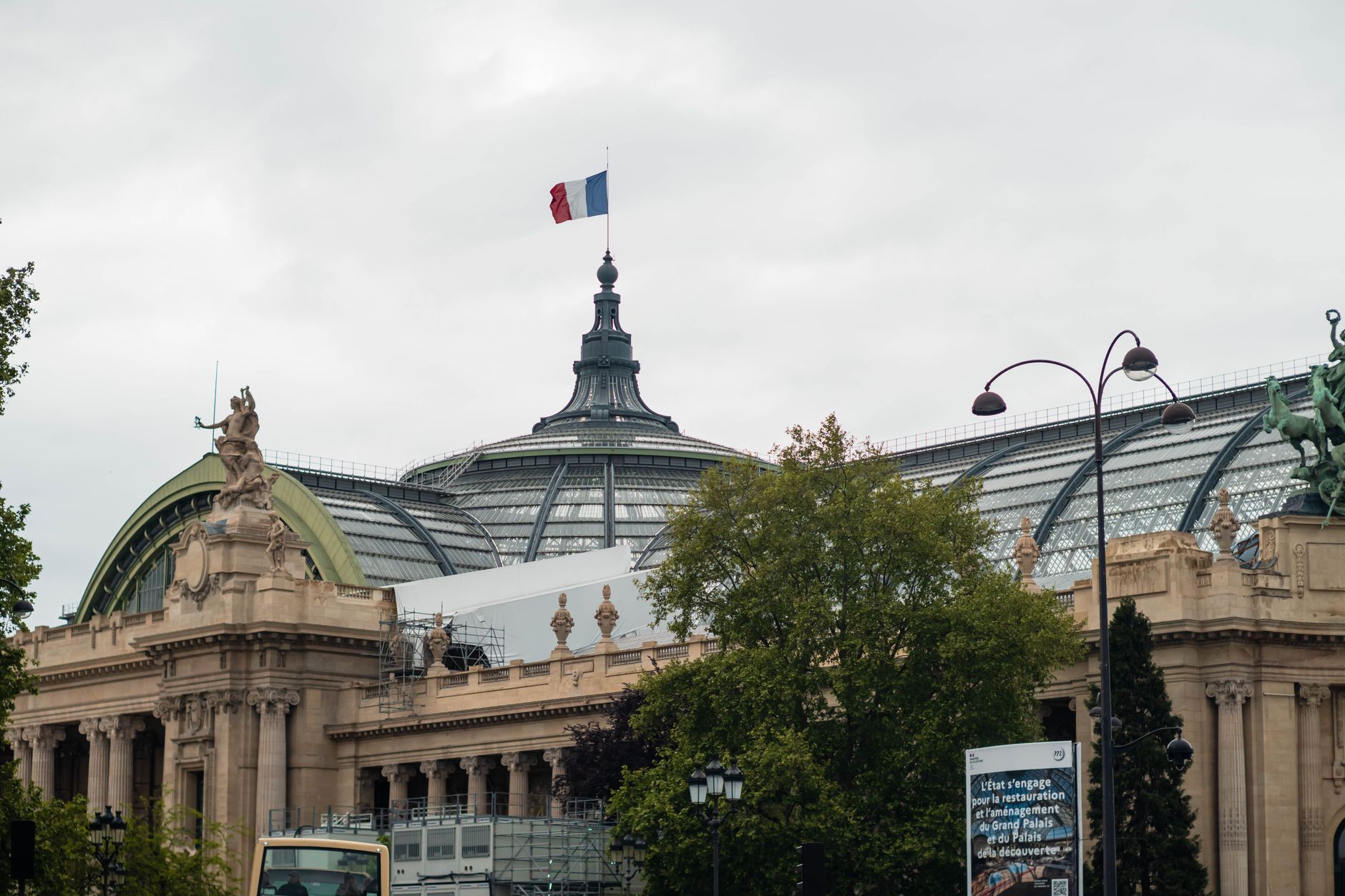
Fine Arts Paris returns to the Grand Palais from September 19 to 23, 2026, bringing together around 100 international galleries specialising in art, antiques, furniture, design, jewellery and other fields. For this year’s edition, seven prominent interior designers selected pieces that caught their attention, revealing how historic furniture can still shape sophisticated contemporary interiors. Their choices range from an Art Nouveau chair by Gustave Serrurier-Bovy and a Louis Majorelle chair to an 18th-century French chiffonnière by Jean-Henri Riesener valued at €750,000.
Fine Arts Paris Returns to the Grand Palais
Paris is preparing for one of the major events of its autumn art season.
Fine Arts Paris, formerly known as FAB Paris, returns to the Grand Palais from September 19 to 23, 2026. The fifth edition brings together approximately 100 international dealers covering a wide range of artistic periods and specialties, including Old Masters, modern art, antiquities, furniture, Art Deco, 20th-century design, sculpture and jewellery.
The fair is also establishing a permanent home at the Grand Palais, placing the event beneath one of Paris’s most recognizable architectural landmarks.
For interior lovers, however, some of the most interesting objects may not be paintings at all.
Furniture is increasingly being treated as an important part of the art market, particularly when exceptional craftsmanship, provenance and design history come together.

This year, seven interior designers were asked to identify standout pieces at Fine Arts Paris and explain how they would use them in contemporary interiors.
Their selections offer an interesting glimpse into the way designers are looking at antique furniture today.
A Chair by Gustave Serrurier-Bovy
One of the most striking selections is a pair of chairs from Gustave Serrurier-Bovy’s “Saint-Saence Padouck” series, dating to around 1905.
The chairs combine wood, Loetz glass panels and brass and are offered by Belgian dealer Haesaerts-le Grelle with an estimated price of €40,000–€50,000.
Interior designer Constance Guisset selected the pair for their strong vertical character and distinctive upholstery.
Her proposed setting is particularly revealing.
Rather than placing the chairs in a traditional period interior, she imagined them in a bedroom where wallpaper would extend upward behind the chairs and continue toward the ceiling and floor.
The idea demonstrates how an early 20th-century object can become the starting point for an entire contemporary room.
Instead of treating antique furniture as something that must be surrounded by matching antiques, the designer uses the furniture as the architectural inspiration for the space itself.
That is an important shift.
The antique becomes the focal point rather than simply another historical object.
Mithé Espelt’s Sculptural Mirror
Another selection moves away from conventional furniture altogether.
Sarah Poniatowski chose “Sète”, a mirror created by French artist and designer Mithé Espelt around 1947.
The work is made from stamped earth and is offered by Galerie Omagh in Paris for €26,000.
Poniatowski described the handmade mirror as feeling more like a work of art than an ordinary functional object.
That distinction is central to understanding why pieces like this are attracting attention from contemporary designers.
A mirror normally has an obvious practical function.
Espelt’s work transforms that function into something more sculptural.
Poniatowski imagined it above a console in an entrance hall covered in wood, including the ceiling, creating an intimate architectural environment around the mirror.
The result would not resemble a conventional minimalist hallway.
Instead, the room would become a setting for a single crafted object.
Louis Majorelle Turns a Leaf Into Furniture
Charles Zana, the guest designer responsible for the scenography of Fine Arts Paris 2026, selected one of the fair’s most charming pieces: Louis Majorelle’s Feuille de marronnier chair from 1895.
The chair is made from walnut with marquetry and retains its original corduroy velvet seat.
It is offered by Demisch Danant in New York and Paris for €10,000.
The name refers to the horse-chestnut leaf, which Majorelle transformed into the visual language of the chair.
Zana’s interpretation is unconventional.
Rather than placing the chair in a formal drawing room or a traditional library, he imagined it alone in a bathroom designed as a private salon, facing a garden through a large window.
This approach makes the chair almost sculptural.
It does not need a collection of matching pieces around it.
Its shape becomes the room’s central visual event.
The choice also demonstrates why antique furniture can work surprisingly well in modern interiors.
A highly decorative historic object can provide contrast in an otherwise contemporary environment.
Ephraim Ståhl’s Neo-Egyptian Armchairs
Jacques Grange selected a pair of armchairs dating to around 1800 by Swedish furniture maker Ephraim Ståhl.
The chairs feature carved, gilded and bronze-lacquered wood and incorporate neo-Egyptian motifs, including decorative heads inspired by Egyptian imagery.
The pair is offered by Galerie Léage in Paris for €60,000–€80,000.
Grange’s proposed setting is dramatic.
He imagined the chairs in an entrance hall with Pompeian-red walls and an Art Deco console positioned between them.
This is not a restrained interpretation of antique furniture.
It is deliberately theatrical.
The chairs are allowed to dominate the room through their scale, gilding and sculptural presence.
That approach is particularly relevant to the current interest in interiors that mix periods rather than following a single historical style.
A pair of 19th-century or earlier chairs does not necessarily require an entire period room.
Placed carefully, such furniture can coexist with Art Deco, modern architecture or contemporary art.
Jean-Henri Riesener’s €750,000 Masterpiece
The most expensive furniture selection highlighted by the designers is an extraordinary chiffonnière by Jean-Henri Riesener.
Dating to around 1775, the piece combines marquetry, gilt bronze, leather and glass.
It is being offered by Galerie Steinitz in Paris for €750,000.
Riesener was one of the most important cabinetmakers of 18th-century France and became particularly associated with the French royal court.
The piece demonstrates the extraordinary level of craftsmanship associated with elite French furniture of the period.
François-Joseph Graf selected it for its proportions, marquetry and finely cast bronze decoration.
He also highlighted the transition visible in its design between curved and straight forms.
Graf’s comments point toward something increasingly important in the antique furniture market: historic furniture is being appreciated not only for its age but also for its design quality.
A piece can appeal to a contemporary designer because of its proportions, material combination and construction, even when it was created almost 250 years ago.
Why Designers Are Looking at Antique Furniture Again
The selections at Fine Arts Paris suggest that antique furniture is increasingly being considered as part of a broader artistic vocabulary.
These pieces do not have to be displayed in rooms filled with other antiques.
A Louis Majorelle chair can become the focal point of a modern bathroom.
A 1905 Serrurier-Bovy chair can inspire the colour and geometry of an entire bedroom.
An 18th-century French cabinet can provide historical depth to a contemporary interior.
This way of decorating creates tension between old and new.
That tension is often what gives a room personality.
Perfectly matched furniture can create a polished appearance, but mixing periods introduces contrast.
The eye moves between different materials, proportions and historical references.
For designers, that makes antique furniture useful far beyond its original function.
The Return of Historical Character
The Fine Arts Paris selections also reflect a broader interest in interiors with more historical character.
For years, minimalist interiors dominated design conversations.
Neutral colours, simple forms and uncluttered spaces became synonymous with contemporary luxury.
But designers are increasingly experimenting with rooms that contain stronger references to the past.
Antique furniture offers an immediate way to introduce that history.
A carved wooden chair can bring craftsmanship into an otherwise modern room.
A marquetry cabinet can introduce pattern.
A gilded bronze detail can add visual richness.
A sculptural mirror can become an artwork.
The result does not have to look old-fashioned.
In fact, the contrast between an antique object and a modern architectural setting can make both elements appear more distinctive.
Fine Arts Paris Is Treating Furniture as Art
The structure of the 2026 fair reinforces this idea.
Fine Arts Paris describes itself as a multidisciplinary event covering the full history of art and the international art market.
Furniture and works of art form one of its major categories, alongside antiquities, Old Masters, modern art, Art Deco furniture, 20th-century design and sculpture.
The presence of around 100 galleries means visitors are not being presented with a single decorative style.
Instead, the fair places objects from different periods and disciplines into the same environment.
That encourages comparisons.
A visitor can move from an 18th-century French cabinet to Art Nouveau furniture, then to 20th-century design and contemporary art.
For collectors and interior designers, this creates a different way of thinking about furniture.
The question is no longer simply whether a piece matches a particular room.
The more interesting question is whether the object has enough character to transform the room.
Charles Zana’s “Ephemeral City”
The fair’s scenography is itself part of the story.
Charles Zana, the guest designer for the 2026 edition, has conceived Fine Arts Paris as an “ephemeral city” made up of three villages connected by pathways and punctuated by squares.
The idea is designed to encourage visitors to discover works as they move through the fair rather than experiencing a conventional sequence of exhibition stands.
That approach is particularly appropriate for a fair containing such a broad mixture of art and furniture.
It allows historic objects to be experienced within an environment that emphasizes discovery.
For a piece of furniture, context can make an enormous difference.
A chair displayed alone may initially seem like an attractive object.
Placed within a carefully designed room, its scale, colour and material can suddenly become much easier to understand.
The New Luxury Is Not Always New
Perhaps the most interesting message from this year’s designer selections is that luxury does not necessarily mean buying something new.
Some of the most desirable objects at Fine Arts Paris were created decades or centuries ago.
Their value comes from craftsmanship, rarity, condition, design and historical significance.
The Riesener chiffonnière dates from the 18th century.
Majorelle’s chair comes from the 19th century.
The Serrurier-Bovy chairs were created at the beginning of the 20th century.
Yet contemporary designers can still imagine them in bedrooms, bathrooms, entrance halls and modern living spaces.
That is the enduring strength of exceptional design.
Good proportions do not become obsolete.
Fine craftsmanship does not become unfashionable.
And a beautiful object does not necessarily need to belong to the period in which it was created.
What to Watch at Fine Arts Paris 2026
For anyone interested in antique furniture and interiors, several pieces stand out before the fair opens.
The Serrurier-Bovy chairs demonstrate the expressive possibilities of early modern design.
Mithé Espelt’s mirror shows how functional objects can cross into sculpture.
Majorelle’s leaf-inspired chair offers a particularly elegant example of Art Nouveau craftsmanship.
The neo-Egyptian armchairs by Ephraim Ståhl demonstrate the dramatic possibilities of historic furniture.
And Riesener’s extraordinary chiffonnière represents the height of 18th-century French cabinetmaking.
Together, they show how different historical periods can speak to contemporary interiors.
Antique Furniture Is No Longer Just About Tradition
The most interesting aspect of Fine Arts Paris may therefore be not the age of these objects but their ability to remain relevant.
The designers featured in the fair’s preview are not suggesting that homeowners should recreate historic rooms exactly as they once looked.
Instead, they are placing exceptional objects into unexpected environments.
That approach makes antique furniture feel contemporary.
A chair from 1895 can become the centrepiece of a modern bathroom.
An 18th-century cabinet can provide a historical counterpoint to contemporary architecture.
A handmade mid-century mirror can function as both decoration and sculpture.
The message is simple: antique furniture does not have to belong to the past.
It can become part of the present.
Fine Arts Paris Shows Where Interior Design Is Going
Fine Arts Paris 2026 arrives at the Grand Palais at a moment when designers are increasingly interested in interiors with personality, craftsmanship and historical depth.
The furniture selections chosen by leading designers offer a useful snapshot of that direction.
Rather than matching everything, designers are mixing periods.
Rather than hiding decorative objects behind minimalist interiors, they are allowing individual pieces to dominate.
And rather than treating antique furniture simply as collectibles, they are treating it as an active part of interior architecture.
That may be the real attraction of these objects.
They have already survived their original era.
Now they are being given another life.
Fine Arts Paris will run from September 19 to 23, 2026, beneath the glass dome of the Grand Palais, bringing together around 100 international galleries and a remarkable range of historical and contemporary objects.
For anyone interested in antique furniture, the most exciting question may not be what belongs in a museum.
It may be what belongs in your home.
Sources
- Financial Times – Seven designers’ top picks from the Fine Arts Paris fair
- Fine Arts Paris – Official 2026 information
- Grand Palais – Fine Arts Paris 2026
AI Notice: Some visual content in this article may have been created or enhanced using artificial intelligence (AI) for artistic, editorial or illustrative purposes. Learn more about our approach in our AI & Editorial Principles.