The Kröller-Müller Museum in the Netherlands has brought together all 88 Vincent van Gogh paintings in its collection for the exhibition Van Gogh, All Our Paintings. The exhibition opened on September 15, 2026, and runs until January 3, 2027. According to the museum, this is the first time since 1984 that all 88 paintings have been displayed together. Instead of presenting Van Gogh’s work chronologically, the exhibition explores his paintings through three themes: faith, hope and love.
A Rare Van Gogh Moment Has Arrived in the Netherlands
For anyone interested in Vincent van Gogh, the autumn of 2026 offers an unusually rare opportunity.
At the Kröller-Müller Museum in Otterlo, the Netherlands, all 88 paintings by Van Gogh belonging to the museum’s collection are now hanging together.
The exhibition is called Van Gogh, All Our Paintings.
It opened on September 15 and will remain on view until January 3, 2027.
But the most important fact is not simply the number of paintings.
It is how rarely the entire collection has been visible in one place.
The museum confirms that this is the first time since 1984 that all 88 paintings have been displayed together.
For a museum with one of the world’s most important collections of Van Gogh’s work, that makes the exhibition an event in its own right.
Why 88 Paintings Are So Difficult to Show Together
The Kröller-Müller Museum normally cannot display all of its Van Gogh paintings simultaneously.
The institution has only a limited amount of gallery space available for the collection.
As a result, some works are normally kept in storage, while others may be on loan or undergoing conservation.
For the new exhibition, the museum temporarily moved its Van Gogh collection from the regular Van Gogh Gallery into four larger exhibition rooms.

That architectural decision has made it possible to create something visitors rarely experience: an opportunity to see the entire collection together rather than encountering individual masterpieces separately.
The result is not simply a larger Van Gogh exhibition.
It changes the way the collection itself can be understood.
The Collection Began With Helene Kröller-Müller
The story of these 88 paintings begins with the woman whose name the museum carries.
Helene Kröller-Müller, a Dutch art collector and museum founder, developed an extraordinary interest in Van Gogh.
Between 1908 and 1930, she acquired most of the Van Gogh works now belonging to the museum.
Her collection eventually became one of the most important groups of Van Gogh paintings outside the Netherlands’ Van Gogh Museum in Amsterdam.

Kröller-Müller’s interest in Van Gogh was not simply based on his popularity.
She regarded him as a major modern artist whose work combined personal experience, spirituality and a new approach to painting.
The museum’s collection is therefore also a record of one collector’s early belief in Van Gogh’s importance.
A Collection Built Before Van Gogh Became a Global Icon
It is easy to forget how different Van Gogh’s reputation was during the early decades of the 20th century.
Today his name is almost synonymous with Western art.
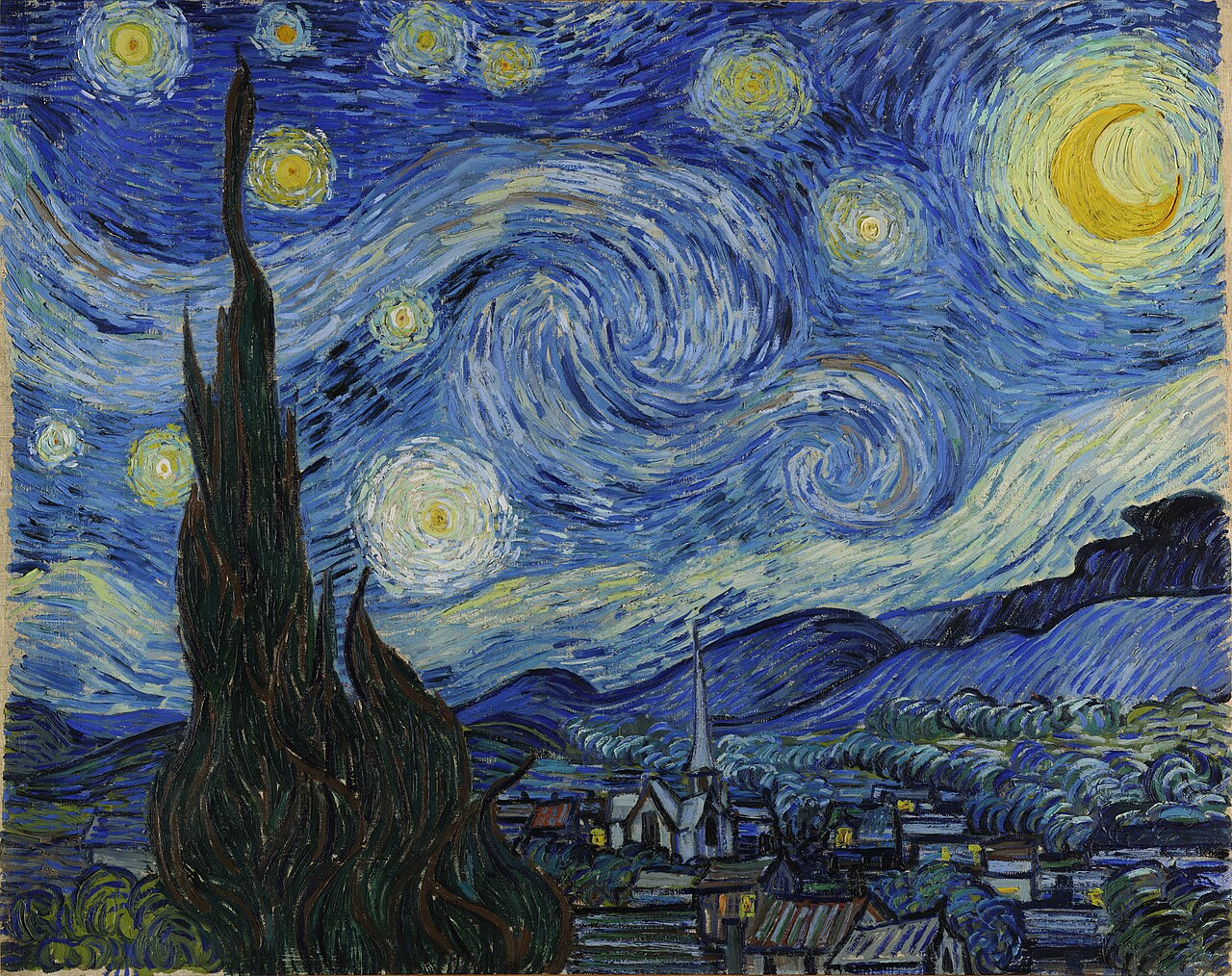
Sunflowers, The Starry Night, Irises and his self-portraits are instantly recognisable around the world.
But when Helene Kröller-Müller began acquiring his work, his reputation was still developing.
Her decision to devote such significant attention to Van Gogh helped establish the foundation for what would eventually become one of the world’s most important collections of his paintings.

The museum therefore tells two stories at once.
It tells the story of Van Gogh.
And it tells the story of how Van Gogh came to be recognised as one of the defining artists of modern art.
This Is Not a Conventional Van Gogh Exhibition
Visitors expecting a traditional chronological presentation may be surprised.
The museum has deliberately chosen not to arrange the 88 paintings simply according to the years in which they were created.
Instead, the exhibition is organised around three themes:
Faith. Hope. Love.
These concepts were important throughout Van Gogh’s life and work.
The museum argues that they provide a different way of understanding the artist’s paintings.

Rather than moving neatly from his early Dutch period to Paris, Arles, Saint-Rémy and Auvers-sur-Oise, visitors are encouraged to make connections between paintings created at very different moments.
That creates visual conversations across Van Gogh’s short but extraordinary career.
Two Sunsets, Separated by Five Years
One example demonstrates how unusual the arrangement can be.
Early in the exhibition, visitors encounter two paintings depicting rows of trees beneath evening skies.
One is ** Lane of Poplars at Sunset **, painted in Nuenen in October 1884.
The other is ** Pine Trees at Sunset **, created in Saint-Rémy-de-Provence in December 1889.
The two paintings were made roughly five years apart.
Yet they can now be viewed together.
The comparison allows visitors to see both continuity and transformation.
Van Gogh’s fascination with nature remained.
But his colour, brushwork and emotional intensity had changed dramatically.
This is precisely what a thematic exhibition can reveal that a purely chronological display sometimes cannot.
Some of Van Gogh’s Most Important Works Are Here
The 88 paintings include several major works from different stages of the artist’s career.
Among them are a large study for ** The Potato Eaters **, created in April–May 1885.
There is also ** Four Sunflowers Gone to Seed ** from 1887.
The collection contains ** Pink Peach Trees ** from March 1888 and ** Terrace of a Café at Night ** from September 1888.
The later period is represented by ** Country Road in Provence by Night **, painted in May 1890.
Seen together, these works reveal the extraordinary speed of Van Gogh’s artistic development.
His career lasted only around a decade.
Yet within that short period, he moved from dark-toned Dutch interiors and peasant scenes toward an intensely coloured and highly individual language of painting.
The Rare Painting Visitors Almost Never See
Among the exhibition’s most intriguing works is ** Falling Leaves (Les Alyscamps) **.
The painting dates from around November 1888 and depicts the ancient avenue of Les Alyscamps in Arles.
It is one of four views Van Gogh created of the site.
But there is a reason many visitors may never have encountered it.
The Kröller-Müller Museum says the painting has not been displayed for more than 20 years because of its fragility.
Its return to exhibition makes the current presentation particularly valuable.
Visitors are not simply seeing famous Van Gogh paintings.
They are also seeing works that are normally difficult to access.
A Painting Changed by Time
Falling Leaves also contains an intriguing conservation story.
The trees that appear blue today were originally painted purple.
According to the museum’s collection record, the change resulted from discolouration of the red pigment used in the paint.
That detail is a reminder that paintings are not completely static objects.
The colours we see today can differ from those originally intended by the artist.
Van Gogh’s intense colour combinations are central to our understanding of his work.
When pigments change over time, they can subtly alter how a modern viewer experiences the painting.
Conservation therefore becomes an important part of art history.
Van Gogh and the Japanese Influence
The composition of Falling Leaves also demonstrates Van Gogh’s fascination with Japanese prints.
The artist places the viewer at a relatively high viewpoint.
There is no conventional horizon dominating the scene.
The trees appear prominently in the foreground.
The unusual perspective and simplified forms create an image that feels different from traditional European landscape painting.
Van Gogh admired Japanese art and incorporated elements of its visual language into his own work.
This influence can be seen throughout his paintings from the 1880s.
In the Kröller-Müller exhibition, such connections become easier to recognise because works from different periods can be compared directly.
The Exhibition Is About More Than Masterpieces
It would be easy to turn an exhibition containing 88 Van Gogh paintings into a simple parade of famous works.
The museum has deliberately avoided that approach.
The emphasis on faith, hope and love creates a more personal interpretation of Van Gogh.
His paintings are treated not simply as examples of artistic technique but as expressions of his attempt to understand the world.
That is important because Van Gogh’s work has often been reduced to stories about his mental health, his tragic death or the mythology surrounding his life.
The exhibition shifts attention back toward the paintings themselves.
What was Van Gogh trying to communicate?
Why did certain subjects return repeatedly?
How did nature become a source of meaning?
And how did painting become a way for him to make sense of his own existence?
Nature Was Never Just Decoration
Trees, fields, gardens, flowers and rural landscapes appear repeatedly throughout Van Gogh’s work.
But nature was rarely simply decorative.
He found emotional and symbolic meaning in the natural world.
A field could become a meditation on labour.
A tree could suggest endurance.
A garden could become a place of renewal.
Flowers could carry associations with life, death and beauty.
The thematic structure of Van Gogh, All Our Paintings allows visitors to examine these ideas across different stages of his career.
A work painted in the Netherlands can suddenly be compared with a later painting from Provence.
The geography changes.
The style changes.
But certain emotional concerns remain.
Seeing the Collection as One Body
Perhaps the greatest strength of the exhibition is the opportunity to see the collection as a single body of work.
When paintings are scattered across galleries, it is easy to think of them as individual masterpieces.
When 88 works are presented together, a different picture emerges.
Patterns become visible.
Certain colours recur.
Subjects return.
Brushwork changes.
Themes evolve.
The visitor can begin to follow Van Gogh’s artistic thinking almost as if reading a visual diary.
This is particularly valuable for understanding an artist whose career developed so rapidly.
Van Gogh’s Ten-Year Transformation
Van Gogh began his career as an artist relatively late compared with many of his contemporaries.
His professional artistic career lasted only about ten years, from the early 1880s until his death in 1890.
Within that decade, he underwent extraordinary changes.
His early paintings were often dark and earth-toned.
Paris introduced him to Impressionism and Neo-Impressionism.
Arles brought intense yellows, blues and greens.
Saint-Rémy produced some of his most turbulent and expressive landscapes.
Auvers-sur-Oise brought another period of experimentation shortly before his death.
Seeing 88 paintings together allows the viewer to experience that transformation almost in accelerated form.
The Museum’s Unusual Position
The Kröller-Müller Museum itself occupies a special position in Van Gogh scholarship.
It is located in De Hoge Veluwe National Park near Otterlo.
Its setting is very different from the urban environment of Amsterdam’s Van Gogh Museum.
The combination of art and landscape is particularly appropriate for an artist whose work was so deeply connected with nature.
After seeing the paintings, visitors can also enter the museum’s sculpture garden and the surrounding landscape.
The experience therefore extends beyond the gallery walls.
A Different Kind of Van Gogh Experience
The exhibition also includes an accessibility initiative.
The museum has created a tactile presentation based on Bridge at Arles (Pont de Langlois).
Visitors who are blind or visually impaired can explore a tactile version of details from the painting, accompanied by an audio description.
This is a small but meaningful part of the exhibition.
It reflects a broader question facing museums today:
How can major works of art be experienced by people who cannot see them in the conventional way?
In this case, the museum is attempting to make one of Van Gogh’s paintings accessible through touch and sound as well as sight.
Why This Exhibition Matters
There are countless Van Gogh exhibitions around the world.
His paintings appear constantly in museums, travelling exhibitions and popular culture.
So why does this one matter?
Because it brings together an unusually important collection belonging to a single institution.
Because many of the paintings are rarely seen together.
Because the exhibition offers a new thematic interpretation rather than simply repeating the familiar chronology.
And because it provides an opportunity to see famous masterpieces alongside less frequently exhibited works.
Most importantly, it allows visitors to experience Van Gogh not as a collection of individual icons, but as an artist whose ideas developed continuously.
The Lasting Power of the Collection
Helene Kröller-Müller’s collecting decisions continue to shape how people encounter Van Gogh more than a century later.
Her purchases between 1908 and 1930 created the foundation for one of the world’s great Van Gogh collections.
Today, visitors can walk through four large galleries and see all 88 paintings together.
That is a remarkable legacy for a collector who began acquiring Van Gogh at a time when his eventual position in art history was far from inevitable.
One Exhibition, 88 Windows Into Van Gogh
The title Van Gogh, All Our Paintings is deliberately simple.
It describes what visitors are seeing.
But there is another way to understand it.
These 88 paintings are not 88 isolated objects.
Together they form a portrait of an artist searching for meaning through colour, nature, people and painting.
Some works are famous.
Others are rarely seen.
Some are early.
Others belong to the final years of his life.
Placed together, they reveal connections that are easily missed when the paintings are separated.
That is what makes the exhibition so compelling.
A Rare Chance That Will Not Last
The exhibition runs until January 3, 2027.
After that, the 88 paintings will once again return to the museum’s normal presentation and lending arrangements.
For now, however, they occupy the same exhibition space.
After more than four decades since the previous complete presentation, the Kröller-Müller Museum has created a rare Van Gogh moment.
For visitors, it is a chance to stand in front of an extraordinary concentration of his work.
For art historians, it offers an opportunity to reconsider relationships between paintings from different periods.
And for anyone who simply loves Van Gogh, there is something even simpler:
88 paintings by Vincent van Gogh, finally together again!
Sources:
Kröller-Müller Museum — Van Gogh collection
Kröller-Müller Museum — Van Gogh, All Our Paintings
AI Notice: Some visual content in this article may have been created or enhanced using artificial intelligence (AI) for artistic, editorial or illustrative purposes. Learn more about our approach in our AI & Editorial Principles.