
Henri Gervex
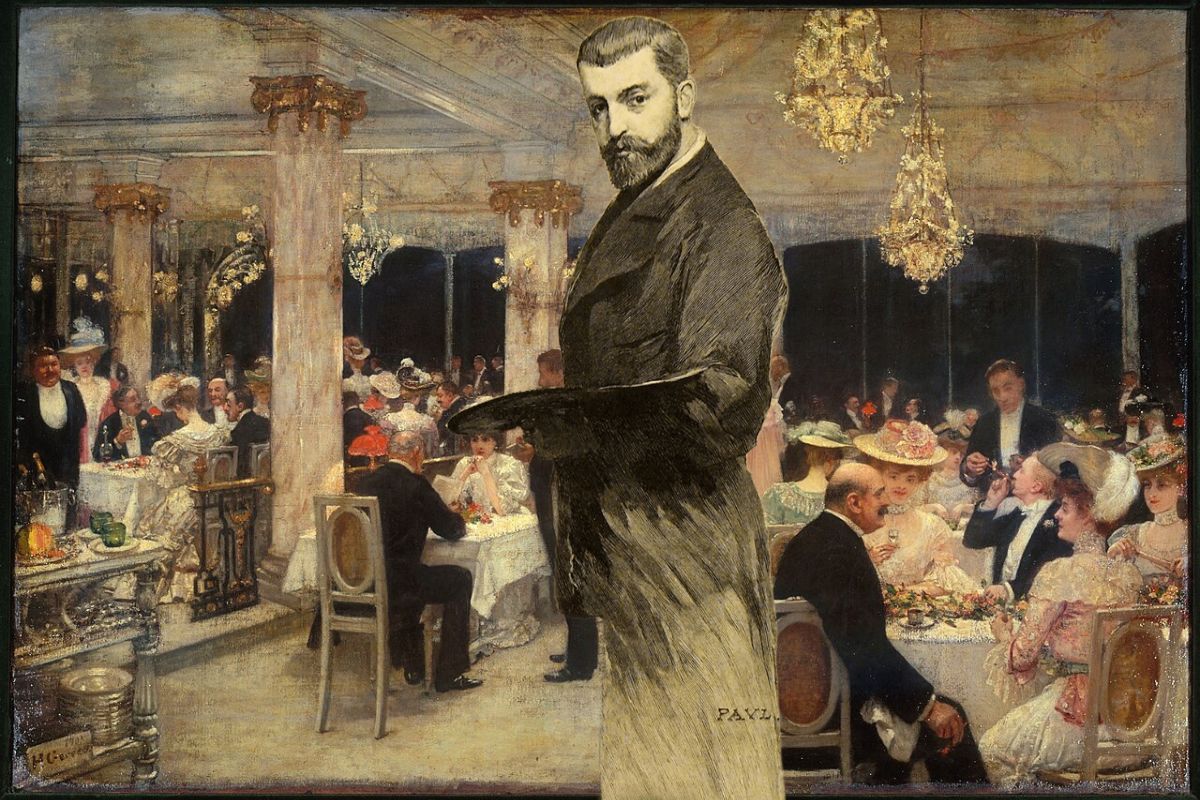
Henri Gervex (1852–1929) occupies a distinctive place in French art history as a painter who successfully negotiated the demands of academic training and the attractions of modern life. Best known for his polished nudes, stylish portraits, and large-scale public commissions, Gervex combined the technical rigor of the École des Beaux-Arts tradition with a keen interest in the social spectacle of Belle Époque Paris. His work moved between scandal and official favor, between salon painting and monumental decoration, thereby illuminating the tensions that shaped visual culture in late 19th- and early 20th-century France. This article offers a comprehensive account of his life, training, stylistic development, major works, legacy, and the market for his art—serving as a resource for collectors, curators, and enthusiasts of art and antiques.
Early Life
Can You Name the Masterpiece?
Ten masterpieces. Ten questions. How well do you know the history of art?
Henri Gervex was born on March 19, 1852, in Paris into a milieu that allowed him early exposure to the city’s dynamic cultural life. The son of a middle-class family, he grew up during a period of rapid social change, urban modernization, and lively debates about art and society. Paris in the mid-19th century offered a rich environment for an aspiring artist: the academic institutions remained powerful, salons attracted international attention, and new venues—cafés, theaters, and the emerging popular press—created an appetite for images of contemporary life.
From an early age Gervex displayed an aptitude for drawing and composition. His formative years coincided with the rise of Realism and the gradual emergence of Impressionism, movements that emphasized observation of modern life and experimentation with light and color. Gervex’s subsequent career would reflect these cross-currents: he absorbed academic technique without rejecting modern urban subject matter.
Education and Training
Can You Guess the Artist?
Three clues. One artist. How quickly can you identify the painter?
Henri Gervex’s formal training began at the École des Beaux-Arts in Paris, the premier institution for academic art in France. There he studied under prominent academic painters, most notably Alexandre Cabanel, whose polished surfaces and classical compositional strategies left a clear imprint on Gervex’s technical formation. Gervex also worked with Isidore Pils and benefited from the rigorous draughtsmanship and figure training that characterized École instruction.
While trained in the academy, Gervex was not isolated from contemporary artistic developments. He frequented salons, studios, and exhibitions where newer approaches circulated. He began exhibiting at the Paris Salon in the 1870s, entering the official channels of recognition that were still key to an artist’s reputation and commissions. His training allowed him to execute large-scale, multi-figure compositions and public decorative programs—skills that would later secure him major civic and state commissions.

Career Development
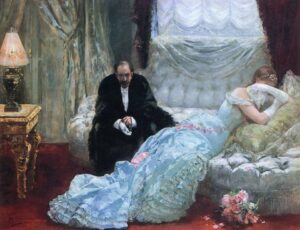
Gervex’s career unfolded along two complementary tracks: salon painting and public commissions. He first gained notice for works that depicted modern urban life—with fashionable women, theatrical interiors, and private boudoirs—and for the precision and sheen of his painting technique. Perhaps no single event crystallized his early notoriety like the painting Rolla (1878): a sensual, realist depiction of a young woman reclining after a nocturnal encounter. The work sparked controversy at the time for its frank eroticism and its alignment to literary sources; it illustrated the paradoxical reception of modern subject matter when rendered with academic polish.
As his reputation grew, Gervex received official recognition and numerous commissions from municipal and national institutions. He was entrusted with mural decorations, state portraits, and large-scale narrative paintings for the Palais de Justice, town halls, and theaters. These works required a mastery of composition at monumental scale and an ability to convey civic themes in a language acceptable to official patrons.
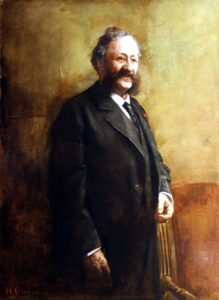
Simultaneously, Gervex remained active in the salon circuit and portraiture market. He produced portraits of politicians, industrialists, and members of fashionable society—subjects that brought both income and visibility. His capacity to operate successfully across popular, private, and official spheres made him a central figure of the visual culture of the Third Republic.
Artistic Style
Henri Gervex’s style represents a distinctive synthesis. Technically, he adopted the refined facture and finish prized by academic painting: clear contours, modeled anatomy, and carefully controlled color harmonies. Yet his palette sometimes incorporated the brighter, freer color typical of the late-19th-century Parisian scene. He had a particular facility with the depiction of skin and fabrics, rendering flesh, silk, and velvet with a convincing tactile presence.
Compositionally, Gervex was fluent in both intimate, single-figure studies and complex multi-figure arrangements. His narrative scenes often foregrounded moments of modern life—post-concert dissolutions, dressing rooms, and fashionable interiors—capturing the social rituals of the era. Even in his historical and official works, he sought to combine clarity of storytelling with visual immediacy.
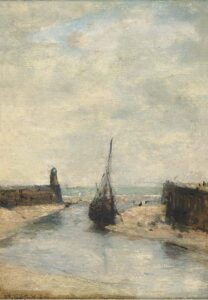
Two tendencies define his aesthetic: the preservation of academic discipline (line, form, draughtsmanship) and an attentiveness to contemporary subject matter (urban leisure, theatre sets, and domestic modernity). This duality explains why Gervex could be controversial for depicting contemporary sensuality while also being commissioned to undertake civic decoration.
Influences and Inspirations
Gervex’s major influences derive from academic teachers, contemporary Parisian life, and European artistic currents:
– Academic mentors: Alexandre Cabanel and Isidore Pils provided technical grounding, classical composition, and a respect for narrative painting.
– Realism and modernity: The Realist emphasis on everyday subjects and the modern preoccupations of painters like Édouard Manet and Jean Béraud informed Gervex’s choice of scenes—especially his interest in the theater, the boudoir, and social gatherings.
– Literature and theater: Many of Gervex’s paintings drew inspiration from contemporary literature and theater, translating narrative and poetic themes into pictorial form. The interplay between text and image appealed to both salon audiences and critics.
– Decorative painting traditions: For his commissions in public buildings and theaters, Gervex turned to the grand tradition of mural painting and integrated allegory and history into festive decorative schemes.

These converging influences allowed him to move between intimate portrayals of modern life and the monumental demands of public art.
Famous Works
Below are five notable works by Henri Gervex, each described with year, medium, current museum or collection, and a brief explanation.
– Rolla
– Year: 1878
– Medium: Oil on canvas
– Current Museum or Collection: Musée d’Orsay, Paris
– Explanation: Rolla is among Gervex’s most famous and controversial paintings. Inspired by a literary text, it depicts a young woman lying on a bed after an apparent nocturnal encounter. The work’s frank sensuality, coupled with academic polish, provoked debate at the time—challenging conventions of propriety while demonstrating Gervex’s technical mastery. Today the painting is considered a key example of the tensions between modern subject matter and academic style in late 19th-century French painting.
– The Ball at the Opera (Le Bal à l’Opéra)
– Year: c. 1883–1890
– Medium: Oil on canvas
– Current Museum or Collection: Private collection
– Explanation: This large-scale genre scene captures the spectacle and pageantry of a Parisian opera ball. Gervex’s composition balances a detailed study of costume and crowd with a clear play of light, offering a sociological portrait of Belle Époque leisure. The painting exemplifies his ability to translate contemporary social rituals into refined pictorial narratives and was popular with both critics and patrons seeking fashionable depictions of modern life.
– After the Concert (Après le Concert)
– Year: c. 1880s
– Medium: Oil on canvas
– Current Museum or Collection: Regional museum collection / private collection (various versions exist)
– Explanation: In works titled After the Concert, Gervex explored the moments after an evening’s entertainment—women in the theater box, a dressing room scene, or a convivial group departing into the night. These paintings highlight his interest in transitional, emotionally ambiguous moments and his sensitivity to texture and color. They also reflect contemporary Paris’s fascination with the theater as a site of social mixing and display.
– Portrait of a Young Woman (Portrait of Madame X—style)
– Year: c. 1890s
– Medium: Oil on canvas
– Current Museum or Collection: Museum or private collection (several notable society portraits are in private collections)
– Explanation: As an established portraitist, Gervex painted numerous commissioned likenesses of Parisian society figures. His portraits were characterized by elegant poses, meticulous rendering of costume, and a psychological sensitivity that suggested status and personality. These portraits played an important role in his career by connecting him to the networks of patronage that sustained many artists of the period.
– Civic Decoration for a Public Hall (Mural panel)
– Year: c. 1900–1910
– Medium: Oil on canvas applied to wall / mural technique
– Current Museum or Collection: Public building in Paris (municipal collection)
– Explanation: Gervex received multiple civic commissions for murals and decorative schemes in municipal and state buildings. These works demonstrate his competence at large-scale narrative composition and his capacity to adapt the vocabulary of academic history painting to republican themes and allegory. Such commissions cemented his official reputation and provided him with a visible presence in Parisian public spaces.
Note: Gervex’s oeuvre includes numerous paintings that circulate in private collections and regional museums; several subjects recur—opera and theater scenes, boudoir and bathing studies, society portraits, and public decorative works. Variants on themes like “After the Ball” and “At the Theatre” appear in different collections, reflecting both his market success and the popularity of these motifs.
Legacy and Influence
Henri Gervex’s legacy rests on multiple foundations. First, he represents a crucial link between academic painting and the depiction of modern life. By bringing salon technique to urban subject matter, he helped legitimize contemporary scenes as worthy of serious, large-scale execution. Second, his public commissions placed him within the visual fabric of French civic identity: murals and decorations by Gervex continue to shape how spaces such as town halls and theaters are experienced. Third, his portraits and genre scenes provide historians and collectors with vivid records of Belle Époque fashion, manners, and social ritual.
Gervex also influenced a generation of painters who sought to reconcile academic training with a modern sensibility. His example demonstrated that official recognition and commercial success could be compatible with an attentiveness to present-day life. Although subsequent generations of modernists pursued more radical departures, the balanced approach of Gervex remained important for artists working within institutional frameworks.
In institutional terms, Gervex helped sustain the lineage of French academic painting into the 20th century, even as avant-garde movements reshaped the broader art world. His works are now important for understanding both the continuities and transitions in French art during a time of profound cultural change.
Market Value and Collectibility
The market for Henri Gervex’s works is characterized by steady interest from collectors of academic painting and Belle Époque subjects. Several factors influence the market value and collectibility of his paintings:
– Subject matter: Genre scenes depicting theater, opera balls, and boudoirs tend to attract strong interest because of their evocative depiction of Belle Époque life. Portraits of notable sitters also command premiums, particularly if provenance and sitter identity are documented.
– Condition and size: Large-scale salon paintings and murals that retain original surfaces and framing tend to be more valuable. Condition concerns—such as retouching or relining—can affect prices.
– Provenance: Works with royal, municipal, or prominent private provenance or those exhibited at important salons or expositions often fetch higher prices.
– Rarity and exhibition history: Paintings that have been included in significant exhibitions or publications, or that represent rare subject types in Gervex’s oeuvre, may be particularly sought-after.
Auction results over the past decades show mid- to high-range prices for well-documented Gervex paintings, with exceptional works—particularly large salon pieces or significant portraits—achieving notable sums. For collectors, Gervex offers an attractive combination: technically accomplished works that capture a resonant historical moment, and a catalog of images that often resonate in interior decoration and museum displays.
For buyers and sellers in the art and antiques market, careful provenance research, condition reporting, and expert consultation are essential when assessing Gervex works. Given the prevalence of workshop variants and the circulation of copies, authentication by recognized specialists or institutions enhances market confidence.
Museums and Collections
Henri Gervex’s work is represented in a number of French and international museums, reflecting both his public commissions and the collecting interests in Belle Époque painting. Key repositories include:
– Musée d’Orsay, Paris: Holds important examples of Gervex’s salon painting and is a primary public repository for his most discussed works.
– Municipal and regional museums: A range of provincial museums in France and some civic collections include Gervex’s portraits, genre scenes, and decorative panels—often arising from municipal commissions or regional collectors.
– Private collections: Many of Gervex’s society portraits and genre scenes reside in private hands, circulating through the art market and occasionally appearing at auction.
– Public buildings: Several murals and decorative programs by Gervex remain in situ in municipal halls, theaters, and other civic interiors in France, where they continue to function as elements of architectural design.
For curators and researchers, tracing Gervex’s dispersed works often involves consulting salon catalogues, municipal archives (for commissioned murals), and provenance records in auction catalogues and estate inventories.
Interesting Facts
– Scandal and Success: Gervex’s ability to provoke scandal and secure official commissions illustrates the ambivalence of his career—he could be both provocative and establishment.
– Versatility: He comfortably worked in genres as diverse as nude studies, society portraiture, genre scenes, and monumental murals—demonstrating technical range.
– Literary Connections: Some of Gervex’s works drew inspiration from contemporary literature and theater, underlining the close relationship between visual art and other cultural forms in Belle Époque Paris.
– In-situ Works: Several of Gervex’s murals remain in public buildings across France, offering opportunities for viewing his work in original architectural contexts.
– Market Presence: Gervex continues to attract collectors of 19th-century French painting, and his works appear regularly at auction and in specialist galleries.
FAQ
Who was Henri Gervex and why is he significant?
Henri Gervex (1852–1929) was a French painter known for bridging academic technique and modern subject matter. He achieved fame for sensual salon paintings, portraits of society figures, and large-scale public commissions. His significance lies in his synthesis of academic training with contemporary themes, and in the visibility of his mural and civic decorations.
What is Henri Gervex’s most famous painting?
Rolla (1878) is widely regarded as Gervex’s most famous work. The painting attracted controversy for its candid depiction of a post-coital scene and remains a notable example of the interplay between academic finish and modern narrative in late 19th-century French painting. It is part of the collection of the Musée d’Orsay in Paris.
Where can I see Henri Gervex’s work in person?
Key public venues that hold Gervex’s work include the Musée d’Orsay and various regional and municipal collections in France. Additionally, several of his murals remain in situ in public buildings and theaters, where his decorative schemes can be viewed as part of architectural interiors.
How much are Gervex’s paintings worth today?
Values vary widely according to subject, size, condition, and provenance. Salon-scale works and portraits with clear provenance can command higher prices at auction; smaller genre scenes and lesser-known portraits are more moderately priced. Consulting recent auction results and seeking specialist appraisal are necessary steps when assessing a specific work.
Did Gervex influence modern art movements?
While not a central figure in avant-garde movements like Impressionism or Cubism, Gervex influenced the direction of academic painting by demonstrating how traditional technique could depict contemporary life. His approach provided a model for artists who sought official recognition while engaging with modern subject matter.
AI Notice: Some visual content in this article may have been created or enhanced using artificial intelligence (AI) for artistic, editorial or illustrative purposes. Learn more about our approach in our AI & Editorial Principles.