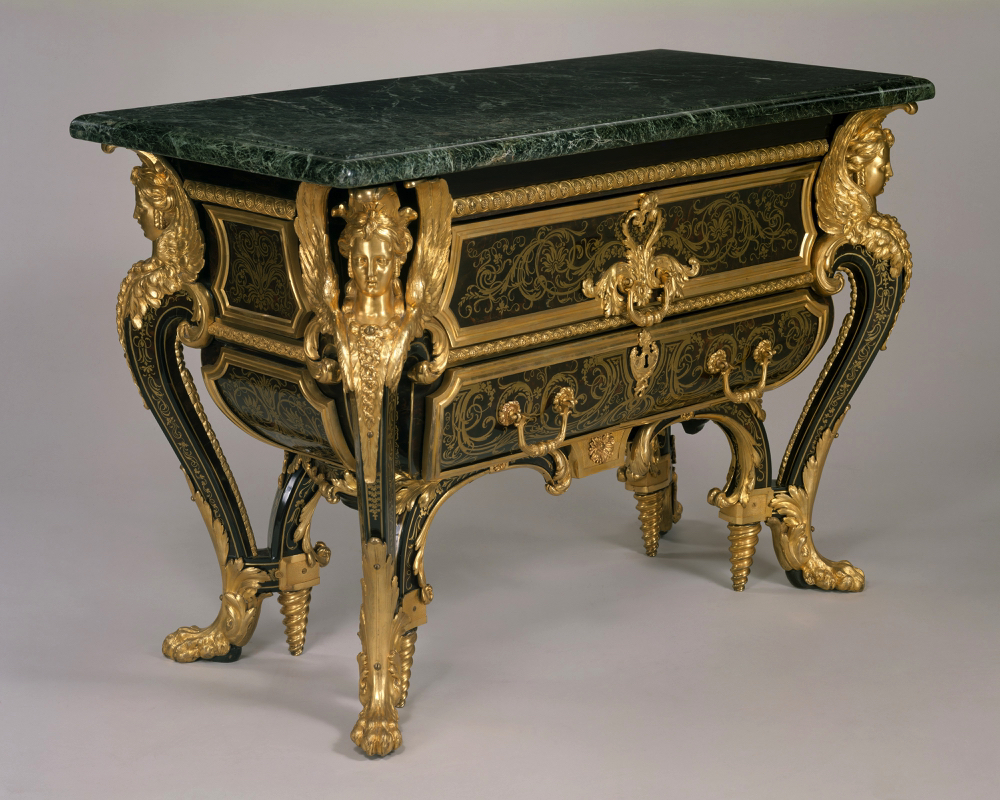
Few styles in the history of furniture design capture the imagination as vividly as French Rococo. Light, playful, and extravagantly ornamental, Rococo furnishings transformed the interiors of 18th‑century France into theatrical stages for aristocratic life. Chairs curled like tendrils of ivy, commodes shimmered with gilded bronze, and writing desks seemed almost too delicate to touch. Yet beneath their graceful surface lies a complex story of craftsmanship, court culture, and social change on the eve of the French Revolution. Understanding French Rococo furniture means looking closely not only at curves and gilding, but also at the workshops, royal patronage, and elite tastes that shaped one of Europe’s most distinctive decorative arts movements.
Origins of French Rococo: From Versailles to Parisian Salons
French Rococo furniture emerged in the early 18th century, roughly between 1715 and 1770, during the Regency of Philippe d’Orléans and the reign of Louis XV. As royal life shifted away from the rigid ceremony of Louis XIV’s Versailles, so too did taste move away from the grandeur of the Baroque toward a more intimate, playful aesthetic. The Metropolitan Museum of Art notes that “the Rococo style developed in France as a reaction against the grandeur, symmetry, and strict regulations of the Baroque” and instead embraced “asymmetry, lightness, and natural forms.” This change reflected not just fashion, but a broader cultural transition toward sociability, conversation, and comfort.
The geographic originating point for the design of Rococo furniture was Paris. Versailles lacked the real experimentation with taste, creating instead a powerful mythical center of taste in the antique bodies of former ruling institutions. The “real” seat of taste was sat in the training grounds of the haute bourgeoisie, their opulent apartments (hotels particuliers) in the Faubourg SaintHonore and the Marais. The rooms of these private luxury residences now replaced the state apartments; where France‘s philosophes, writers, and artsits who frequented the salons of the Enlightenment centered their salon interiors around lighter, flexible furnishings conducive to music and leisurely discussion. Guild based menuisiers (solid wood cabinetmakers) and ebenistes (veneered case pieceworkers) in the crowded studio workshops a round the Faubourg Saint-Antoine rose to ever more sophisticated, diverse, and intricate rococo designs.

On an institutional level, the royal manufactories and the system of guilds provided the financial stability and intellectual momentum to drive Rococo innovation. Although the Manufacture des Gobelins and the Manufacture de Sevres are primarily remembered for making tapestries and porcelain respectively, both provided crucial assistance to the presentation of the interior scheme as a whole, overseeing the production of furniture, textiles and decorative objects. Guild regulations in Paris required master craftsmen to place their personal mark on all works of art, and thus today many of these can be confidently attributed to such leading craftsmen as Charles Cressent, JusteAurele Meissonnier and Bernard II Vanrisamburgh, with the assistance of the Victoria and Albert Museum or the Louvre.
Key Characteristics and Decorative Vocabulary
French Rococo furniture is immediately recognizable by its sinuous lines and ornamental exuberance. Curves dominate: cabriole legs (with outward‑then‑inward S‑shaped profiles), serpentine fronts on commodes, and frames that seem to undulate like waves. Ornamentation often appears to grow organically from the piece, with carved and gilded details integrating seamlessly into the structural forms. The Louvre Museum describes Rococo as characterized by “fantastical asymmetrical motifs and a love of curving lines,” a definition that holds especially true for chairs, consoles, and mirrors from this period.

Natural forms dominate the decorative vocabulaire. Shells, rocaille, scrollwork, foliage, floral decoration and occasionally something more exotic chinoiserie with Chinese figures must have been the surface adornments of choice. Artisanal gilded bronze mounts (bronzes dores) enlivened and guarded the risky corners of the furniture desks, commodes, tables, especially. Exotic imported veneers of tulipwood, kingwood, amaranth were intricately inlaid (marquetry) in patterns or painted side-by-side (bookmatched) to achieve transparent quality. “French ebenistes of the Rococo perfected the art of veneering and marquetry to an unparalleled degree of technical and aesthetic finesse” (Victoria and Albert Museum).
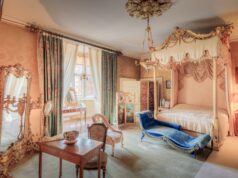
Color and Surface Finish- The Rococo style was characterized by overly dyed painted surface finishes in pastel shades of pinks, yellows, greens, and browns, along with soft shades of white, gray, and cream with highlights of gilding. Upholstered pieces, both in the authentic Rococo seating furniture and room furnishings, were covered with silks, damasks, brocades, and tapestries while the treatments were covered in wall coverings, draperies and window hangings. These combinations of components created fully coordinated interior spaces that were playful but opulent, carpeted but cozy. The rooms were well lit, yet soft, and not monumental as a museum display manner like the earlier Baroque fireplaces and walls. The Smithsonian Institution’s Cooper Hewitt, Smithsonian Design Museum describes Rococo interiors as, “a new emphasis on comfort, informality, and personal luxury.”
Iconic Furniture Types of the Rococo Period
Seating furniture, especially armchairs (fauteuils) and side chairs (chaises), lies at the heart of Rococo design. Frames in beech or walnut were carved with shells, flowers, and scrolls, then painted or gilded. Wide, gently curved backs and deep seats reflected new attitudes toward comfort and posture. The fauteuil à la reine featured a straight back, while the fauteuil en cabriolet had a concave back that enveloped the sitter. Bergères—enclosed armchairs with upholstered arms and sometimes caned or upholstered sides—offered even greater comfort, particularly in boudoirs and private apartments. The Metropolitan Museum of Art emphasizes how these chairs symbolized “a new informality and ease in aristocratic life.”

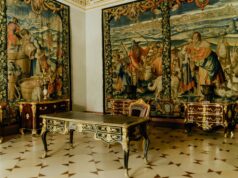
The generous top surfaces of the case furniture, commodes (drawers chests), secretaires (writing cabinets) and encoignures (corner cupboards), were ideal for fine marquetry, veneers and giltbronze mounts. The bombe (bulging) commode of the 1730s-50s became a typical Rococo form, notably in the complex floral marquetry examples that survive, for instance those attributed to Bernard II Vanrisamburgh, in the Louvre and the V&A, and the elaborately chased bronze mounts. Writing furniture, such as slopingfront secretaire a abattant, cylinder desks and minute ladies writing tables (bonheursdujour), also became increasingly popular, as the long letter-writing, reading and administrative tasks of life in the higher-end households became central to the life within them.
Smaller, more specialized forms emphasize the refinement and conventions of social intimacy enjoyed by the Rococo elite. There were games tables, with reversible tops for cards and backgammon, gueridons for candles or vases, coiffeuses or dressing tables, as well as work tables for needlework and large sittings. Bedchambers and private room-settings called for screens, daybeds, co-sies longues, and dukess (extended bergeres), according to the staged informality of the setting demanded and all also developed from the same underlying aesthetic traits, fine curving lines, cohesive ornament and subtle delicacy.
Makers, Workshops, and the Guild System
Behind the glittering façade of Rococo furniture lay a rigorously organized craft system. Parisian furniture production was regulated by separate guilds: menuisiers worked in solid wood, making chairs, beds, and paneling; ébénistes specialized in veneered and marquetry case furniture. Gilders, carvers, bronze casters, and upholsterers formed additional guilds, each contributing a layer of expertise. This compartmentalization ensured very high technical standards, but also meant that a single commode or armchair often involved numerous specialized hands and workshops.

A number of master craftsmen have also achieved enduring fame. Charles Cressent ( 1685 1768) sculptortedurneb‘benist, was renowned for lively bronze mounts and dramatic overall feel; his work is represented in the Louvre. Juste Aurele Meissonnier ( 1695 1750), better known as a designer, produced influential patterns for furniture and silverware and decoration for rooms, so epitomising the Rococo‘s consummate individuality and literary allusions. Bernard II Vanrisamburgh (1770 1760), who worked freestupped pieces, has his work, primarily floral marquetry, in the collectionsof the V&A and the Met. Further Namessuch asGillesJoubert, AntoineGaudreauxandNicolas QuinibertFoliothen recurregularly in court inventories and museum catalogues.
The patronage of the monarchy, in particular through the GardeMeuble de la Couronne, the royal furniture department was. This administered all the furniture for the various royal palaces; Versailles, Fontainebleau, Compiegne. The Museum describes the GardeMeuble‘s role as ensuring ‘that the very best Parisian craftsmen were engaged to provide furniture for the royal house… who often set fashion trends to be followed by aristocrats.’ It was something of a team effort between royal manufactory designers and independent guild masters, in order to push the Rococo style into the houses of financiers and successful professionals heaving themselves up the social ladder and seeking to emulate the noble way of life.
Rococo Interiors and the Culture of Sociability
It‘s impossible to grasp the importance of rococo furniture without understanding it as part of the whole interior, which encompassed architecture and boiseries, textiles, and the decorative arts. In the private apartments of the Hotel de Soubise in Paris now within the National Archives lined ceilings, mirrored panels and gilded carved boiseries created a unifying decorative condition in which chairs, consoles and tables sat comfortably. As the Victoria and Albert Museum emphasizes, rococo interiors ‘so dissolve the boundary between structure and ornament that completely envelope furniture.

The interiors served as staging for sociability. Salons that were managed by certain individuals, such as Madame de Pompadour mistress to Louis XV and a major patron of artists such as Boucher or Boucherie, whose fame owed itself in great part to the artist‘s devotion to her gathered philosophers such as Voltaire or Diderot, painters, and members of the aristocracy. The arrangement of furniture encouraged conversation, with chairs arranged in semi circle, small tables at hand to play checkers or drink tea movable sections that could be swiftly rearranged to host musicians or readers. The setting of the rather compact, relatively small rooms (modern dwellings still are often designed with a greater regard for homely intimacy than for ritual ceremony) conforms to [an] ideal of modem speech and conversation, witty or lofty, precisely controlled.
Domestic rituals had a similar effect on furniture. Dressing and washing everyday acts of publicprivate staging before a handful of servants and intimate relations became big production, requiring sizeable and ornate dressing tables and screens. Growing respectability of reading and writing one of the Enlightenment‘s specific practices resulted in the proliferation of lecterns and writing desks and the bookcase. As the Cooper Hewitt commented, “the Rococo integrated the ‘nobler concerns’ of philosophy and society into the ‘painstaking design’ of decorative objects”…
Decline, Legacy, and Modern Appreciation
By the 1760s and 1770s, the Rococo style began to wane, replaced by the more restrained lines of Neoclassicism associated with the reign of Louis XVI. The excavations of Pompeii and Herculaneum, along with a renewed interest in antiquity, inspired straight lines, geometric forms, and classical motifs. Many contemporaries criticized Rococo as frivolous or excessive. Architect Jacques‑François Blondel famously condemned what he saw as its “capricious and monstrous” ornaments, predicting they would appear ridiculous to future generations.

Despite its decline the style continued to influence, with some of the emphasis on cheerfulness and ease remaining in late 18thcentury furniture, particularly in a range of seating types. In the course of the 19thcentury, ideas about the style were continually revisited by Historicist designers, as they sought to adapt the Rococo to new, bourgeois interiors, an exercise helped along by the readiness of various museums, such as the Metropolitan, Victoria and Albert, Louvre and Smithsonian Institution, to collect and show examples of the style, and to subscribe to the notion of Rococo as a topic for significant academic debate.
Today, 18 th century French Rococo furniture is valued as much for the insights into 18 th century society, technology and international trade that it affords as for its artistic beauty. Studies of the workshop systems, production techniques, materials and conservation have improved the understanding of the techniques by which the pieces were fabricated and there are now digital catalogues raisonnés of these objects in the collections of the M et, and the V&A, which have made these objects more accessable to students, collectors and the interested general public than ever before. The style‘s active fascination for the enthusiast is helped by the way in which it incorporates the imaginative and fantastical in the way that it unrevealingly masks a key development in European intellectual history.
Summary of Key Characteristics
| Feature | Description | Typical Examples |
|---|---|---|
| Period & Place | c. 1715–1770, primarily Paris and French court circles | Regency, Louis XV reign |
| Overall Form | Asymmetrical, curving lines; fluid silhouettes; avoidance of strict symmetry | Cabriole legs, serpentine fronts |
| Decorative Motifs | Shells (rocaille), scrolls, foliage, flowers, chinoiserie, rocailles | Chair crest rails, commode mounts |
| Materials | Beech, walnut, oak; exotic veneers (tulipwood, kingwood, amaranth); gilt bronze | Bombé commodes, marquetry tables |
| Surface Treatment | Gilding, painted finishes, rich veneers; silk upholstery; tapestry covers | Gilt fauteuils, lacquered commodes |
| Key Furniture Types | Fauteuils, bergères, commodes, secrétaires, guéridons, games tables | Salon seating, writing furniture, small tables |
| Context of Use | Private apartments, salons, boudoirs; emphasis on comfort and sociability | Parisian hôtels particuliers, royal apartments |
| Institutions & Patrons | Garde‑Meuble de la Couronne, Gobelins, Sèvres; aristocracy, financiers | Versailles, Hôtel de Soubise, Sèvres factory |
Authoritative Voices on French Rococo Furniture
Curators and historians at major museums have articulated the significance of Rococo furniture with clarity and authority. The Metropolitan Museum of Art summarizes the style’s defining spirit: “Rococo works of art, in particular those created in France, are distinguished by their refined elegance, intricate ornamentation, and lighthearted themes” (Heilbrunn Timeline of Art History, The Met). This combination of elegance and playfulness is especially evident in seating and small tables designed for conversation and entertainment.
Within the Victoria and Albert Museum is an emphasis on technical skill behind the relaxed appearance: “The Rococo cabinetmakers of mid-18th-century France produced furniture at the very height of the art. It had both the technical expertise of the best constructional furniture and the refinement of surface decoration.” It is comments like these that place Rockoco‘s frivolous fantasy within the domain of technical skill. No gueridon, no matter how minuscule, could be made without accurate joinery, delicately cast and chased bronze mounts, and an expert hand.
French experts of the Louvre, the Smithsonian and the Museum of the Cooper Hewitt explain the cultural significance of rococo interiors. The Louvre shows that rococo represented “a new art of living” for the French aristocracy, welcoming intimacy, ease and the enjoyment of conversation. The Museum of the Cooper Hewitt, Smithsonian Design Museum repeats the idea of a new culture more broadly involving the designed environment expressing identity and taste. These expert opinions mean that French rococo furniture was more than just decoration, but a social history.
Frequently Asked Questions about French Rococo Furniture
1. How can I distinguish French Rococo furniture from Louis XVI or Neoclassical pieces?
Rococo furniture (Louis XV period) is dominated by curves: cabriole legs, serpentine fronts, asymmetrical ornaments, and organic motifs like shells and foliage. By contrast, Louis XVI and Neoclassical pieces favor straight, fluted legs, rectilinear forms, and classical motifs such as laurel wreaths, urns, and Greek key patterns. If the piece appears very linear and architecturally “classical,” it is likely later than the Rococo.
2. Were all Rococo pieces gilded and heavily decorated?
No. While gilded and richly veneered pieces exist—especially in royal and aristocratic contexts—many Rococo furnishings were painted in light colors or left with relatively simple finishes. Country houses and more modest townhouses often featured simpler versions of Rococo forms. The essential characteristics are the flowing lines and ornamental vocabulary, not necessarily extreme luxury in every example.
3. Are there authentic Rococo pieces in major museums that I can visit?
Yes. The Metropolitan Museum of Art (New York), the Victoria and Albert Museum (London), the Louvre Museum (Paris), and the Smithsonian Institution (particularly the Cooper Hewitt and the National Museum of American History’s period rooms) all hold significant collections of French Rococo furniture. These institutions often display furniture within reconstructed period interiors, allowing visitors to see pieces in an appropriate architectural and decorative context.
Conclusion
French Rococo furniture crystallizes a particular moment in 18th‑century France when social life, artistic imagination, and technical mastery converged. Its curling lines, shell‑like ornaments, and delicate proportions were more than stylistic flourishes; they articulated a new ideal of domestic comfort, private sociability, and cultivated pleasure. Today, through the collections and research of institutions such as the Metropolitan Museum of Art, the Victoria and Albert Museum, the Louvre, and the Smithsonian, we can read these objects not only as beautiful designs but as primary sources on the culture that produced them. To study a Rococo chair or commode closely is to glimpse the conversations, ambitions, and values of an age on the brink of profound change.
AI Notice: Some visual content in this article may have been created or enhanced using artificial intelligence (AI) for artistic, editorial or illustrative purposes. Learn more about our approach in our AI & Editorial Principles.