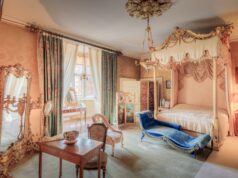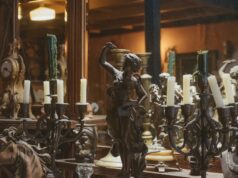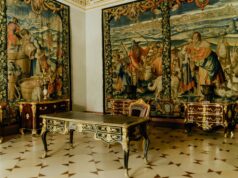
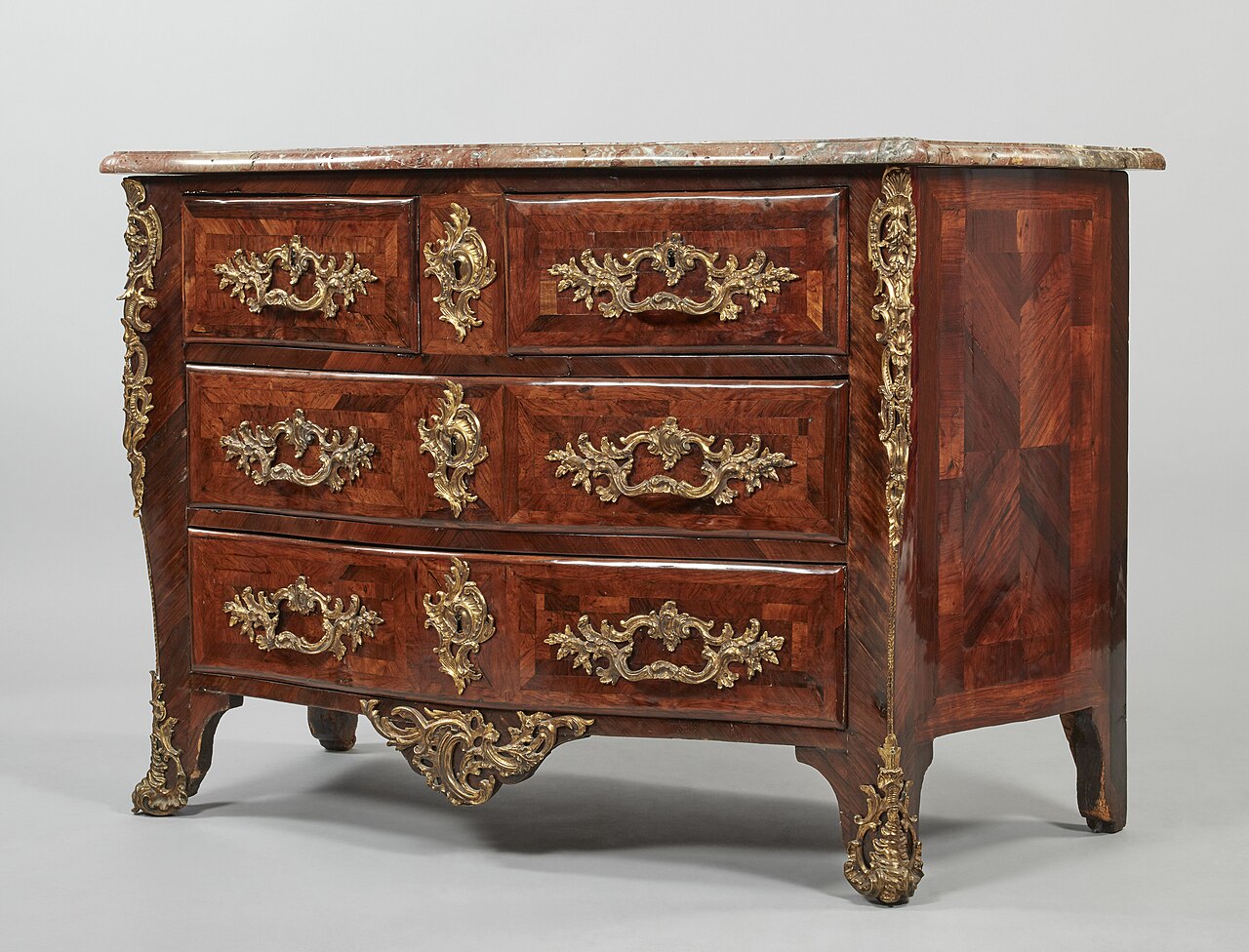
Rococo style furniture is the visual equivalent of champagne—effervescent, playful, and luxuriously light. Emerging in 18th‑century France as a reaction against the solemn grandeur of the Baroque, Rococo transformed interiors into theatrical stages of pleasure and refinement. Today, its sinuous curves, shell motifs, and gilded surfaces still captivate collectors, designers, and museum visitors worldwide. Far from being merely “ornate,” Rococo furniture reflects a sophisticated blend of craftsmanship, social change, and artistic innovation that reshaped how Europeans lived, entertained, and expressed status in the age of Louis XV.
The Metropolitan Museum of Art, Victoria and Albert Museum, and The Louvre all contain key works from the style of Rococo which show the revolutionary nature of this style in a materialized form. As the Met describes it in its Heilbrunn Timeline of Art History, ‘The rococo style represented a move away from the official, heroic grand manner of the baroque toward a more intimate, personal, and domestic mode of expression’. This paper gives the history of the Rococo style from its advent through its development, form and symbolism to its decline, to explain the revolution of the style from a historical perspective, examining the materials used, and drawing on institutional holdings.
Whatever your interests, for a designer, collector, student or aficionado, identification of Rococo style furniture provides a fascinating insight into 18thcentury taste, workshops and wealth, as well as enabling you to tell high-quality originals from 19thcentury revivals and copies.

Origins and Historical Context of Rococo Furniture
Rococo style developed in France during the early 18th century, particularly in the reign of Louis XV (1715–1774), before spreading to Germany, Austria, Italy, and other parts of Europe. It grew out of the late Baroque but softened its monumental drama into something more intimate and playful. The style is closely associated with the Régence period (1715–1723) and the subsequent Louis XV era, when aristocratic life increasingly centered on Parisian hôtels particuliers (townhouses) rather than the rigid court of Versailles. These new urban interiors demanded comfortable, elegant furniture suited for conversation, games, and private sociability.
Rococo was also affected by social and intellectual changes. The commodification of the Salon, the impact of the Enlightenment ideals of pleasure and domesticity, and a decline of overtly political tropes provided incentive for instyle décor that was based on individual taste and a focus on sensual pleasure. The Museum at the Louvre of the decorative arts of France in the 18 th century contains an abundance of examples that illustrate these trends. Comparison of this Works to the solid symmetry of earlier decorative motifs, such as heavy thronelike chairs which give way to furniture with outward curving and sinuous contours designed for intimate conversation, reveals these changes.

Economically, the rise of a wealthy bourgeoisie and a prosperous luxury market, both in the Paris region and in other European centers, resulted in an increased demand for fashionable furniture (including in particular, luxurious furnishing in formal rooms). In the hands of guild-formed ebenistes or cabinetmakers and menuisiers or joiners some of whose pieces are now housed in the Victoria and Albert Museum there was fierce competition to create entirely new stylistic forms, skillfully elaborate marquetry and technically innovative devices (e.g. mechanized tables, secret drawers). According to the Victoria and Albert Museum, Paris was To be sure, during the Rococo period, Paris was the… leading center of furniture making in Europe. The Rococo style was the most prevailing theme.
Defining Features of Rococo Style Furniture
Rococo furniture is distinguished above all by movement and lightness. Lines curve and twist; surfaces undulate; legs often end in delicate scrolls rather than heavy blocks. This “line of beauty,” to borrow William Hogarth’s famous term, creates an impression of continuous flow from one element to the next. Chairs and tables appear almost weightless, as if designed to float within refined interiors. The Smithsonian Institution’s collections and analyses of 18th‑century European furniture note that this shift reflected a “new ideal of comfort and informality,” radically different from the formal rigidity of Louis XIV’s court.

Decorative art is lively and exuberant but not serious, often whimsical and playful. Motifs are often repetitive, Motifs include concentric shells (hence the term Rococo, derived from rocaille, or rock and shell decoration), C and Sscrolls, acanthus leaves, floral garlands, birds, putti, chinoiserie scenes showing imagined views of Asia, and fancy little cherubs or hermit crabs, all abundant and exuberant. Asymmetry considered improper for fine arts becomes the norm in this realm: mirror frames, commodes and writing desks may be haunted by asymmetrical cartouches and ornament that appears to have grown naturally over the surface. The Metropolitan Museum of Art showcases the designs of JusteAurele Meissonnier who epitomize this exuberant asymmetry.
Materials and finish also contribute to the Rococo profile. Gilt wood, mostly in chair and screen seats as well as in console tables, creates a glowing relationship to the mirrors and light. Exotic veneers (such as tulipwood and kingwood), intricate marquetry panels, East and west Asian inspired and imported lacquer European markets were flooded with West Asian lacquerware and sumptuous textiles (silk damask, brocade, tapestry) are visible manifestations of that luxury. Careful attention to craftsmanship and the ability to hide it is key, and spirit joints would be avoided by being incorporated into the sweeping lines of carving and highly technical mechanical developments within furniture surfaces.
Key Types of Rococo Furniture Forms
Seating furniture underwent one of the most dramatic transformations during the Rococo period. The fauteuil (open‑arm chair) and bergère (enclosed upholstered armchair) became essential elements of salon culture. They featured serpentine backs, cabriole legs, and often a carved wooden frame left visible around upholstered panels. These seats were designed to be moved easily within a room to facilitate conversation or placed in intimate corners for reading and reflection. The Louvre’s period rooms from the Hôtel de Crillon and other Parisian residences show how sets of chairs, sofas, and stools combined to create fluid conversational groupings.

Furniture moved towards more flowing curves and elaborate decoration. The chest of drawers, commode, an item of furniture of late 17th century origin, which contained drawers in a low cabinet gained artistic prominence during the Rococo period. Finest commodes have bombe, marquetry surfacework, bevelled angles, giltbronze mounts and marble tops. The work of virtuoso ebenistes such as Charles Cressent, JeanFrancois Oeben, and Bernard II van Risenburgh; furniture which included commodes and secretaries, is now featured prominently in the collections of the Metropolitan Museum of Artand the Victoria and Albert Museum.
These intimate, specialty objects are manifestations of a more complex lifestyle for the 18th century elite. Lavish card, writing and tea tables, bonheur du jour (little ladies writing tables), tables a la bouillotte (for a very particular gambling game), coiffeuse tables (for intimates dressing rituals) all these forms emerge or fully develop during the Rococo and document a new approach to work, leisure and beauty. The portable screens, decorative stands and encoignures (corner cabinets) were also vital components of the intimate Rococo interior.
Rococo Across Europe: Regional Variations
While France was the cradle of Rococo furniture, the style spread quickly to neighboring regions, each adapting it to local traditions. In Germany and Austria, Rococo flourished in princely courts such as Munich, Dresden, Würzburg, and Vienna. Furniture here often exhibits even more elaborate carving and a strong integration with exuberantly decorated interiors—stucco, frescoes, and gilding blending architecture and furniture into a single ornamental ensemble. The Residenz in Würzburg and Nymphenburg Palace near Munich, represented in various European collections and studied by institutions like the Smithsonian, showcase these theatrical interiors.

In Italy, especially in Venice and Rome, Rococo fused with the local Baroque and late Baroque styles. The Venetian Rococo furniture are represented by painted and gilded surfaces instead of veneer and marquetry, giving priority to decoration and surface decoration over construction. Consolle tables, mirrors and chairs with exuberant carving, fantasistic ornamentation and lively polychrome enamels can be found in the collection of Victoria and Albert Museum. Italian usually goes for show and celebratory opulence, which to some extent produce an exuberance in decor to a more fantastic and whimsy level.
Rococo was used more sparingly by British designers, melding it into an already established vocabulary established by Palladianism. Designers such as Thomas Chippendale drew upon the Rococo forms and details such as scrolls, shells, and chinoiserie adornment to adapt English furniture to the Chinese-inspired forms and combinations exhibited by the design books in the Metropolitan Museum of Art [see illustration] and Victoria and Albert Museum showcases. [see illustration] Chippendale used a fairly moderated level of American Rococo and Mannerist decoration sometimes even reined in by the regularity of classical symmetry and solid structural integrity.
Materials, Craftsmanship, and Techniques
Rococo furniture showcases some of the highest levels of craftsmanship in the history of the decorative arts. In France, the strict guild system separated menuisiers (responsible for solid wood seat frames and paneling) from ébénistes (specialists in veneered case furniture). Each guild developed sophisticated techniques to respond to the new demand for curving forms and elaborate decoration. Gilded beech and walnut frames for chairs and sofas required expert carving and gesso preparation before being water‑gilded with gold leaf—a labor‑intensive process that museums like the Louvre and the Met have documented through conservation research.
Veneered furniture was as skill demanding as inlaid work. Exotic woods, purchased across an expanding world-wide trading system such as rosewood, kingwood, tulipwood and amaranth, were sliced into veneers and laid in intricate geometric and floral patterns over carcasses of in oak. Inlaid panels could show hurdy-gurdy players, battle trophies or floral arrangements, or elaborate geometric replication. Giltbronze mounts (or bronzes dores) served not only a practical purpose by covering edges; they were designed for the maximum impression, and the Victoria and Albert Museum comments that they were “works of art in their own right,” designed and chased by the specialist bronziers before being mercury gilded.
A scientific examination by bodies such as the Smithsonian and the Metropolitan Museum has discovered the technology behind this ostentatious display- dovetailing and mortis and tenon joints that are smoothly integrated or ingeniously concealed; intricate mechanical devices in inventories and tables, not to mention finishes which are choreographed to flicker and glow around the flame of a candle… conservation studies have been able to prove how surfaces have oxidized and aged- how previously colourful gilding or lacquer is within a decade or so viewed through a haze that unknowing viewers wrongly always presume to be the aesthetic result.
Symbolism, Taste, and Social Meaning
Rococo furniture is not just decorative; it encodes a set of values and social practices. Its emphasis on comfort, intimacy, and play reflects the 18th‑century ideal of douceur de vivre—the sweetness of life—pursued by aristocrats and wealthy bourgeois in their private and semi‑private interiors. The arrangement of light, movable furniture around salons, boudoirs, and dressing rooms mirrored new forms of sociability, especially the salon culture in Paris, where conversation, wit, and flirtation reigned. As the Met’s essays on the Rococo note, this was “a style for pleasure rather than power.”
While that association was unfortunately damaging, at the same time Rococo furniture was also a display of worldliness and social standing. The use of exotic woods, Asian-influenced lacquer, and chinoiserie decoration revealed engagement in international trade, as well as enlightened taste. Pleasure in buying advanced mechanical bureaux and a suite of marquetry commodes and side-tables appeared as decoration in the Louvre’s eighteenth-century décor galleries.
Within contemporary and later moral judgment of the time, Rococo furniture was sometimes accused of being frivolous or decadent, concerns that increased in the decades preceding the French Revolution. The later Neoclassical movement adheres strictly to severe classical forms and moral seriousness, explicitly denying the rococo‘s traditional asymmetry and flirtation with frivolous ornament. As the collection of, for instance, The Met, the Victoria and Albert Museum and The Louvre shows, though, it is the visual lightness which makes the furniture alluring and distinguished, not the intellectual excess.
Rococo Revival, Collecting, and Influence Today
Rococo did not disappear with the French Revolution; it was revived and reinterpreted multiple times in the 19th and 20th centuries. The “Rococo Revival” of the mid‑19th century, particularly under Napoleon III in France and in Victorian Britain, reintroduced curving forms and exuberant ornament, though often with heavier proportions and industrial production methods. Many pieces once thought to be 18th‑century Rococo are now recognized—through stylistic and scientific analysis by institutions like the V&A and the Met—as high‑quality 19th‑century revivals. Distinguishing between original and revival Rococo remains a central task for curators, dealers, and collectors.
Authentic rococo furniture now is very desirable and expensive. In the art market, for example, known pieces by leading ebenistes go for high prices at auction. However, the extent of knowledge of the materials (particularly gilding, veneers, and upholstery) and the scarcity of complete suites means there is a wealth of fascinating surviving material in museums, of which the Metropolitan Museum of Art, the Louvre, the Victoria and Albert Museum, and the Smithsonian Institution provide invaluable resources publishing catalogues and online source material for research.
The design and decoration of Rococo has obviously not been lost today, not only is it still present in architecture but can be seen in fashion (see for instance many recent examples of interior design, which still seems to be preoccupied by voluptuous comfort and lightness, frivolous ornament, curved furniture silhouettes, decorative wall panelling and decorating lighting). The skills are kept alive but with the advantage of new technologies and materials, such as digitized images of shells, scrolls and foliage that formed the raison d‘etre of gilding, reinterpreted in lasercut screens, or plastic shaped in thermic molds, manipulated on computer. Looking at the history of Rococo furniture is a good starting point for understanding modern design and a interesting perspective of what exactly is implied when one designates an object ‘Rococo’ today, and more is not content with another term of general use such as ‘graceful’.
Summary Table: Key Characteristics of Rococo Style Furniture
| Aspect | Rococo Characteristics | Context / Notes |
|---|---|---|
| Period | c. 1720–1770 (primarily Louis XV era) | Originating in France; spreads to Germany, Austria, Italy, Britain |
| Overall Impression | Light, playful, intimate, asymmetrical | Reaction against monumental, formal Baroque |
| Forms & Lines | Curving silhouettes, cabriole legs, serpentine fronts | Continuous flowing lines, avoidance of rigid geometry |
| Motifs | Shells, C‑ and S‑scrolls, rocailles, flowers, putti, chinoiserie | Often asymmetrically arranged, “growing” across surfaces |
| Materials | Gilded wood, exotic veneers (rosewood, kingwood, tulipwood), lacquer | Rich silk upholstery, marquetry, gilt‑bronze mounts |
| Furniture Types | Fauteuils, bergères, commodes, secrétaires, small tables, screens | Specialized pieces for leisure, writing, dressing |
| Social Function | Comfort, conversation, leisure, private sociability | Salons, boudoirs, urban townhouses (hôtels particuliers) |
| Key Centers | Paris; Munich, Dresden, Vienna; Venice; London | Parisian guild system sets technical standards |
| Legacy | Revivals in 19th century; continuing influence in design | Major collections in Met, V&A, Louvre, Smithsonian |
Authoritative Quotes and Sources
- The Metropolitan Museum of Art (Heilbrunn Timeline of Art History) describes Rococo as “a style of art and decoration characterized by its intricate ornamentation, light colors, and curving forms, emphasizing intimacy and pleasure over grandeur.”
- The Victoria and Albert Museum notes that 18th‑century French furniture represents “an unparalleled combination of design, materials, and craftsmanship,” with Paris as “the leading center of furniture making in Europe.”
- The Louvre Museum emphasizes that “the art of living reached an apex in 18th‑century France,” reflected in decorative arts where “elegance, comfort, and sociability were given unprecedented importance.”
- The Smithsonian Institution highlights the Rococo shift to “new ideals of domestic comfort and informality,” reshaping both furniture design and patterns of daily life.
Key institutional resources include:
- The Metropolitan Museum of Art, Heilbrunn Timeline of Art History (entries on “French Rococo Furniture,” “The Régence and Louis XV Style”)
- Victoria and Albert Museum, Furniture and Woodwork Collections and online collection entries on 18th‑century French furniture
- Louvre Museum, Department of Decorative Arts: 17th and 18th Centuries galleries and online highlights
- Smithsonian Institution, Cooper Hewitt, Smithsonian Design Museum and related publications on European decorative arts
Frequently Asked Questions About Rococo Style Furniture
1. How can I distinguish Rococo furniture from Baroque and Neoclassical styles?
Rococo is lighter and more playful than Baroque, with curving lines, asymmetry, and shell/scroll motifs replacing Baroque’s heavy massing and strict symmetry. Compared with Neoclassical furniture, which favors straight lines, classical orders, and rectilinear forms, Rococo feels more organic and fluid. A chair with cabriole legs, carved shells, and an undulating crest rail is more likely Rococo; a severe, column‑like leg and geometric ornament suggests Neoclassicism.
2. Is all heavily ornamented 18th‑century furniture “Rococo”?
No. Ornament alone does not define Rococo. The key is the combination of lightness, curving forms, playful asymmetry, and specific motifs like rocailles and shells. Some Baroque pieces are richly decorated but remain architecturally massive and symmetrical. Likewise, later 19th‑century Rococo Revival furniture can be even more ornate yet differs in proportions, construction methods, and often quality. Consultation of museum references (Met, V&A, Louvre) and expert appraisal is essential for accurate attribution.
3. Are authentic Rococo pieces suitable for everyday use today?
True 18th‑century Rococo furniture is best treated as historic art rather than everyday furniture. Original gilded frames, veneers, and upholstery are fragile and can be damaged by modern use. Museums like the Metropolitan Museum of Art and the Victoria and Albert Museum strictly limit handling and use to preserve surfaces. For practical purposes, high‑quality reproductions or contemporary pieces inspired by Rococo design are better choices for daily living, while original works should be conserved and displayed with care.
Conclusion
Rococo style furniture stands at the intersection of art, craftsmanship, and social history. Born in the refined salons of 18th‑century France and spread across Europe, it transformed interiors with its flowing lines, delicate ornament, and unprecedented focus on comfort and intimacy. Far from mere extravagance, Rococo embodies a coherent aesthetic supported by exceptional technical skill.
The great collections of the Metropolitan Museum of Art, the Victoria and Albert Museum, the Louvre, and the Smithsonian Institution provide unparalleled opportunities to study and appreciate authentic examples. Understanding Rococo’s historical context, formal language, and material reality not only deepens our appreciation of the past but also informs contemporary design, ensuring that this “art of elegant excess” continues to inspire with clarity and respect for its rich heritage.
AI Notice: Some visual content in this article may have been created or enhanced using artificial intelligence (AI) for artistic, editorial or illustrative purposes. Learn more about our approach in our AI & Editorial Principles.