
Velvet curtains so heavy they muffled street noise, silk gowns that shimmered in gaslight, soot-dark wool overcoats marching through London fog—Victorian fabrics were more than mere materials. They were symbols of power, empire, technology, and class in a century transformed by industrialization. From the polished drawing rooms of Belgravia to the teeming mills of Lancashire, textiles shaped Victorian life as visibly as steam engines and railways. Understanding these fabrics—how they were made, worn, traded, and displayed—offers a tangible way to grasp the ambitions and contradictions of the nineteenth century.
The Fabric of an Era: Historical Context
To understand Victorian fabrics, we must place them within the broader sweep of the nineteenth century. Queen Victoria’s reign (1837–1901) coincided with the high point of the Industrial Revolution in Britain and major technological innovation across Europe and the United States. Textile manufacture was at the very heart of this transformation. As the Victoria and Albert Museum (V&A) notes, “Textiles were the first industrially manufactured products and remained Britain’s largest single industry for much of the 19th century.” This dominance meant that fabrics both drove and reflected economic, social, and cultural change.
That the empire was global was vital. Raw cotton came from the American south and later India and Egypt. Wool came from Australia and New Zealand. Silk was imported from China and Japan. All these raw materials were used to great effect by the factories of Manchester, Leeds and Lyon. To quote the mission statement of the Metropolitan Museum of Art, ‘cotton textiles were ‘the engine of the Industrial Revolution’, supporting the establishment of factory labor, mass production, and expanding consumer markets.’ Victorian textiles were then not only local products. They were the visible surface of a global network of resources.
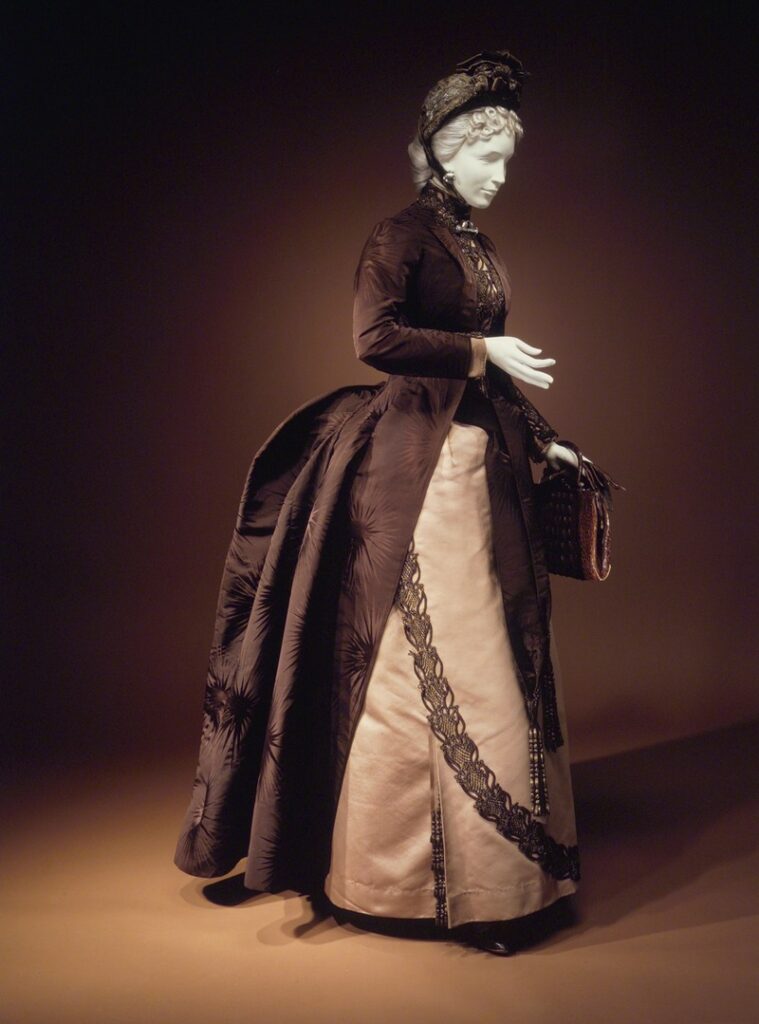
Fairs and exhibitions sought to display the importance of textiles as part of their widely varied agendas, for through such events they reinforced the notion that textiles were of national importance, of scientific and technological achievement and even of international attraction. The Great Exhibition held at The Crystal Palace, 1851 held huge sections of both fabrics and lace, carpets and trimmings to demonstrate the culture that the materials, and by implication, their owners, belonged to. Museums such as the South Kensington Museum (founded 1852), later to be known as the Victoria and Albert Museum, and in France, The Musee des Arts Decoratifs (now incorporated as part of the larger Louvre complex of art and design institutions), collected textiles for this purpose. The collections are still amongst the most useful and comprehensive in the world.
Luxury and Status: Silk, Velvet, and Brocade
At the top of the Victorian textile hierarchy stood silk and its elaborately woven cousins, velvet and brocade. These fabrics signaled wealth and status in a society acutely sensitive to visual cues. Evening gowns for upper- and upper-middle-class women were often fashioned from lustrous silk satin or rich silk taffeta, while formal menswear relied on silk waistcoats and cravats. As the Metropolitan Museum observes in its Costume Institute collections, mid-century silk dresses “combined technological modernity with conspicuous display,” using new aniline dyes to produce brilliant, previously unattainable colors.
That the empire was global was vital. Raw cotton came from the American south and later India and Egypt. Wool came from Australia and New Zealand. Silk was imported from China and Japan. All these raw materials were used to great effect by the factories of Manchester, Leeds and Lyon. To quote the mission statement of the Metropolitan Museum of Art, ‘cotton textiles were ‘the engine of the Industrial Revolution’, supporting the establishment of factory labor, mass production, and expanding consumer markets.’ Victorian textiles were then not only local products. They were the visible surface of a global network of resources.
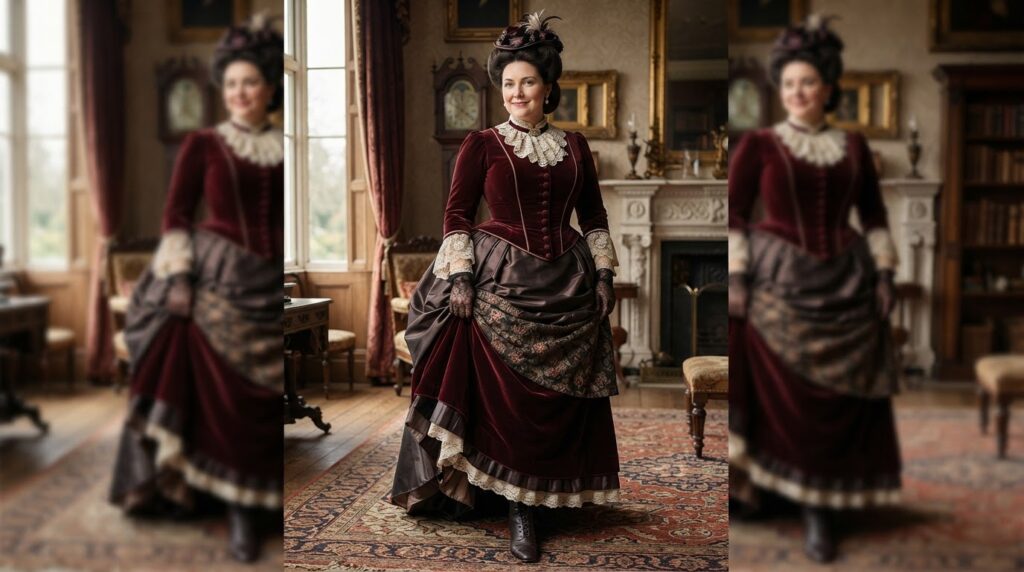
Fairs and exhibitions sought to display the importance of textiles as part of their widely varied agendas, for through such events they reinforced the notion that textiles were of national importance, of scientific and technological achievement and even of international attraction. The Great Exhibition held at The Crystal Palace, 1851 held huge sections of both fabrics and lace, carpets and trimmings to demonstrate the culture that the materials, and by implication, their owners, belonged to. Museums such as the South Kensington Museum (founded 1852), later to be known as the Victoria and Albert Museum, and in France, The Musee des Arts Decoratifs (now incorporated as part of the larger Louvre complex of art and design institutions), collected textiles for this purpose. The collections are still amongst the most useful and comprehensive in the world.
Everyday Fabrics: Cotton, Wool, and Practicality
If silks and velvets captured the imagination, cotton and wool dressed the Victorian majority. Cotton, spun and woven in ever-increasing volumes in British and continental factories, underpinned both fashion and household textiles. Calico (plain-woven cotton), muslin, and later percale and sateen became staples for shirts, undergarments, children’s clothing, and modest dresses. The Metropolitan Museum notes that as production scaled up, “cotton became increasingly affordable, transforming clothing consumption for the working and middle classes.” Printed cottons—chintzes and dress prints with floral or geometric motifs—brought color and pattern within reach of people who could never have afforded silk brocades.
Wool, meanwhile, was the workhorse of Victorian fabrics, essential to the wardrobes of both sexes. Broadcloth and fine worsteds served for men’s suits, tailcoats, and overcoats, projecting sobriety and respectability. Women’s winter dresses and outerwear often combined wool with silk trims or velvet accents. The Smithsonian Institution’s collections on nineteenth-century American dress emphasize how wool’s durability and warmth made it ideal for expanding urban and industrial populations who spent more time outdoors and commuting by rail or omnibus.
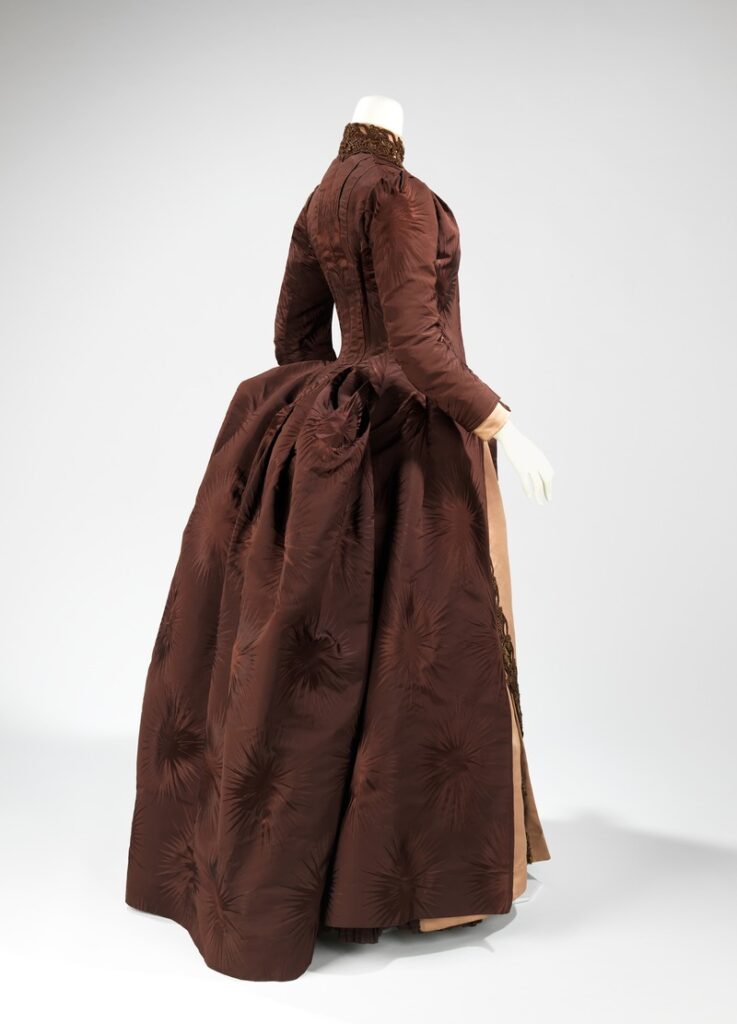
Blending practicality and fashion, manufacturers increasingly experimented with mixed fabrics: cotton-wool blends, cotton-backed velvets, and silk-wool combinations that offered the look of luxury at lower cost. These materials were particularly attractive to the growing middle class, who sought to emulate upper-class styles within tighter budgets. Such fabrics also reveal the complex relationship between authenticity and appearance in Victorian culture. As the V&A observes, “The 19th century saw an explosion of imitation materials,” from faux lace to artificial moiré, reflecting both technological innovation and anxieties about social imitation and class boundaries.
Innovation and Industry: New Technologies and Dyes
Technological change fundamentally reshaped Victorian textiles, from the spinning mill to the dye vat. Mechanization of weaving—through power looms, Jacquard attachments, and later improved shuttle looms—allowed for rapid production of complex patterns that had previously required painstaking hand labor. Lyon in France and Lancashire in England became synonymous with industrialized fabric production, while smaller centers specialized in lace, ribbons, or particular weaves. The Smithsonian’s documentation of textile machinery underscores how technical expertise migrated between Britain, continental Europe, and the United States, creating an international network of innovation.
The chemical revolution in dyes was perhaps the most concrete of all changes. The vast majority of fabric dyes before the 1850s relied on natural substances like madder, indigo, cochineal, and logwood. Chemist William Henry Perkin in 1856 by chance created mauveine, the world‘s first commercially viable synthetic aniline dye. According to the V&A, it signaled “a new age of rich, fast-dyeing colors [which] thrilled the world of fashion”. The widespread use of vibrant purples and magentas (and subsequently greens and blues) in the 1860s and 1870s can be directly related to this chemical breakthrough.
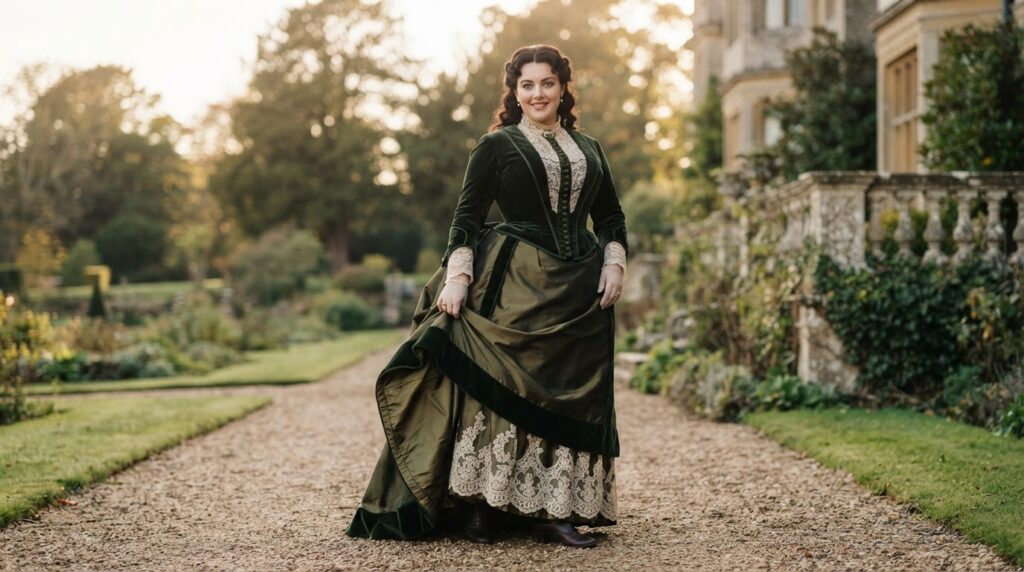
Innovation, though, was risky. Some of the first aniline dyes were unstable or toxic, and bright green dresses based on arsenic pigments proved notorious. As historian Alison Matthews David has written, ‘The fashionable body became a test site for new chemical technologies.’ Would conservation be risking embalmment by the time museums like the Met or the V&A saved examples of these garments whose glowing colours reflect a past story of taste and also of the impact of pollution (on watercourses beneath dye factories), and on workers and wearers’ health?
Interiors and Identity: Upholstery, Drapery, and Domestic Textiles
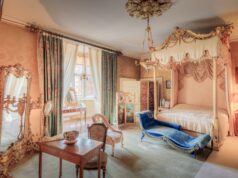
Victorian fabrics were as significant in the home as in the wardrobe. Middle-class identity in Britain, France, and the United States was closely tied to the domestic interior, and textiles played a starring role in constructing notions of comfort, morality, and taste. Heavy damask curtains, plush wool or mohair velvets, and patterned jacquard upholstery fabrics turned drawing rooms into “upholstered nests,” to borrow a contemporary phrase. As the V&A’s textile collections show, complex floral, neo-Gothic, and Orientalist designs reflected both industrial printing capabilities and the era’s fascination with historic and exotic motifs.
Much more can be said about the interior arrangements of Victorian homes including the carpets and rugs. Machine-manufactured Brussels and Axminster carpets, predominantly finished in reds and greens and retailed to middle-class consumers, were gradually becoming increasingly affordable and some of the wealthier residents imported hand-knotted carpets from regions of the Ottoman Empire, Persia and India. The Metropolitan Museum of Art and the Louvre both have notable collections of fa nineteenth-century Oriental Carpets, exemplifying how global trade influences domestic style. Turned ownevery chairs, tables and pianos in theaverageVictorian home might be covered with layers of textiles through which the eye could rest.
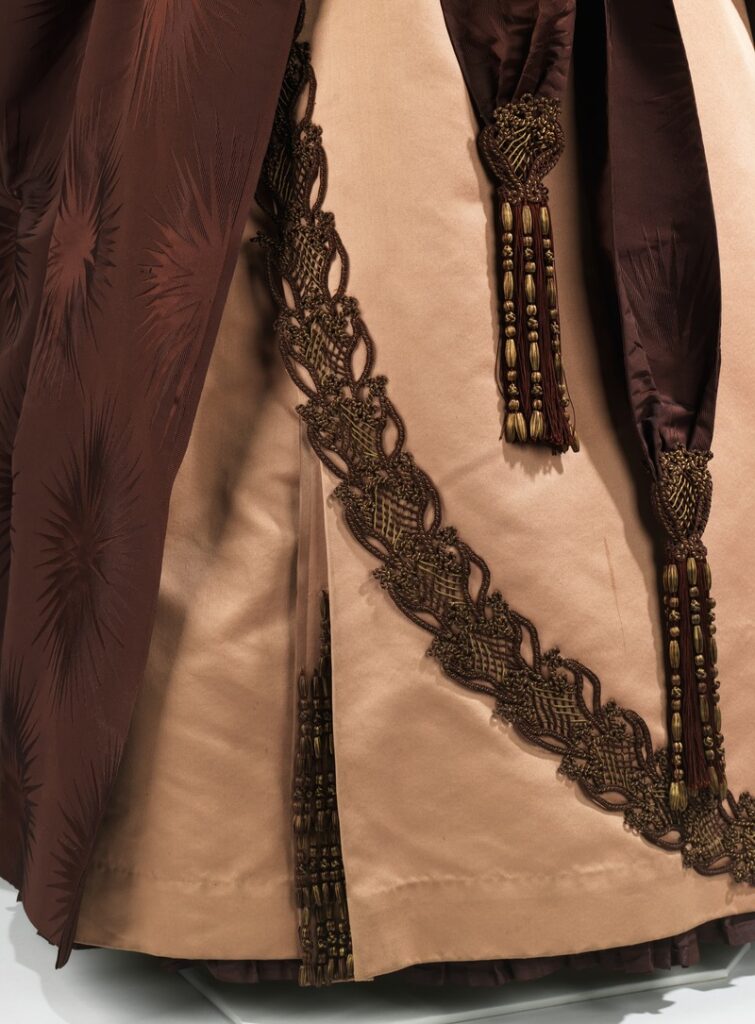
Domestic textiles could also encode moral and gender ideals. Embroidered table-cloths, antimacassars (washable covers to protect furniture from the hair oil applied with the brush), and bed linen represented women‘s unpaid work. Needlework was endorsed as a politely feminine activity enhancing the beauty of the home‘s interior, and contributing to the display of domestic virtue. As the objects in the Smithsonian Museum‘s holdings of women‘s domestic craft reveal, these works straddle the boundary between art and useful object. The Victorian fabric coded something about the values of Victorian life: cleanliness and order, propriety and the family hearth.
Table: Key Victorian Fabrics and Their Characteristics
| Fabric Type | Typical Fiber Content | Common Uses (19th c.) | Social Associations | Notable Features |
|---|---|---|---|---|
| Silk Satin | Silk | Evening gowns, bodices, waistcoats, trimmings | Upper & upper-middle classes | High sheen, drapes fluidly, luxurious |
| Silk Velvet | Silk pile on silk/cotton | Cloaks, mantles, jackets, upholstery, curtains | Elite and formal wear | Deep pile, rich color, light-absorbing |
| Brocade | Silk (sometimes metallic) | Ball gowns, ecclesiastical garments, furnishings | Courtly, ceremonial, religious | Raised woven patterns, complex designs |
| Printed Cotton | Cotton | Day dresses, shirts, children’s wear, furnishings | Broadly affordable | Washable, huge variety of patterns |
| Wool Broadcloth/Worsted | Wool | Suits, coats, winter dresses, uniforms | Respectable, middle/upper class | Durable, warm, smooth or crisp hand |
| Mixed Fabrics | Cotton-wool, silk-cotton | Affordable fashion, imitation luxury | Aspirational middle class | Combines look of luxury with lower cost |
Frequently Asked Questions About Victorian Fabrics
1. Were Victorian fabrics really as uncomfortable as they look?
Not necessarily. While certain garments—especially heavily structured women’s dresses with corsets, bustles, and multiple petticoats—could be restrictive, many everyday Victorian fabrics were chosen for comfort and practicality. Cotton chemises, wool flannel petticoats, and loose wrapper gowns provided comfort at home. Museums like the Metropolitan Museum and the V&A preserve informal garments that challenge the stereotype of constant stiffness; the discomfort often lay more in the cut and construction than in the fabric itself.
2. How did people clean and care for fabrics in the Victorian era?
Laundry practices varied by fabric type and social class. Most wool garments were brushed and aired rather than washed, to preserve the fiber. Cotton undergarments and shirts were boiled and scrubbed, a labor-intensive process often delegated to servants or professional laundresses. Silk was rarely washed; instead, it might be spot-cleaned or unpicked and re-made. As the Smithsonian’s documentation of domestic life shows, the difficulty of laundering shaped fabric choices—washable cotton for underlayers, more delicate fabrics for outer garments that did not touch the skin directly.
3. Did Victorian fabrics differ significantly between Britain, France, and the United States?
The overall fabric repertoire was similar across these regions, but there were notable differences in style, supply, and industrial organization. France, with centers like Lyon, was especially influential in silk weaving and fashion-forward fabrics, often setting trends adopted elsewhere. Britain dominated mass production of cottons and wools, exporting worldwide. The United States developed a strong domestic cotton and woolen industry, documented extensively by the Smithsonian, but continued to import high-fashion textiles from Europe. Local climate and culture also affected preferences—for instance, lighter cottons were particularly important in the American South and in colonial India.
Conclusion
Victorian fabrics were the visible skin of a rapidly changing world—simultaneously industrial and artisanal, global and domestic, luxurious and utilitarian. Silk velvets and brocades broadcast privilege in London ballrooms and Paris salons, while cottons and wools clothed clerks, factory workers, and emigrants across Britain, Europe, and North America. Innovations in weaving and dyeing brought unprecedented color and variety, but also new social and environmental challenges.
The collections and research of institutions such as the Metropolitan Museum of Art, the Victoria and Albert Museum, the Louvre’s decorative arts museums, and the Smithsonian Institution allow us to examine these textiles in close detail. Through them, we see how Victorians used fabric to express identity, aspiration, and belief—threading together technology, empire, and everyday life in patterns that still captivate the modern eye.
AI Notice: Some visual content in this article may have been created or enhanced using artificial intelligence (AI) for artistic, editorial or illustrative purposes. Learn more about our approach in our AI & Editorial Principles.