

A bedroom that’s cluttered, loud, or visually “busy” makes it harder to unwind and fall asleep. Many people feel this every night but don’t know what to change beyond buying new bedding. Japandi style offers a clear answer: combine the warmth of Scandinavian design with the calm minimalism of Japanese interiors to create a bedroom that feels like an exhale.
This matters for more than aesthetics. Sleep and mental rest are strongly linked to your environment. Research summarized by the World Health Organization and sleep foundations shows that calmer, darker, quieter bedrooms support better sleep quality and overall health. A Japandi bedroom helps you build that kind of restful space, starting with your furniture choices.
Below are practical Japandi bedroom furniture ideas, what they mean for daily life, and how to know when your setup is working—or when it might be getting in the way of real rest.

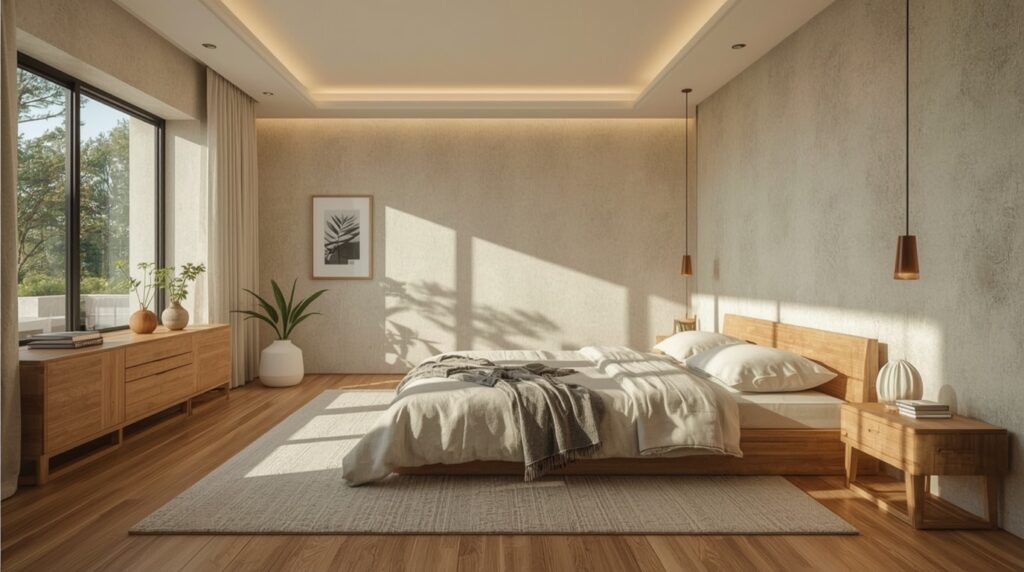
1. The Low, Minimal Bed Frame: Calm Starts at Eye Level
The bed is the anchor of a Japandi bedroom. In both Japanese and Scandinavian design, the bed is simple, low, and free of visual noise.
Why a Low Profile Bed Works
A low bed immediately changes how a room feels:
- It lowers the visual center of the room, making it feel calmer and more grounded.
- It reduces the sense of bulk and heaviness that tall, ornate beds create.
- It echoes traditional Japanese futons and platform beds while staying clean and modern.
What this means for people:
When you walk into a room where furniture sits low and unobtrusive, your eyes can rest. That reduces the constant stimulation that keeps your brain “on alert,” which is especially useful before sleep. Several sleep studies referenced by the CDC highlight the benefit of a clear, uncluttered bedroom for better sleep onset and quality.
How to Choose a Japandi Bed Frame
Look for:
- A simple platform bed in light or medium wood
- Straight lines with rounded corners rather than sharp or ornate details
- A low or no headboard, or a plain wooden headboard with no tufting or carving
If your bedroom is small, consider:
- A low platform with built-in drawers for hidden storage
- A futon-style mattress on a foldable or slatted base
When to be concerned:
If your bed frame is so low that getting up causes knee or back strain, it’s not serving you well. Japandi should feel easy and functional, not punishing. In that case, raise the height slightly with taller legs or a thicker mattress while keeping the lines simple.
2. Neutral, Natural Materials: Wood, Linen, and Soft Textures
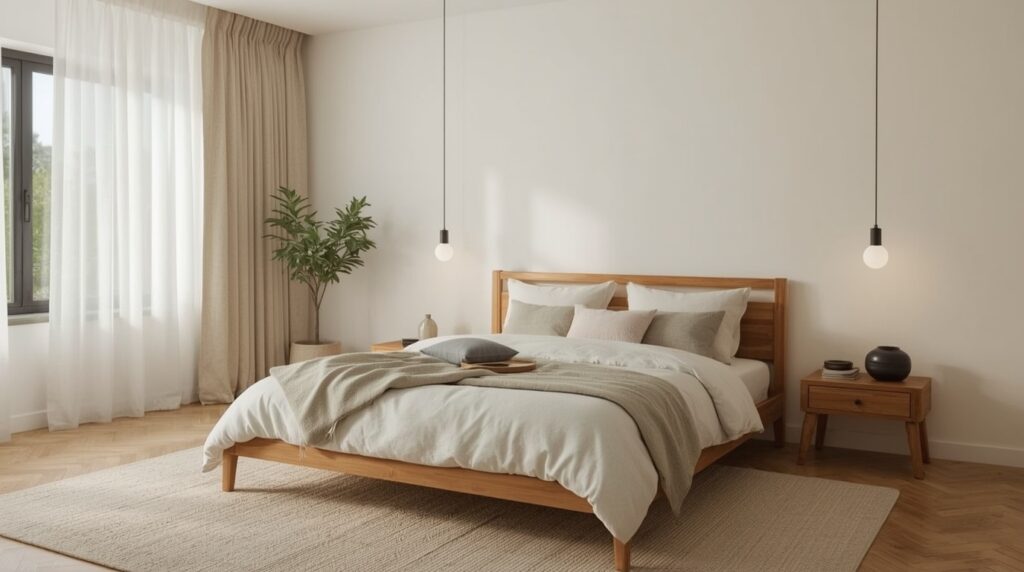
Japandi design leans heavily on natural, tactile materials that feel good to the touch and look soft on the eye.
Calm Through Color and Texture
Instead of bold colors or shiny surfaces, Japandi bedrooms rely on:
- Light woods (oak, ash, birch)
- Natural fibers (linen, cotton, wool)
- Soft, matte finishes
What this means for people:
Harsh contrasts and synthetic shine keep the brain more alert. Soft neutrals—beiges, warm whites, stone grays—allow your nervous system to downshift. Environmental psychology research has repeatedly found that natural materials and neutral palettes are linked to lower stress and better mood.
How to Apply This in Furniture Choices
Consider the following combinations:
Bed + Side Tables
- Light wood platform bed
- Matching or coordinating wood bedside tables with simple silhouettes
Storage Pieces
- A wooden dresser with visible grain and minimal hardware
- A woven bench or rattan trunk at the end of the bed
Textiles on Furniture
- Linen or cotton bedspread in off-white, sand, or light gray
- A wool throw in muted terracotta, forest green, or charcoal as a single accent
When to be concerned:
If your “neutral” palette starts to feel cold, sterile, or depressing, you may have gone too far into gray or white. Add warmth with:

- Warmer wood tones
- A cream or beige duvet instead of pure white
- One or two earthy color accents (rust, olive, clay)
3. Clutter-Free Nightstands: Protecting Your Sleep Zone
Nightstands are small, but they strongly influence how restful your bedroom feels. A Japandi nightstand is functional, minimal, and carefully edited.
Why Bedside Simplicity Matters
The CDC and sleep experts emphasize that your brain forms associations with your sleep environment. When your bedside is:
Covered in cords, devices, receipts, and half-finished tasks,
your brain reads “work in progress,” not “time to rest.”Clear, intentional, and calm,
your brain learns that the bed area is for winding down and sleep.

Designing Japandi Nightstands
Choose nightstands that:
- Are close in height to your mattress top
- Have 1–2 drawers for hidden storage
- Have a simple top surface with room for only a few essentials
Aim to keep on each nightstand:
- A small lamp with a warm, soft bulb
- A glass or carafe of water
- One book or journal
- Possibly a small plant or single ceramic piece
What this means for people:
You see fewer reminders of tasks and choices at night, which can reduce bedtime overthinking. This is especially helpful if you struggle with anxiety or racing thoughts when trying to fall asleep.
When to be concerned:
If your nightstand surface is regularly overflowing, it’s a sign your storage is inadequate or your habits need adjusting. Consider:
- A nightstand with deeper drawers
- A small wall shelf nearby for extra books or devices
- A nightly “two-minute reset” where you clear the top before bed
4. Thoughtful Storage: Hiding Chaos, Not Life
Japandi style is not about having nothing—it’s about making peace with what you own and storing it wisely.
The Role of Storage in a Calm Bedroom
Exposed clutter increases visual stress. Research into mental health and organization has shown that chronic clutter is linked to higher cortisol (a stress hormone) and feelings of overwhelm. In a bedroom, that translates directly into restless nights.
Japandi storage furniture aims to:
- Hide visual chaos behind clean lines
- Keep essentials easy to reach
- Avoid oversized, dominating wardrobes where possible
Smart Japandi Storage Furniture Ideas
Consider:
- A low, wide dresser instead of a tall, looming chest
- A simple wardrobe with flat-panel doors (no glass fronts or busy handles)
- Under-bed storage drawers that match or blend with the bed frame
- A single bench with built-in storage at the foot of the bed
What this means for people:
You’re more likely to put things away when storage is simple and nearby. That keeps surfaces clear and reduces the “I should really clean this” mental load that often shows up right when you’re trying to relax.
When to be concerned:
If you find yourself stacking clothes on chairs or the floor regularly, your system isn’t working. Adjust by:
- Adding one more storage piece (like a wall-mounted shelf or an extra drawer unit in the closet)
- Doing a small declutter session focused only on your bedroom wardrobe
- Setting a limit: if a piece doesn’t fit comfortably in current storage, something else must go
5. Soft Lighting and Simple Accent Pieces
Furniture is one part of the puzzle; how you accompany it matters just as much in Japandi style.
Lighting That Supports Rest
Good lighting turns your minimalist furniture into a truly soothing setup. Health organizations and sleep researchers consistently stress limiting bright, blue-heavy light at night because it disrupts melatonin and sleep rhythms.
For a Japandi bedroom, aim for:
- Warm white bulbs (around 2700K) in bedside lamps
- Diffused light through fabric or rice-paper style shades
- At least two light sources:
- One overhead, dimmable if possible
- One or two smaller lamps near the bed
What this means for people:
You can shift from bright, task-oriented light to soft, cocoon-like light as evening progresses, helping your body prepare for sleep naturally.
When to be concerned:
If the bedroom feels too dim for tasks like reading or getting dressed, you’ll end up compensating with harsh lighting. Add:
- A floor lamp with a soft shade
- A brighter overhead light on a dimmer switch
- A dedicated reading lamp with adjustable brightness
Restraint With Decor on and Around Furniture
Japandi style values negative space. That means less is more, especially on top of furniture.
Choose:
- A single piece of art or a simple framed print above the bed
- One or two ceramics or vases on a dresser
- A small plant on a stool or dresser corner, not on every surface
Avoid:
- Overcrowded gallery walls
- Many small decorative items scattered around
- Bright, contrasting colors that draw the eye everywhere at once
What this means for people:
Your eyes have places to rest. This visual quiet supports mental quiet, making it easier to let go of the day once you step into the room.
When to be concerned:
If the room starts to feel impersonal or hotel-like, add a few meaningful elements:
- A single framed photo
- One handmade or vintage piece
- A favorite object placed thoughtfully, not randomly
6. Balancing Japanese Minimalism and Scandinavian Warmth
Japandi is a balance. Lean too far into minimalism and the room feels stark; lean too far into coziness and it starts to look cluttered.
Finding Your Own Center
Think of Japandi as:
- 60–70% calm minimalism
- 30–40% soft comfort
In practice, that might mean:
- Clean-lined bed, nightstands, and dresser
- One plush rug under the bed
- A couple of cushions and a soft throw
- One or two personal objects on display
What this means for people:
You get the psychological benefits of minimalism—clarity, less overwhelm—without losing the emotional comfort that soft textures and personal touches provide.
When to be concerned:
If you feel guilty for wanting color, books, or sentimental items, you may be approaching Japandi as rigid rules instead of guidance. Your bedroom should support you:
- Keep the larger furniture simple and neutral
- Use smaller items (art, textiles, accessories) to express your personality
- Periodically review what’s in your bedroom, keeping what truly supports rest and letting go of the rest
Conclusion: A Calmer Bedroom, Night After Night
Japandi bedroom furniture is not about chasing a trend; it’s about creating a space that actively helps you rest. A low, minimal bed; natural materials; clutter-free nightstands; thoughtful storage; and soft, layered lighting all work together to reduce visual noise and mental stress.
The main takeaway:
Start with one or two key furniture changes—often the bed and nightstands—and then simplify around them. Pay attention to how you feel when you walk into your bedroom. If your shoulders drop and your breathing slows, your Japandi-inspired choices are doing exactly what they should: turning your bedroom into a calm, supportive space you look forward to every night.
AI Notice: Some visual content in this article may have been created or enhanced using artificial intelligence (AI) for artistic, editorial or illustrative purposes. Learn more about our approach in our AI & Editorial Principles.