Where Desire Learned to Curve: The Secret Psychology of Rococo Lines
Some styles announce themselves with a bang. Rococo arrives as a whisper.
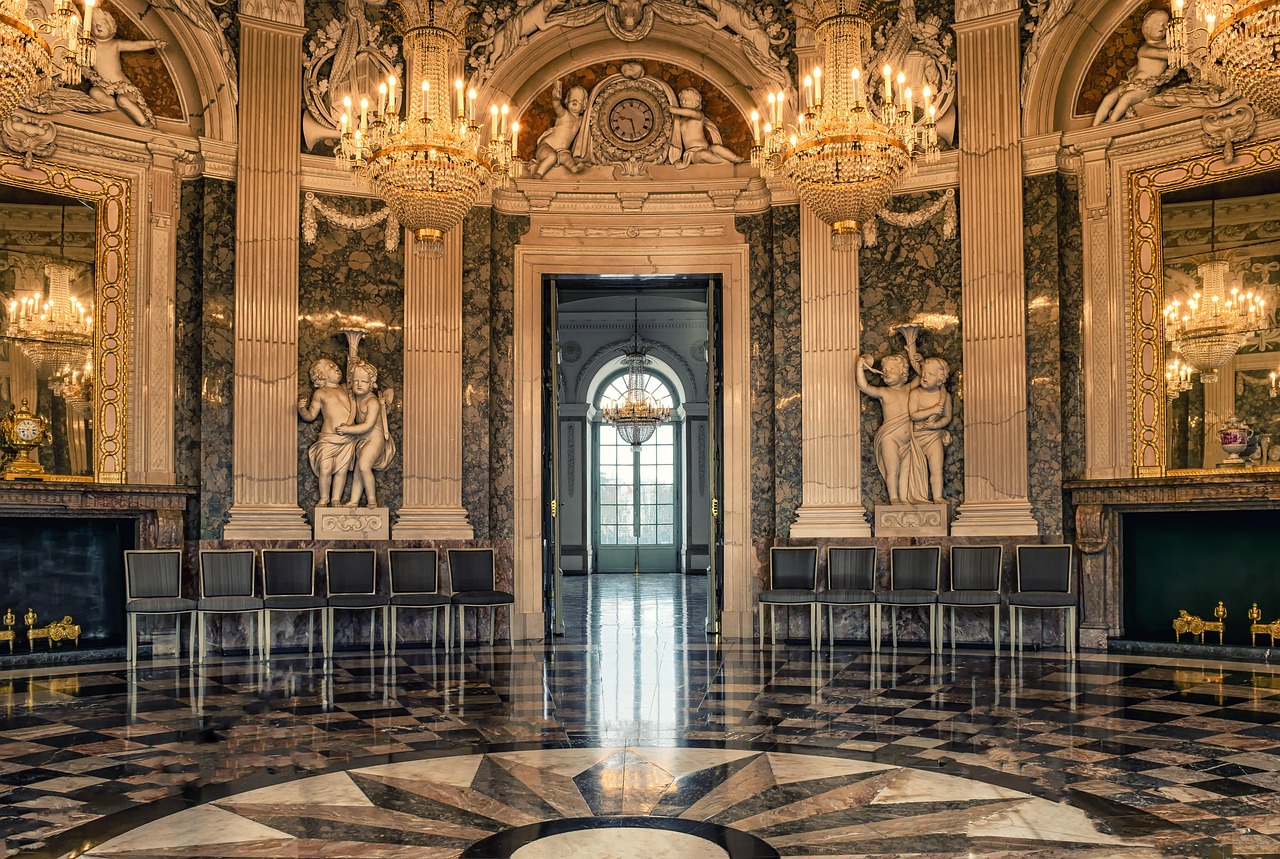
Step into a Rococo interior—at least in your mind—and nothing is straight for long. Walls appear to soften at the edges. Mirrors blossom with gilded foliage that refuses to grow in tidy directions. Ceiling frescoes dissolve corners with clouds and flesh and vaporous sky. The line, that most obedient of artistic instruments, has slipped its leash. It coils and unfurls and doubles back on itself, like a thought you refuse to finish because you don’t want the feeling to end.
Can You Name the Masterpiece?
Ten masterpieces. Ten questions. How well do you know the history of art?
This is the secret of Rococo: it is not just a style of ornament, but a way of teaching desire to move. To curve. To linger. To avoid conclusions.
We are used to explaining Rococo in practical terms. It followed the severity of the Baroque. It mirrored the tastes of Louis XV’s court. It suited intimate salons rather than grand state halls. All of this is true, and yet it misses the heart of the matter. The real question is not when or where Rococo happened, but why it chose the curve as its native language.

A World That Wanted to Float
Imagine Paris in the early 18th century, the heavy shadow of Louis XIV’s absolutism just beginning to lift. The Sun King is dead. Versailles no longer exerts the same gravitational pull on every gesture, every outfit, every piece of furniture. The court, once choreographed like a military parade, is migrating back to townhouses—hôtels particuliers—with their tall windows, spiral staircases, and private rooms designed for conversation, flirtation, and secrets.
Can You Guess the Artist?
Three clues. One artist. How quickly can you identify the painter?
Power has not disappeared, but it has grown more private, more psychological. Influence happens in corners now, over cards and whispered alliances, under painted ceilings and between veils.
The straight line—beloved in palaces, avenues, and military drills—belongs to the world of public power. It is the line of control, of perspective, of marching orders. Rococo emerges at the exact moment aristocratic life begins to turn inward: from state to self, from duty to pleasure, from the plaza to the boudoir.

And when life moves inward, it does not go in straight directions. It meanders. It doubles back. It indulges.
The curving line of Rococo is the visual trace of that inward turn. It is the geometry of a society attempting to float above its own anxieties.
The Soft Rebellion Against Gravity
Rococo lines behave as though gravity is a suggestion, not a law. They climb walls as tendrils of gilded stucco; they loop around doorways, tangle around mirrors, cascade across furniture.
Unlike earlier Baroque drama—with its muscular diagonals and heavy draperies—Rococo is lighter, more evasive. Its movement is not the thrust of a hero but the ripple of silk on a body that refuses to be clearly outlined.

Look at a typical rocaille—the shell-like ornament that gave the style its name. It twists, curls, folds back on itself. There is no obvious starting point, no clear center. Your eye follows its slipstream, only to find that you’ve returned to where you started without noticing.
Psychologically, this is powerful. The curve is the line of delay. It postpones definition. It postpones endings. When a wall panel could be framed in clean rectangles, Rococo prefers cartouches that bulge and sway, framing nothing in particular—just the pleasure of framing itself.
It is as though the entire interior has been designed not to get somewhere, but to stay somewhere: the suspended middle of a conversation, a flirtation, a daydream. The curving line refuses closure because closure means the spell is broken.
Curves as the Geometry of Seduction
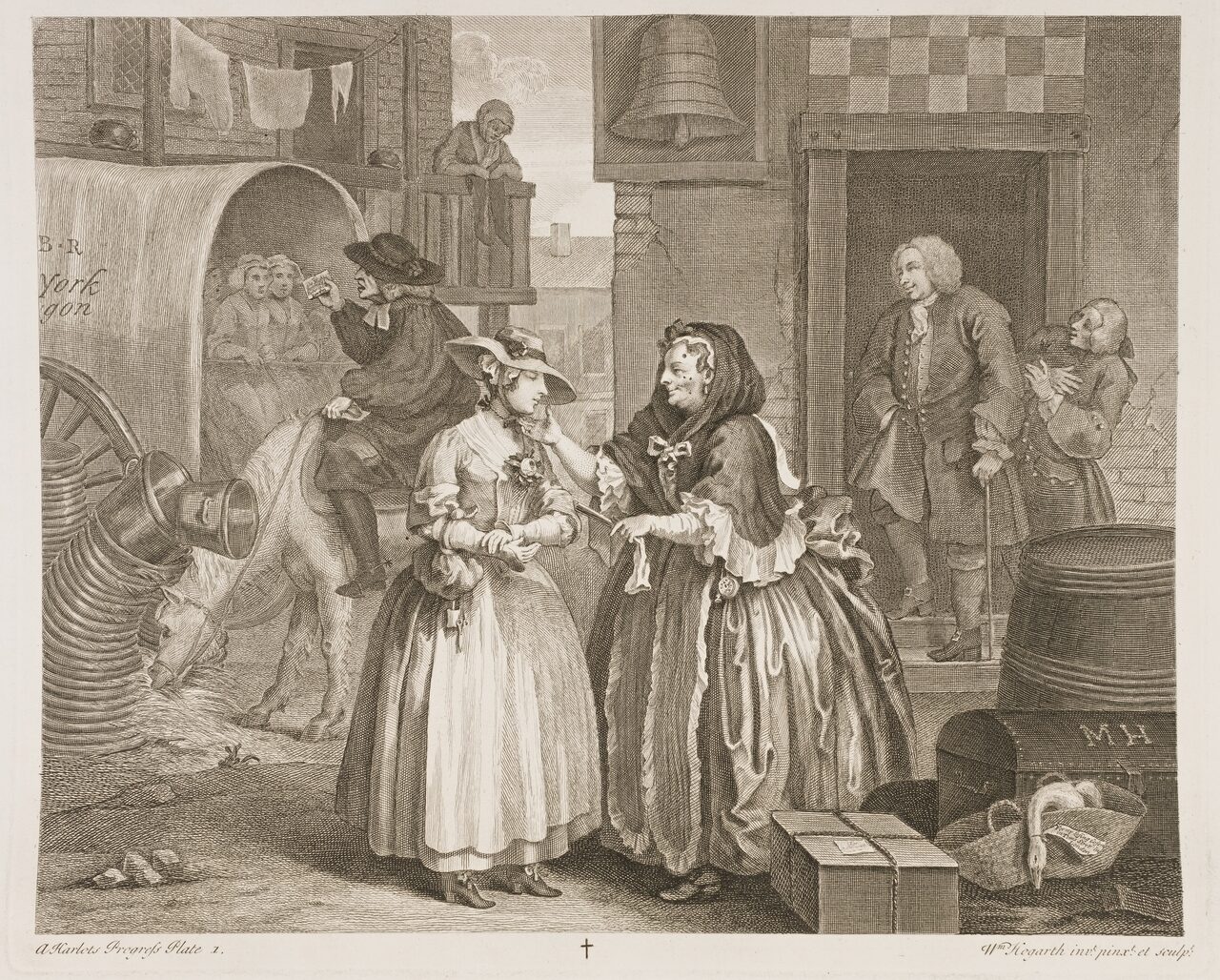
Consider the paintings of François Boucher: nymphs draped over clouds, shepherdesses whose crooks are as ornamental as their glances, mythological scenes rendered with such intimate softness that the gods seem like actors in a private play.

What holds these scenes together is not narrative logic, but the choreography of curves. A reclining Venus is echoed by the arc of a drapery, repeated by the bend of a tree, and rhymed by the swirl of a cloud. The body’s softness is extended into the setting, as though the entire world were conspiring to keep flesh from hardening into form.
Rococo’s curve is the line of seduction because seduction is rarely a straight path. It thrives on detours: the almost-touch, the half-finished sentence, the delayed answer. The S-curve that animates Rococo compositions—found in serpentine tables, mirrored doors, and the very posture of painted figures—is a visual mirror of flirtation’s emotional logic.
Think of how these interiors were used: dinners that turned into card games, card games that turned into confidences, glances traded across a room thick with candlelight, perfume, and the rustle of brocade. In such a setting, a straight corridor would feel like an interruption. Better, instead, to have thresholds melt into alcoves, corners softened by decorative scrolls, doorways framed by asymmetrical cascades of leaves and shells.
The Rococo line does what polite society cannot do openly: it makes desire visible. It turns rooms into psychological landscapes where every flourish is a gesture of invitation that stops just short of commitment.
The Intimate Theatre of the Salon
Rococo is a style built for smaller rooms and shorter distances between people. The grand, severe enfilades of Versailles—designed for processions and display—give way to salons with curved corners, mirrored walls, and low-set, undulating chairs. These spaces are not about spectators and spectacles; they are about participants and encounters.

The curve plays several roles here.
First, it reduces formality. A straight-backed chair governs the body; a voluted, scrolling bergère invites you to sink, recline, lounge. You do not sit on Rococo furniture so much as you fall into it. Comfort, that new bourgeois value, has arrived in aristocratic guise.
Second, it blurs boundaries. Mirrors framed in ornate curves repeat and distort the room, fracturing straight lines into shimmering fragments. You catch your reflection not as a single, fixed portrait but as a series of glances: half-seen, multiplied, refracted by bevelled glass and flickering candles.
Third, it creates a sense of continual movement, even in stillness. The line runs along walls, splashes up around chandeliers, trickles down table legs. Even when nothing is happening, the room looks as if something could happen at any moment. Curves hold the air in a perpetual state of anticipation.
This is not accidental; it is psychological architecture. The Rococo salon is a stage for fragile performances: wit, charm, seduction, alliance. Curving lines encourage fluidity in conversation. There is always another corner to lean into, another niche where two people can detach themselves from the group. Straight lines would be too honest, too blunt. Curves allow thoughts—and desires—to be half-concealed, half-revealed.
The Secret Life of Ornaments
The modern eye, trained on minimalist restraint, often mistakes Rococo ornament for excess: too much gilding, too many tendrils, an almost anxious proliferation of detail. But beneath the surface, the language of Rococo décor is surprisingly consistent, even obsessive.
Shells, vines, scrolls, smoke, waves—none of these can be drawn with a ruler. They are, by nature, forms without right angles. To lean so heavily into these motifs is to choose the organic over the geometric, the fluid over the fixed.
Symbolically, this matters. The early 18th century was an age of polite codes, strict etiquette, and rigid hierarchies. Yet the undercurrent of the period—the novels read in private, the clandestine correspondence, the erotic engravings passed hand to hand—was one of emotion trying to find a vocabulary beyond duty.
Rococo ornament gives that emotional undercurrent a visible shape, while still maintaining plausible deniability. A shell is just a shell; a vine just a vine. But the way they move—twining, wrapping, unfolding—reads like a map of feelings that cannot be spoken plainly.
Notice how often Rococo ornament refuses symmetry. A cartouche may be balanced, but one side spills just a bit further than the other. A stucco garland droops differently on the left than on the right. This asymmetry is key. Perfect balance feels resolved, finished. Rococo wants imbalance—a little tilt, a sense of motion arrested mid-sway. Emotion lives in that slight deviation.
Curves as a Form of Denial
One way to think about Rococo is as an exquisite form of collective denial. Outside those gilded rooms, the world was not curving gently; it was accelerating toward rupture. Economic imbalance, political discontent, and Enlightenment critiques of aristocratic privilege were all intensifying.
Inside, however, ceilings were painted as endless skies filled with frolicking gods. Walls disappeared behind undulating fields of pastel, gilt, and mirror.
The curve becomes a form of refusal: a refusal of edges, of endings, of the brutally straight line of history marching toward revolution.

Psychologically, this is easy to understand. When the future feels unstable, some respond not with austerity but with heightened fantasy. Think of how decadent styles often bloom just before collapse. The more unstable the ground, the more the privileged imagine surfaces that float.
Rococo’s lines coil and drift as if time itself could be put off: politics deferred through pleasure, duty softened by play, the straight road to consequence quietly rerouted through a garden of diversions. When you live in curves, you never quite arrive.
The Modern Eye and the Old Curve
Why, in our glass-and-concrete age of straight-lined minimalism, does Rococo still exert such a peculiar fascination? Even those who claim to dislike it rarely find it forgettable.
Part of the answer lies in contrast. We inhabit spaces defined by efficiency: grids, rectangles, right angles optimized for function. Our phones, laptops, offices—even our streets—lean toward the straight line. The curve appears as luxury because it signals surplus: of time, of means, of attention. A curved stair tells you that someone chose beauty over practicality.
But there is something deeper at work. Our emotional lives are not as linear as our architecture suggests. Relationships do not move in tidy progressions; careers rarely unfold in straight trajectories; identities loop back on themselves, revisiting old questions with new eyes.
Rococo, for all its aristocratic context, is emotionally honest about this. Its lines match the ways we actually experience desire and memory: in spirals, returns, near-repetitions, variations on a theme. To stand before a Rococo wall panel is to recognize, in decorative form, the meandering path of our own inner lives.
This is why contemporary designers, artists, and fashion houses periodically flirt with Rococo flourishes—an asymmetrical neckline, a baroque swirl in a logo, a serpentine staircase in an otherwise austere space. A single curve can puncture the tyranny of the straight line, whispering of a world where feeling still has the right to wander.
The Hand That Drew the Curve
Behind every Rococo flourish, there was a human hand—often several, working together in workshop or atelier. Carvers, stucco workers, painters, designers: all trained to think in curvature, to imagine form not as a boundary but as a continuous movement.
To draw a Rococo line is to put your hand in conversation with hesitation and flourish. It requires confidence—too much correction, and the line stiffens. But it also requires a willingness to let the form surprise you, to follow the motion rather than impose a rigid plan.
This, too, is why the style feels psychologically resonant. It springs from a bodily understanding of how emotion moves—smoothly here, abruptly there, slowing, quickening, never entirely predictable. In a world where we increasingly manipulate images with cold digital precision, Rococo reminds us of the sensual intelligence of the hand: the way the smallest change in curve can turn playful into erotic, frivolous into melancholic.
Where Desire Still Curves
In the end, Rococo’s curves do more than decorate walls; they model a way of being in the world. They suggest that not everything valuable is goal-directed, that not every path must be the shortest distance between two points. There is meaning in the meander.
To follow a Rococo line with your eyes is to rehearse a different relationship to desire—one that does not rush to possess or define, that allows pleasure to be extended through delay, that accepts ambiguity as fertile rather than threatening.
We live now with constant invitations to straighten: to optimize, streamline, simplify, declutter. Yet the mind, left to itself, still curls around its fascinations. We revisit old loves, rethink old choices, circle back to obsessions we thought we’d left behind. Our emotional truths are rarely orthogonal.
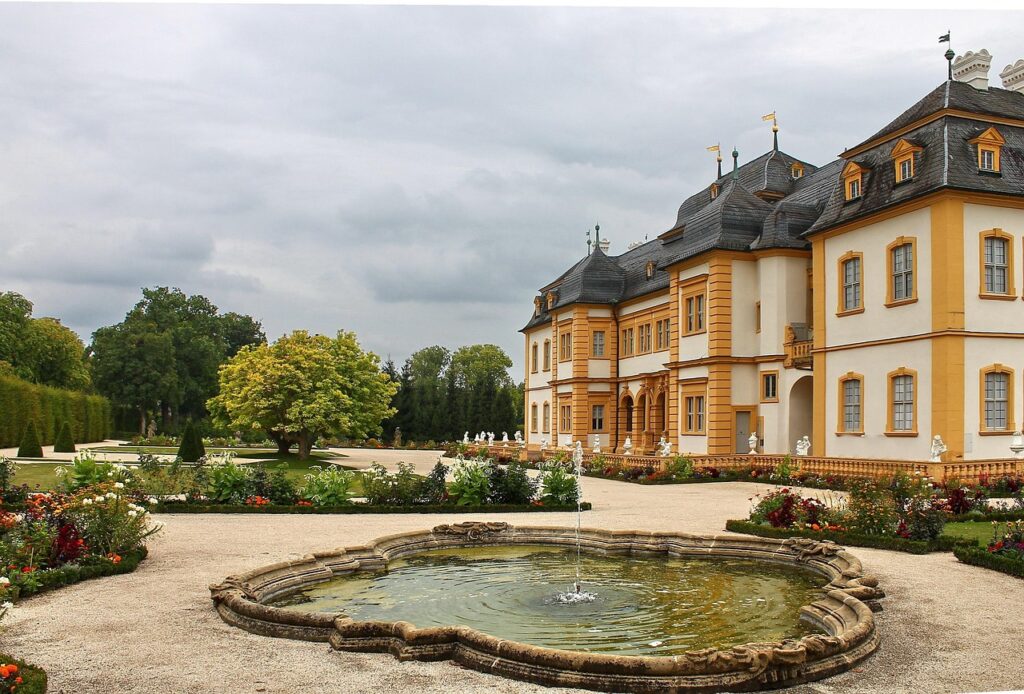
This is why Rococo feels so hauntingly alive when you encounter it in person—a room in Munich, a panel in Paris, a fragment of carving in a museum. Against the clean edges of our contemporary world, it appears like an x-ray of the inner life: looping, elaborate, sometimes excessive, always in motion.
In its gilded scrolls and clouded ceilings, the 18th century left us a quiet manifesto: that desire does not march; it curls. That pleasure is not a point but a path. That somewhere between gravity and escape, between duty and dream, there is a line that does not know how to be straight—only how to keep moving, beautifully, around what it cannot quite bring itself to name.
AI Notice: Some visual content in this article may have been created or enhanced using artificial intelligence (AI) for artistic, editorial or illustrative purposes. Learn more about our approach in our AI & Editorial Principles.