Vintage Corner Cabinets Can Make Small Rooms Feel Much Bigger — Here’s How
A vintage corner cabinet can change a room in a way few other pieces can: it turns an often-ignored corner into a focal point while adding authentic historical character and practical storage. Unlike many modern case goods designed for blank walls, the corner cabinet is a purposeful solution rooted in centuries of domestic life—built to fit architecture, display prized objects, and signal taste. Today, collectors and homeowners seek them not only for function, but for the craftsmanship, materials, and design language that reveal where—and when—they were made.
This article explains what defines a vintage corner cabinet, how the form evolved across major historical periods, what to look for when buying, and how to care for one responsibly. Along the way, it draws on the study traditions and collections of institutions such as The Metropolitan Museum of Art, the Victoria and Albert Museum, the Louvre Museum, and the Smithsonian Institution.
What Is a Vintage Corner Cabinet?
Can You Name the Masterpiece?
Ten masterpieces. Ten questions. How well do you know the history of art?
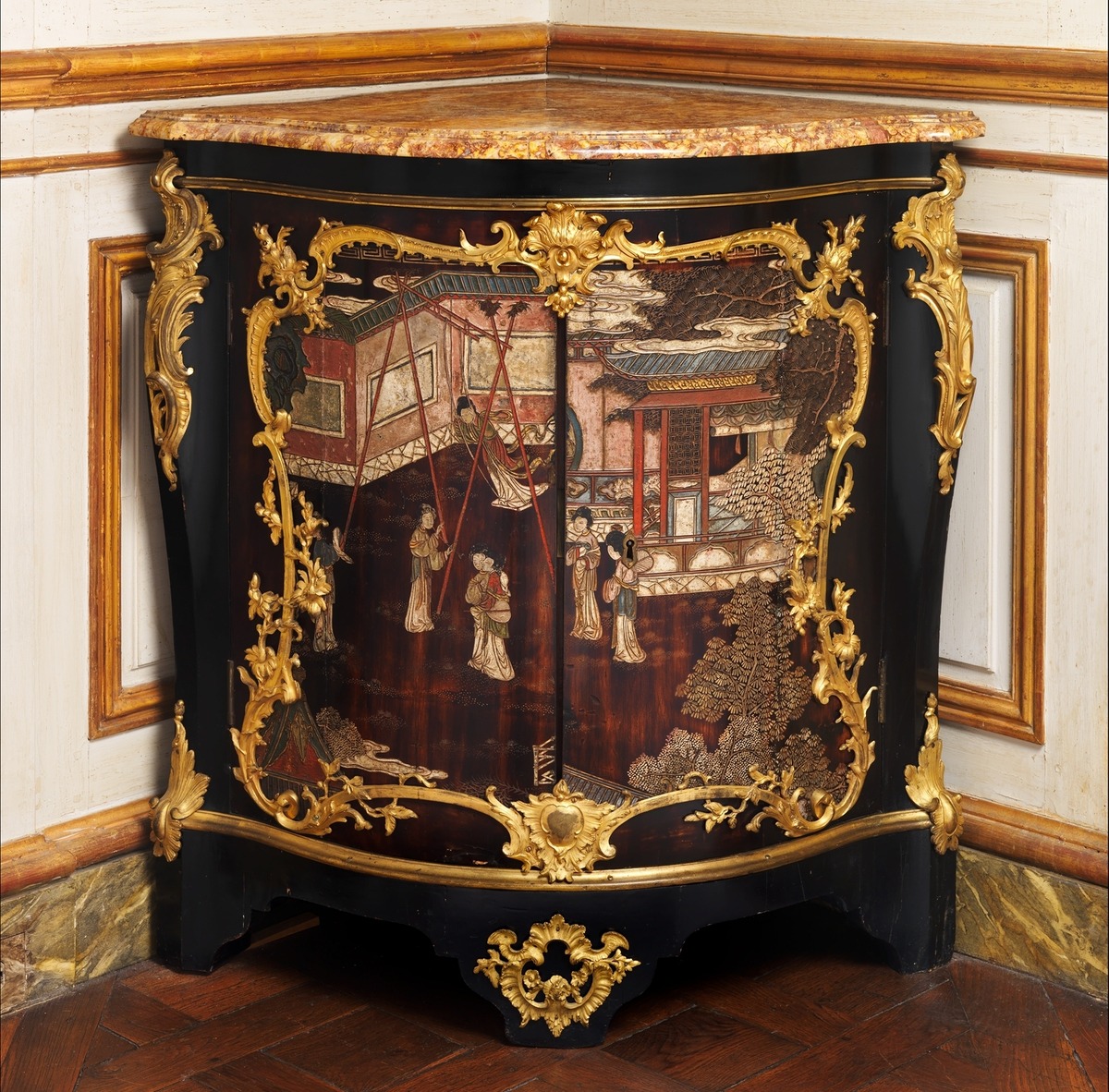
A vintage corner cabinet is a freestanding or wall-hung cabinet designed to sit diagonally in a room corner, typically with angled sides and a façade that presents doors, drawers, or glass display panels. The “corner” design is not a gimmick; it’s a long-standing furniture solution that maximizes storage while preserving floor space and circulation—especially valuable in older homes with smaller rooms and irregular layouts.
Most vintage corner cabinets fall into two broad types: enclosed storage cupboards (often with paneled doors) and display cabinets (frequently with glass doors or open shelving). Many examples combine both, such as a lower cupboard for linens and an upper glazed section for ceramics or glassware. Details like bracket feet, ogee molding, dentil cornices, or inlaid banding often reveal regional influences and date ranges.
“Vintage” is used differently across markets, but many dealers treat it as roughly 20–100 years old, while “antique” often implies 100+ years. In practice, buyers may call a late-19th-century piece “vintage” colloquially. What matters most is construction, authenticity, and condition—not the label.
A Brief History: From Georgian Corners to Arts & Crafts Honesty
Can You Guess the Artist?
Three clues. One artist. How quickly can you identify the painter?
Corner cupboards and cabinets appear in European and American interiors well before industrial mass production. In the Georgian period (1714–1830) in Britain and its Atlantic world, built-in corner cupboards and freestanding corner forms reflected symmetry and proportion; they were part of an architectural approach to rooms. Surviving pieces show careful joinery, refined moldings, and a design logic tied to classical ideals.
By the Victorian era (1837–1901), expanding middle-class households and changing display culture influenced furniture. Corner cabinets increasingly showcased decorative objects, often behind glazed doors. This shift aligns with the 19th century’s enthusiasm for collecting and exhibiting—porcelain, souvenirs, and ornamental glass—mirrored across museum culture. The Louvre, for example, traces decorative arts traditions that shaped what households aspired to display, while the V&A’s extensive furniture holdings show how design and domestic life evolved in tandem.
In the late 19th and early 20th centuries, the Arts and Crafts movement (with strong centers in Britain and the United States) emphasized visible workmanship and honest materials. Gustav Stickley’s writings are frequently cited for this ethos: “Have nothing in your house that you do not know to be useful, or believe to be beautiful,” a line widely attributed to William Morris and often echoed by Arts & Crafts designers. Corner cabinets from this era may feature quartersawn oak, rectilinear lines, and restrained hardware—less about ornament, more about integrity.
Key Characteristics to Evaluate (with a Practical Summary)
When assessing a vintage corner cabinet, prioritize construction and provenance over surface impressions. Period-appropriate joinery—such as dovetails in drawers, mortise-and-tenon frames, and backboards that show age-consistent tool marks—often signals quality. Conversely, very uniform machine marks, staple-heavy construction, or thin composite panels can indicate later manufacture or lower-grade work.
Materials provide clues. Georgian and early American pieces commonly use hardwoods like oak, walnut, and mahogany (sometimes as veneers over secondary woods). Arts & Crafts cabinets often feature oak and a hand-rubbed finish. Hardware matters too: original brass or iron pulls, locks, and hinges add value; replaced hardware is common but should be disclosed. Institutions like the Metropolitan Museum of Art and the Victoria and Albert Museum publish object records and essays that help collectors compare profiles, woods, and ornament across time.
Finally, consider usability in a modern home. Depth, door swing, shelf spacing, and stability affect daily life. Many corner cabinets were built for rooms with tall baseboards and uneven floors—meaning leveling and anchoring may be wise today, especially in homes with children or seismic risk.
Table: Quick Reference for Identifying a Vintage Corner Cabinet
| Feature | What to Look For | Why It Matters |
|---|---|---|
| Joinery | Dovetails, mortise-and-tenon, pegged joints | Indicates craftsmanship and likely age |
| Wood & veneer | Solid hardwoods, period-appropriate veneers | Affects durability and authenticity |
| Hardware | Old locks, hand-cut keys, patina-consistent hinges | Originals support value and dating |
| Proportions | Angled sides, diagonal face, balanced cornice/base | Confirms true corner design (not modified) |
| Glass & shelving | Wavy old glass, adjustable pegs, plate grooves | Reveals display intent and period features |
| Finish | Shellac, wax, oil; age-consistent wear | Over-refinishing can reduce value |
How Museums and Scholarship Help You Buy with Confidence
Museum collections are practical tools for buyers because they provide dated, attributed examples. The Metropolitan Museum of Art and the V&A maintain public online catalogs with high-resolution images and curatorial notes; these can help you match molding profiles, door panel shapes, and regional traits. The Smithsonian Institution similarly offers access to material culture collections that contextualize American furniture forms and domestic use.
A useful buying habit is to cross-check a cabinet’s stylistic claims against documented examples. If a seller calls a piece “Georgian,” compare it with Georgian case furniture in major collections: does the cornice molding make sense, are the feet appropriate, is the veneer consistent with the period? This reduces reliance on sales language and increases confidence in what you are actually purchasing.
Authoritative voices consistently emphasize careful observation. As the V&A notes in its furniture research and object records, close study of materials and construction is central to understanding furniture history and authenticity. In other words: the cabinet tells its own story—if you know where to look.
Care, Placement, and Ethical Restoration
Start with the environment. Keep a vintage corner cabinet away from direct sunlight, radiators, and damp exterior walls. Wood expands and contracts with humidity swings; stable conditions help prevent veneer lifting and door warping. If you use it for display, add discreet museum-style supports for plates or glassware and avoid overloading shelves.
Cleaning should be conservative. Dust with a soft cloth; avoid silicone-based sprays that can contaminate finishes and complicate future conservation. For valuable pieces, consult a trained conservator—especially before stripping or refinishing. The Smithsonian’s conservation approach (widely reflected across museum conservation departments) favors minimal intervention and reversibility when possible, because heavy restoration can erase historical evidence.
If restoration is necessary for safe use—loose hinges, broken locks, unstable feet—aim for repairs that respect the original. Period-appropriate hardware, reversible adhesives, and documented work protect both integrity and resale value. A well-repaired cabinet can remain a functional object without becoming “new” in a way that undermines its history.
Frequently Asked Questions
What is the difference between a corner cupboard and a corner cabinet?
A “corner cupboard” often implies enclosed storage (frequently with solid doors), while “corner cabinet” can include display features like glass doors and open shelves. In the trade, the terms overlap, so assess the piece itself rather than the label.
How can I tell if a corner cabinet is truly vintage?
Look for age-consistent construction (joinery, tool marks), materials (hardwoods, old glass), and wear patterns (hinge wear, shelf wear). Provenance—receipts, estate history, maker’s labels—helps. Comparing with museum-documented examples from the Met, V&A, or Smithsonian can be decisive.
Does refinishing reduce value?
Often, yes—especially for antiques—because original surfaces carry historical information. Light conservation (cleaning, stabilizing) is usually preferred. If a cabinet is later vintage and heavily damaged, careful refinishing may be acceptable, but disclose it.
Are corner cabinets safe in modern homes?
They can be, but many are tall and narrow-fronted. For safety, consider discreet wall anchoring, especially in earthquake-prone areas or homes with children. Ensure doors and shelves are secure before displaying heavy objects.
What periods are most collectible?
Collectibility depends on taste and rarity, but Georgian, Federal/early American, Arts & Crafts, and well-made early 20th-century examples are consistently sought. Condition, originality, and documented origin matter as much as the style name
A vintage corner cabinet is more than a space-saving trick—it is a distilled piece of domestic history shaped by real periods, from Georgian symmetry to Arts & Crafts craftsmanship. By evaluating joinery, materials, and condition, and by using museum resources like The Met, the V&A, the Louvre’s decorative arts context, and the Smithsonian’s material culture scholarship, you can choose a cabinet that is both authentic and livable. Buy thoughtfully, restore ethically, and let the piece do what it has always done best: make a corner meaningful.
AI Notice: Some visual content in this article may have been created or enhanced using artificial intelligence (AI) for artistic, editorial or illustrative purposes. Learn more about our approach in our AI & Editorial Principles.