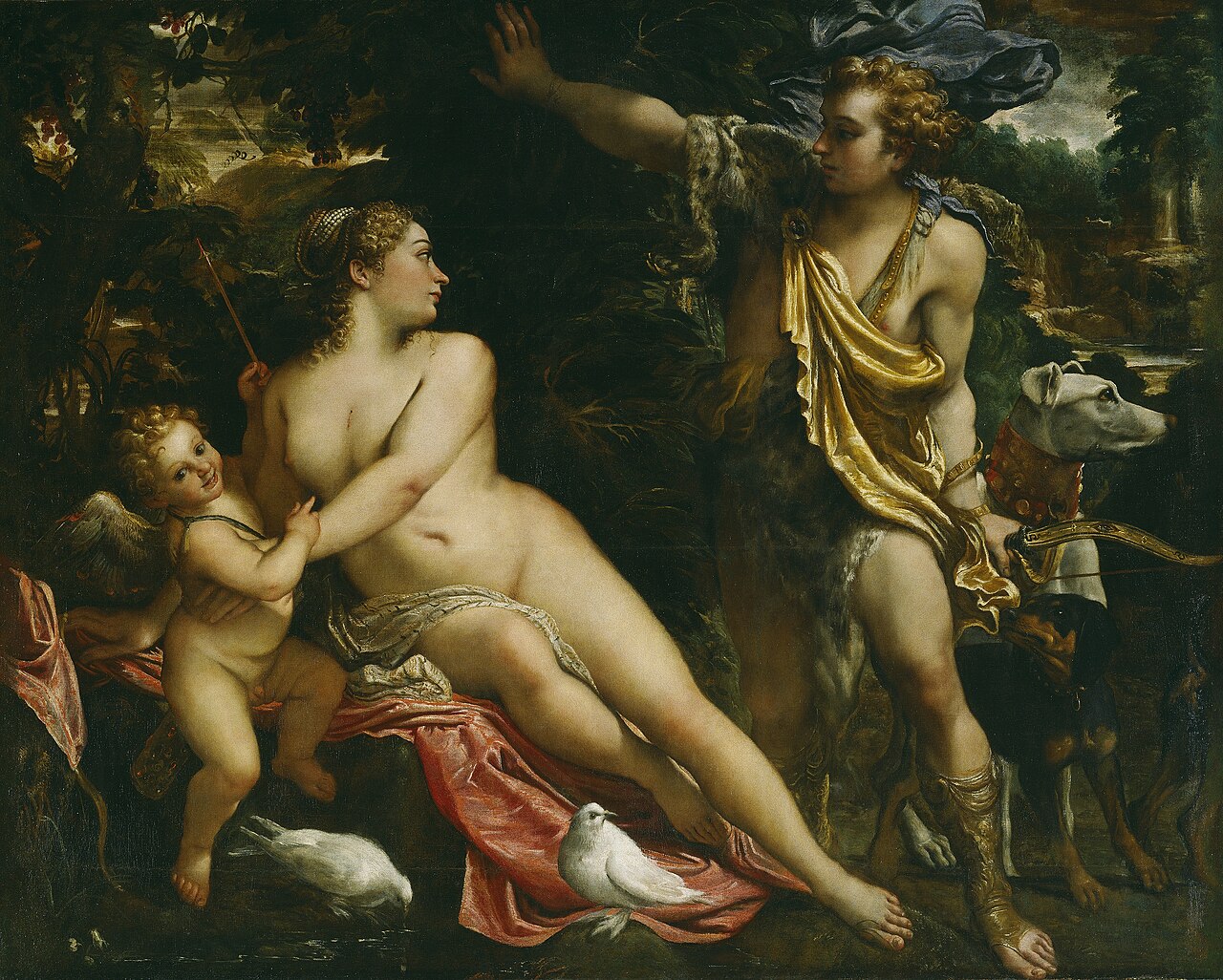
Annibale Carracci’s Venus, Adonis and Cupid does not merely “illustrate” a myth—it stages a decisive moment in European art when painters began to treat classical antiquity as a living language for emotion, movement, and moral tension. In Carracci’s hands, Venus’s desire and Adonis’s fatal resolve are not distant literary themes but urgent human drama, made immediate through muscular naturalism, luminous color, and a compositional intelligence that would help define the Baroque. The result is a picture that feels both learned and visceral: a work shaped by Renaissance humanism and Counter-Reformation discipline, yet pulsing with the energy that soon transformed Rome’s artistic world.
Carracci, the Carracci Academy, and the Birth of a New Naturalism
Annibale Carracci (1560–1609) emerged from Bologna at the end of the Italian Renaissance, during a period of intense artistic debate about how painting should relate to nature and to classical ideals. Along with his brother Agostino and cousin Ludovico, he helped found the Accademia degli Incamminati (“Academy of the Progressives”), which emphasized life drawing, anatomy, and close study of earlier masters. This Bolognese reform was not anti-intellectual; it was a disciplined synthesis—uniting observation with the compositional clarity of Raphael and the corporeal force of Michelangelo.
Can You Name the Masterpiece?
Ten masterpieces. Ten questions. How well do you know the history of art?
Carracci‘s career coincided with Counter-Reformation culture, in which one expected religious painting to be intelligible and morally significant. Mythological painting, however, seemed to do well in the aristocratic world, where classical stories were valued because they were poetic and interpretively free. Carracci‘s mythologies, then, seem to have been straddling a fine line: they are physically and psychologically engaging, but also structurally tight manipulating the viewer‘s focus and emotion through precise compositional ordering and expressive movement.
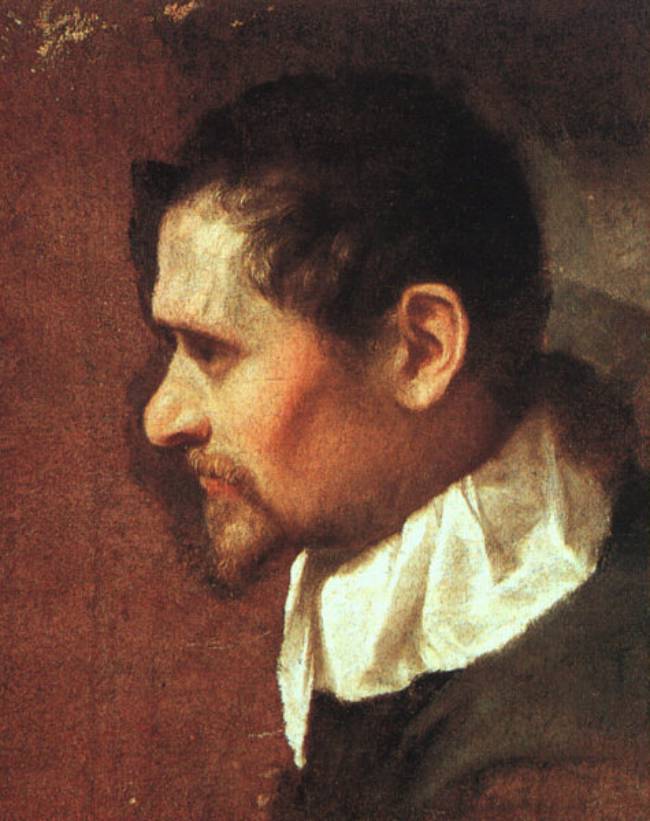
His relocation to Rome in the 1590s most particularly his role in the decoration for the Farnese family effectively set him apart in the epicenter of Europe‘s pre-eminent artistic community. The fresco series for Palazzo Farnese emerged as a benchmark for the development of the Baroque ceiling presentation, as well as the ideal vehicular for a mythological narrative. The Louvre Museum and The Metropolitan Museum of Art have consistently seen, and continue to see, Carracci as a symbol of the Italian paradigm shift away from late Renaissance mannerism, towards Baroque naturalism, a construction still supported by contemporary academic research, and reflected in museum catalogues.
The Myth of Venus and Adonis: Desire, Mortality, and Warning
Can You Guess the Artist?
Three clues. One artist. How quickly can you identify the painter?
The story of Venus and Adonis is most widely known through Ovid’s Metamorphoses (1st century CE), a foundational text for Renaissance and Baroque artists. Venus, goddess of love, falls for the mortal Adonis and warns him not to hunt dangerous beasts; Adonis ignores her counsel and is fatally wounded by a boar. Cupid is often included as the instigator or emblem of love’s power—at times playful, at times ruthless. In pictorial terms, the myth offers artists a charged confrontation between beauty and death, persuasion and stubbornness, tenderness and impending violence.
Carracci‘s treatment gains strength from the choice of a psychologically “hinged” moment: Venus trying to hold or cajole Adonis and the hero physically and mentally moving away from her. It is not storytelling, but dramatic argument expressed in bodies. The viewer is a witness to a choice an awareness of the imbalance of power of divine understanding compared with human purpose. The emotional heat is increased by Cupid which can be read as a reminder of the irrepressible start of love‘s arrow.
Mythological painting in 16th and 17th century also operated as a refined courtly language where the audience could draw various mystic, erotic, moral, political and poetic overtones. As museums such as the Victoria and Albert Museum (V&A) (commenting on the Renaissance and Baroque engagement with classical subjects), mythological paintings served to exhibit prestige, edu cation and the artist’s command of the nude. Carracci’sVenus and Adonisexemplifies such practice but ventures towards a modern naturalism: fleshy, weighty; gesturing weightily and the story read as serial presentation.
Visual Analysis: Composition, Bodies, and the Language of Baroque Painting
In Venus, Adonis and Cupid, Carracci’s authority as a draftsman is evident in the interlocking arrangement of figures. Venus typically anchors the composition with a persuasive reach or embrace, while Adonis turns outward, his body angled toward departure. This creates a dynamic diagonal—an early Baroque device that replaces static symmetry with directional tension. Cupid, smaller but crucial, acts as a compositional hinge and a thematic key: love’s presence is literally “in the room,” but it cannot guarantee obedience or safety.
The language of Carracci’s painting is made up of a precise search for a middle ground between idealization and observation of the body. The musculature of Adonis and the fluid, translucent flesh of Venus are indications of intense reading of classical sculpture and High Renaissance precedents, while their poses appear as natural rather than artificial. For Carracci’s generation disegno and colorito were not antagonists but allies, and Carracci shows how rigor can be used to draw out the sensual.
And this would appear to be the core achievement that the principal museums seem to ascribe to Carracci: re-instill clarity and naturalness to painting without renouncing monumentality. The Metropolitan Museum curators speak of the Baroque period in education programs on Baroque art and Italian painting, as beginning with the Theater of immediate presence and increasing naturalism qualities Carracci went on to introduce in his Roman paintings. Elsewhere the Smithsonian Institution has tended to present its views of Baroque visual culture as an art of persuasion and sensation, exactly the kind of scene of viewer-gesturing that Carracci comMissioned into the mythological Venus and Adonis.
Key Characteristics (Summary Table)
| Aspect | What to Look For | Why It Matters |
|---|---|---|
| Subject | Venus restraining/warning Adonis; Cupid present | Love versus fate; choice before tragedy |
| Composition | Diagonals, interlocked figures, outward pull | Baroque dynamism and narrative urgency |
| Figure style | Anatomical truth fused with ideal beauty | Carracci’s synthesis of nature and classicism |
| Emotional register | Persuasion, resistance, foreboding | Myth becomes psychological drama |
| Historical context | Late Renaissance → early Baroque; Bologna and Rome | Marks a turning point in European painting |
Authority, Reception, and Museum Context
Carracci’s reputation as a reformer is not a modern invention; it was recognized by early biographers. The painter and writer Giovanni Pietro Bellori, a key 17th-century source for Italian art, famously praised the Carracci for bringing painting back toward nature and away from mannered artifice. Bellori’s broader thesis—art grounded in the study of nature and the best models of antiquity—helps explain why Carracci’s mythologies were seen as both pleasurable and exemplary.
On display at museums today Carracci is portrayed as an interpolator: the lucidity and unity of the High Renaissance wed to the movement and the immediacy of the Baroque. The Louvre Museum, home to grand mythological and decorative programs in the history of Italian painting so relevant to the taste of European courts, includes major painting in its Carracci exhibition. The Metropolitan Museum of Art, which also has Baroque painting from Rome, abuts Carracci‘s modern influence on his own era against the patronage networks which first supported him.
Authoritative institutional voices also matter for interpreting mythological imagery responsibly. The Victoria and Albert Museum provides research-led discussions of classical themes in Renaissance and Baroque art, particularly how myth was adapted for elite interiors and intellectual circles. The Smithsonian Institution, through its scholarship and public humanities framing, reinforces how images like Venus and Adonis communicate cultural values—desire, agency, warning, and the human cost of pride—through visual rhetoric. Taken together, these institutions support a coherent scholarly picture: Carracci’s mythological works are not decorative sidelines but central documents of European artistic change.
“The Carracci… recalled art from its wanderings and restored it to nature.” — Giovanni Pietro Bellori, Lives of the Modern Painters, Sculptors and Architects (17th century)
Frequently Asked Questions
1) What is the story behind Venus, Adonis and Cupid?
The scene derives chiefly from Ovid’s Metamorphoses, where Venus falls in love with Adonis and warns him against dangerous hunting. Adonis refuses to heed her and is killed by a boar. Cupid’s presence underscores love as the catalyst and complicates the emotional stakes.
2) Why did Carracci paint mythological subjects if the Counter-Reformation demanded religious clarity?
Mythological paintings often served aristocratic and courtly patrons, especially in domestic palaces, where classical learning and poetic themes were valued. Carracci could pursue beauty, the nude, and ancient narrative while still applying the disciplined clarity and expressive control admired in his age.
3) What makes Carracci’s treatment different from earlier Renaissance versions?
Carracci intensifies movement and psychological tension. Rather than presenting a static ideal, he stages a dramatic moment of persuasion and refusal. His synthesis of anatomy, classical reference, and vivid naturalism anticipates the Baroque’s emotionally direct storytelling.
4) Where can I learn more from credible institutions?
Start with museum essays and catalogues from the Metropolitan Museum of Art, the Louvre Museum, and the Victoria and Albert Museum, which provide peer-reviewed style interpretation and historical context. For broader framing of Baroque visual culture and public scholarship, consult resources from the Smithsonian Institution.
Annibale Carracci’s Venus, Adonis and Cupid encapsulates an artistic turning point: myth remade as human drama through disciplined naturalism and energized design. Rooted in the classical authority of Ovid and shaped by Bologna’s reformist academy and Rome’s ambitious patronage, the painting demonstrates how Carracci helped set the terms for Baroque painting—persuasive, bodily, and unforgettable.
Authoritative sources (recommended starting points):
- The Metropolitan Museum of Art (Heilbrunn Timeline / collection essays on Baroque and Italian painting)
- The Louvre Museum (Italian painting holdings and scholarly collection texts)
- Victoria and Albert Museum (research articles on classical myth in Renaissance/Baroque art)
- Smithsonian Institution (public scholarship on Baroque art and visual culture)
AI Notice: Some visual content in this article may have been created or enhanced using artificial intelligence (AI) for artistic, editorial or illustrative purposes. Learn more about our approach in our AI & Editorial Principles.