
Why This Antique Dressing Table With Mirror Is the Missing Piece in Your Room
An antique dressing table with mirror is more than a beautiful piece of furniture—it is a snapshot of private life. These tables reveal how people once prepared for the day, stored personal objects, and displayed refinement in the home. Whether a delicate Louis XV coiffeuse, a sturdy Victorian vanity, or a streamlined Art Deco piece, the combination of table and mirror captures shifting ideals of comfort, fashion, and status across centuries. For collectors and design-minded homeowners alike, understanding the object’s history and construction is the quickest route to buying—and caring for—one with confidence.
What Defines an Antique Dressing Table with Mirror?
An antique dressing table with mirror typically combines a flat surface, drawers or compartments for grooming items, and a fixed, adjustable, or swing mirror. The defining feature is that it was purpose-built for personal toilette—hair, cosmetics, jewelry, letters, and small valuables—rather than general writing or dining. In many traditions it overlaps with forms such as the French coiffeuse (a small dressing table often with a lifting top and mirror) or the English “toilet table” that gained popularity among the growing middle classes.
Can You Name the Masterpiece?
Ten masterpieces. Ten questions. How well do you know the history of art?
In museum terms, these items are catalogued in the history of decorative arts precisely because they are so embedded in a craft / daily ritual context The Met, the V&A, the Louvre, and the Smithsonian all hold and research examples of furniture forms for just this reason, tracing evolutions in domestic interiors and workshop techniques with pieces that (as we see in their catalogues) reflect social history through materials, ornamentation, and joinery, as well as style.
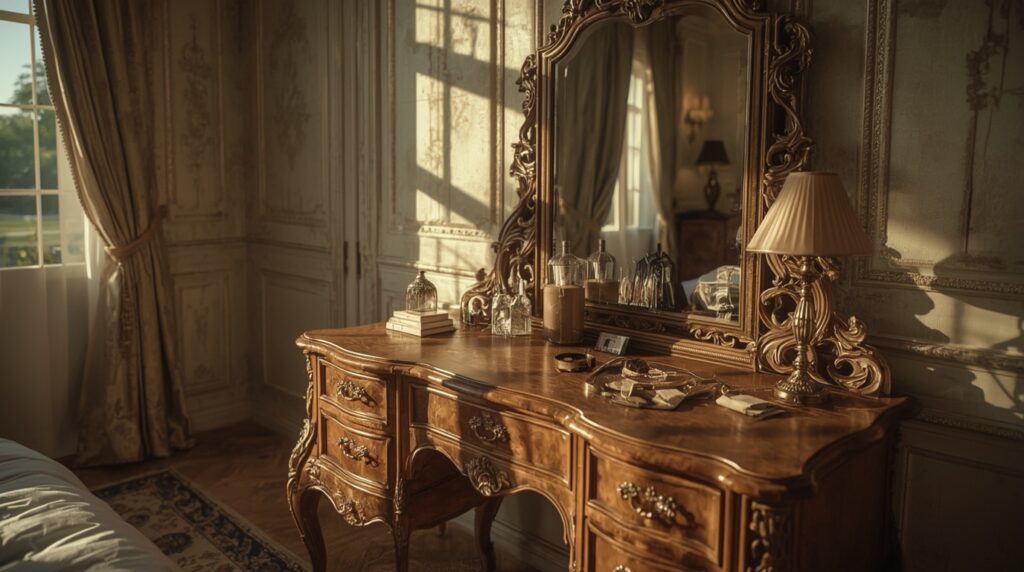
There‘s also an authenticity component in the everyday use of “antique” to a price that relates to age. In general market terms, “antique” usually refers to something 100-plus years old, although, depending on the market or country, there may be legal standards that differ. Condition also plays a role, but a “proper” example may have original mirror plates, brass fittings of the time, and wear patterns that are consistent throughout. However, even a piece of furniture in remarkable shape might have replacement mirror plates, modern screws, or a freshly sawed bottom in its drawers.
A Brief History Across Major Periods and Places
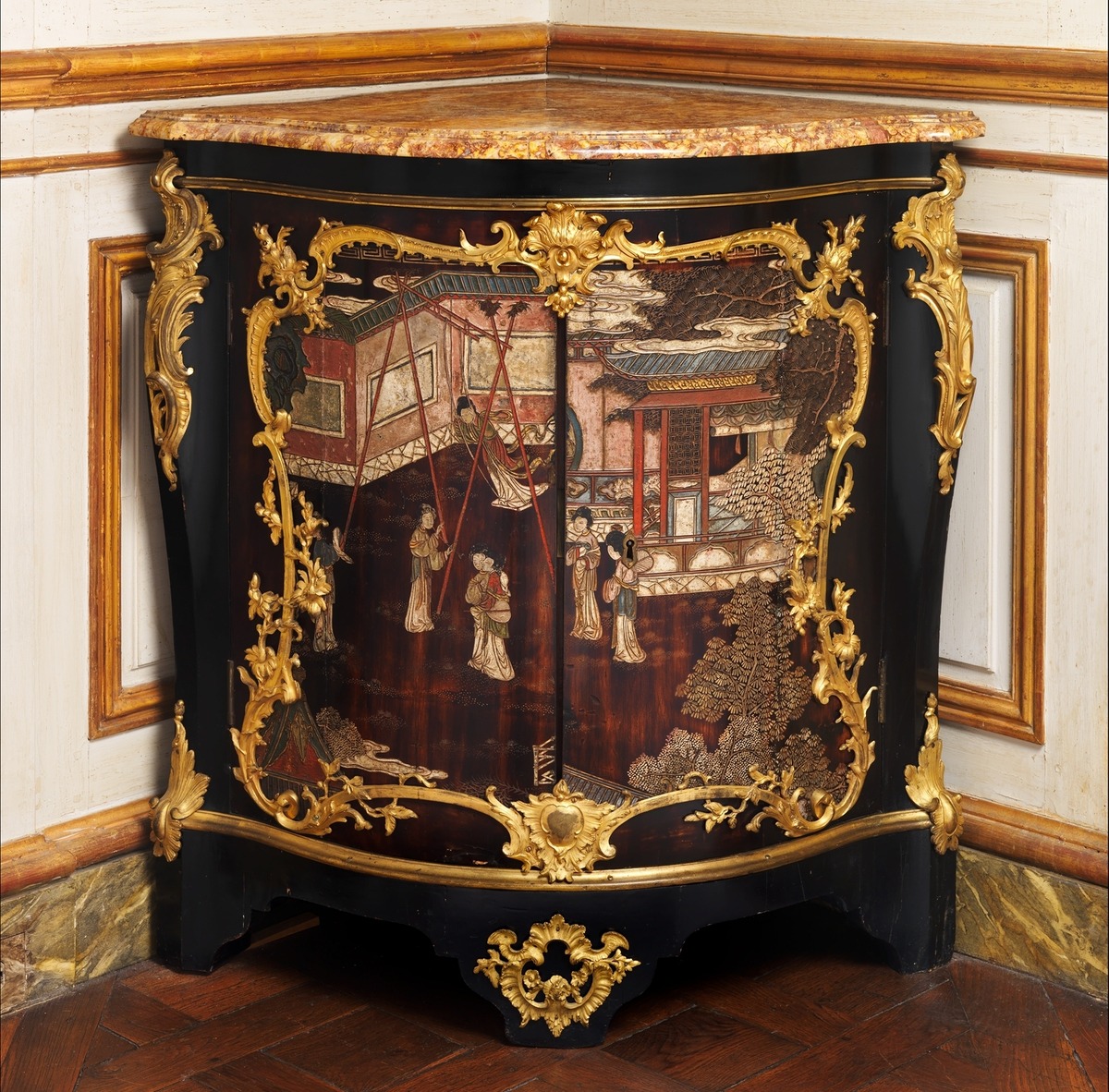
In 18th-century France, personal grooming furniture flourished in aristocratic interiors, particularly under Louis XV (1715–1774) and Louis XVI (1774–1792). Rococo forms favored curving legs, floral marquetry, and gilt-bronze mounts; later Neoclassical designs adopted straighter lines and classical motifs. Parisian ébénistes supplied elite patrons, and the dressing table became part of a broader suite of specialized furniture—objects that reflected courtly etiquette and the increasing privacy of domestic rooms.
Can You Guess the Artist?
Three clues. One artist. How quickly can you identify the painter?
In Britain dressing tables developed in pace with Georgian and Victorian domestic practices. With Victorian households (1837–1901) bigger and furniture more readily manufactured, vanity tables featured many drawers and taller mirrors, sometimes including overmantle mirrors, three-way, or cheval mirrors close at hand. The use of plate glass (which mass production and an increasing supply of it, thanks to the Industrial Revolution, had made more accessible and affordable) had also led to bigger mirrors.
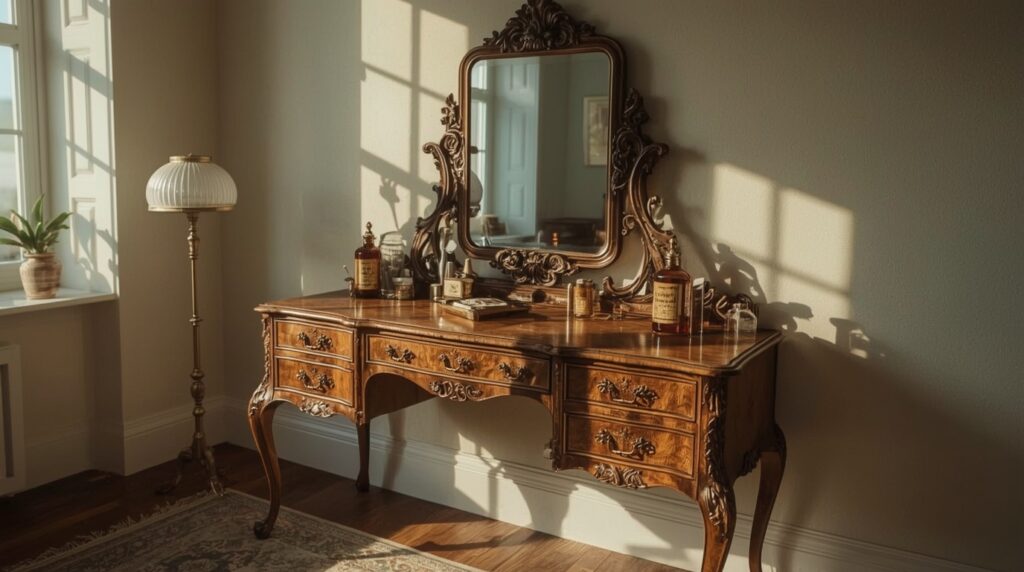
The beginning of the 20th century saw stylistic revolution. Art Nouveau (c. 1890–1910) applied floral curves and wavy lines whereas Art Deco (c. 1920–1939) saw the introduction of exotic woods, veneers, lacquer and chrome detail alongside geometric patterns. Dressing tables from this period and city think Paris, London and New York reflect how the modernist spirit permeated these private zones. As highlighted in the V&A‘s guide to furniture study and collecting, this is one reason why it is vital to be observant of how the item was made and what it is made from.
Key Characteristics: What to Look for (and Why It Matters)
Construction and materials are foundational. Common woods include mahogany (Georgian and Victorian Britain), walnut (earlier European work), and later oak revival pieces. High-end examples may feature marquetry, parquetry, or veneers over a secondary wood. Hand-cut dovetails, pegged joints, and consistent tool marks can indicate earlier workmanship—whereas uniform machine-cut joinery often points to later manufacture.
Special attention should be paid to mirrors. Older mirror plates sometimes have minor oxidation (“foxing”) or slight waviness, or they can have age-related edge chipping. Mirror glass is often substituted because it is very brittle; a substituted mirror is not a deal-breaker in itself but does decrease value, and should always be disclosed. Original swing brackets, screw materials, and back boards can indicate whether the mirror assembly is authentic for the period.
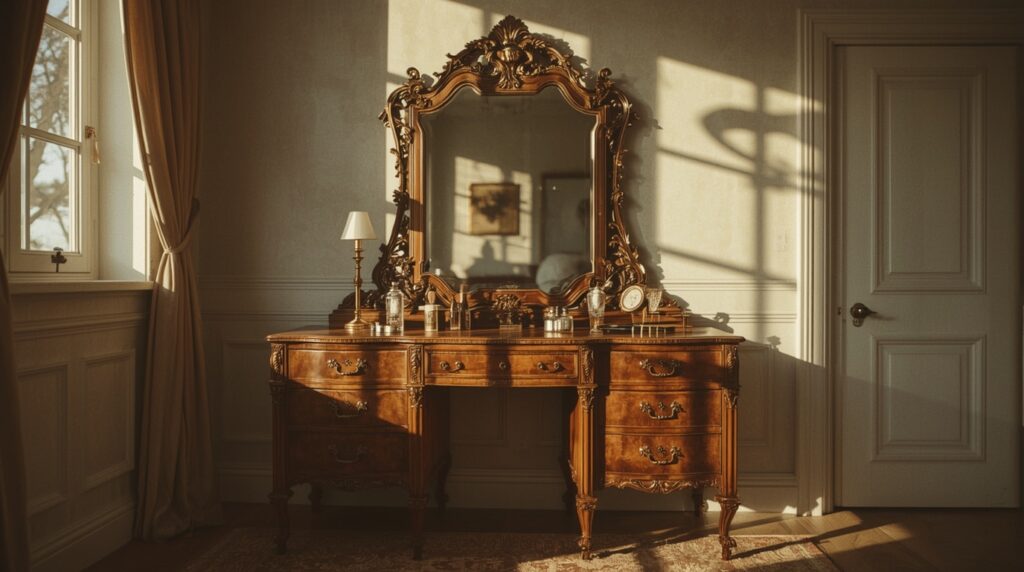
Lastly, consider function and proportion. Antique dressing tables often incorporate a variety of nooks, jewelry trays, and pull-out or hinged lids that once held powders or accoutrements. These often-unique features point to particular social practices and eras. As the Smithsonian has stated often in their public-facing collections work, decorative arts are to be analyzed not only by making and technique, but by the act of living with furniture is “material culture.”
Summary Table: Key Characteristics by Period
| Period & Region | Typical Style Notes | Common Materials | Mirror Type | Telltale Details |
|---|---|---|---|---|
| Louis XV France (18th c.) | Rococo curves, floral mounts | Walnut/fruitwoods, marquetry, gilt bronze | Smaller adjustable mirrors | Cabriole legs, ornate mounts |
| Louis XVI France (late 18th c.) | Neoclassical symmetry | Mahogany/walnut, refined marquetry | Framed, often more rectilinear | Tapered legs, classical motifs |
| Victorian Britain (19th c.) | Heavier profiles, practicality | Mahogany, walnut, sometimes oak | Larger plates, sometimes triple mirrors | Many drawers, turned details |
| Art Deco (1920–39) | Geometric, sleek, modern | Veneers, lacquer, chrome | Clean-lined, often integrated | Contrasting veneers, stepped forms |
Buying and Caring with Confidence (Authenticity, Condition, Provenance)
Authenticity starts with documentation and informed inspection. Ask sellers for provenance (old receipts, family history, estate records), restoration notes, and high-resolution photos of joints, drawer sides, and hardware. Reputable dealers should describe what is original and what has been replaced. When in doubt, consult a qualified furniture conservator or appraiser—especially for higher-value French pieces where mounts and marquetry quality strongly affect attribution.
Condition needs to be assessed in context. It‘s fine that a hundred year-old piece has surface wear, a little veneer lifting, and some tiny losses but it‘s often NOT fine for a piece to have been aggressively refinished in a way that obliterates old surfaces and the associated value. Museums usually prefer preservation over making things look new. The Metropolitan Museum of Art notes in their collections research and conservation work: “The original surface of a historic object is the primary and therefore the most valuable source of information for its interpretation and use. Any historical finishing and original manufacturing methods should be preserved.”
Maintenance is simple and disciplined. Keep the table out of direct sunlight, off radiators, and from cold outside walls because wide variations in humidity will put strain on veneers and joints. Dust with a soft, dry cloth no silicon-based sprays, which will seep through the finish and make restoration an nightmare. The mirror: if original or period glass, use the very minimum amount of liquid when cleaning and try not to splash the liquid behind the plate, which may hasten the decay of the backing.
Frequently Asked Questions
1) How can I tell if an antique dressing table with mirror is truly antique?
Check construction details (hand-cut joinery, period screws), wear patterns consistent across wood and hardware, and whether materials align with the claimed era. Provenance and professional appraisal provide the strongest confirmation, especially for 18th-century European examples.
2) Does replacing the mirror ruin the value?
Not necessarily, but it can reduce value for collectors seeking high originality. A well-documented, period-appropriate replacement is preferable to an ill-fitting modern plate. Transparency in listing and pricing is crucial.
3) What’s the difference between a vanity and a dressing table?
In everyday usage they overlap, but “dressing table” often implies an older, traditional form tied to toilette rituals, while “vanity” can include later 20th-century bedroom sets. Antique catalogues may also use “toilet table” or the French term coiffeuse.
4) Are antique dressing tables with mirrors practical for daily use?
Yes, with reasonable care. Ensure the structure is stable, drawers run properly, and the mirror mount is secure. If you intend heavy daily use, consider a conservation check to address loose veneer, wobbly joints, or fragile finishes.
5) Where can I study verified examples?
Museum collections are excellent references. Explore online catalogues from The Metropolitan Museum of Art, the Victoria and Albert Museum, the Louvre, and the Smithsonian Institution to compare forms, materials, and documented dates.
An antique dressing table with mirror endures because it combines artistry with intimacy: fine materials, skilled making, and a daily human purpose. By grounding your search in historical period knowledge, careful inspection of construction and mirror details, and the museum-informed preference for honest surfaces over heavy refinishing, you can choose a piece that is not only beautiful—but convincingly authentic and built to last.
Authoritative sources to consult: The Metropolitan Museum of Art (collection and conservation resources), the Victoria and Albert Museum (furniture collections and research), the Louvre Museum (decorative arts holdings), and the Smithsonian Institution (decorative arts and material culture collections).
AI Notice: Some visual content in this article may have been created or enhanced using artificial intelligence (AI) for artistic, editorial or illustrative purposes. Learn more about our approach in our AI & Editorial Principles.